Samuel Ha-Nagid
c. 993–1056
Poet Military Scholar
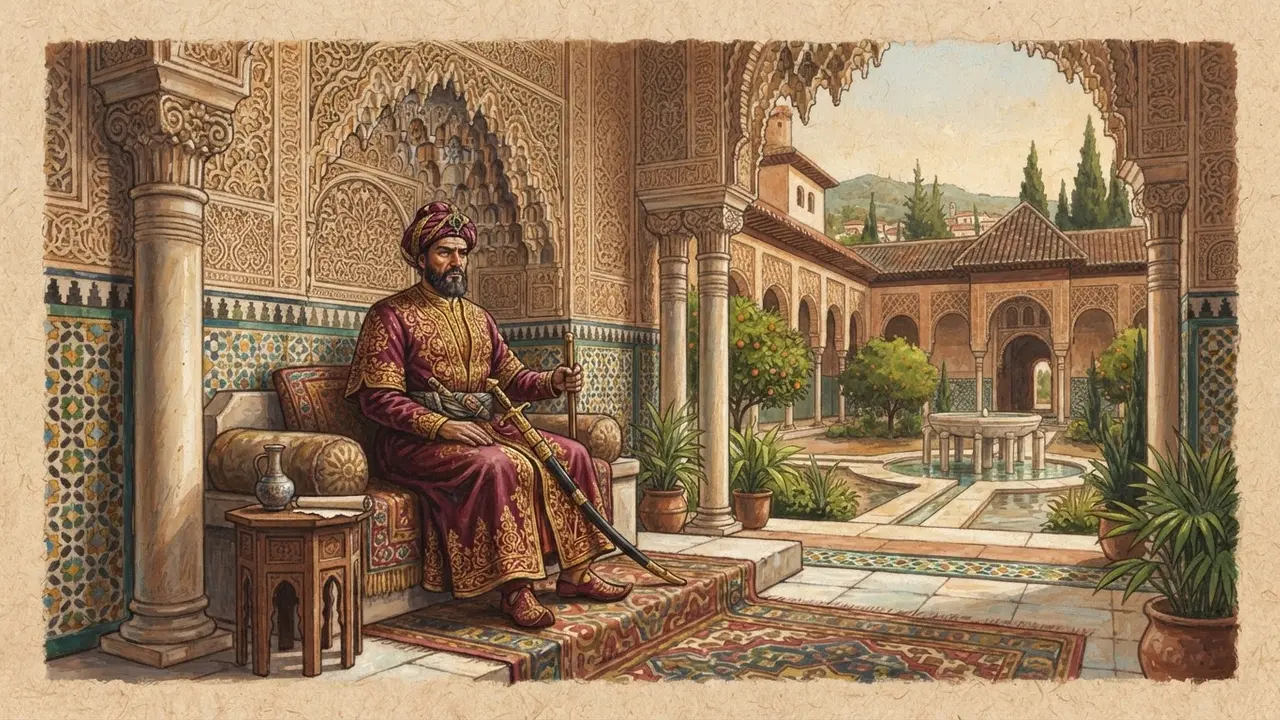
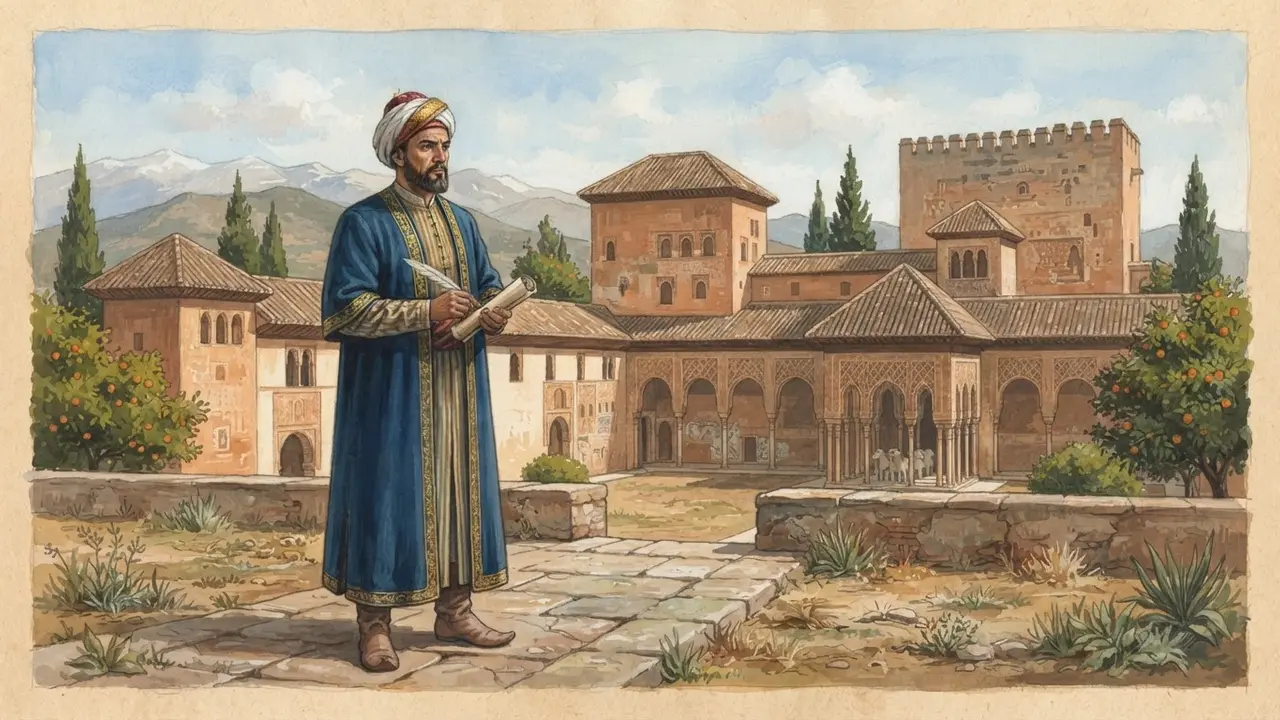
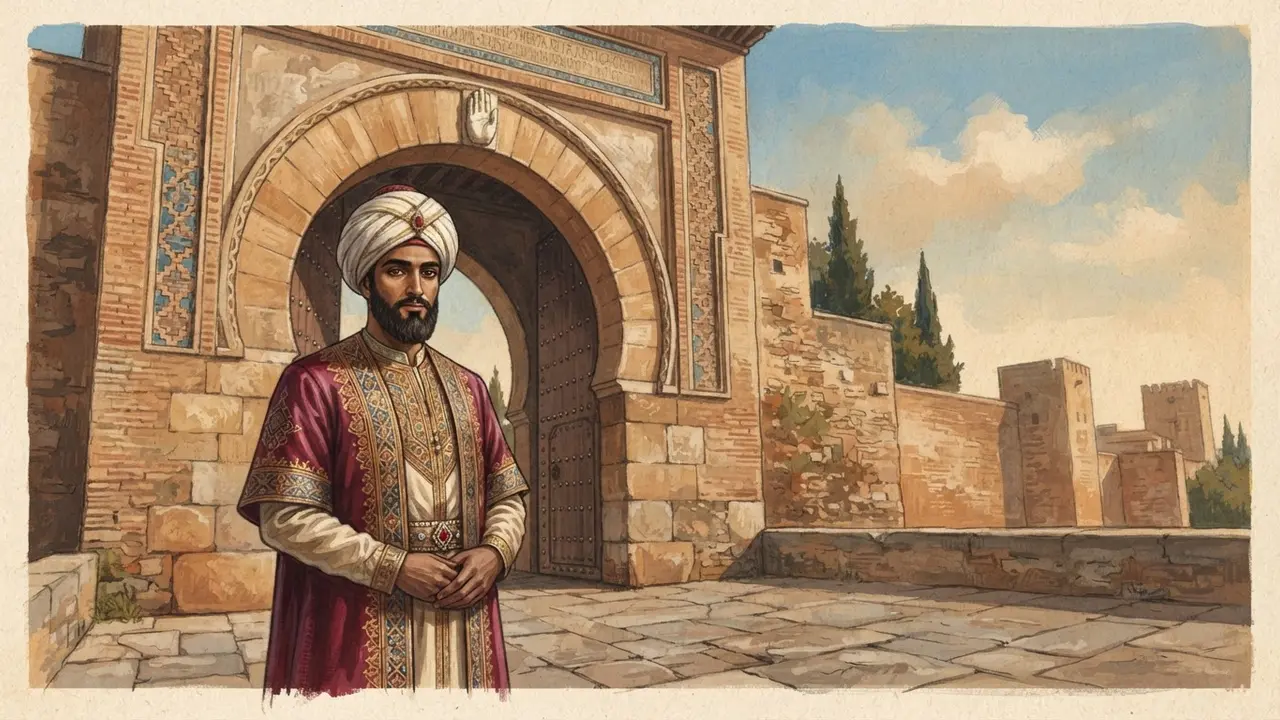
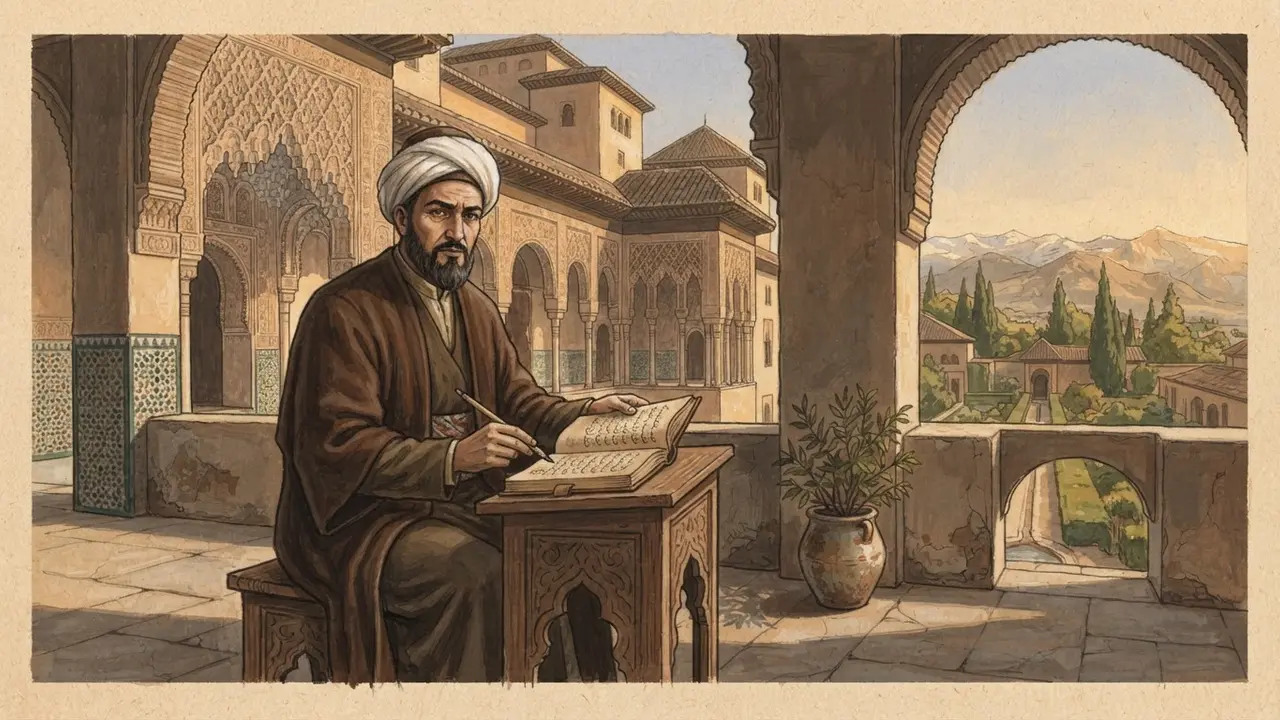
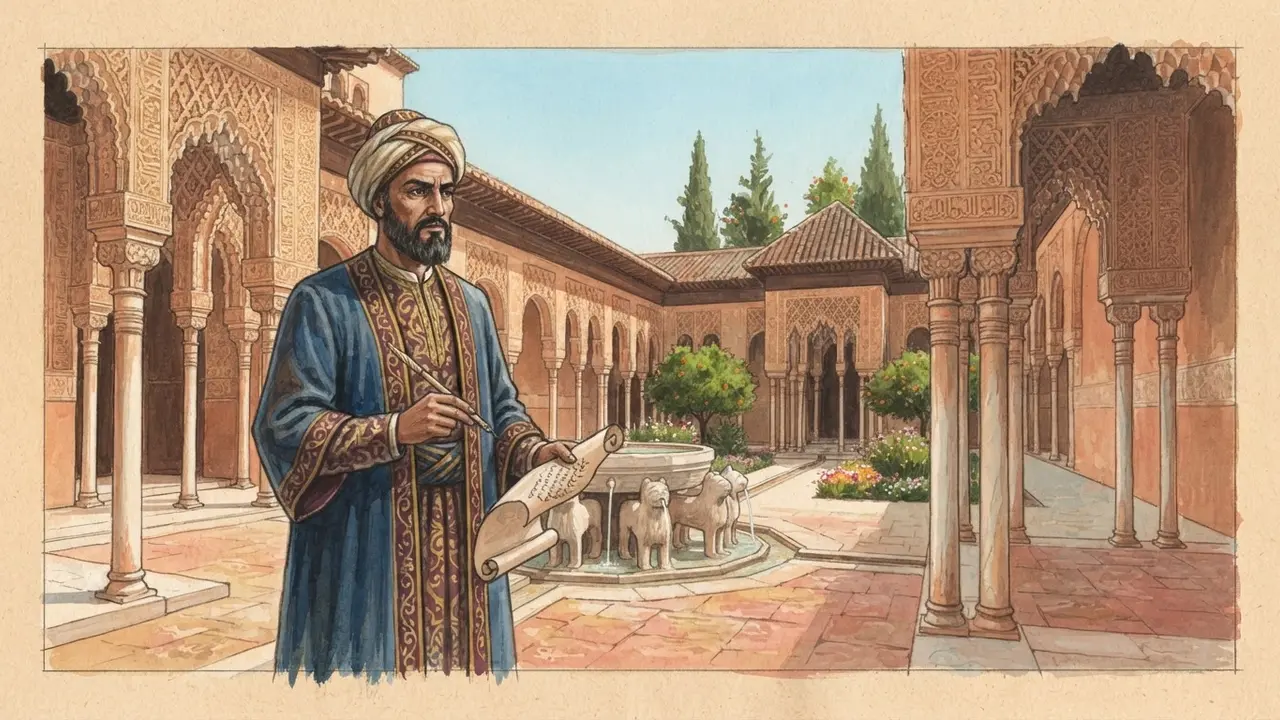
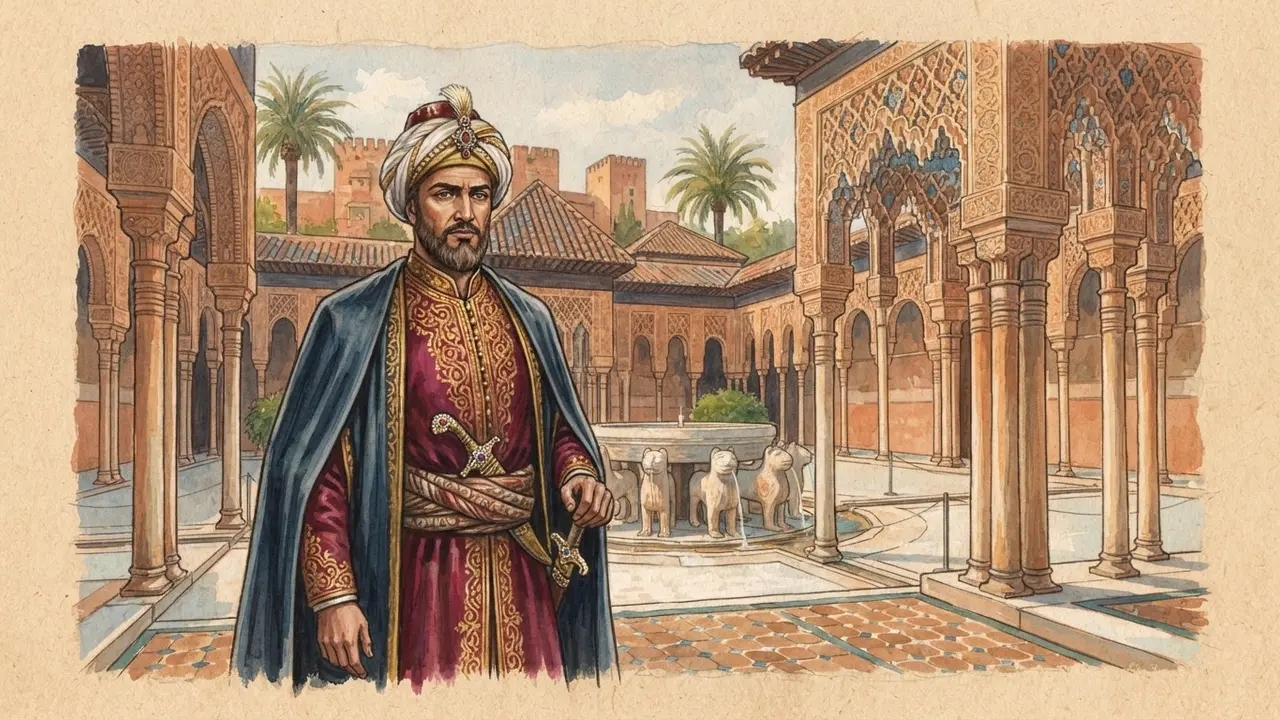
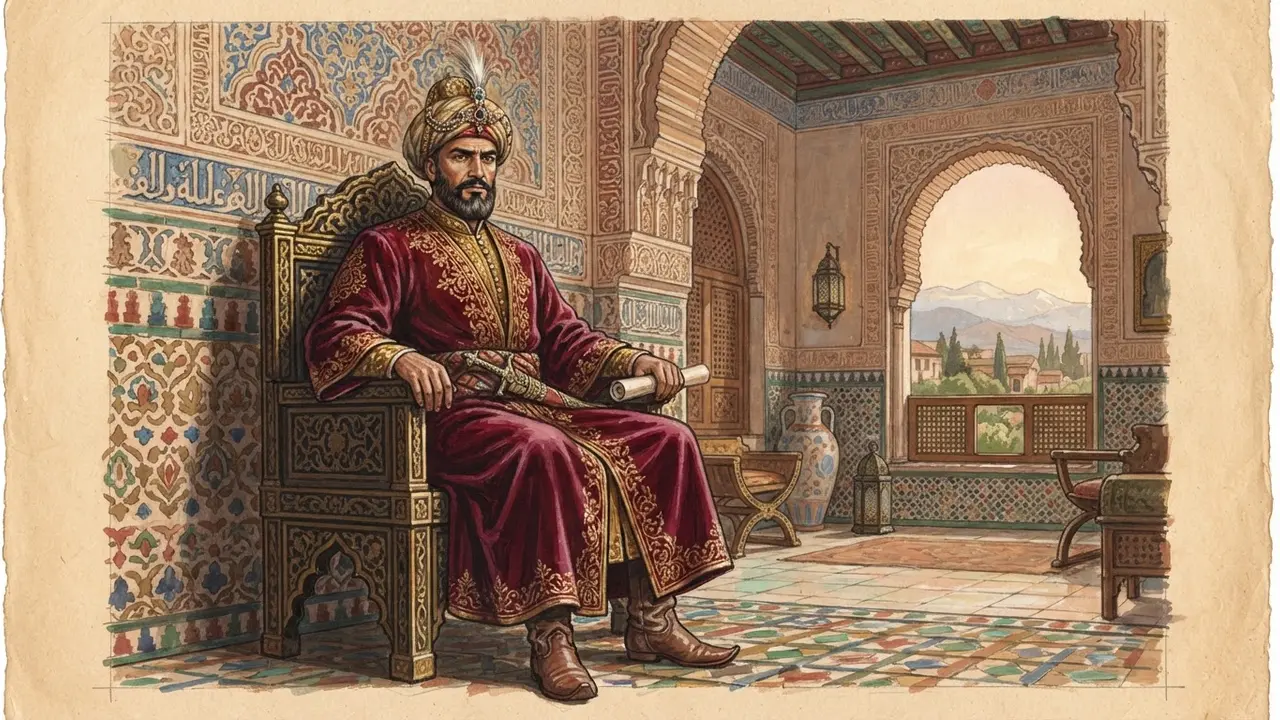
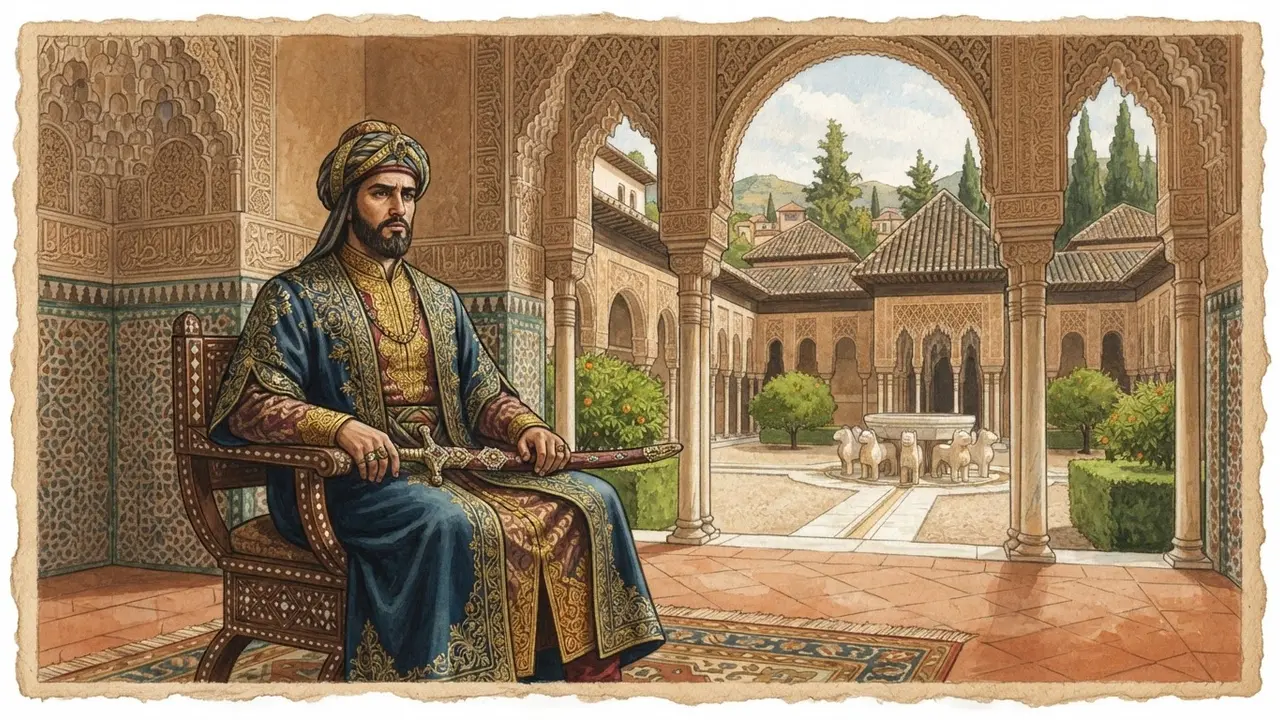
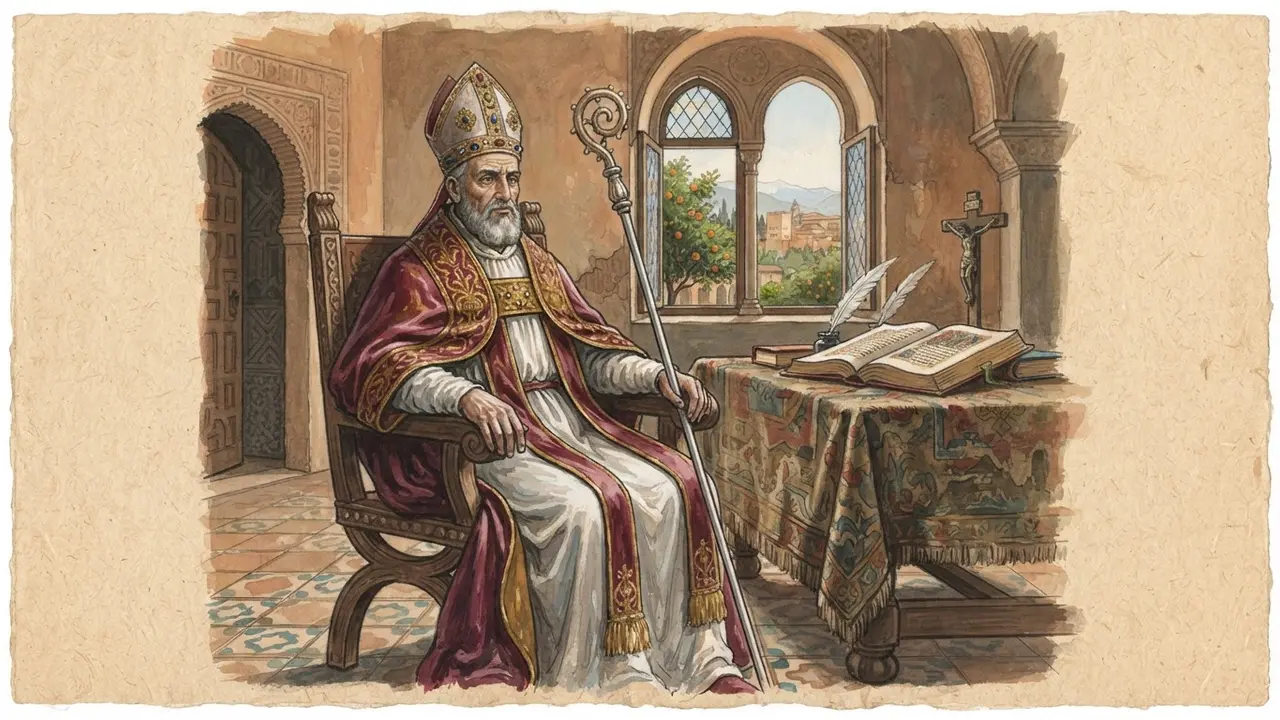
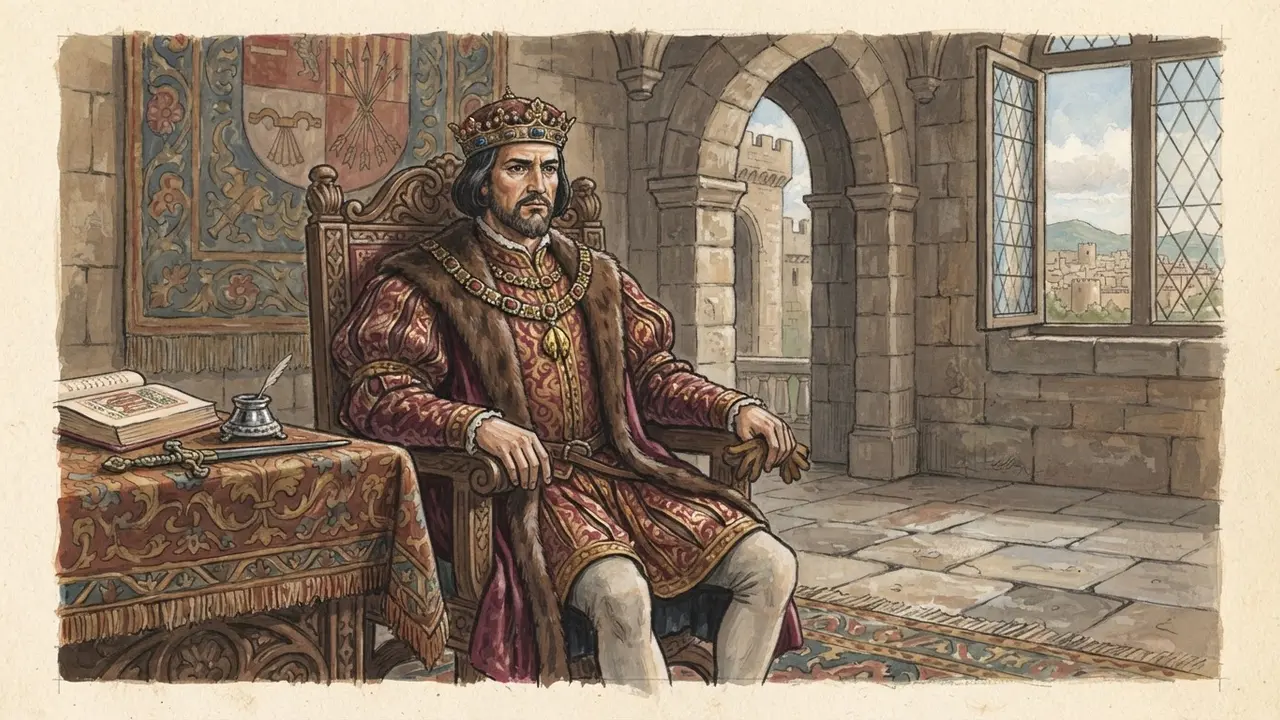
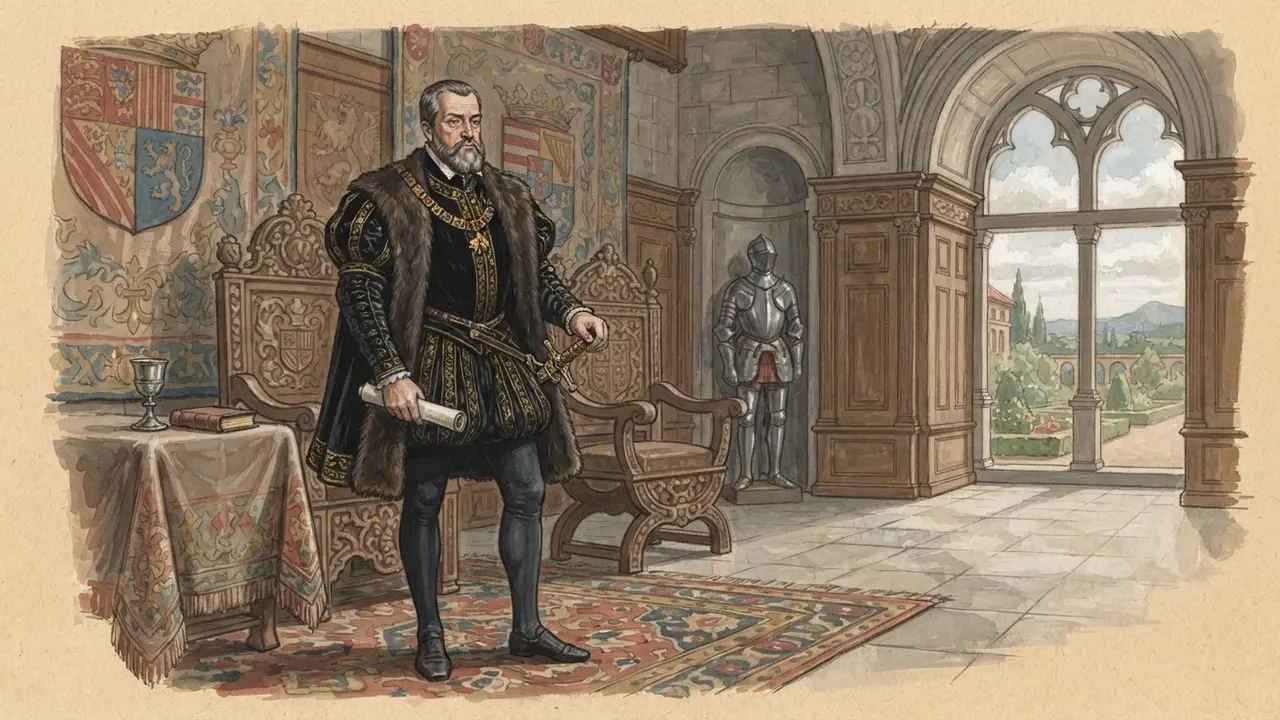
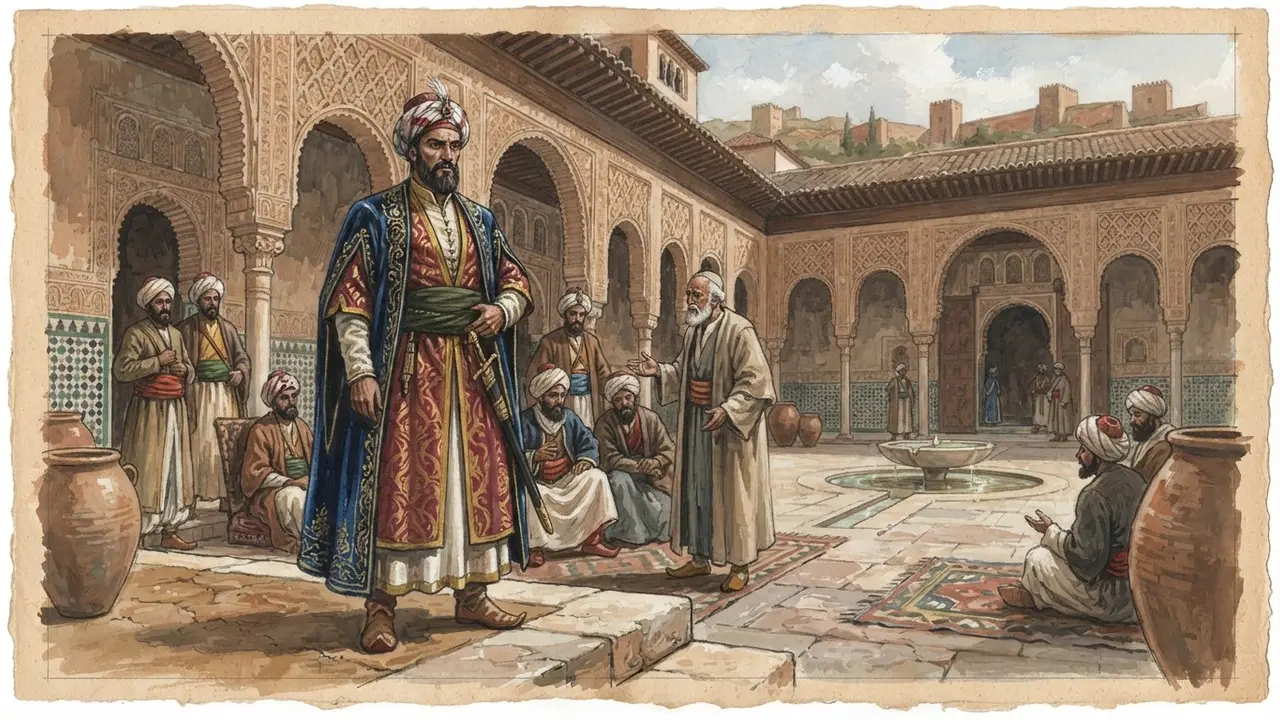
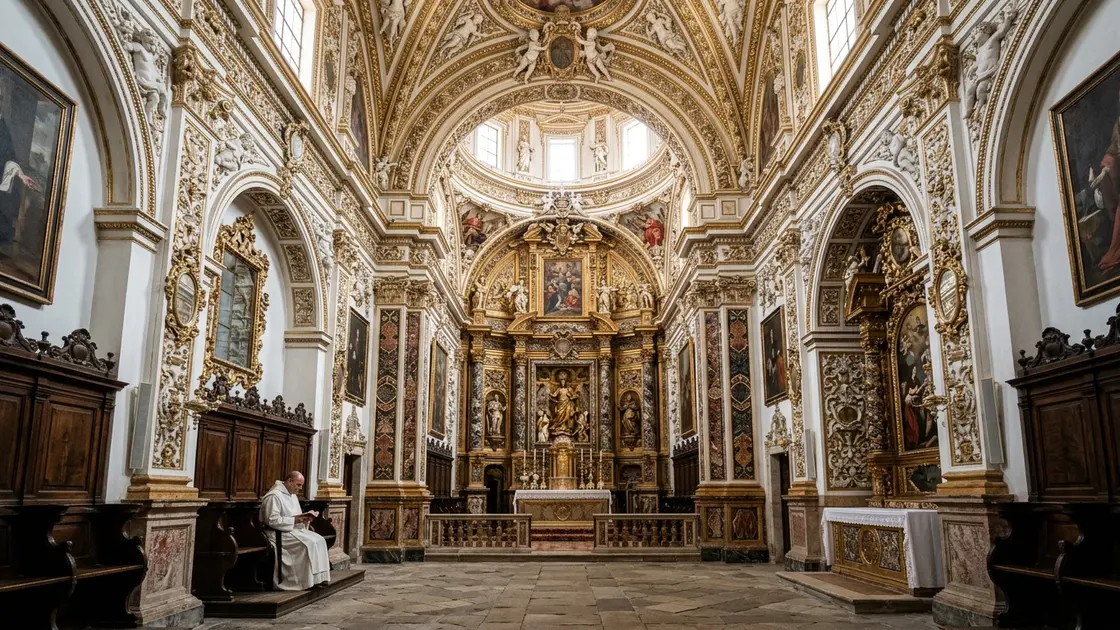
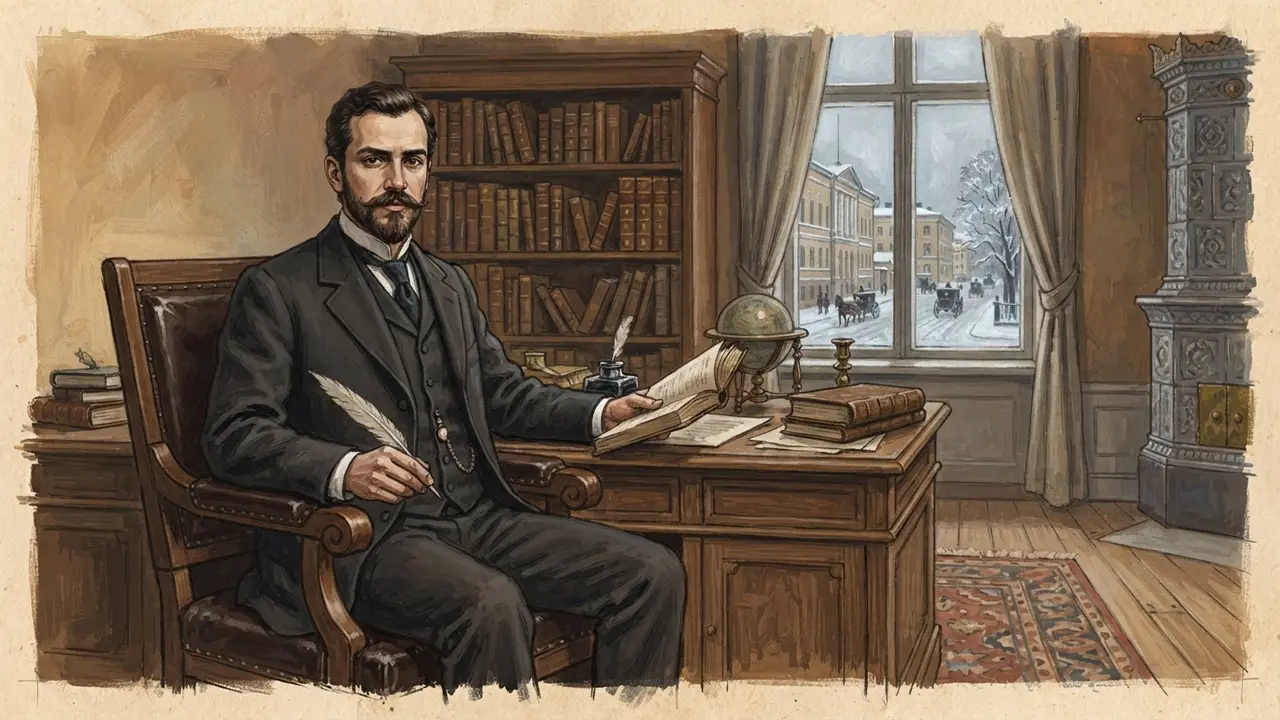
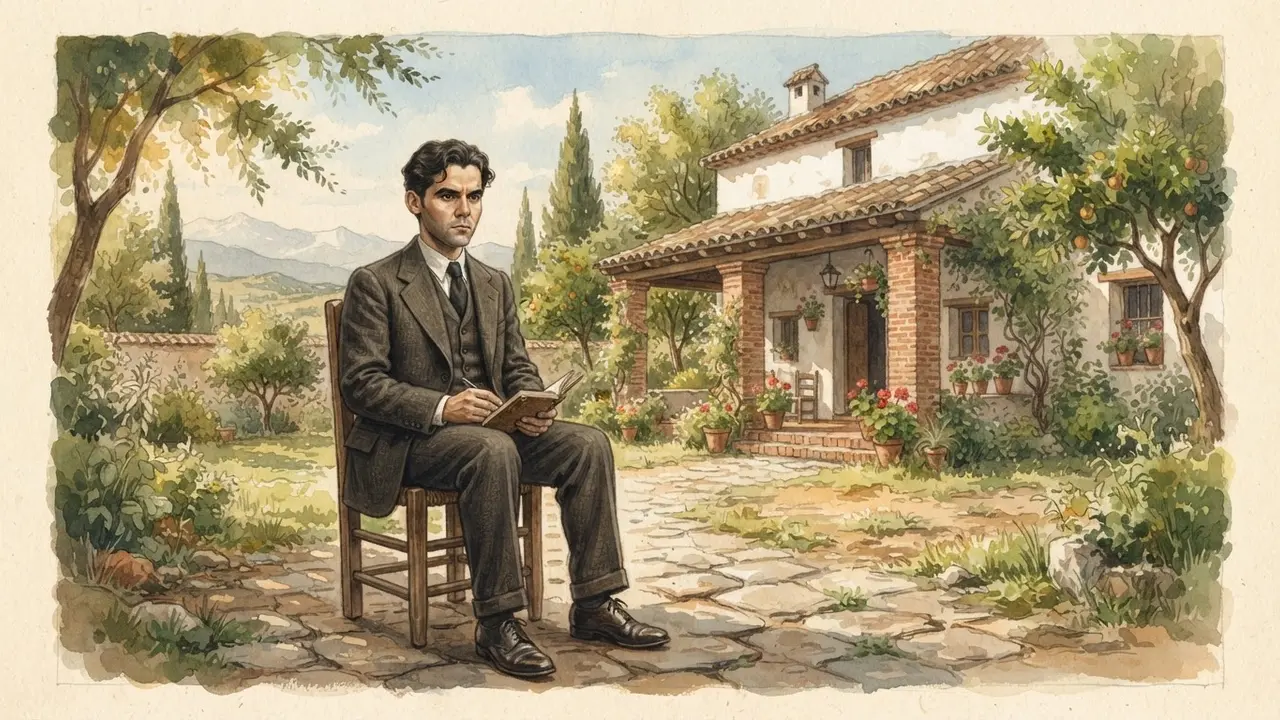
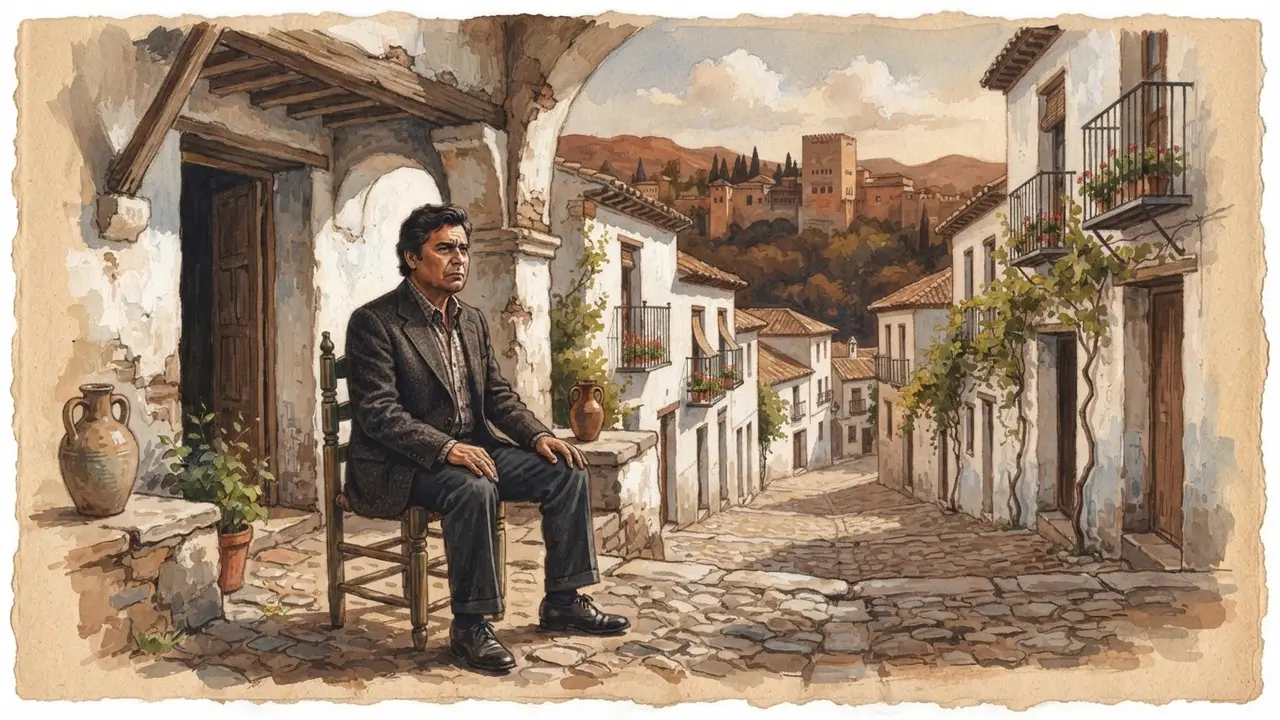
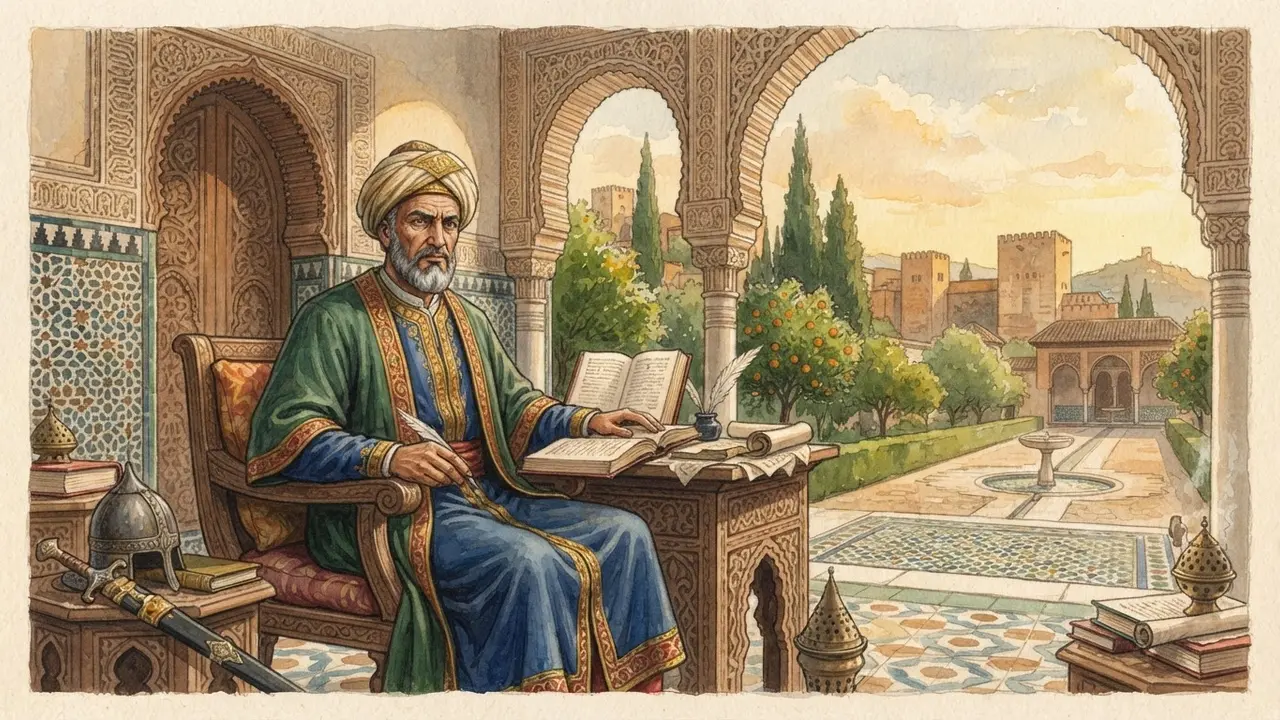
Samuel Ha-Nagid fled Córdoba in 1013, became Nagid of Granada's Jewish community and vizier, and led its army. He is also considered a great Jewish poet.
Read the profile
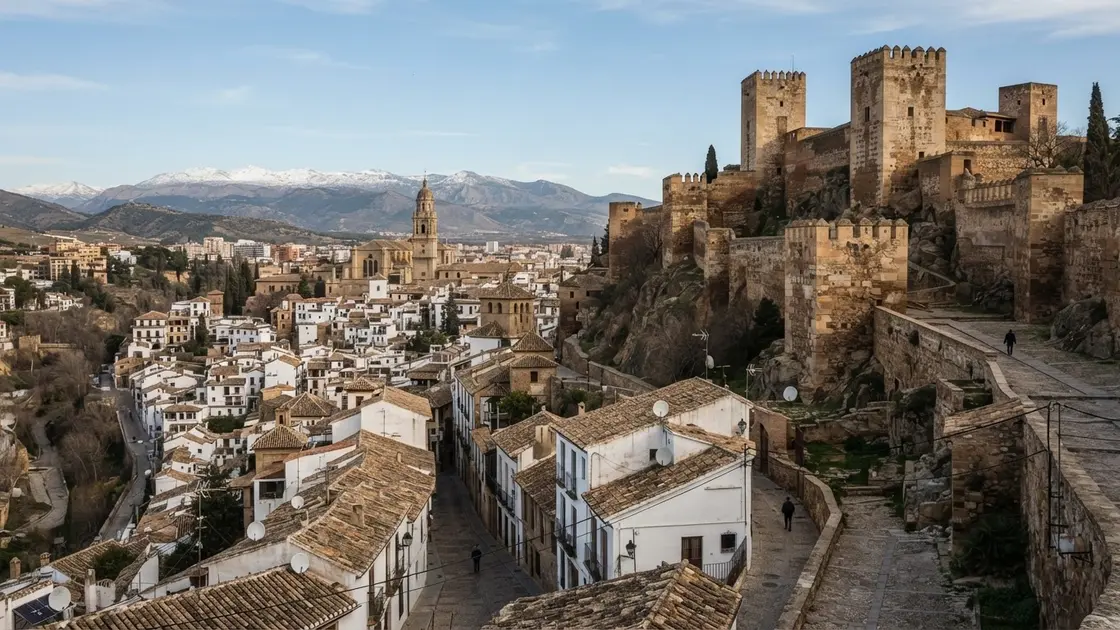
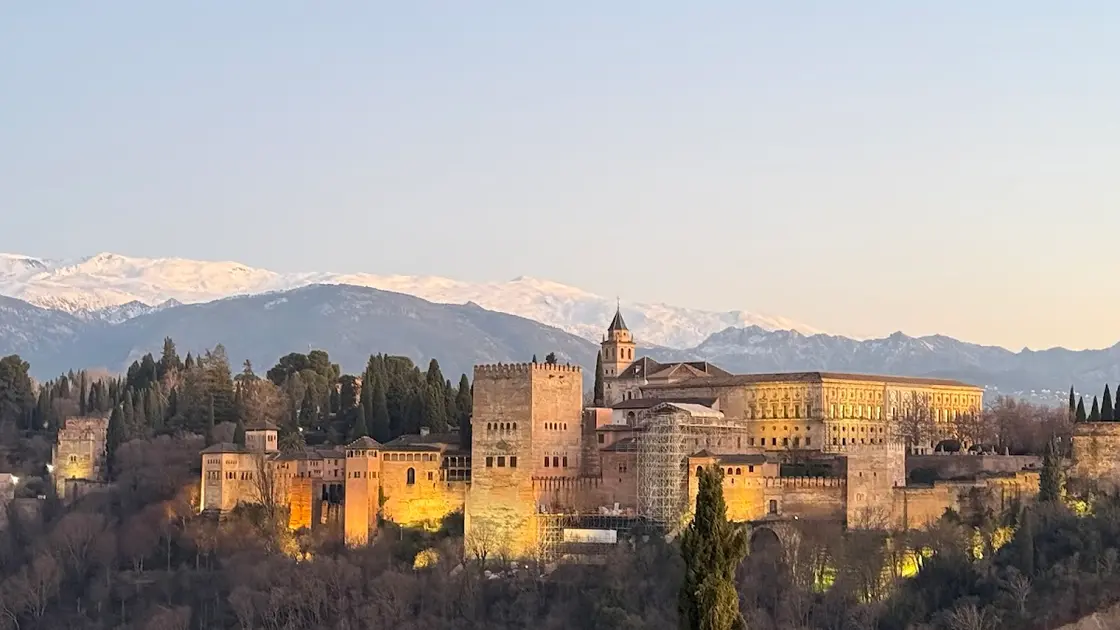
Follow Granada from Iberian Iliberis and Roman Elvira through the Zirids and the Nasrid kingdom to the Castilian conquest and the modern city. Each era gathers the monuments still standing and the articles that go deeper.
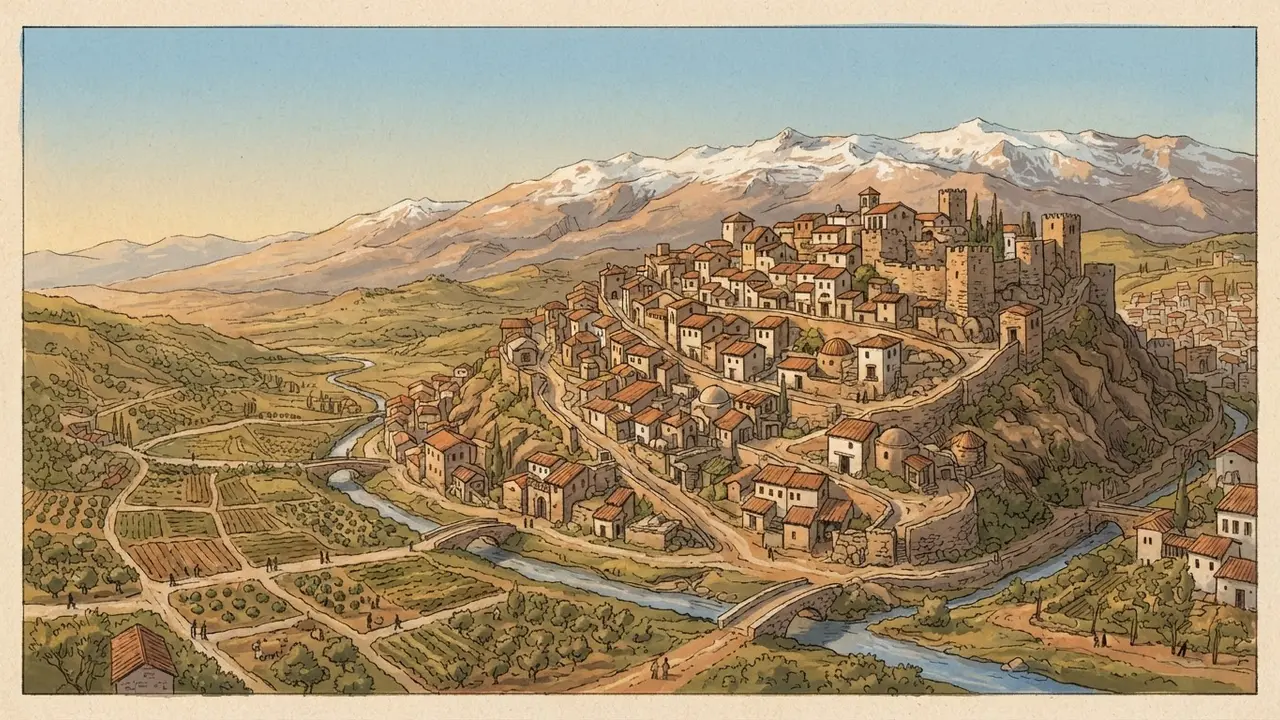
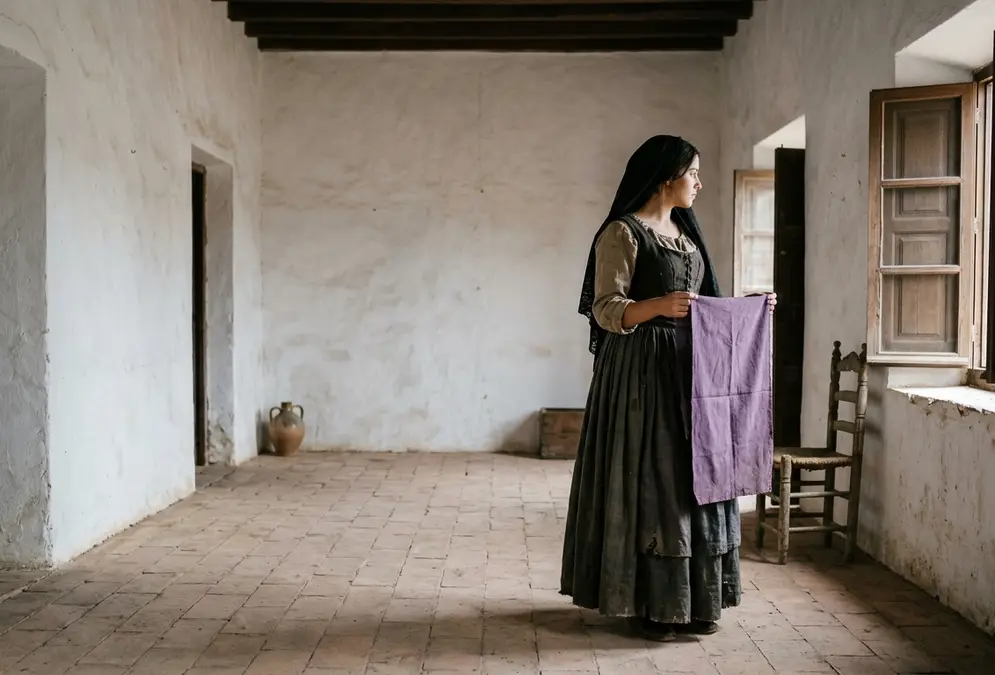
The Bastetani, an Iberian tribe, settled the hill above the Darro that later became the Albaicín, and Rome made it a municipium under Augustus in the late 1st century BC. Around 306 AD nineteen bishops met near Iliberis for the Council of Elvira, the first known church council in Hispania. The Visigoths inherited the city as Elbira, a diocese and regional centre.
306 Article
Granada was Roman Iliberis for over 700 years before the Moors arrived. The Council of Elvira, c. 306 AD, was the earliest church council in all of Hispania.
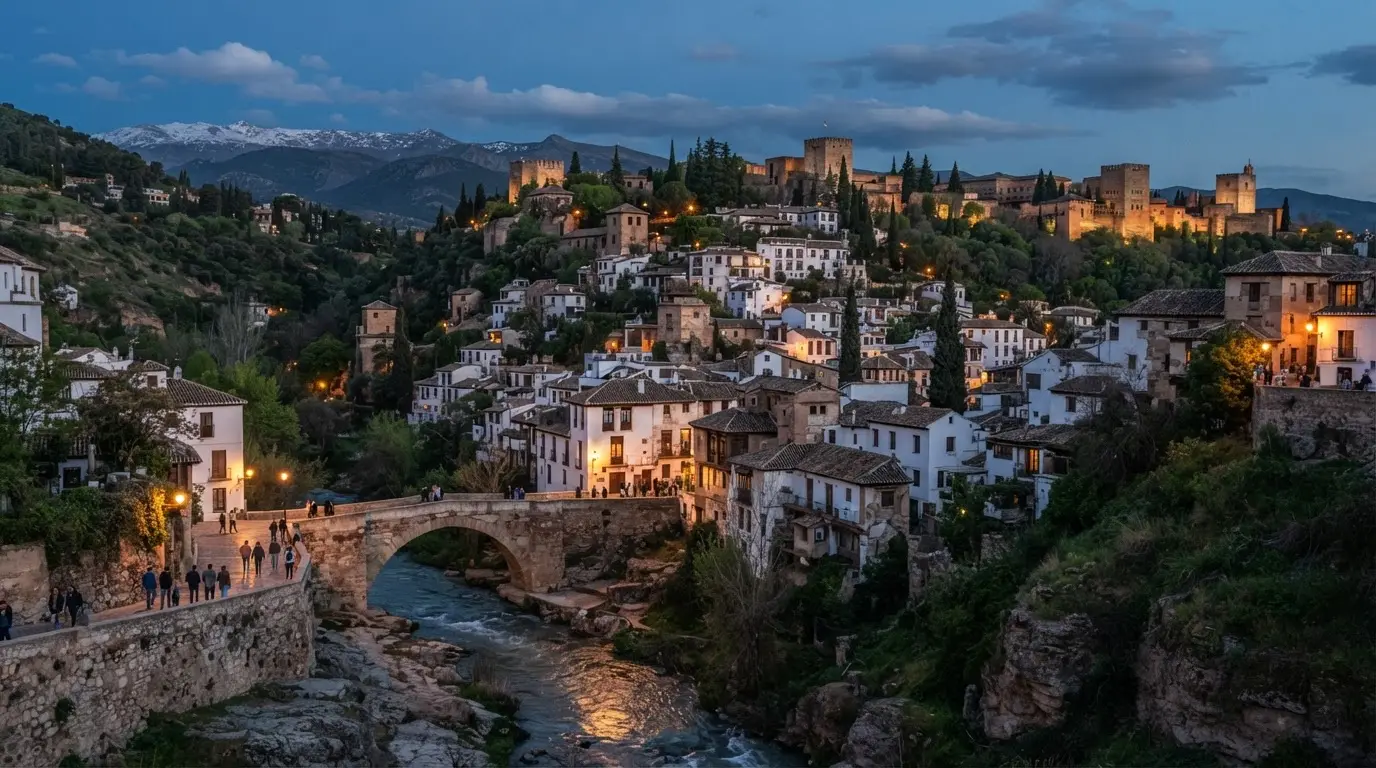
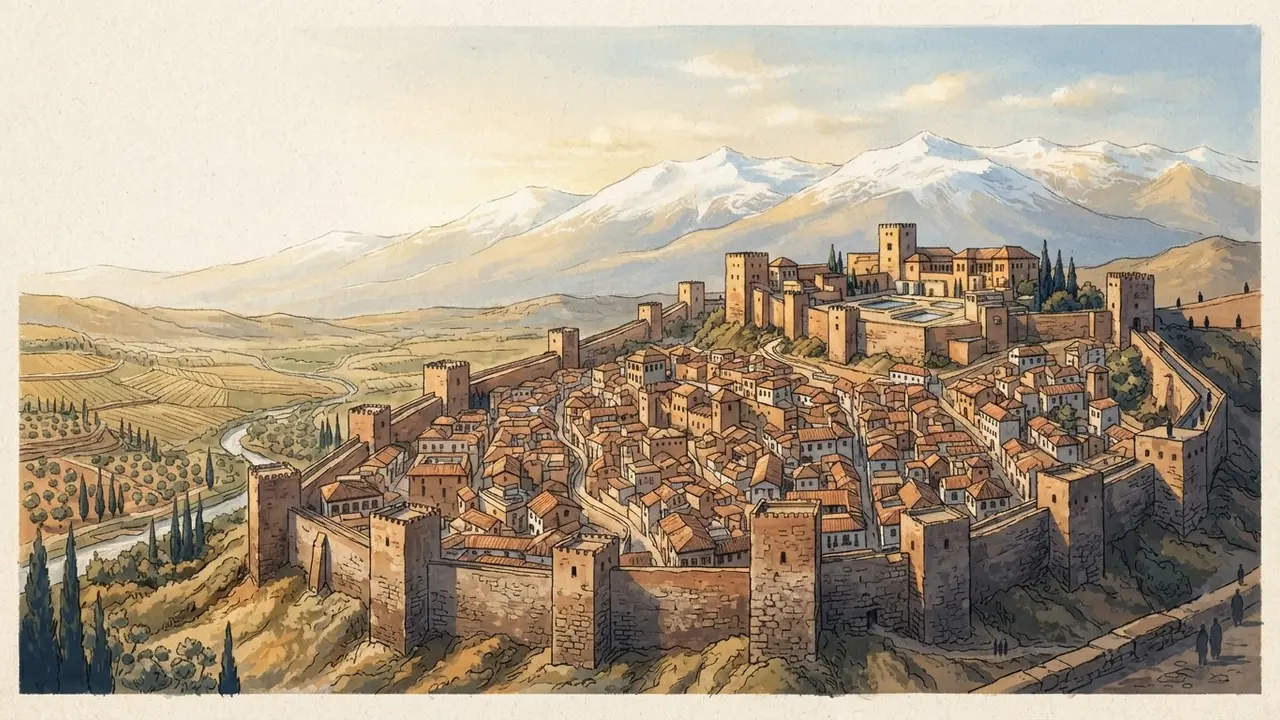
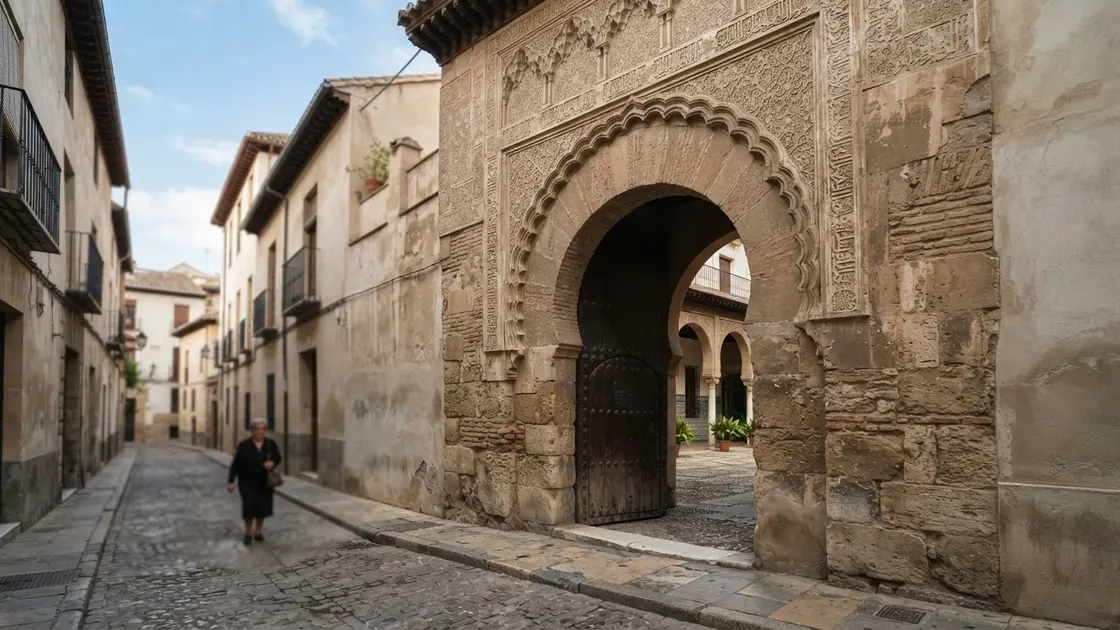
After Arab forces took the peninsula in 711, the settlement on the Albaicín hill became Gharnata, while nearby Medina Elvira served as the regional capital until 1013, when the Zirids moved the capital to the hilltop. They left walls, cisterns and a street plan still legible today. Under the vizier Samuel ha-Nagid the city reached the Jewish Golden Age, which ended on 30 December 1066 when a mob killed his son Joseph and thousands of Jews in a single day.
Article
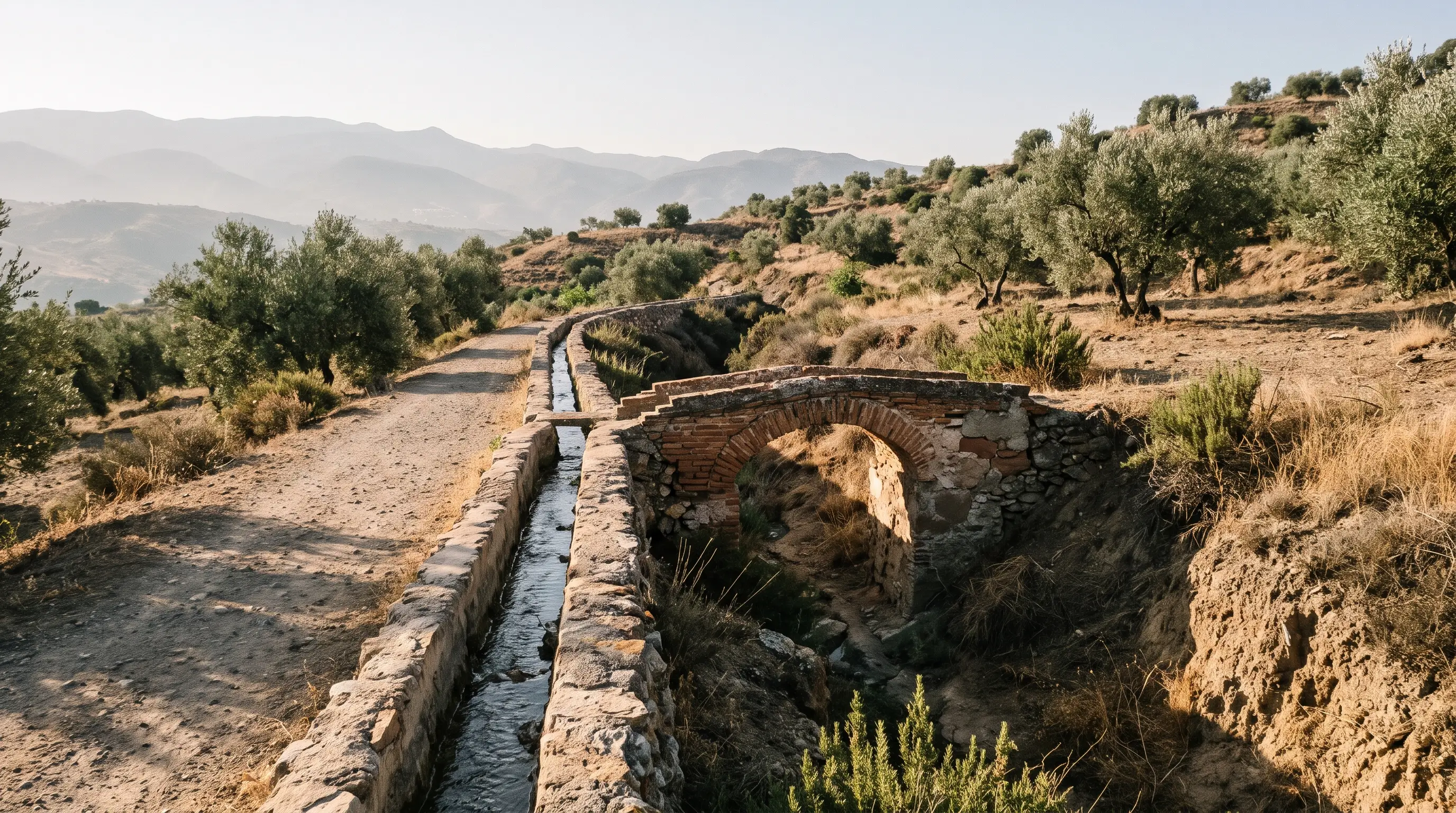
Aynadamar, Granada's Fountain of Tears, is an 11th-century channel from Alfacar to the Albaicin. Its origins, decline, 2023 recovery and Lorca link, explained.
1090–1269 Article
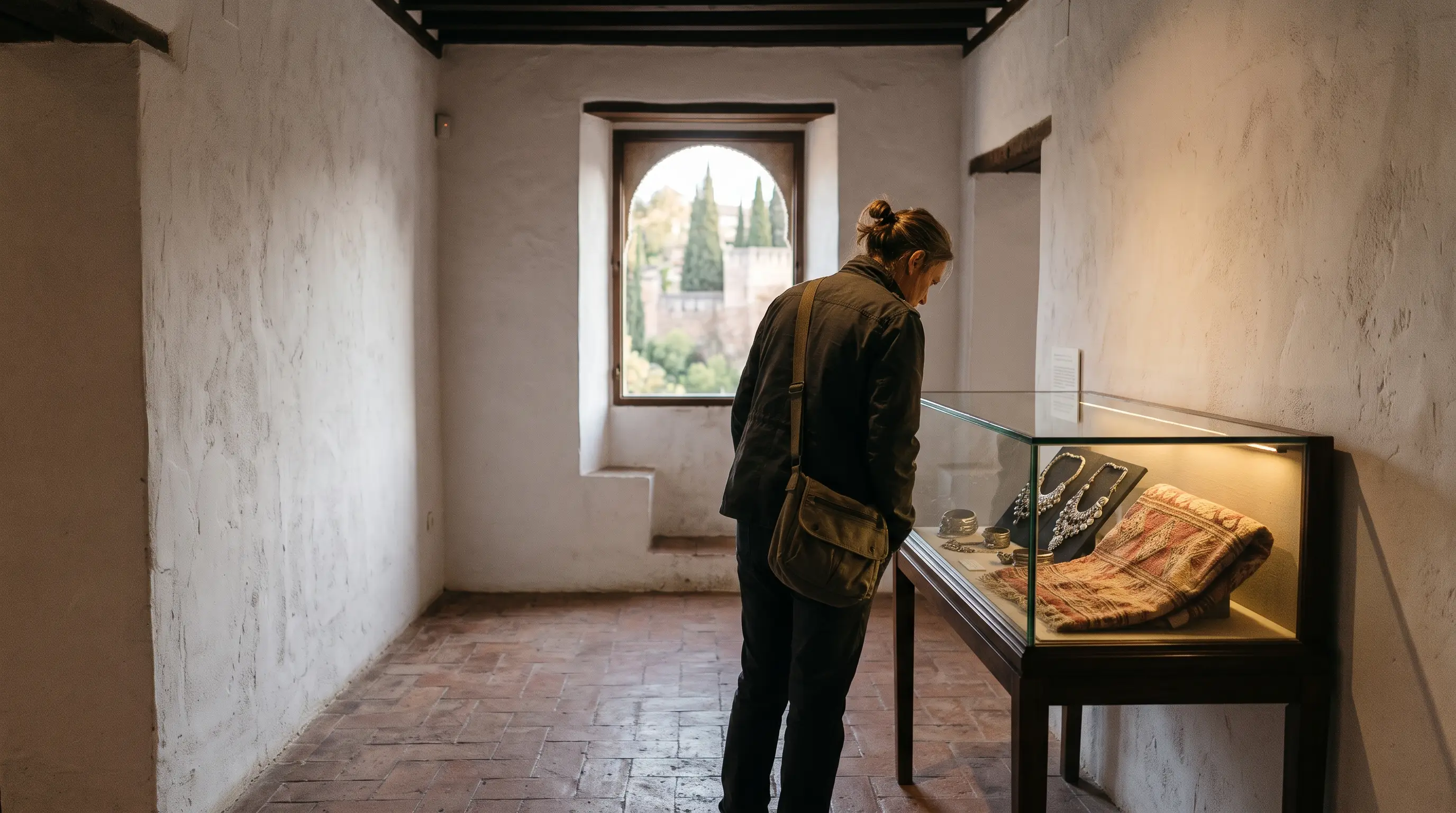
The Alhambra's new Amazigh space opened in June 2026. Follow the Berber thread through Granada, from the Zirids and Almoravids to the Almohads and Nasrid rule.
Article
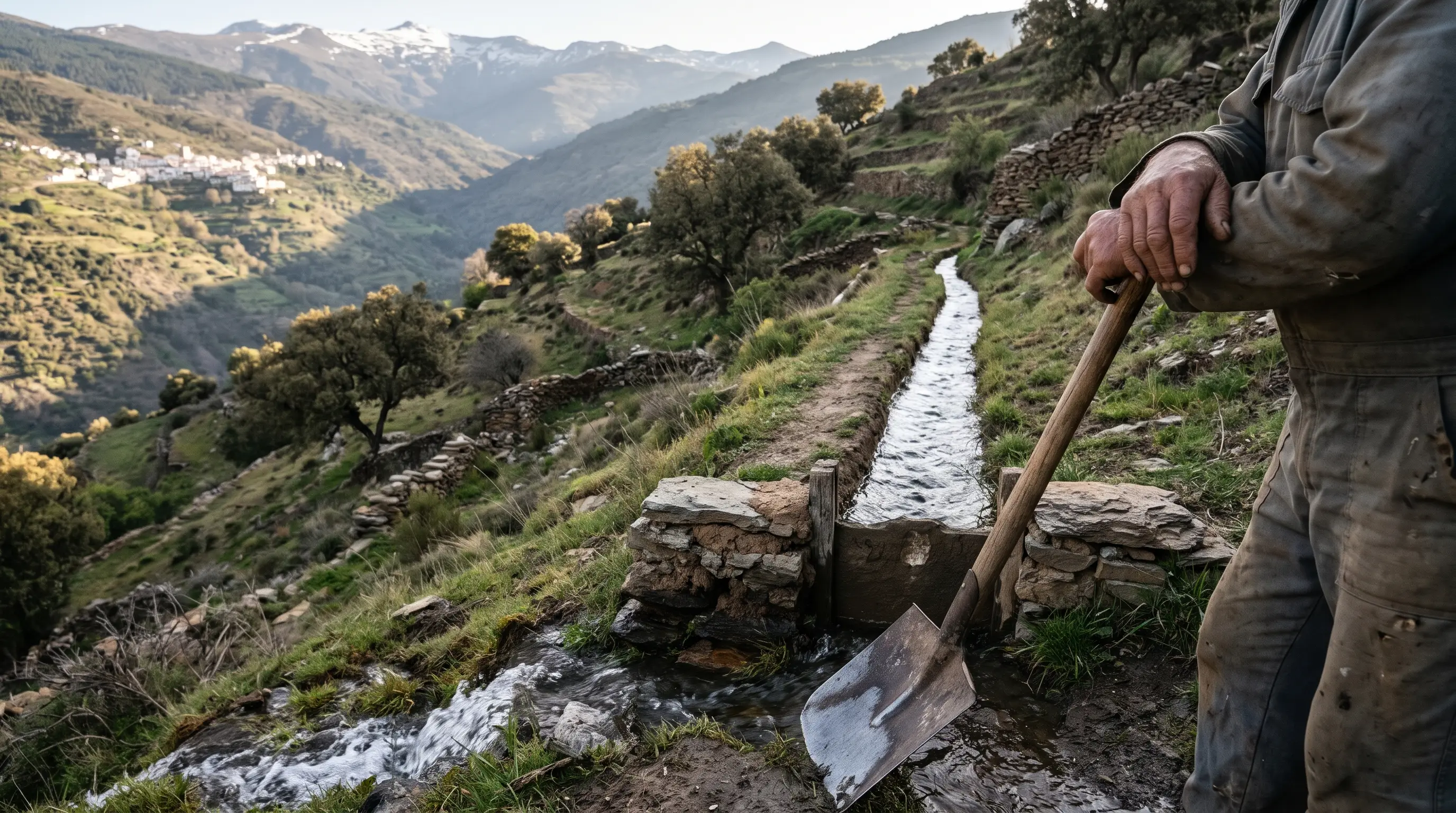
Sierra Nevada's acequias de careo send snowmelt into hillside aquifers, a practice about 1,300 years old that still feeds Alpujarra rivers in dry summers.
Article
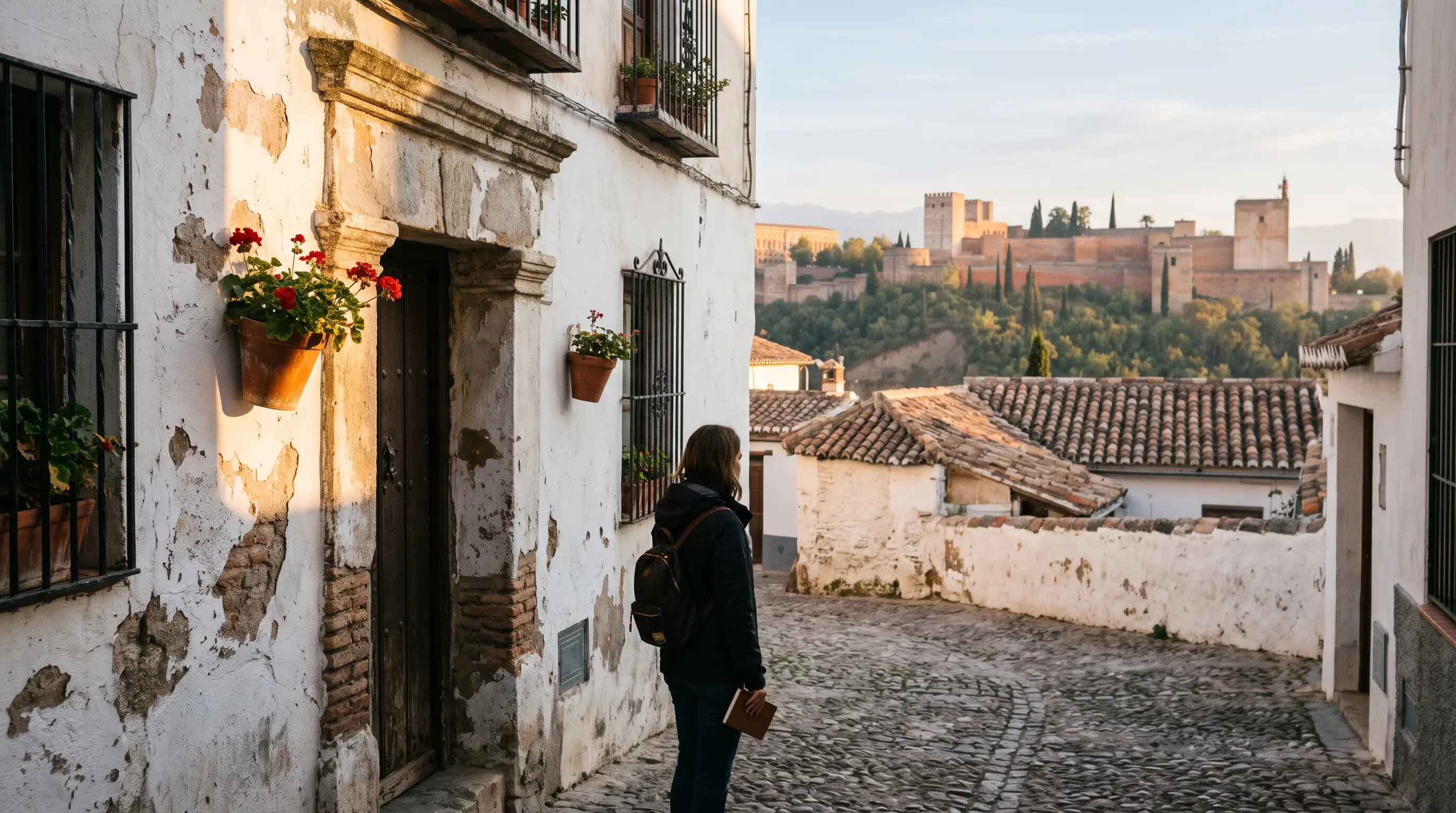
Moses ibn Ezra, the Hebrew poet born in Granada around 1055-1060, lost his city to the Almoravids in 1090 and wrote of it from exile in Christian Spain.
1154 Article
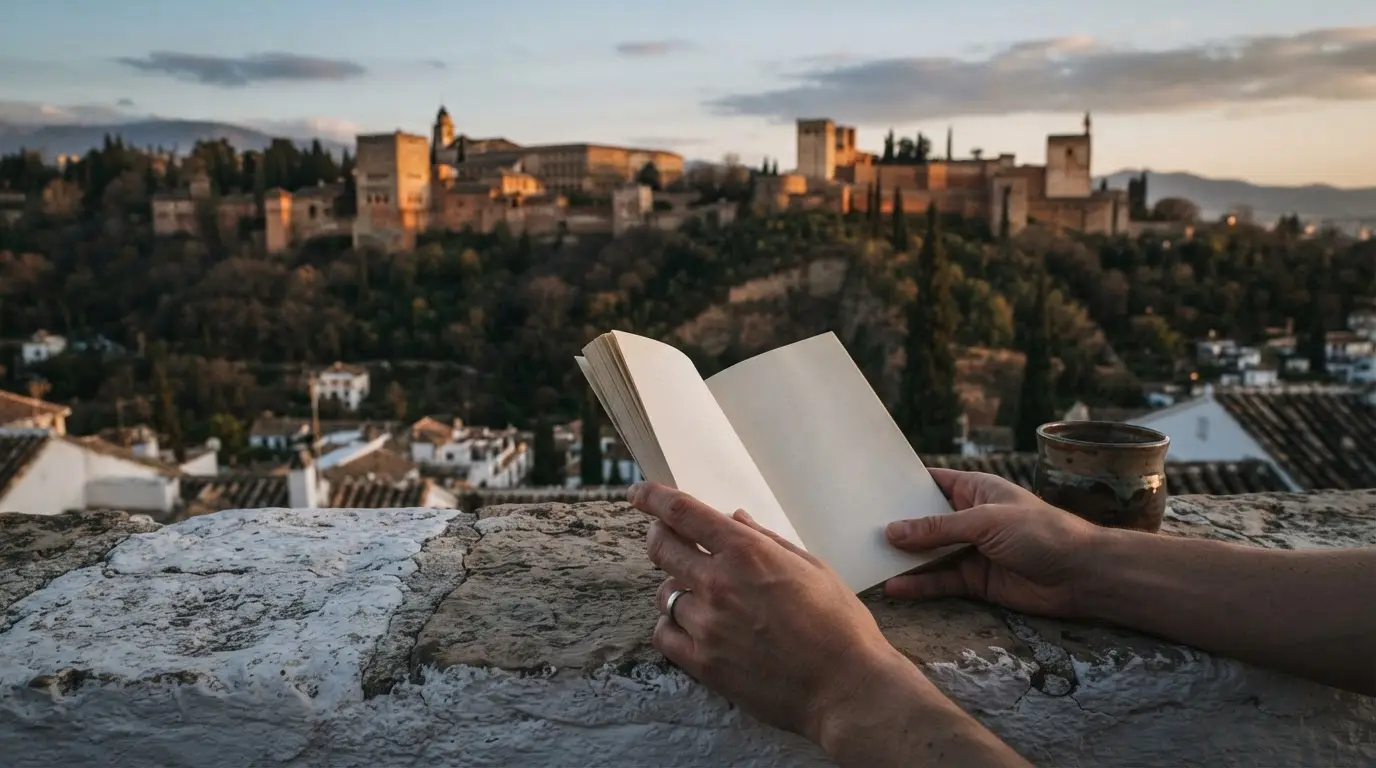
Hafsa bint al-Hajj al-Rakuniyya, Granada's last major Andalusi woman poet: her Almohad-era love affair, her lover's execution and her Marrakech teaching years.
Go deeper
In this era
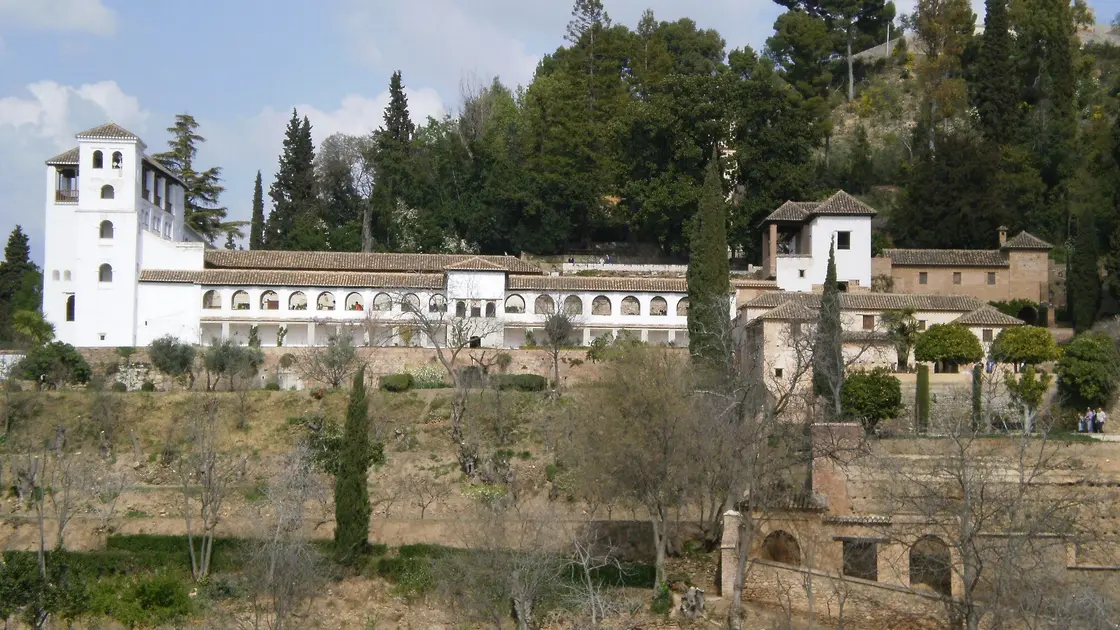
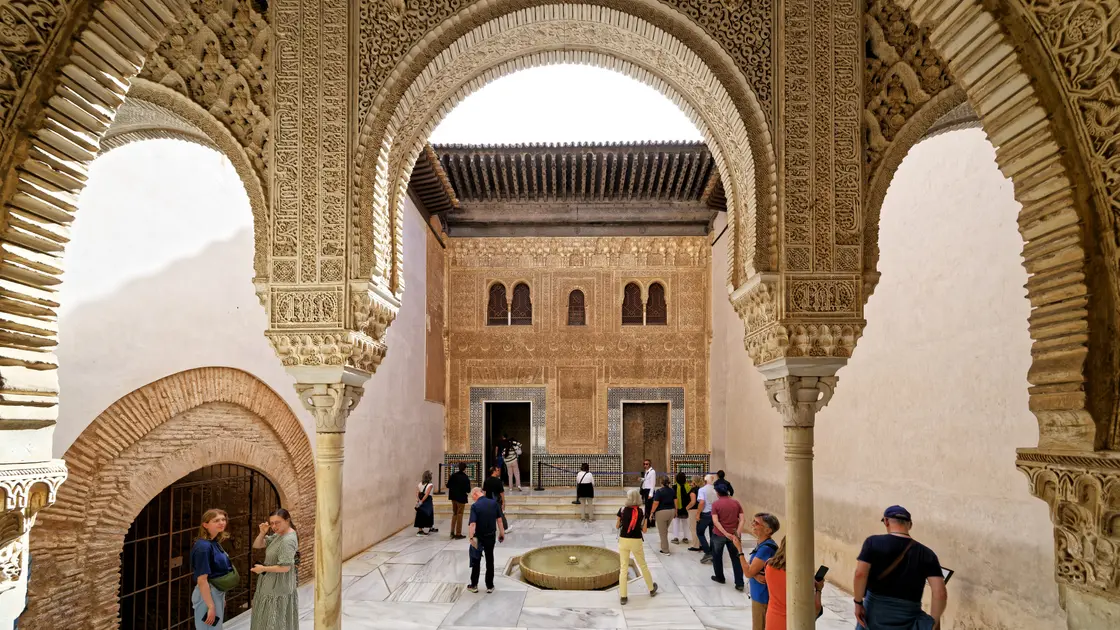
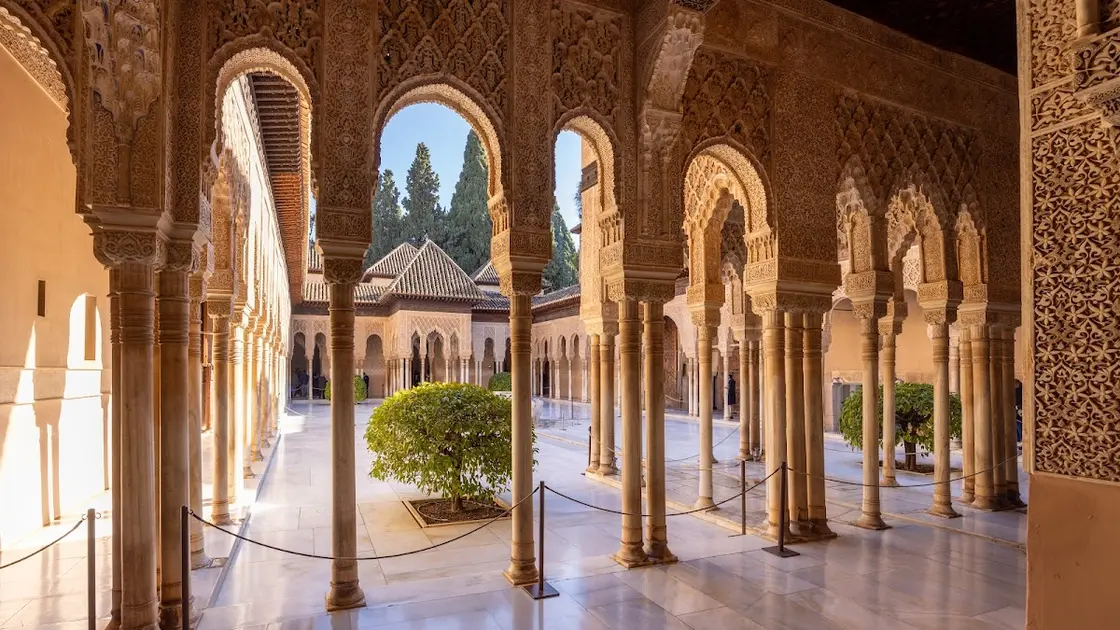
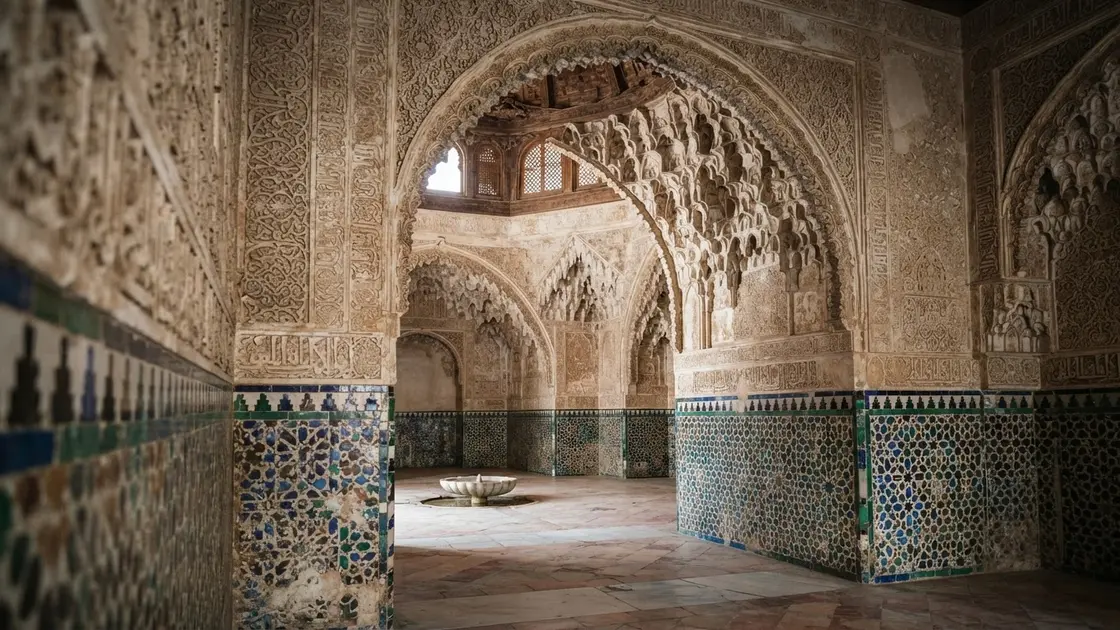
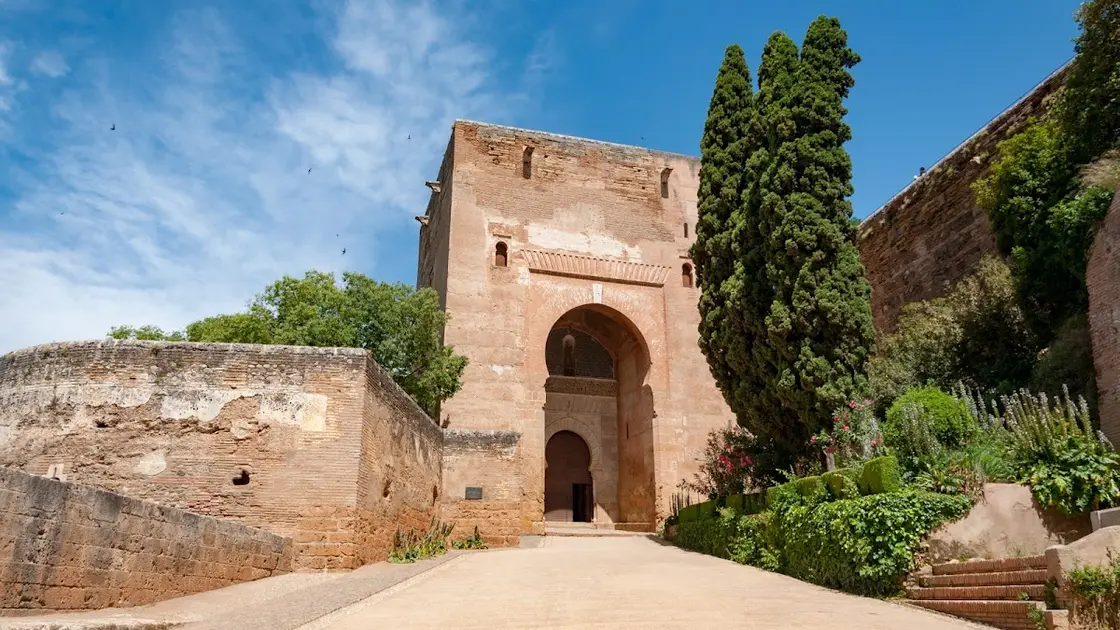
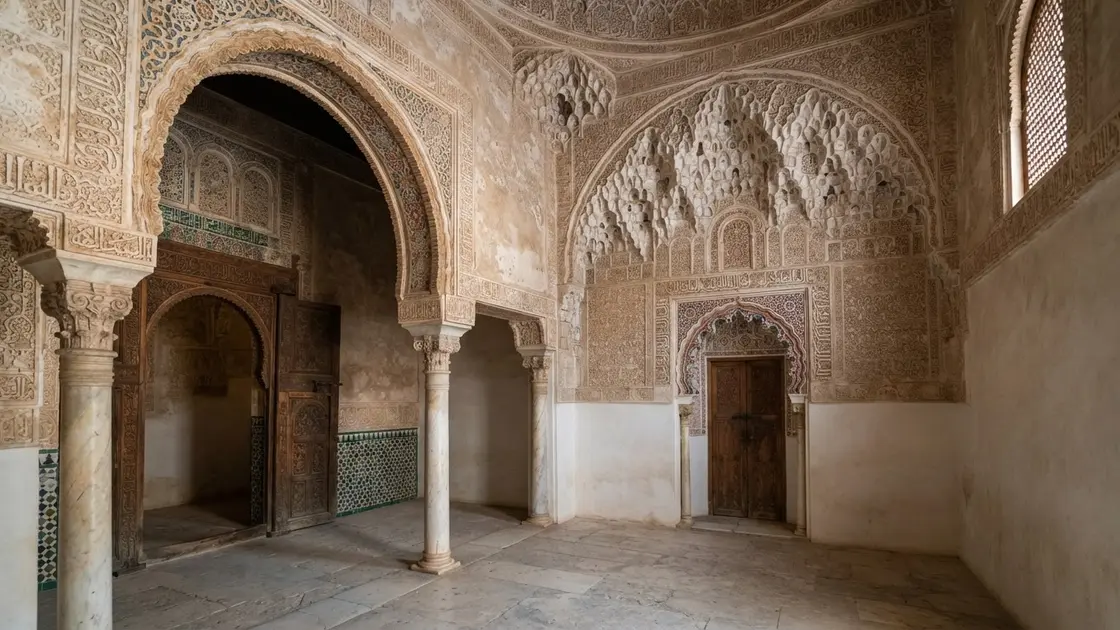
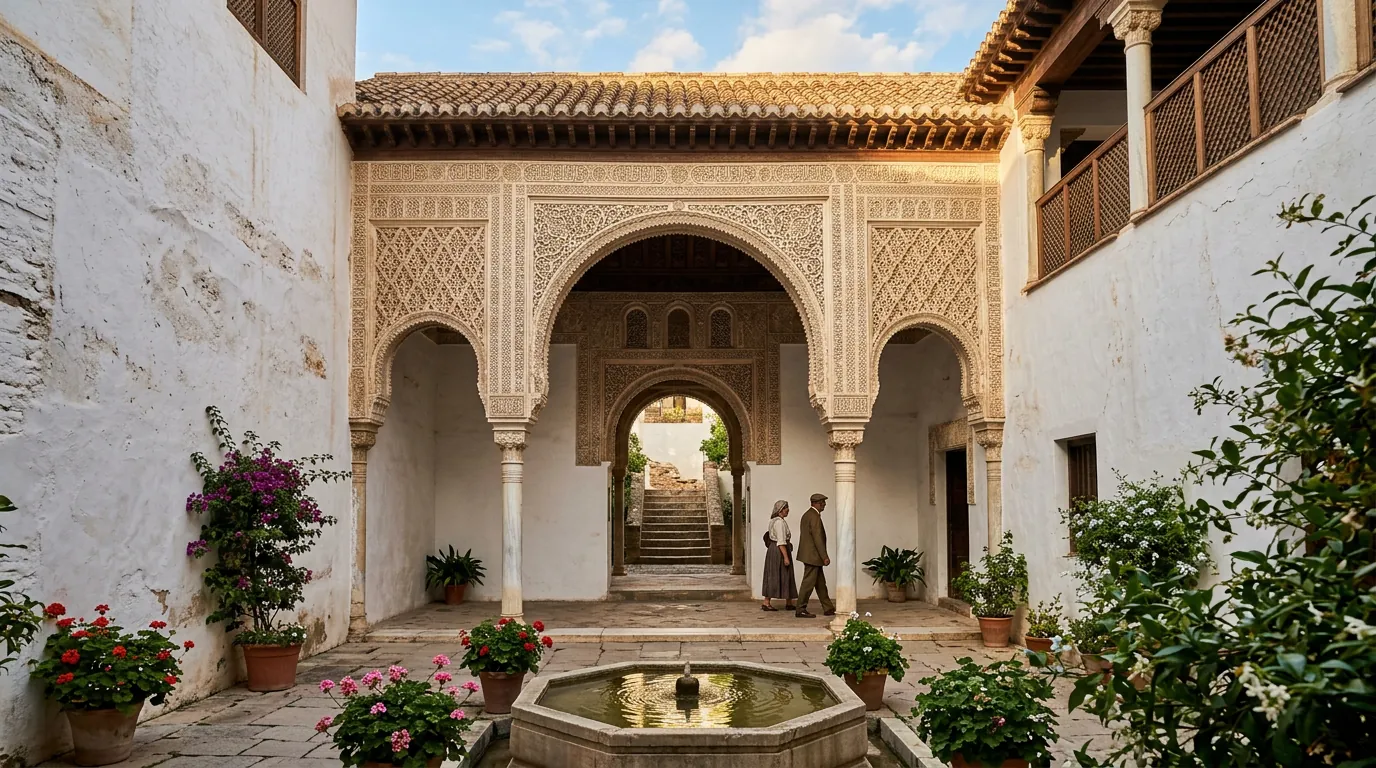
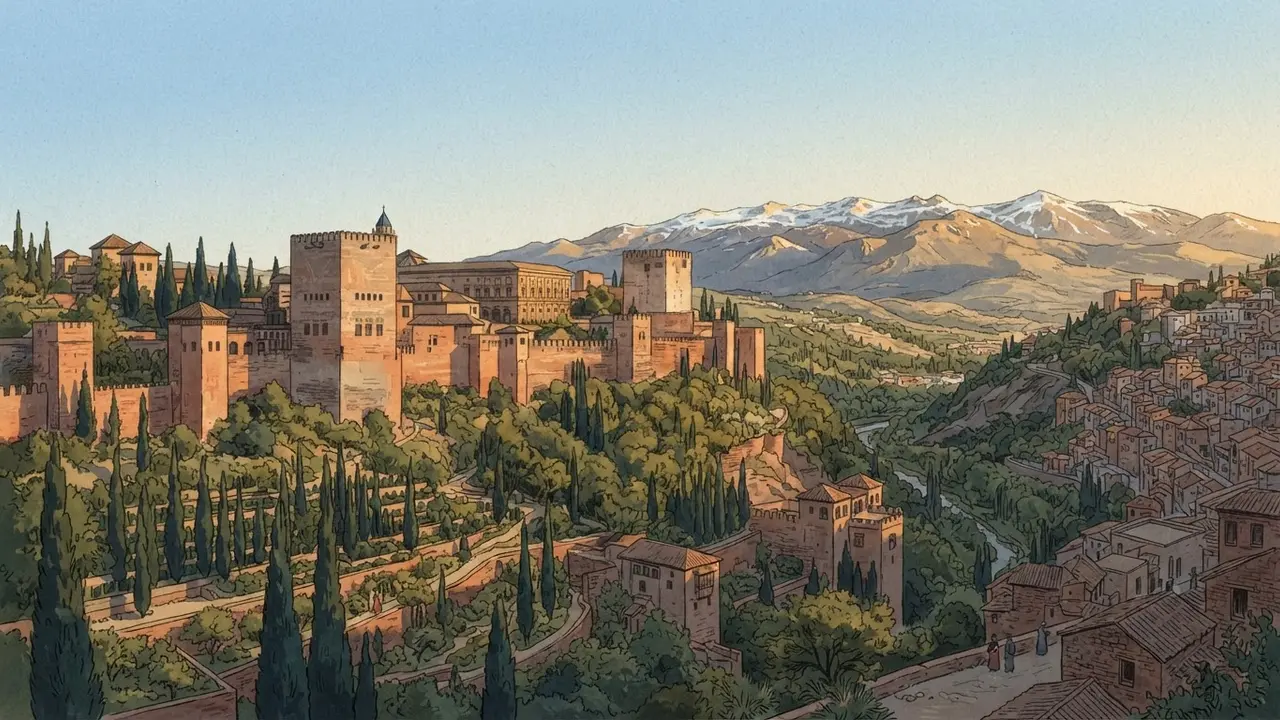
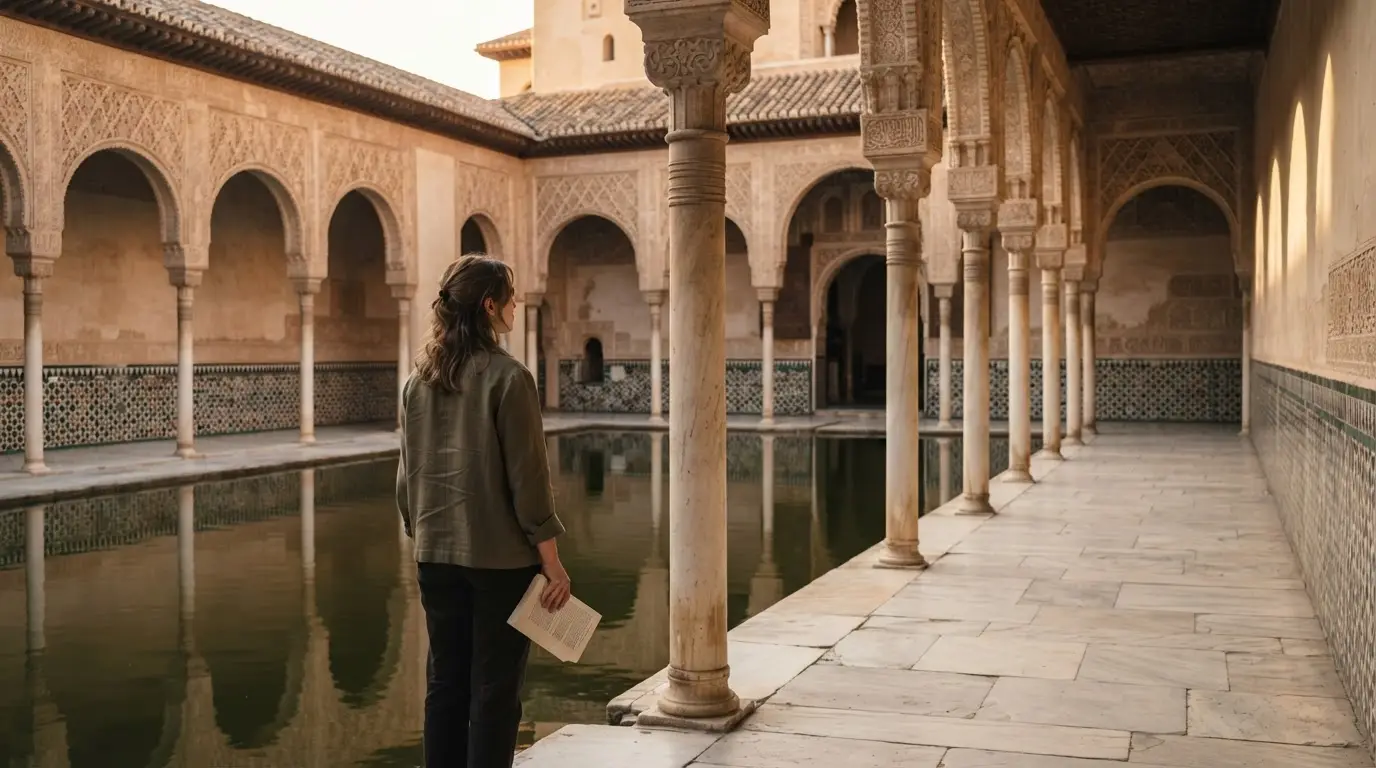
Muhammad I founded the emirate in 1232, became Fernando III's vassal and began the Alcazaba on the Alhambra hill. Yusuf I added the Comares Tower and the Hall of Ambassadors, and Muhammad V finished the Court of the Lions around 1380. In all, 23 sultans ruled for 260 years before the city surrendered in 1492.
Article
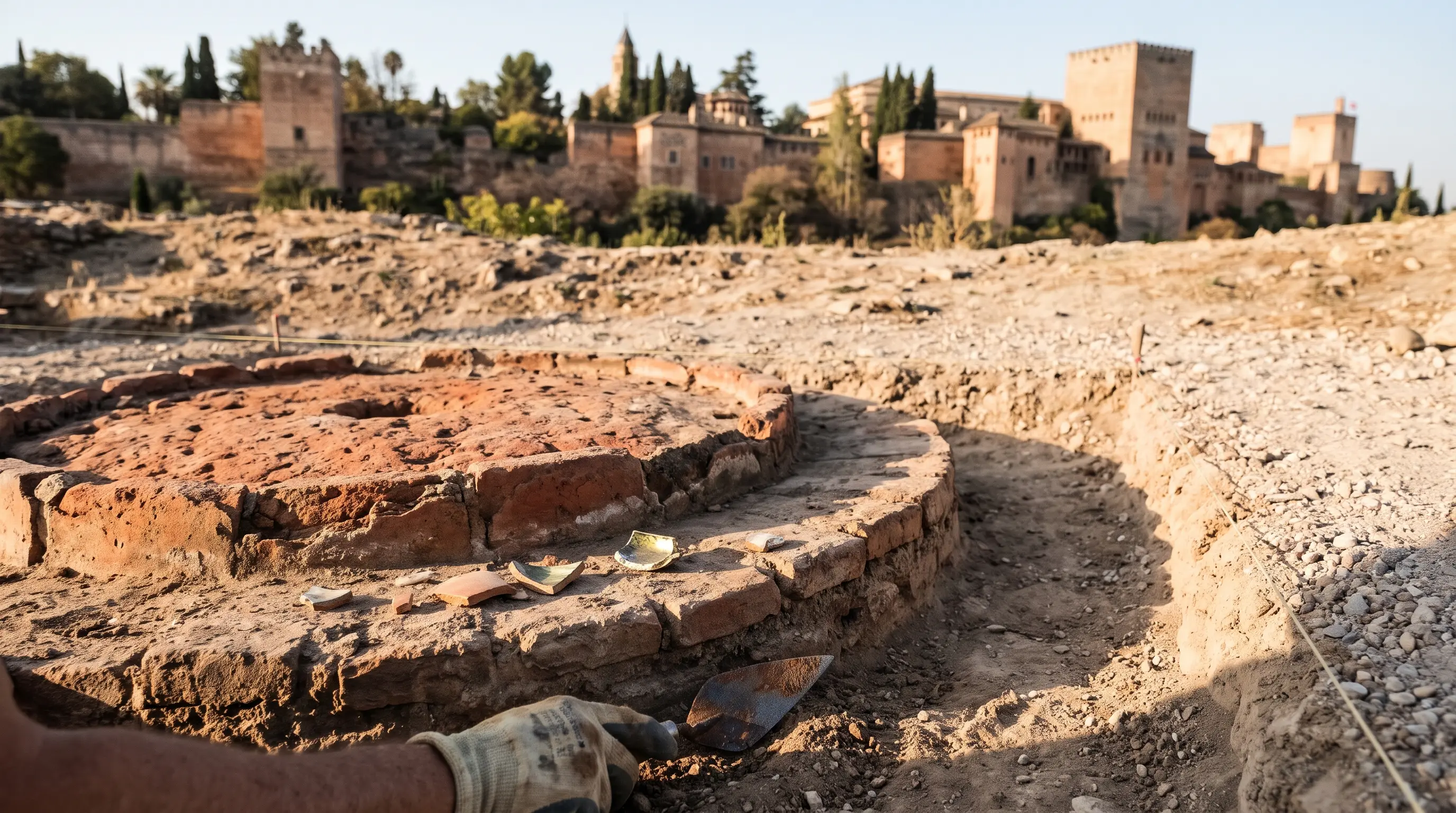
What Alhambra kilns and analysed glazes reveal: how Nasrid glass and glazed ceramics were made, from keyhole kilns and tin-lead glazes to Secano glassworking.
1232–1273 Article
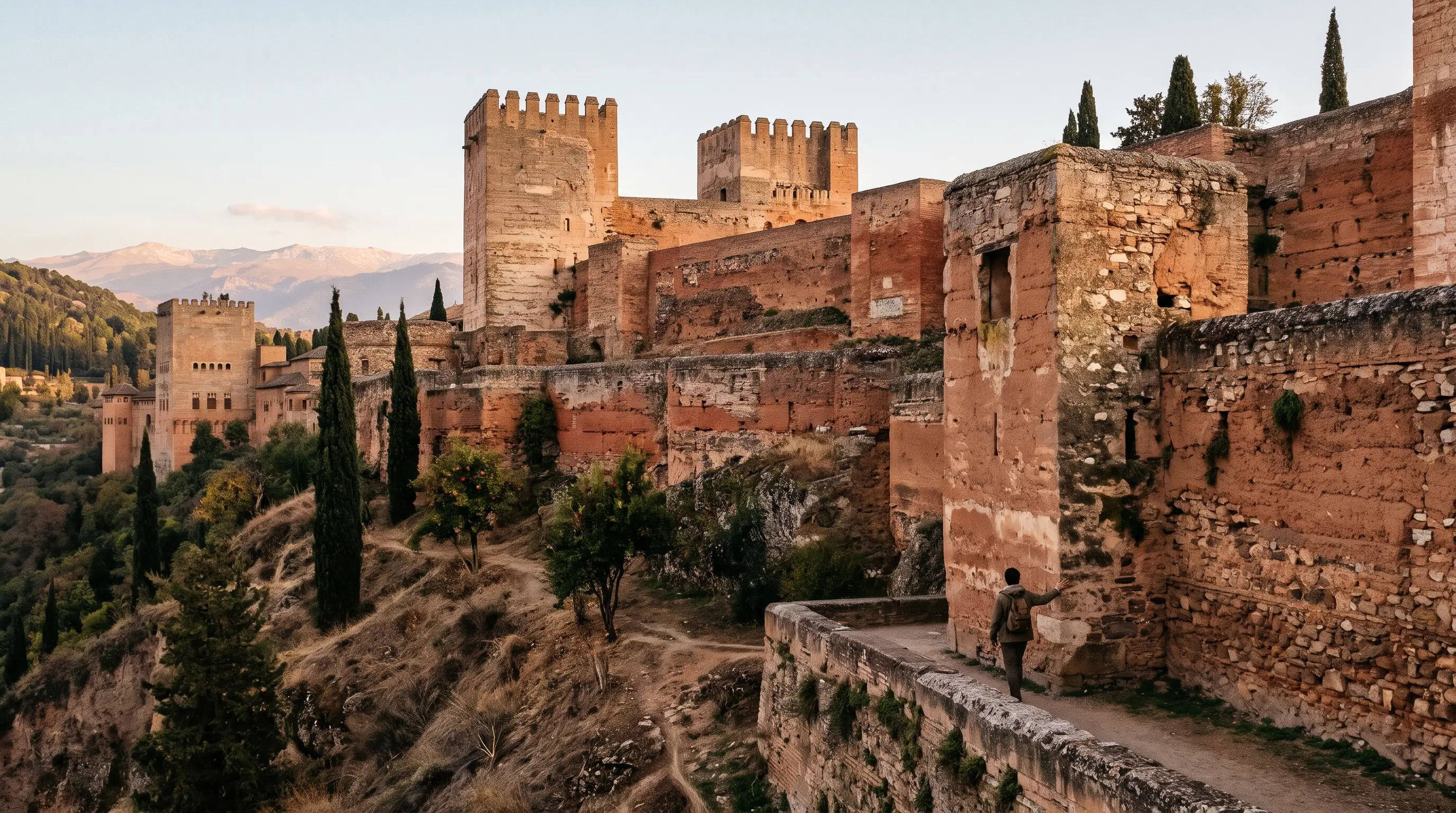
Ibn al-Ahmar rebelled at Arjona in 1232, surrendered Jaén in 1246 and founded Nasrid Granada, the last Muslim state in Iberia. How a vassal bought time.
1490 Article
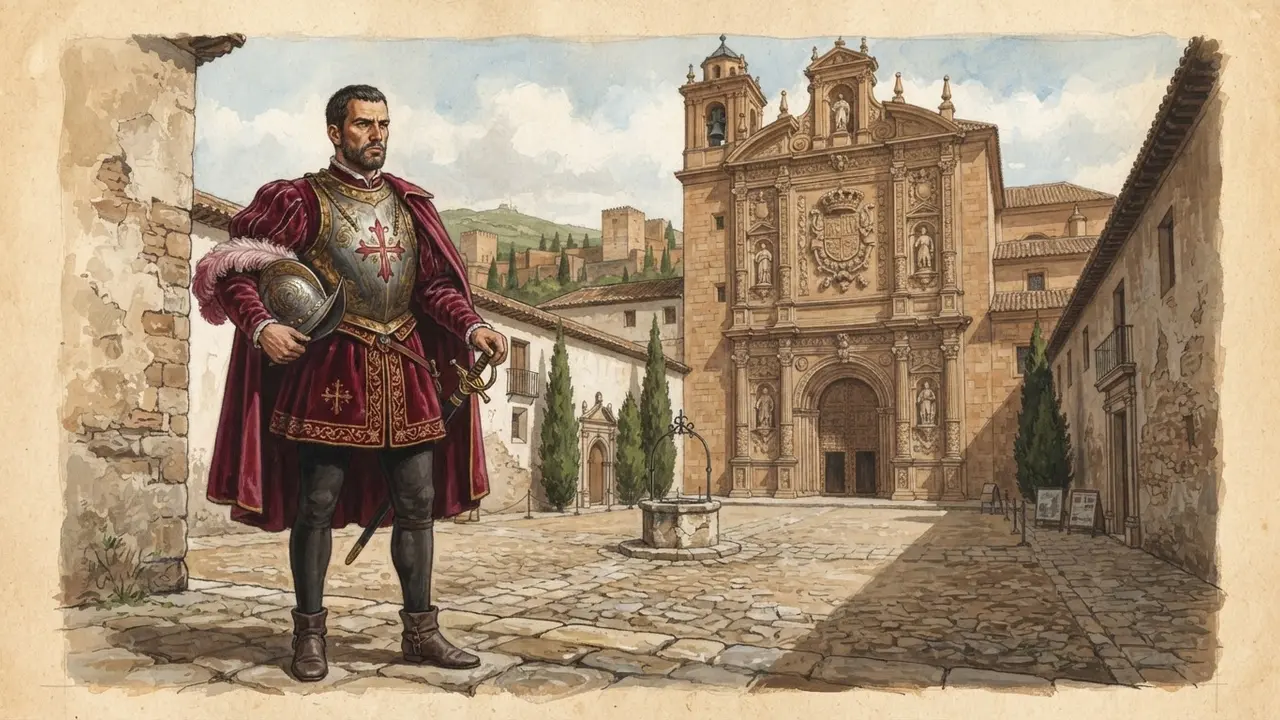
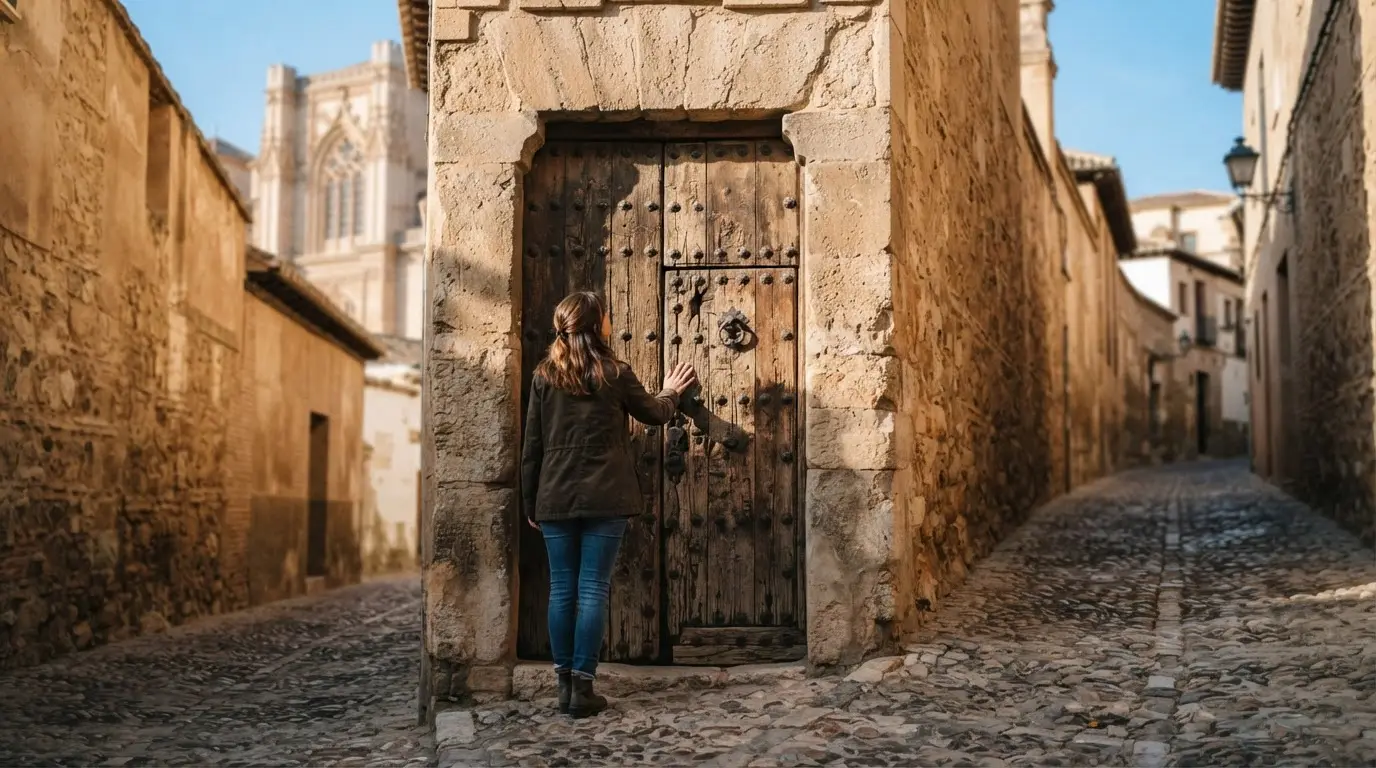
Did Hernán Pérez del Pulgar nail an Ave Maria to Granada's mosque door in 1490? A claim check of the royal grant, the epitaph and what later retellings added.
1482 Article
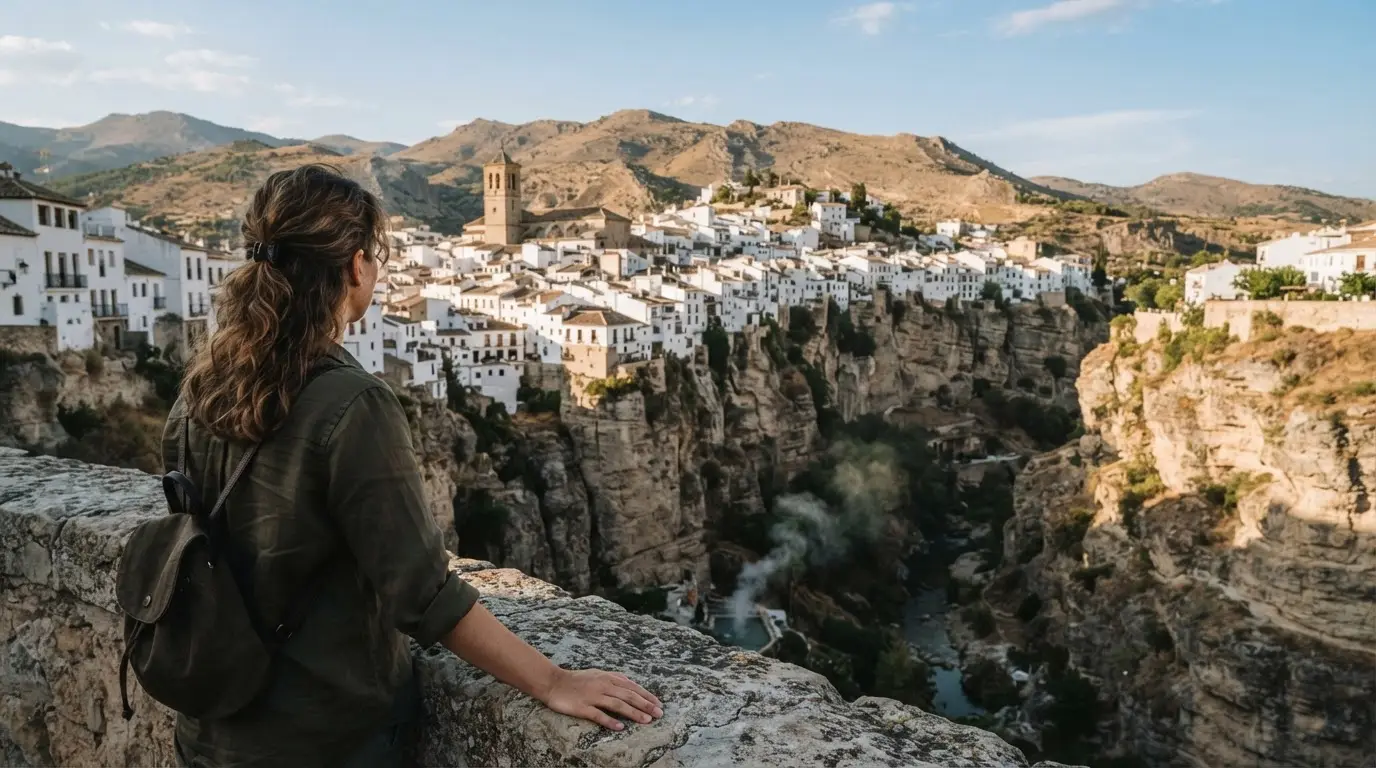
Alhama de Granada was named for its 47 °C springs, fell to Castile in late February 1482 and lives on in the ballad Ay de mi Alhama. History and what survives.
1350–1365 Article
Ibn Battuta reached Granada in 1350 and never met the sultan; Ibn Khaldun came in the early 1360s and fell out with Ibn al-Khatib. What each saw at court.
Go deeper
In this era
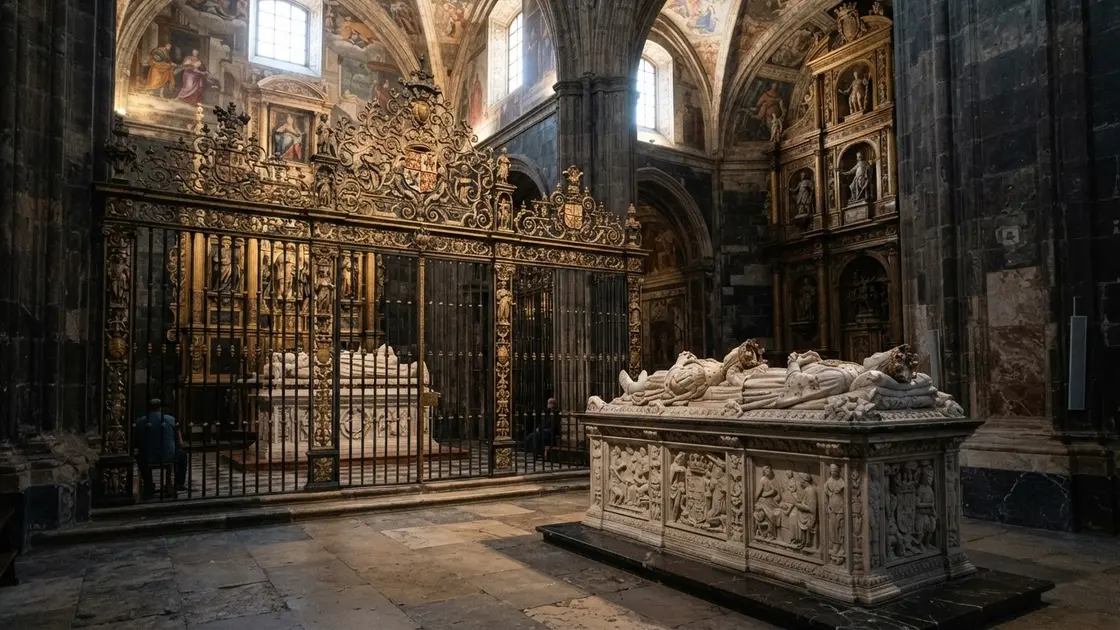
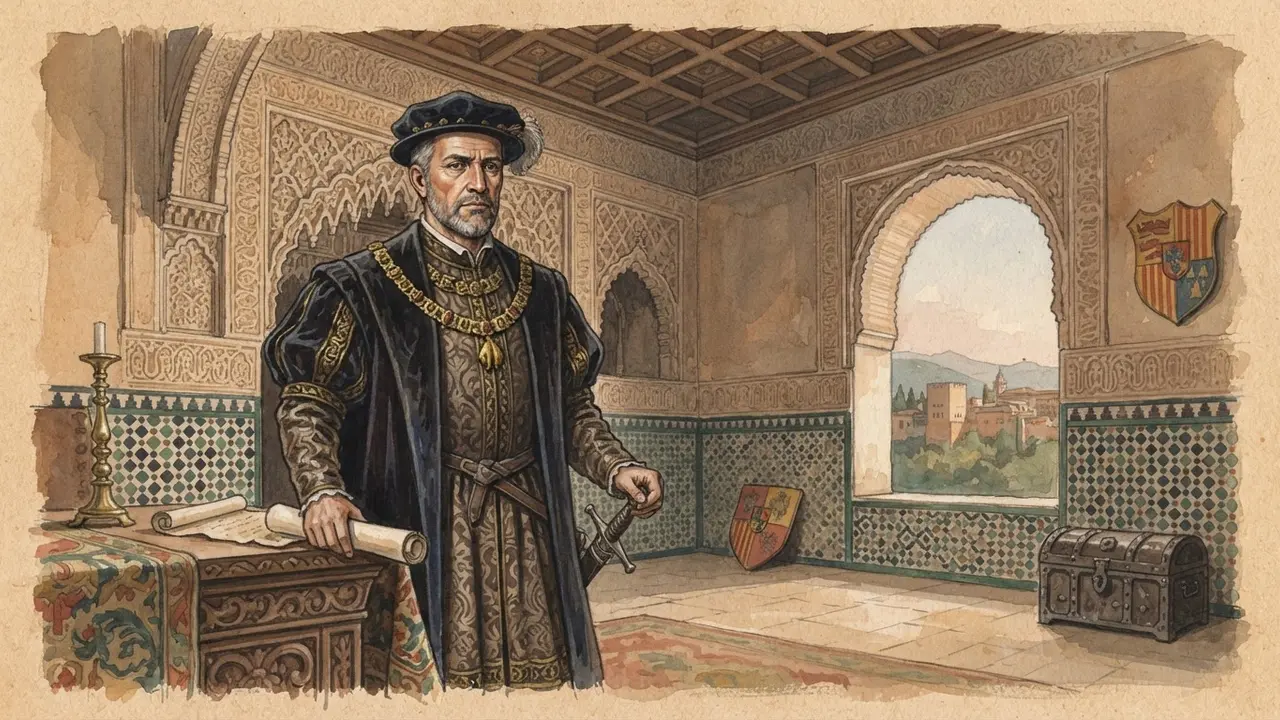
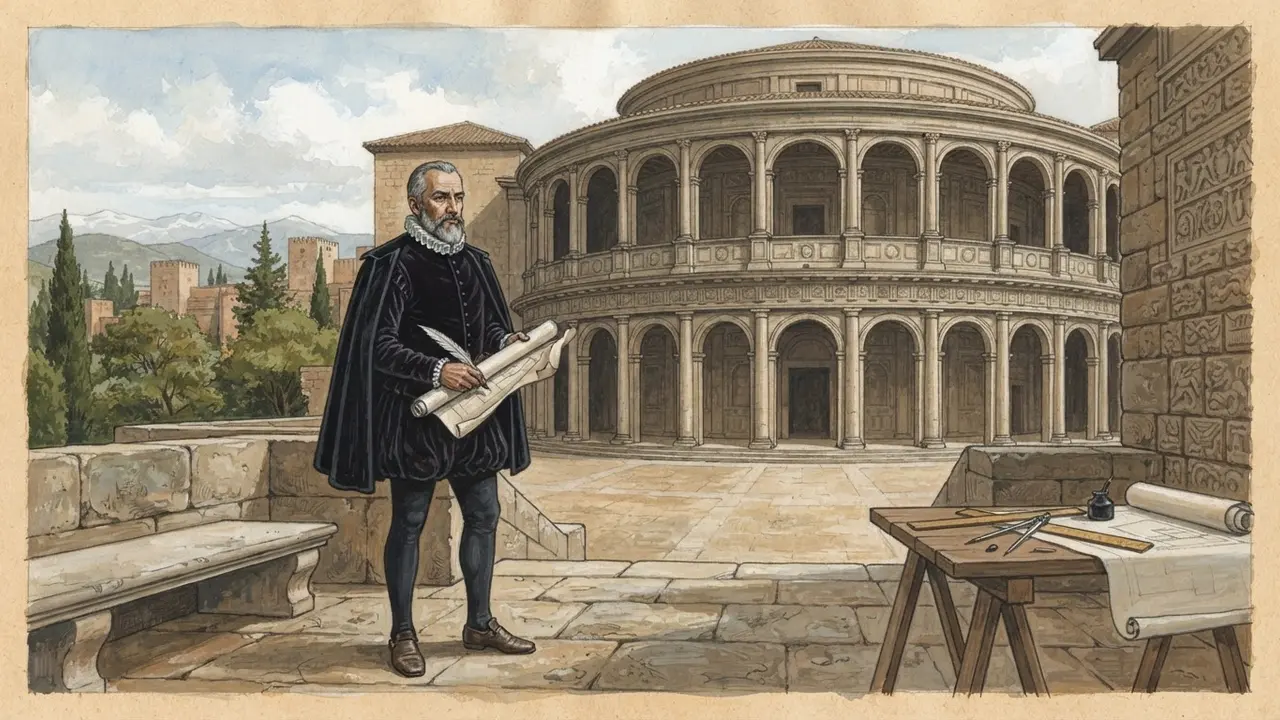
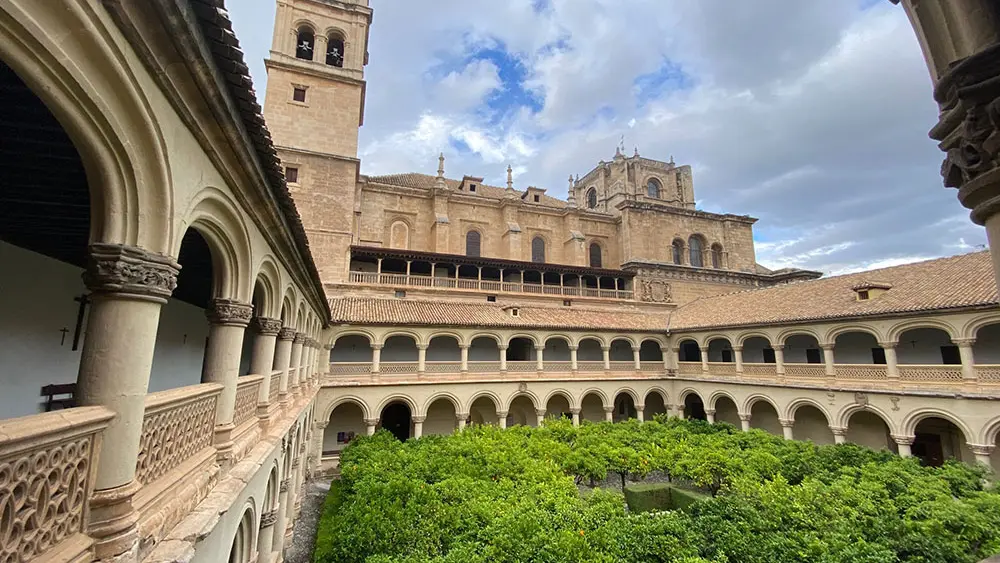
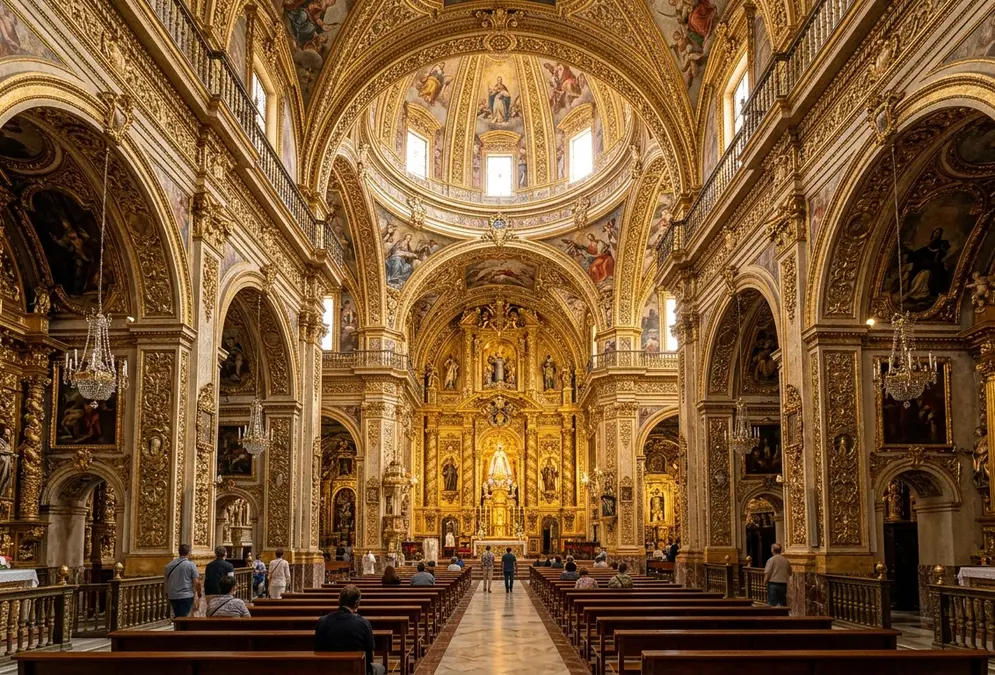
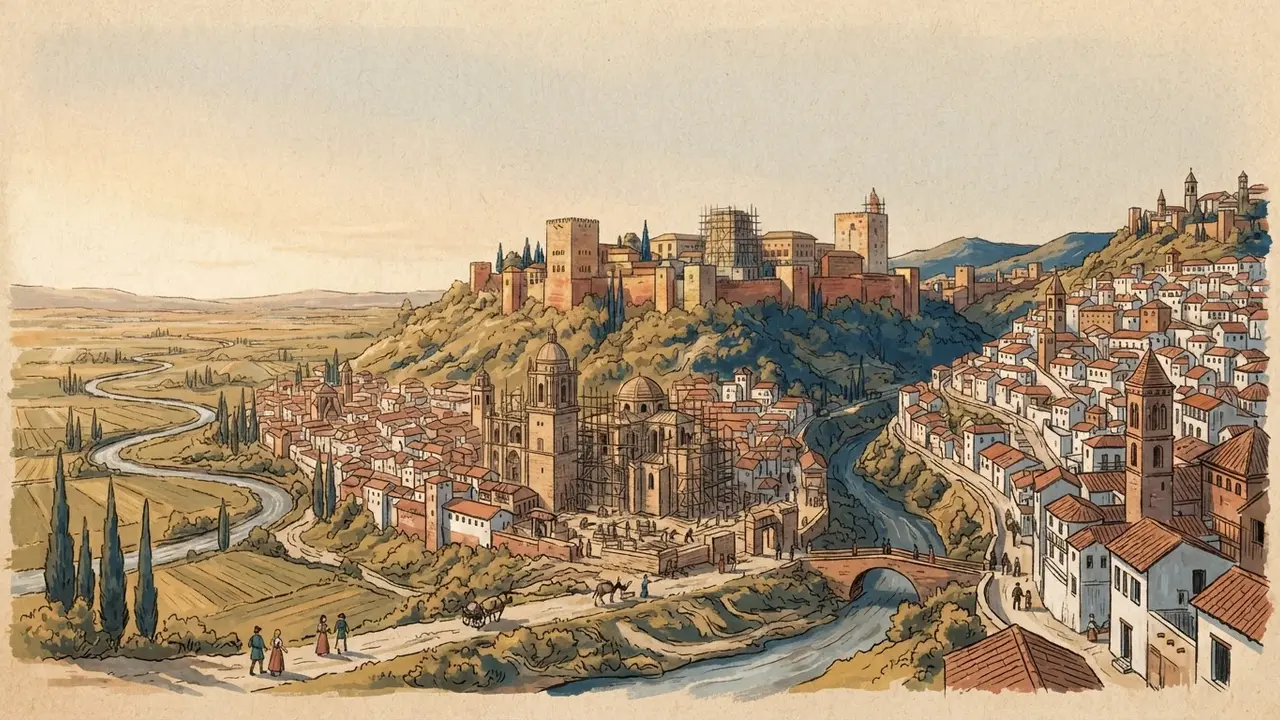
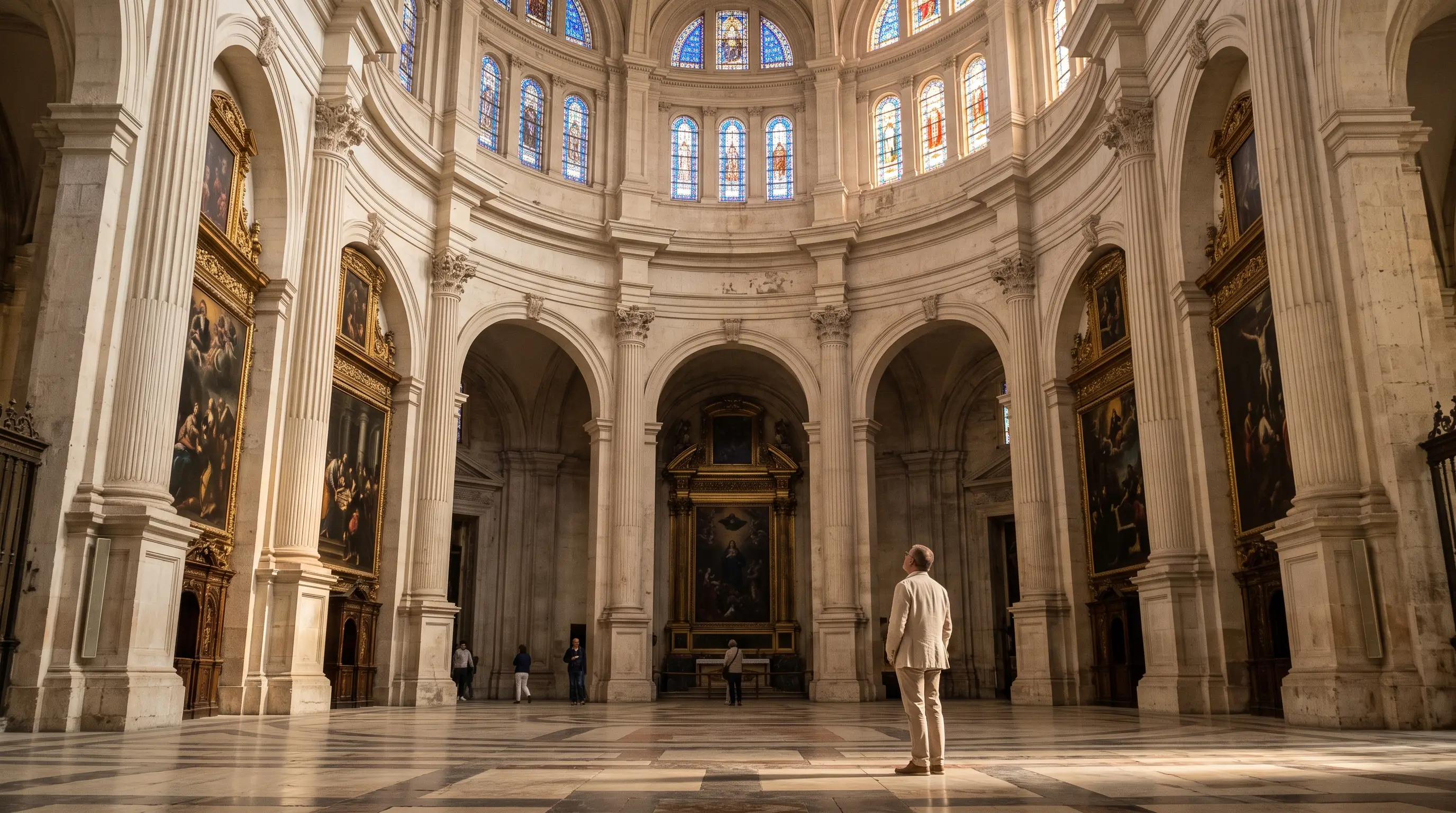
Boabdil handed Granada to Ferdinand and Isabella on 2 January 1492, after a siege whose camp became the town of Santa Fe. Enrique Egas drew a Gothic plan for the cathedral in 1518 and building began in 1523. Diego de Siloé, master builder from 1529, changed it into Spain's first fully Renaissance cathedral, with a circular capilla mayor.
1504–1588 Article
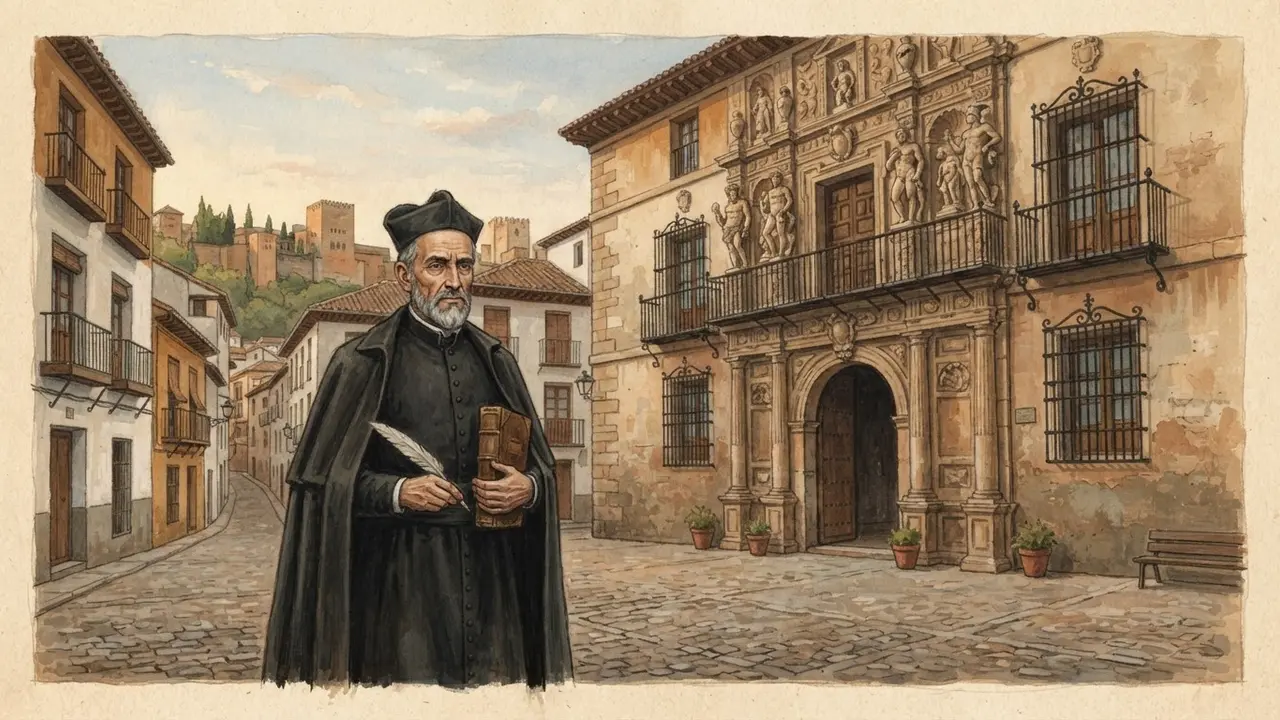
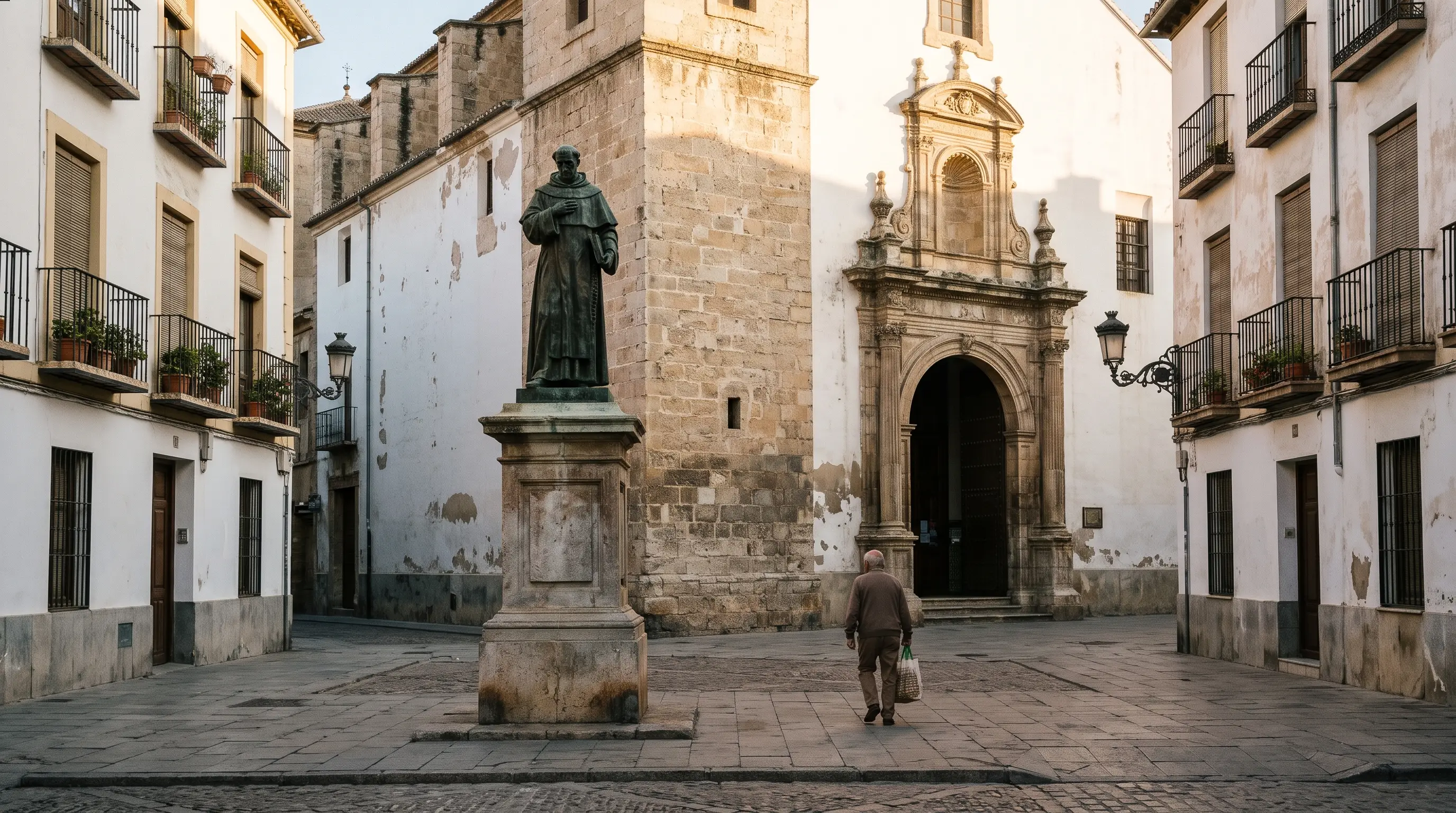
Fray Luis de Granada, the Dominican friar from Granada, Spain, wrote devotional books read across Europe. His life, his Index trouble, and the Realejo traces.
1504 Article
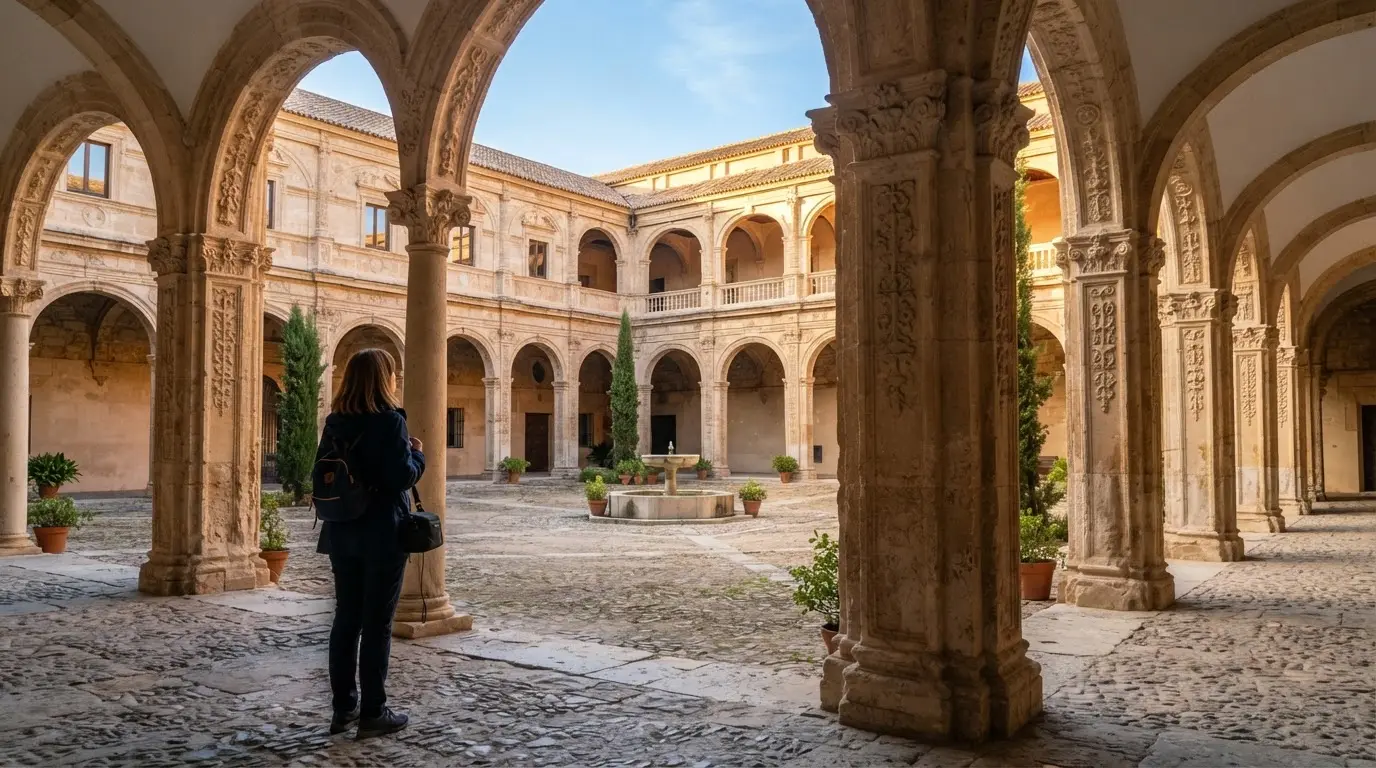
Founded by the Catholic Monarchs in 1504, Granada's Hospital Real stayed unfinished after a 1549 fire, then became the university rectorate. Entry is free.
1517–1594 Article
Juan Latino was enslaved in a duke's household, then taught Latin in Granada and printed a Lepanto epic in 1573. What the records settle, and what they don't.
1597 Article
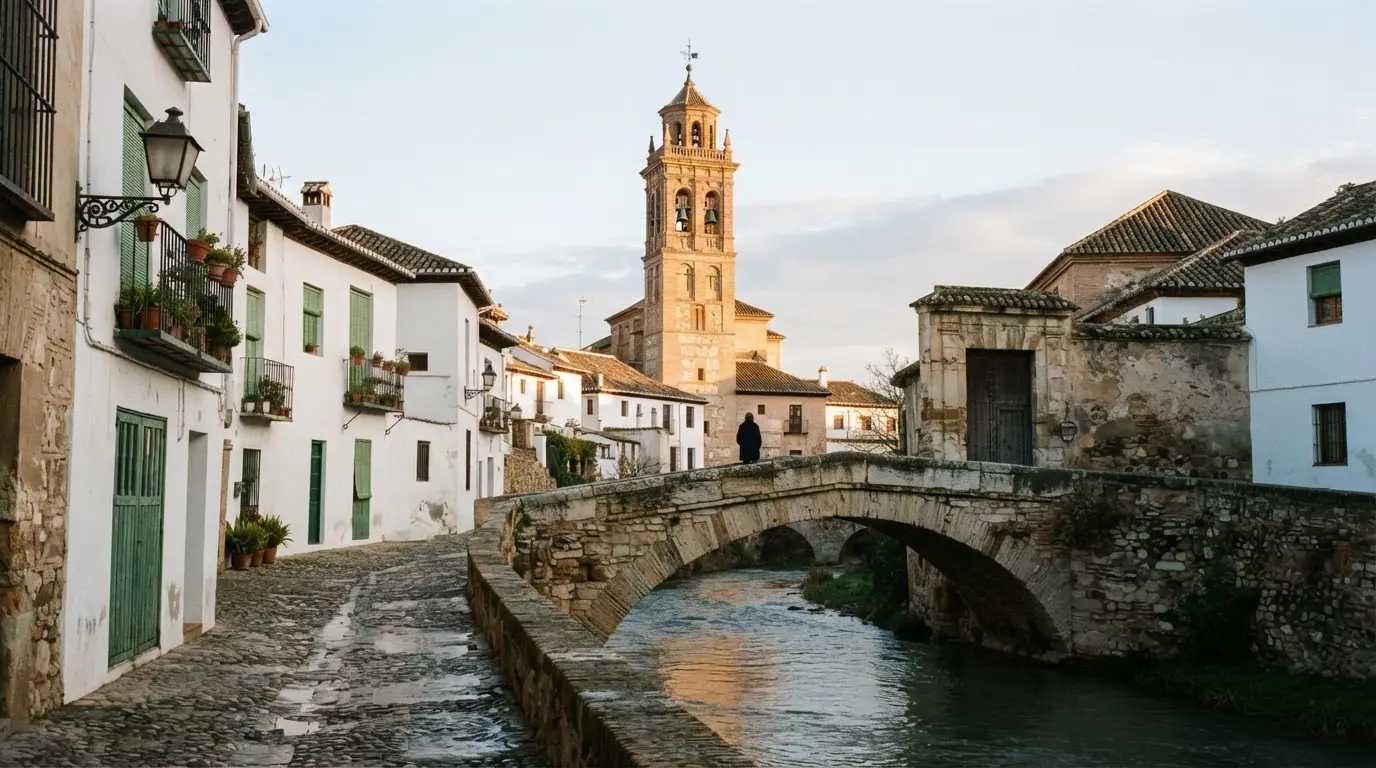
Francisco Suárez, Jesuit philosopher born in Granada in 1548: his Disputationes Metaphysicae, plus the birthplace plaque, monument and archive Granada keeps.
1499 Article
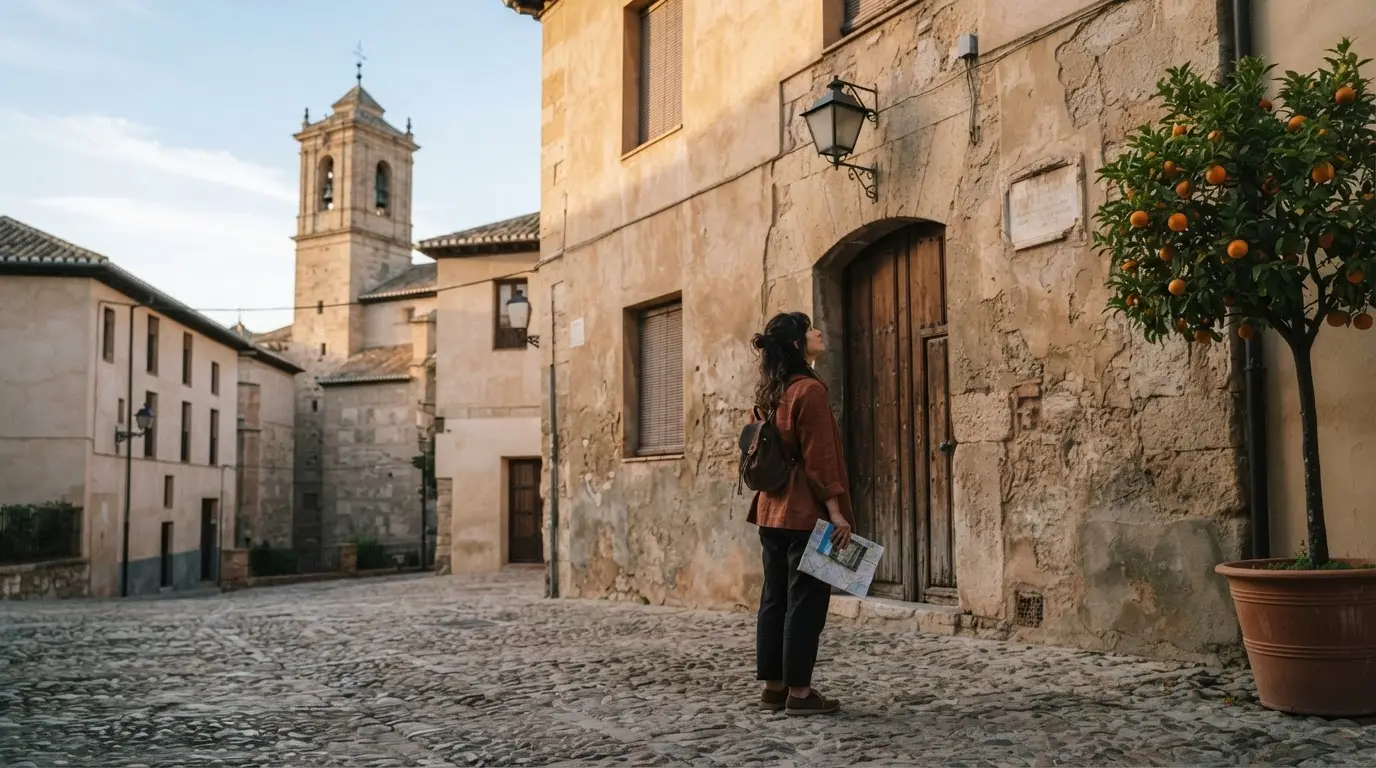
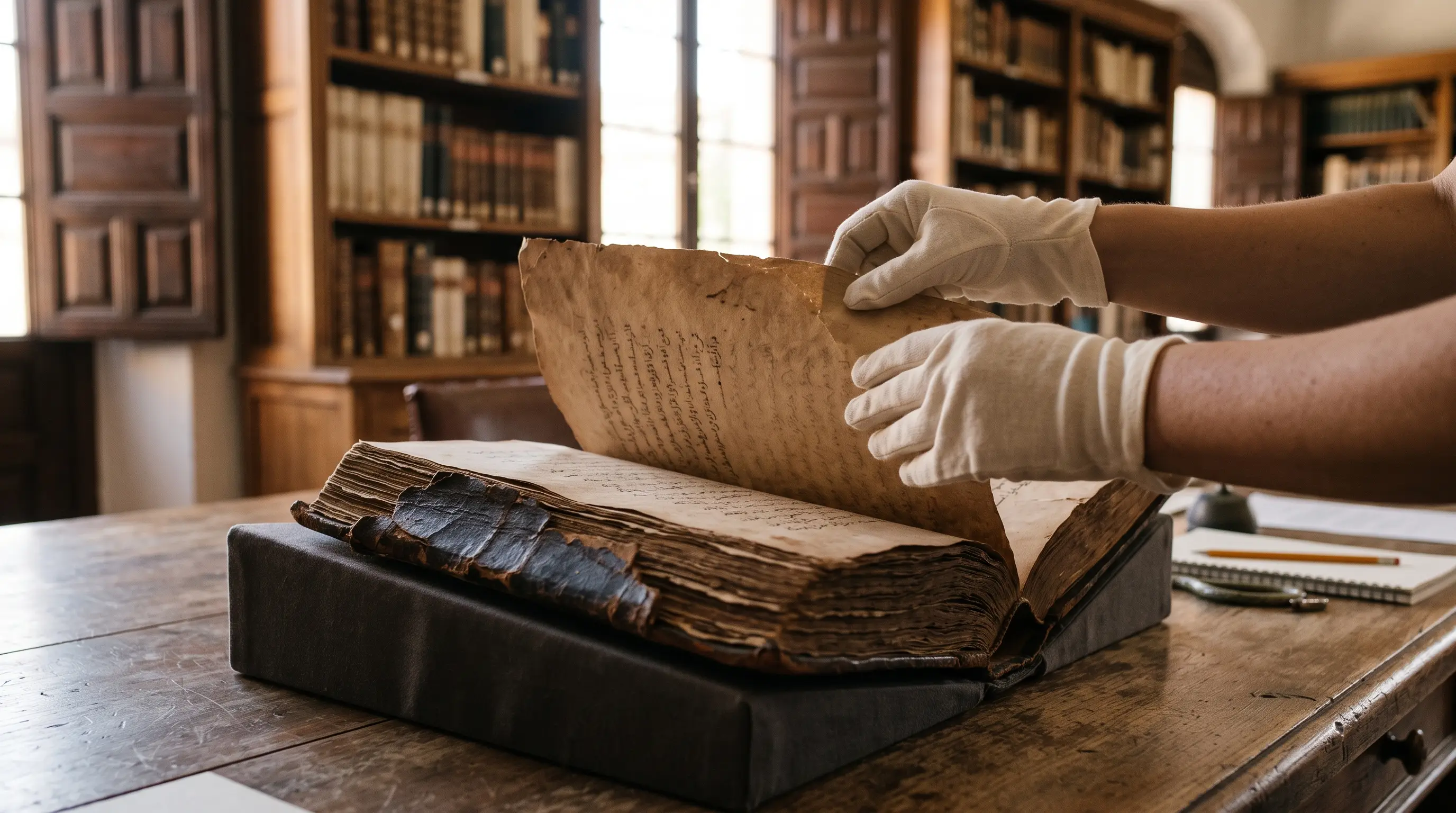
Cisneros burned Arabic books in Granada in 1499, but the numbers, the square and Heine's famous line are shakier. A claim check of what the record supports.
Go deeper
In this era
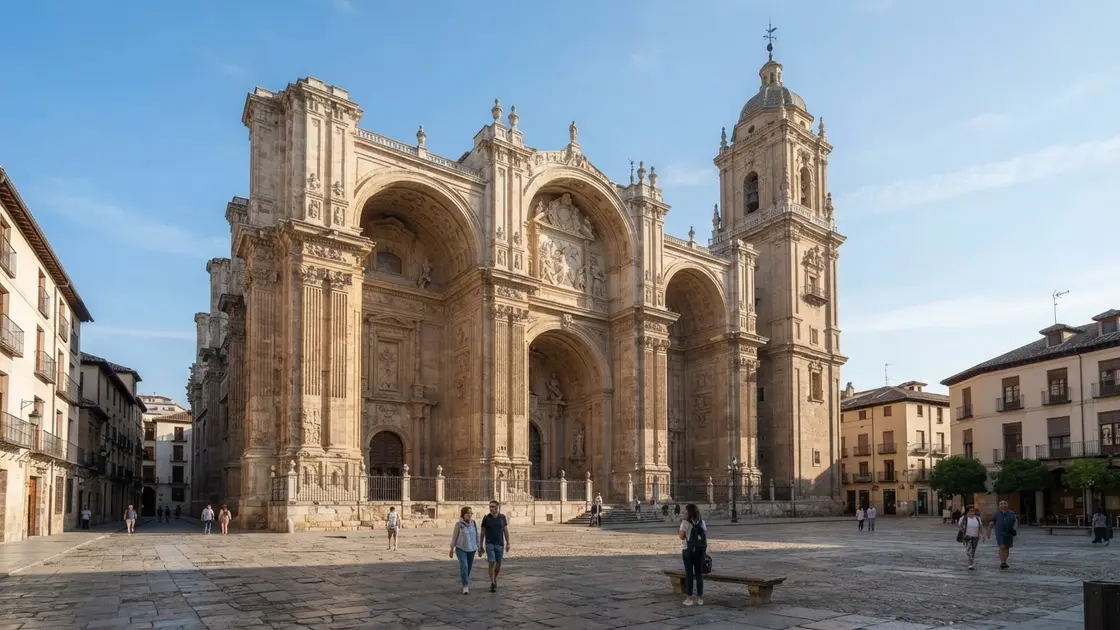
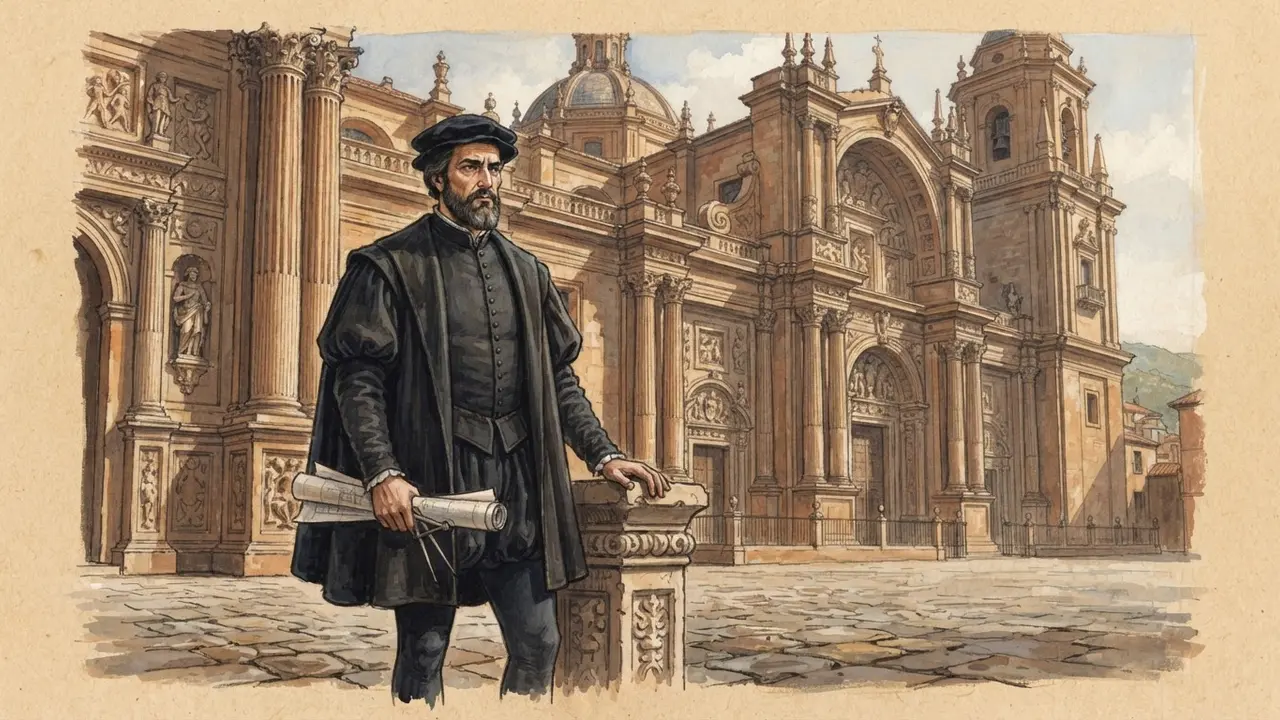
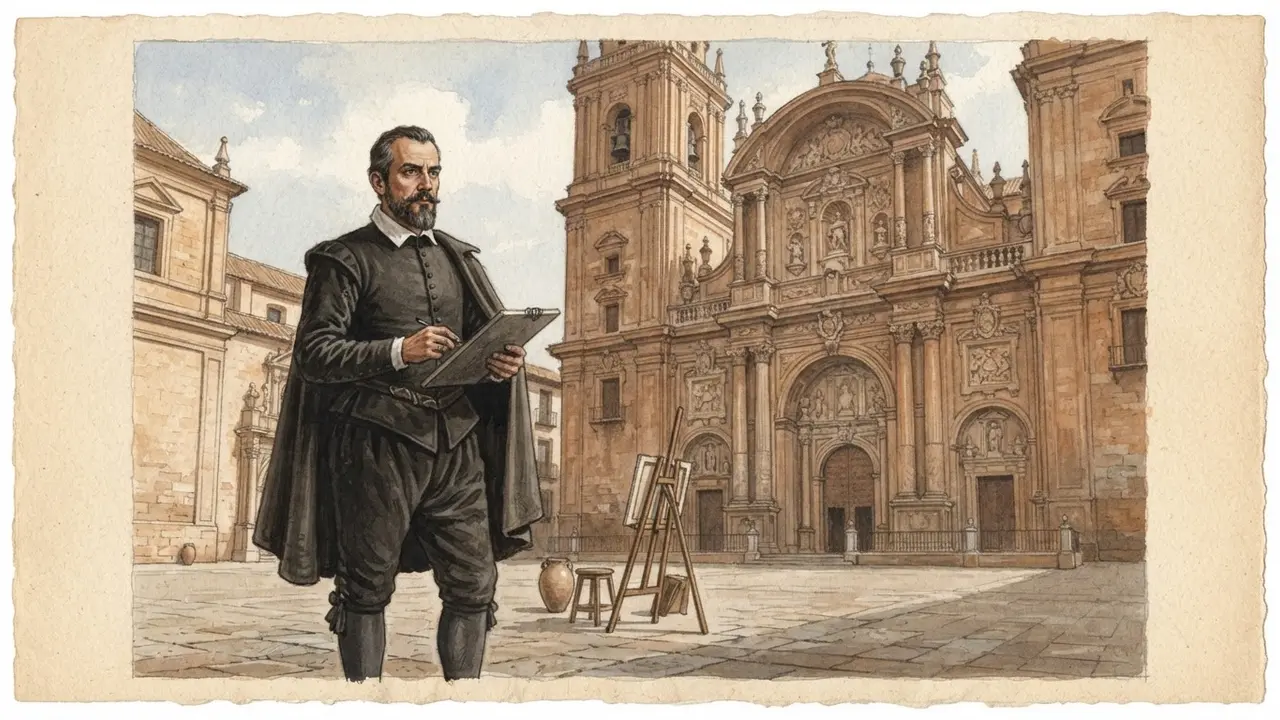
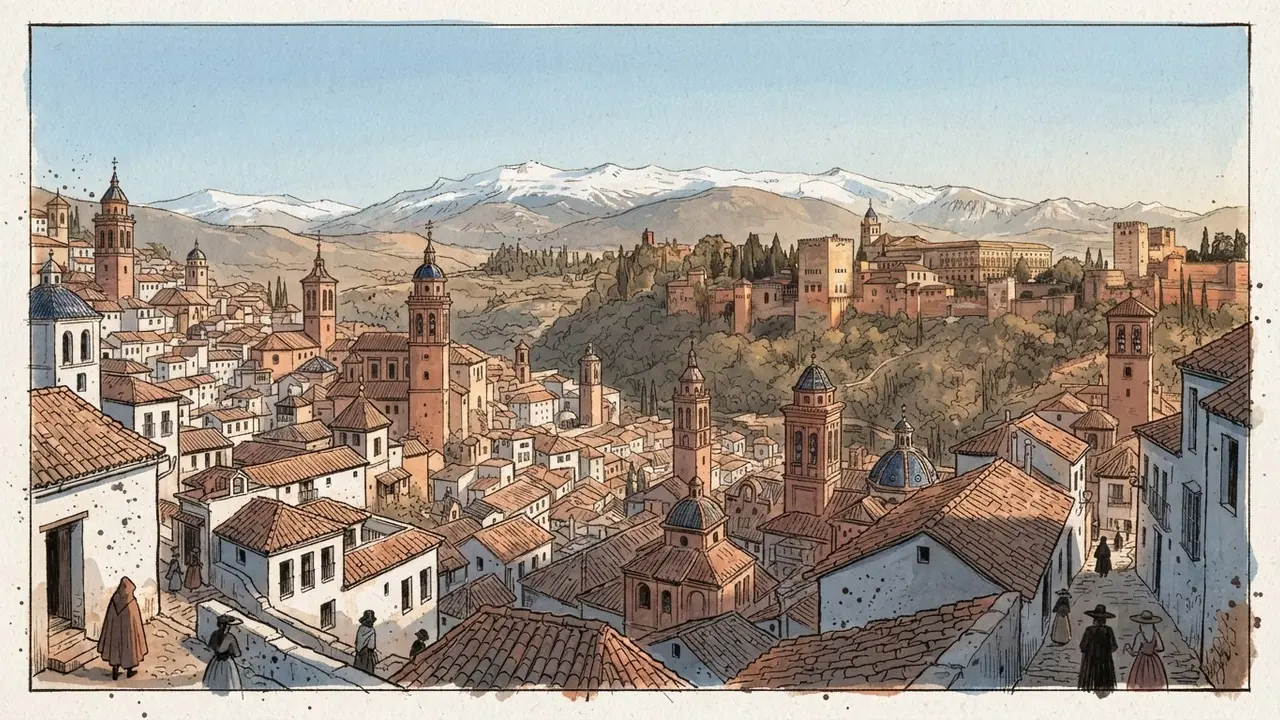
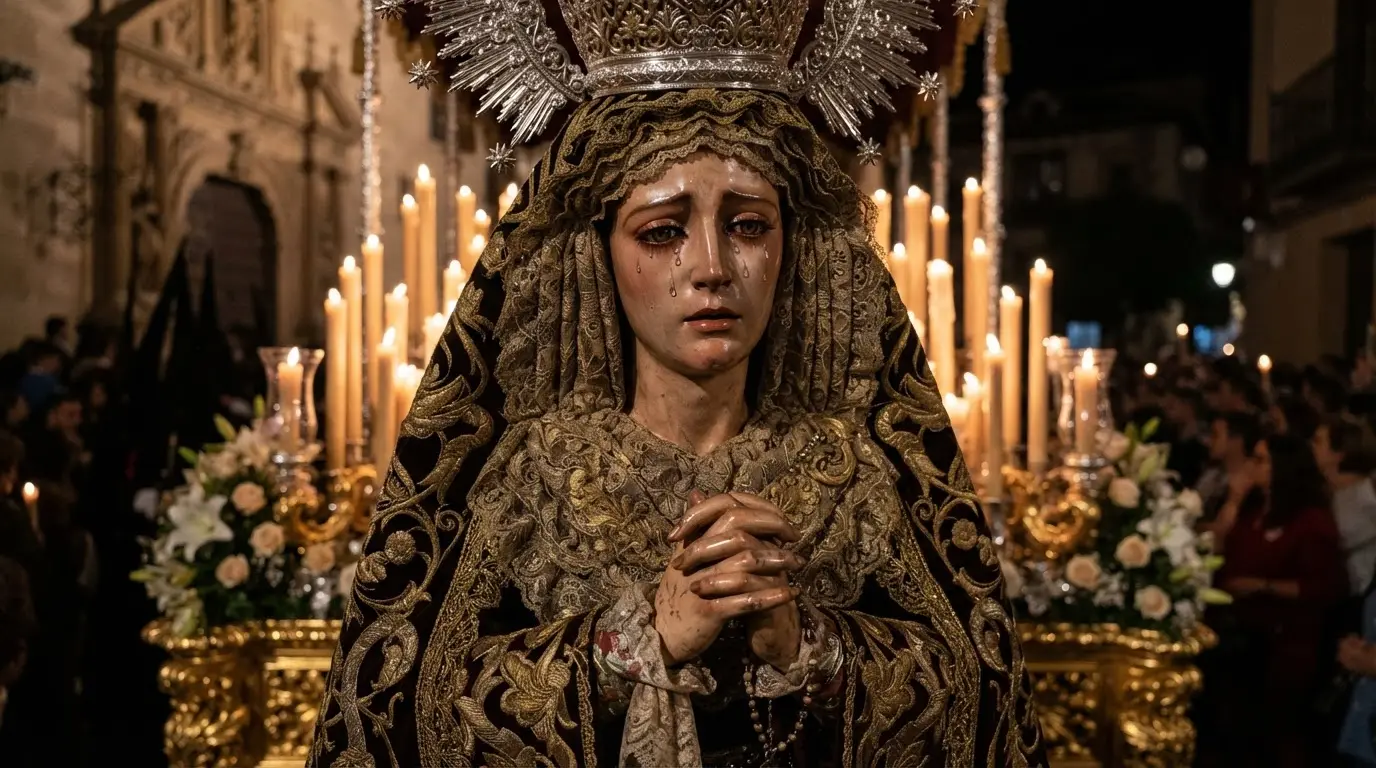
Alonso Cano, painter, sculptor and architect, died in Granada in 1667 and designed the front of Granada Cathedral, which was finished in 1704. The Granadan school of sculpture matured in the 17th century under Pablo de Rojas, Cano and their pupils. Their polychrome saints, with glass eyes and gilded drapery, still leave the churches for Holy Week.
1664 Article
Alonso Cano's Granada: a Seville duel in 1638, a disputed canonry, and the cathedral paintings and facade left behind by Spain's tempestuous Michelangelo.
1655 Article
How Alonso Cano and José de Mora shaped Granada's school of sculpture: glass eyes, gold-leaf drapery, and the saints Granada still carries through Holy Week.
In this era
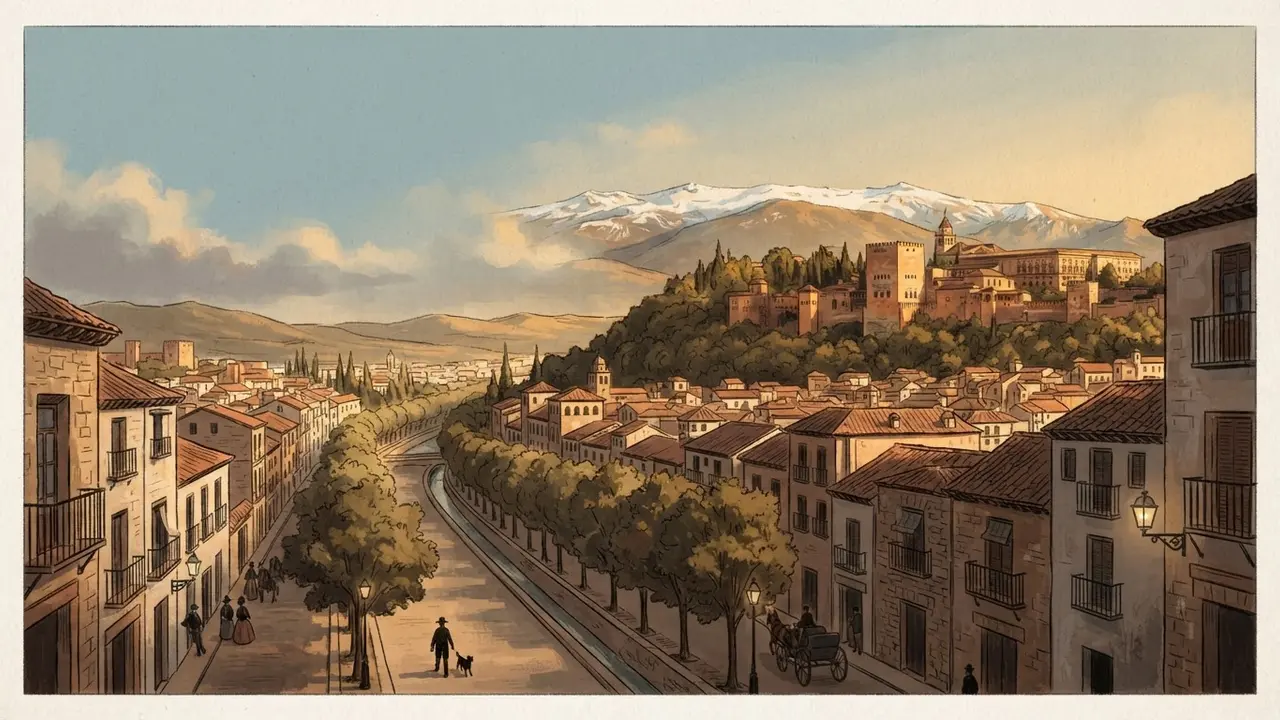
French troops held Granada from 1810 until 17 September 1812 and mined the Alhambra's towers on leaving; eight fell. On Christmas night 1884 a Mw 6.7 earthquake wrecked villages around Alhama de Granada, though not the city itself. On 20 July 1936 a garrison revolt took the centre, and the Albaicín held out under artillery fire until the 23rd.
1830–1845 Article
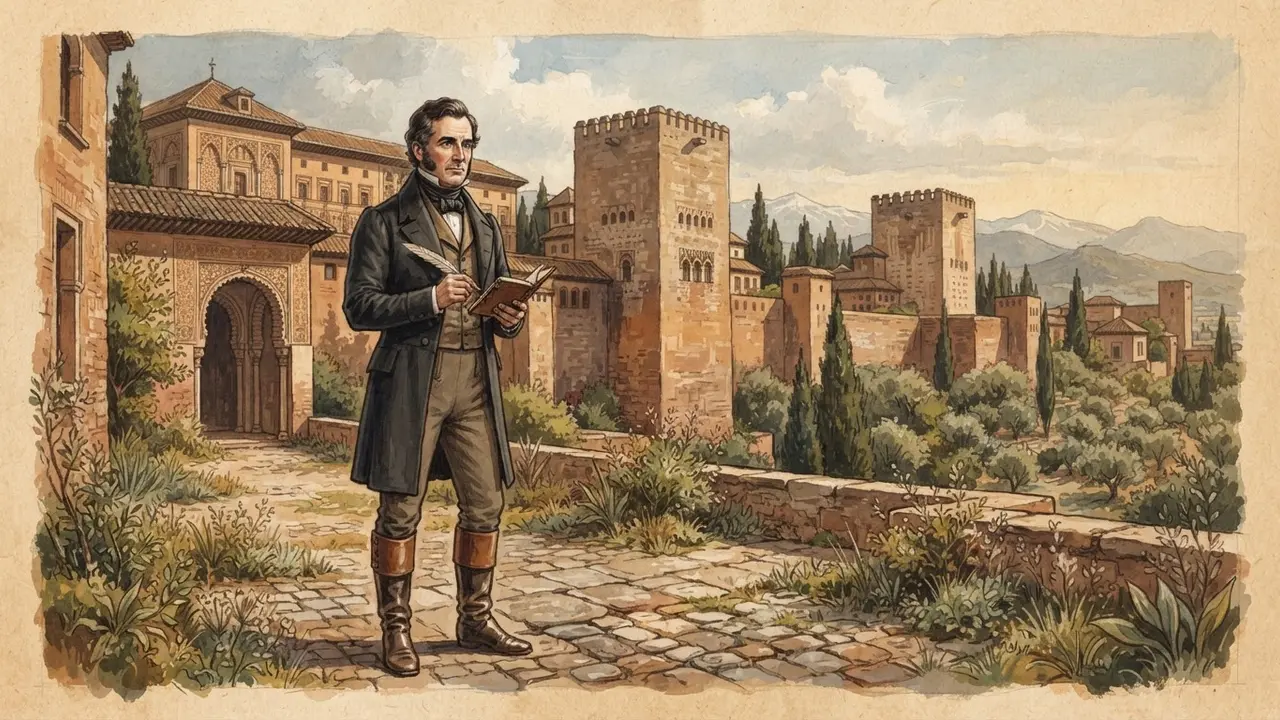
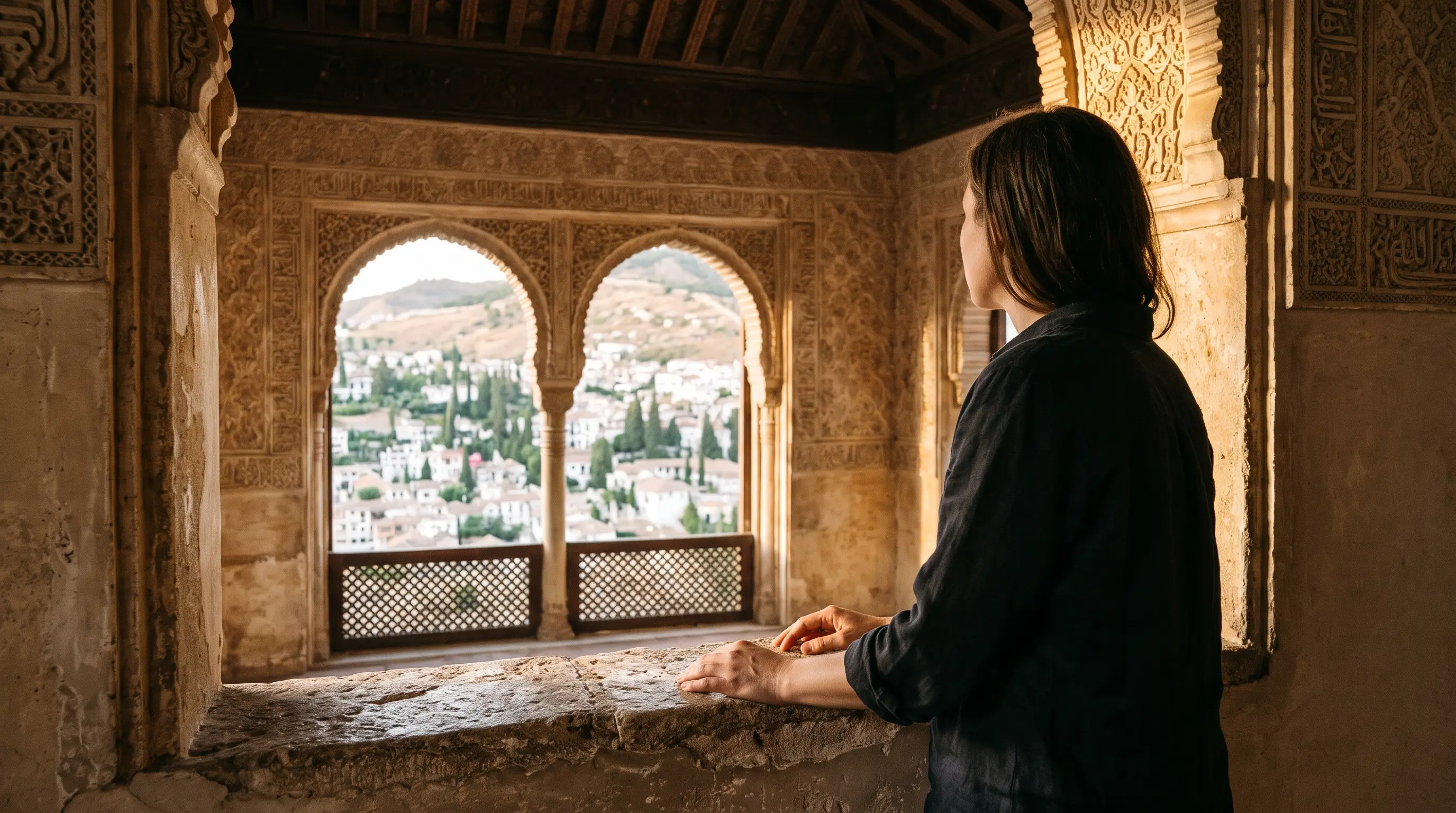
Richard Ford summered in the Alhambra in 1831 and 1833, then wrote the 1845 Handbook for Travellers in Spain. Meet him, Harriet and Gautier in Granada.
1899 Article
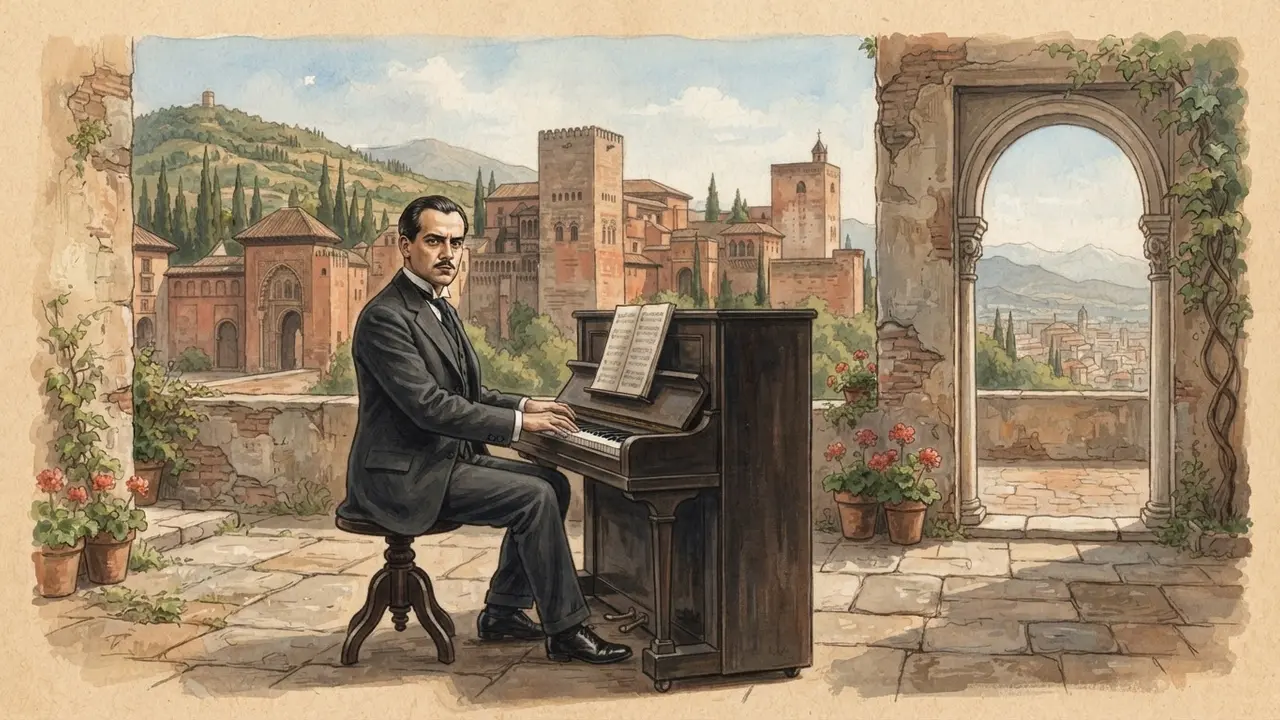
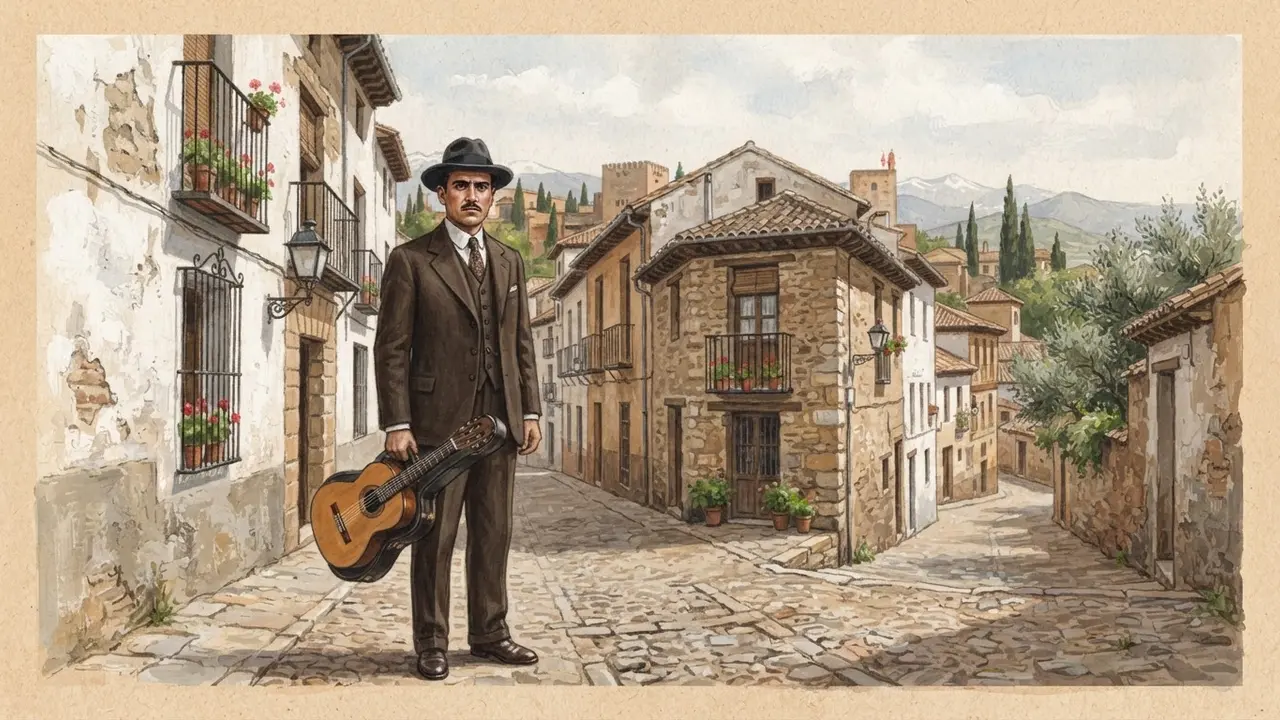
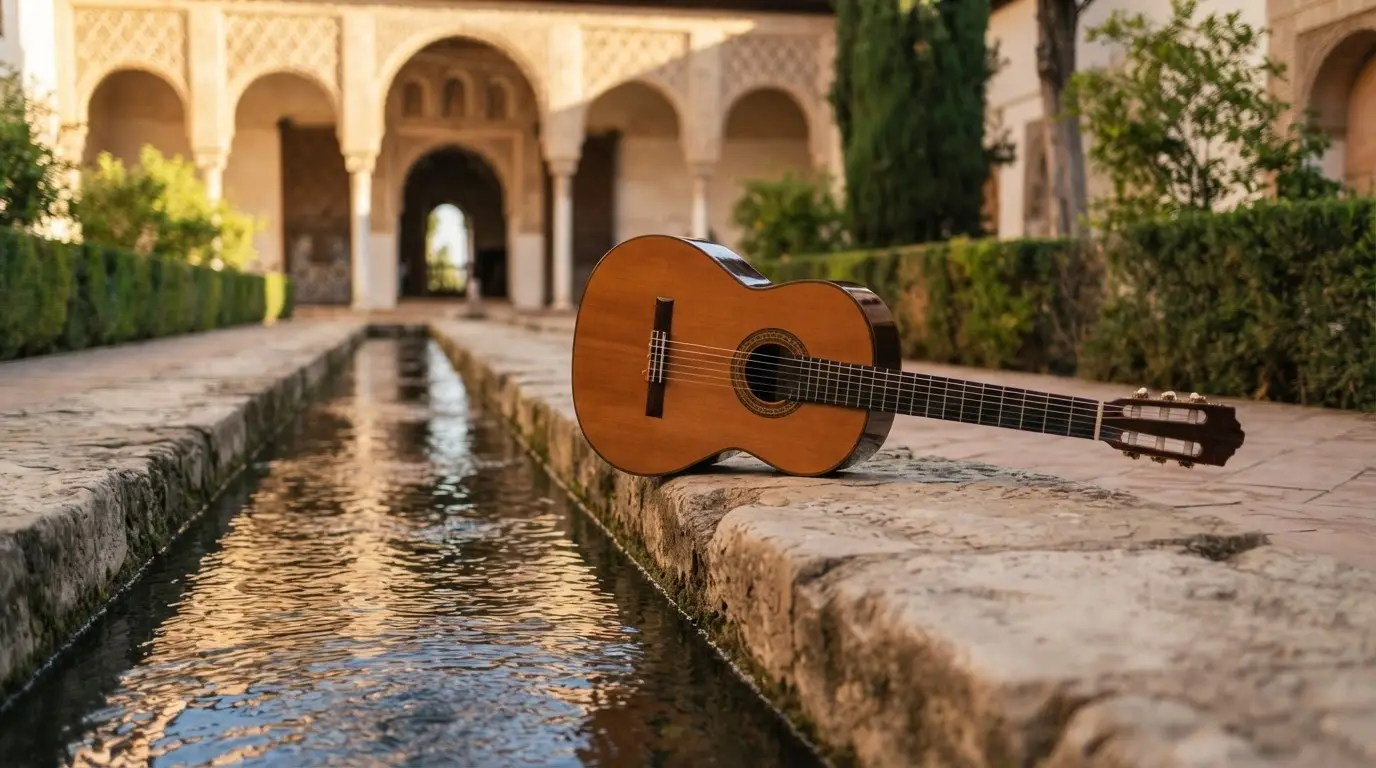
Tárrega's Recuerdos de la Alhambra began as a Málaga improvisation dated 8 December 1899. Its title, dedicatee and the fountains story, set against the record.
1925–2007 Article
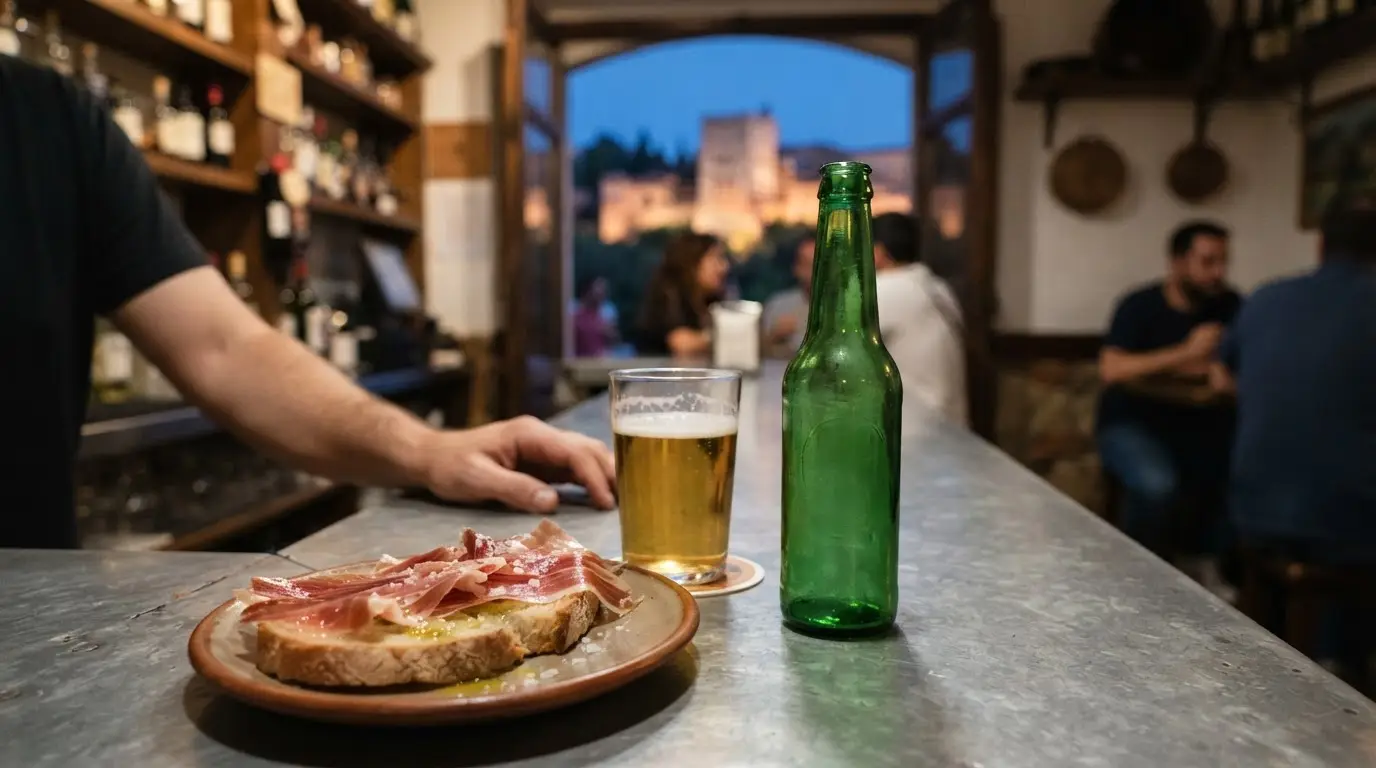
Alhambra beer history: brewed in Granada since 1 Nov 1926, founded 1925, a green Reserva 1925 bottle that is part marketing, and Mahou ownership since 2007.
Article
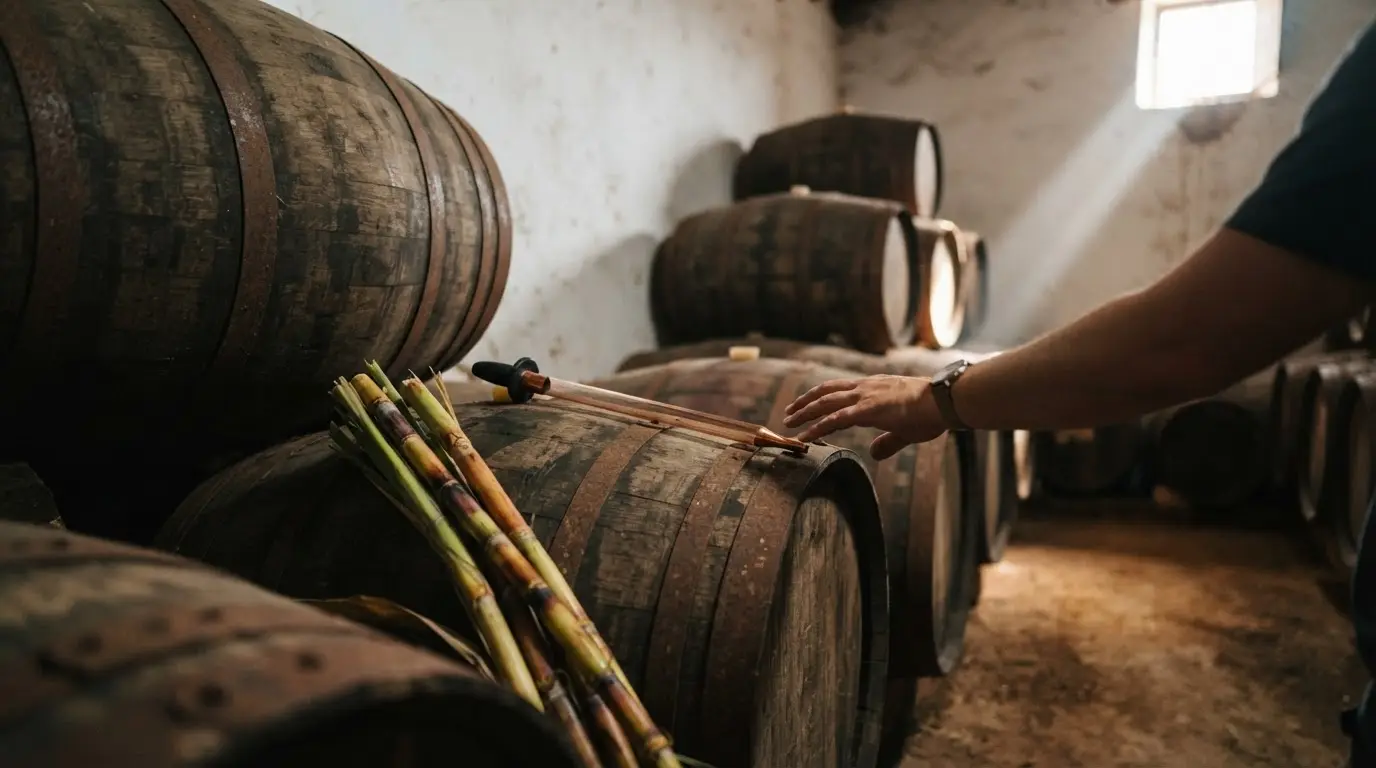
Ron Montero still distils rum in Motril, long after its sugar mills closed. Learn what shut in 1984 and 2006, and what you can visit on the Costa Tropical.
Article
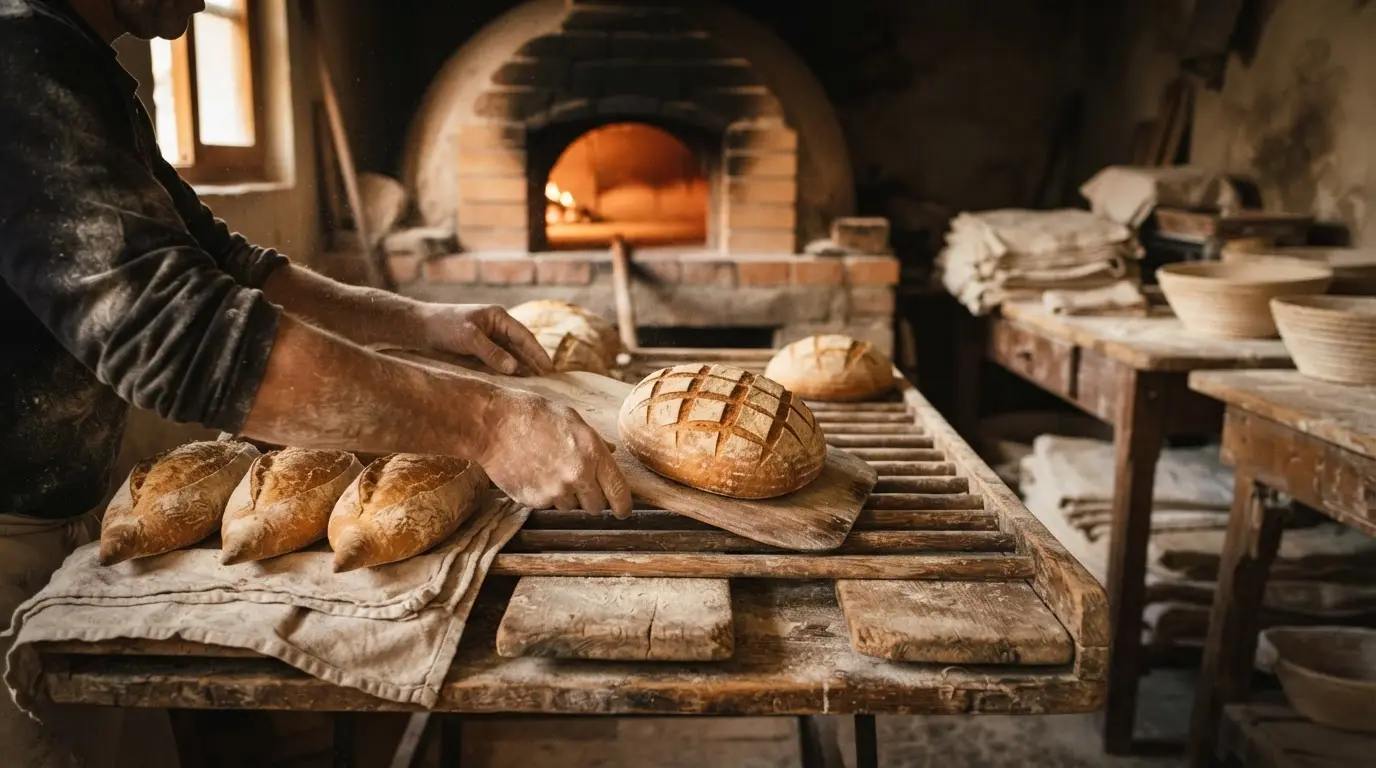
Pan de Alfacar is a PGI loaf baked only in Alfacar and Víznar with spring water, sourdough and a refractory-floor oven. The four formats and who bakes it.
Go deeper