Puerta de Elvira — Granada's 11th-Century Western Gate
moorish city-walls medieval

Puerta de Elvira — Granada's 11th-Century Western Gate

The 11th-century Zirid gate at the edge of the Albaicín — the western entrance to medieval Granada, free to enter, open 24/7, and older than the Alhambra.

Open 24/7. Outdoor public monument
Free
Directions

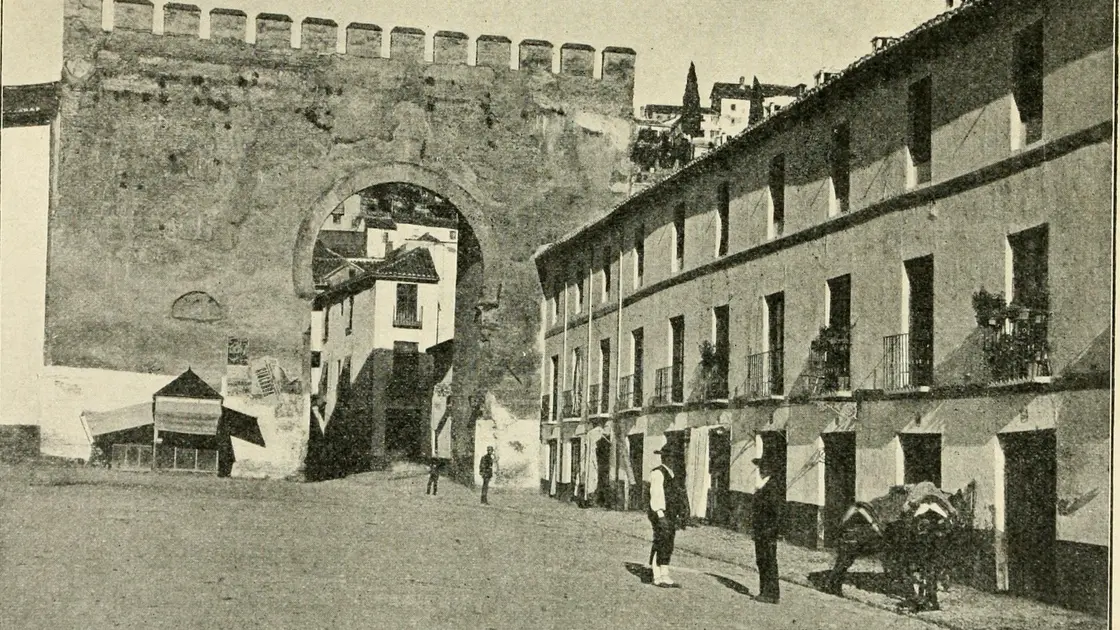
At the bottom of Calle Elvira, where the street widens and the Albaicín begins, the Puerta de Elvira has been standing since the 11th century, two hundred years before anyone laid the first stone of the Alhambra. Most visitors walk straight past it on their way somewhere else. The gate is the oldest surviving piece of Granada's Islamic city walls, and unlike most monuments in the city, you can read two distinct eras of Islamic rule in its stonework without needing a guidebook to tell you they're different.

When to Visit

Best season

Year-round; spring and autumn give the best light on the stonework

Quietest hours

Before 09:00 on weekday mornings; the gate is always uncrowded but Calle Elvira is quietest then

Visit duration

15 to 30 minutes at the gate; extend to 2 to 3 hours if walking into the Albaicín from here

From Medina Elvira to the Nasrid fortress

The Zirid sultans built the gate in the early 11th century as part of the fortifications around what was then called Medina Elvira, the name it still carries, translated into Arabic as Bāb Ilbīra. That name traces back to the Roman city of Iliberis on the same hill: the full story of Roman Iliberis and the Council of Elvira explains how the toponym survived more than a thousand years of successive rulers. The original structure was a functional military gateway at the western approach to the city.

In the 14th century, Yusuf I of the Nasrid dynasty ordered its reconstruction as an autonomous fortress: four towers, three gatehouses, and two separate doors connecting to the slope of the Alhacaba. The Nasrid arch visible today, with its characteristic horseshoe proportions, dates from that expansion. Partial demolition in 1612, and again during the French occupation in the 19th century, reduced the complex from its original scale, but the arch and flanking towers survived. The Spanish government declared it a Bien de Interés Cultural in 1896.

Cross the street for the clean arch shot

The gate reads best from the pavement on Calle Acera Merced, opposite side from the arch. Before 09:00 the light is flat and even — the ochre stonework shows without harsh shadows. Midday sun creates deep contrast that flattens the voussoir detail on the arch.

What to look for in the stonework

The Nasrid arch is the thing to look at closely: the proportions are tighter than Romanesque arches of the same era, the voussoirs cut from local stone that has gone ochre with age. The towers on either side are solid masonry, built for weight and permanence rather than decoration.

Today the gate sits at street level on the edge of the Albaicín quarter, with pedestrians moving around and under it without breaking stride. There is no interior access; the gate is an outdoor monument, and the exterior reading is enough.
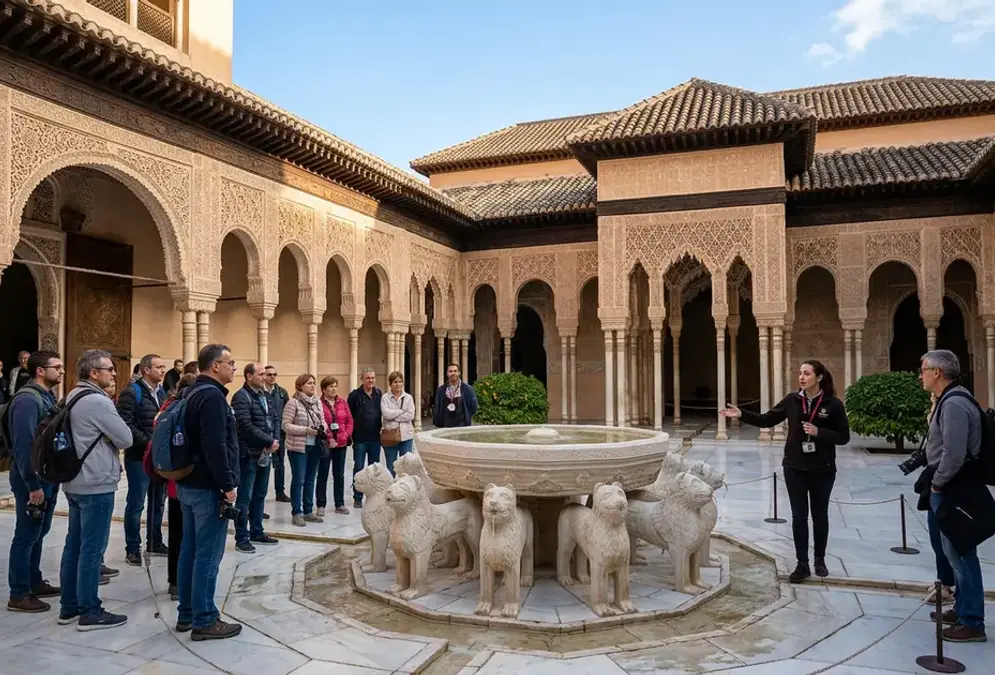
Popular tours in Granada

The experiences travellers book most often in Granada.

Tours are selected for quality, not commission. We earn a small fee if you book — at no extra cost to you.

Visiting the gate and walking into the Albaicín

Stand across the street on Calle Acera Merced in the morning, before the market traffic starts, and the stonework is clear. From the gate, Calle Elvira runs straight into the lower Albaicín, with the neighbourhood's characteristic white-rendered walls and narrow uphill lanes beginning almost immediately.

The Albaicín is the natural continuation from here. Walk up through Calle Elvira and bear left toward the Zirid walls: a section of 11th-century rampart survives along the high ridge of the quarter, and the Puerta de Elvira was its western anchor.

Early morning is the best time to see it: the light is flat and even before 09:00, which makes the stonework photograph cleanly, and Calle Elvira's tea shops haven't yet opened for the day's trade. The gate is a ten-minute walk from the Gran Vía cathedral end and five minutes from Plaza Nueva.

Reporter notebook

Insider tips

Practical observations gathered the way a local journalist would keep them: short, specific, and more useful than brochure copy.

Crowd tip

The Albaicín crowds don't start here

Tourists heading to the Albaicín mirador at San Nicolás mostly go via Calderería or the main Gran Vía route, not Calle Elvira. The gate sees steady local foot traffic but almost no tour groups. Weekday mornings before 10:00 you will have it to yourself.

Local custom

Locals use Calle Elvira as the quiet Albaicín entry

Residents of the Albaicín tend to come and go via Calle Elvira rather than the more touristed routes. The street has working tea houses, North African grocery shops, and a produce market at its upper end. Walking the full length from the gate to Plaza Larga gives you the neighbourhood as people who live in it actually use it.

Practical information

Opening hours
Open 24/7. Outdoor public monument, no restricted hours.
Admission
Free
Address
Calle Acera Merced (at the start of Calle Elvira), 18010 Granada, Spain View on Google Maps
Interactive map — loads as you scroll (requires JavaScript)

Tags

moorish city walls medieval free gates albaicin nasrid zirid

Frequently asked questions

Is the Puerta de Elvira free to visit?

Yes. The Puerta de Elvira is a free, open-air monument with no admission fee and no restricted hours. It sits at street level on Calle Acera Merced and can be viewed from the pavement at any time of day.

What is the connection between the Puerta de Elvira and the Albaicín?

The Puerta de Elvira was the western entrance to the walled city during Granada's Islamic period and sits at the threshold of the Albaicín quarter. The 11th-century Zirid walls run from here along the high ridge of the Albaicín to the Puerta Nueva in the east. Walking through the gate and up Calle Elvira is the oldest pedestrian route into the quarter.

What was the historical role of the Puerta de Elvira?

The gate was the main western entrance to medieval Granada, built by the Zirid sultans in the 11th century when the city was known as Medina Elvira — a name it preserves in its Arabic designation, Bāb Ilbīra. In the 14th century, Yusuf I of the Nasrid dynasty rebuilt it as a full fortress complex with four towers and three gatehouses, making it one of the most heavily fortified points in the city's defensive network.

Further reading

Sources

7 references Show
  1. alhambradegranada.org
  2. granada.hammamalandalus.com
  3. exclusivegranada.com
  4. lovegranada.com
  5. gpsmycity.com