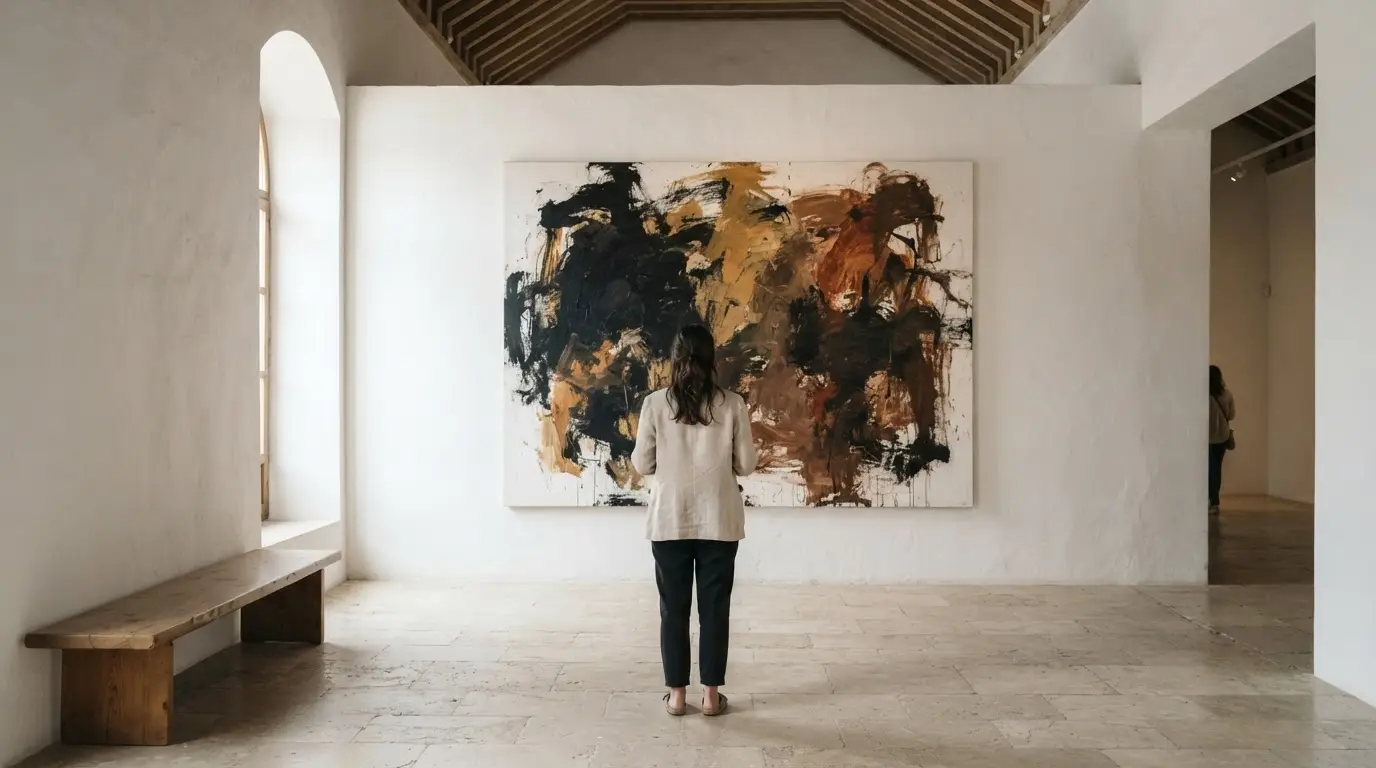
José Guerrero: Granada's Painter in New York

Seven years resident in Granada. Specialist in Nasrid architecture, Al-Andalus history, and Andalusian walking routes.
In this article
Jump to a section
A carpenter's apprentice who rang the cathedral bells
Explore nearby · Museum
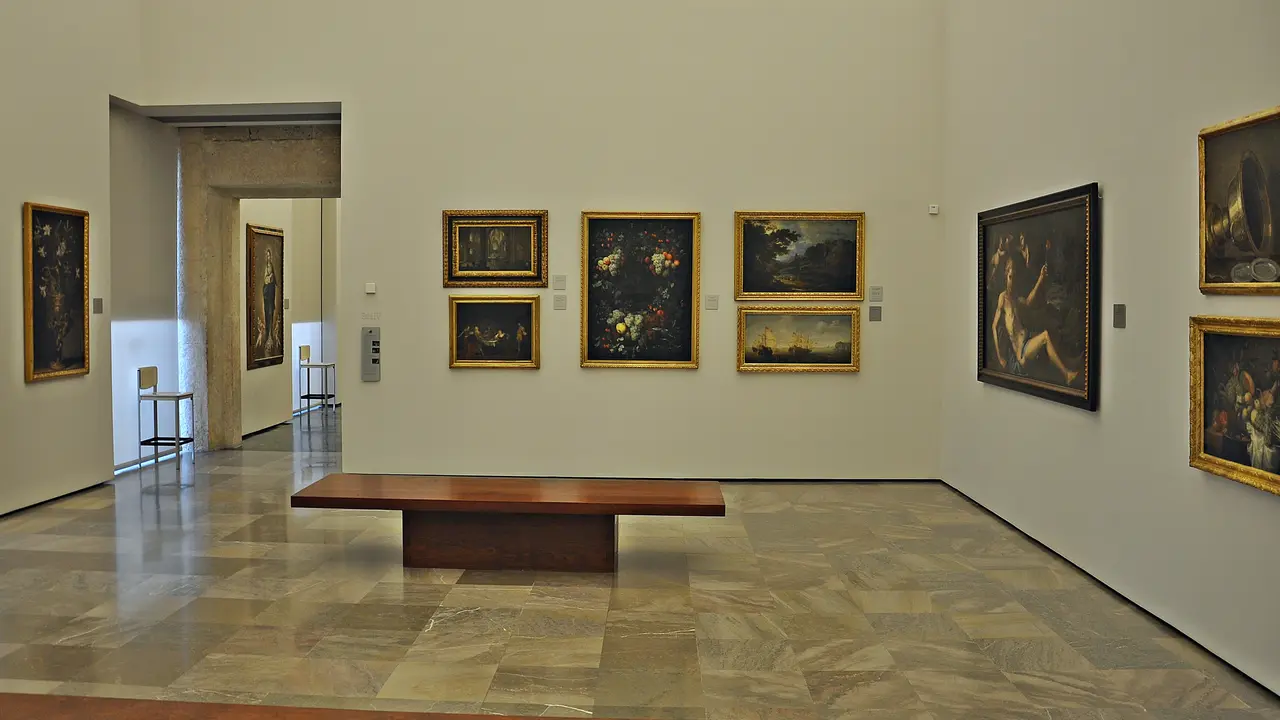
Museo de Bellas Artes de Granada
Spain's oldest public museum (1839), upper floor of the Palace of Charles V. Free for EU visitors. Alonso Cano's Granada School paintings and sculptures.
Philadelphia, then the New York School
- 1914
Born in Granada
- 1940
Moves to Madrid
On Lorca's advice; studies at San Fernando.
- 1949
Marries Roxane Whittier Pollock
- 1950
Settles in New York
His last figurative work is a self-portrait.
- 1954
Betty Parsons Gallery exhibition
- 1965
Returns to Spain
Divides his time between Spain and the United States.
- 1991
Dies in Barcelona
- 2000
Centro José Guerrero opens in Granada
What the paintings look like
Coming home in 1965, and the ravine at Víznar
Deep dive · Article
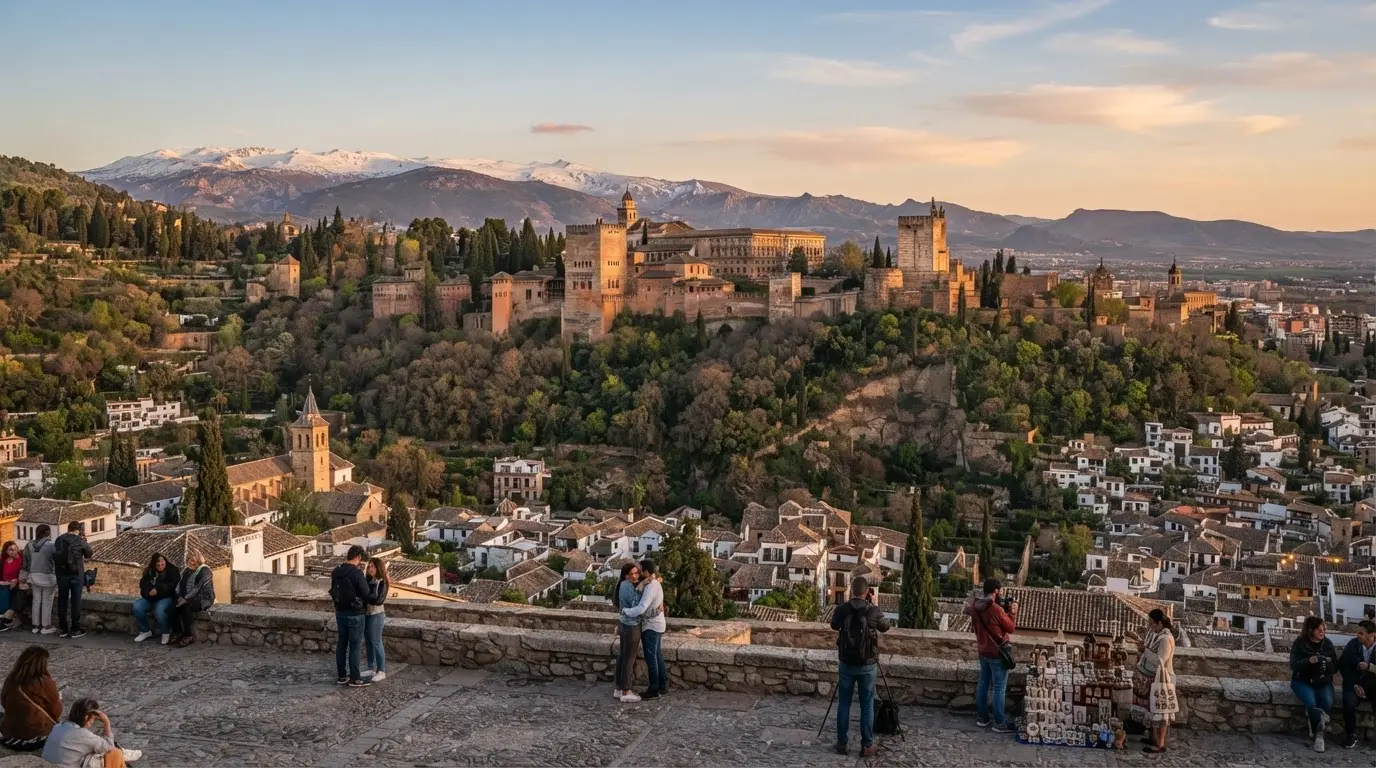
20 Interesting Facts About Granada, Spain
Interesting facts about Granada Spain that guidebooks skip: disputed etymologies, the soldier who saved the Alhambra, and a river buried under Plaza Nueva.
Seeing Guerrero in Granada today
Recommended tours
Tours are selected for quality, not commission. We earn a small fee if you book — at no extra cost to you.
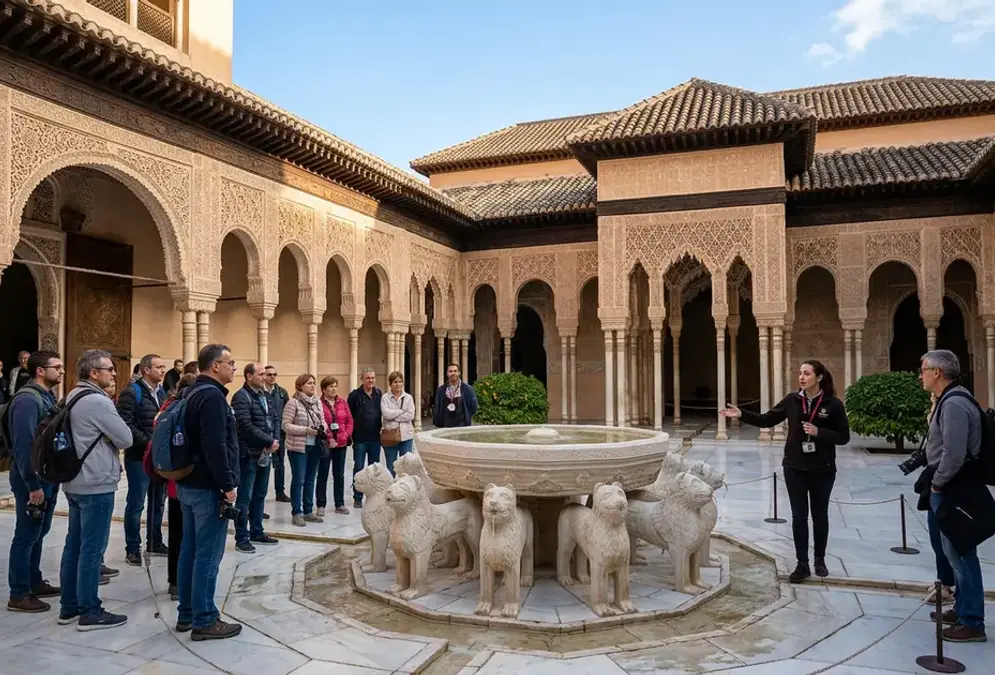
- Opening: Tuesday to Saturday and public holidays, 10:30 to 14:00 and 16:30 to 21:00.[47]
- Closed: Mondays that are not public holidays, Sunday afternoons, 24, 25 and 31 December, and 1 January.[48]
- Guided visit for the general public: every Tuesday at 19:00, except public holidays.[49]
- Bookshop: catalogues, posters and postcards of his work.[50]
Frequently asked questions
Who was José Guerrero, the painter from Granada?
When did José Guerrero move to New York and when did he return?
Was José Guerrero an abstract expressionist?
Is the Centro José Guerrero free?
What is La brecha de Víznar about?
Where can you see José Guerrero's paintings in Granada?
Sources
51 references Show Hide
- fundacioncristinamasaveu.com (opens in a new tab)
“combining his practice with other occupations such as bell ringer at Granada Cathedral.”
- guggenheim.org (opens in a new tab)
“A selection of these new paintings appeared in an exhibition at Betty Parsons Gallery, New York, in 1954, marking Guerrero’s emergence as a distinctive painter within the New York school.”
- centroguerrero.es — Visits (opens in a new tab)
“Entrance free”
- fundacioncristinamasaveu.com (opens in a new tab)
“Initially, he stayed in Philadelphia, the birthplace of his wife, journalist Roxanne Whittier Pollock, whom he had married on 25 April 1949, but in 1950 he settled in New York.”
- museoreinasofia.es — Jose guerrero (opens in a new tab)
“compuesta por sesenta y cinco lienzos y una treintena de obras sobre papel”
- centroguerrero.es — Visits (opens in a new tab)
“Tuesday to Saturday and public holidays from 10:30 to 14:00 and 16:30 to 21:00”
- guggenheim.org (opens in a new tab)
“José Guerrero was born on October 29, 1914, in Granada, Spain.”
- fundacioncristinamasaveu.com (opens in a new tab)
“Born into a family of modest means and orphaned at an early age, he worked in a carpenter’s workshop and as an apprentice wood carver”
- visitalaior.com (opens in a new tab)
“The Civil War came to him by surprise while he is doing his military service.”
- guggenheim.org (opens in a new tab)
“in 1940, following his friend Federico García Lorca’s advice, he moved to Madrid”
- fundacioncristinamasaveu.com (opens in a new tab)
“he enrolled at the Escuela Superior de Bellas Artes de San Fernando, attending Vázquez Díaz’s classes”
- coleccion.bde.es — Jose guerrero 340 (opens in a new tab)
“he travelled to Paris in 1945 with a grant from the French government to study at the École des Beaux-Arts.”
- coleccion.bde.es — Jose guerrero 340 (opens in a new tab)
“Rome (1947-1948). There he met American journalist Roxane Whittier Pollock, and the two were married in 1949.”
- fundaciosunol.org (opens in a new tab)
“José Guerrero arrived in the United States in November 1949, after marrying American journalist Roxane Whittier Pollock in Paris.”
- fundacioncristinamasaveu.com (opens in a new tab)
“Initially, he stayed in Philadelphia, the birthplace of his wife, journalist Roxanne Whittier Pollock, whom he had married on 25 April 1949, but in 1950 he settled in New York.”
- fundacioncristinamasaveu.com (opens in a new tab)
“He soon established contact with Betty Parsons, who introduced him into the circles of the New York School.”
- guggenheim.org (opens in a new tab)
“Guerrero painted his last figurative work, a self-portrait, in 1950.”
- guggenheim.org (opens in a new tab)
“simplified, biomorphic forms float in a quasi-monochromatic background.”
- guggenheim.org (opens in a new tab)
“A selection of these new paintings appeared in an exhibition at Betty Parsons Gallery, New York, in 1954, marking Guerrero’s emergence as a distinctive painter within the New York school.”
- aestheticamagazine.com (opens in a new tab)
“In the USA he was frequently considered a painter of Spanish characteristics, but not Spanish.”
- museoreinasofia.es — Alpujarra (opens in a new tab)
“a personal combination of the action painting advocated by Willem de Kooning and Robert Motherwell and the strategies of colour field painting developed by Mark Rothko”
- museoreinasofia.es — Jose guerrero (opens in a new tab)
“con la amistad y la referencia estilística de Mark Rothko, Franz Klein y Robert Motherwell, y vinculado comercialmente con la galería de Betty Parsons”
- museoreinasofia.es — Alpujarra (opens in a new tab)
“For as long as I can remember, black was always there, a part of life; it was in people, in landscape, in loneliness.”
- museoreinasofia.es — Alpujarra (opens in a new tab)
“such as in this case the Alpujarra region, in the province of Granada.”
- Patronato de la Alhambra — Jose guerrero the presence of black 1950 1966 fundacio sunol (opens in a new tab)
“From 1962 he gave Spanish titles to many of his works including for example, Albaicín (1962) and Sacromonte (1963).”
- Patronato de la Alhambra — Jose guerrero the presence of black 1950 1966 fundacio sunol (opens in a new tab)
“impregnating his paintings with materials such as sand, cement, corrugated roofing and refractory bricks.”
- Patronato de la Alhambra — The alhambra and granada remember jose guerrero 1914 2014 on the centenary of his birth (opens in a new tab)
“the José Guerrero Centre and the Chapel of the Palace of Charles V, from today Friday 17th October until 6th January 2015.”
- Patronato de la Alhambra — The alhambra and granada remember jose guerrero 1914 2014 on the centenary of his birth (opens in a new tab)
“Curated by the Director of the José Guerrero Centre, Yolanda Romero, and its exhibition organizer, Francisco Baena”
- Patronato de la Alhambra — Jose guerrero the presence of black 1950 1966 fundacio sunol (opens in a new tab)
“This is the first monographic exhibition that explores the painter’s American years in depth.”
- Patronato de la Alhambra — The alhambra and granada remember jose guerrero 1914 2014 on the centenary of his birth (opens in a new tab)
“will be traveling to the Casa de las Alhajas in Madrid, thanks to the collaboration of the Fundación Obra Social y Monte de Piedad de Madrid, from 22nd January to 26th April 2015”
- guggenheim.org (opens in a new tab)
“Signs and Portents, 1956. Oil on canvas, 69 1/4 x 98 1/2 inches (175.9 x 250.2 cm)”
- guggenheim.org (opens in a new tab)
“In 1965 Guerrero returned to Spain and from then on divided his time between his native country and the United States.”
- fundaciosunol.org (opens in a new tab)
“The Guerreros set up home between Frigiliana (where they acquired and renovated a farmhouse he would return to every summer)”
- coleccion.bde.es — Brecha ii p 439 (opens in a new tab)
“inspired by a trip Guerrero made to Andalusia in the summer of 1965 with his wife, Roxane Whittier Pollock.”
- coleccion.bde.es — Brecha ii p 439 (opens in a new tab)
“During their time there, they visited the Víznar ravine, where Lorca was murdered in 1936.”
- coleccion.bde.es — Brecha ii p 439 (opens in a new tab)
“(he made a third version in 1989)”
- museoreinasofia.es — Jose guerrero (opens in a new tab)
“Las referencias formales a paisajes granadinos y el incremento de la tensión de la pincelada marcan su obra hasta 1970, patente en Brecha de Víznar (1966)”
- guggenheim.org (opens in a new tab)
“Guerrero died on December 23, 1991, in Barcelona.”
- guggenheim.org (opens in a new tab)
“In 1994, the Museo nacional centro de arte Reina Sofía, Madrid, organized a major retrospective of his work.”
- barcelonagalleryweekend.com (opens in a new tab)
“In Granada, the José Guerrero Centre opened in 2000.”
- revistaseug.ugr.es (opens in a new tab)
“nos presenta las cuarenta obras con las que se funda el Centro José Guerrero”
- centroguerrero.es — La sala de estar el refugio climatico del centro jose guerrero (opens in a new tab)
“El Centro Jose Guerrero, museo de la Diputación de Granada ubicado en el centro histórico, es un espacio climatizado, accesible y gratuito.”
- granadadirect.com (opens in a new tab)
“Dirección: Calle Oficios, 8, 18001 Granada.”
- centroguerrero.es — La sala de estar el refugio climatico del centro jose guerrero (opens in a new tab)
“Consta de una tienda librería, cuatro salas de exposiciones y dos espacios auxiliares”
- eldebate.com (opens in a new tab)
“situado en la céntrica calle Oficios de la ciudad de la Alhambra, alberga la colección más importante de obras del pintor.”
- centroguerrero.es — Work on canvas (opens in a new tab)
“La brecha de Víznar, 1966”
- centroguerrero.es — Visits (opens in a new tab)
“Tuesday to Saturday and public holidays from 10:30 to 14:00 and 16:30 to 21:00”
- centroguerrero.es — Visits (opens in a new tab)
“Closed on Mondays (not public holidays), Sunday afternoons and December 24, 25 and 31, and January 1.”
- centroguerrero.es — Visits (opens in a new tab)
“For the general public: every Tuesday, except public holidays, at 19:00.”
- centroguerrero.es — Visits (opens in a new tab)
“Also available are posters and post-cards showing Guerrero’s work and exhibition posters.”
- Wikipedia (opens in a new tab)
“His work is held by several prominent collections, including those of the Guggenheim, Whitney and Brooklyn Museums in New York”