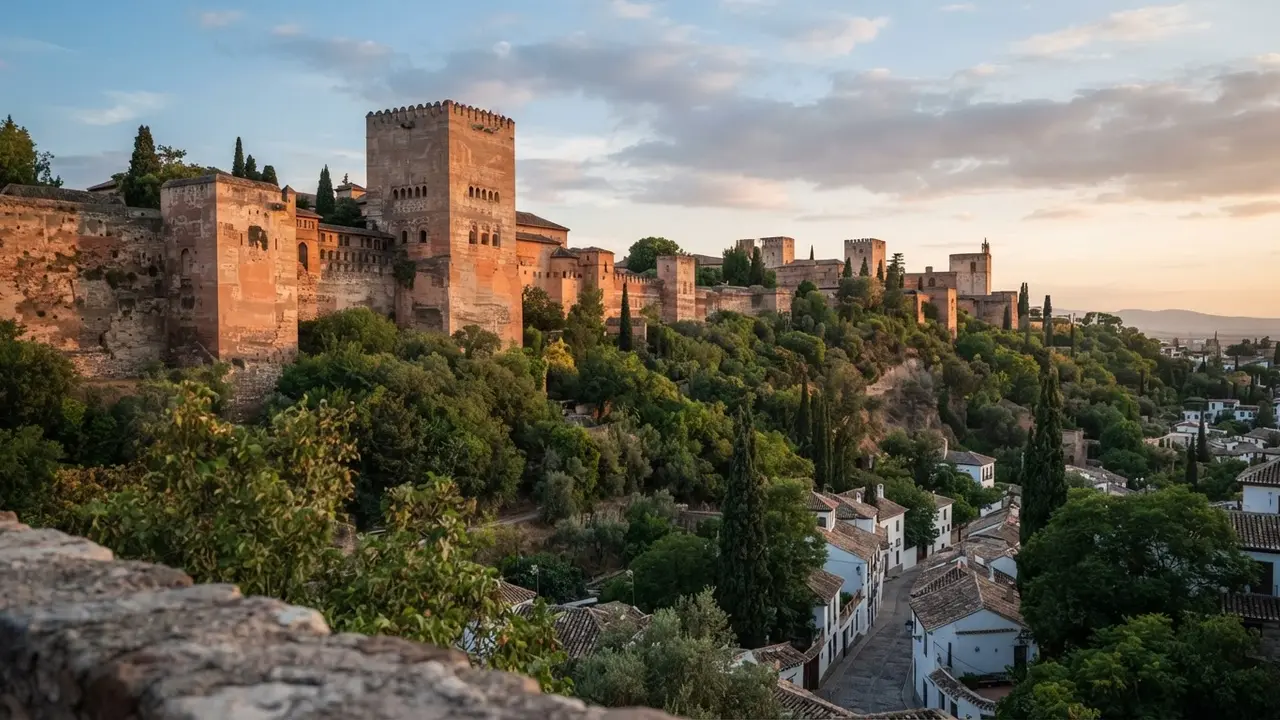
History
Nasrid Granada
The last Muslim dynasty in Spain, the sultans who built the Alhambra, the tribute that kept Castile at bay and the surrender of 1492.

Written by
James Walker Seven years resident in Granada. Specialist in Nasrid architecture, Al-Andalus history, and Andalusian walking routes.
Published
Nasrid Granada was the last Muslim state in Spain, founded by Muhammad I in 1232 and ended by the Christian conquest of 1492. It is the dynasty behind the Alhambra.
This page is the overview. Each section answers one question briefly and sends you to the article that owns the detail, starting with the full Nasrid chronology. If you are here to plan a visit, go straight to Alhambra tickets or the self-guided tour.
Nasrid Granada: four dates
- 1232
- Muhammad I's reign begins; the dynasty is founded
- 1238
- Muhammad I enters Granada and begins the Alhambra
- 1348
- The Tower of Justice is built under Yusuf I
- 1492
- Granada surrenders and Nasrid rule ends
Jump to a section
Who founded Nasrid Granada, and when?
Muhammad I founded the Nasrid dynasty. Britannica dates his reign from 1232, while its biography of him says the dynasty ruled Granada from 1238 to 1492. Both dates are right: 1232 is when he became king, and 1238 is when he entered Granada, the city that became his capital.
The start was not in Granada at all. On 16 July 1232 a mosque assembly in Arjona declared the town's independence, and Muhammad entered Granada in May 1238 (Ramadan 635), according to Wikipedia's account of his reign. Britannica adds that he began the construction of the Alhambra and fostered the city's prosperity by welcoming Muslim refugees.
The sequence of events, and the sultans who followed him, is laid out in the Nasrid dynasty history, 1232 to 1492. For a later and very different reign, see Muhammad V, the Alhambra builder.
Why did Granada pay tribute to Castile?
Granada paid because Castile bordered it on every landed frontier. In 1246 Muhammad I secured the recognition of Ferdinand III of Castile in return for a vassalage, which, in Britannica's words, "though often ignored, remained in force until the kingdom's disappearance in 1492."
Wikipedia puts a number on the first bargain: after the surrender of Jaén, an annual tribute of 150,000 maravedíes, which it says became Ferdinand's most important source of income. Britannica's wider point holds regardless of the figure: Muhammad I's successors kept being caught between submission to Castile and reliance on their North African kin.
The payments are the subject of how tribute to Castile kept the Nasrids alive, and the North African side is in Nasrid diplomacy between Castile and the Marinids.
How was the Alhambra built?
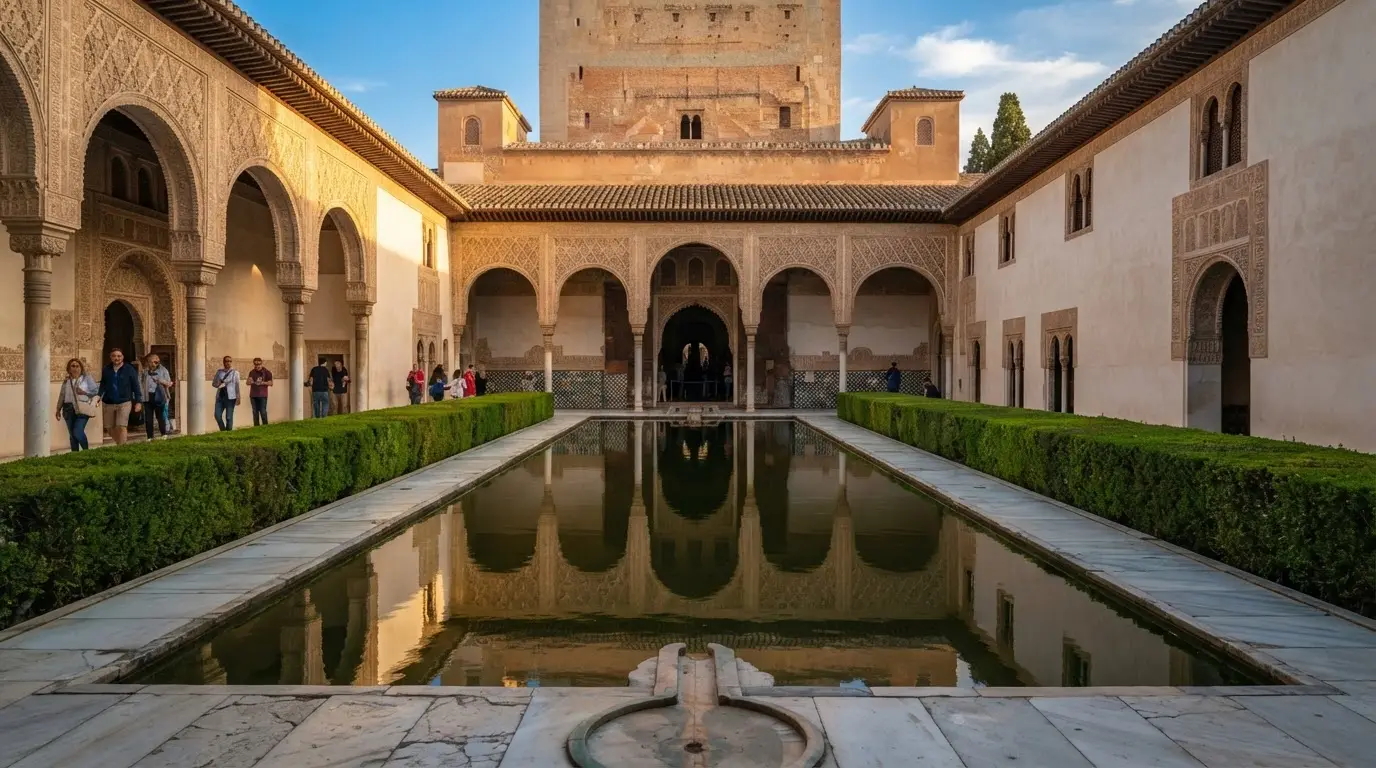
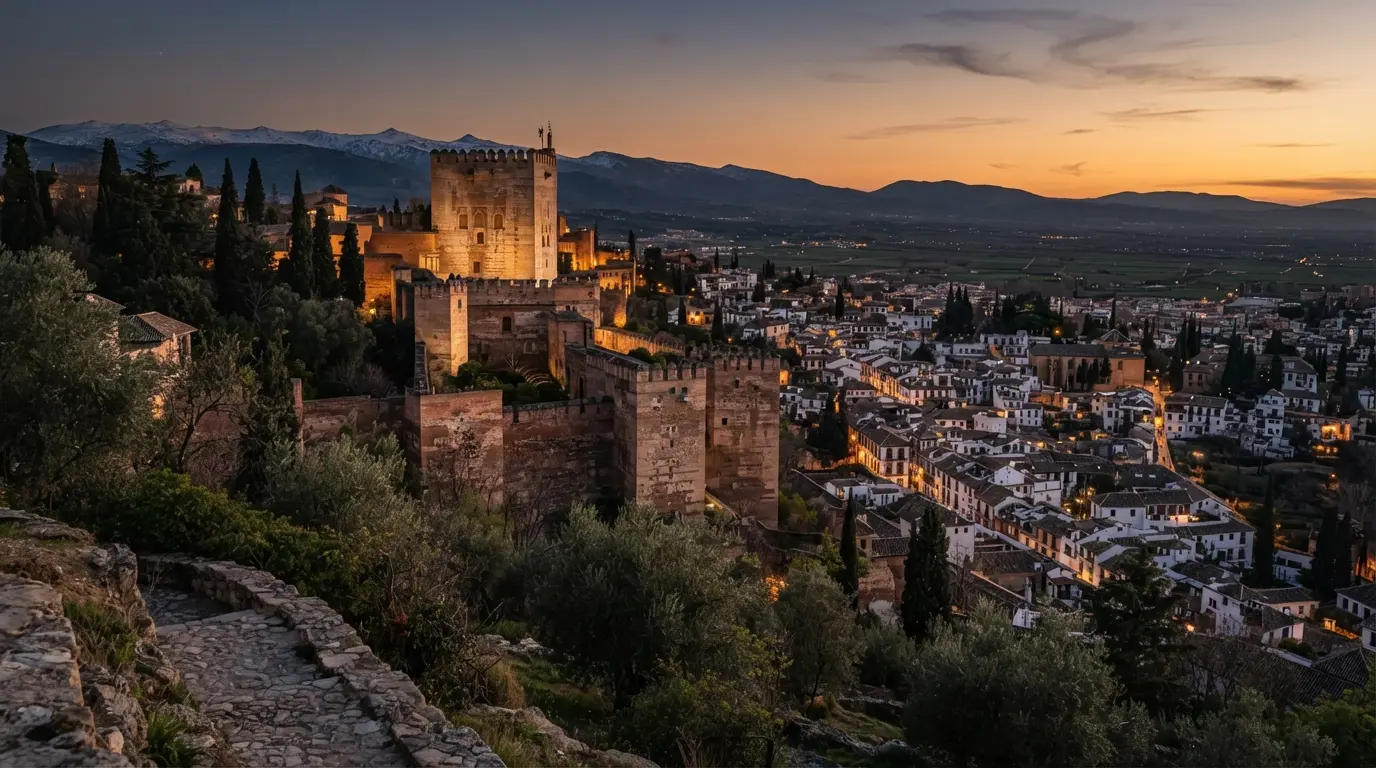
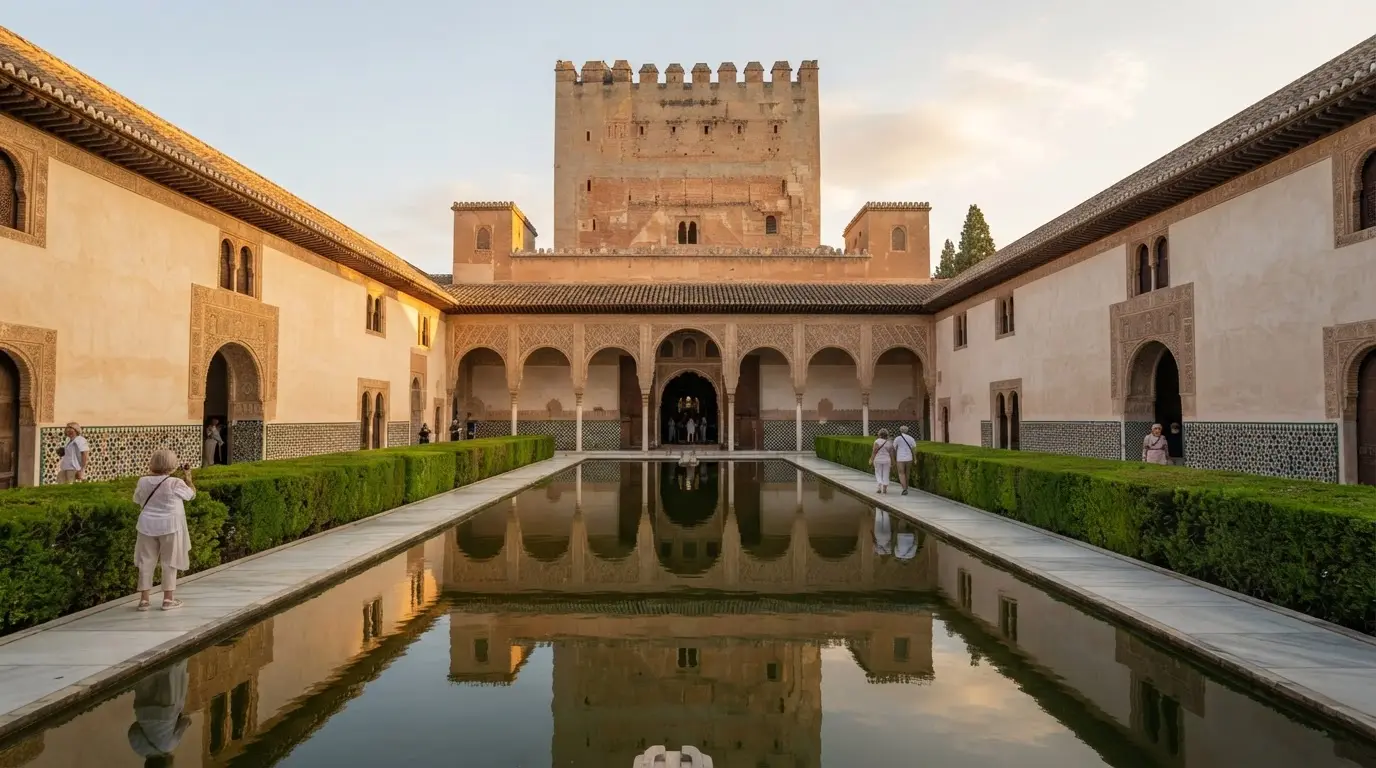
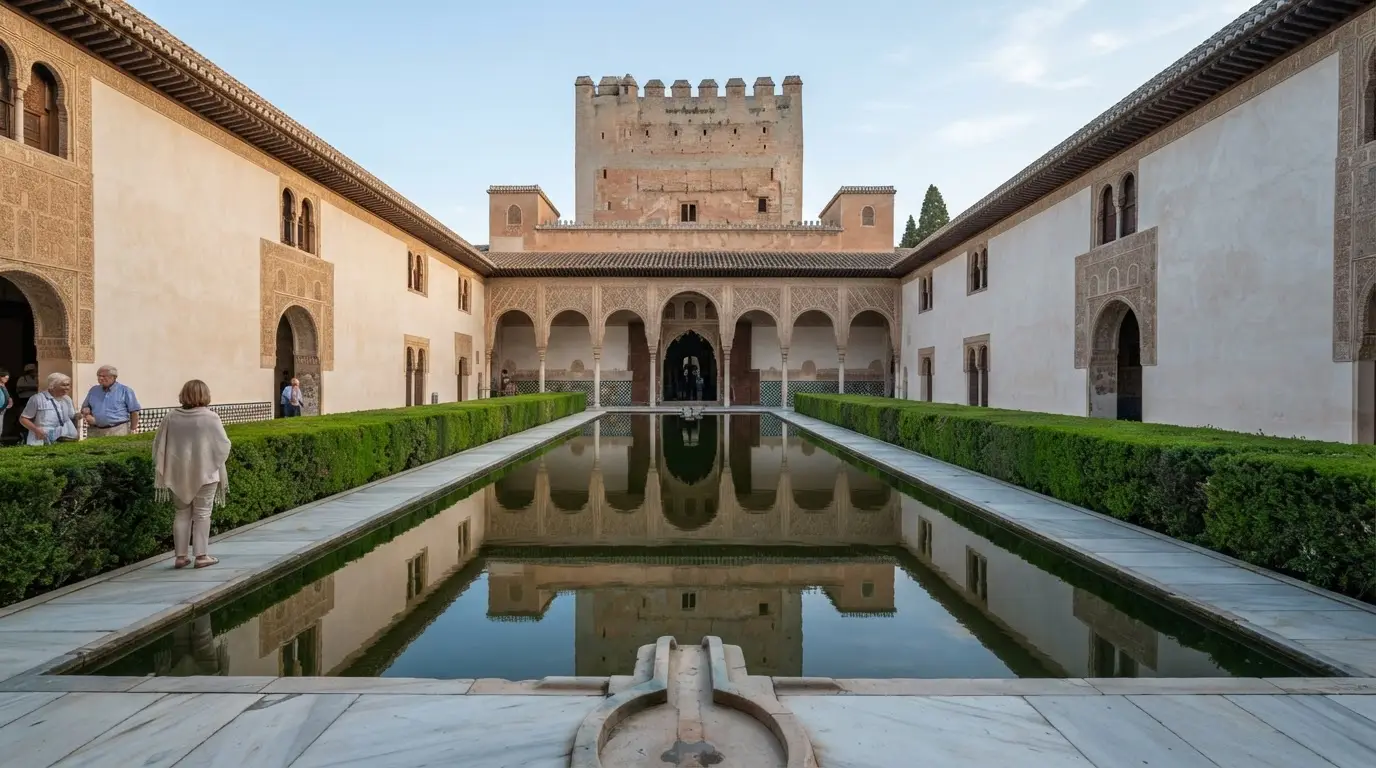
The Alhambra was built in stages, begun by Muhammad I after 1238 and reaching its full splendour in the second half of the 14th century. The Patronato de la Alhambra ties that peak to the sultanate of Yusuf I (1333 to 1354) and the second reign of Muhammad V (1362 to 1391).
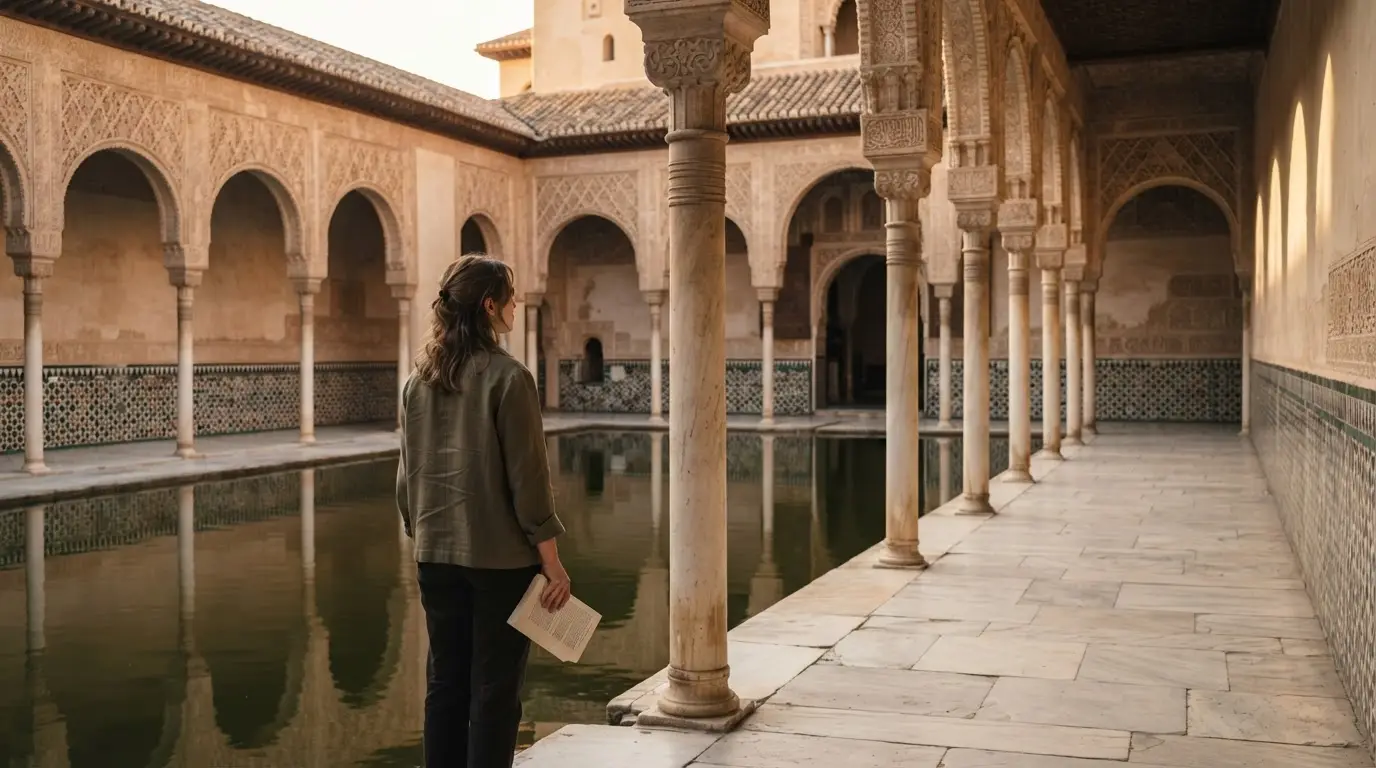
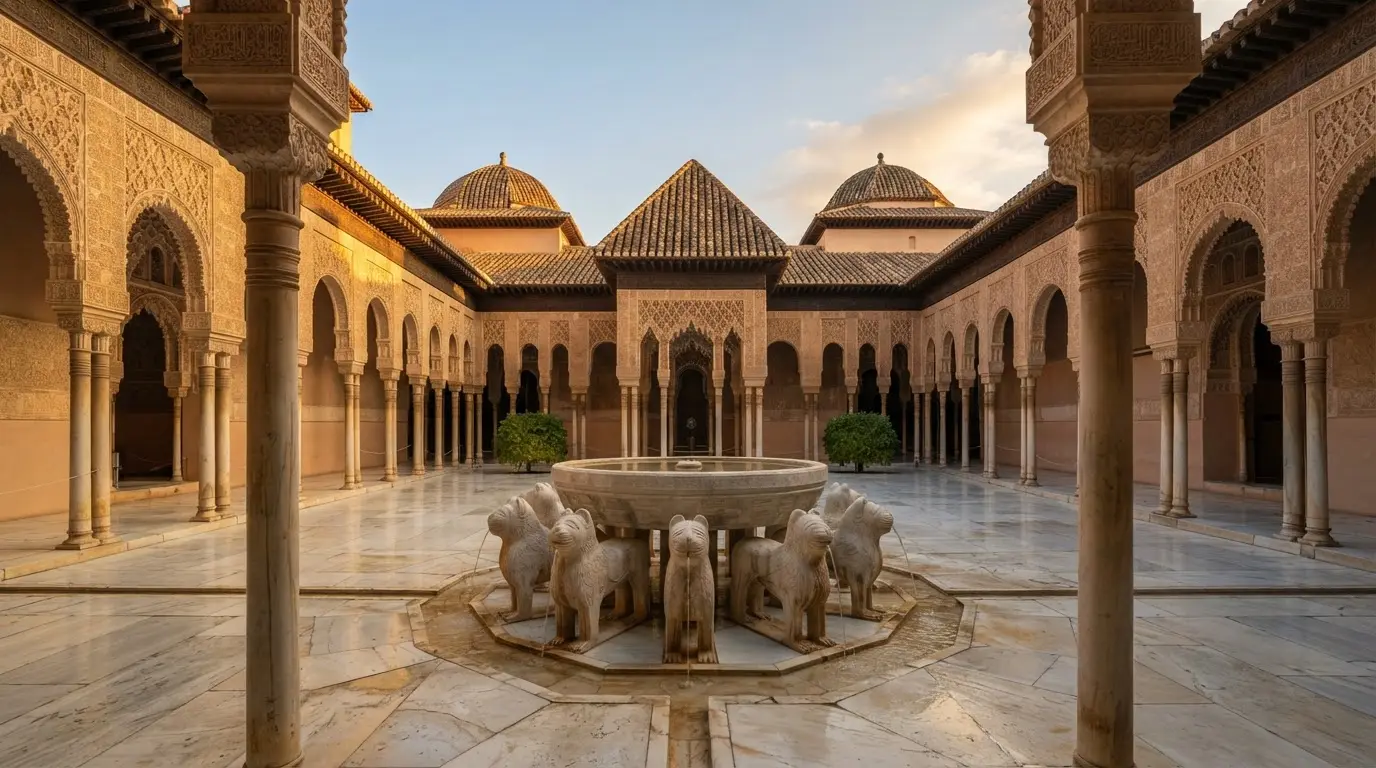
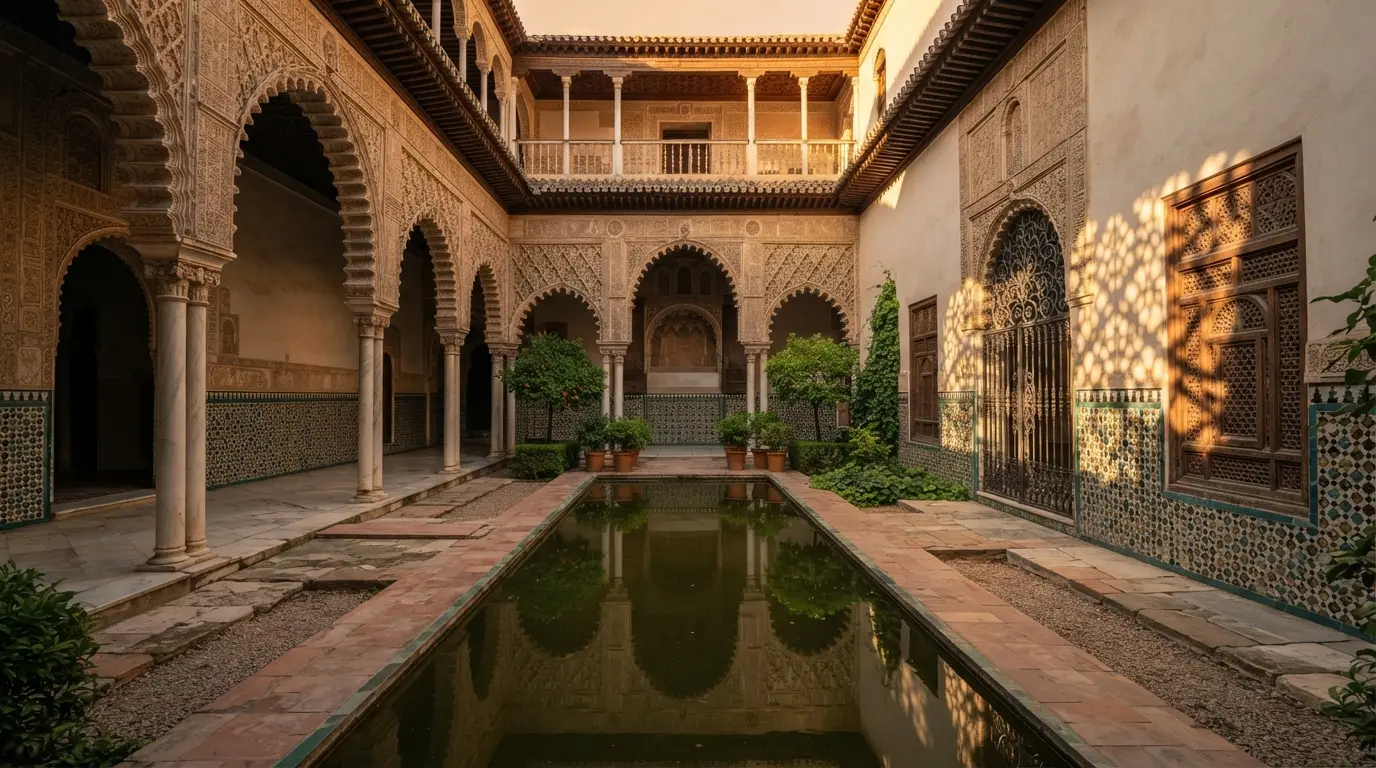
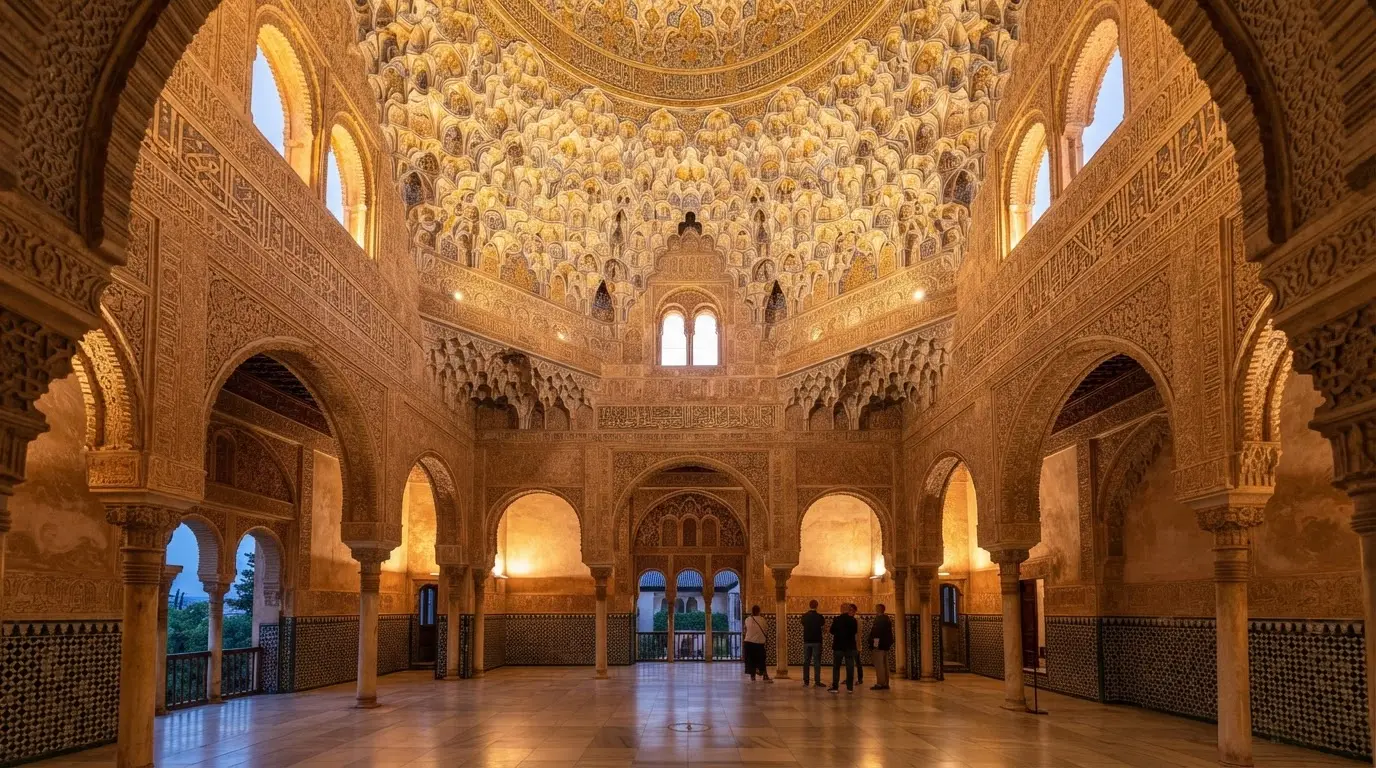
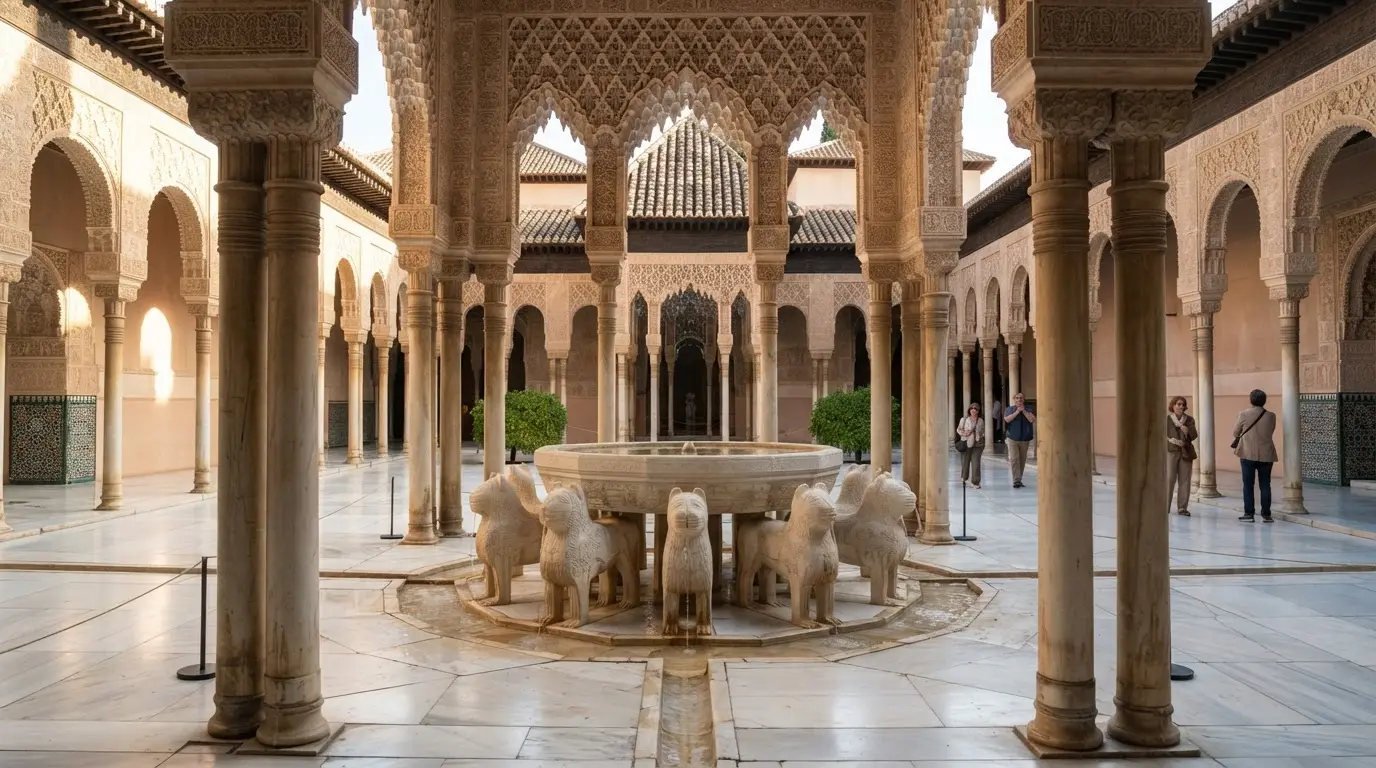
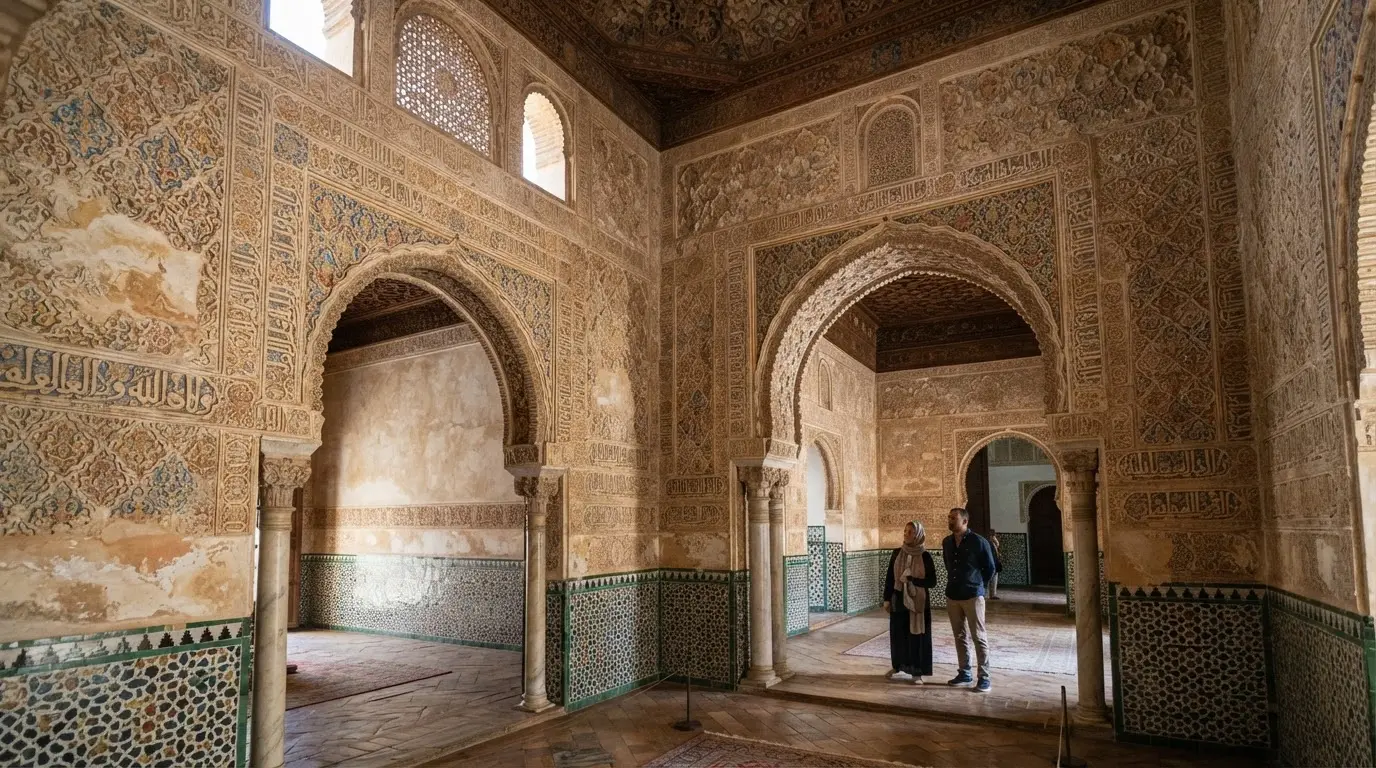
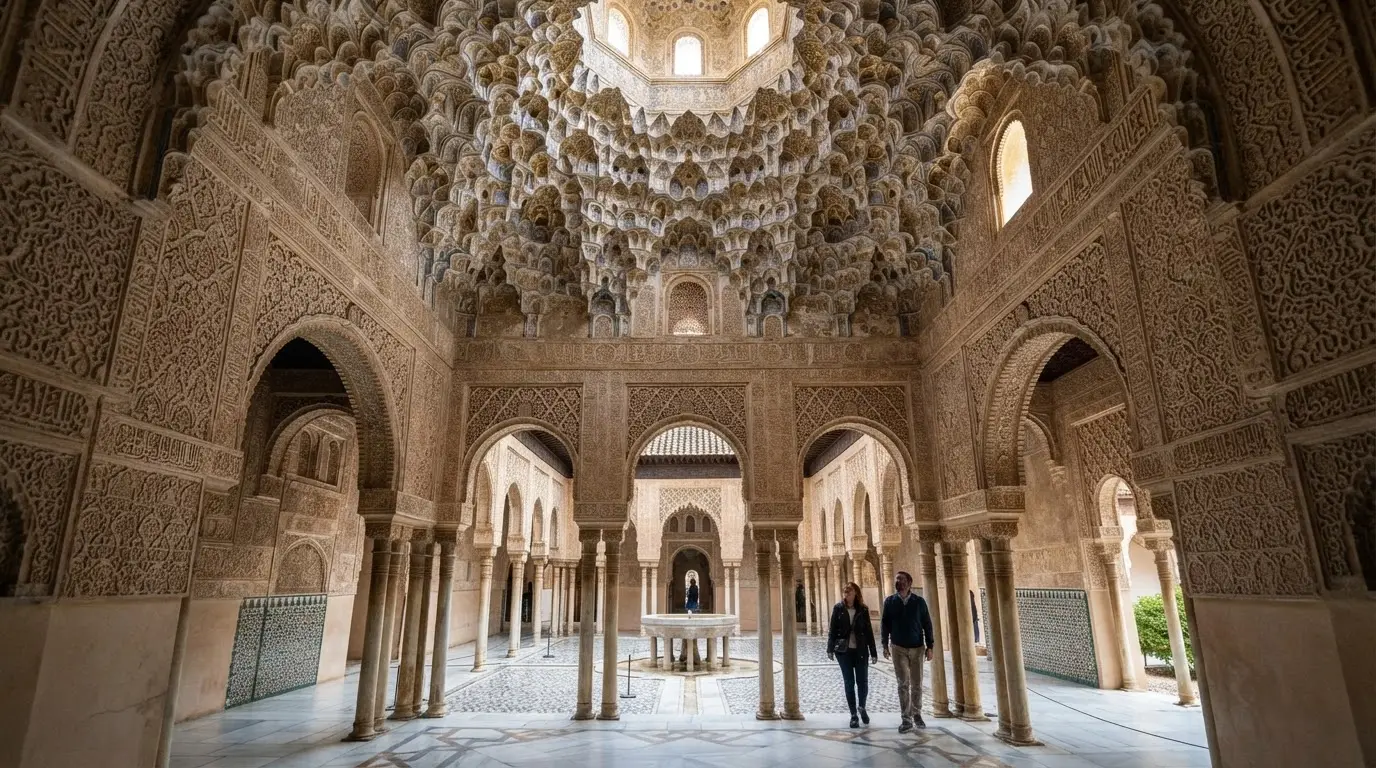
Two dated landmarks anchor the sequence. The Tower of Justice has been one of the main entrances to the complex since it was built in 1348 under Yusuf I. Muhammad V built the palace around the Court of the Lions during his second mandate, between 1362 and 1391. The site was never only a palace: the Patronato describes it as a palace, citadel and fortress, home to the sultans, senior officials, court servants and elite soldiers.
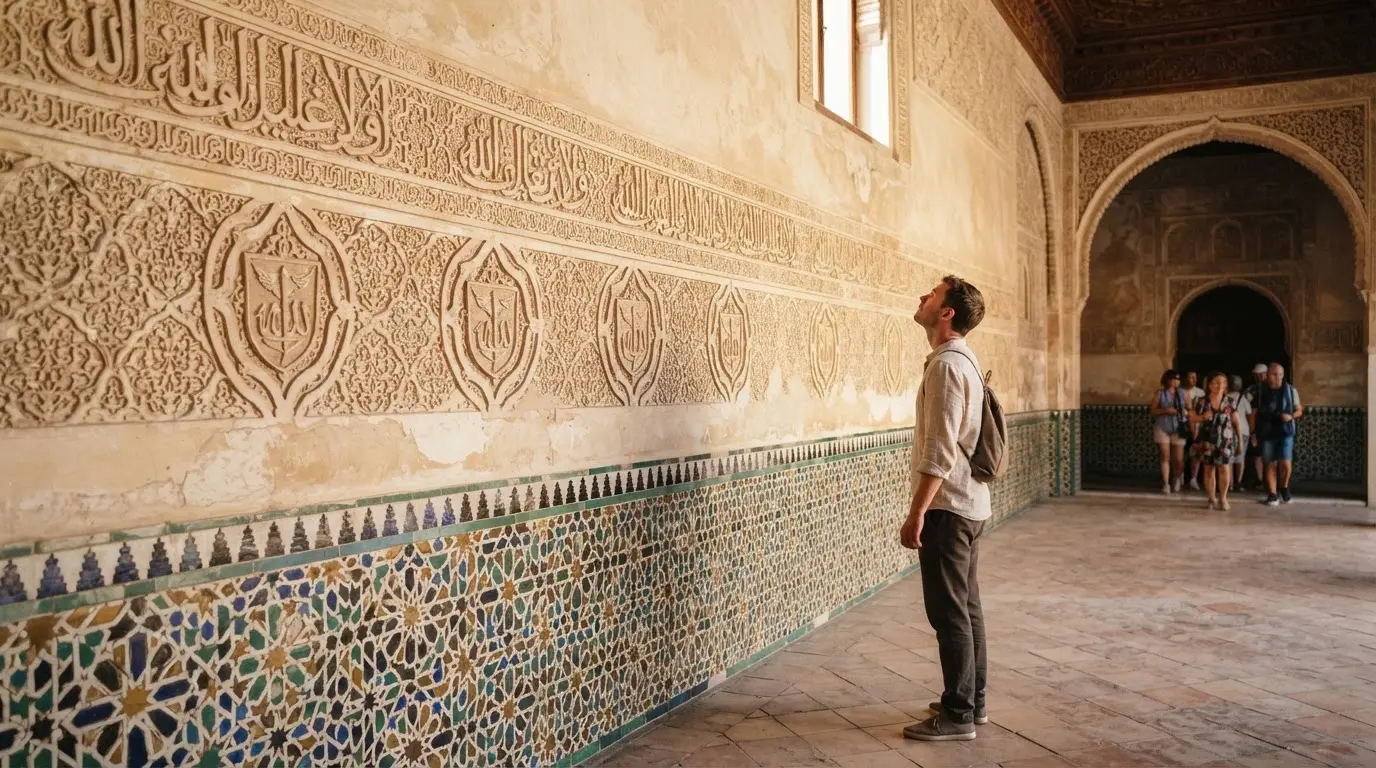
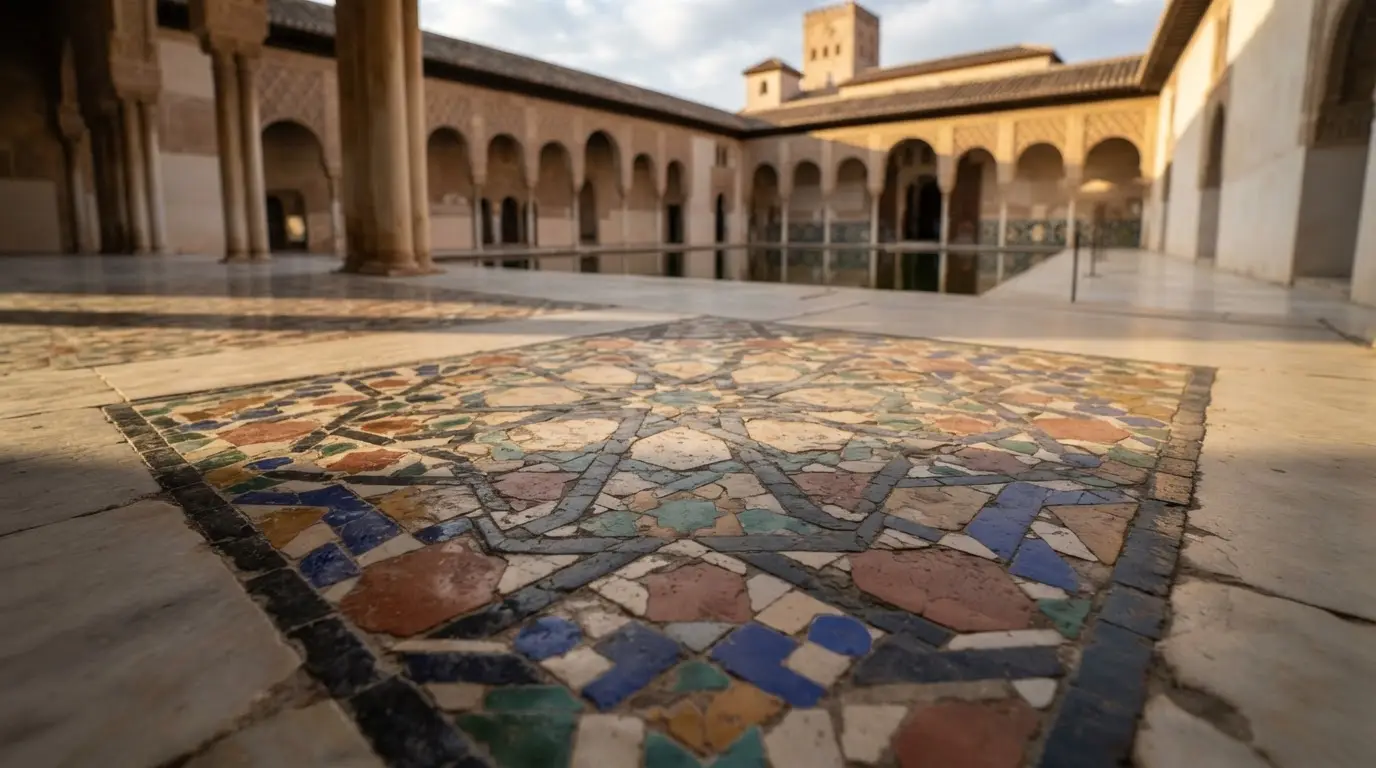
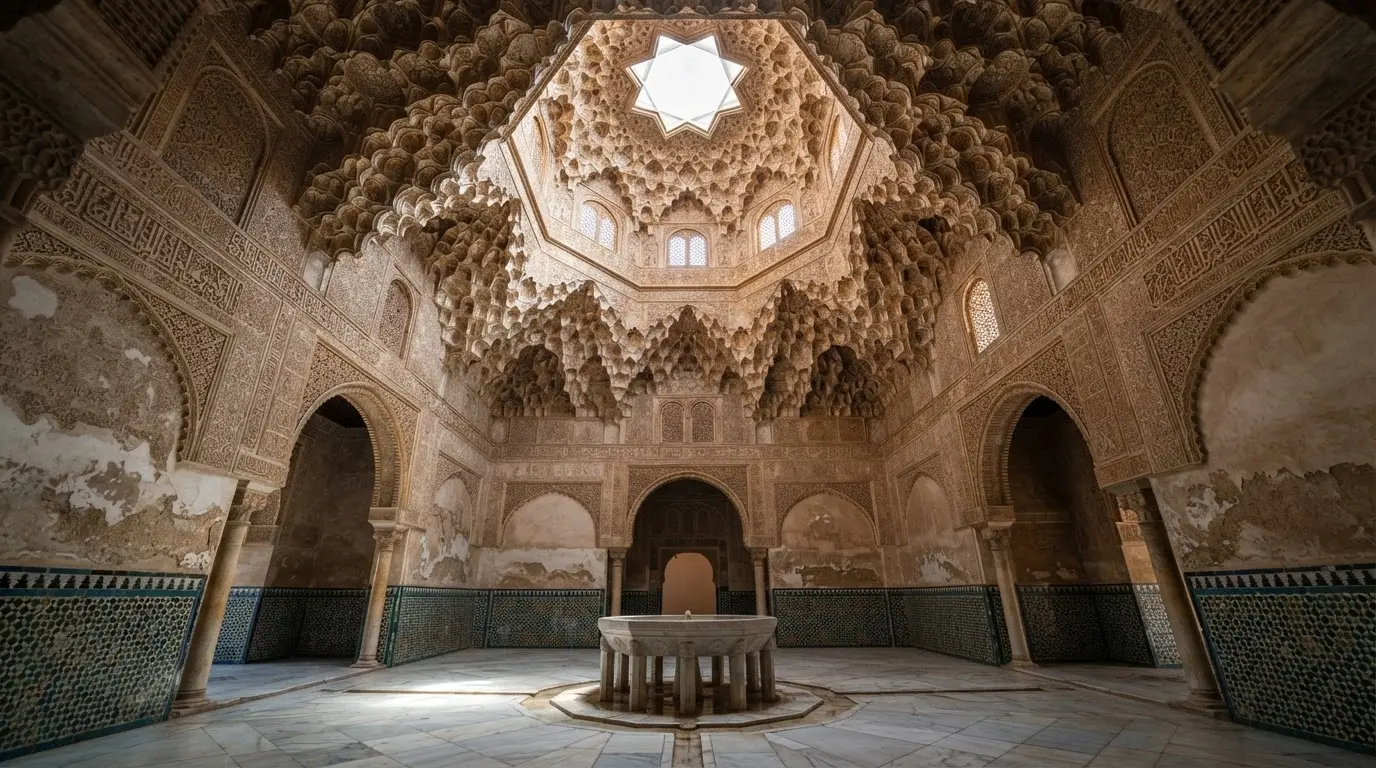
UNESCO calls the Alhambra the only preserved palatine city of the Islamic period, and notes that its inscriptions relate to the religious, political and poetic world of the Nasrid dynasty. That is why the walls are worth reading as well as looking at.
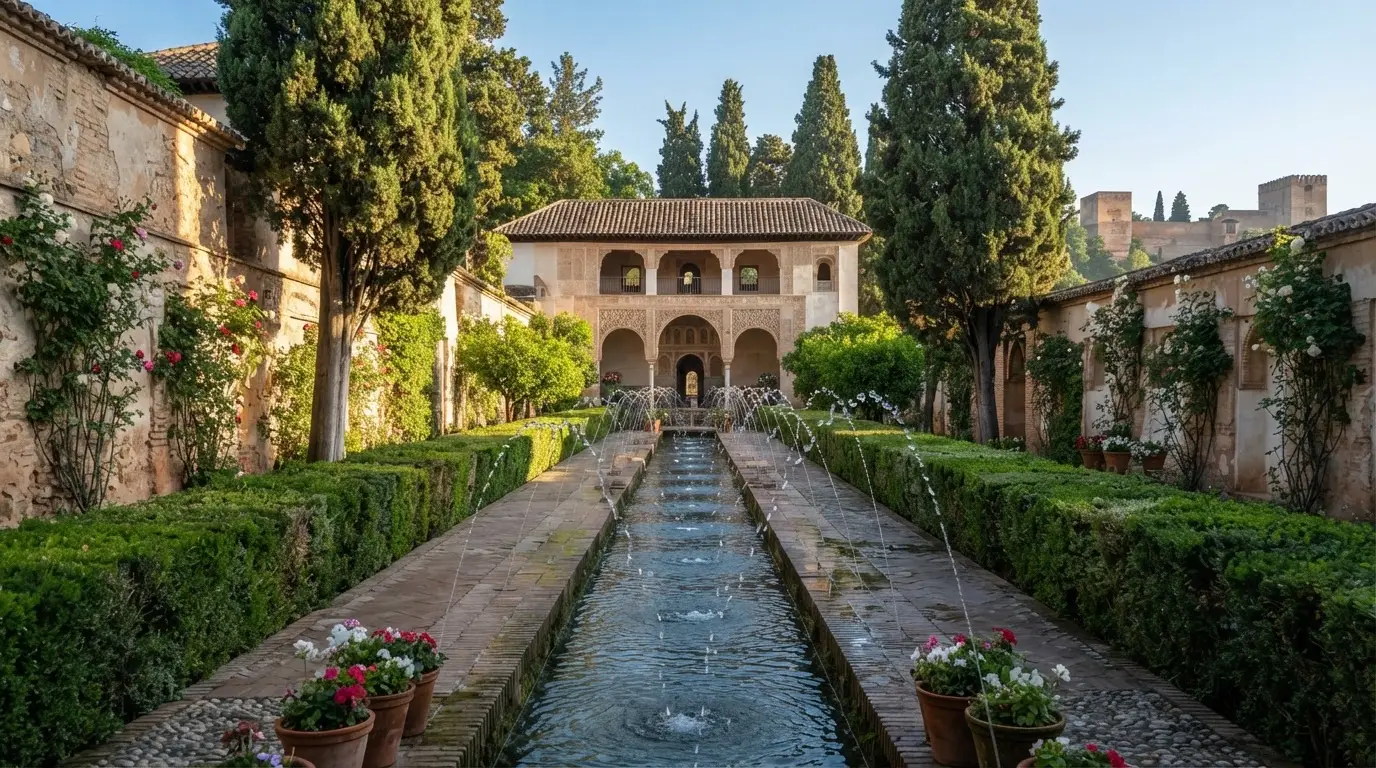
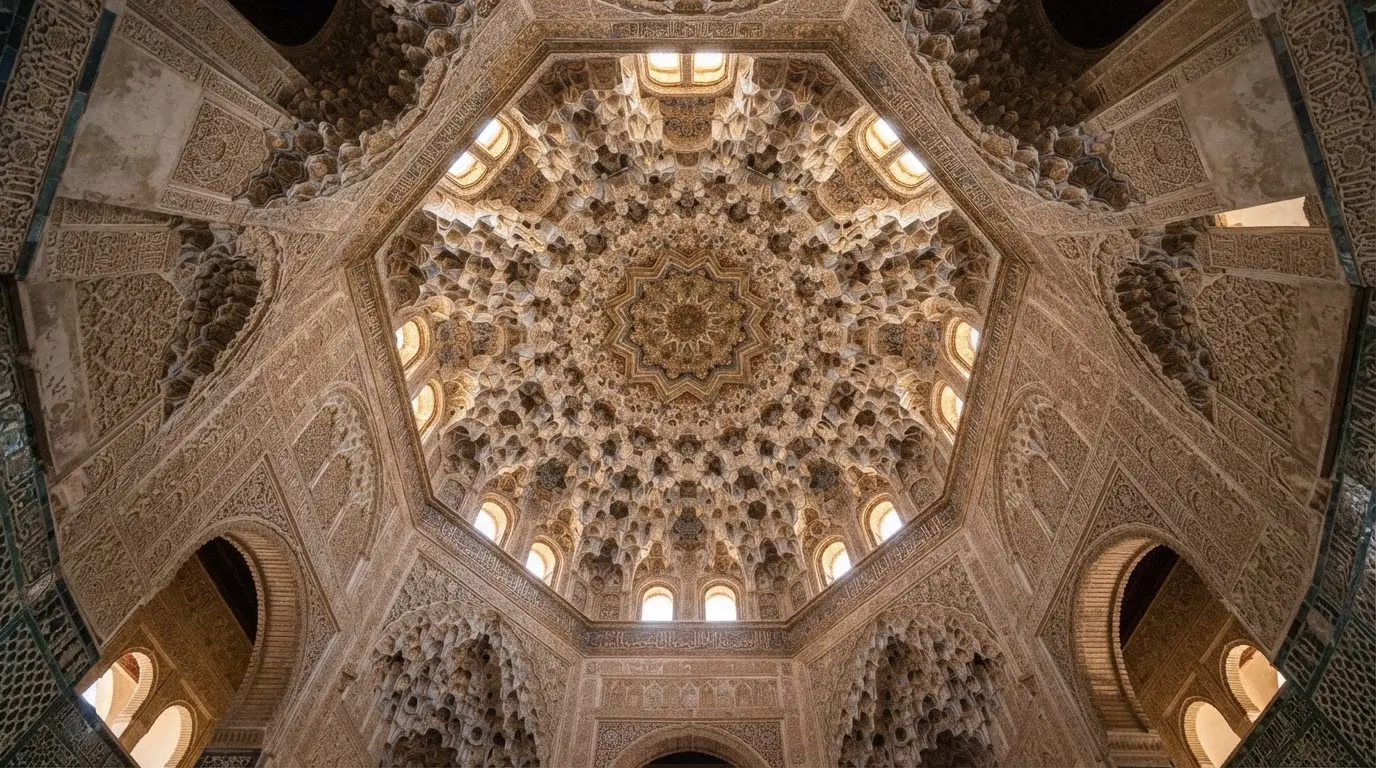
Go deeper with the Court of the Lions, Nasrid architecture: muqarnas, mocárabes and zellige, the Alhambra water system and the Nasrid motto and inscriptions. For the rooms as political theatre, read the Alhambra's political history through its rooms.
What was life like in the Nasrid kingdom?
Nasrid Granada was a refuge and a trading city. The Patronato notes that its capital gradually received Islamic populations as the Christian conquest advanced, and Britannica says the central government's economic resources depended mainly on the silk industry and on external trade.
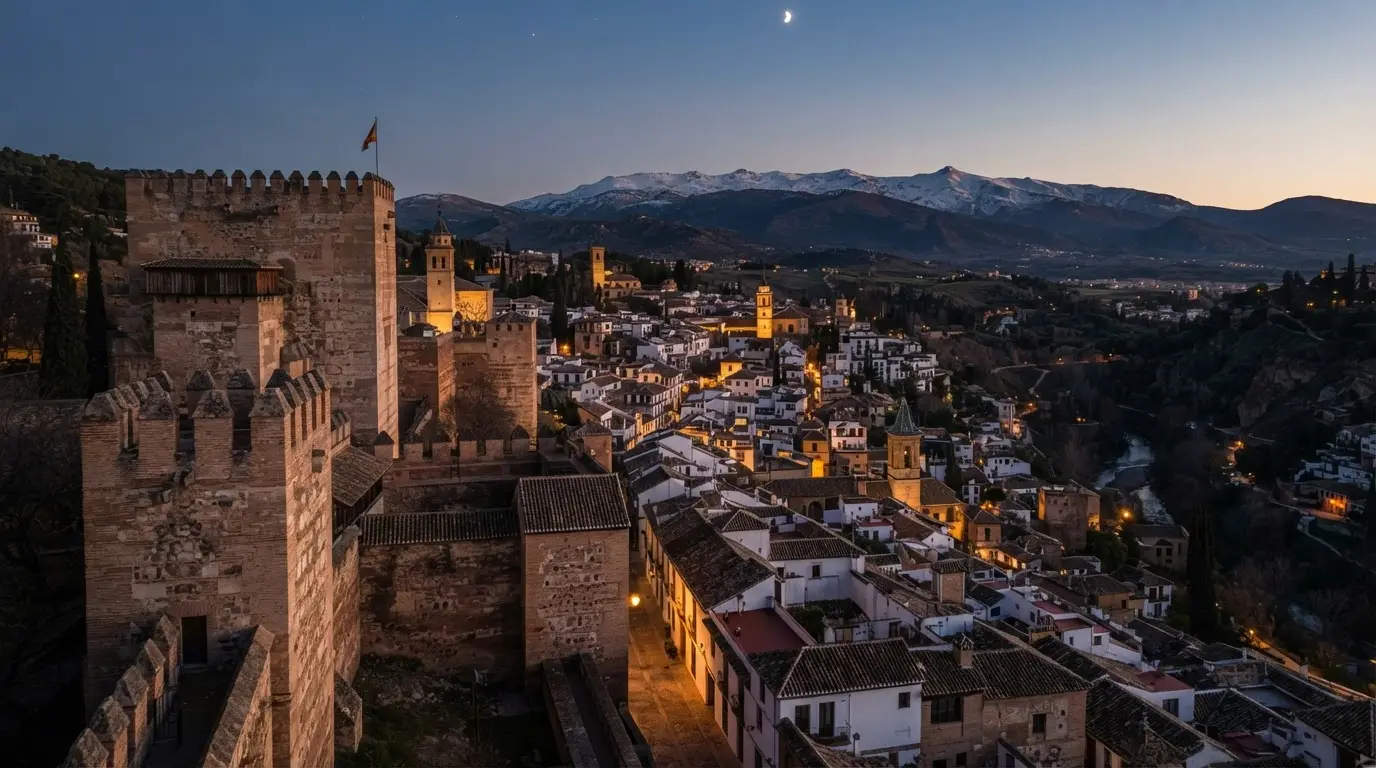
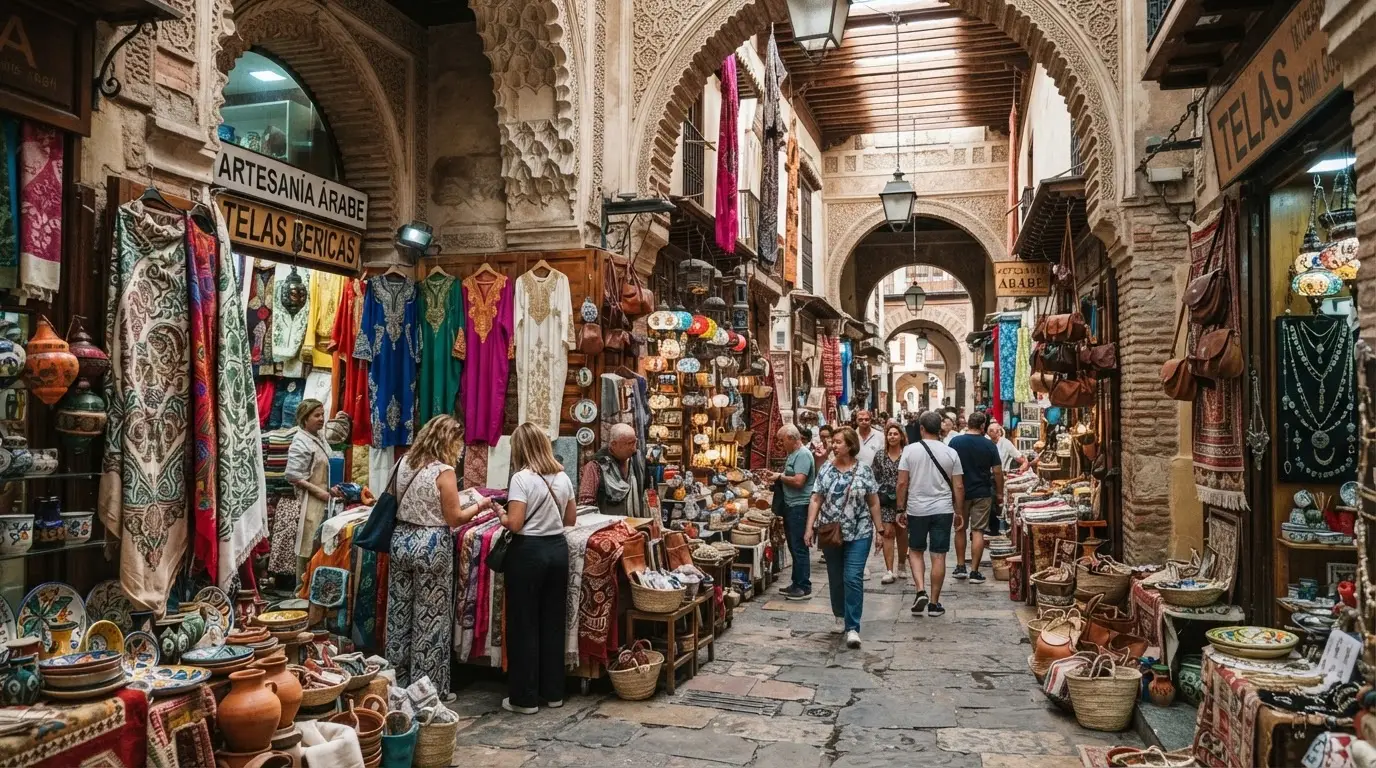
Around the sultan sat a court that included poets such as Ibn al-Khatib and Ibn Zamrak, with the Alhambra as the residence of every Nasrid ruler up to the surrender of 1492. Below the hill, silk was sold in the market quarter now remembered as the Alcaicería.
People and places to follow up: Ibn al-Khatib, the Nasrid vizier, Ibn Khaldun and Ibn Battuta at the Nasrid court, the women of the Nasrid court, the silk trade and the Alcaicería and convivencia among the three faiths.
How did the Nasrid kingdom fall in 1492?
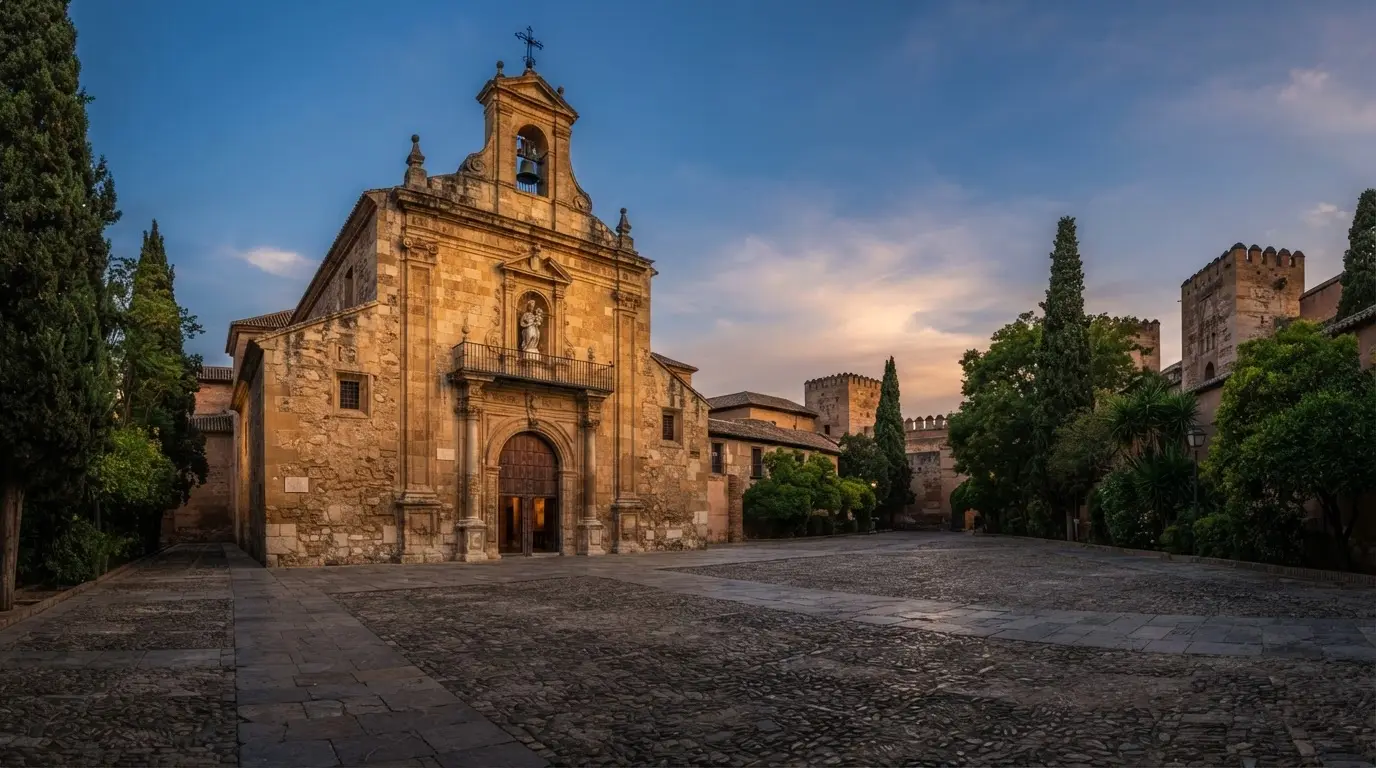
It fell to the Catholic Monarchs after a long decline: Britannica says the rulers who succeeded Muhammad I were weakened by dynastic and factional strife, and that Nasrid rule was finally ended by the Christian conquest of Granada in 1492. The flag of Ferdinand and Isabella was first raised above the Torre de la Vela on 2 January 1492.
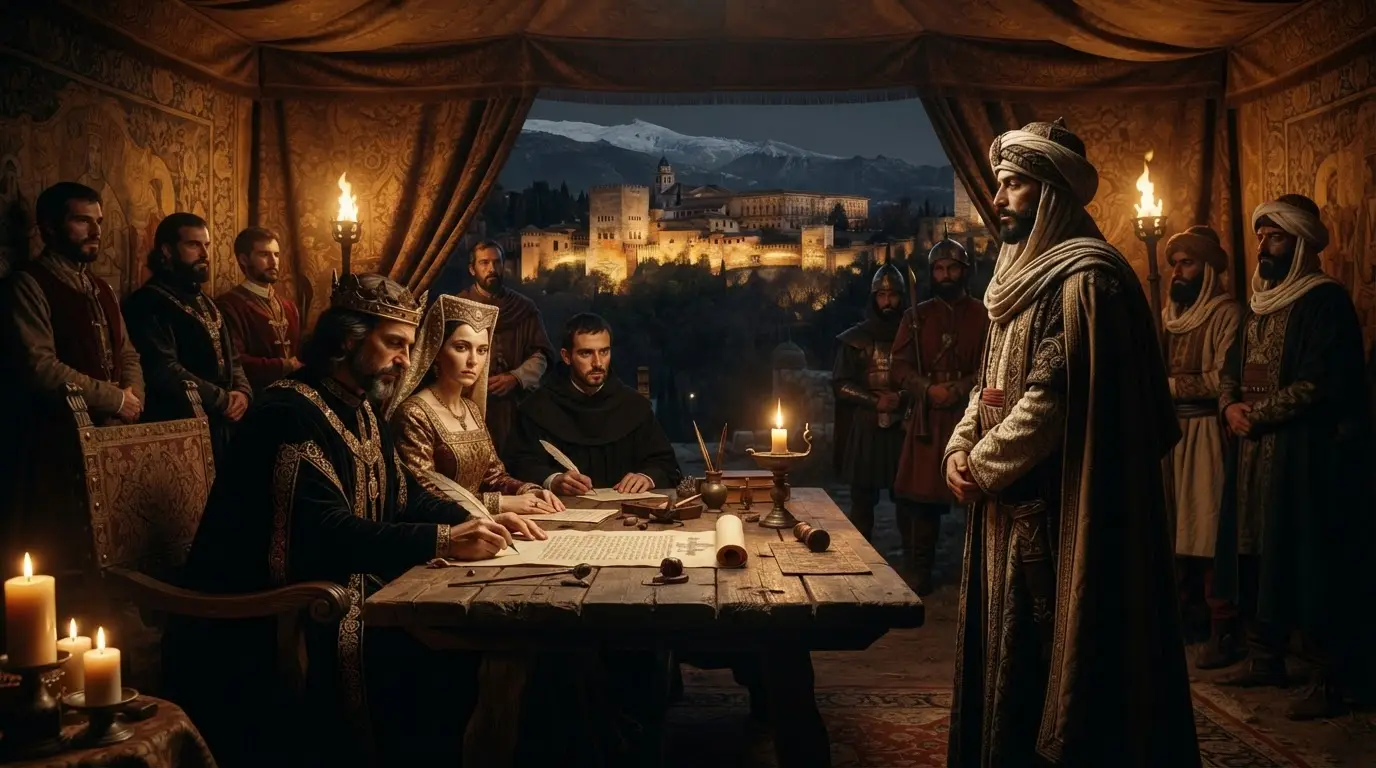
The last ruler is known in Spain as Boabdil. Numbering differs by source, Muhammad XI in some, Muhammad XII in others, so the name is the safer handle. According to Wikipedia he surrendered Granada to Ferdinand and Isabella and was given a lordship in the Alpujarras. The Patronato records that the Catholic Monarchs then ordered extensive repairs to the Alhambra, mainly using Moorish craftspeople.
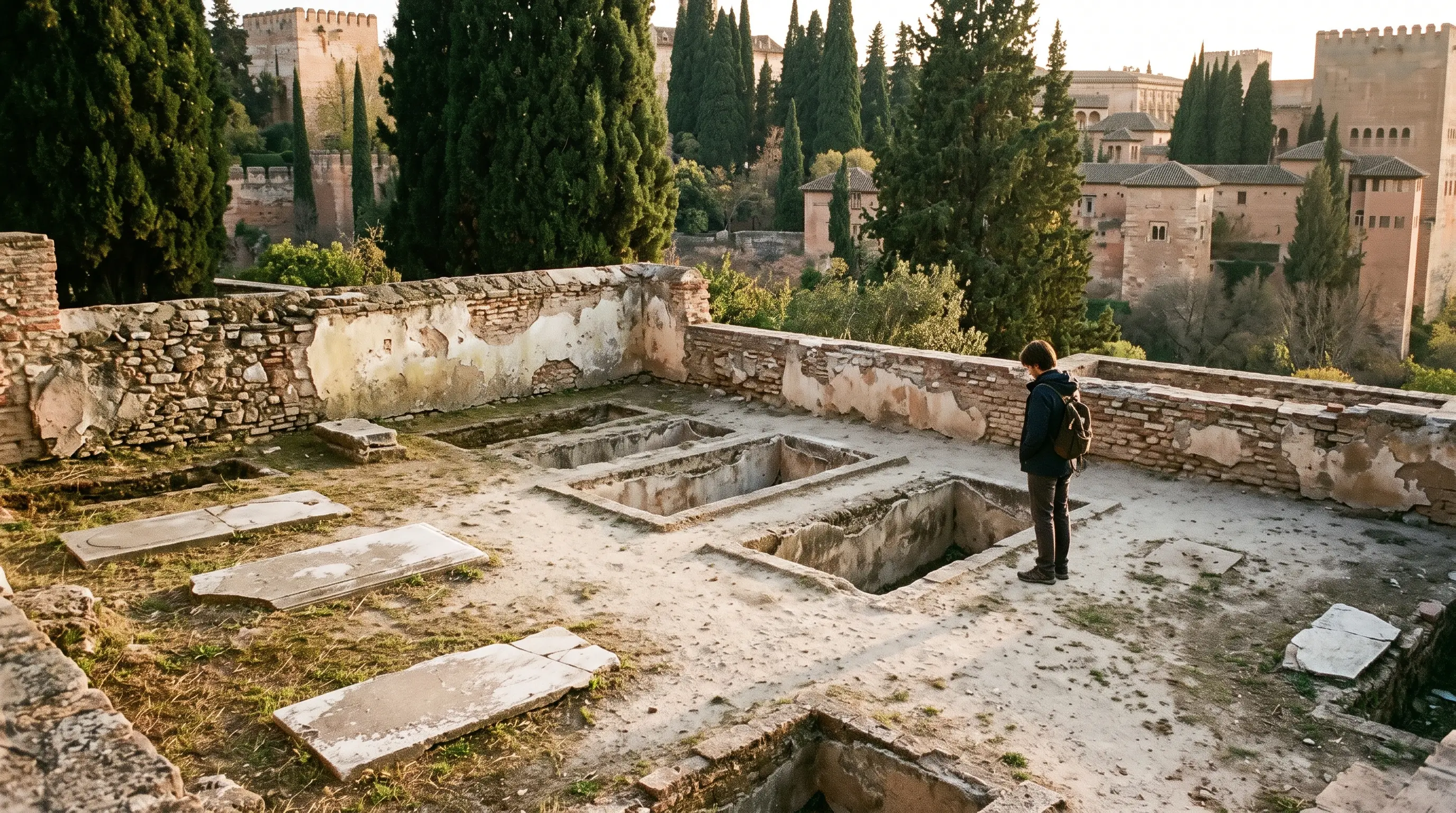
The infighting is told in the Nasrid civil war over the succession and the clan at its centre in the Abencerrajes. The surrender has its own pages: the conquest of Granada, 1492, the 1491 Capitulations, Boabdil and the Alhambra Decree. To stand where the dynasty is buried, see the Rawda, the Nasrid royal tombs.
The full story: Nasrid Granada
Each article in this set takes one strand of the Nasrid story and tells it in full: the sultans and their quarrels, the palaces, the court and its poets, the tribute to Castile and the surrender. Start with the one closest to the room or gate you are about to see, or begin with the chronology and work outward.

Frequently asked questions
Who founded the Nasrid dynasty of Granada?
Muhammad I, who became king in 1232 and founded the Nasrid dynasty, according to Britannica. A mosque assembly in Arjona declared the town's independence on 16 July 1232. He entered Granada in May 1238 and began building the Alhambra. The fuller chronology is in the Nasrid dynasty history.
When did the Nasrids rule Granada?
Britannica gives 1238 to 1492 for Nasrid rule in Granada. The dynasty itself dates from 1232, when Muhammad I's reign began, so you will see both 1232 to 1492 and 1238 to 1492 in print. The two dates mark different events: the start of his reign and his entry into the city.
What was the Emirate of Granada?
It was the Nasrid kingdom, the last Muslim state in Spain, with Granada as its capital. Britannica describes the Nasrids as the last Muslim dynasty in Spain. The capital took in Muslim populations as the Christian conquest advanced elsewhere, and the sultans lived in the Alhambra. See Moorish Granada for the wider Islamic city.
Why did the Nasrids pay tribute to Castile?
Because their survival depended on it. In 1246 Muhammad I secured the recognition of Ferdinand III of Castile in return for a vassalage that, though often ignored, remained in force until 1492, according to Britannica. Wikipedia reports an annual tribute of 150,000 maravedíes after the surrender of Jaén. The mechanics are in the article on tribute and Castile.
Who was the last Nasrid ruler?
Boabdil. Regnal numbering varies between sources: Wikipedia's Nasrid article calls him Muhammad XI, while its article on the Treaty of Granada calls him Muhammad XII. He surrendered Granada to Ferdinand and Isabella in 1492 and was given a lordship in the Alpujarras, according to Wikipedia. His story is in Boabdil, the last Moorish king.
How did the Nasrid kingdom fall?
Dynastic and factional strife weakened the later rulers, and Nasrid rule ended with the Christian conquest of Granada in 1492, according to Britannica. The flag of Ferdinand and Isabella was raised above the Torre de la Vela on 2 January 1492. Read the conquest of Granada in 1492 for the campaign and the 1491 Capitulations for the terms.
Further reading
Sources
9 references Show Hide
- Britannica: Muhammad I, Nasrid ruler (opens in a new tab)
The founder of the dynasty, his move to Granada, the Alhambra and the vassalage to Castile.
- Britannica: Granada, historical kingdom of Spain (opens in a new tab)
The 1246 recognition, the vassalage that lasted to 1492 and the kingdom's silk and trade economy.
- Britannica: Nasrid dynasty (opens in a new tab)
Dynastic strife among the successors and the end of Nasrid rule in 1492.
- Patronato de la Alhambra y Generalife: history (opens in a new tab)
The Alhambra as palace, citadel and fortress, its 14th-century splendour and the repairs after 1492.
- Patronato de la Alhambra: the Tower of Justice (opens in a new tab)
The main gate, built in 1348 under Yusuf I.
- Patronato de la Alhambra: the Court of the Lions (opens in a new tab)
Muhammad V and the palace of his second reign, 1362 to 1391.
- UNESCO World Heritage: Alhambra, Generalife and Albaicín (opens in a new tab)
The Alhambra as the only preserved palatine city of the Islamic period.
- Muhammad I of Granada (Wikipedia) (opens in a new tab)
The 1232 Arjona assembly, the entry into Granada in 1238 and the tribute figures.
- Nasrid dynasty (Wikipedia) (opens in a new tab)
Regnal numbering of the last ruler (Muhammad XI) and the surrender of 1492.