How two hill villages came to feed Granada
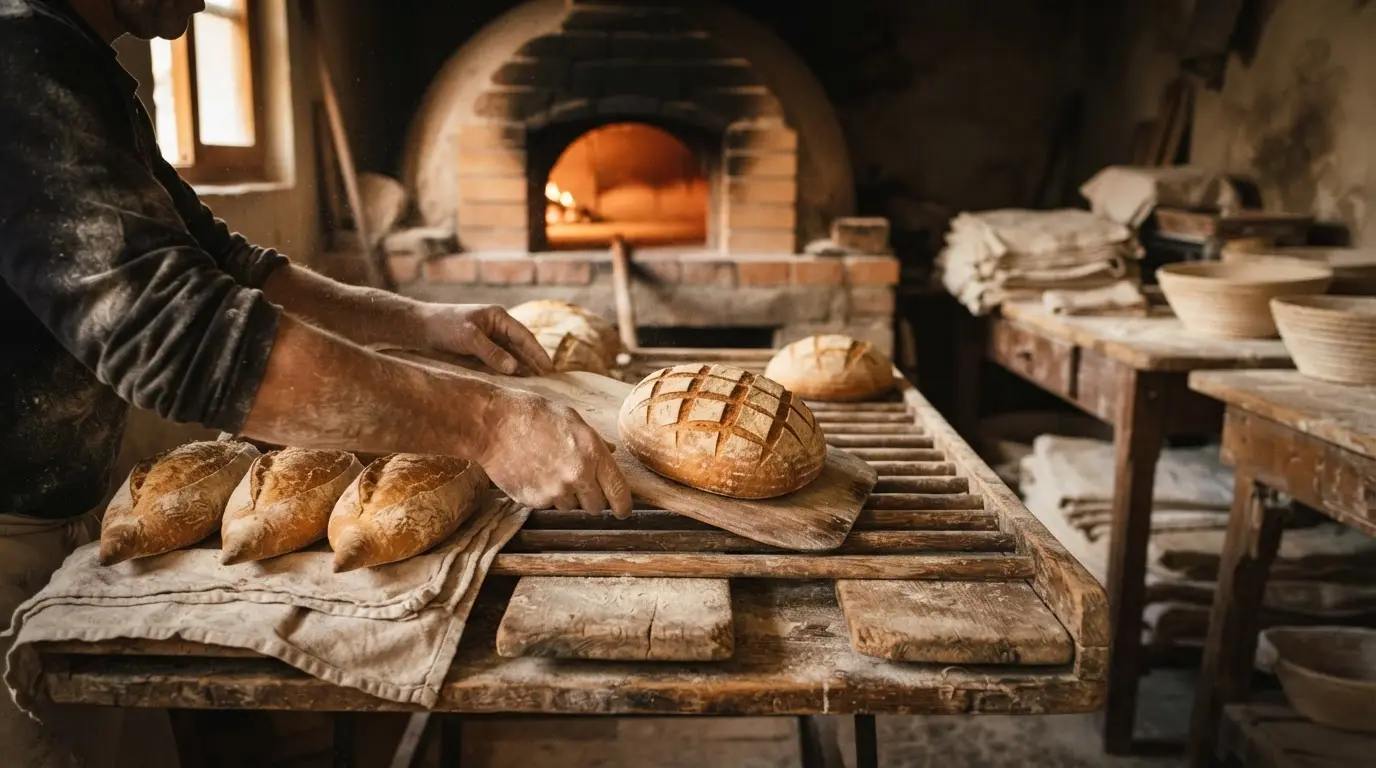
The hills outside Granada had what a bread trade needs: spring water, firewood from the Alfaguara forests for the wood-fired hornos morunos, thyme and rosemary for aroma, and old flour mills close to the ovens[7]. Alfacar gave the bread its name, but Víznar sits inside the same protected zone and shares the trade[1]. Many visitors know it only from the story of Lorca's last day.
The start of that trade is easy to overstate. The bakers' own specification dates its first boost to the demand of Christian settlers after the conquest of the kingdom of Granada, at the end of the 15th century[8]. Written proof begins in the 16th, when the Libros de Apeo y Repartimiento of Alfacar already counted the village's mills and ovens[9].
By the 17th century the bread had a reputation in the city. Henríquez de Jorquera wrote that more than a hundred loads of it entered Granada every day of the year, and that it was reputed the best eaten there[10]. Madoz, in the mid-19th century, counted 17 flour mills and 12 ovens that were always burning in Alfacar, working to supply Granada's bread[11].
300 fanegas
What the PGI protects, and what it leaves open
The application rests on reputation more than on any single ancient recipe: the specification says the link to the place is based mainly, though not exclusively, on historical and commercial standing consolidated through the 20th century[13]. That candour explains the rules. They concentrate on what an inspector can check: where the bread is baked, what water goes in and how it is handled.
Brussels entered the name in the register because no statement of opposition arrived[14]. The regulation is dated 5 November 2013[2]; the Official Journal printed it on 8 November[15], and the regional Consejería's favourable decision had already appeared in the BOJA on 14 July 2011[16]. The applicant was the Gremio de Panaderos de Alfacar, the village bakers' guild[17].
The scheme now has a Consejo Regulador, whose president, Gabriel Vílchez Ibáñez, was named in the Andalusian bulletin in 2021[18]. When the PGI began, about 21 workshops in Alfacar and Víznar were in the scheme[19]; in 2023 Vílchez put the workshops and sales points across Granada city and its surrounding belt at more than 50[20].
How the loaf is made, from spring water to refractory floor
The specification reads like a recipe that happens to be law. It is slow: an artisan loaf takes at least two and a half hours and up to four from kneading to the end of baking[21].
Only five ingredients are allowed: wheat flour, natural sourdough fermented inside the production zone, water from the Alfacar spring, baker's yeast and salt[22]. The spring is Fuente Grande, which drains a limestone-dolomitic aquifer in the Sierra de la Alfaguara at a mean 200 litres a second[23][24], and every bakery must keep proof that the water used in its oven came from there[25]. Research on the old Aynadamar channel notes that this water was long said to serve Víznar, the Beiro valley and the Albaicín, though other farming hamlets held rights too[26]. The Albaicín's aljibes belong to the same story of water moving down from the hills to Granada.
Taste of Granada · Dish
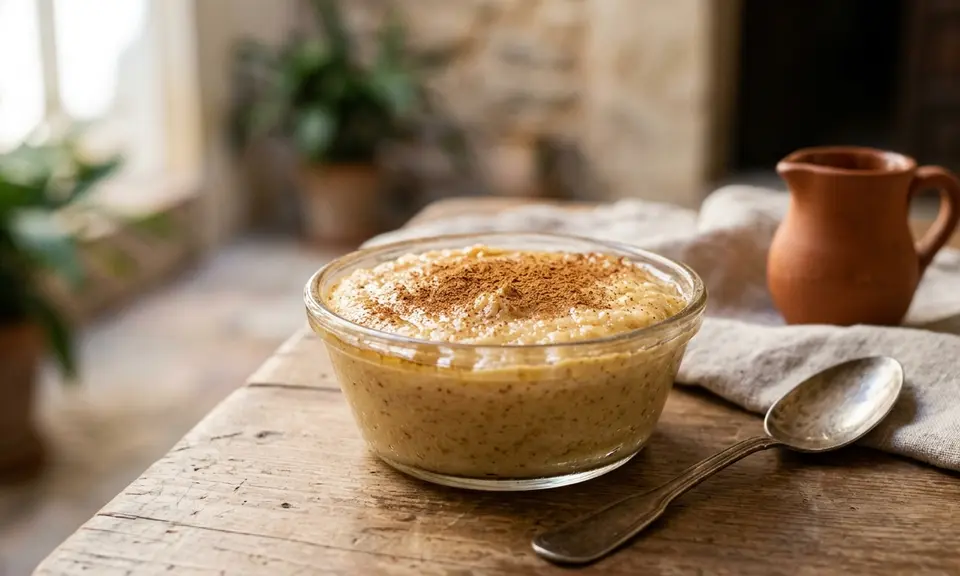
Bienmesabe Granadino
Granada's thick cold almond cream: blanched almonds, egg yolks, cinnamon and lemon zest. A convent sweet sold from monastery turn-boxes since the 15th century.
The flour is relatively weak, with a strength (W) of 110 to 150[27], and the dough is semi-soft, hydrated with 55 to 62 litres of spring water per 100 kg of flour[28]. Sourdough makes up at least 10% of the flour weight[29], refreshed in a step locally called the recentao at least once and then left to ferment in wooden tubs[30].
Shaped pieces rest on wooden boards on cloth tendíos, covered with lonas to keep the moisture up, for one continuous fermentation of one to two hours depending on the weather; proofing chambers are strictly forbidden[5][31]. Ovens need a refractory floor, heated by conduction through it[47]. Certified bread may only go in from the oven's second load[32], and it bakes at 200–230 °C[33].
Bollo, rosco, rosca, hogaza: reading the four loaves
All four formats are cut from one base dough, so shape, weight and the baker's hand-made marks are what tell them apart[34]. The rosco is the fourth format the specification lists; the other three leave marks you can read.
| Format | How to recognise it |
|---|---|
| Bollo | Elongated, with pointed ends called tetas and a single lengthwise cut made before baking; 80, 125 or 250 g[35] |
| Rosca | Joined by hand at a point called the suegra (mother-in-law)[36] |
| Hogaza | Round, with a hand-marked grid (pintao) inside a frame of four cuts; 250 g, 500 g or 1 kg[37] |
A finished loaf should have a golden, slightly shiny, unfloured crust more than 1.5 mm thick, relatively smooth to the touch[38].
Certified loaves are also meant to be stamped: a rubber stamp with food-grade ink prints the letter a plus the identification number of the bakery that produced the piece[4]. No mark, no proof. You are relying on the shopkeeper's word, which matters when some loaves sold as pan de alfacar are not even made in Alfacar[3].
Who still bakes it, and how to find the real thing
Published lists of certified bakeries run from three, Enrique Fernández, Eduardo Vílchez and Horno de Gabriel[39], to five once Pastelería San Juan and Mariano Moreno Caballero, known as Pan de Mariano, are added[40], and a rural-tourism round-up says six[41]. The lists differ, so treat each as a snapshot and look for the stamp on the loaf.
The village has thinned. Gabriel Vílchez, the Consejo's president, recalls more than 100 workshops in the municipality from his childhood[42]. Far fewer remain.
Recommended tours
Tours are selected for quality, not commission. We earn a small fee if you book — at no extra cost to you.




If you go to Alfacar for the loaf, one named address is Eduardo Vílchez's bakery at Calle Julián Besteiro 1[39]; the stamp on what you buy tells you which oven it came from[4]. Granada has other foods that survive through a shrinking number of makers, notably the convent sweets sold through the torno, and like them this one is best bought from the people who bake it.
Deep dive · Article
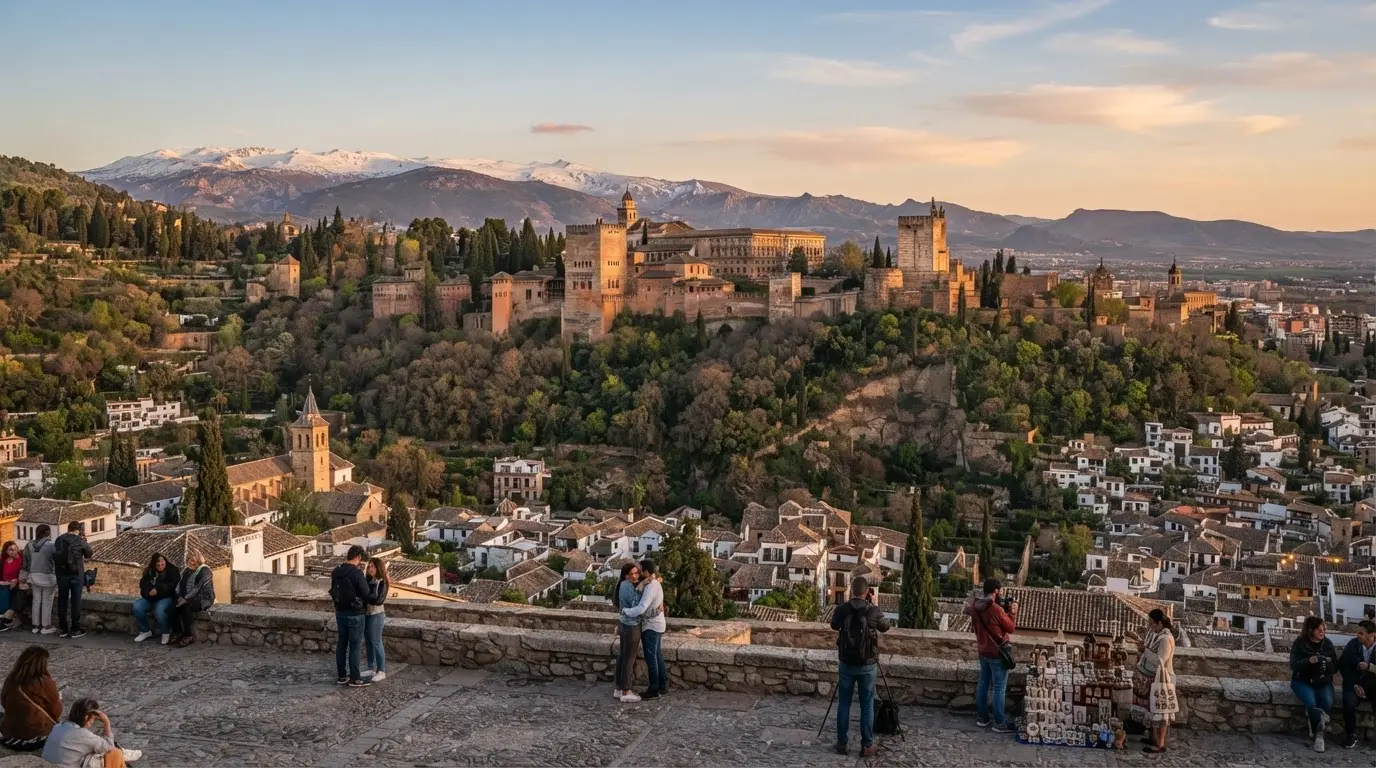
20 Interesting Facts About Granada, Spain
Interesting facts about Granada Spain that guidebooks skip: disputed etymologies, the soldier who saved the Alhambra, and a river buried under Plaza Nueva.
Getting there is straightforward. Metropolitan bus line 0102 (Granada–Jun–Alfacar)[43] and line 0101, which carries on to Víznar[44], both serve the village under the Consorcio de Transportes del Área de Granada, so check the timetable on the Consorcio's site before you set out. The town hall's list, which is undated, also gives Enrique Fernández at Calle Molinillo 1[45] and Horno de Gabriel at Calle Agua 15[46]. Confirm they still trade before you travel. Opening hours and prices are not published there, so phone ahead.