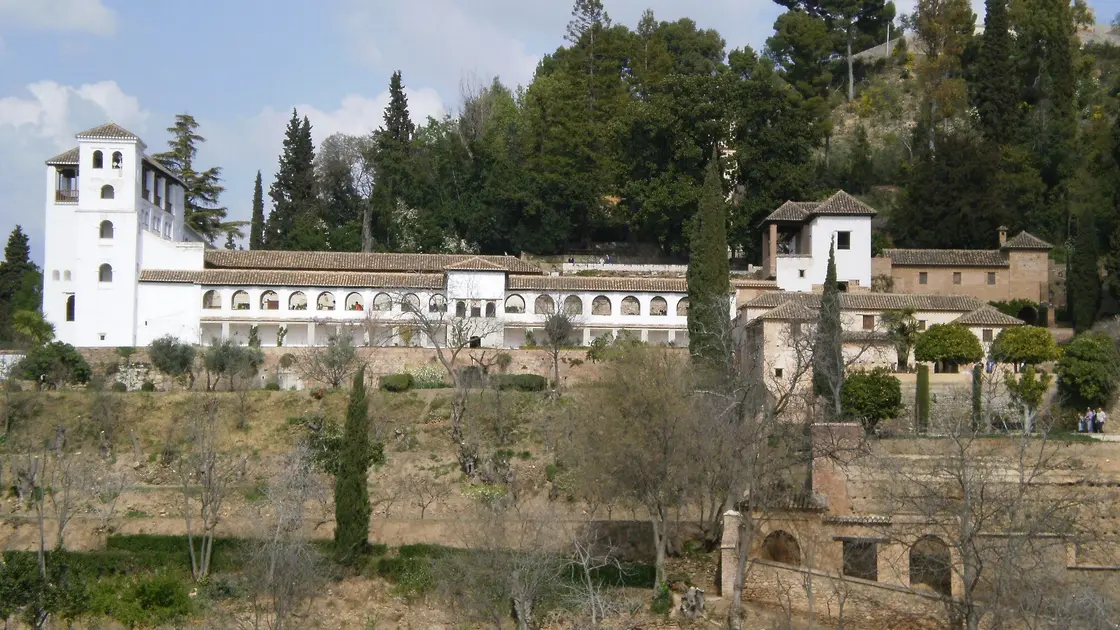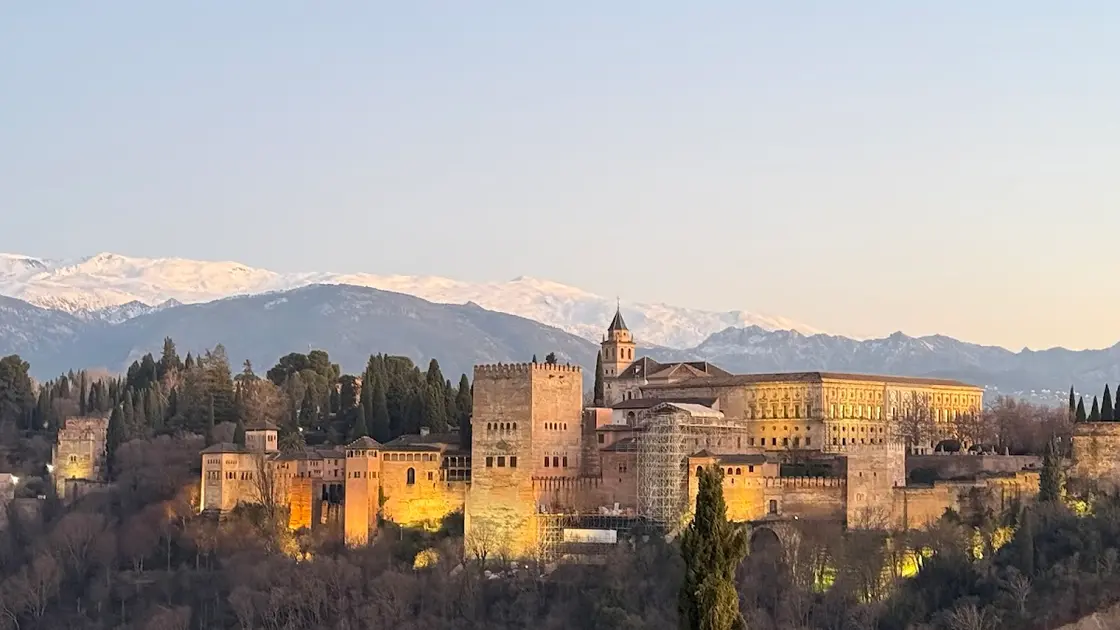
A hundred metres from the Alhambra ticket queue, behind an iron gate most visitors walk straight past, seven hectares of gardens sit almost empty. Carmen de los Mártires costs nothing to enter and asks for nothing in return: no ticket, no booking, no queue. The gap in atmosphere between the two sides of that gate is not subtle.
When to Visit
Best season
April to May (orange blossom, full peacock plumage, mild temperatures); October for autumn colour and lower crowds
Quietest hours
Weekday mornings at opening (10:00–11:30)
Visit duration
45 to 75 minutes
Three centuries of the same hillside
The site has three distinct pasts. During the Nasrid period, this slope of the Alhambra hill held Christian captives taken in the wars before the Reconquista — the name, the Martyrs, is their inheritance.
After 1492, a Carmelite convent rose on the land; San Juan de la Cruz, the 16th-century mystic poet, lived here as prior and wrote some of his most searching verse in a cell that looked out over Granada.
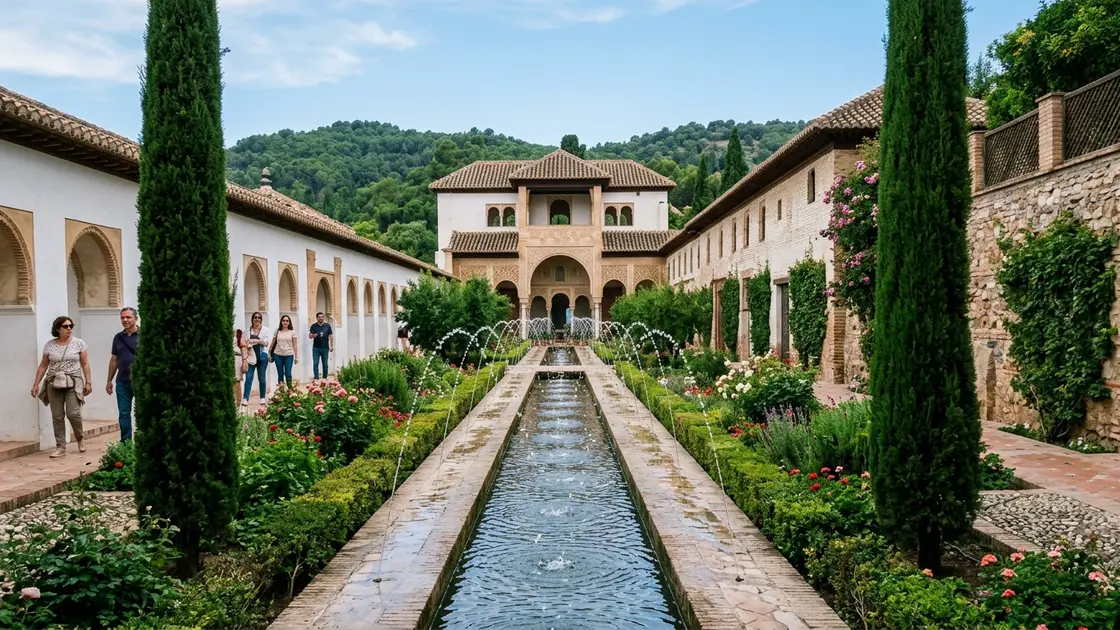
The convent is gone now, its ruins absorbed into the 19th-century Romantic estate that a series of titled owners built across the hillside, part of a broader tradition of cármenes, the walled garden estates of Granada, that flourished on these same hillsides from the Nasrid period onward: formal French parterres in one corner, an English-style landscape garden in another, a Nasrid-inspired water channel, an Andalusian courtyard, a lake where ducks congregate in the shallow end.
April and early May for orange blossom and full peacock plumage
The gardens are at their best in spring when the orange blossom is heavy in the Andalusian courtyard and the male peacocks are in full display plumage. Weekday mornings between 10:00 and 11:30 are the quietest window — the Alhambra crowds have gone through the main gate below and few think to continue uphill to here.
Peacocks, poets, and one old cedar
Peacocks have lived here as long as anyone can remember. They walk the gravel paths without interest in being photographed, stand on the balustrades in the morning sun, and occasionally spread their tails for reasons of their own.
The Poets Route runs through the grounds with stone tablets carrying lines from Federico García Lorca and San Juan de la Cruz, two poets bound to Granada who wrote about longing and the particular quality of Andalusian light. The old San Juan cedar still stands in the garden, a living piece of that earlier history.