Alcazar Genil, Granada's Riverside Palace That Lost Its Pool
Alcazar Genil in Granada today: one 13th-century qubba, two 1892 wings, a garden and the great pool inside a metro station. Free weekday visits, how to go.
Seven years resident in Granada. Specialist in Nasrid architecture, Al-Andalus history, and Andalusian walking routes.
Updated Published
The great pool of an Almohad country palace now survives in part inside a metro station, and the palace itself has shrunk to a single medieval room of 25 square metres[2] that you can enter free on weekday mornings[3]. Alcazar Genil is what remains of a riverside pleasure estate on the Genil, and it rewards a short visit (a guided one runs about 45 minutes[24]) rather than a day out. Take the Alcázar Genil metro station[22] or buses 5 and U3. If you want the full sweep of Nasrid interiors, the Alhambra is the better use of a free morning.
Almunia ordered built
1218
Almohad governor Ishaq ibn Yusuf, near the San Sebastián hermitage[1]
Floor area of the qubba
25 m²
A room 10 m high, with stucco, muqarnas and a timber roof[2]
Foundation visiting hours
9:00-14:00
Monday to Friday, no booking needed, no charge[3][4]
In this article
Jump to a section
⌄
What survives: one medieval room, two later wings and a garden
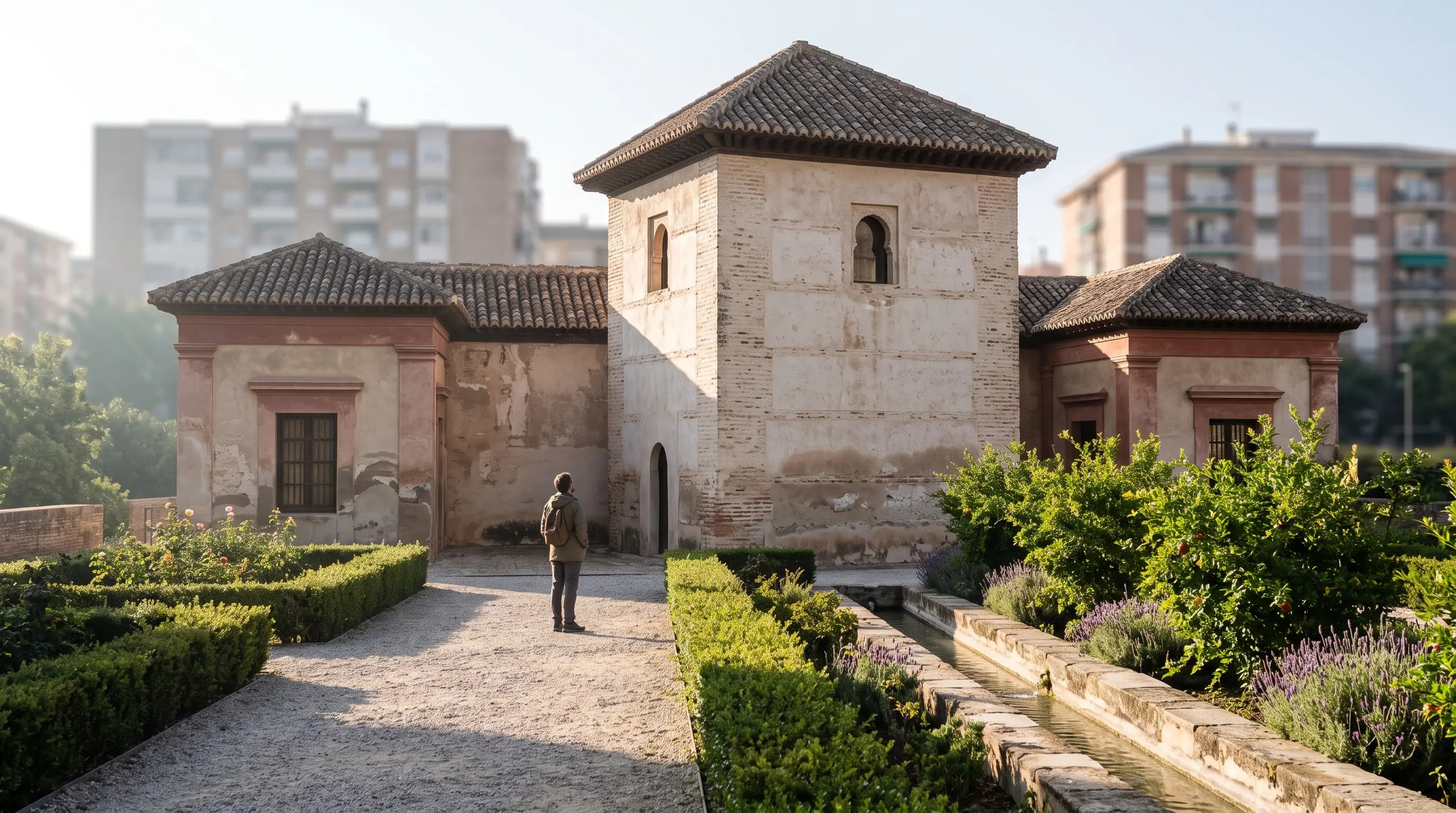
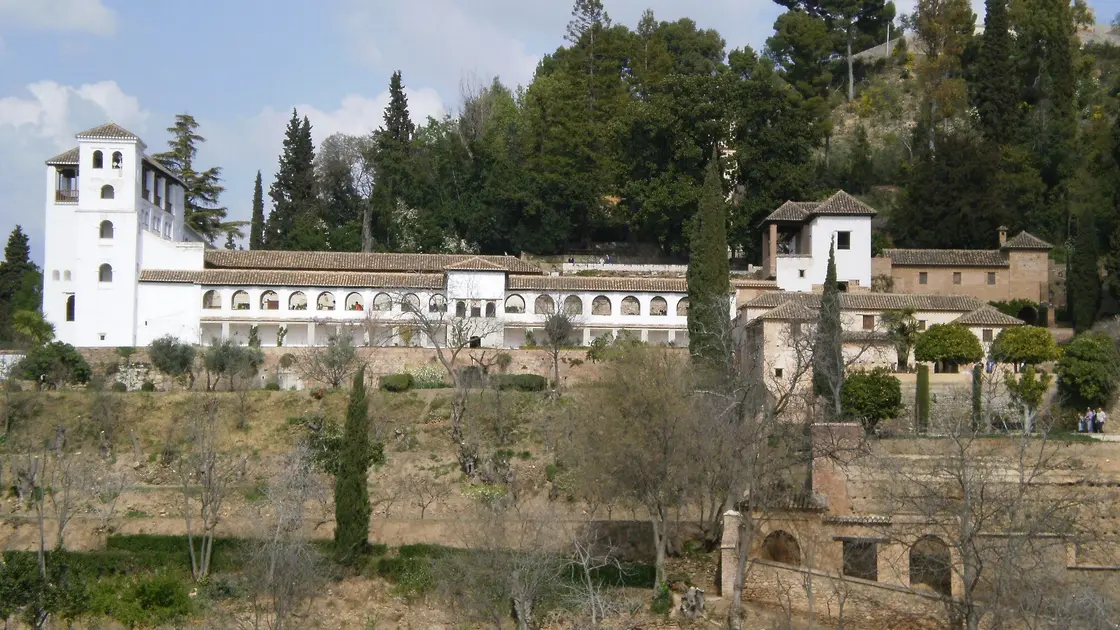
A central qubba, a tall square chamber from the 13th century, sits between two lateral pavilions raised in the 19th[5], and the whole ensemble is a Bien de Interés Cultural.
Rafael Contreras, better known for his Alhambra interiors, added the wings in 1892 with a small porch on the front[6]. What looks like a Nasrid facade is a late 19th-century frame around a medieval core. The core is the point.
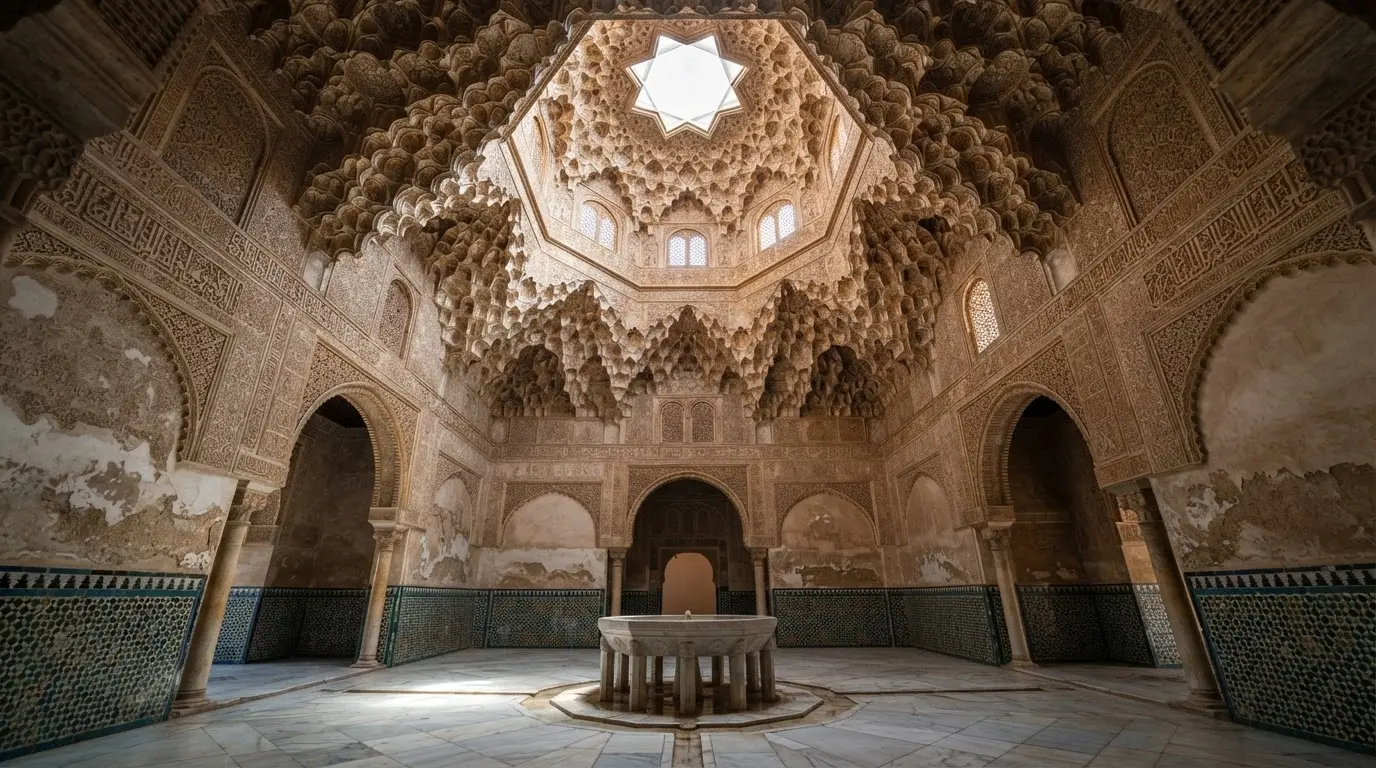
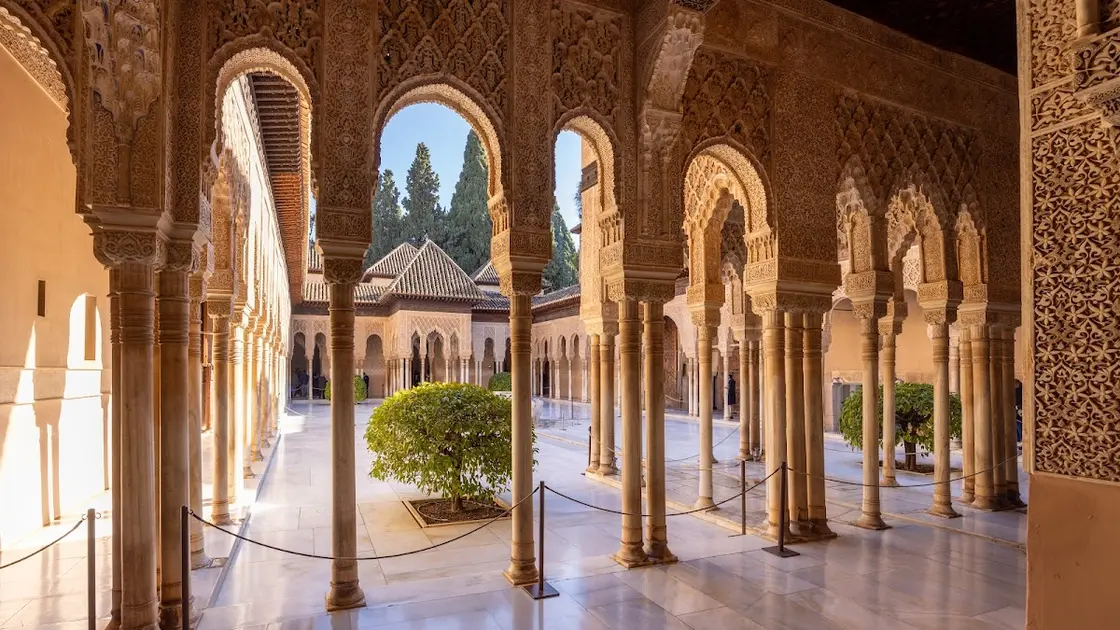
The qubba measures 25 square metres on the floor and 10 metres to the roof[2], so you stand in something closer to a well than a hall. Look up first at the timber, then at the stucco and muqarnas, which is where the Nasrid hand shows. The remodelling is credited to either Ismail I or Yusuf I, an attribution still argued, but the decoration is Nasrid either way.
Only the central chamber opened to the outside, so the building faced inward and treated the surrounding gardens as something to look out on, not live in[7]. It is a closed box. A palace that melts into its garden, in the manner of the Generalife, this is not.
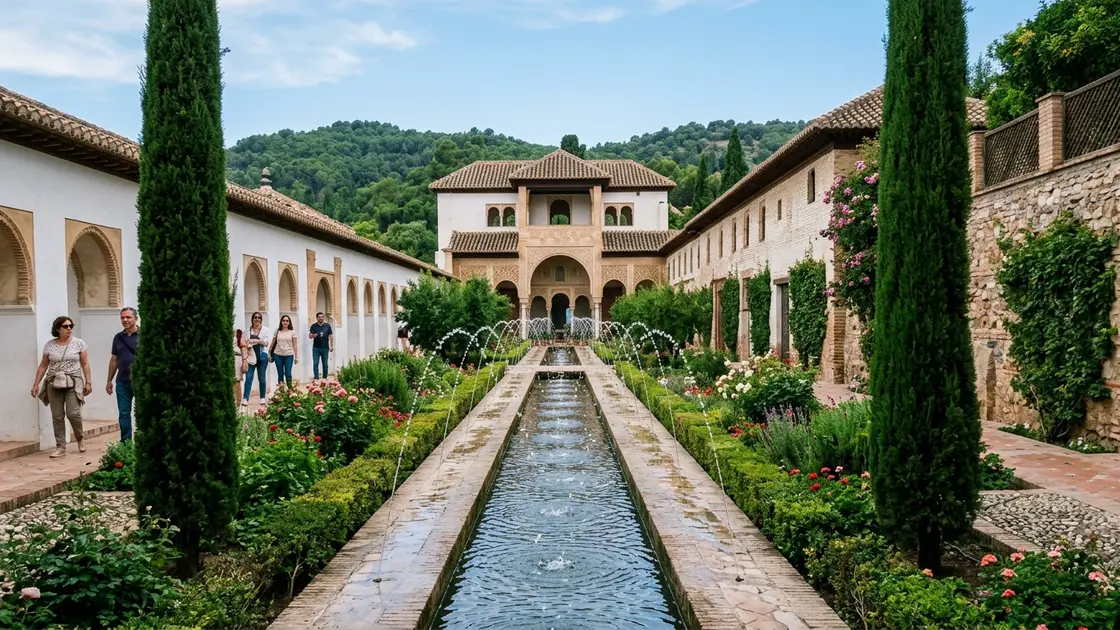
The garden is planted mostly with the stock species of Andalusi gardening: myrtle, lavender, pomegranate and nettle trees[8]. Come for the room, and treat the garden as its setting.
From Almohad almunia to Nasrid pleasure garden
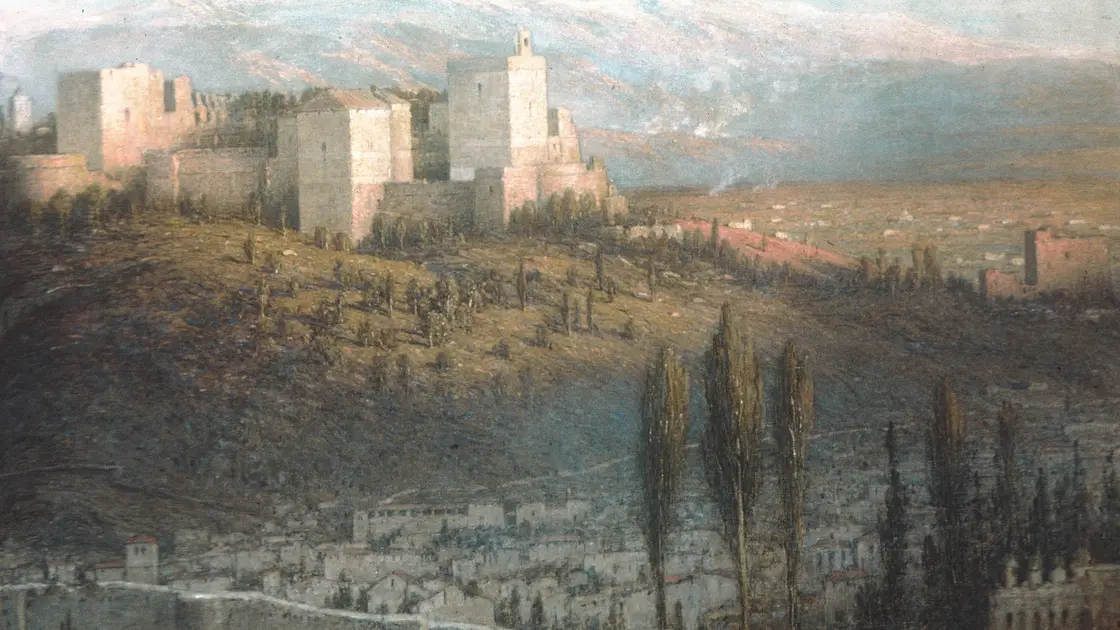
In 1218 or 1219 the Almohad governor Ishaq ibn Yusuf had a royal almunia built on what was then the edge of Granada[1][9]: a villa set among orchards and irrigated land, closer to a country retreat than a court. Nobody lived behind walls here.
The small ribat built at the same time still stands nearby as the Ermita de San Sebastián, after a conversion to Christian use[10]. Under the Nasrid sultans the estate worked as residence, retreat and farm at once[11], and that mix lets us deduce musical evenings, with poets, singers and lute players and running water for accompaniment.
Timeline
1218-1219
Almunia founded
The Almohad governor Ishaq ibn Yusuf has the estate built beside the Genil.
1309
A dethroned sultan
Muhammad III lives here for a time after losing the throne, then leaves for Almuñécar.
1526
Navagero visits
The Venetian ambassador Andrea Navagero visits the estate and its pool.
1892
Wings added
Rafael Contreras adds the two lateral pavilions and a small porch.
1950s
Sold to the state
The Dukes of Gor sell the property to the state.
1977
Pool built over
Two housing developments destroy most of the great pool.
Muhammad III, grandson of Muhammad I, founder of the Nasrid dynasty, sat out part of his deposition here before leaving for Almuñécar[12]. A house that could shelter a fallen sultan was plainly meant to be comfortable and private. The Venetian ambassador Andrea Navagero had visited by 1526[13], and the Dukes of Gor held the estate until they sold it to the state in the 1950s[14].
Read as a whole, the estate has an almunia's logic. A city palace is a political machine; an almunia is a retreat that also pays for itself, which is why Alcazar Genil mixes courtly and agricultural uses where the Alhambra does not.
The great pool, now a metro station exhibit
Ibn Zamrak, vizier and court poet of Muhammad V, dedicated verses to the pool[15], a sign it was an ornament worth a poem and not merely a tank.
The Tarramonta, one of the Genil's irrigation channels, fed it[16], so the water that mirrored the qubba had been drawn off the river that watered the fields. Reservoir, garden and building were one system. Remove one and the others lose their sense.
Two housing developments took most of the pool in 1977, leaving only a stretch below the Camino de Ronda[17], some 15 by 27 metres[28] of a pool that ran to roughly 128 by 27[29]. Its published length varies by several metres from one study to the next, so distrust any guide that gives a single figure without a range.
At the Alcazar Genil metro station the redesign sent trains beneath the remains and left them in view[18], and the public can see them in the station itself[27]. The reservoir now sits on show inside a transport hub. Odd, and good.
Between the 1950s sale, the housing blocks and a plan that hid the interior from the street, Alcazar Genil never became a landmark in the way the Alhambra did. The pieces were scattered across a century before anyone put them back on display.
Alcazar Genil versus the Cuarto Real de Santo Domingo
Granada has two small Nasrid palaces that people mix up, and the mix-up is not careless. The Cuarto Real de Santo Domingo was a palace before it was a convent, and it stands inside the city in the Realejo[19]. Its floor plan echoes the original plan of Alcazar Genil[20], so photographs of the two interiors are easy to confuse.
They are still different visits:
Alcazar Genil: a riverside estate with a qubba, gardens and a pool story, open free on weekday mornings
Cuarto Real de Santo Domingo: a palace in the Realejo that later became a convent
The Generalife: the Nasrid country estate that survives with its pavilions and gardens, and the one to see first if time is short
If the idea that appeals is a lost Nasrid palace you can walk into for nothing, Alcazar Genil is the better answer. Simple. If you would rather stay among the Realejo streets, the Cuarto Real is the one inside the city.
How to visit Alcazar Genil
The Francisco Ayala Foundation has its seat in the palacete[21] and opens the monument on its own working week: Monday to Friday, 9:00 to 14:00, with no booking and no charge[3][4].
Check the day before you go
No weekend opening is listed, and third-party listings disagree on the opening and closing hours. Confirm with the Foundation before crossing town.
The Foundation lists the Alcázar Genil metro station as the way in[22], which lets you see the pool remains first and the room second. The address is Calle Rey Abu Said, s/n, 18006 Granada[25], and buses 5 and U3 also run there[26].
The visit has three stops:
The qubba, with its stucco, muqarnas and timber roof
The left pavilion, which holds Francisco Ayala's personal library and a room named for the Granadan painter Luz García-Duarte[23]
The gardens, with their myrtle and pomegranate trees
Recommended tours
Tours are selected for quality, not commission. We earn a small fee if you book — at no extra cost to you.
A guided visit arranged in advance lasts about 45 minutes[24]; drop-in visitors set their own pace. Go early: the hours end at two, and a late start costs you the room. The Foundation is a working institution that happens to occupy a monument, so keep your voice down in the library. Pair the visit with a look at the Ermita de San Sebastián nearby and, to see how the same plan became a convent, an afternoon at the Cuarto Real in the Realejo.
Frequently asked questions
Is Alcazar Genil in Granada open to visitors?
Yes. The Francisco Ayala Foundation, which occupies the building, lets visitors in during its own hours, listed as Monday to Friday from 9:00 to 14:00. Entry is free and no booking is needed. Other listings give slightly different hours, so confirm before you go.
What is left of the original Alcazar Genil palace?
One central 13th-century qubba with Nasrid stucco, muqarnas and a wooden roof, two lateral pavilions added in the 19th century, and restored gardens. The great pool was largely destroyed in 1977; a stretch survives below the Camino de Ronda and is visible at the metro station.
Is Alcazar Genil the same as the Cuarto Real de Santo Domingo?
No. They are two separate Nasrid buildings. The Cuarto Real de Santo Domingo is a palace inside the city, in the Realejo, that later became a convent. Alcazar Genil was a riverside country estate. Their floor plans are similar, which is why the two are often confused.
Who built Alcazar Genil and when?
The Almohad governor Ishaq ibn Yusuf had a royal almunia built here in 1218 or 1219. The qubba you can see today carries Nasrid decoration from a later remodelling, and the side wings were added by Rafael Contreras in 1892.
What happened to the great pool at Alcazar Genil?
Most of it was destroyed in 1977 by two housing developments. A stretch below the Camino de Ronda survives. When the metro station was designed, the plans were changed so trains run beneath the remains, which are left visible to visitors.
How do I get to Alcazar Genil by metro?
Take the metro to the Alcázar Genil station, which the Foundation lists as the way to reach the monument. The address is Calle Rey Abu Said, s/n, 18006 Granada, and buses 5 and U3 also run there. Because the pool remains are part of the station, you can combine the palace and the pool in one trip.
“una sala de veinticinco metros cuadrados con diez de altura ricamente adornada durante el periodo nazarí con yeserías, mocárabes y cubierta de madera.”
“El edificio, declarado Bien de Interés Cultural, está compuesto por una qubba central, edificada en el siglo XIII, y dos pabellones laterales, levantados en el siglo XIX.”
“Only the central chamber of the palace was entered from the outside, such that the building was a relatively introverted space rather than one that was open to the gardens around it.”
“This was later converted into a Christian hermitage and is now known as the Ermita de San Sebastián ("Hermitage of Saint Sebastian") or the rábita ("ribat").”
“El pabellón izquierdo alberga la biblioteca personal de Francisco Ayala y la sala Luz García-Duarte, dedicada a la pintora granadina; este espacio funciona también como sala de actividades.”