
Fiesta de la Virgen de las Angustias
Granada's patron saint festival: floral offering on 15 Sep, procession on 27 Sep 2026. Free to attend. Thousands queue to place flowers on the basilica facade.
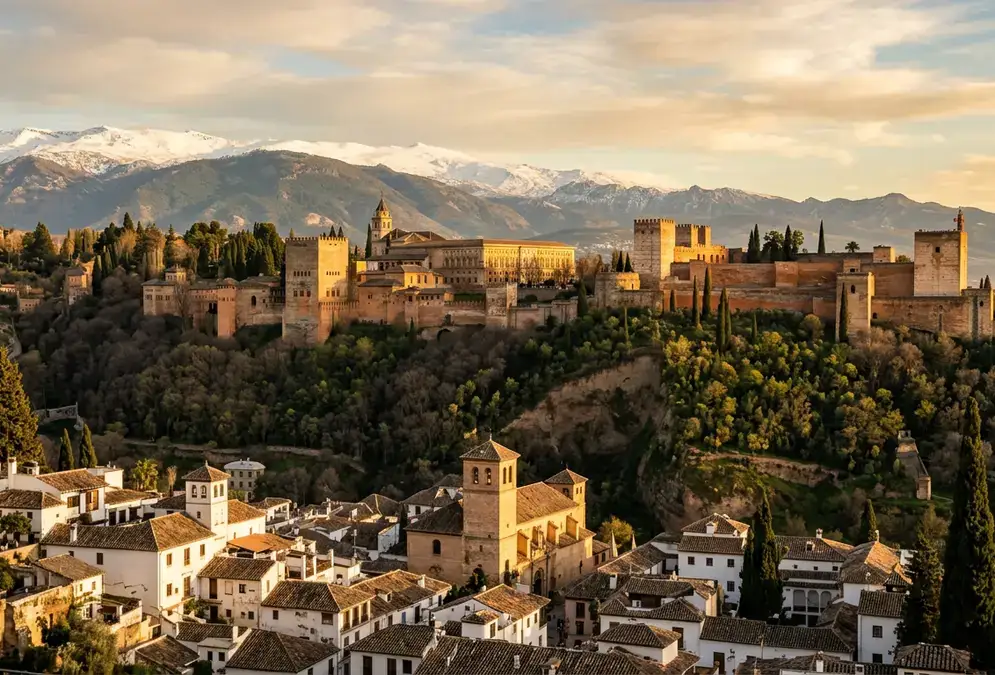
Granada is an Andalusian city at the foot of the Sierra Nevada, 70 km from the Mediterranean coast. The Alhambra, Generalife and Albaicín are UNESCO World Heritage, inscribed in 1984 and extended in 1994. Capital of the last Nasrid kingdom of al-Andalus until 1492, it is one of Spain's last cities where every drink comes with a free tapa.
Choose your visit length
Last updated July 2026
Build your trip
One, two or three days, mapped out hour by hour with the walking order that works.
How to book the Nasrid Palaces before they sell out, plus prices and timed-entry rules.
Month-by-month weather, crowds and festivals: the full picture for picking the right window to visit.
AVE trains, Granada airport, buses and the practical basics for arriving.
June and July belong to the Festival Internacional de Música y Danza, which stages concerts inside the Alhambra's Palace of Charles V and the open-air Generalife Theatre. July heat pushes city life into the evenings: the Guitar Festival at the Alhambra runs through to early August. The next four dates on the calendar are below, from Corpus Christi to Holy Week.
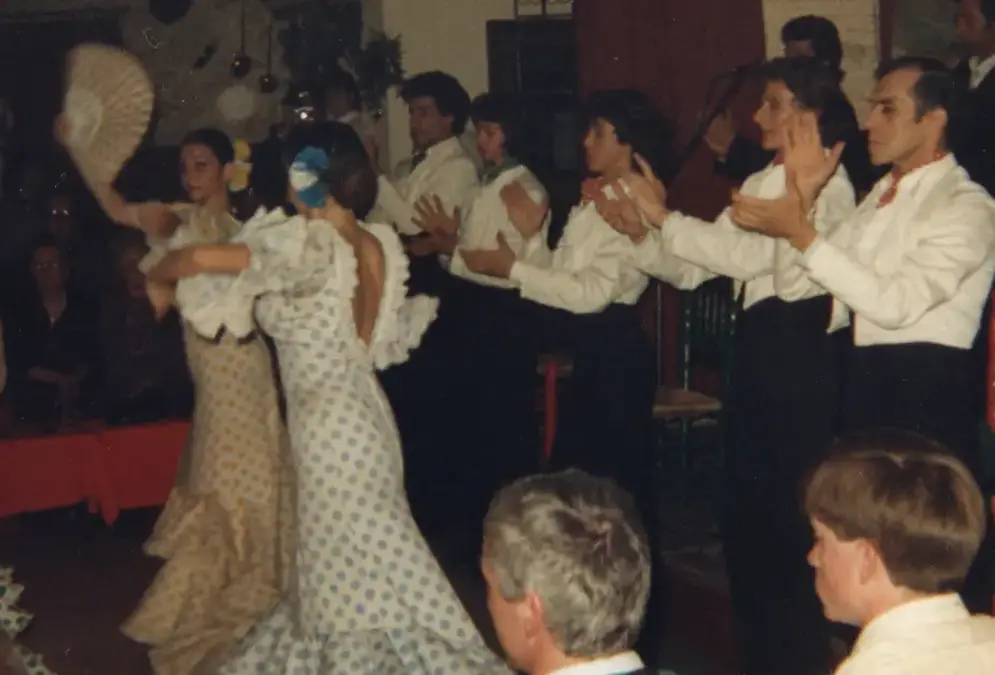
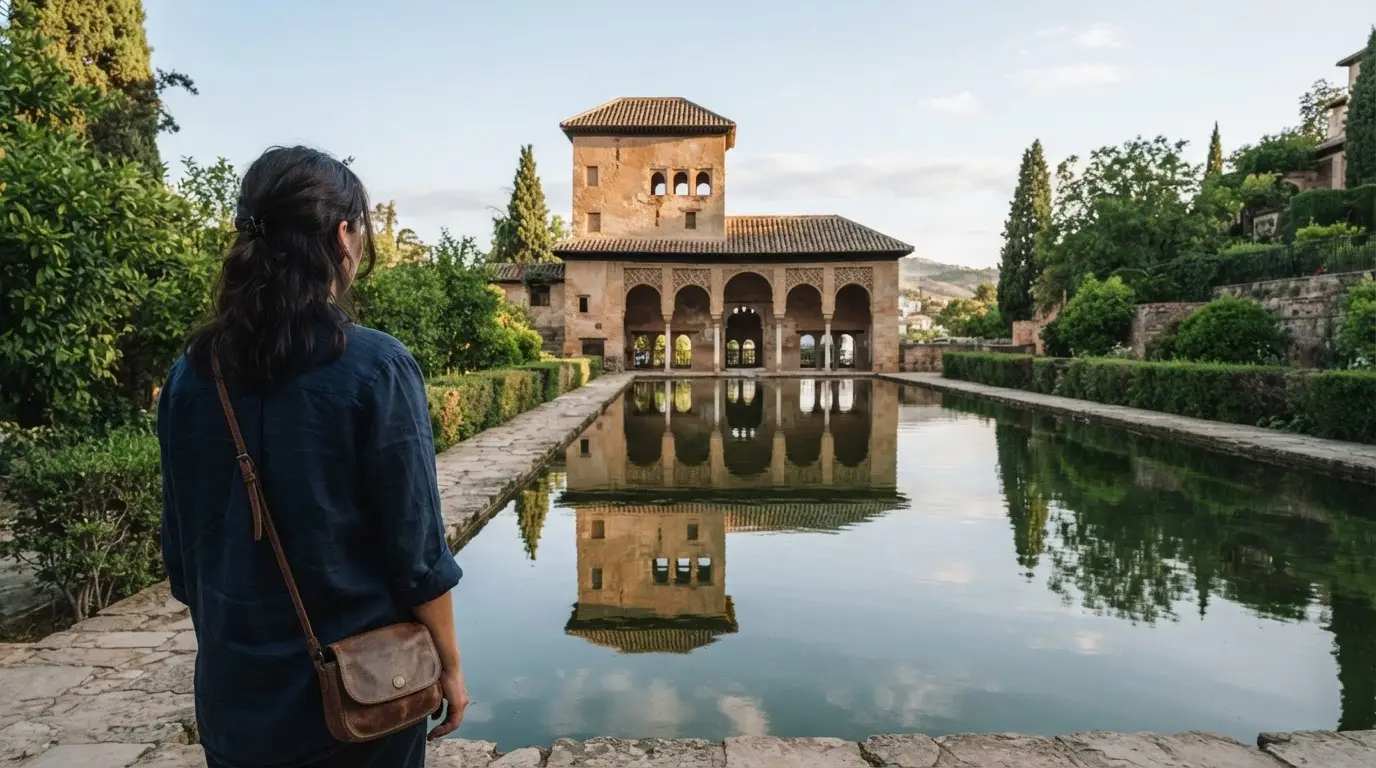
Granada's patron saint festival: floral offering on 15 Sep, procession on 27 Sep 2026. Free to attend. Thousands queue to place flowers on the basilica facade.
80+ concerts at 70+ venues in November 2026. Theatre headliners at Teatro Isabel la Católica €20–40; much of the programme is free in bars and plazas.
Granada Marathon returns in November 2026 after 20 years. 42.195 km through seven villages, start and finish in the city centre. Registration from €35.
Granada's January 2 civic-religious ceremony at the Royal Chapel commemorates 1492. Free to attend, but politically contested — counter-events run in parallel.
The Alhambra, the Alcazaba, Granada Cathedral, the Royal Chapel: centuries of Moorish and Christian architecture within walking distance of each other.
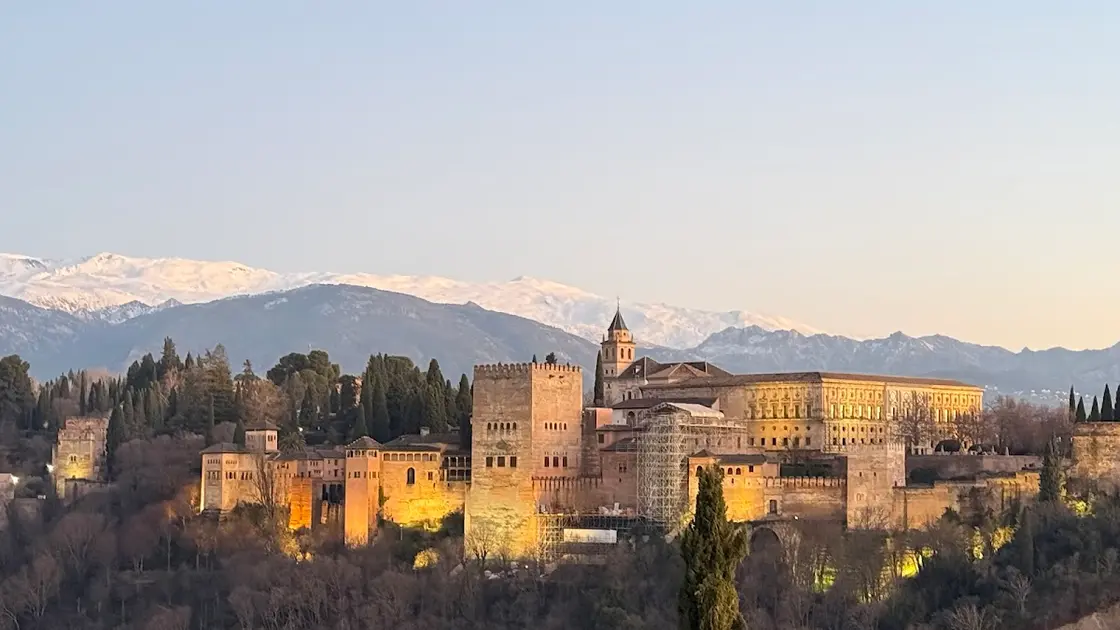
Granada's UNESCO fortress-palace on the Sabika hill. Nasrid Palace tickets sell out weeks ahead and daily entry is capped. Book via the Patronato website.
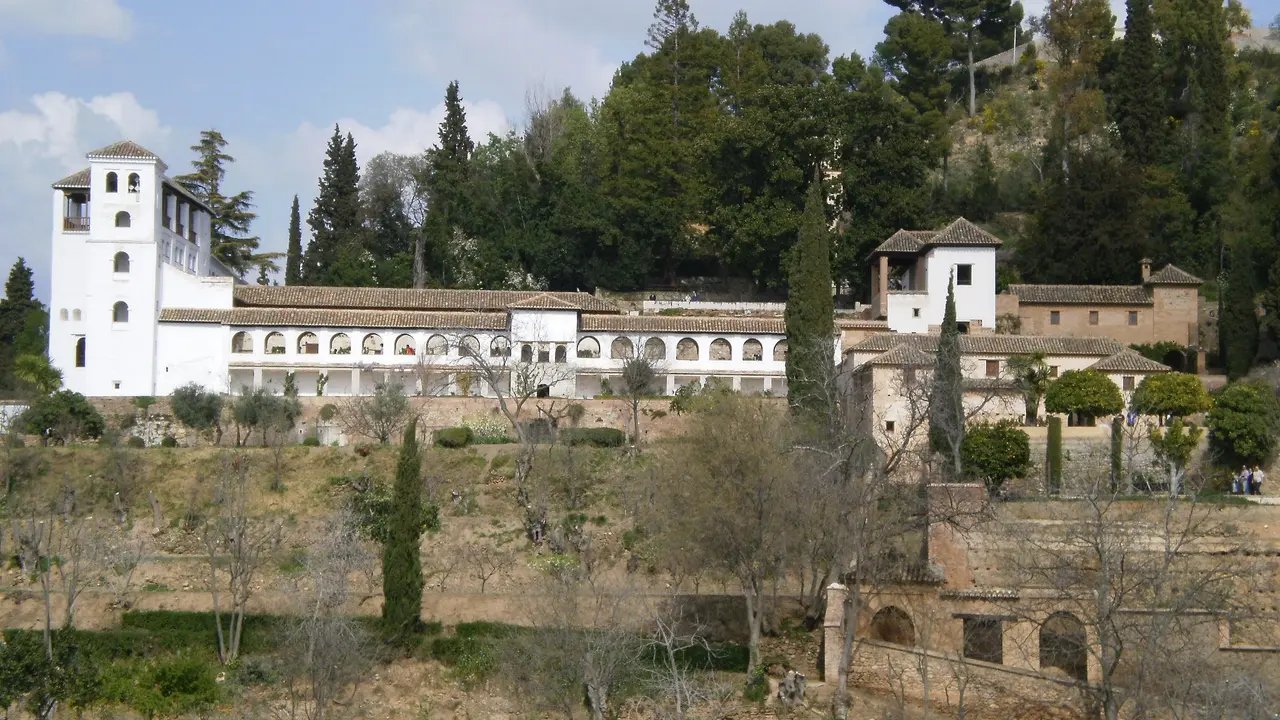
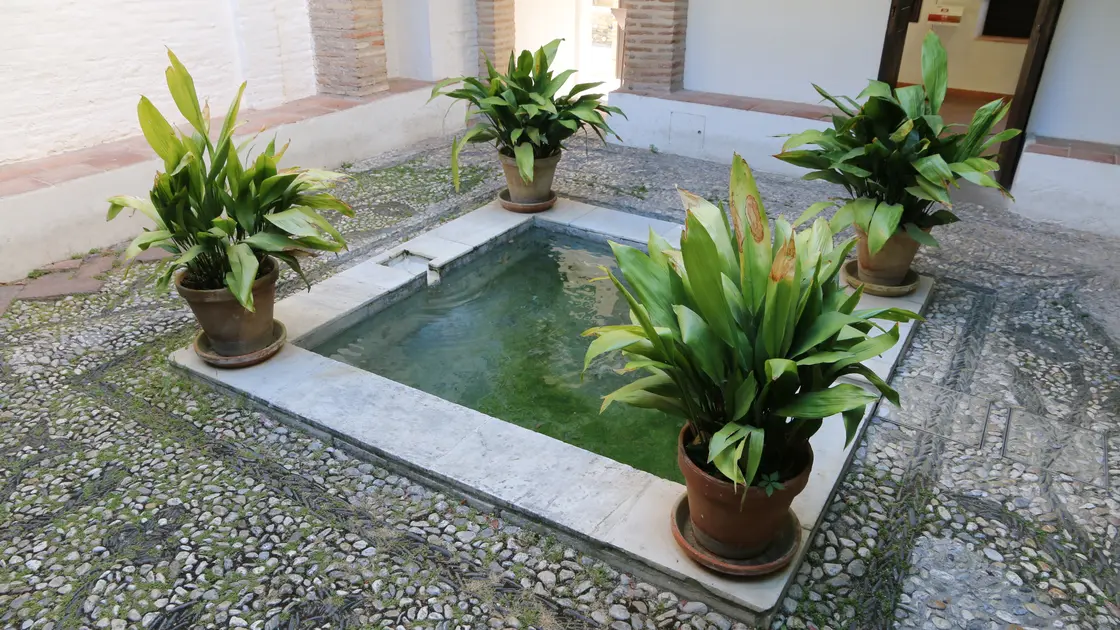
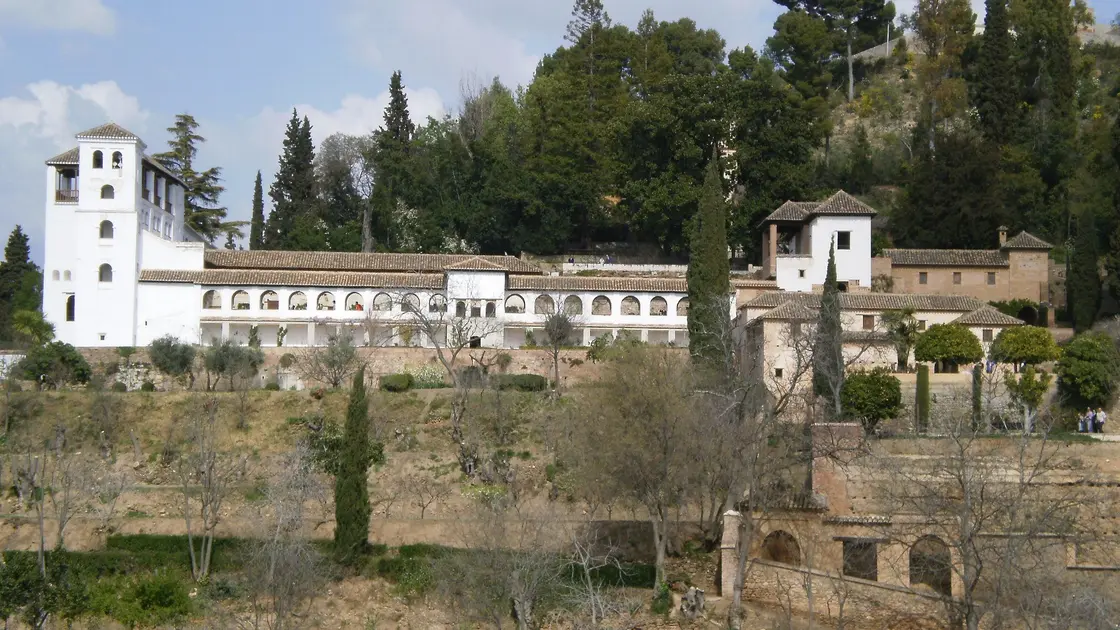
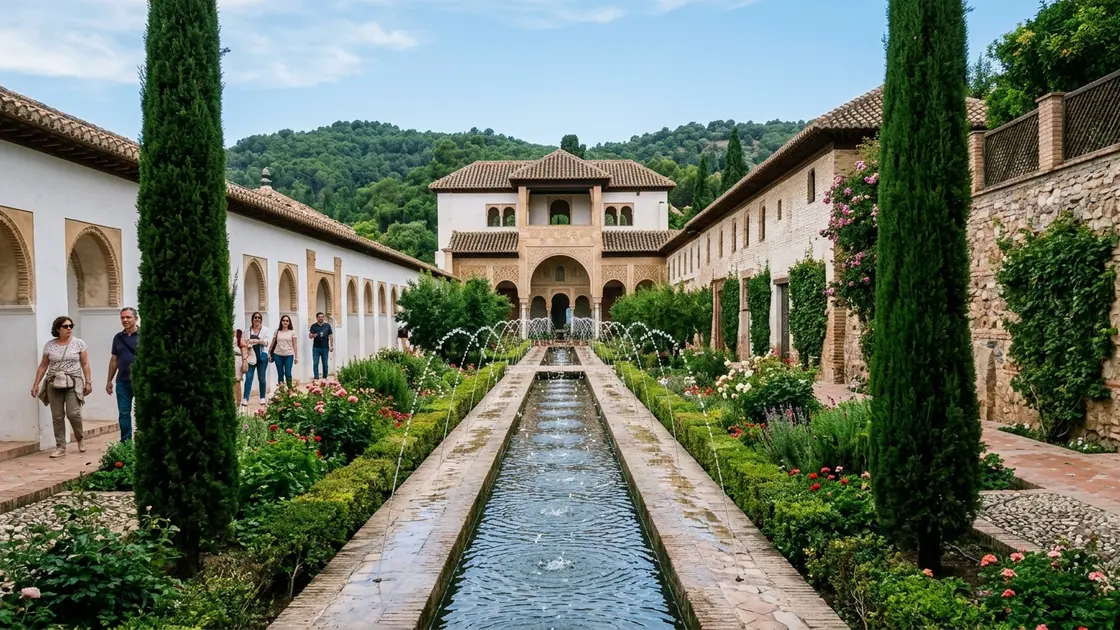
The Nasrid sultans' summer estate above the Alhambra, with terraced gardens and the Patio de la Acequia, a 49-metre water garden from the 14th century.
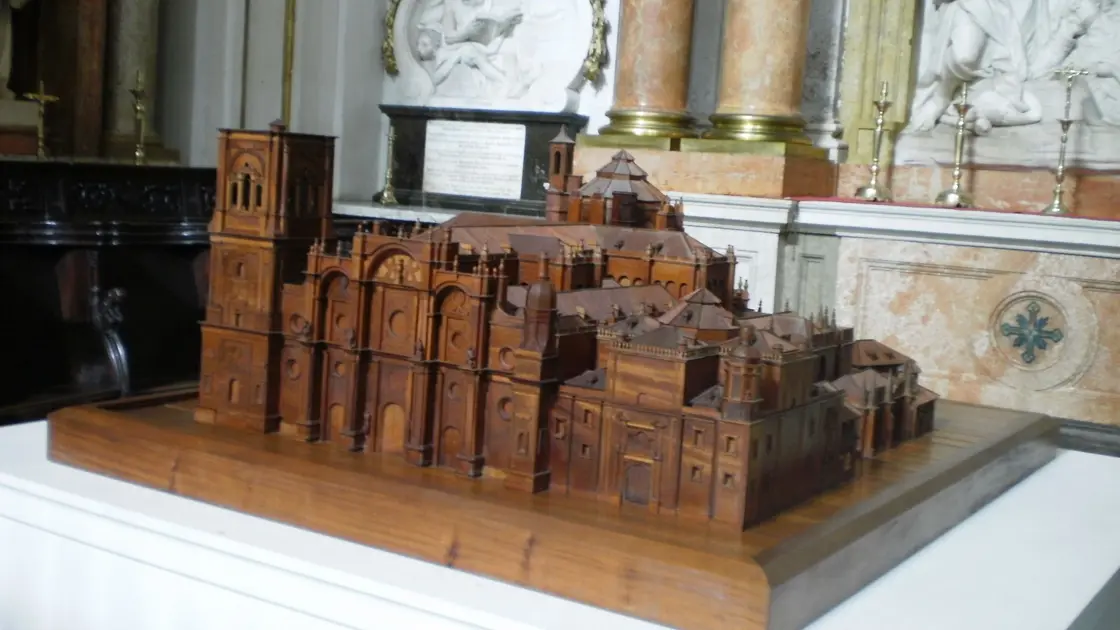
Granada Cathedral, built over 181 years from 1523, blends Gothic foundations with a Renaissance interior of five naves and a circular chapel with a gilded dome.
Free 24-hour viewpoint in the Albaicín with unobstructed Alhambra views and the Sierra Nevada as backdrop. Crowds peak at sunset; early morning is far quieter.
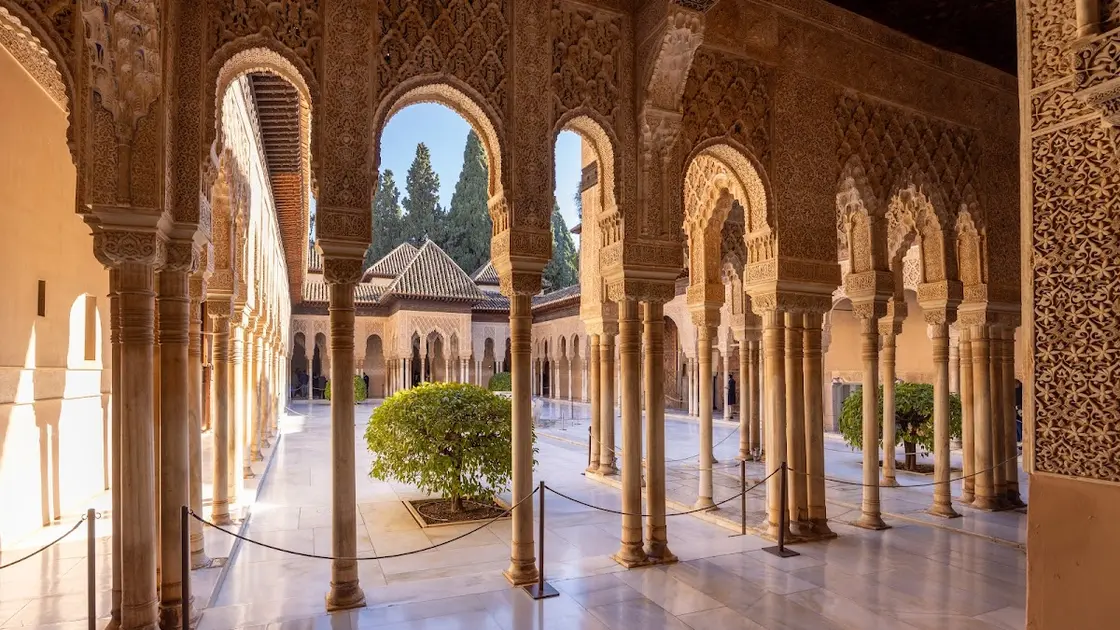
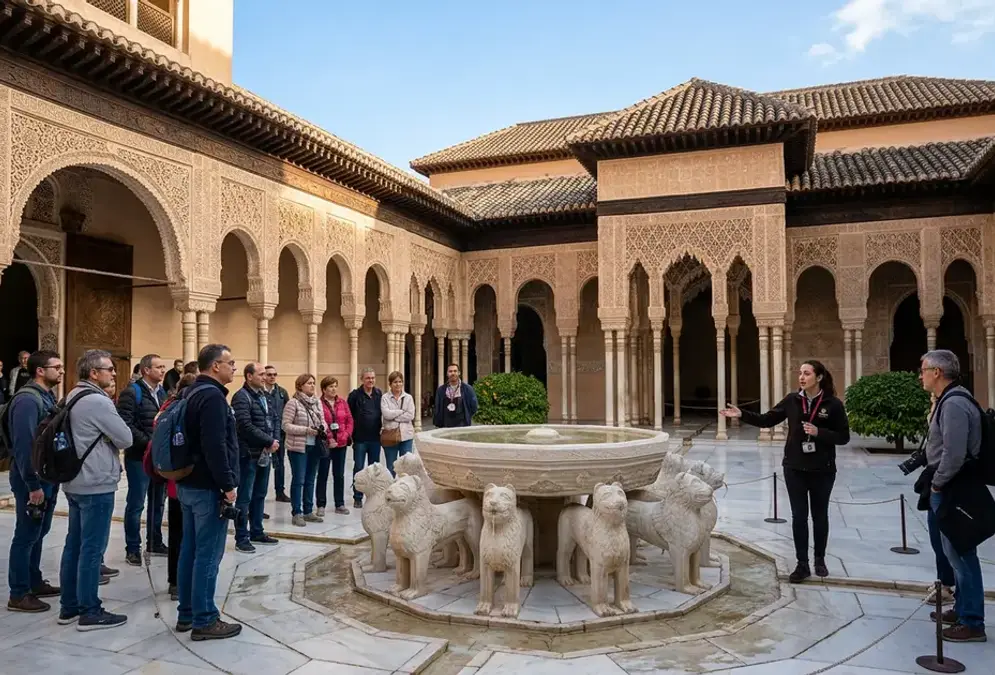
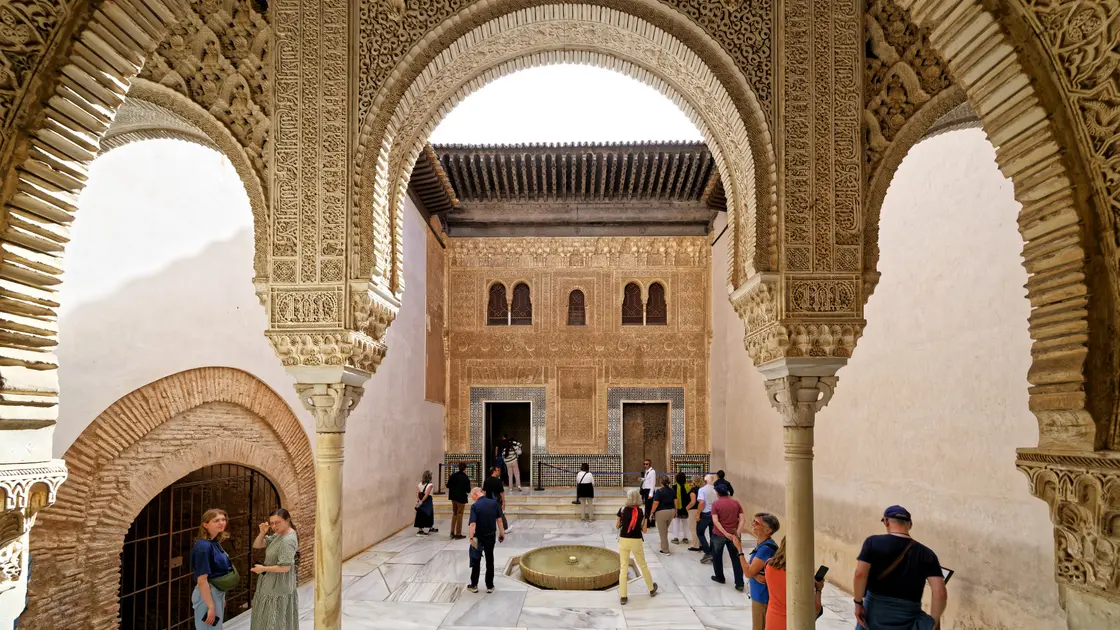
Three royal Nasrid palaces inside the Alhambra, including the Patio de los Leones and Hall of the Ambassadors. Entry is timed: arrive within your booked slot.
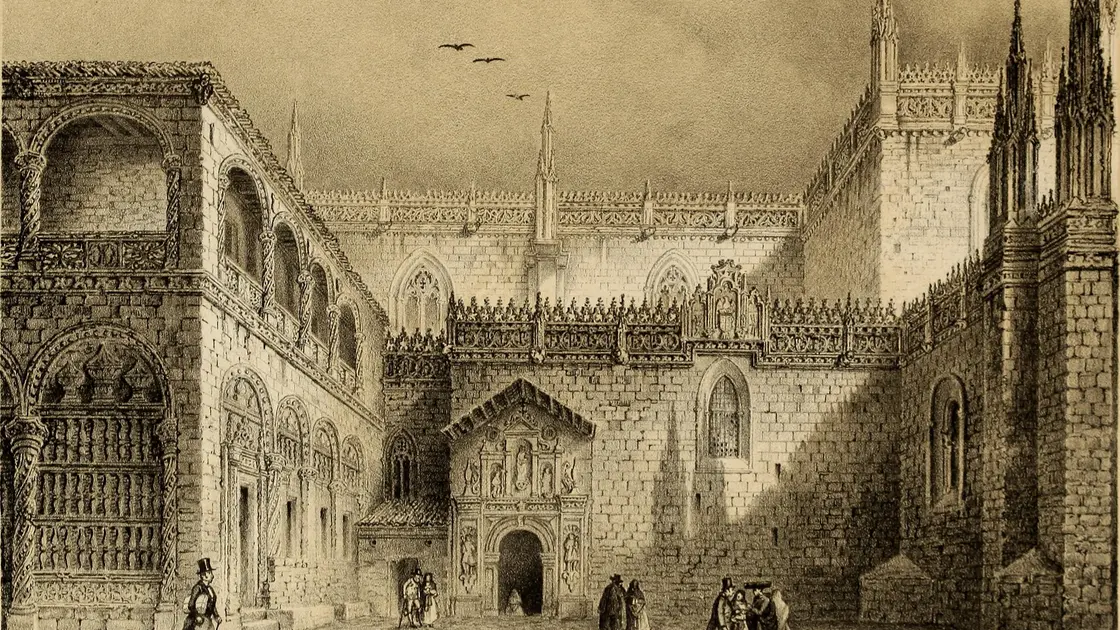
Isabelline Gothic chapel with the tombs of Isabella I and Ferdinand II. The sacristy holds royal regalia and paintings by Memling, Botticelli, and Bouts.
Skip-the-line Alhambra tours, flamenco in the Sacromonte caves, hammams and tapas walks: the experiences worth booking ahead.
Guided walk through Granada's UNESCO Moorish quarter. Narrow cobblestone lanes, hidden carmenes gardens, and the best Alhambra viewpoint in the city. From €15.
Book a licensed guide for the Alhambra and skip the queue. Expert commentary on the Nasrid Palaces, Alcazaba and Generalife gardens. Group tours from €49.
Zambra flamenco in Sacromonte's original limestone caves. Shows run nightly from 19:45 in family-run venues of up to 60 seats. Tickets from €26, with drink.
The Nasrid sultans' summer gardens above the Alhambra. Standalone entry €12.73. Guided tours cover 14th-century water engineering and Nasrid landscape design.
Guided 2.5-3 hour walk through Granada's authentic tapas bars. 10-12 tapas samples and 4-5 local drinks per person. Small groups, max 8 people. From €60.
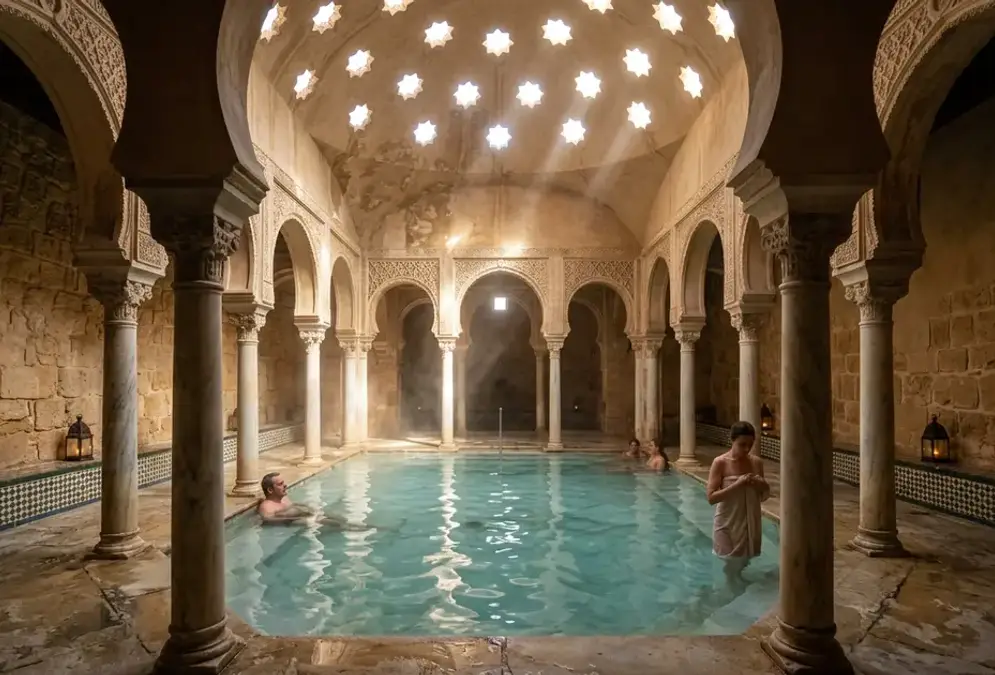
Granada's Arab hammam near Plaza Nueva. Three thermal pools, steam room and optional massages in a Nasrid-inspired space. The circuit takes 1 hour, from €52.
Skip the Alhambra queue with a guide
Alhambra & Nasrid Palaces Skip-the-Line Guided Tour: rated 4.7/5 by 21,863 visitors.
Tours are selected for quality, not commission. We earn a small fee if you book — at no extra cost to you.
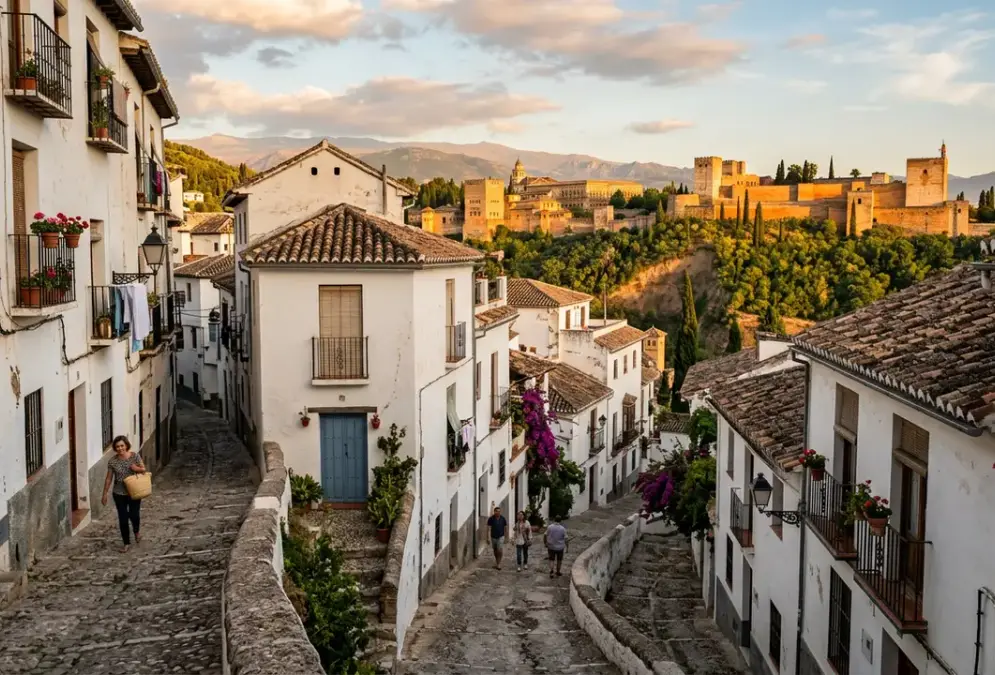
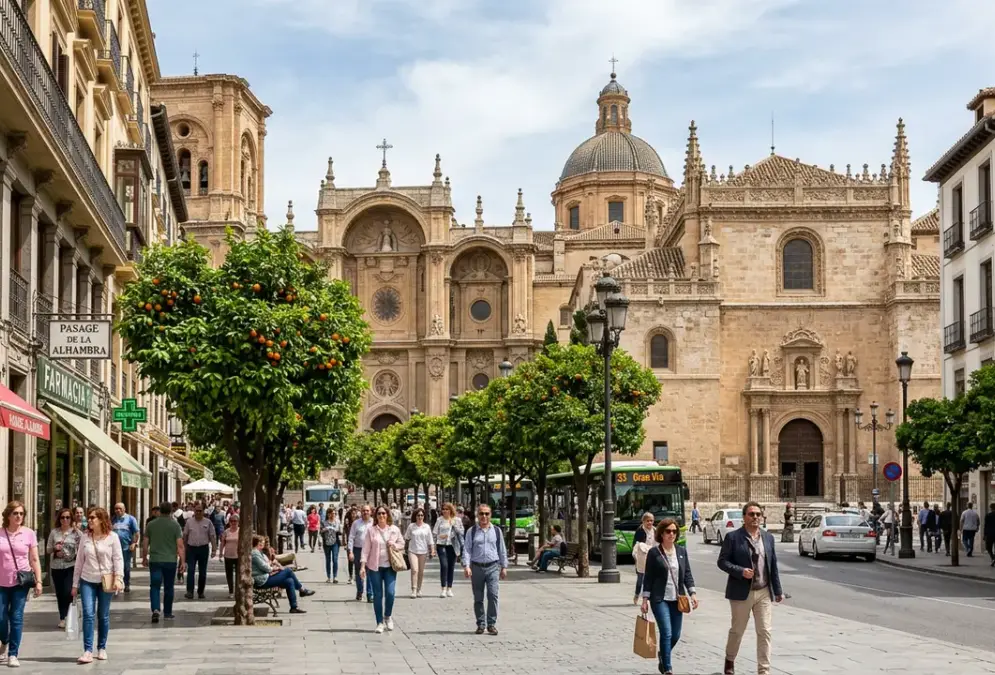
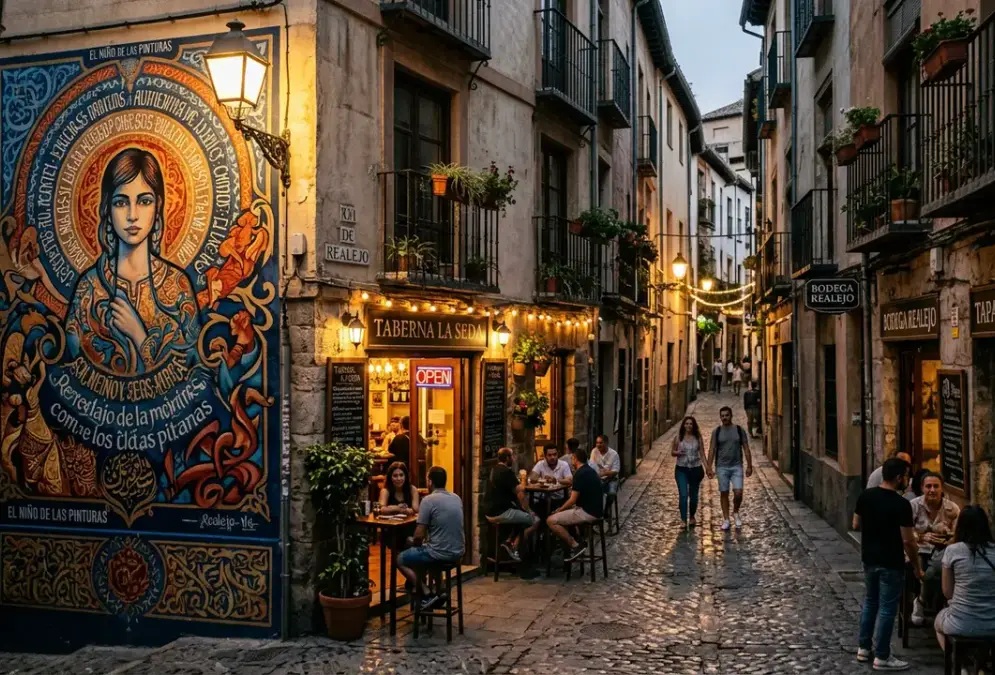
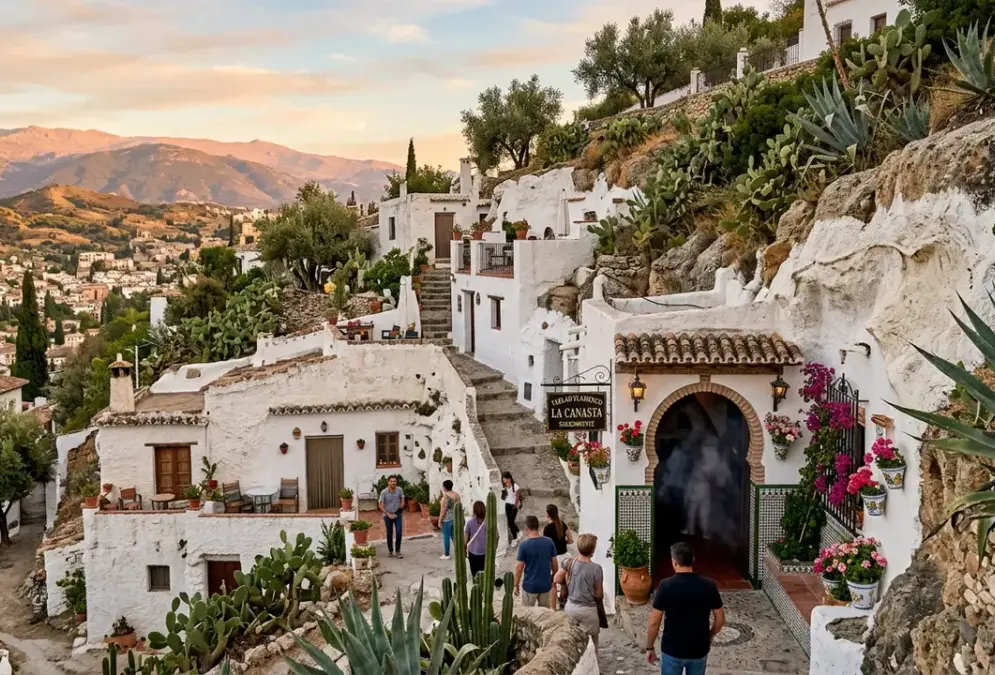
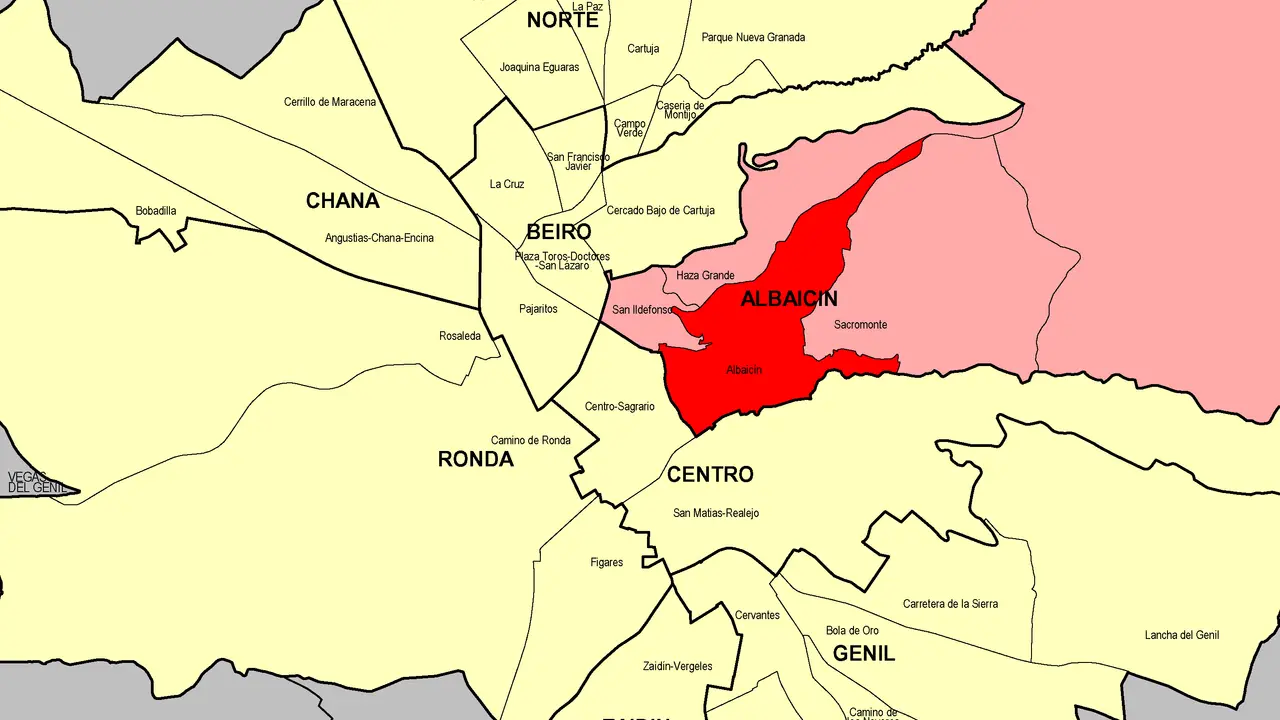
The Albaicín's whitewashed lanes, Sacromonte's cave houses, the buzz of the Centro and the quieter Realejo: each quarter shapes a different visit.
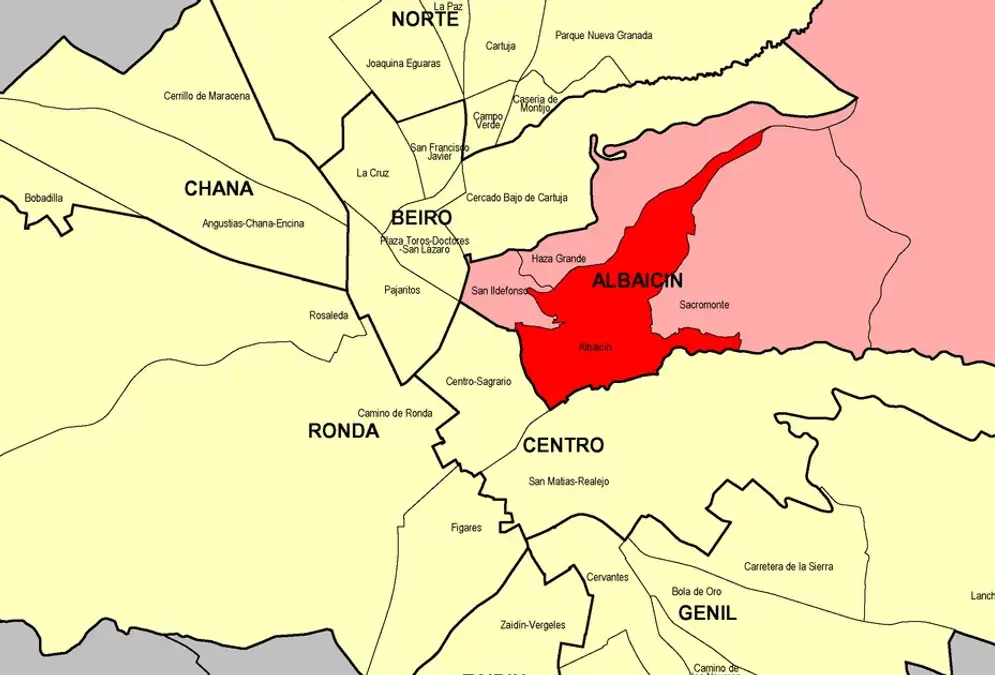
Granada's oldest neighbourhood: the Albaicín holds a UNESCO-listed maze of whitewashed lanes, Moorish cármenes, and the finest Alhambra views in the city.
Granada's centro holds the Cathedral, Royal Chapel, Alcaicería bazaar, and Corral del Carbón: five centuries of civic history packed into one walkable zone.
Medieval Granada's Jewish quarter, now a neighbourhood of historic palaces, street art, and the city's finest tapas bars — all at the foot of the Alhambra.
Sacromonte is Granada's cave district: birthplace of zambra flamenco, home to Romani heritage, and a hillside of whitewashed cave houses facing the Alhambra.
Granada is one of the last cities where a drink still comes with a free tapa. The tables worth booking and the dishes worth knowing: see the best restaurants in Granada or read the free-tapas food guide.
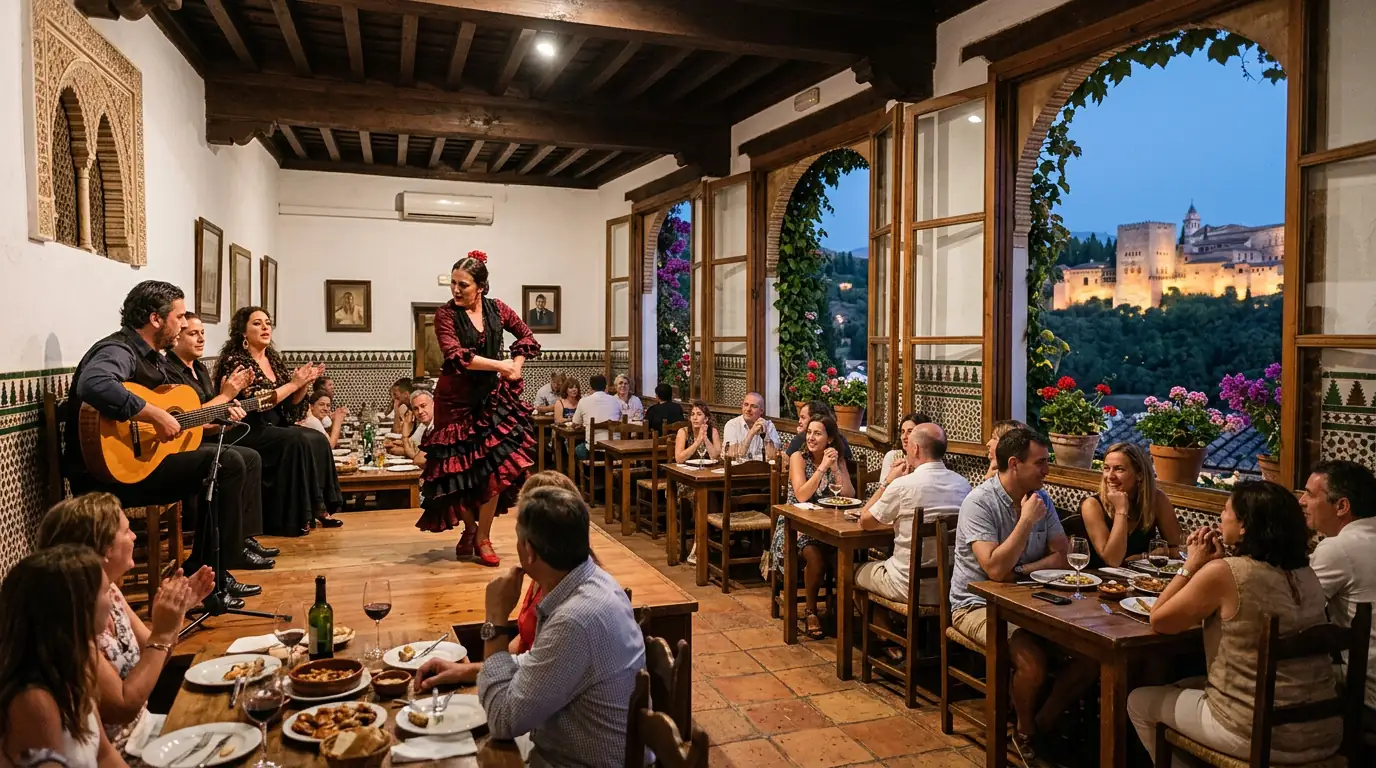
Nightly live flamenco and Andalusian cuisine in a traditional Albaicín carmen garden. One of Granada's most atmospheric dinner experiences, €25–40 per person.
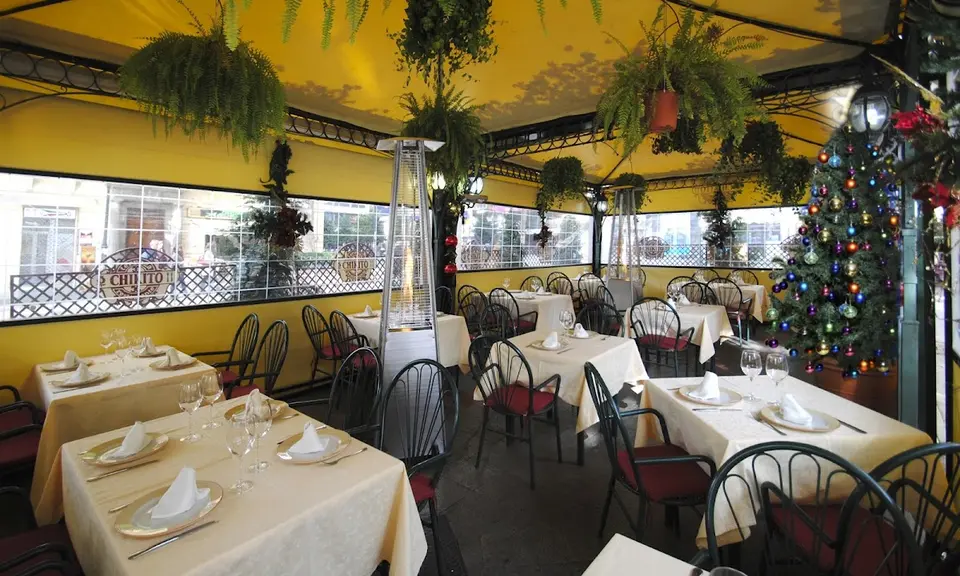
Traditional Andalusian cuisine at the site where Lorca's literary circle met in the 1920s. Historic venue on Plaza del Campillo with regional Granada classics.
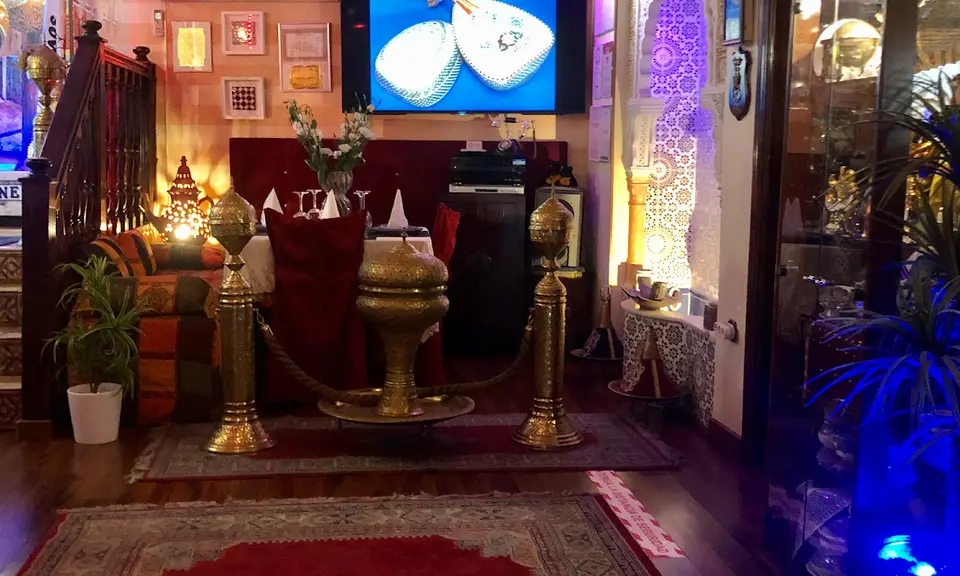
Halal Moroccan restaurant in the Albaicín, run personally by owner Mustafa. Lamb tagine and chicken pastilla are the dishes to order. Closed Mon and Tue.
Rabo de toro, tortilla del Sacromonte, habas con jamón: the plates that define a Granada menu. All 20 local dishes.
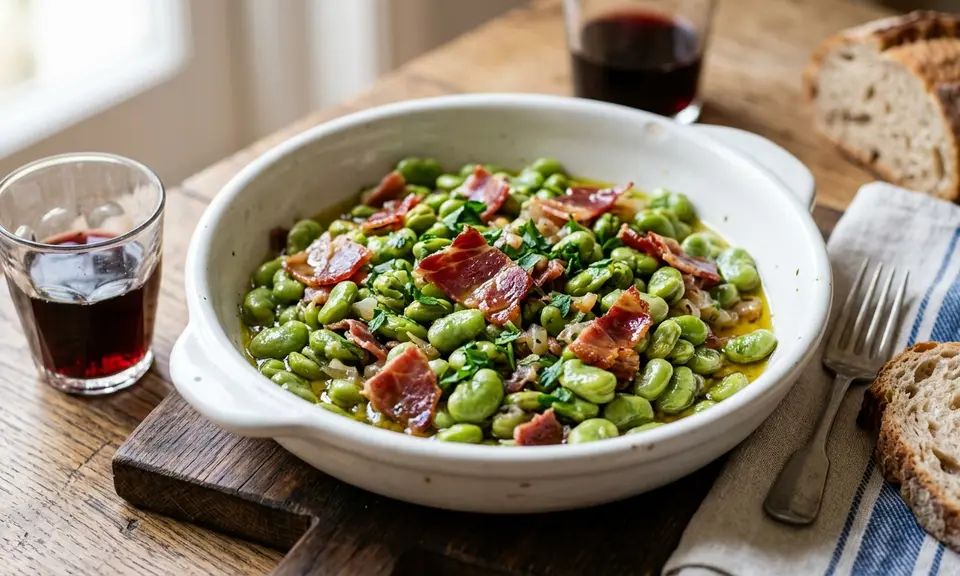
Granada's spring stew of fresh broad beans with cured Trevélez ham, slow-cooked in olive oil with garlic and cumin. Often served with a fried egg on top.
A syrup-soaked sponge cylinder filled with egg yolk cream and caramelised on top, created in 1897 in Santa Fe. Granada's iconic bite-sized royal pastry.
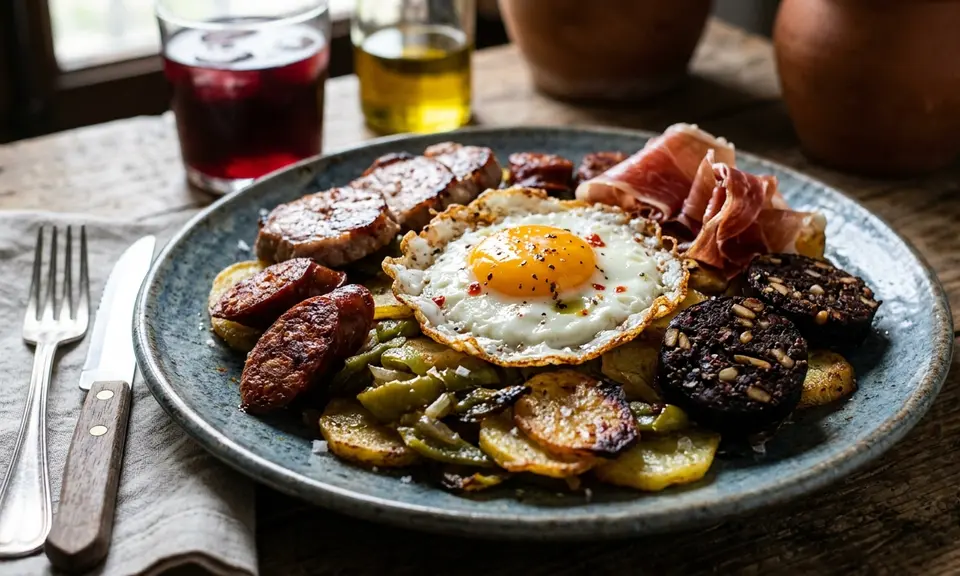
The full Sierra Nevada mountain platter: fried eggs, chorizo, morcilla, jamón de Trevélez, and potatoes in olive oil. Hearty and rustic Alpujarras food.
From a Parador inside the Alhambra walls to boutique carmenes in the Albaicín, a handful of stays we keep recommending.
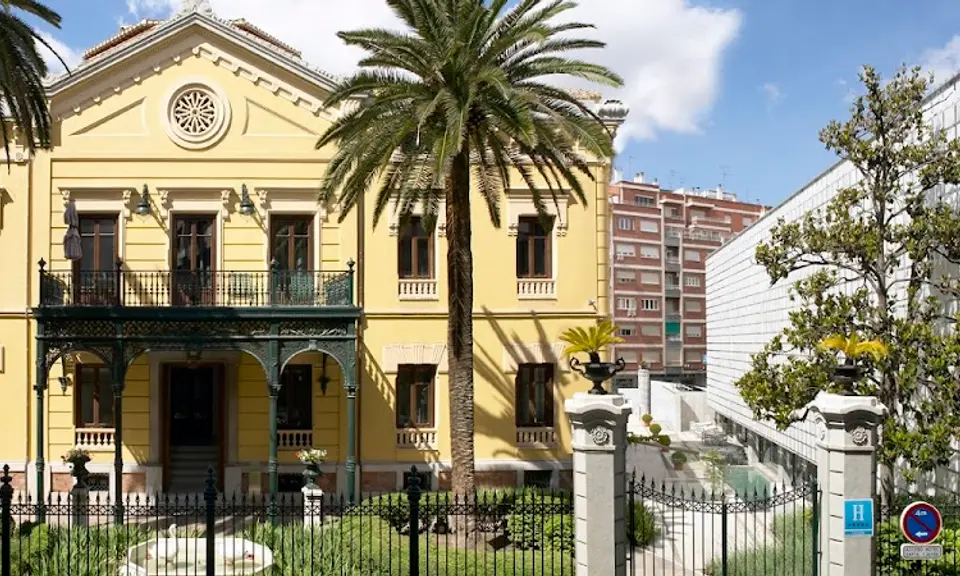
5-star Design Hotels member in a restored 19th-century palace near the Cathedral. 42 rooms, Bodyna Spa, Michelin-recommended restaurant, butler service.
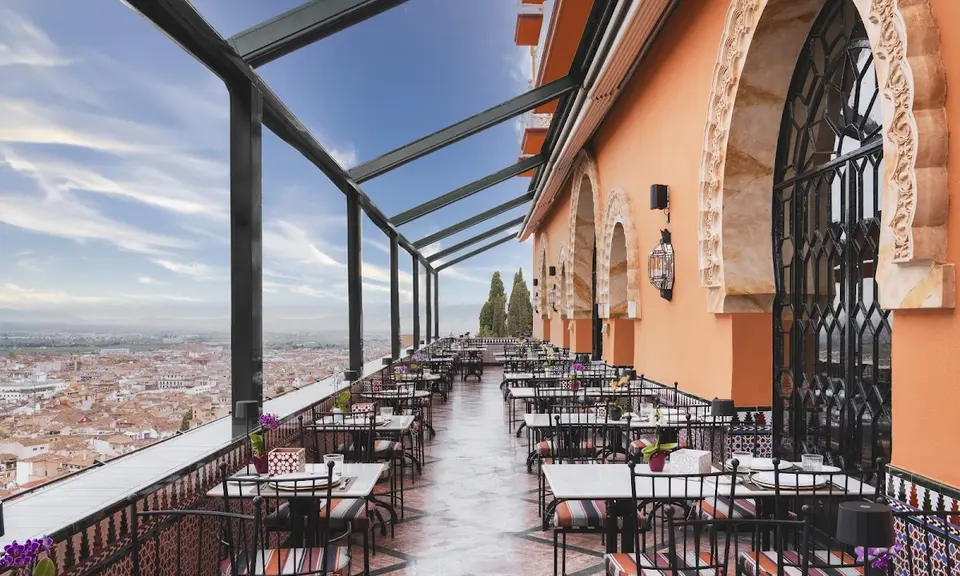
Five-star hilltop hotel open since 1910, five minutes' walk from the Alhambra entrance. Panoramic views of Granada, the Vega, and the Sierra Nevada mountains.
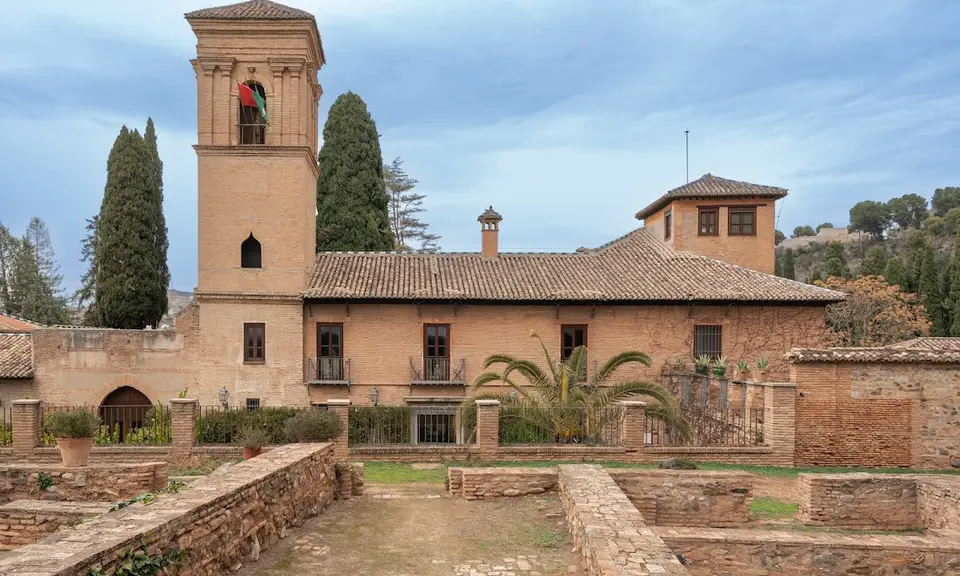
The most requested of Spain's 93 Paradors. A 15th-century monastery inside the Alhambra UNESCO complex, only 40 rooms. Book at least three months ahead.
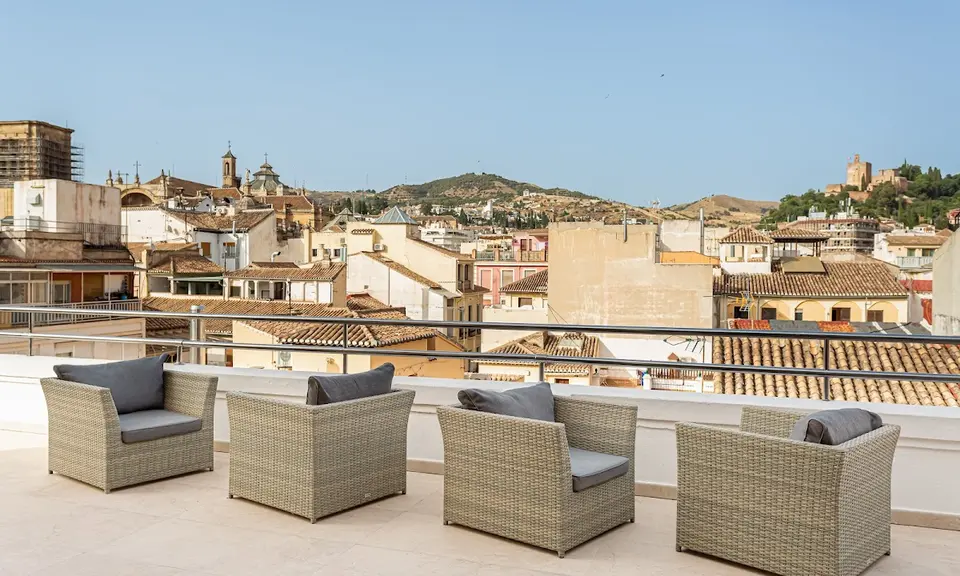
4-star design hotel renovated in 2024 with 67 rooms, heated rooftop pool open year-round and Alhambra views from the bar. 600m from the Alhambra. From 60€.
Free themed routes with maps and stop-by-stop directions, from the Albaicín's miradors to the Darro riverside up to the Alhambra gate.
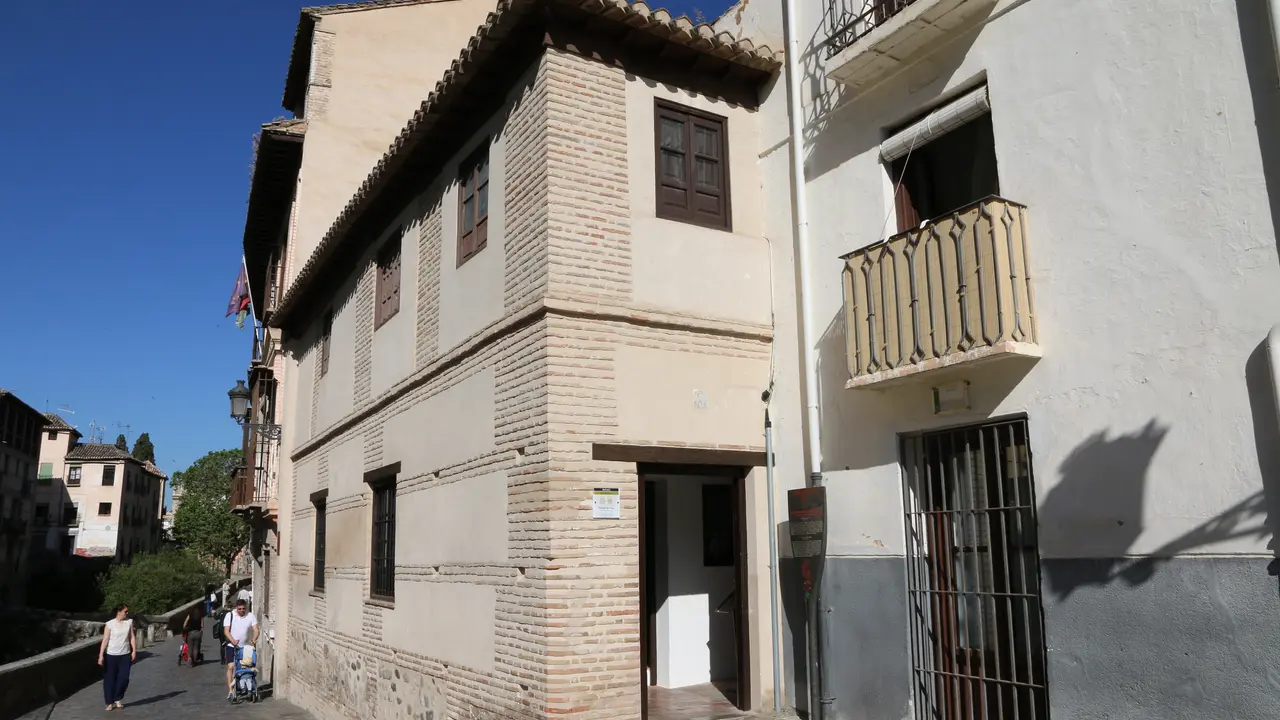
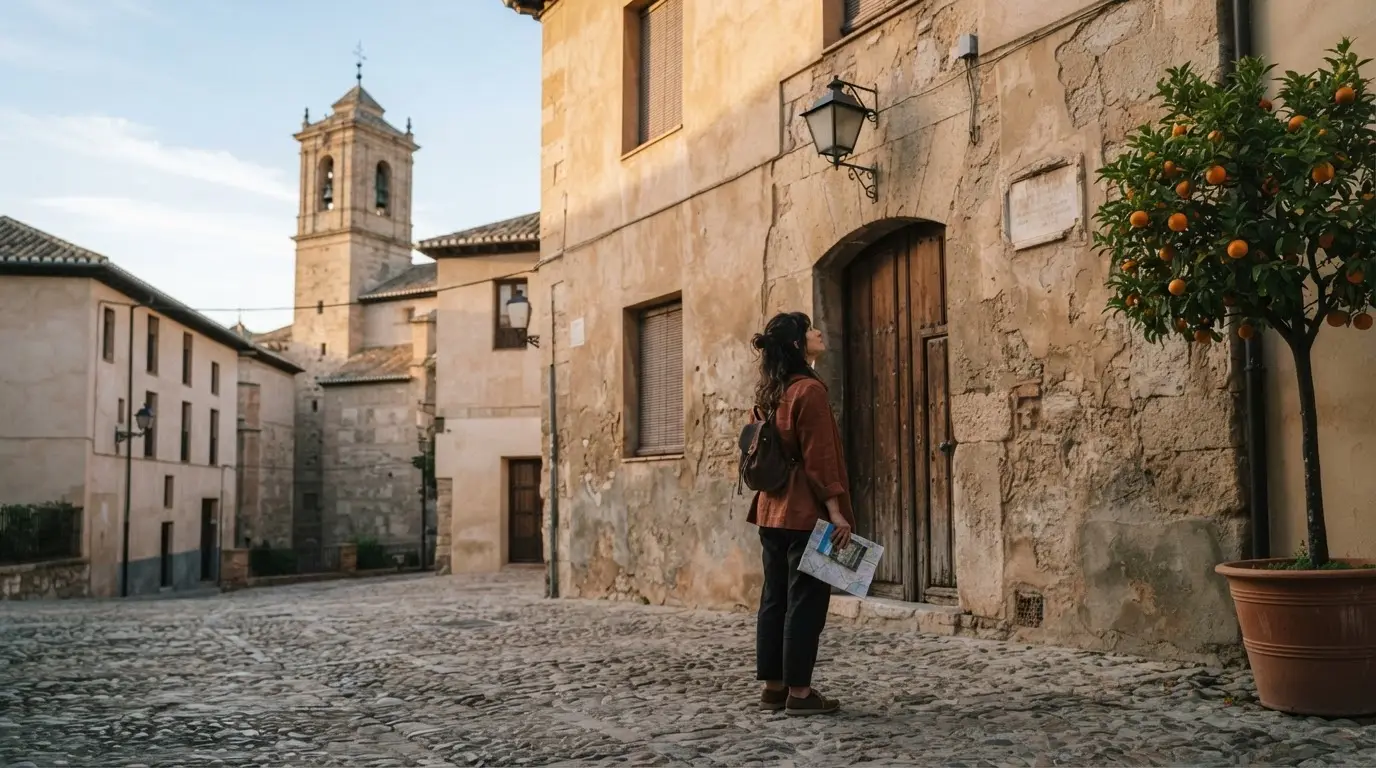
Explore Granada's Albaicín on foot: Arab baths, a 15th-century Nasrid palace, whitewashed alleys and sunset views over the Alhambra from Mirador San Nicolás.
Walk the Cuesta de Gomérez from Plaza Nueva to the Alhambra gates through a tree-lined medieval avenue and past the 1536 Renaissance Puerta de las Granadas.
The Darro river walk passes Arab baths, Renaissance bridges, and direct Alhambra views. Granada's most atmospheric flat walk, best before 9am or at dusk.
Reported pieces on Granada's history, food, and culture by resident correspondents.
James Walker
Isabella I of Castile chose Granada over Toledo for her burial. Her Royal Chapel tomb, the 1504 will, and the 17-year journey from Medina del Campo to Granada.
Read
James Walker
Arrested on 16 Aug 1936 and killed before midnight on 18 Aug 1936. The 48 hours that killed Federico García Lorca, reconstructed from witness testimony.
Read
James Walker
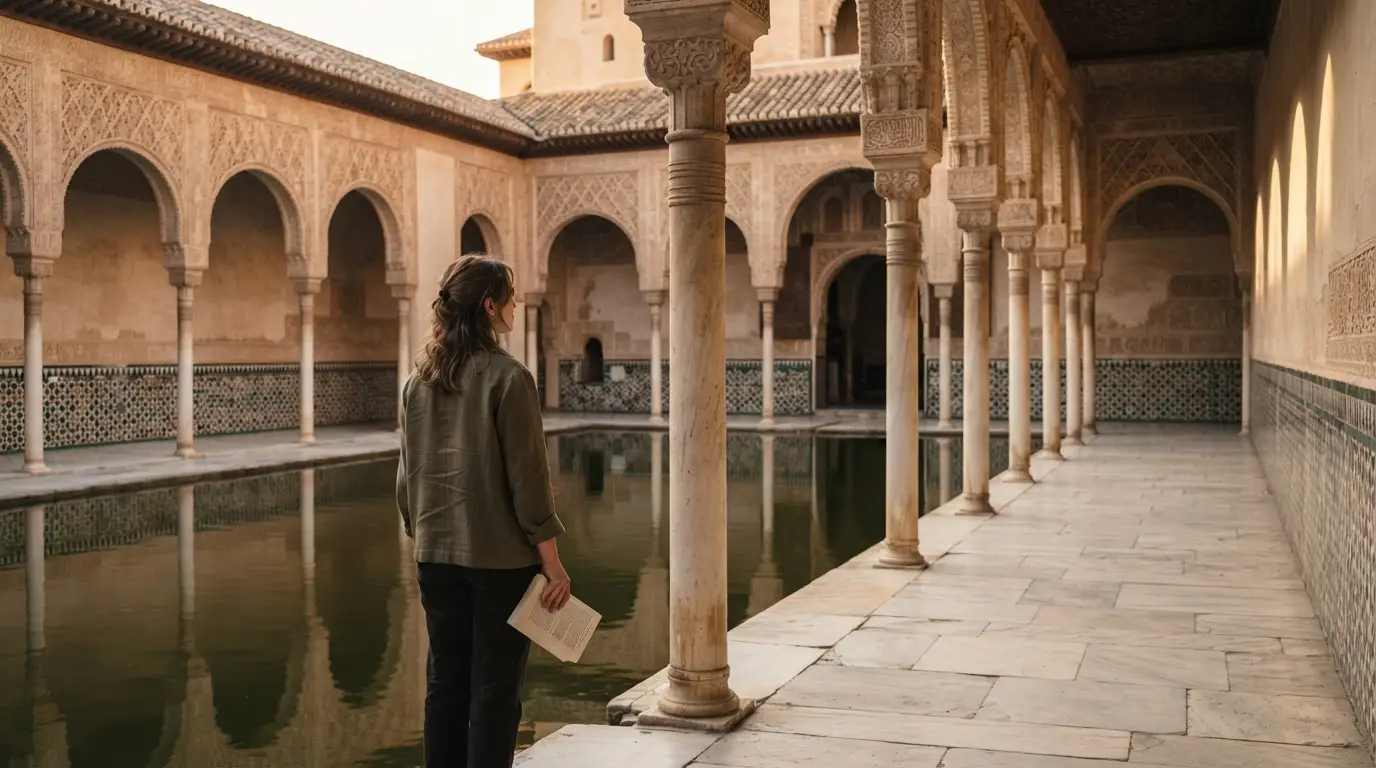
Granada in Story is a five-day travel writing workshop that uses the Alhambra, Albaicín and Sacromonte as material, plus who leads it and what it costs.
ReadEvery monument, museum, restaurant, neighbourhood and walk we cover, in one place.
Answers to the most common questions to help you organise your stay in Granada.
Two to three days cover Granada's highlights comfortably: the Alhambra and Generalife, the Albaicín, Granada Cathedral and the Royal Chapel, and an evening of free tapas. Add a third day for Sacromonte and the quieter corners of the Realejo.
Spring (April–May) is the best time to visit: Holy Week brings large crowds in late March and April, and the Corpus Christi fair runs from late May into June with free public casetas. Autumn (September–October) is quieter and still warm. Avoid July–August when the city exceeds 35°C.
The Alhambra, Generalife and Albaicín are Granada's UNESCO World Heritage sites, first inscribed in 1984 and extended in 1994. The Royal Chapel — where Ferdinand and Isabella are buried — and the 16th-century Granada Cathedral are a short walk from each other in the city centre.
Book through the official Alhambra website as early as possible: the Nasrid Palaces have timed entry slots that sell out weeks ahead, especially in spring and summer. Same-day tickets at the gate are rarely available. Check the official site for current prices and opening hours.
The AVE high-speed train is the fastest option from both Madrid and Seville. The station sits about a 20-minute walk or short bus ride from the historic centre. Alsa coaches also serve Granada from most major Andalusian cities and are cheaper, though slower. Check current times on the Renfe website when planning.
Granada works well for families. The Alhambra gardens and the narrow lanes of the Albaicín hold children's attention, the Science Park (Parque de las Ciencias) has hands-on exhibits, and free tapas with every drink keeps food costs manageable. Children under 12 from EU countries typically get free entry to state-run monuments with ID.
A mid-range day runs €60–100 per person: accommodation (€50–80), meals (€20–35), monuments (€10–15). Budget further with free monument hours, the menú del día lunch from €12–15, and the fact that every drink comes with a free tapa in the bars of the Realejo and Centro.
For a first visit, the historic centre is the practical base: flat, central, and walkable to the Cathedral, Royal Chapel, and the Alhambra bus stop. The Albaicín is more atmospheric but its steep lanes tire quickly with luggage. The Realejo is quieter and close to the best tapas streets.
The classic Granada plates are rabo de toro (slow-braised oxtail), tortilla del Sacromonte (a dense omelette with offal, traditional in the cave district), and habas con jamón (broad beans with cured ham). Granada is also one of the last Spanish cities where every drink comes with a free tapa. Wash it all down with a cold Alhambra beer or local Lecrín wine.
Plenty. Watch the sun set over the Alhambra from a mirador in the Albaicín, hear raw flamenco in a Sacromonte cave, graze through the free-tapas bars of the Realejo, or browse the Alcaicería spice and craft market near the Cathedral. The city rewards wandering on foot.
The Albaicín's whitewashed lanes, Sacromonte's cave houses, or the buzz of the Centro: each neighbourhood shapes a different visit.