Articles · Arts & culture
Granada's Arts and Culture
This section covers Granada's craft and creative life: taracea woodwork, Fajalauza ceramics, the guitar workshops that supply flamenco players worldwide, the sculpture school, and the street art and film work shot around the city.
8 articles
Arts & culture: the big picture

Written by
James Walker Seven years resident in Granada. Specialist in Nasrid architecture, Al-Andalus history, and Andalusian walking routes.
This section follows Granada's craft traditions from their Nasrid origins through to what survives in workshops today. Granada's artisan crafts is the overview: taracea marquetry, Fajalauza ceramics, leather, and guitar-making, all traceable directly to Nasrid workshop traditions. Two articles go deeper on individual crafts: taracea marquetry, the geometric wood-inlay technique whose name comes from the Arabic tarsi and whose rod-slicing embutido method is often confused with the Alhambra's own ataujería ceiling work, and Fajalauza ceramics, the blue-and-green pottery tradition documented since a 1517 tax complaint and still made by one family workshop in the Albaicín.
Music and sculpture get their own entries. Granada's guitar-making tradition runs an unbroken 200-year lineage through Antonio Marín Montero; the same city gave a young Andrés Segovia his guitar, a gift from luthier Benito Ferrer five years after Segovia moved to Granada in 1903, while the Granadan school of sculpture traces the polychrome religious carving of Alonso Cano, whose Inmaculada del Facistol defined the school's grace-over-drama style, and his pupils, still processed through the streets every Holy Week.
The remaining pieces look at specific objects and buildings: the Alhambra's Vase of the Gazelles, the only surviving Nasrid lustreware vase never to leave the complex, its sibling jars now scattered as far as Stockholm, Berlin, and Washington D.C.; Mudéjar architecture built by Muslim craftsmen for Christian patrons after 1492, best preserved in the courtyard of the Iglesia del Salvador, the only surviving mosque courtyard in the city; and Isabella I's Flemish painting collection in the Royal Chapel sacristy.
Start with the artisan crafts overview, then follow taracea or Fajalauza into the individual workshop traditions.
More arts & culture articles
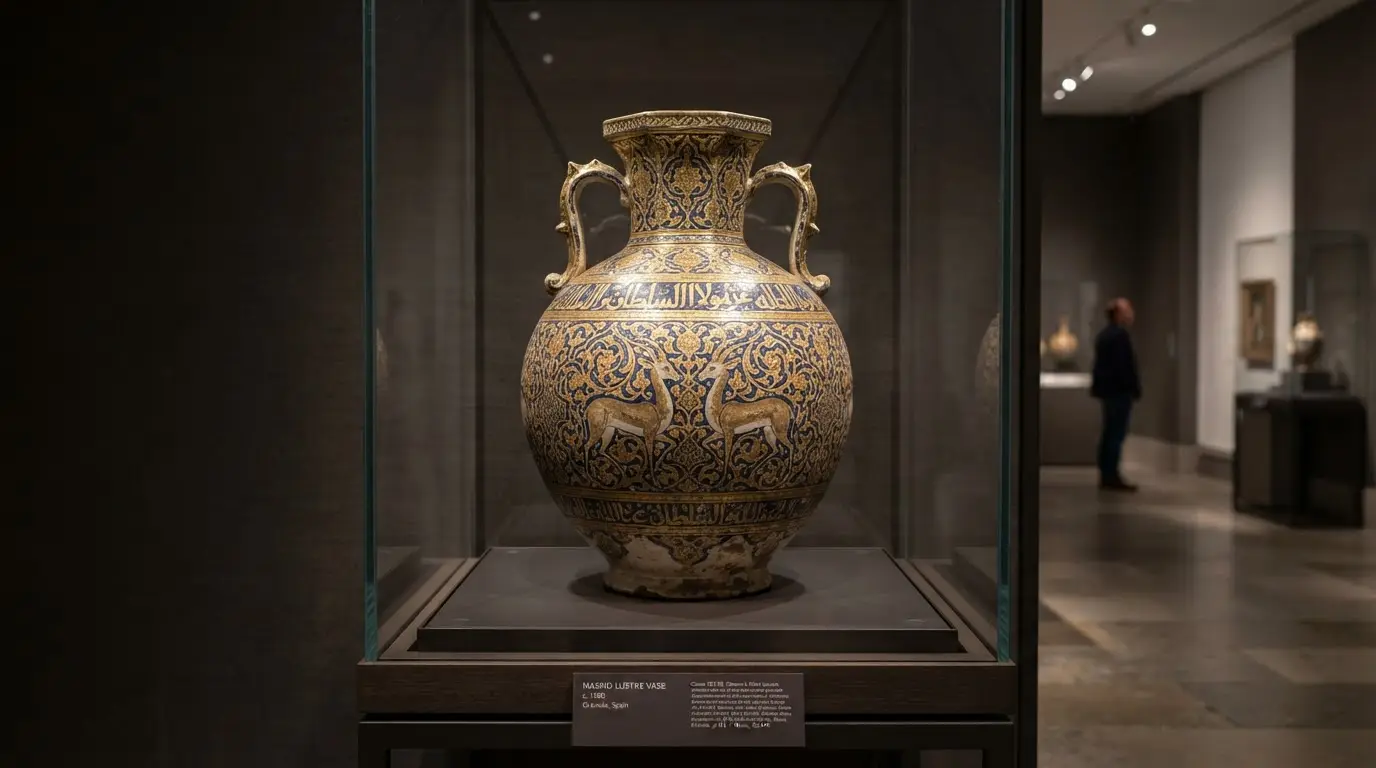
Vase of the Gazelles: The Alhambra Vase That Never Left
James Walker
The Vase of the Gazelles is the only Alhambra Vase that never left the complex, now displayed in Room V of the Alhambra Museum after six centuries on site.
Read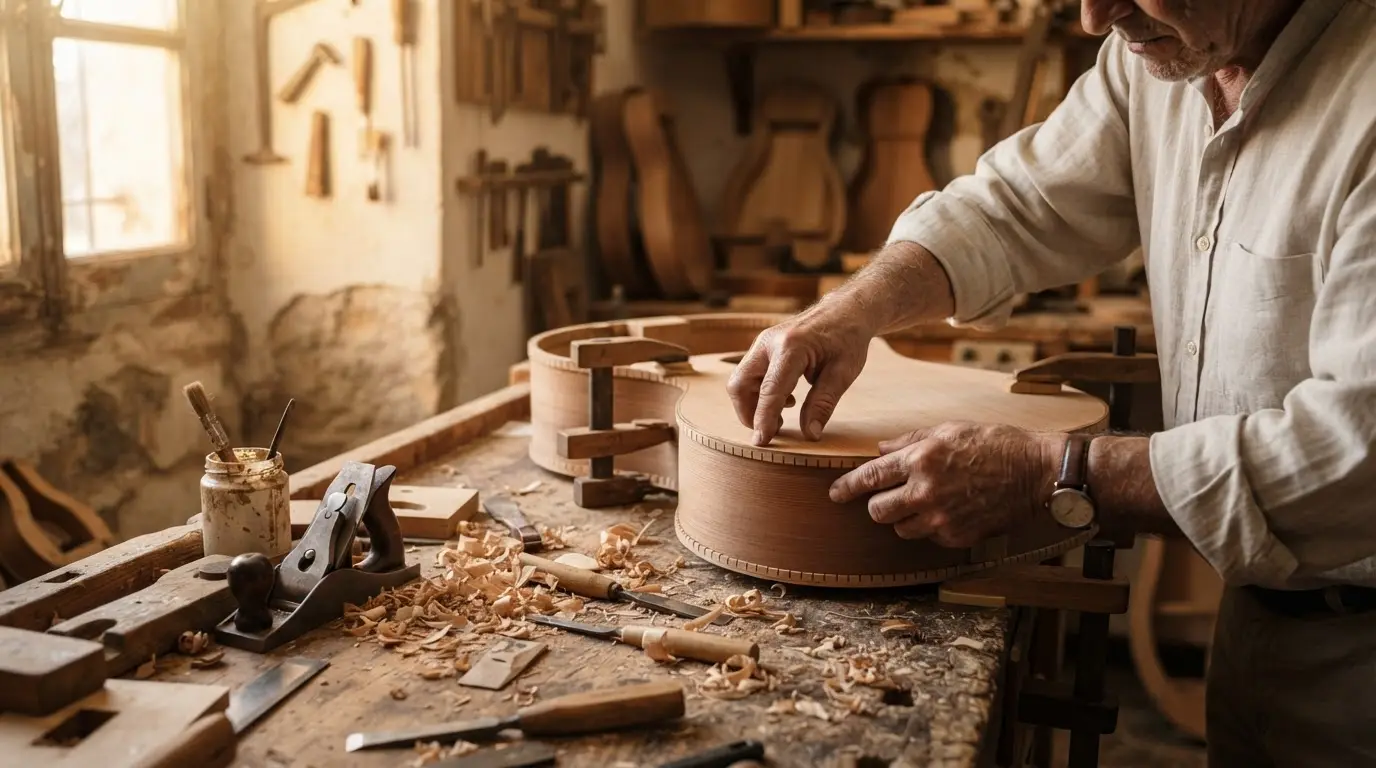
Granada Guitar Makers: Inside the Luthier School
James Walker
Granada has built guitars by hand for 200 years, from Antonio de Torres to Antonio Marín Montero's 1977 meeting with Robert Bouchet — still made here today.
Read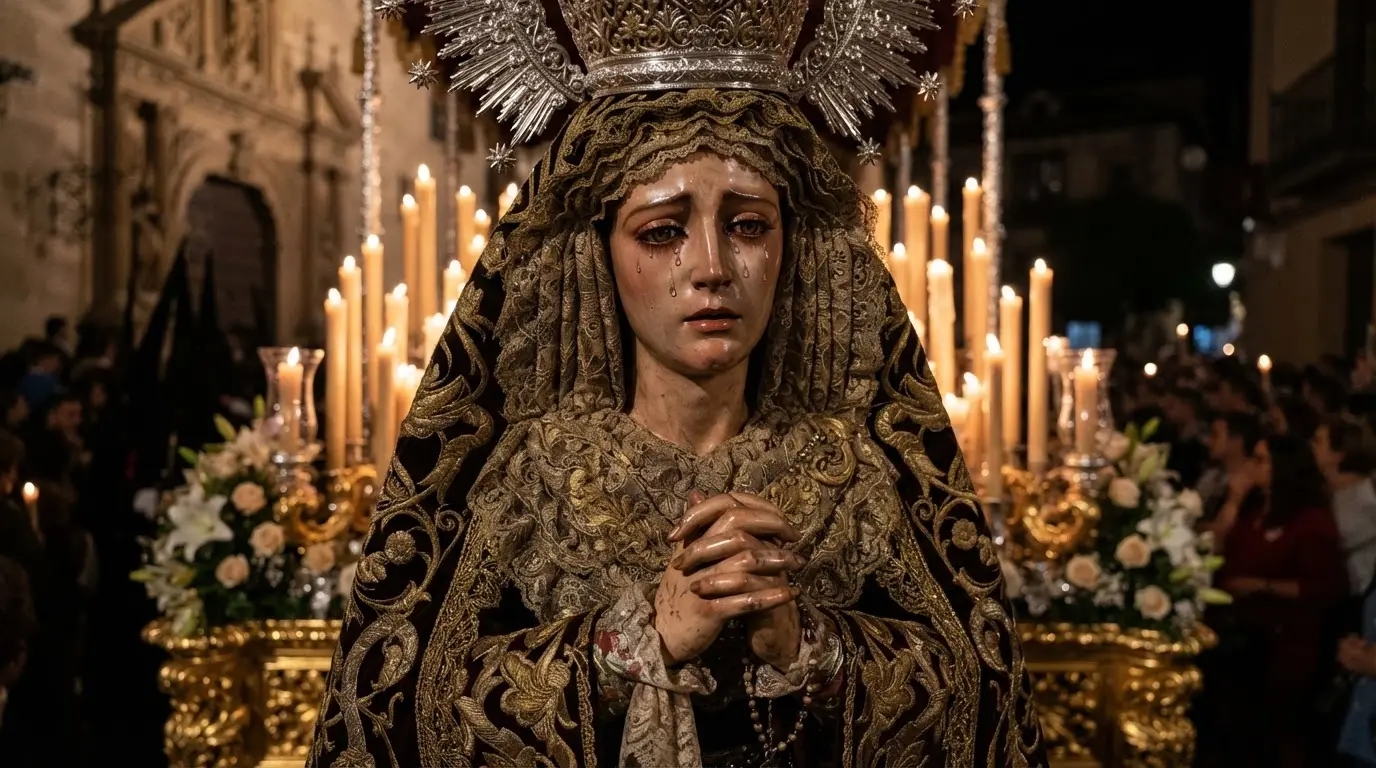
The Granadan School of Sculpture: Polychrome Saints
James Walker
How Alonso Cano and José de Mora shaped Granada's school of sculpture: glass eyes, gold-leaf drapery, and the saints Granada still carries through Holy Week.
Read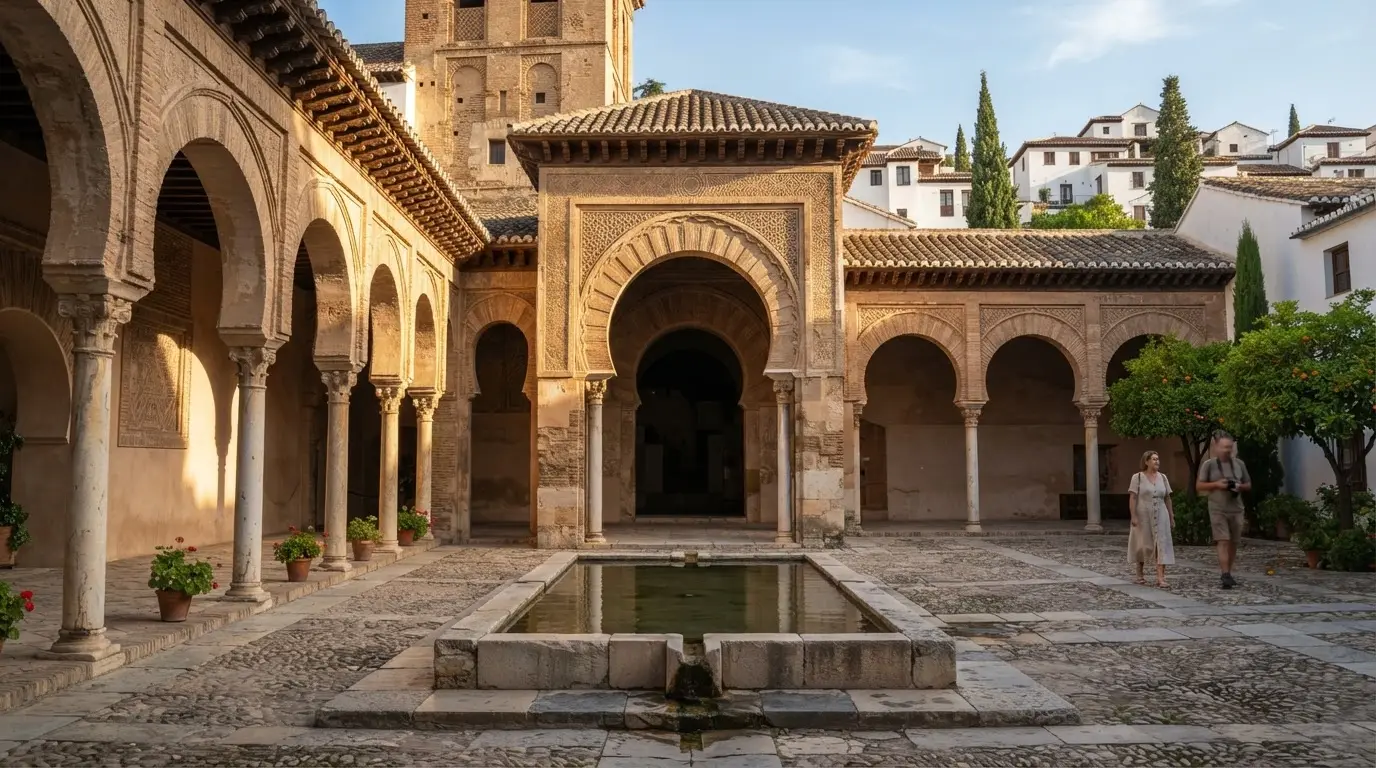
Mudéjar Granada: Islamic Art After the Reconquista
James Walker Updated
Mudéjar art in Granada: after 1492, Muslim craftsmen built Albaicín churches with horseshoe arches, sebka lattice and artesonado ceilings for Christian patrons.
Read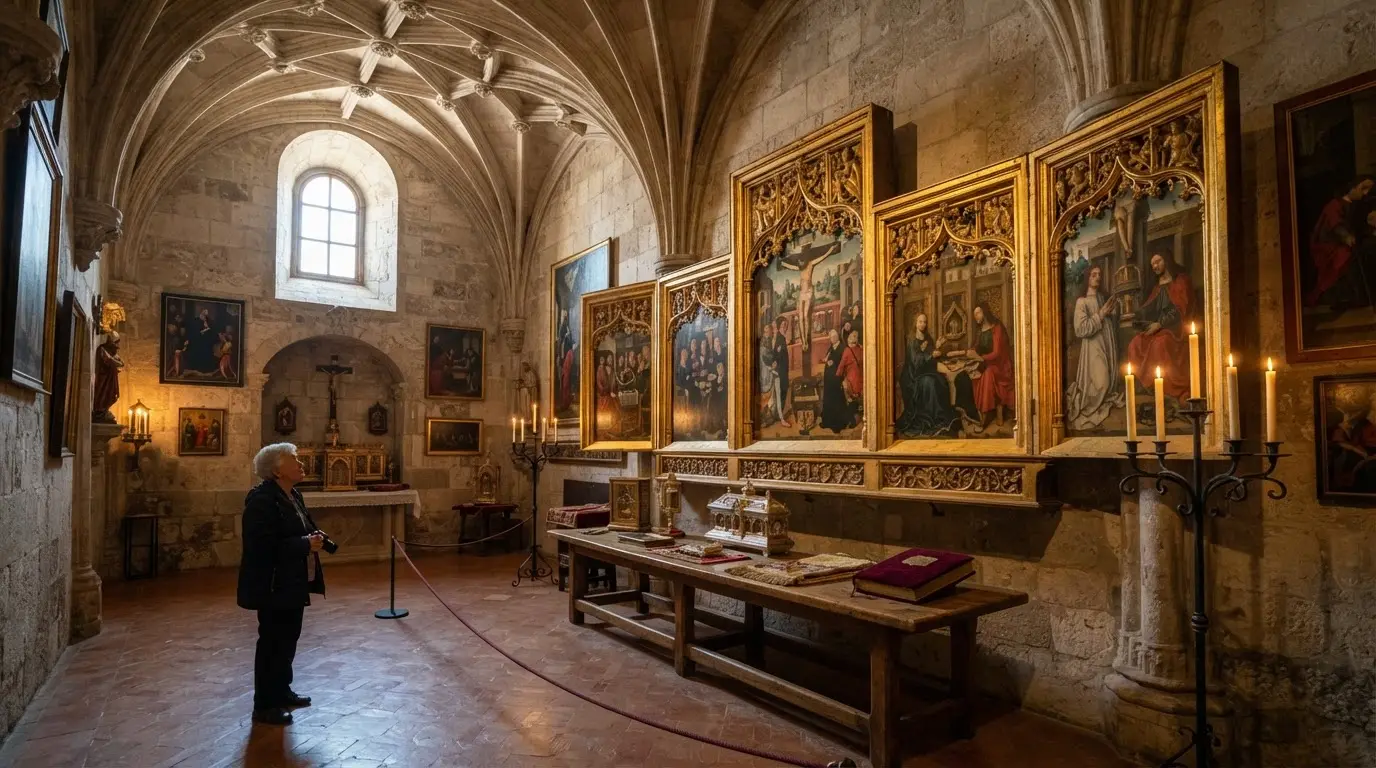
Isabella I and the Flemish Masterpieces of Granada's Royal Chapel
James Walker Updated
Inside the Royal Chapel sacristy, Isabella I's Flemish paintings wait: Van der Weyden, Memling, Bouts, and a lone Botticelli. Most visitors never enter.
ReadFrequently asked questions
What is taracea?
Granada’s wood-inlay marquetry craft, named from the Arabic tarsi (to incrust). Craftsmen assemble rods of contrasting wood, bone, and nacre, slice them into identical wafers, and press the wafers into carved recesses. The technique dates to the Nasrid Kingdom and is still made by hand only in Granada.
What is Fajalauza ceramics?
Granada’s traditional tin-glazed pottery, identified by cobalt blue and copper green decoration on a white ground, with the pomegranate as its signature motif. First documented in a 1517 tax complaint, it is still hand-painted by one Albaicín family workshop with a direct Morisco lineage.
Who was Alonso Cano?
A Granada-born painter, sculptor, and architect (1601-1667) considered the central figure of the Granadan school of sculpture. He trained under Juan Martínez Montañés, served as the cathedral’s chief architect from 1652, and carved the Inmaculada del Facistol that defines the school’s grace-over-drama style.
What is the Vase of the Gazelles?
A 14th-century Nasrid gold-and-cobalt lustre jar decorated with a confronted pair of gazelles, the only vessel from a family of monumental Alhambra Vases that has never left the complex where it was made. It is displayed today in Room V of the Alhambra Museum.
What is Mudéjar art?
The style Muslim and Morisco craftsmen produced for Christian patrons after 1492, using the same horseshoe arches, sebka lattice, and artesonado ceilings developed under the Nasrids, but applied to churches built to replace Granada’s mosques. The tradition lasted until the Morisco expulsion of 1609.
What Flemish paintings does the Royal Chapel hold?
Isabella I’s personal collection, bequeathed to the chapel’s sacristy in her 1504 will, including works by Rogier van der Weyden, Hans Memling, and Dieric Bouts, plus a rare Botticelli, Agony in the Garden. The collection sits steps from her tomb, largely overlooked by visitors.