Articles · Monuments & architecture
Granada's Monuments and Architecture
This category collects everything about Granada's built heritage: the Alhambra's palaces and gardens, the Alcazaba fortress, the Renaissance cathedral, and the city's cármenes and aljibes. Written for visitors who want context before or after seeing the buildings.
20 articles
Monuments & architecture: the big picture

Written by
James Walker Seven years resident in Granada. Specialist in Nasrid architecture, Al-Andalus history, and Andalusian walking routes.
This collection covers what the Nasrid sultans and their successors actually built, room by room. Start with the political history of the Alhambra's rooms, which explains which sultan built what and why, then work back to the Alcazaba, the fortress documented since 889 that predates the palace by 350 years.
Several articles unpack the craft that makes the palace legible: muqarnas, zellige and taracea explains the three-zone decoration system, while the Alhambra's water system and the Albaicín's 26 surviving cisterns cover the hydraulic engineering that made the hilltop city possible at all, the Alhambra fed by its 1238 Acequia Real and the Albaicín by the older Acequia de Aynadamar.
Two more pieces widen the picture beyond the Alhambra's walls. The Court of the Lions covers Muhammad V's private palace, finished around 1391 with its twelve-lion fountain and 124 columns, and the Generalife gardens explain the water geometry of the sultans' summer retreat, built around the 48.7-metre Patio de la Acequia. Granada's surviving city walls, an 11th-century Zirid stretch with fourteen towers running from the Puerta de las Pesas to the Puerta Monaita, show how the Albaicín was fortified before the Nasrids arrived.
The collection also follows what came after 1492: Granada Cathedral, built from 1523 on the site of the city's Great Mosque, and the Palacio de Carlos V, the Renaissance palace Charles V inserted into the Alhambra itself in 1526. A final thread follows the buildings' survival, a shift traced in the Contreras and Torres Balbás restoration debate.
Begin with the Alhambra's rooms, the Alcazaba, and the muqarnas guide for the broadest orientation to how Granada's monuments actually work.
More monuments & architecture articles
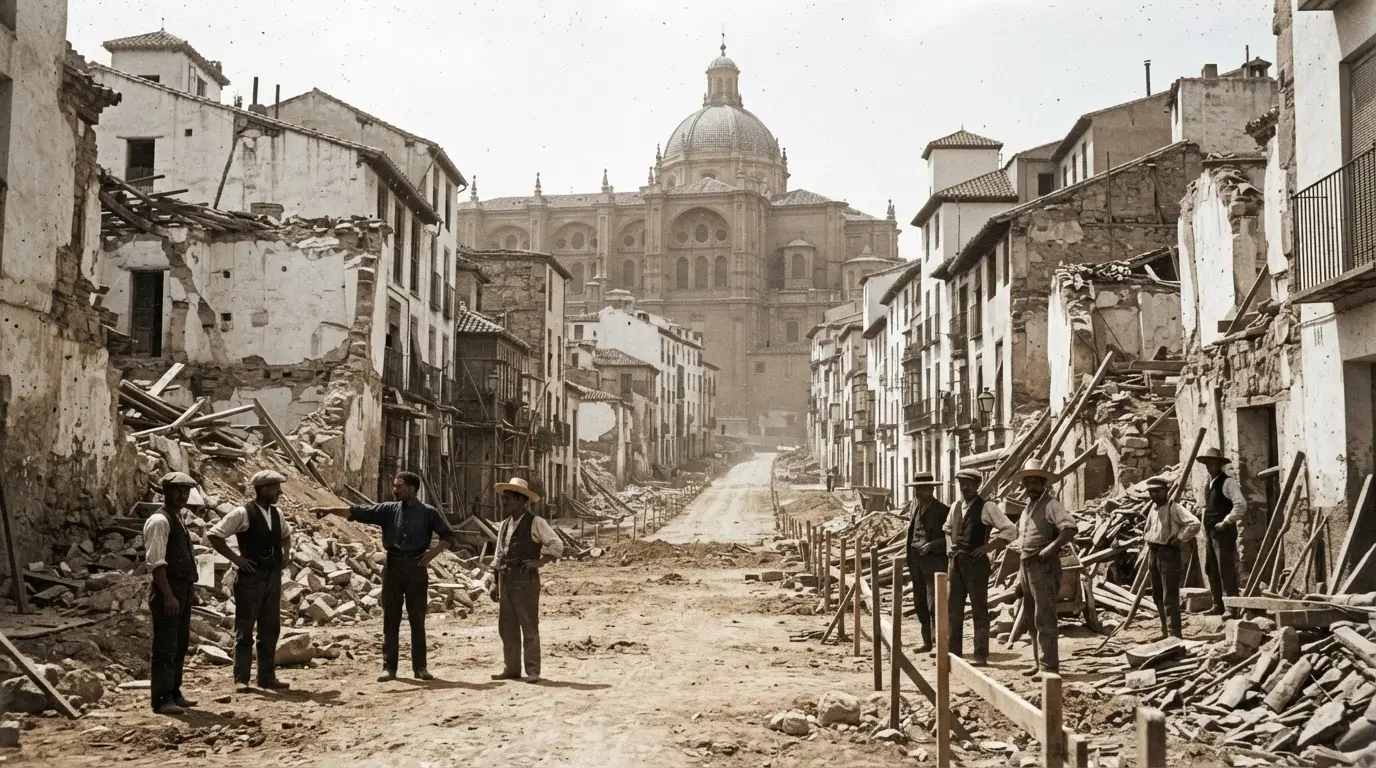
Gran Via de Colon Granada History: The Cut Through the Medina
James Walker
How Granada's Gran Via de Colon was cut through the medieval medina from 1895: the Cendoya plan, 244 expropriations, lost Nasrid houses and who paid for it.
Read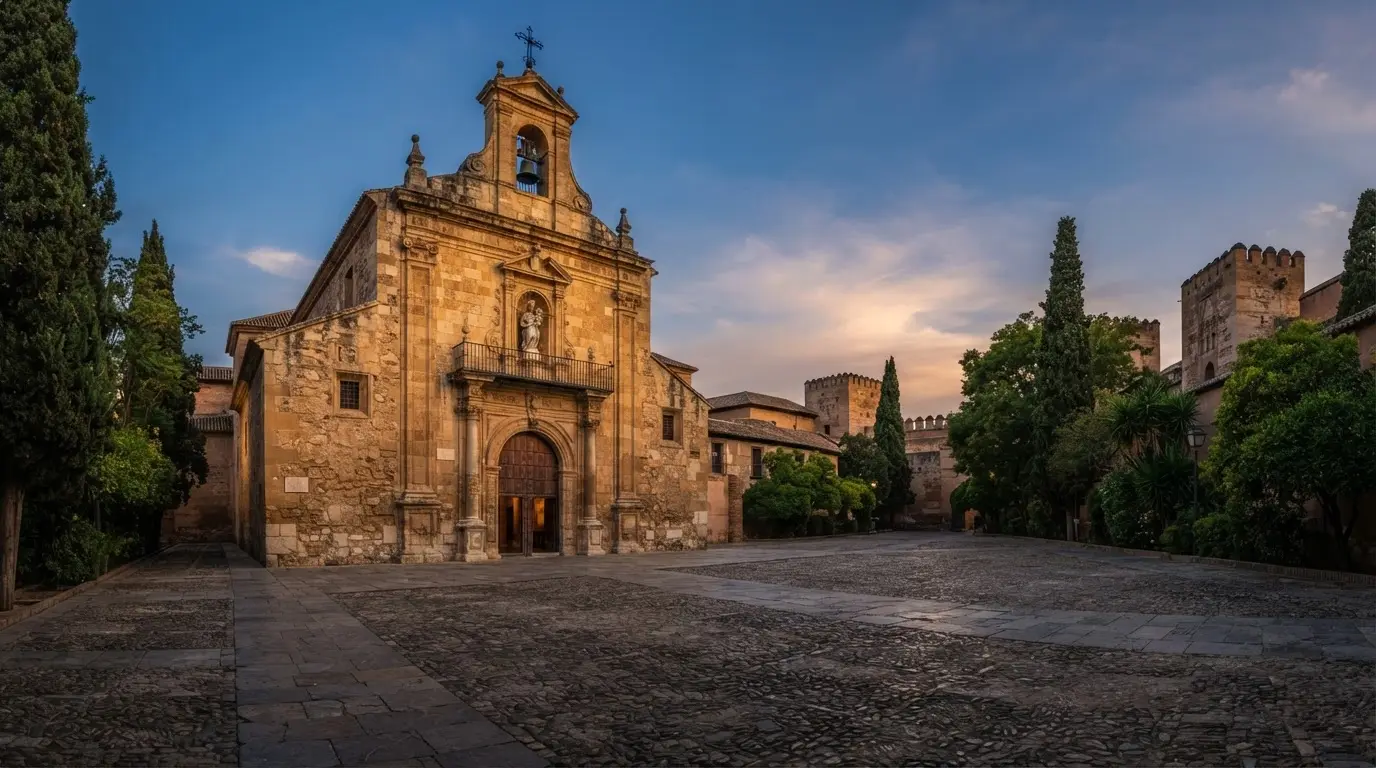
Alhambra Royal Mosque: From Nasrid Mosque to Santa María
James Walker
The Alhambra royal mosque was completed in 1305 and later replaced by Santa María. Read its plan, surviving bath and difference from Granada's city mosque.
Read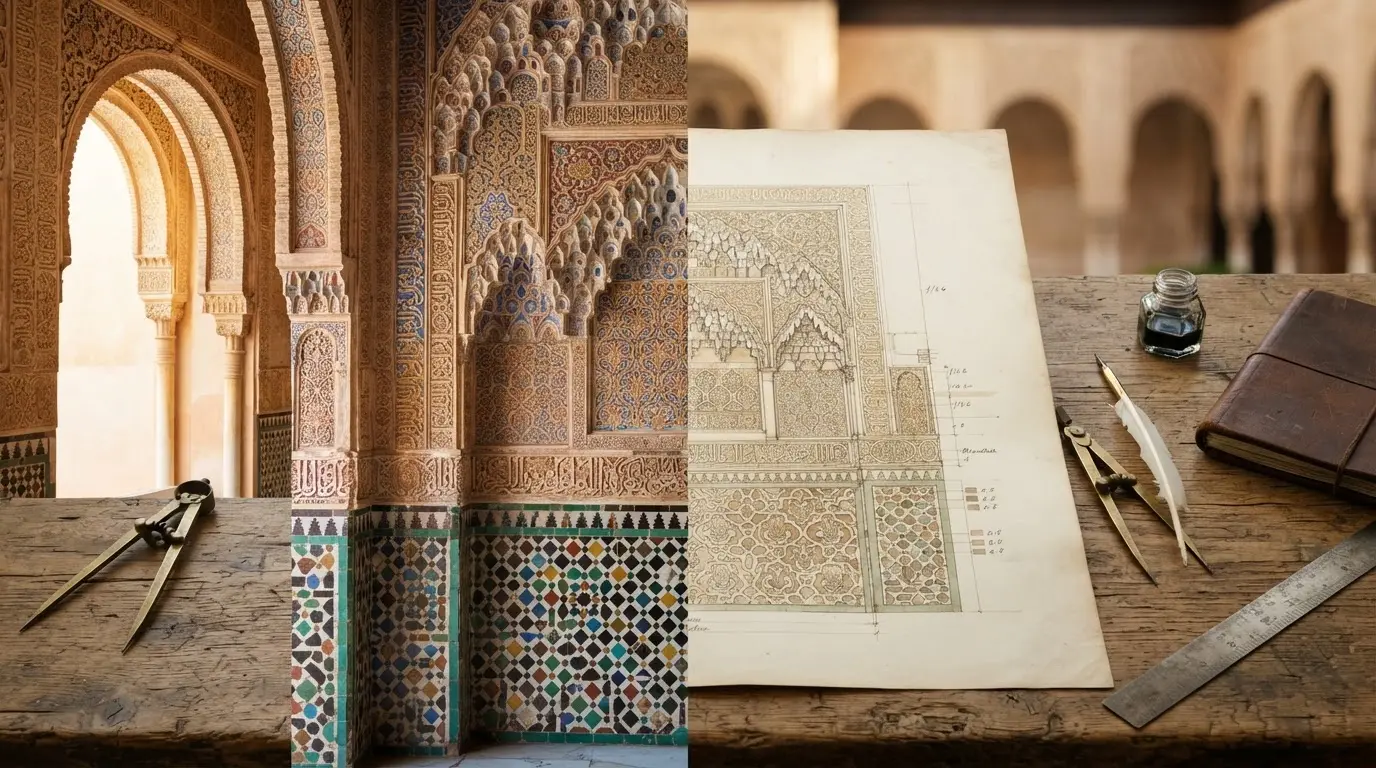
Alhambra 19th Century Restoration: What Contreras Changed
James Walker
Rafael Contreras renewed parts of the Alhambra in the 1800s. See how Leopoldo Torres Balbás later changed the method through conservation and restraint.
Read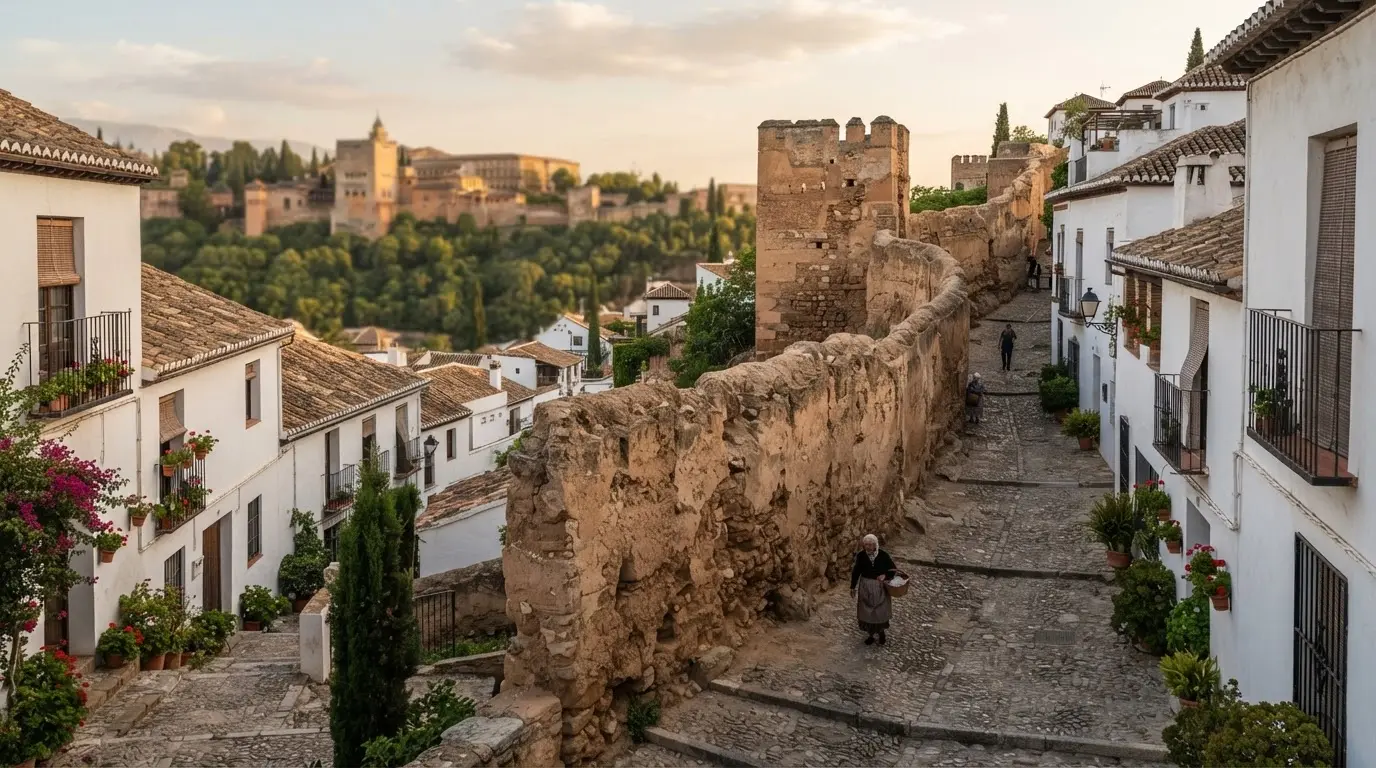
Granada City Walls: Tracing the Zirid Circuit
James Walker
Granada's oldest walls aren't at the Alhambra. Trace the 11th-century Zirid circuit through the Albaicín: surviving towers, vanished gates, Puerta de Elvira.
Read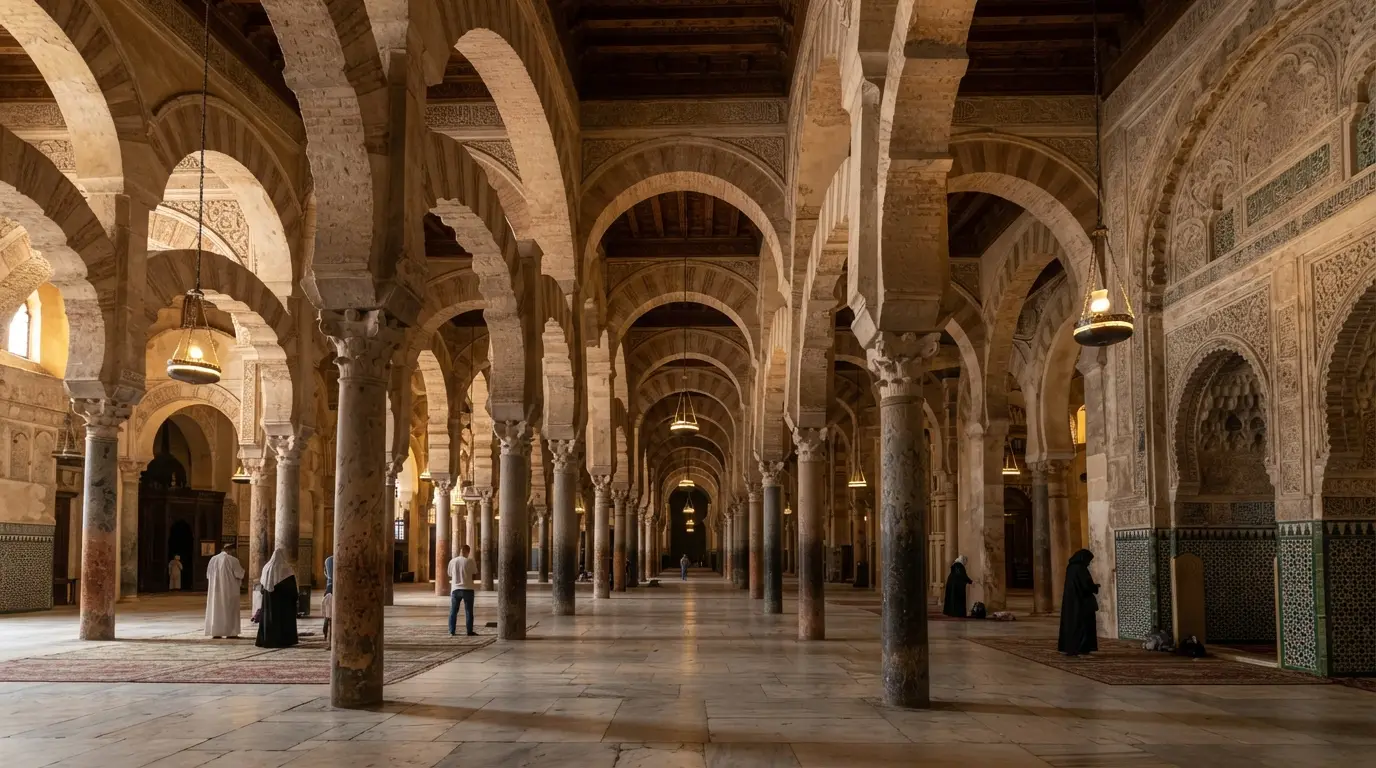
Before the Cathedral: Granada's Lost Great Mosque
James Walker Updated
Granada's 11th-century Great Mosque had 130 columns and 11 naves. It served 450 years until the Renaissance cathedral replaced it. Little survives above ground.
Read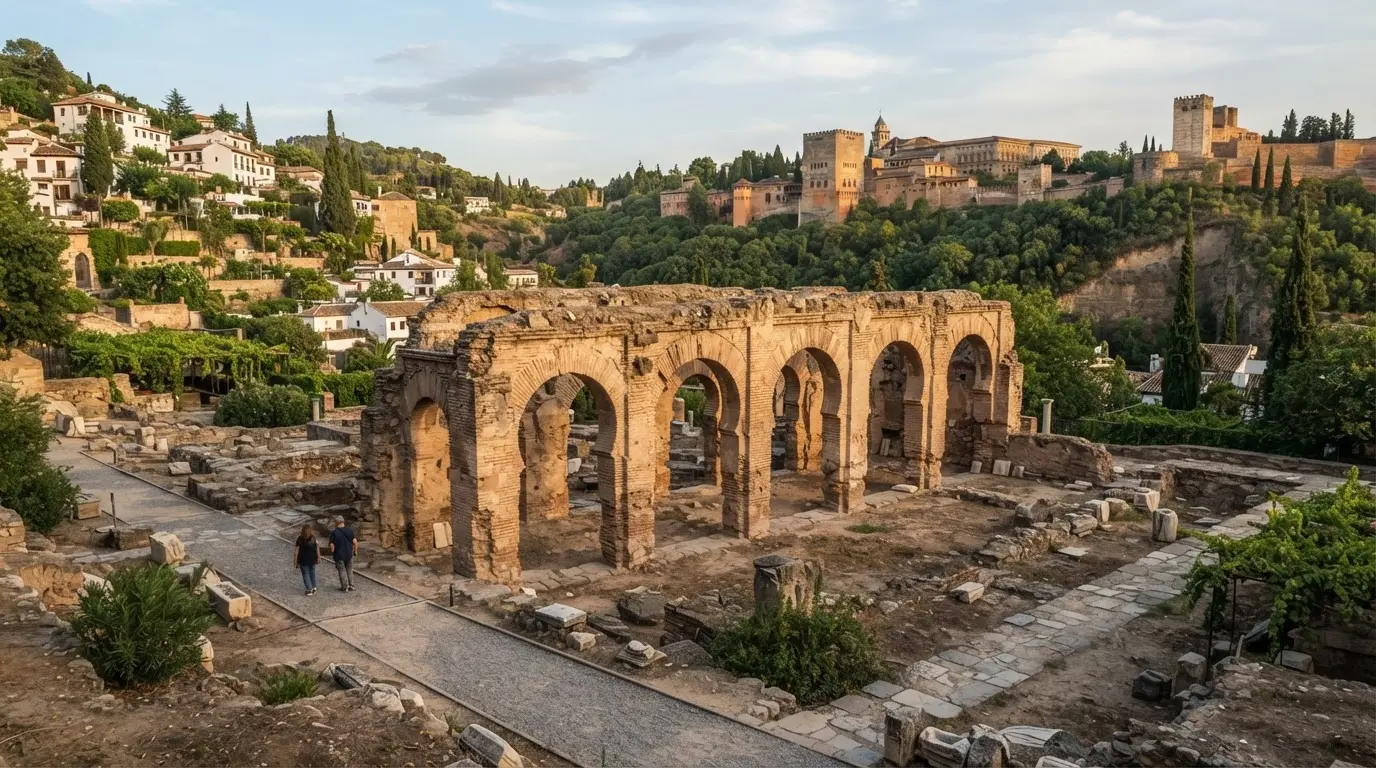
The Maristan of Granada: Islamic Hospital That Vanished
James Walker Updated
Granada's 14th-century Maristan was Islamic Spain's first hospital, built by Nasrid sultan Muhammad V in 1367. Its remains quietly reopened to visitors in 2023.
Read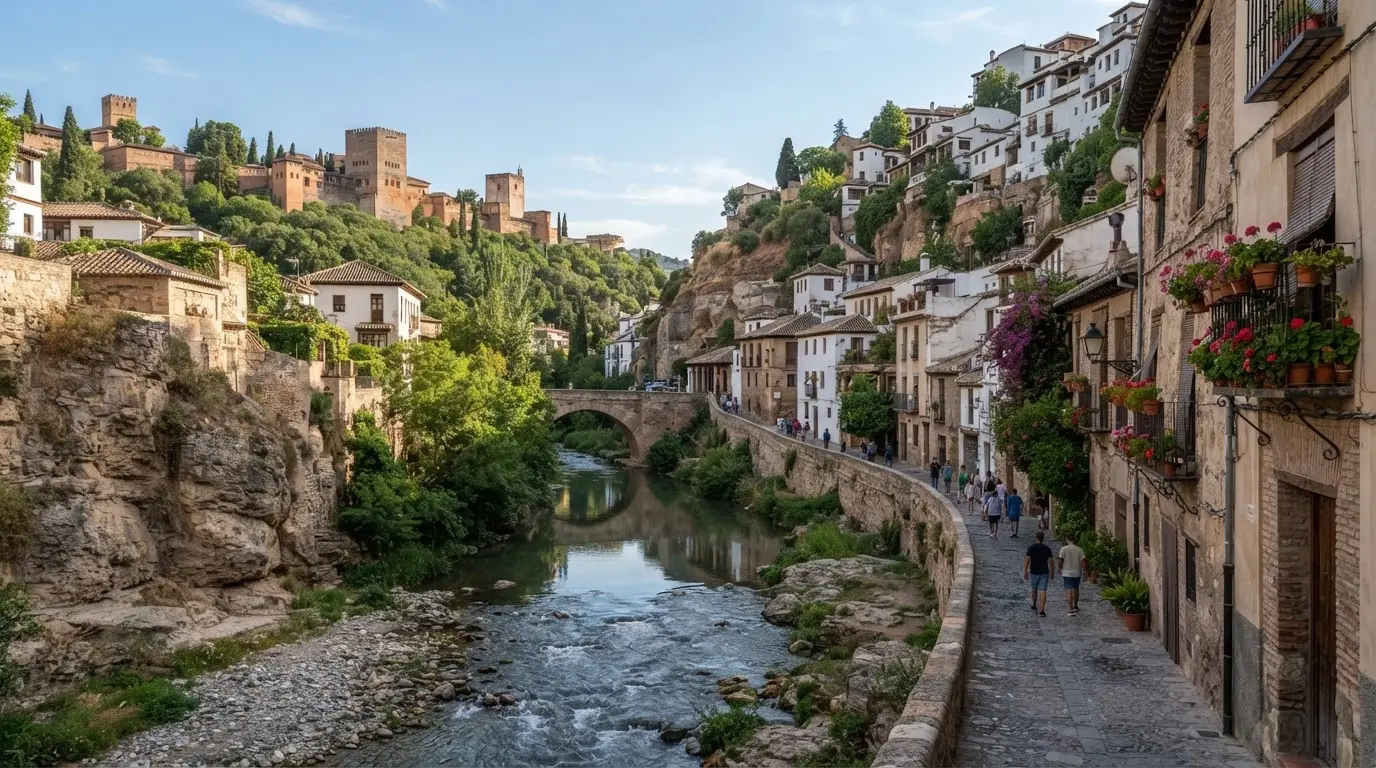
Darro River Granada: From Roman Gold to a Buried River
James Walker Updated
Why does the Darro vanish underground in Granada? The history: Roman gold, the Acequia Real, an 1854 burial, and the one open stretch at Carrera del Darro.
Read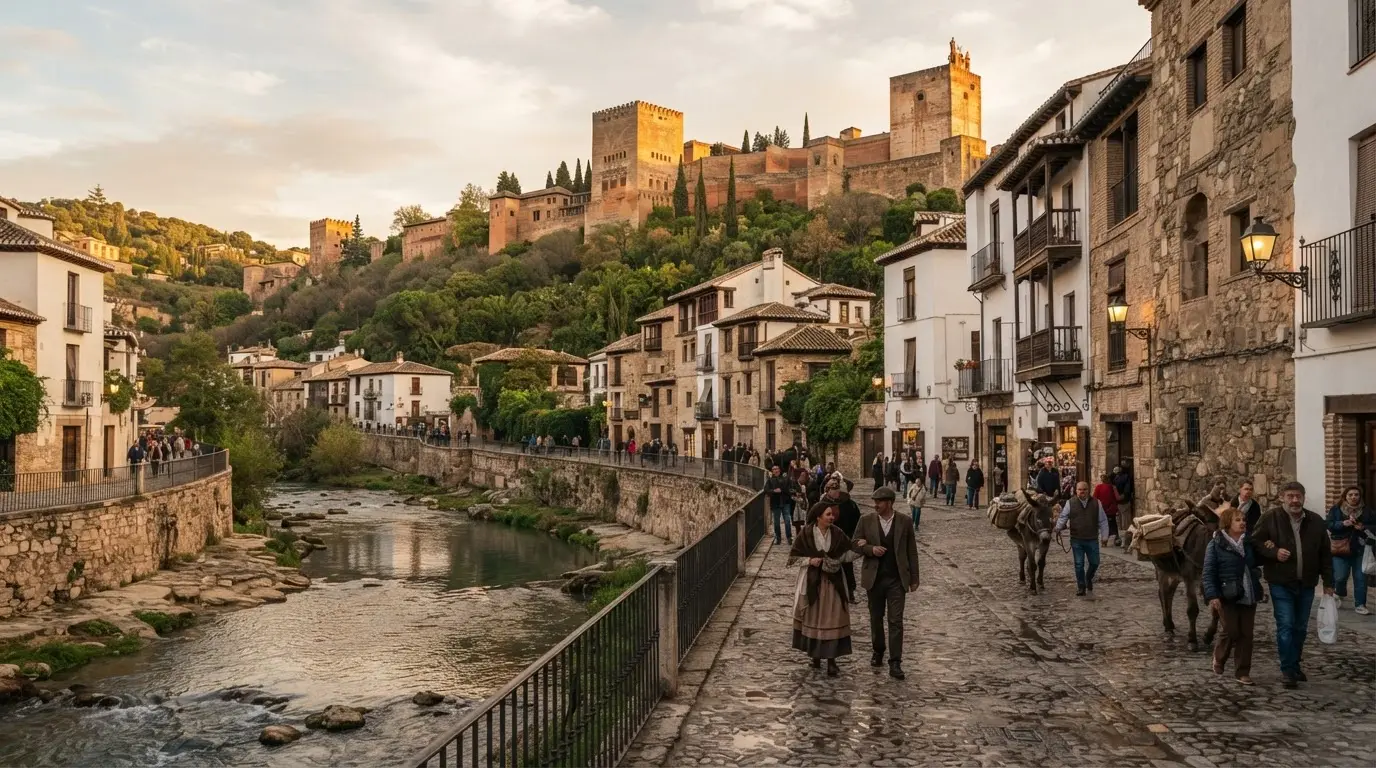
Carrera del Darro: Granada's Medieval Street Explained
James Walker Updated
Carrera del Darro history: 11th-century Moorish bridges, El Bañuelo bathhouse, a 1539 Renaissance palace, and Granada's only open stretch of the Darro river.
Read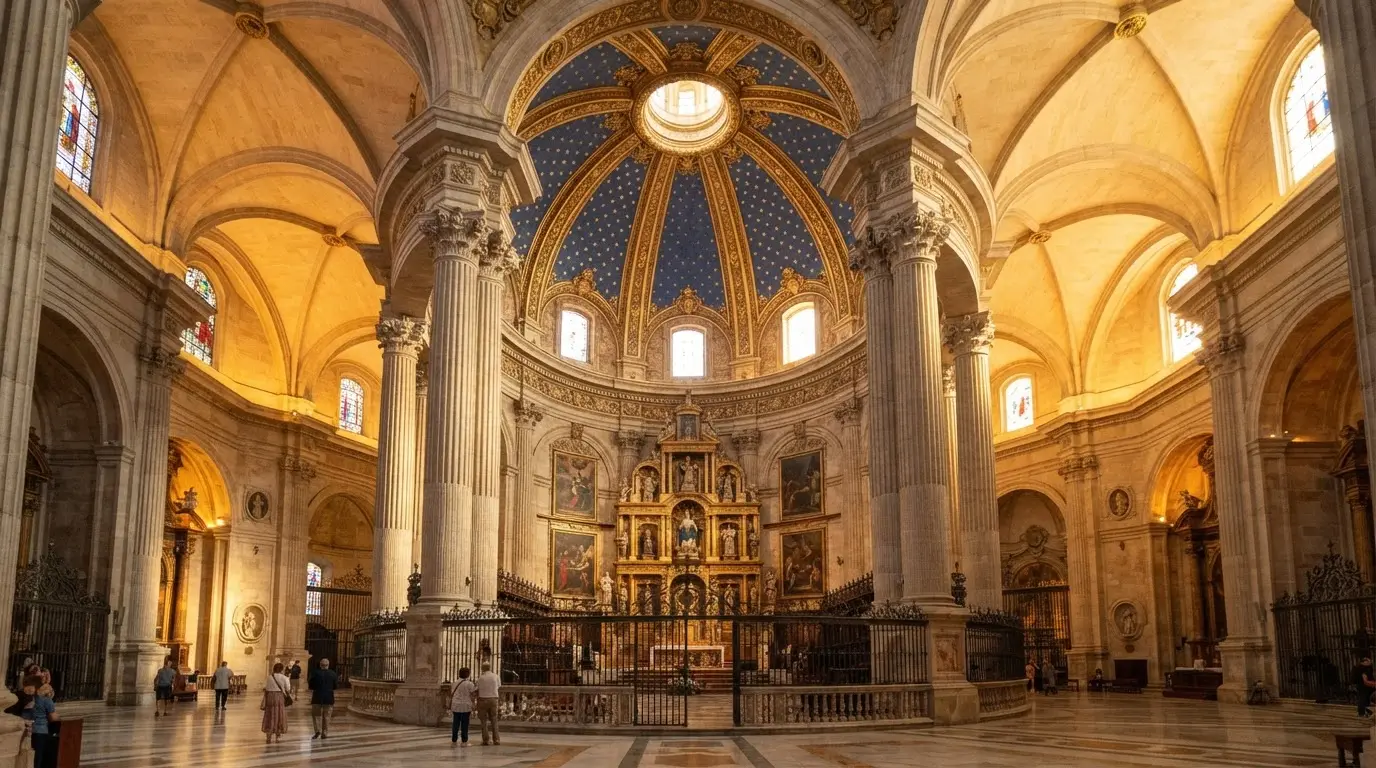
Granada Cathedral: Siloé's Renaissance Blueprint
James Walker Updated
Granada Cathedral's history: built from 1523 to 1704, converted from Gothic to Spain's first Renaissance design in 1529 by Diego de Siloé's circular chapel.
Read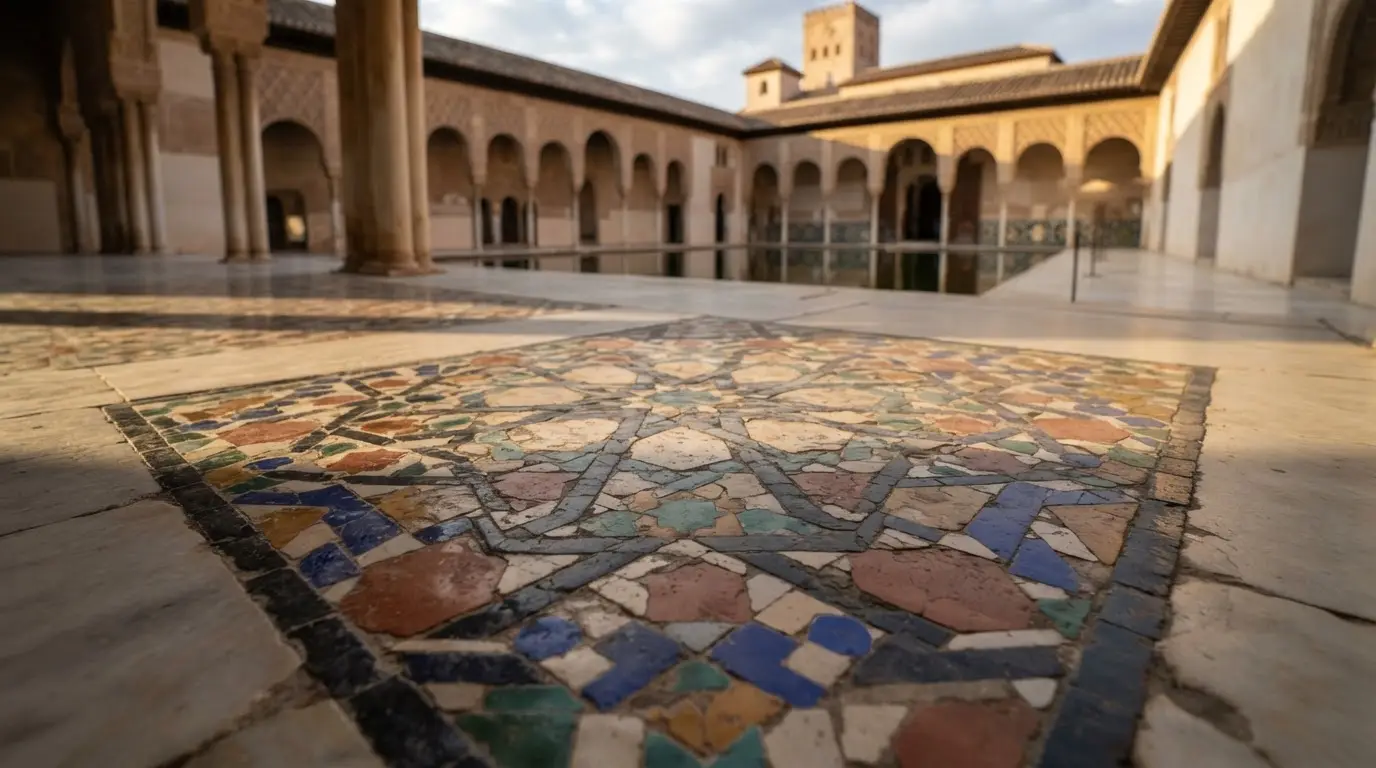
Alhambra Geometry: An Architecture Lover's Deep Dive
James Walker Updated
Alhambra geometry decoded room by room: girih tile patterns, muqarnas mathematics, and the proportion systems that still baffle modern architects and designers.
Read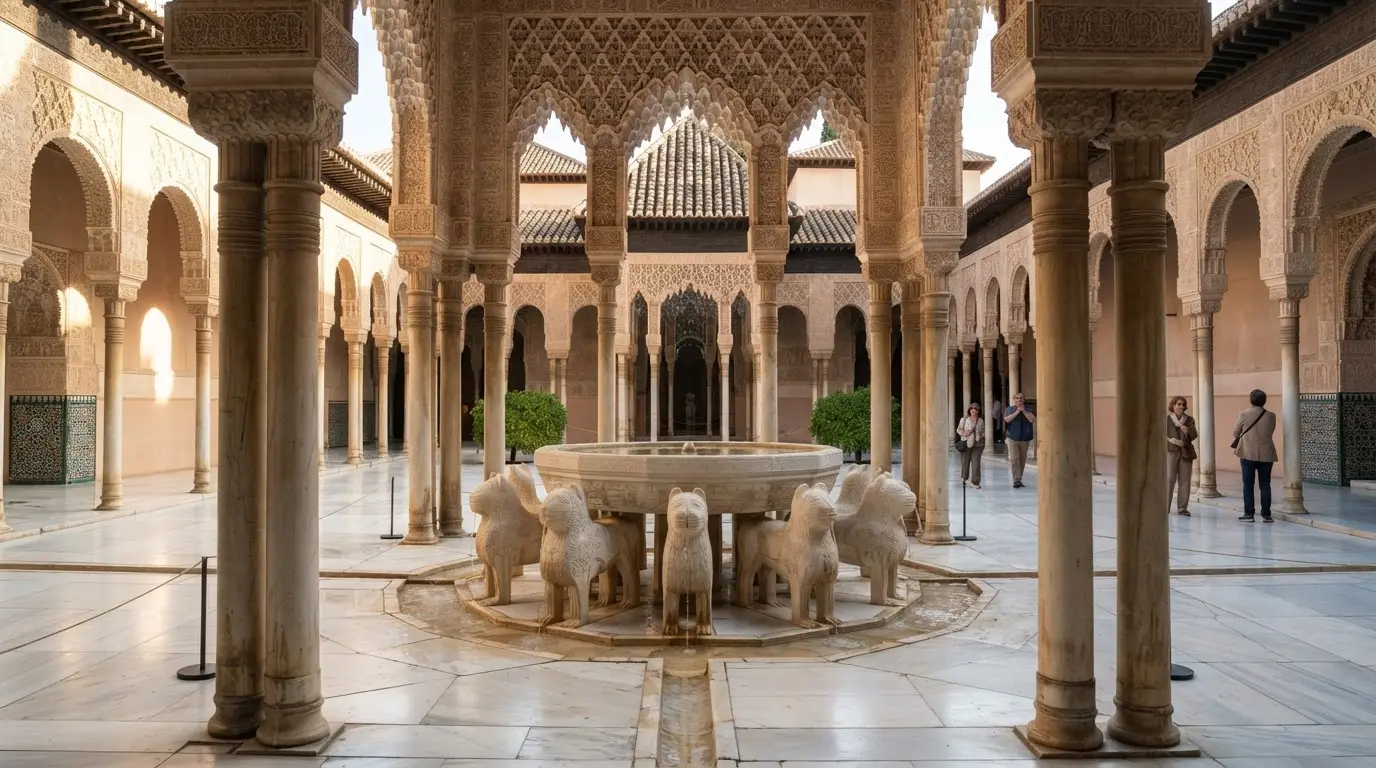
Court of the Lions Alhambra Granada: Decoding the Courtyard
James Walker Updated
Court of the Lions, Alhambra Granada: 124 marble columns, a lion fountain 650 years old, a Quranic paradise built by Muhammad V. What to see and when.
Read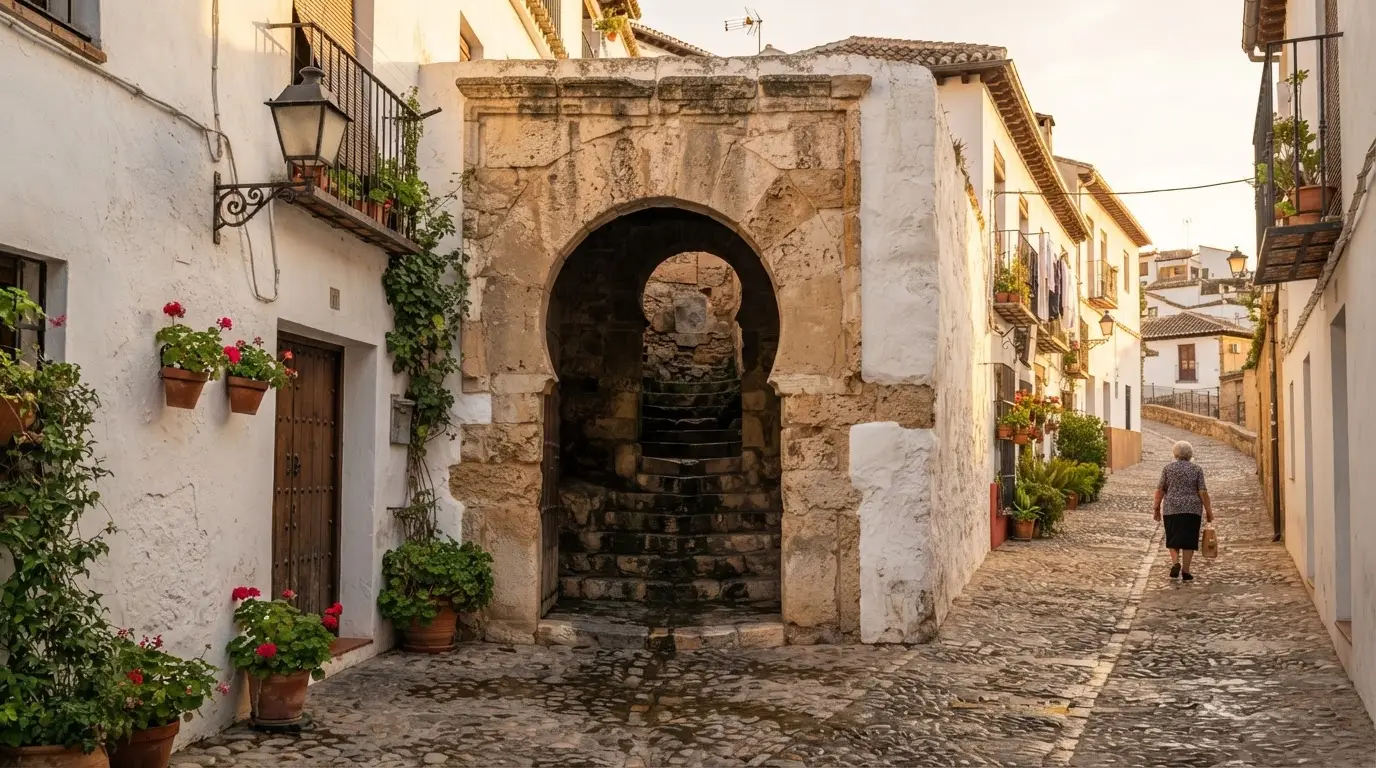
Albaicín Aljibes: The Medieval Cisterns Under Granada's Streets
James Walker Updated
Twenty-six medieval cisterns survive beneath the Albaicín, built 10th–15th centuries. Fed by the Acequia de Aynadamar from Alfacar into every home and mosque.
ReadFrequently asked questions
What is the oldest part of the Alhambra?
The Alcazaba fortress is the oldest surviving structure, with a documented history reaching back to 889, roughly 350 years before Muhammad I began building the Nasrid palaces beside it in the 13th century.
How did the Alhambra get its water supply?
The Acequia Real, a gravity-fed channel built from 1238, diverted water from the Darro river roughly 6 kilometres upstream and carried it to the Alhambra using only gradient, supplying every fountain, cistern, and garden in the complex without any pumping.
Why does the Alhambra look decoratively unified despite being built over 150 years?
Every major room stacks the same three layers: geometric zellige tilework at floor height, carved stucco arabesque above it, and either muqarnas vaulting or a wooden ceiling at the top, with the tilework throughout drawn from the same five-shape geometric system regardless of which sultan commissioned the room.
What replaced Granada's Great Mosque?
The Great Mosque, an 11th-century hypostyle hall with roughly 130 columns, was converted to a church after 1492 and demolished in stages between 1588 and 1704 to build Granada Cathedral and the Iglesia del Sagrario on the same site.
Who restored the Alhambra in the 19th and 20th centuries?
Rafael Contreras renewed parts of the palace’s decoration in the 19th century, favouring visual completeness. Leopoldo Torres Balbás, appointed architect-conservator in 1923, reversed that approach, prioritising consolidation of surviving fabric and clearly distinguishing new work from old.
How many cisterns survive beneath the Albaicín?
Twenty-six medieval aljibes survive in the Albaicín today, out of 28 historically documented across Granada. The oldest, the Aljibe del Rey, was built between 1038 and 1073 under the Zirid dynasty and held 300 cubic metres of water.