Juan Latino: The Enslaved Man Who Taught Latin in Granada
Juan Latino was enslaved in a duke's household, then taught Latin in Granada and printed a Lepanto epic in 1573. What the records settle, and what they don't.
In 1573 the Granada printer Hugo de Mena ran off the first volume of verse by Juan Latino,[1] a man who began life enslaved in the household of the Duke of Sessa and later taught Latin in the city.[2] The University of Granada credits him as the first Afro-European to write literary works in learned Latin,[3] a narrower claim than the grander firsts attached to his name. He lived from c. 1517 to c. 1594 or later,[4] and almost everything else, from his birthplace to the exact post he held, is contested.
First verse volume printed
1573
Hugo de Mena's Granada press; a second volume followed in 1576[1]
Bachelor's degree in arts
1546
Later became master or professor at the university[5]
Slaves in his parish
51
Counted in Granada's 1561 census of the parish where he lived[6]
In this article
Jump to a section
⌄
Born into an argument about where he came from
Juan Latino was born around 1517, and scholars generally bracket the year between 1516 and 1518.[7] The place is harder to fix. The likelier account makes him a native of Baena, in southern Spain, descended from parents born in Guinea.[4] A rival version has him born in Berbería, the Spanish term for the North African coast, and carried across to Spain at the age of twelve.[8]
The firmer fact is who owned him. Latino belonged to Gonzalo Fernández de Córdoba, 3rd Duke of Sessa and grandson of the Gran Capitán whose name he shared.[2] Whatever the truth about his birth, he began as property, and everything he later achieved has to be read against that.
His face is as uncertain as his birthplace: no verified portrait of Juan Latino is known to survive.[9] Any image sold as his likeness deserves suspicion.
The two origin stories carry different weight. Baena makes him the descendant of people already carried to Iberia and born into a Spanish household, while Berbería makes him a captive child taken across the sea, as the tradition has it, with his mother. Both are consistent with a boy who entered the Sessa household unfree, and both leave him with the same starting point.
From the Sessa household to the cathedral school
By 1546 Latino had taken a bachelor's degree in arts, and he later became a master or professor at the university.[5] That is where the accounts split.
In one telling his career began in 1556, when his old teacher Pedro de Mota died and Latino, backed by Archbishop Pedro Guerrero, took over Mota's lectureship in the cathedral school.[10] In the other he was a catedrático of the University of Granada, a description the university itself uses, and one that makes his birth into slavery the exceptional part of the story.[11]
A lawsuit between Latino and the Royal College over the location and ownership of his chair shows why the picture stays blurred.[12] The wording that survives both versions is plain enough: he taught grammar and Latin in Granada with the archbishop's backing, and the university counts him among its early chair-holders. Both versions put him inside the institutions that shaped learning in Renaissance Granada, and both rest on the same documented fact: an enslaved man became a teacher of Latin whose name outlived the argument over his title.
The Austrias Carmen and the poet of Lepanto
The work that made Latino's name is the Austrias Carmen, a Latin epic on the naval battle of Lepanto whose title translates as the Song of John of Austria.[13] Scholars writing in Spanish still call it La Austriada, without doubt his most famous work and the one that earned him the greatest literary glory.[14] The battle itself was fought in 1571, two years before the poem reached print, so the epic was a fresh commemoration rather than a distant tribute.
His hero was the commander who also led the crown's campaign against the Morisco revolt of the Alpujarras. A poet who had once been a duke's property was now writing a victory song for the half-brother of the king, and writing it in a language few Granadinos could read.
The University of Granada ties his name to a surprisingly long list of figures and houses:[15]
the Gran Capitán, grandfather of his owner
the dukedom of Sessa
John of Austria, the hero of his epic
Cervantes
Lope de Vega
Both volumes of his verse came off Hugo de Mena's Granada press, the first in 1573 and the second in 1576.[1]
Marriage, the courts and the question of freedom
Many retellings call him a freed slave, yet there is no evidence he ever was.[16] Latino married Ana de Carleval, a noblewoman whose surname also appears as Carlobal in the records, and the couple had several children; they are counted among the first legally recognised mixed-race couples in Spain.[17] The match was unusual even in a city that held enslaved people, since a marriage between a freed Black man and a free white woman was very rare.[18]
Trouble of a legal kind followed. The University of Granada's notice of Aurelia Martín Casares's 2016 biography singles out a long case before the Chancillería of Granada, running from 1564 to 1572.[19] Cases before that royal court could drag on for years, and this one closed the year before his first volume reached print.
What the record does show is a man who bought a house, taught, published and married into the local gentry; the one document missing is the one that would say how he got there.
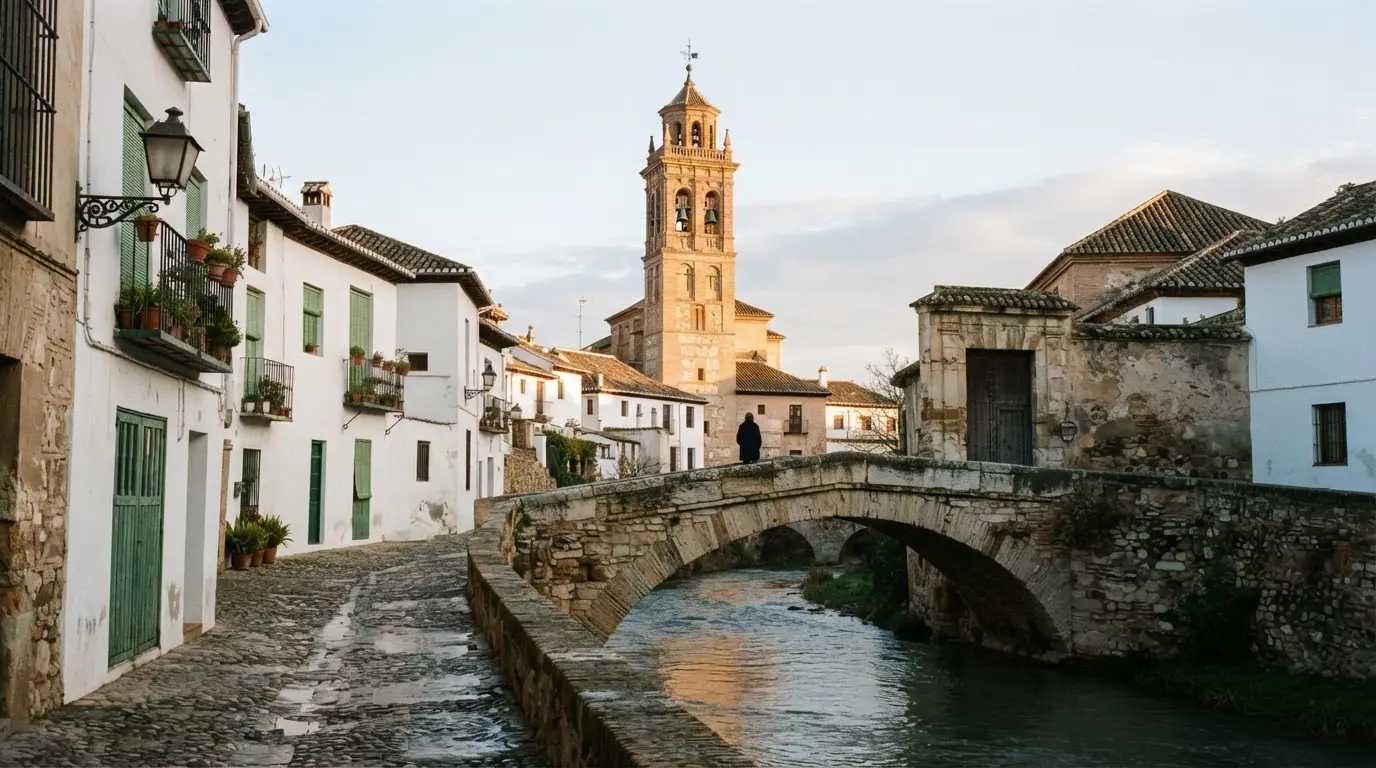
The one address the record gives is a parish. In 1560 Latino bought a house in the collation of Santa Ana,[20] the district gathered around the church of that name beside the Darro at the foot of the Albaicín. Granada's 1561 census counted 51 enslaved people in the parish where the family lived,[6] which puts slavery on his own doorstep.
He died in old age, around 1594 or at some unknown date after it.[21] He is reportedly buried in the church of Santa Ana, whose archive from that period has since burned.[22] That loss is the practical reason the parish yields a name and a street but little paperwork, and it is one more reason the question of his post and his freedom has never been settled by a single document.
Santa Ana is the natural start of the Darro riverside walk, and a route that follows the evidence has two stops:
the church and parish of Santa Ana, his home parish and reported burial place
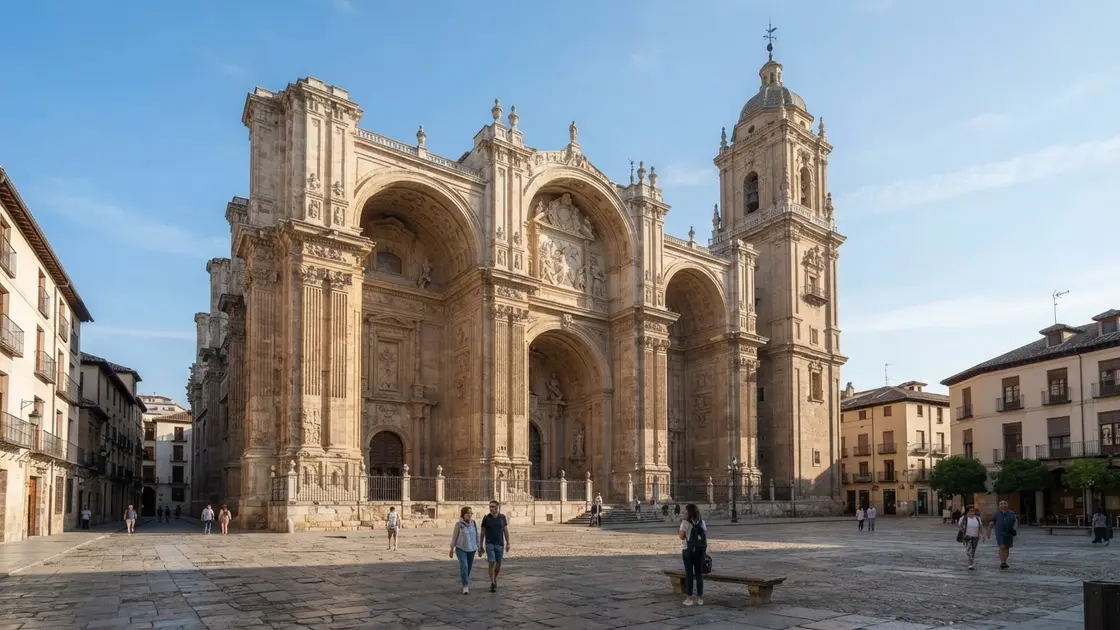
the cathedral, for the school where he lectured in one account of his career
What these stops add up to is a parish and a school, thinner than the legend but firmer than most retellings. Which Latino you find there depends on the version you trust: the master of grammar at the cathedral school, the university chair-holder, or the poet who sent a Lepanto epic to press in 1573.
Frequently asked questions
Who was Juan Latino?
Juan Latino was a 16th-century Afro-Spanish scholar and poet who lived in Granada. He began life enslaved in the household of the Duke of Sessa,[2] married the noblewoman Ana de Carleval[17] and published the Lepanto epic Austrias Carmen in 1573.[1]
Was Juan Latino really enslaved, and was he ever freed?
He was enslaved: he belonged to the 3rd Duke of Sessa.[2] Whether he was freed is unclear. Many retellings say so, but there is no evidence of a formal act of freedom.[16]
Why is Juan Latino described as a pioneer?
The University of Granada calls him the first Afro-European to write literary works in learned Latin.[3] Elizabeth R. Wright's study presents him as Renaissance Europe's first black poet.[13] Both are narrower claims than some popular retellings make.
What is the Austrias Carmen about?
It is a Latin epic on the naval battle of Lepanto, and its title translates as the Song of John of Austria.[13] It was printed in Granada by Hugo de Mena in 1573, in the first of two volumes of his verse.[1]
Where was Juan Latino born?
Nobody knows for certain. The likelier account is Baena, to parents born in Guinea,[4] while another version says Berbería on the North African coast, with arrival in Spain at the age of twelve.[8]
Who was Ana de Carleval?
She was the noblewoman who married Juan Latino; the couple had several children and are counted among the first legally recognised mixed-race couples in Spain.[17] Her surname also appears as Carlobal.
Where can you find traces of Juan Latino in Granada?
The firmest trace is the parish of Santa Ana beside the Darro, where he bought a house in 1560,[20] and he is reportedly buried in its church.[22]
Did Juan Latino teach at the university or the cathedral school?
Accounts differ. One has him taking over Pedro de Mota's lectureship at the cathedral school in 1556,[10] while the University of Granada describes him as a catedrático.[11] A lawsuit with the Royal College over his chair shows the arrangement was disputed.[12]
“Latino was the slave of the 3rd Duke of Sessa, Gonzalo Fernández de Córdoba – grandson of the famous Spanish general who shared his name, the so-called The Great Captain.”
“When his old teacher Pedro de Mota died in 1556, Latino, with the help of his protector Archbishop Pedro Guerrero, took up his job as a lecturer in the Cathedral school.”
“El hecho de que naciera esclavo y se convirtiera más tarde en catedrático de la Universidad de Granada otorga al personaje un carácter verdaderamente excepcional.”
“In The Epic of Juan Latino, Elizabeth R. Wright tells the story of Renaissance Europe’s first black poet and his epic poem on the naval battle of Lepanto, Austrias Carmen (The Song of John of Austria).”