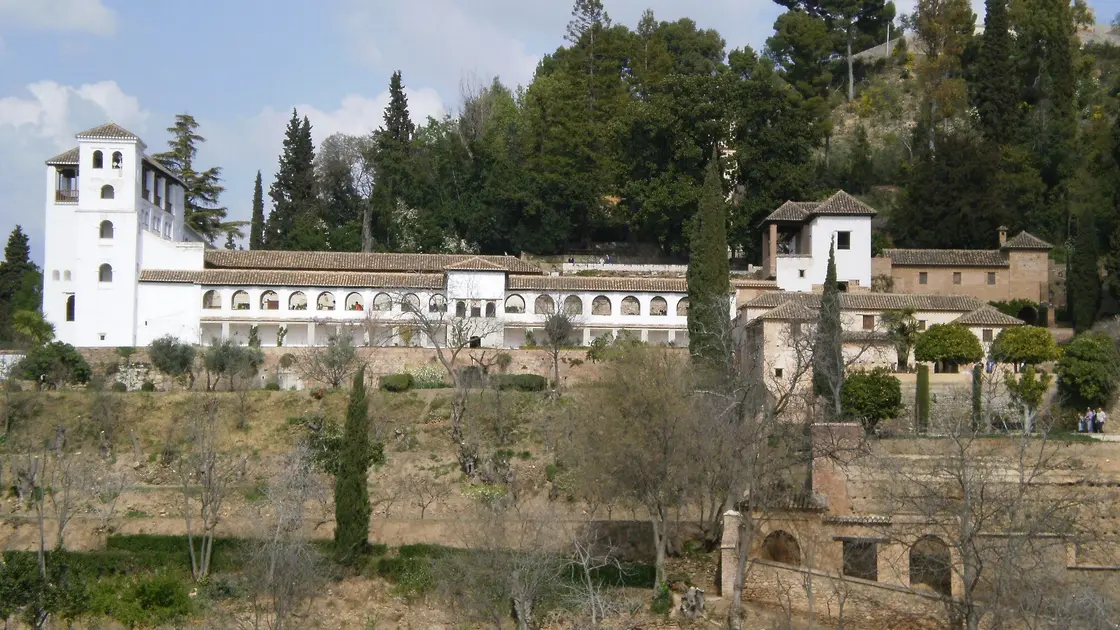
The Generalife sits on the Cerro del Sol, the hill immediately east of the Alhambra, connected to the main complex by a path through the upper gardens. Its name derives from the Arabic Yannat al-Arif, most commonly translated as the Garden of the Architect or the Garden of the Noble. It served as the sultans' country estate: a retreat from the formality of the Nasrid Palaces, close enough to the city to be convenient but high enough to catch a breeze in summer.
When to Visit
Best season
April to June (rose season) and September to October
Quietest hours
Early morning at 8:30 or late afternoon after 16:00
Visit duration
1.5 hours
The Patio de la Acequia
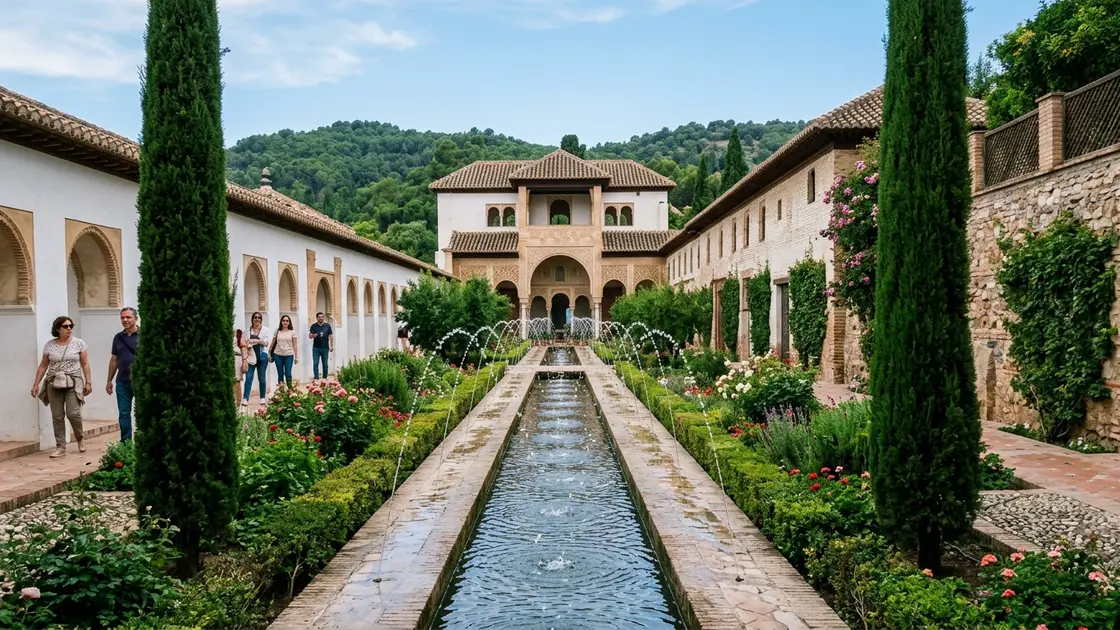
Construction of the present form is attributed to Muhammad III (1302–1309), who built the central Patio de la Acequia, though the site's use as a royal garden predates him. The courtyard is the Generalife's defining feature: a rectangular space 49 metres long and 13 metres wide, with the Acequia Real, the royal water channel, running along its central axis.
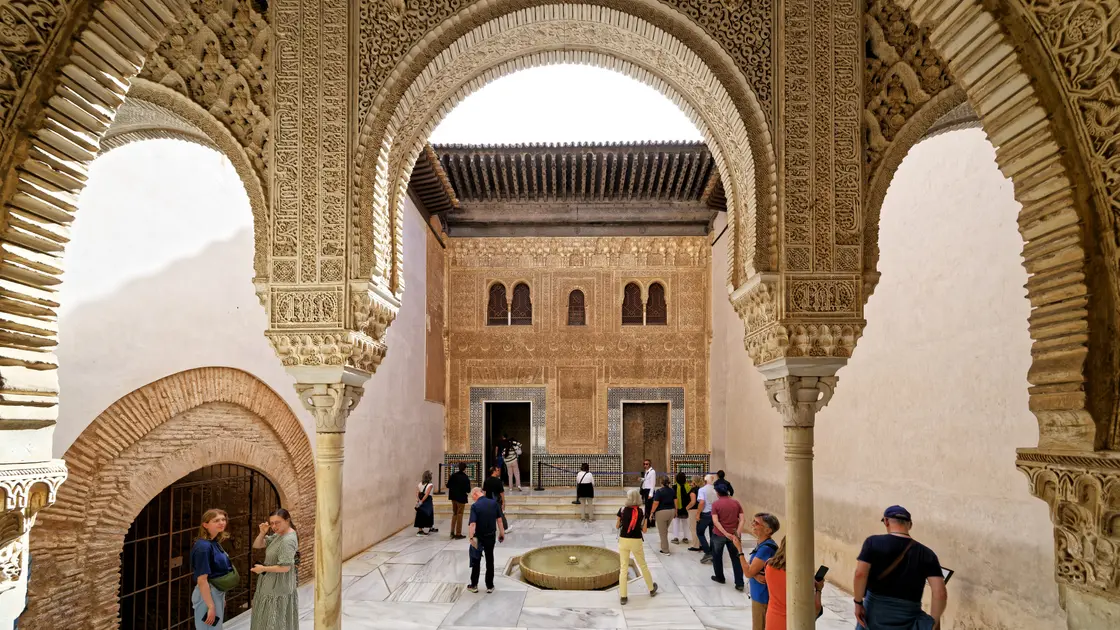
The symmetrical jets of water arching across the channel are a 19th-century addition; the Nasrid original was a straight channel with lower spouts. At the north end, the Mirador de la Acequia, a porticoed loggia with delicate columns and carved plasterwork, is the only surviving original opening of the Nasrid building. The overall arrangement, with water as its organising element, influenced formal garden design across southern Spain and beyond.
Visit in late April or May for the rose season
The upper terraces are planted with rose varieties that peak in late April and May. The combination of the blooms, the running water channels, and the Alhambra towers visible across the valley is the most photogenic the Generalife gets all year.
The upper terraces
Above the main courtyard, a series of terraced gardens climbs the hillside in a sequence of stairways, fountains, and planted areas. The Escalera del Agua, a stairway whose handrails are hollow channels carrying a constant flow of water, is one of the more ingenious pieces of hydraulic engineering in the complex.
The views from the upper terraces across the Alhambra rooftops to the Albaicin and the city below are among the best on the hill.