A converso grandson who became Isabella's confessor
Talavera did not start as a prince of the Church. At least one of his maternal grandparents was Jewish,[1] and his parents were short of money: Hernando Álvarez de Toledo, lord of Oropesa, helped fund his studies at Salamanca.[2]
Family helped him up. He was related to Fray Alonso de Oropesa, general of the Hieronymites from 1457 to 1468 and a public defender of conversos.[3] Talavera himself took the Hieronymite habit in 1466,[4] and went on to serve as confessor to Queen Isabella.
Before Granada came Ávila, where he was bishop among large Jewish and mudéjar communities.[5] He arrived on the Darro having already governed a diocese where Christians were not the only neighbours. Formal appointment as archbishop followed in January 1493.[6]
He did not come alone. His sister and her children lived with him in his Granada house, and a nephew, Francisco de Herrera, sat as dean of the cathedral chapter beside his uncle.[7]
Learning Arabic and becoming the alfaqui santo
Talavera learned Arabic himself and pressed his clergy to do the same.[8] The Hieronymite chronicler José de Sigüenza says he searched everywhere for priests and religious who knew the language, so that they could preach and teach in it.[9] He also kept a regular Arabic lesson going in his own house.[10]
The honest footnote is that he was not fluent. Sigüenza admits Talavera worked at Arabic as far as he could, but that languages "stick badly in old age".[11] A man past sixty, running a new archdiocese, was never going to preach like a native speaker.
It still counted. Granada's Muslims nicknamed him the alfaqui santo, the holy scholar, once he had learned their language.[12] A modern Spanish study of his miracle records agrees that the nickname, used by the mudéjars, seems to reflect something real.[13] An alfaqui is a Muslim jurist, so the compliment came from the very people he hoped to persuade.
The programme outlived his own lessons. In 1505, the circle around him produced a printed Arabic grammar and a Spanish-Arabic vocabulary by the Morisco Hieronymite Pedro de Alcalá, issued in Granada.[14] According to Sigüenza, Talavera paid for the printing and had copies sent across the whole archdiocese.[15]
The school for Morisco boys
From 1493 to 1507, Talavera ran a residential school for Morisco noble boys in his palace.[16] He also founded a college that educated the children of the newly converted, teaching reading and writing as well as Christian doctrine.[17] Where the palace stood is not established in the sources I trust, so be wary of any guide who points at a doorway.
The classroom method was practical. Catechetical primers let children who knew no Castilian learn to read it, and the main Catholic prayers came with the alphabet.[18]
Behind the teaching sat an idea. A study in the History of Education Quarterly argues that Talavera thought good manners, meaning the adoption of Spanish customs, were the main marker of a true Christian.[19] The same reasoning explains his table: he invited leading converts to eat with him so that they would absorb Christian habits.[20]
That is a gentle method with a quiet demand inside it. To become a Christian, in Talavera's Granada, was also to become a Castilian. The author of the Cambridge study reads the school as an early forerunner of colonial boarding schools, and the comparison is hard to dismiss. It is also why the Moriscos, the converted Muslims of the kingdom, never fully trusted the offer.
A conciliatory method, and where it stopped
One of Talavera's principles was respect for the Capitulations: no forced Christianity, only persuasion and a gradual change of habits.[21] He allowed the Muslims' own language, dances and instruments into the liturgy.[22]
Francisco Núñez Muley, his former page, later remembered the scene. Leaving for church, the archbishop was preceded by musicians playing their instruments and zambras, and the band answered during Mass, with some words in Arabic.[23] Picture a Castilian archbishop walking to church behind Moorish drums, in the years after the conquest.
It did not make him a friend of Islam. The historian Ladero Quesada insists that Talavera's differences with Cisneros were over procedure, not doctrine; he rejected Islam as completely as they did.[24] Persuasion yielded few converts, though Granadines respected him for keeping the peace terms.[25]
Deep dive · Article
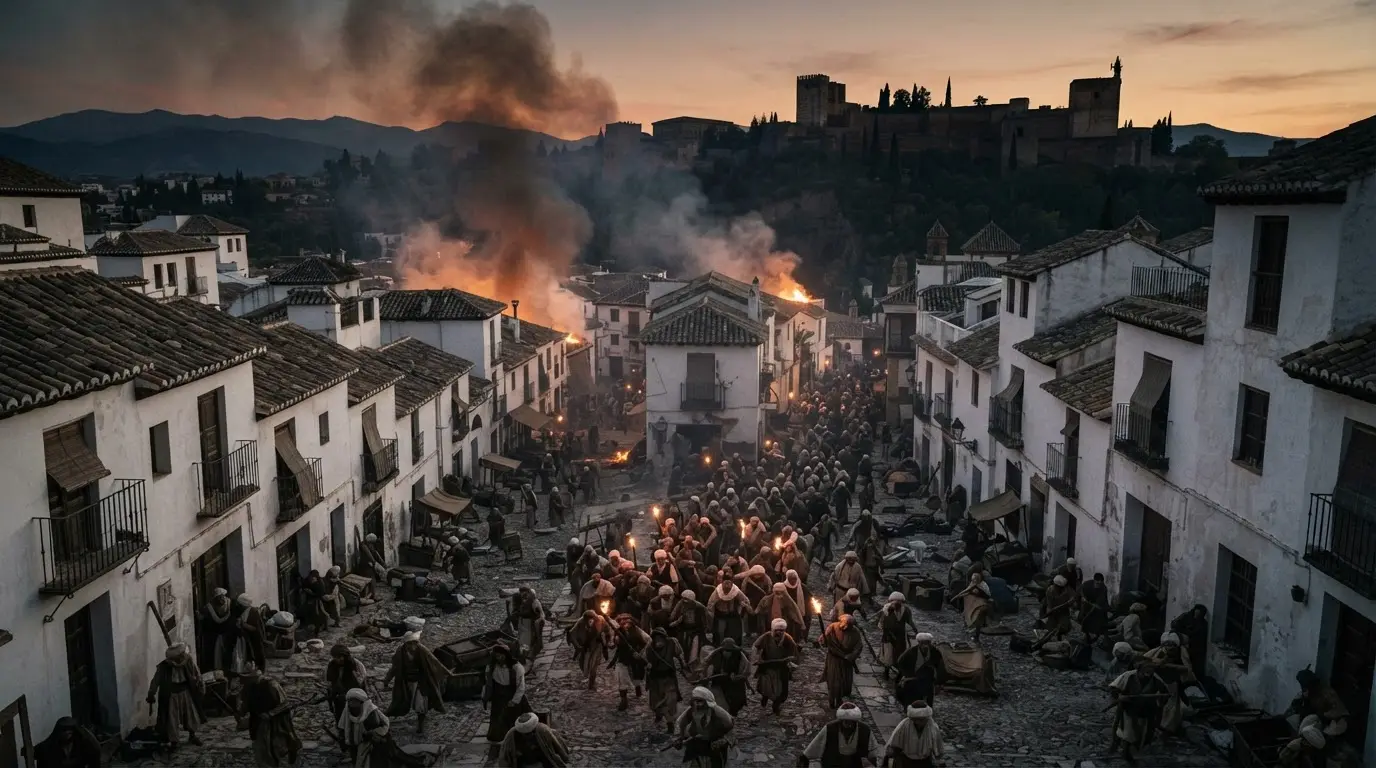
1066 Granada Massacre: When the Jewish Golden Age Ended in a Day
The 1066 Granada massacre killed Joseph ha-Nagid and thousands of the city's Jews in a single day, ending three decades of Jewish power under Samuel ha-Nagid.
Recommended tours
Tours are selected for quality, not commission. We earn a small fee if you book — at no extra cost to you.




What followed when Cisneros arrived is told in the Treaty of Granada and its broken capitulations, so it need not be retold here.
Talavera's own end was grimmer than his rival's triumph. After Isabella died in 1504 he lost his protector, and Inquisitor Lucero denounced him. The papal nuncio Giovanni Ruffo appealed to Pope Julius II, who cleared him of all charges and ordered his release.[26]
Death in 1507 and what is left in Granada
Talavera died in Granada on 14 May 1507, and the first document gathering reports of miracles is dated the very same day.[27] The Christian city also held him for a saint, and the records show the religious excitement his death provoked.[28] A manuscript from that inquiry survives in the archive of Granada Cathedral.[29]
I cannot send you to a tomb. The sources I have used do not say where his remains rest today, so treat any confident answer from a guide with suspicion.
Explore nearby · Monument
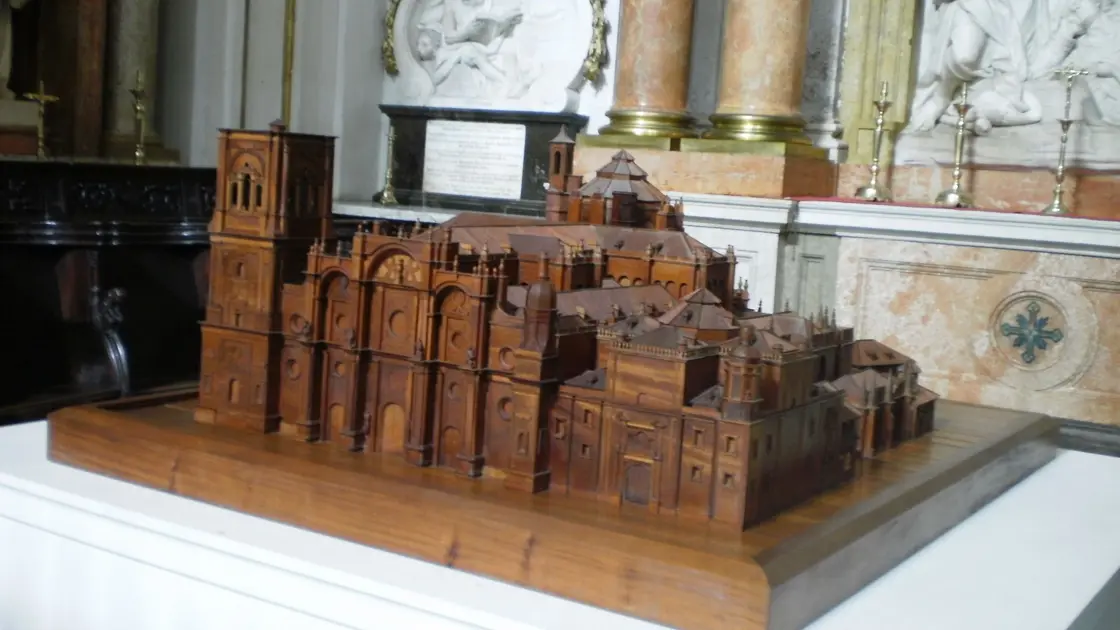
Granada Cathedral
Granada Cathedral in Spain took 181 years to build from 1523, blending Gothic foundations with a Renaissance interior of five naves and a gilded dome chapel.
What can be documented is his institutional footprint:
I have not located the present-day buildings for any of these. For the cathedral the city built after his time, start with the cathedral's Renaissance design.