Articles · History
Stories from Granada's Nasrid and Zirid Past
This collection traces Granada's political history through the people and episodes behind it: the Zirid taifa, the Nasrid kingdom that built the Alhambra, and the palace intrigue that led to the 1492 surrender. It covers the Morisco expulsions and Napoleon's brief occupation.
23 articles
History: the big picture

Written by
James Walker Seven years resident in Granada. Specialist in Nasrid architecture, Al-Andalus history, and Andalusian walking routes.
This collection follows Granada's political history across two thousand years, from the Roman town of Iliberis, host to the Council of Elvira around 306 AD, through the Berber Zirid dynasty that founded the modern city in 1013 and built its first walls and cisterns, as told in the Zirid dynasty's medieval history.
Most of the articles here trace the Nasrid dynasty, the last Muslim kingdom in Iberia, which ruled Granada from 1232 until its surrender on 2 January 1492. That surrender is covered in full in the Reconquista and the fall of Granada, alongside the 67-article Treaty of Granada that promised religious freedom and was broken within a decade. The consequences ran deep: the Alhambra Decree expelled Spain's Jews that same year, and Granada's Moriscos were forced to convert in 1502 and expelled between 1609 and 1614.
Earlier chapters recover episodes many visitors never hear about: the 1066 massacre that ended Granada's Jewish Golden Age, the Nasrid court's decades of tribute payments and diplomacy with Castile and the Marinids, and the palace intrigue of the 1480s that split the kingdom three ways before Ferdinand and Isabella ever laid siege.
Start with the Nasrid dynasty overview, then follow the Reconquista and the Zirid founding story outward into the individual episodes.
Planning a visit?
For dates, dynasties and a planning-ready timeline, see the dedicated guide: The Full History Guide
More history articles
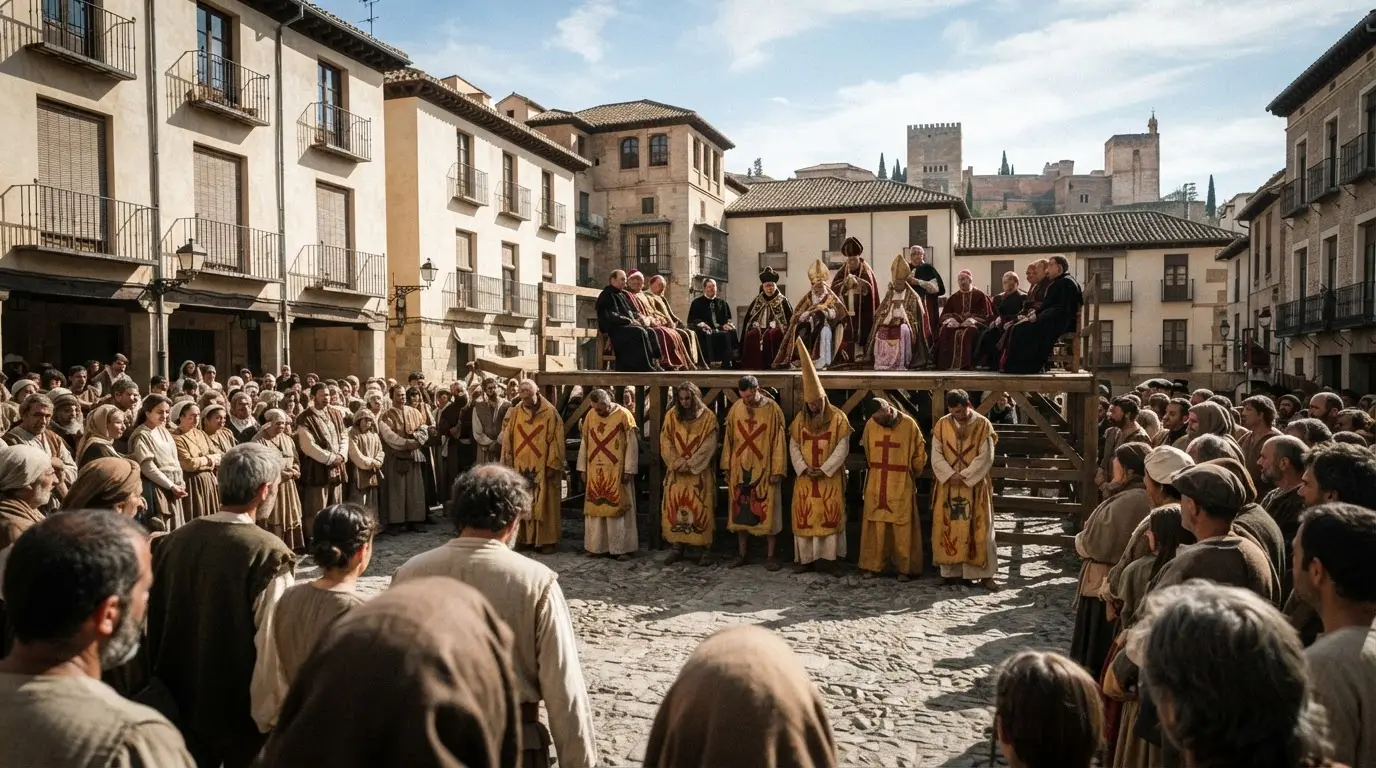
Granada Inquisition: The Holy Office Tribunal, 1526 to 1834
James Walker
The Granada Inquisition's permanent tribunal ran from 1526 to 1834. Its jurisdiction, autos de fe in Bibarrambla and San Jerónimo, and who it prosecuted.
Read
Why Granada Earthquakes Keep Coming: The 2026 Series and 1884
James Walker
Two Mw 4.8 quakes hit south of Granada in August 2026. Basin faults, plate collision and the 1884 Alhama disaster explain why, and what visitors should know.
Read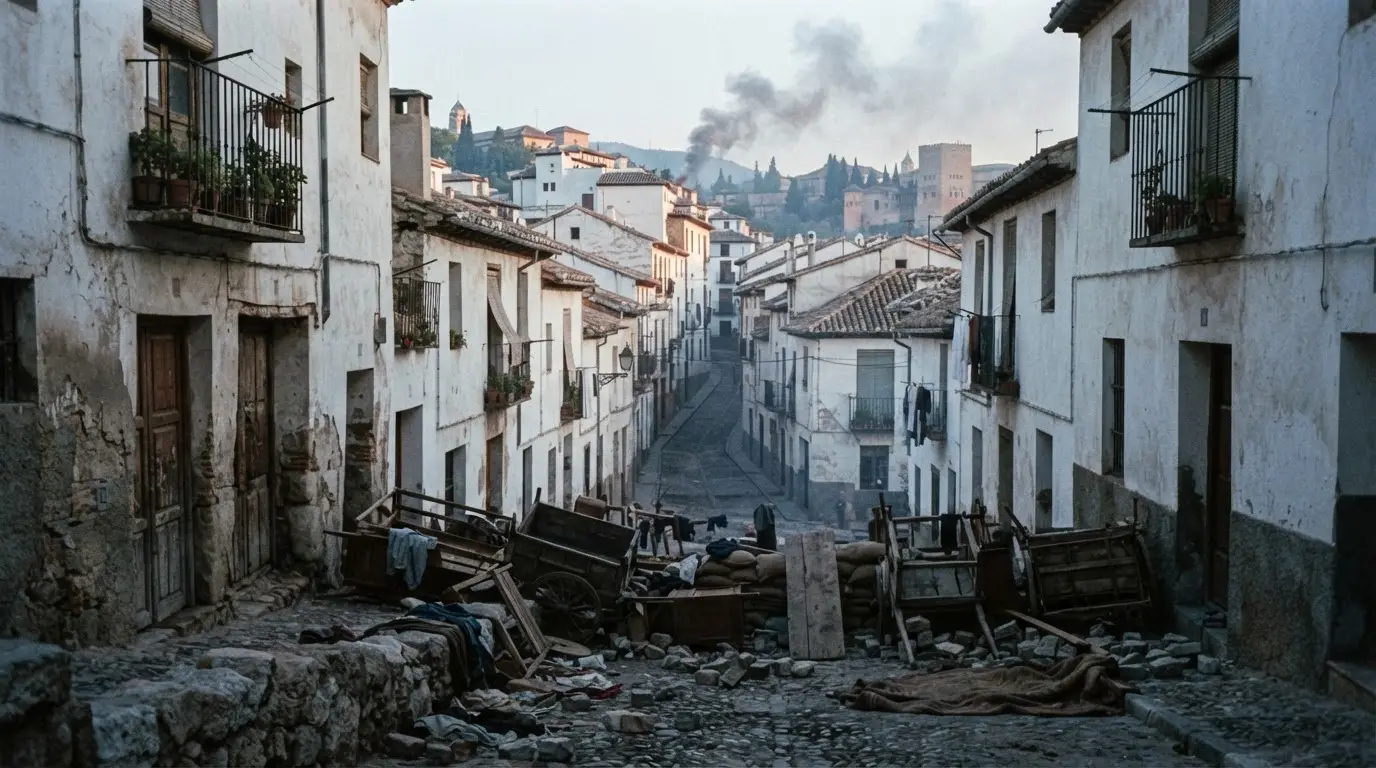
July 1936 Coup in Granada: How the City Fell
James Walker
The July 1936 coup in Granada, day by day: the garrison revolt of 20 July, the Albaicín's barricades under artillery fire, the surrender and the repression.
Read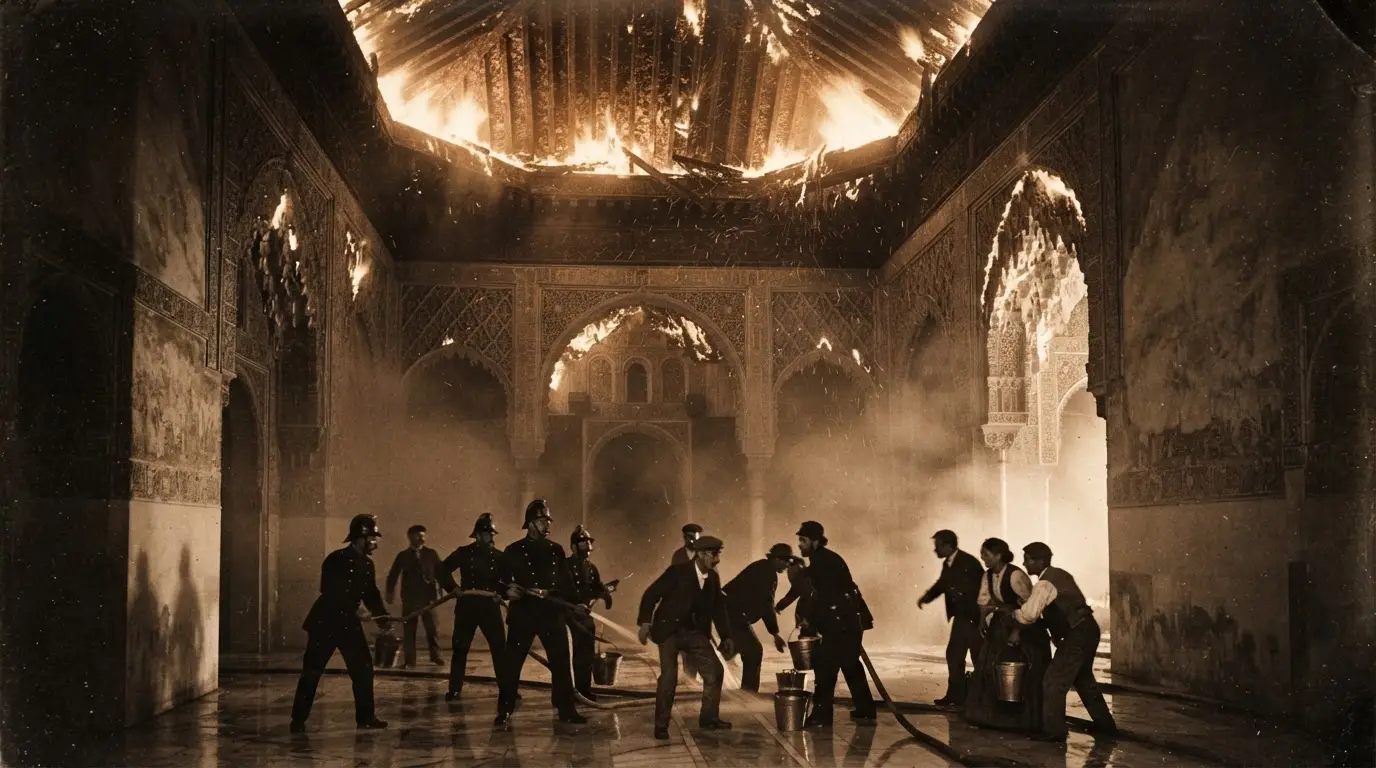
Alhambra Fire of 1890: A Disaster Nearly Forgotten
James Walker
Fire gutted the Alhambra's Sala de la Barca on the night of 15 September 1890. Here's what burned, who was blamed, and how 75 years rebuilt the ceiling.
Read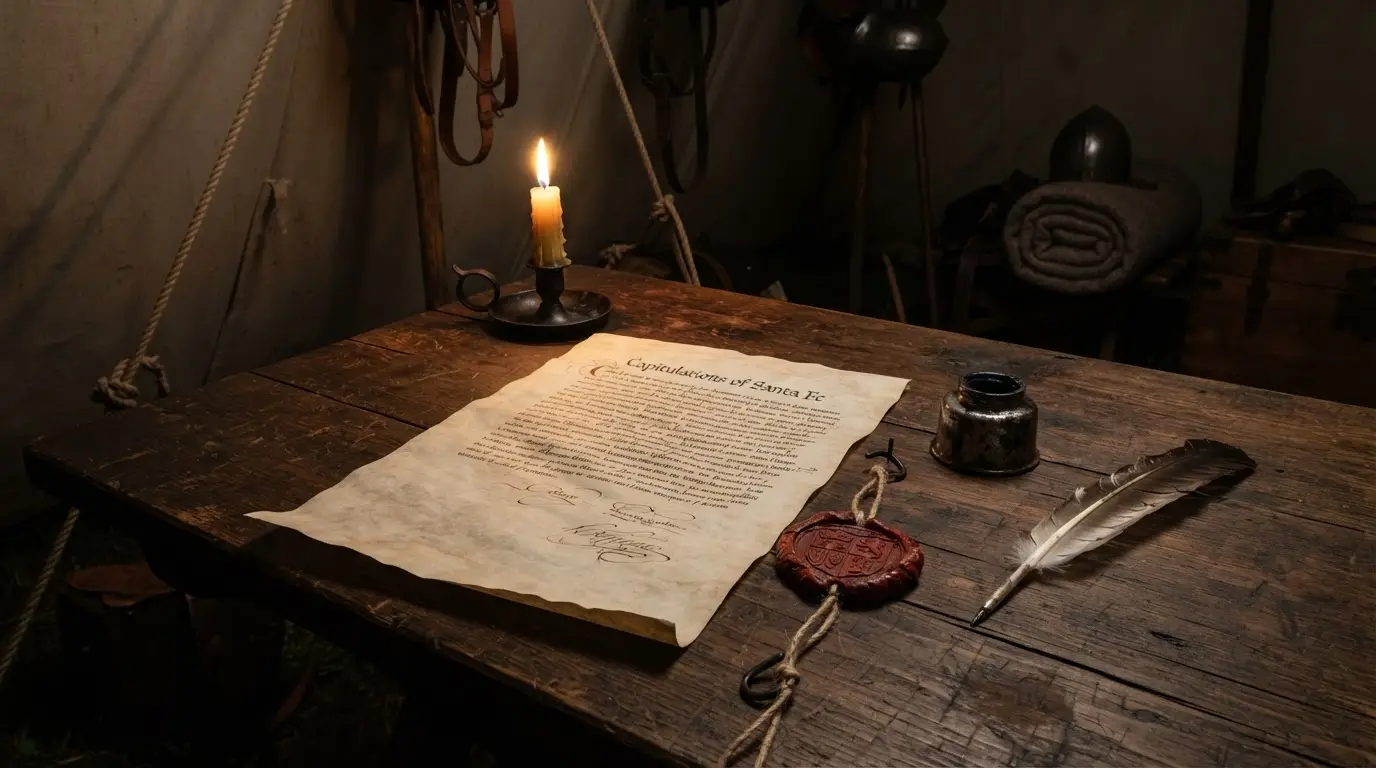
Capitulations of Santa Fe: The Deal That Sent Columbus
James Walker
Fifteen weeks after Granada fell, Columbus signed away a tenth of the New World at a Granada siege camp, and the crown's own coffers weren't what paid for it.
Read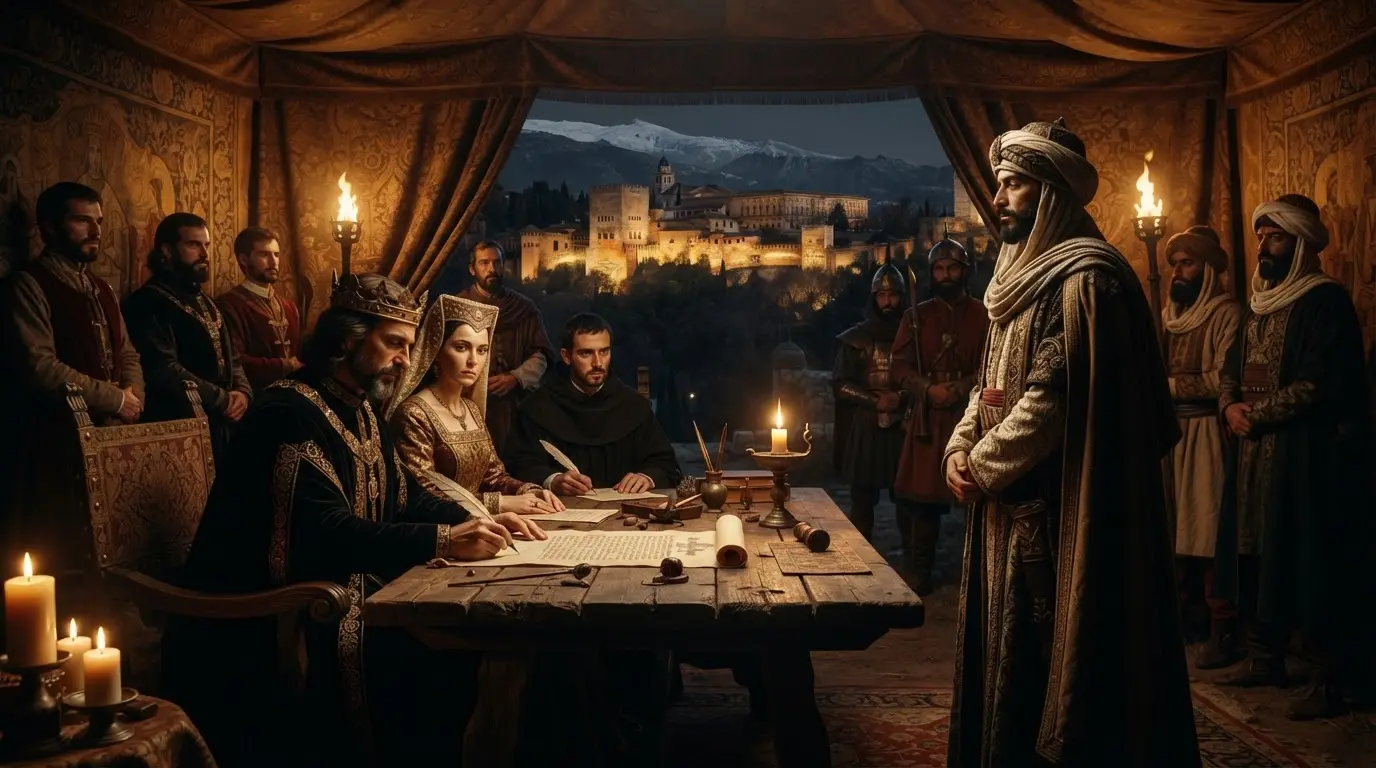
The Treaty of Granada 1491: 67 Promises That Were All Broken
James Walker Updated
The treaty of Granada 1491 capitulations promised the city's Muslims their mosques, law and faith for all time. Within a decade Cisneros broke them all.
Read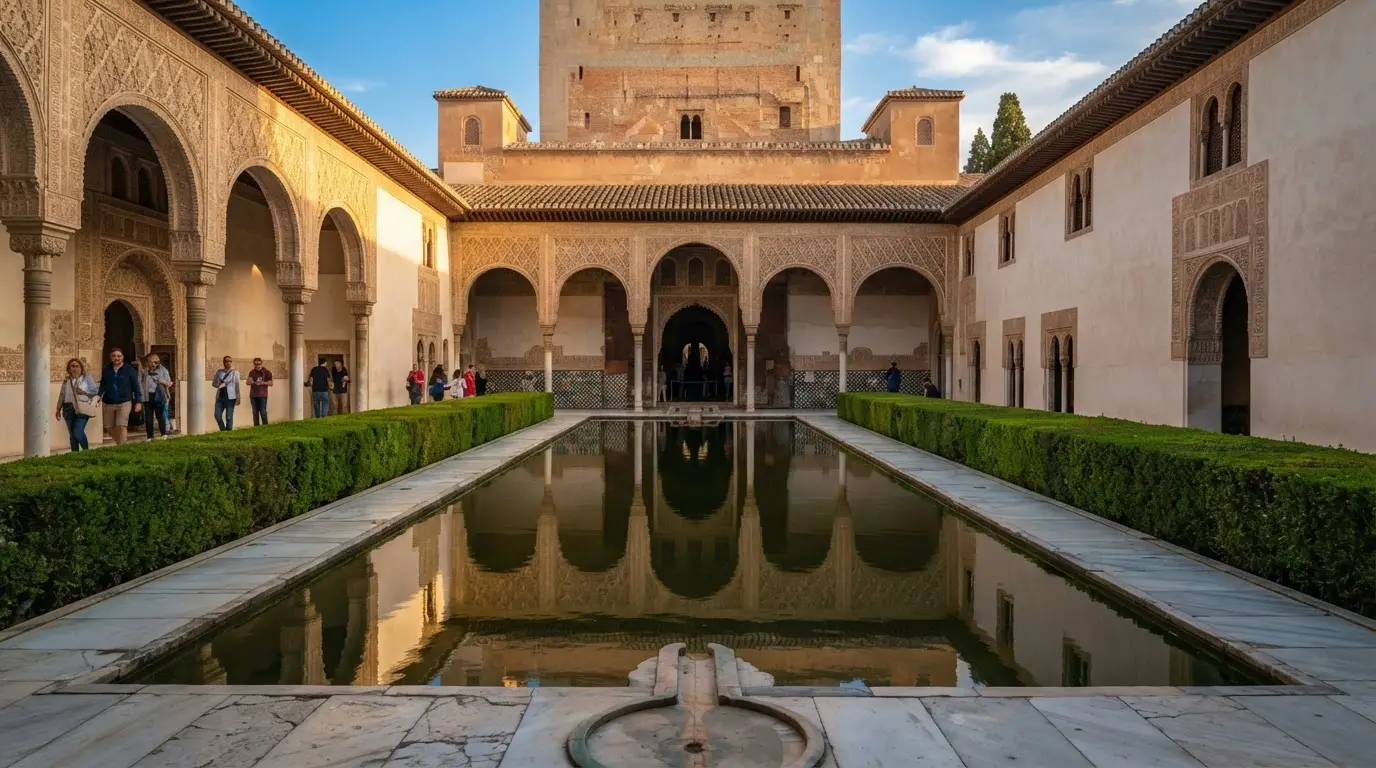
Nasrid Granada's Diplomacy Between Castile and the Marinids
James Walker
For two centuries Nasrid Granada survived by playing Castile against the Marinids of Morocco, until the 1340 Battle of Río Salado tipped the balance for good.
Read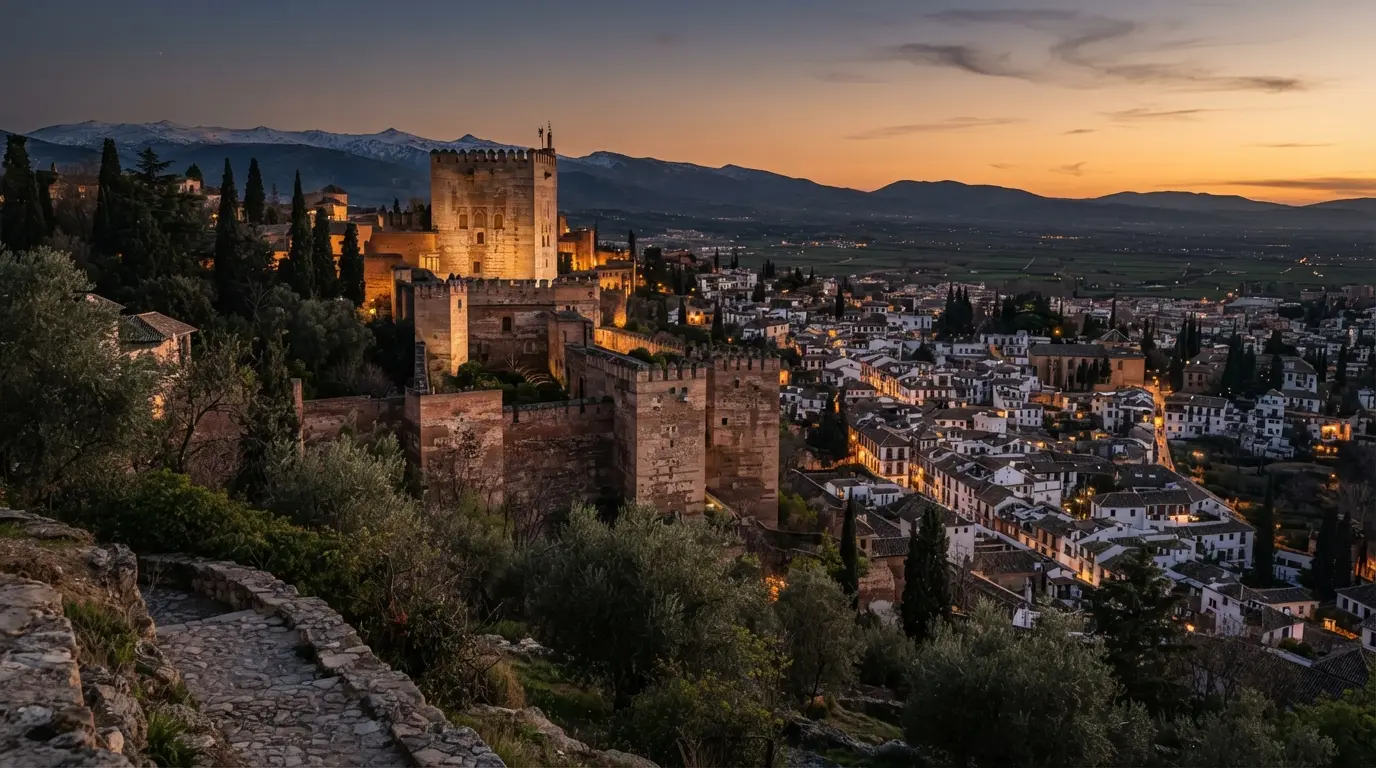
Nasrid Tribute Payments: How Granada Survived Castile
James Walker
Muhammad I's 1246 pact bound Granada to pay Castile in gold, silver, and silk-funded tribute, a bargain that funded the Alhambra and lasted 250 years in total.
Read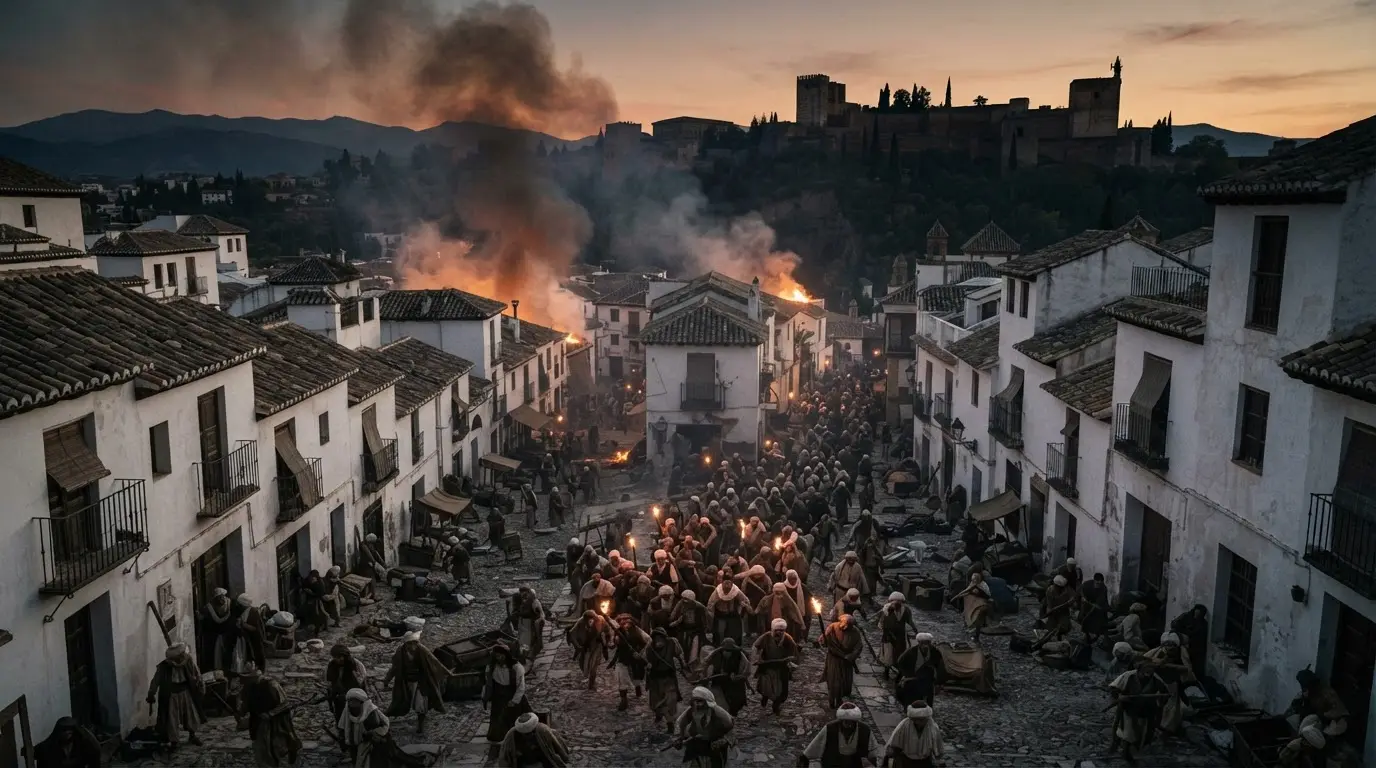
1066 Granada Massacre: When the Jewish Golden Age Ended in a Day
James Walker Updated
The 1066 Granada massacre killed Joseph ha-Nagid and thousands of the city's Jews in a single day, ending three decades of Jewish power under Samuel ha-Nagid.
Read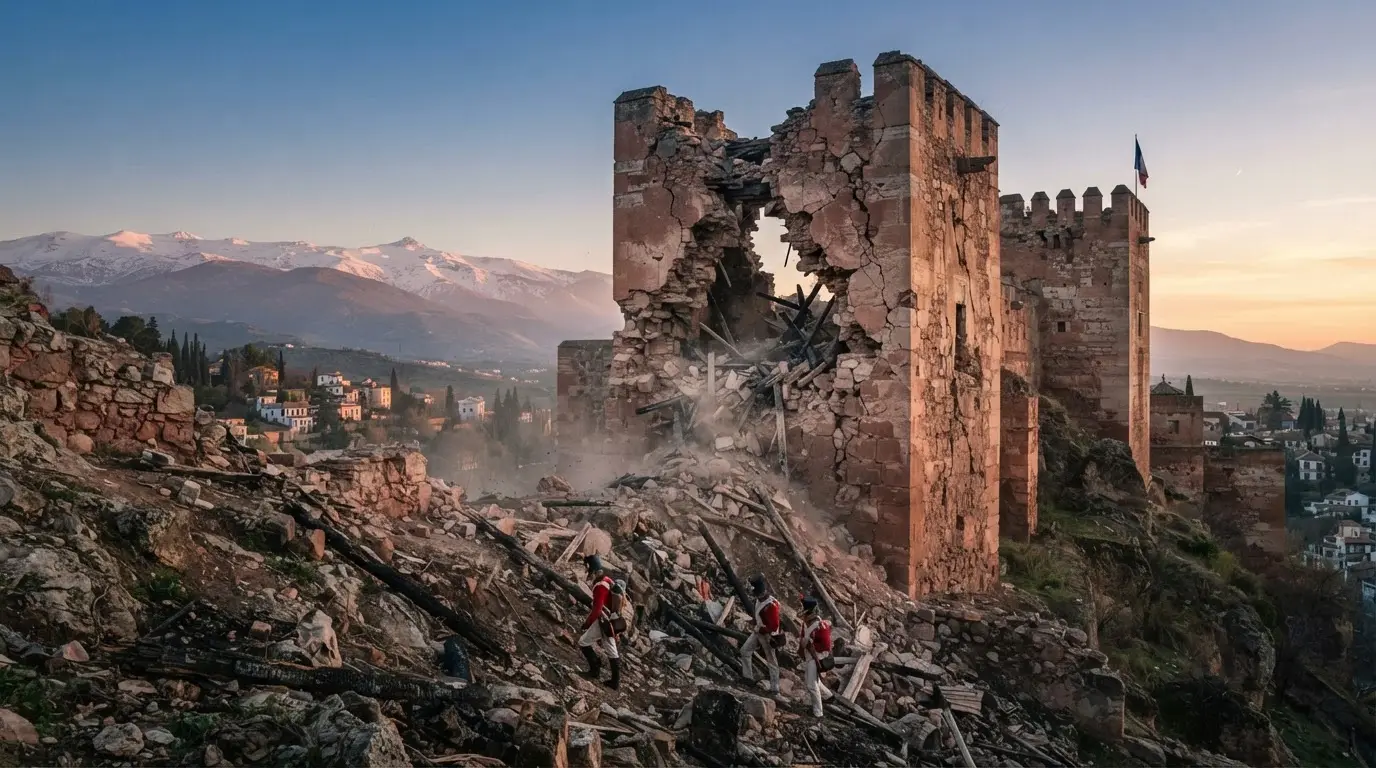
Napoleon in Granada: The Plot to Blow Up the Alhambra
James Walker Updated
In 1812, retreating French troops mined the Alhambra's towers to stop it becoming a fortress again. Eight fell before a disabled soldier disarmed the rest.
Read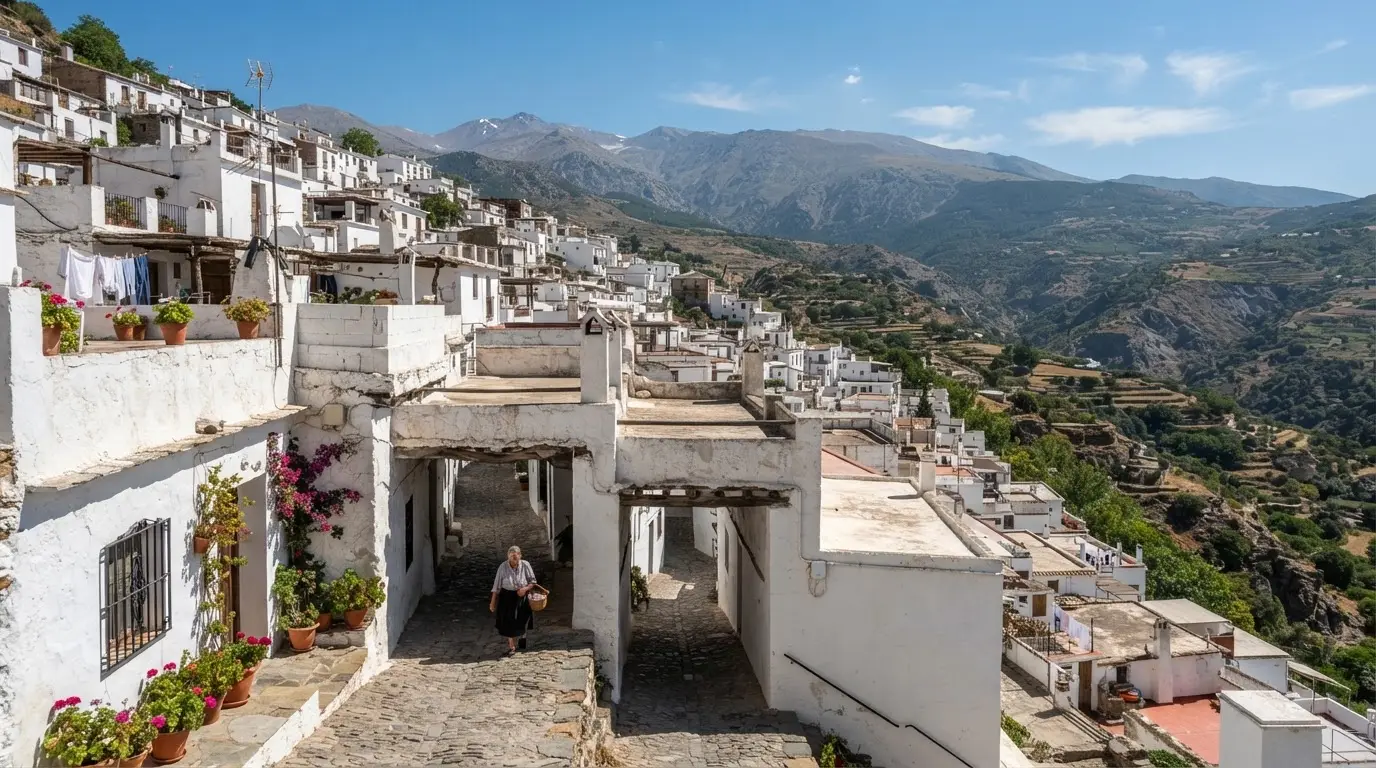
The Alpujarras Villages: Morisco Refuge After 1492
James Walker Updated
After 1492, the Alpujarras sheltered Granada's Morisco community for 80 years. Their tinaos, acequia channels, Berber chimneys, and flat launa roofs survive.
Read
Convivencia in Granada: how three faiths lived side by side
James Walker Updated
Christians, Muslims, and Jews in Nasrid Granada: the legal framework, the intellectual exchange, and the episodic violence that convivencia contained.
ReadFrequently asked questions
When did the Nasrid dynasty rule Granada?
The Nasrid dynasty ruled Granada from 1232, when Muhammad I founded the emirate, until 2 January 1492, when the last sultan Boabdil surrendered the city to Ferdinand and Isabella. Over 260 years the dynasty saw 23 sultans, several deposed or murdered, and built the Alhambra complex that survives today.
What happened to Granada's Jews after 1492?
On 31 March 1492, Ferdinand and Isabella signed the Alhambra Decree, ordering every Jew in Spain to convert or leave within four months. This followed the 1066 massacre, which had already destroyed Granada’s Jewish community as a political force four centuries earlier, ending the city’s Jewish Golden Age in a single day.
Did the Treaty of Granada protect the city's Muslims?
The 1491 treaty's 67 articles promised Granada's Muslims their mosques, their law, and free passage abroad. Cardinal Cisneros began breaking those guarantees within seven years, forcing mass conversions from 1499, and a 1502 decree required all Muslims in Castile to convert or leave, creating the Morisco community.
Who founded the city of Granada as its capital?
The Berber Zirid ruler Zawi ibn Ziri moved the regional capital from Medina Elvira to the Albaicín hill in 1013, after the Caliphate of Córdoba collapsed. The Zirids built the city's first walls, cisterns, and street plan, laying the urban foundation the Nasrids later expanded around the Alhambra.
What did Napoleon's troops do to the Alhambra?
As French forces withdrew from Granada in September 1812, they mined the Alhambra’s towers to stop it being reused as a fortress, destroying eight towers before a disabled Spanish soldier, José García, disabled the remaining fuses and saved the rest of the complex.
What was the Convivencia in Granada?
Convivencia describes the coexistence of Muslim, Jewish, and Christian communities in Zirid and Nasrid Granada under a legal system of structured inequality. Jewish physicians, astronomers, and translators worked alongside Muslim officials for centuries, though the arrangement periodically erupted into violence, including the 1066 massacre under the Zirids.