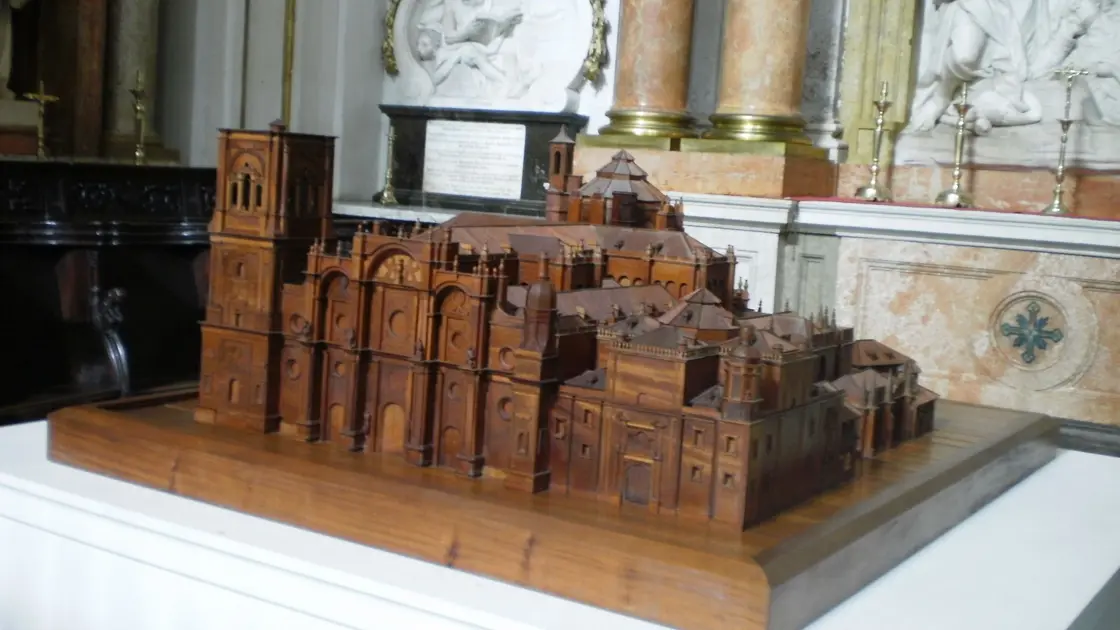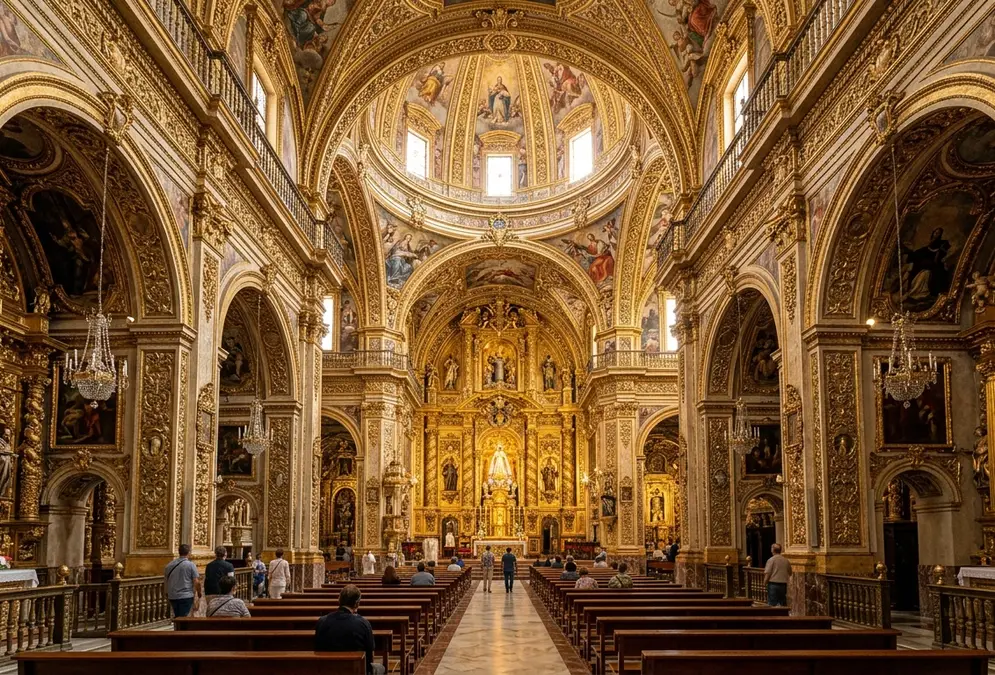
From the street, the Basilica of San Juan de Dios looks like one more baroque façade on a busy Granada road. Step inside and the scale of what the Hospitaller Order built here is immediate: gold leaf covers the walls, ceiling, columns and altarpieces from floor to vault, with barely a hand's width of bare stone anywhere. It's the most densely gilded interior in the city, and by most accounts one of the most opulent baroque church interiors in Spain, built specifically to house the relics of the order's founder.
When to Visit
Best season
Year-round; spring and autumn for comfortable temperatures
Quietest hours
10:00–11:00 on Tuesday or Wednesday mornings
Visit duration
45–90 minutes
Built to house a saint's relics
Construction began in 1737 and was completed in 1759, built by the Hospitaller Order of St John of God to house the relics of their founder. The saint, born as João Duarte Cidade in Portugal in 1495, spent his later years in Granada caring for the sick, the mentally ill, and the homeless before his death in 1550.
He was canonised in 1690, and the basilica was purpose-built to give his remains a proper home. That silver urn, displayed in the camarín reliquary behind the main altar, remains the devotional heart of the building. Pilgrims still travel specifically to see it.
Arrive at 10:00 on a weekday for the morning session
The basilica closes between 13:00 and 16:00 every day for the midday break. Arriving at 10:00 on a Tuesday or Wednesday gives you the interior almost entirely to yourself before any group visits arrive. Sunday mornings are closed altogether, so plan around that.
What the gilded interior holds
The interior follows a Latin cross plan with a central nave, side chapels on each flank, and a 50-metre dome over the transept. Frescoes by Diego Sánchez Sarabia and the Italian painter Corrado Giaquinto cover the upper surfaces; the main altarpiece was designed by José de Nada y Navajas.
The 190 mirrors and reliquaries distributed around the nave catch and scatter light in a way that makes the gold appear to move. The effect is deliberately overwhelming, meant to signal the importance of the saint interred here rather than the institutional power of the church itself, which distinguishes this building from the Granada Cathedral or the Royal Chapel a few hundred metres away.