The claim as it gets retold
Told at its most repeated, the story goes like this: Cisneros rounds up every Arabic text in Granada, burns them in a public square, and Heine's warning about burning people becomes the epitaph. Each piece is true of something. The trouble is what retellings stack on top.
Four details drift from one telling to the next:
- The scale runs from "thousands" of Arabic books to the hundreds of thousands imagined in a legend from the city archive's storytelling series.[4][5]
- The date is given as 1500 in some web retellings,[6] when the chronicles allow either 1 December 1499 or a stretch between January and February 1500.[20]
- The place is Bib-Rambla, the square where the library of the Madraza is said to have been brought and burned in a public bonfire.[7]
- The moral comes from Heine: in his play Almansor a character answers news of a Qur'an burning ordered by Jimenez with "Where they have burned books, they will end up burning people."[8]
Weighed separately, the four do not stand or fall together. The event is documented, the place rests on one strand of tradition, and the scale and the Heine link depend on later writers.
What the record supports
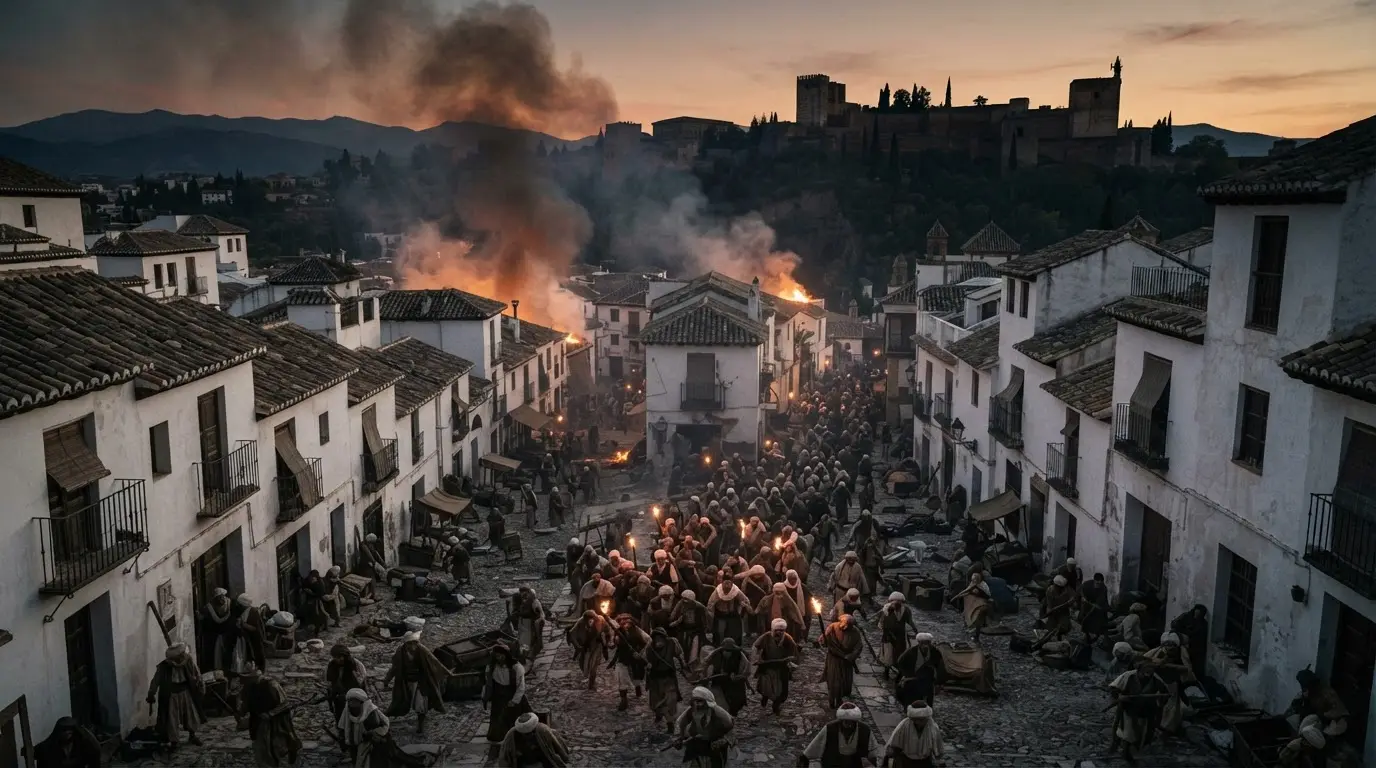
Cisneros, Archbishop of Toledo, reached Granada in late 1499 and opened a campaign of coercive proselytizing, book burning and persecution of Muslims who would not convert. On the scholarly reading, those actions broke the terms of the capitulations of 1491 and set off revolts among Granada's new Mudéjar population.[9][10]
His was not the only method on offer. Hernando de Talavera had pressed for conversion just as hard, but through language and culture rather than the pyre.[11]
Explore nearby · Monument
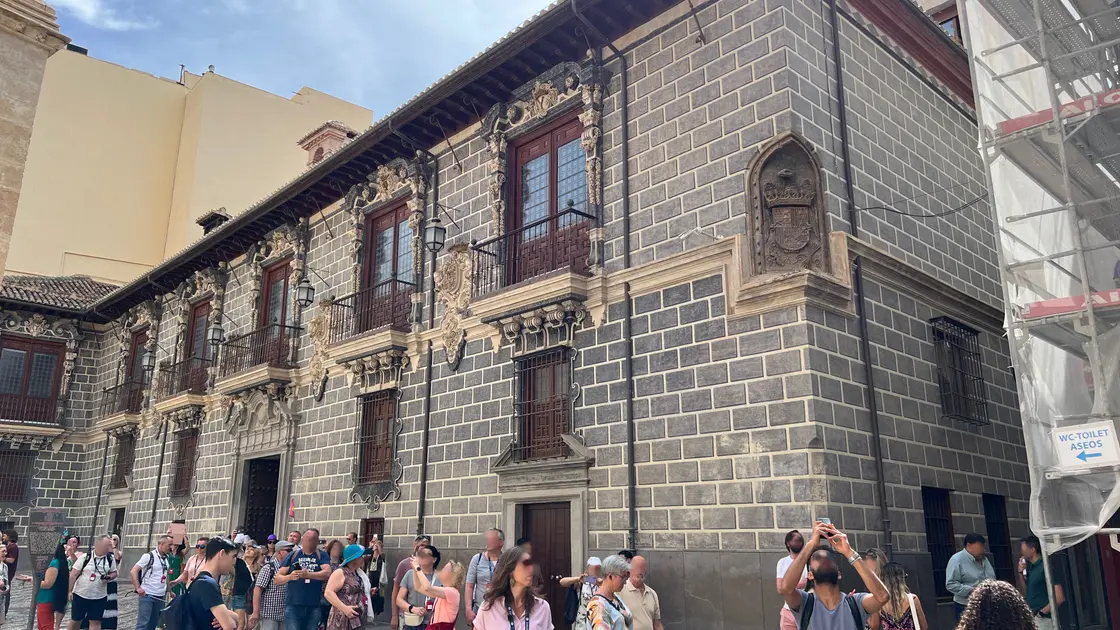
Madraza of Granada
The Madraza, founded in 1349 by Sultan Yusuf I, was Granada's first Islamic college. Its Nasrid oratory and Baroque facade stand near the Royal Chapel.
On 18 December 1499 a convert woman, carted off by the authorities to be forcibly baptised, announced her fate so loudly and publicly that it lit the rebellion.[1]
That framing matters for the books. A bonfire is the image that survives, but the scholarly charge is wider: a promise made at the surrender was broken, and burned Arabic texts are one visible piece of that breach. Even a reader who doubts every number can hold on to that much.
Together these give the episode its documented spine: a breached treaty, then an uprising. The burning of Arabic books belongs inside that campaign as one of its instruments, and it needs no legend to be shocking.
Where the claim outruns the evidence
The number is the weakest link, and the earliest accounts give only a rough range of 4,000 to 5,000 volumes.[2] The testimony closest in time comes from Juan de Vallejo, a notary and personal friend of Cisneros, who speaks of more than four or five thousand volumes and says all were burned, "without leaving any memory", except the medical books.[21][22]
A Latin biography of Cisneros, De rebus gestis, did not reach print until 1569, at Alcalá de Henares,[12] some seventy years on. Beyond Vallejo, every later number, from the cautious to the fantastical, has to bridge that gap. When someone quotes a total, ask what it rests on, and treat any single figure as an estimate.
The Madraza is the anchor of the standard account, and local memory keeps it there: the University of Granada's Semitic studies department takes part in an event, Arde la Memoria, that denounces the burning of the Madraza's books on Cisneros's order in 1499.[14] A separate commemoration announced in 2000 also carried the slogan Arde la memoria and was to start at the Plaza del Carmen, in front of the town hall,[23] before heading to Bib-Rambla, where the pyre of manuscripts was said to have been lit during an auto de fe.[24] On 22 April 2023, during the Book Fair, an Arde la Memoria event was held again, organised by Granada Abierta with the university's Semitic studies department.[25] Commemoration is not corroboration, though.
Recommended tours
Tours are selected for quality, not commission. We earn a small fee if you book — at no extra cost to you.
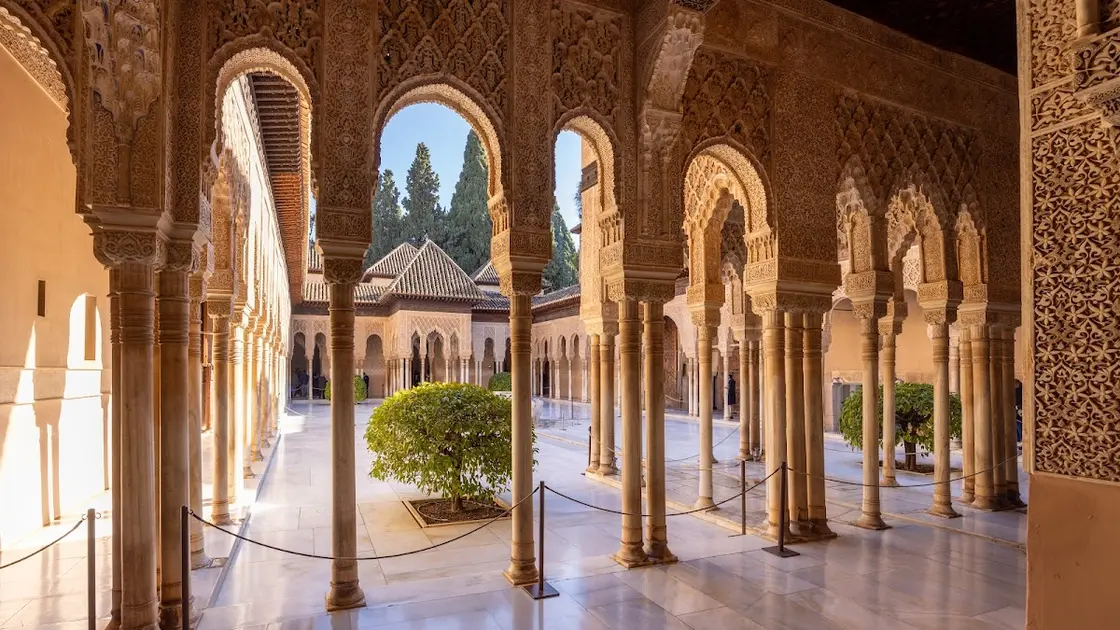
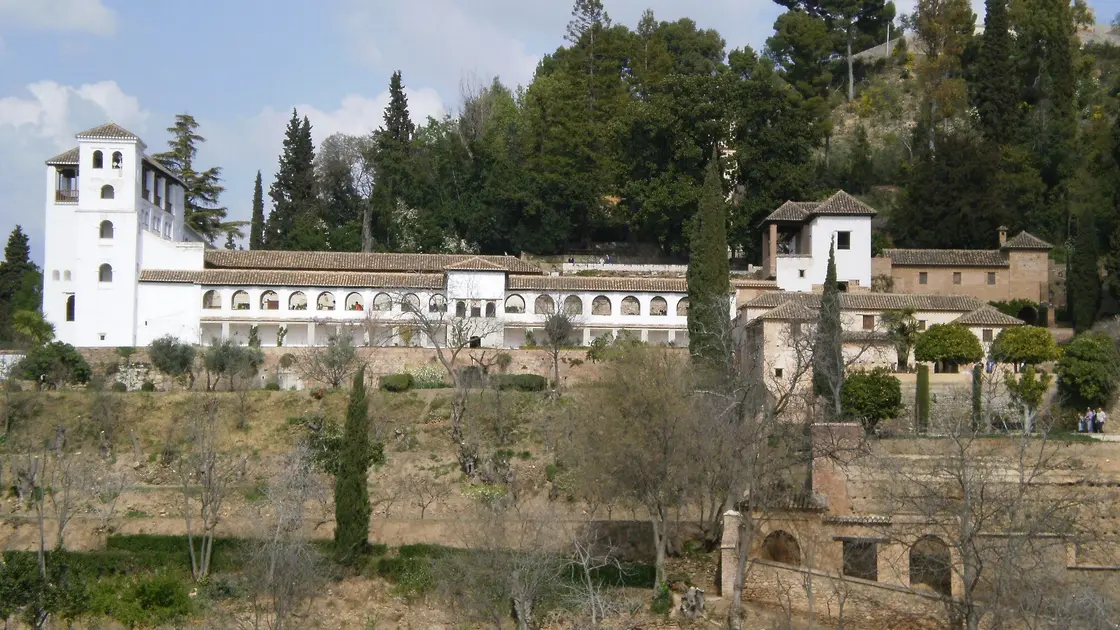
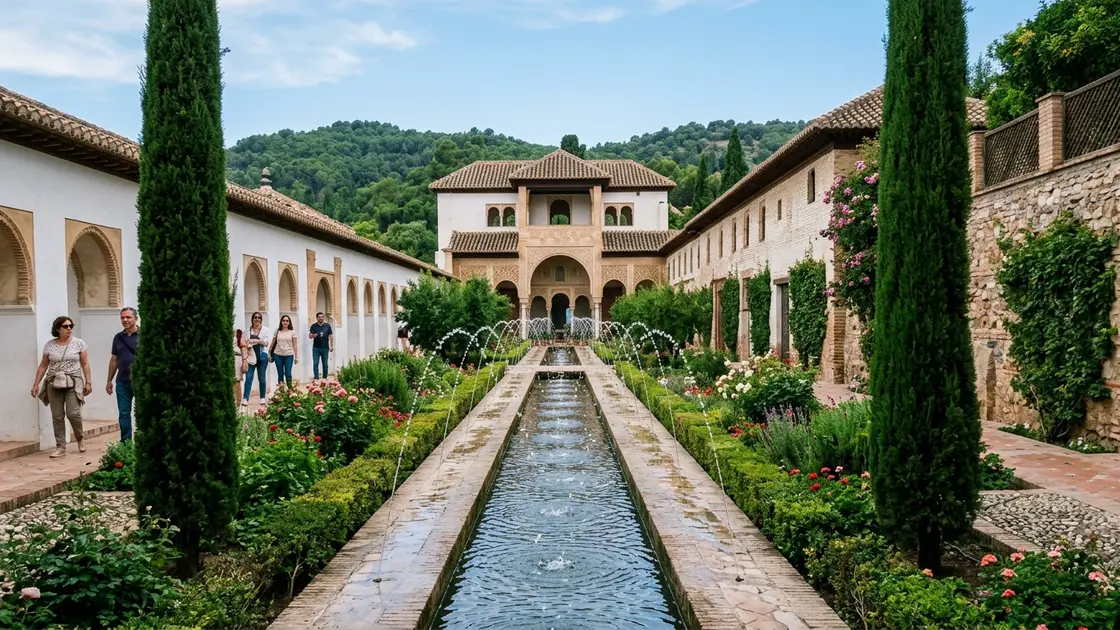
The topic has an old paper trail. The 1913 Catholic Encyclopedia remembers the cardinal's Granada years as labours for the conversion of the Moors that met with considerable success,[15] and in 1885 Francisco Javier Simonet published a study in Granada titled El Cardenal Ximenes de Cisneros y los manuscritos arábigo-granadinos.[16]
What survived, and what Heine's line refers to
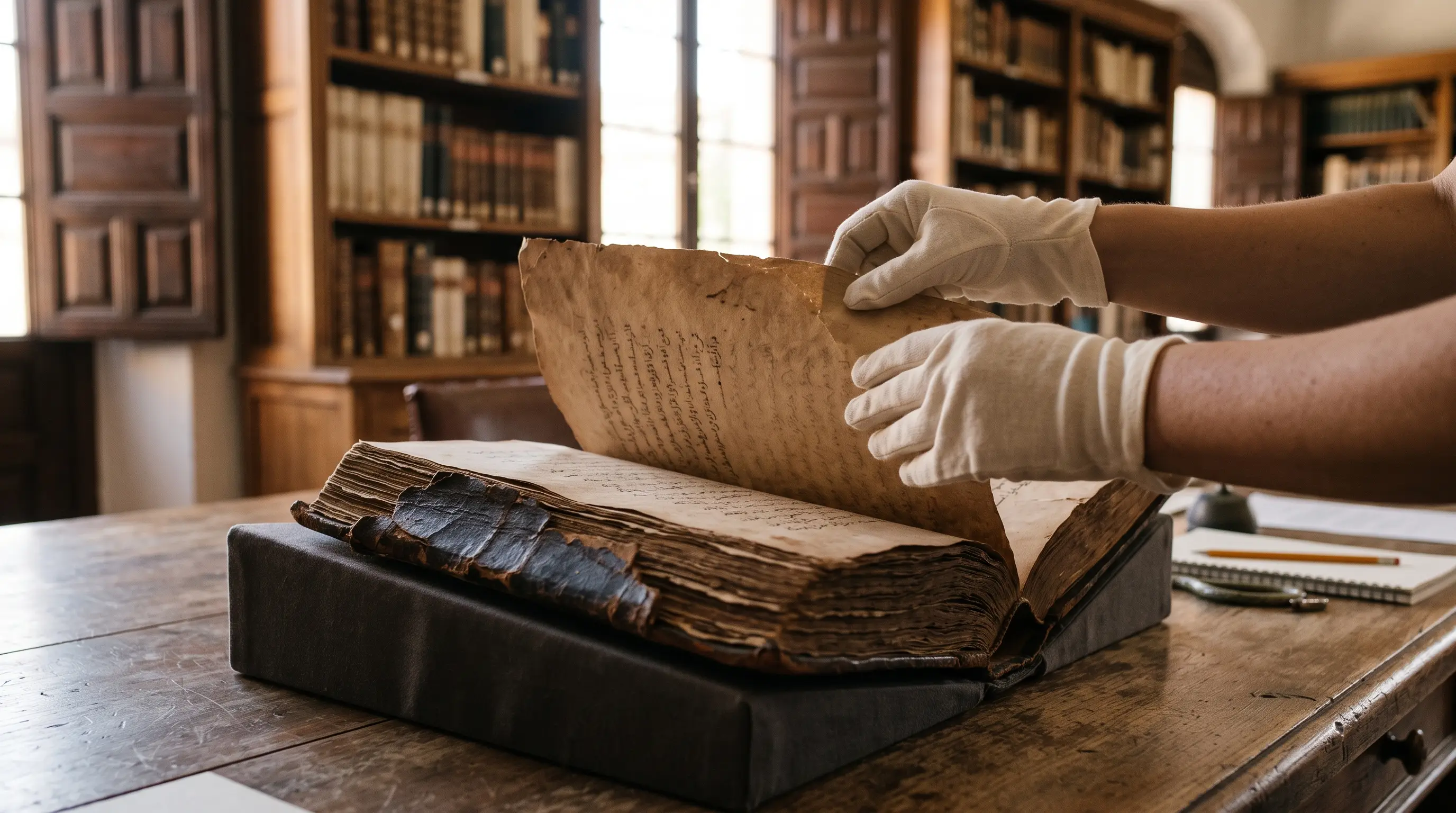
Not everything went up. Several royal manuscripts of the Nasrid sultans have outlived the cardinal after all, a finding published in the Journal of Islamic Manuscripts in 2018 that retires the picture of a clean sweep.[13]
What the fire took is therefore harder to name than any headline total: the working shelves of a teaching institution, in the standard account, rather than a treasury of royal copies.
Heine's line is a separate matter. In Almansor the speaker answers news of a Qur'an burning, but one reading holds that Heine fully intended playgoers to think of contemporary events,[17] chiefly a celebratory book burning that capped a German student festival.[18]
Its fame is Berlin's, not Granada's: the warning is engraved on the memorial in the Bebelplatz square, and that is where most people now meet it.[19]
Deep dive · Article
1066 Granada Massacre: When the Jewish Golden Age Ended in a Day
The 1066 Granada massacre killed Joseph ha-Nagid and thousands of the city's Jews in a single day, ending three decades of Jewish power under Samuel ha-Nagid.
That detour explains why a Granada story keeps surfacing in German memory. A warning written about one era's book burning was adopted by the next, and each use pulled the line further from the play and from Cisneros. To judge the 1499 episode, put Heine back in his own decade and let Granada's evidence speak for Granada.
The verdict runs in two parts. Cisneros's campaign did include burning Arabic books, and some of what he meant to destroy survives. The tidy totals and the Heine connection belong to later tellers. Granada's forced converts of these years became the community history calls the Moriscos of Granada.
Seeing it in Granada
The places in this story sit within a short walk of each other in the old centre, and the sequence below takes about as long as a coffee.
- The Madraza of Granada, the building the standard account ties to the burned library, stood in the heart of the Nasrid city beside the main mosque, now the Cathedral site.[26]
- Plaza de Bib-Rambla, a few minutes away, is where the same account lights the bonfire.
- The Cathedral of Granada stands on the Plaza de las Pasiegas, which narrow streets link to Bib-Rambla.[27]
Hours and prices are on the Madraza and Cathedral pages. Do not expect a marker: the commemoration on record is the Arde la Memoria ceremony, not a plaque in the square.
For surviving manuscripts, the Museum of the Alhambra in the Palace of Charles V holds two fragmentary Qur'ans, one Almohad and one Nasrid, bought for its collection.[28] The Boabdil codex among the Nasrid royal survivors is kept at El Escorial, outside Granada.[29] Nothing in the published record points to a display of Nasrid royal manuscripts in Granada itself.