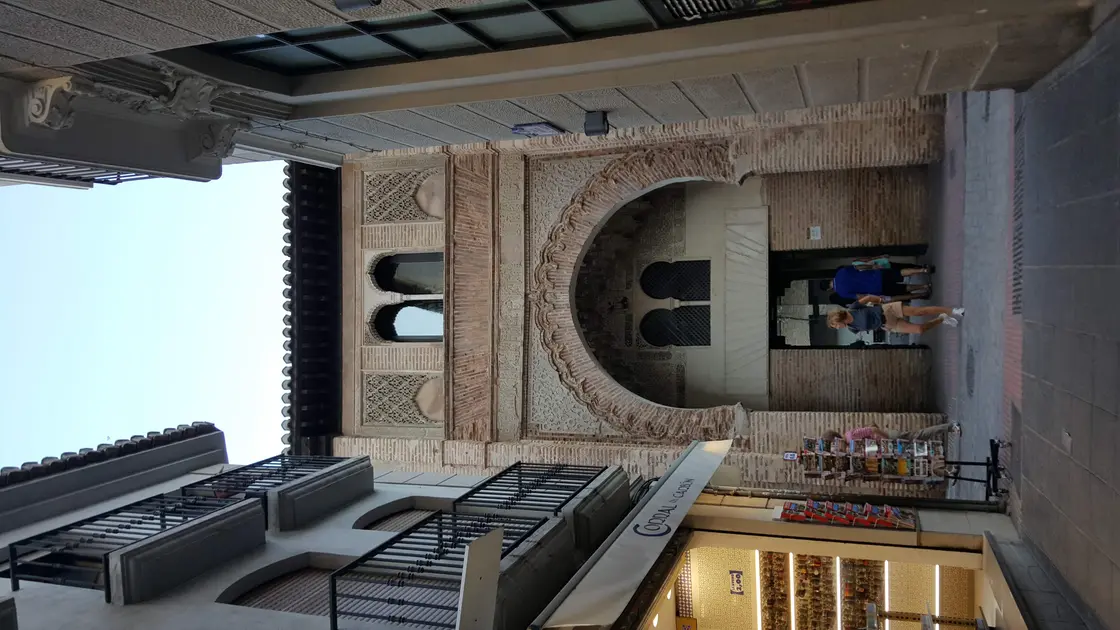
The Corral del Carbón is the last surviving funduq in Spain, built in the Nasrid period, before 1336, as a combined merchant warehouse, grain market, and inn where traders stored goods on the ground floor and slept in rooms above. It is one of the best-preserved examples anywhere in the western Mediterranean. The carved entrance portal alone is worth the short detour from the main shopping streets nearby.
When to Visit
Best season
Year-round; the open courtyard is pleasant in any season
Quietest hours
09:00–10:30 in the morning
Visit duration
15–25 minutes
What to look for in the portal and courtyard
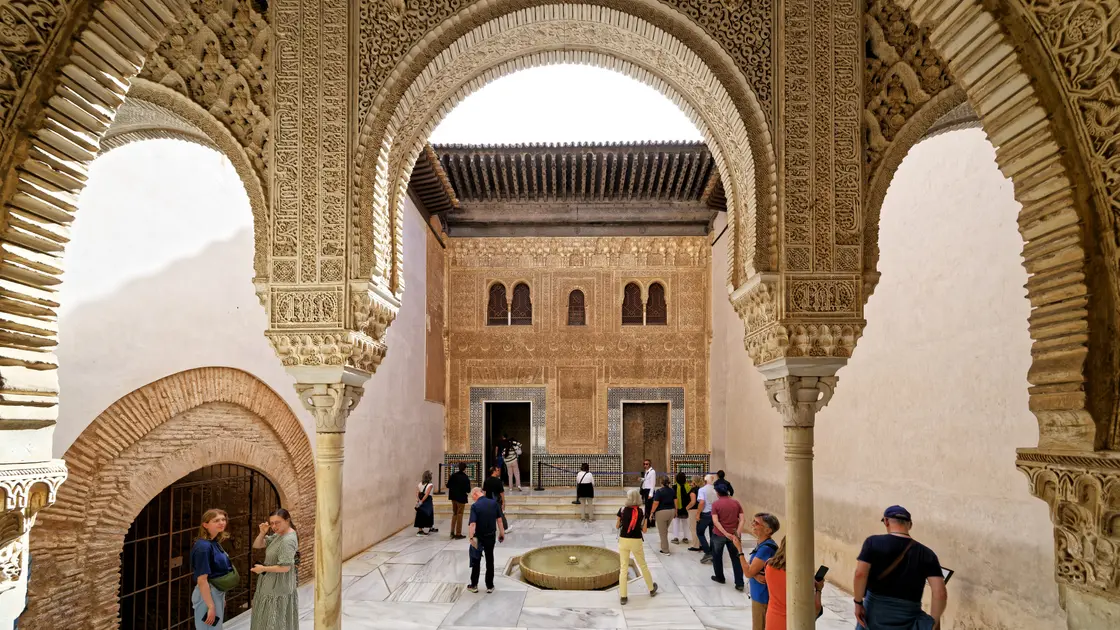
The entrance portal is the visual highlight of the exterior. A horseshoe arch of fine ashlar stone frames the doorway, topped by a band of ceramic tile decoration and an alfiz frame of carved stucco with Arabic inscriptions. Above the arch, a panel of blind arcading in Nasrid style runs across the full width of the facade.
Once through the portal, the courtyard rises three storeys, with arcaded galleries on the upper two levels. The proportions, with a central cistern and the rhythm of the arched bays, give a clear sense of how orderly and functional Nasrid commercial architecture could be.
Morning light hits the portal directly
The entrance portal faces roughly east. In the morning, low sunlight illuminates the carved stucco and the Arabic inscriptions in the arch frame with the kind of raking light that makes the ornament legible. By afternoon the facade is in shade.
From merchant inn to coal store
After the Christian reconquest in 1492, the Catholic Monarchs granted the building to a private party. In the 16th century it became a corral de comedias, one of the open-air theatres where Spanish Golden Age drama was performed (from the 1530s until at least 1593), before permanent playhouses existed.
It later became a residential compound and, in the 17th century, a coal store, which gave the building its current name. Declared a National Monument in 1918, it was purchased with funds from the Alhambra's own entrance fees and restored between 1929 and 1931 by Leopoldo Torres Balbás, the architect who also restored much of the Alhambra and El Bañuelo. Today it houses offices for the city's International Festival of Music and Dance.