Alonso Cano's Granada: a Seville duel in 1638, a disputed canonry, and the cathedral paintings and facade left behind by Spain's tempestuous Michelangelo.
Seven years resident in Granada. Specialist in Nasrid architecture, Al-Andalus history, and Andalusian walking routes.
Published
Tradition says that on his deathbed in Granada in 1667, Alonso Cano waved away a priest's crucifix because it was badly carved. True or not, it fits a painter, sculptor and architect who fought a duel, lost a court post under suspicion of murder and still ended up drawing the front of Granada Cathedral. Alonso Cano in Granada suits readers who like a difficult genius; for the building's Renaissance story, start with Siloé.
Cano's lifespan
1601–1667
Painter, sculptor and architect, called the Spanish Michelangelo[1]
Back in Granada
1652
Returned as racionero of the cathedral after years in Madrid[2]
Virgen de Belén height
46 cm
Carved in 1664, three years before his death in 1667[3]
In this article
Jump to a section
⌄
A boy from Granada in Seville's workshops
Alonso Cano was born in Granada in 1601 and left it as a boy. His family moved to Seville in 1614, where he is usually said to have studied sculpture under Juan Martínez Montañés, and painting under Francisco Pacheco.[4]
Pacheco's workshop mattered most. In August 1616 Cano entered it while Diego Velázquez was finishing his own apprenticeship there, and the two stayed friends for life.[5] Few young painters in Spain could have asked for a better room to argue in. It also planted an idea he would defend for the rest of his life, that a painter should be treated as a gentleman rather than a tradesman.
Seville handed him two languages: the carved devotional discipline of Montañés and the dark, theatrical lighting that Sevillian painters favoured. Cano spent a career pulling them apart. The sculptor in him wanted contour and calm; the painter wanted drama.
Granada, much later, is where the calm won. The sculptural lineage that ties the two cities together has its own page: the Granadan school of sculpture.
A duel, the court, and a dead wife
Seville made his name, then ran him out. Cano crossed swords in 1638 with another painter, Sebastián de Llano y Valdés; the duel cost him Seville, and Madrid's court was where he landed, in favour.[6] What the quarrel was about, and how the fight ended, the surviving record leaves open.
The court years ended in 1644. Suspected of murdering his wife, he escaped to Valencia and his work as court painter ended.[7] Later biographers embroidered the case with lurid detail that rests on tradition, not on documents. The reliable record says suspected, and nothing more.
Temper runs through the whole story. Yet the same hand went on to paint the balanced, classical Virgin cycle in Granada Cathedral, which is the contradiction that makes him worth a profile rather than a plaque.
It also explains why Granada, not Madrid or Seville, ended up holding his best late work. He had left Seville under a cloud and lost his court post, and Granada, the city of his birth, was where the cathedral needed a master after years of difficult restarts.
The lesson for a visitor is practical. Cano's Granada pieces are late work, made by a man in his fifties and sixties who had been through the worst of his career. Expect restraint rather than fireworks.
Racionero, expelled, restored: 1652 to 1660
Cano reached Granada in 1652 with a place waiting for him at Granada Cathedral. One account says he successfully solicited a canonry from Philip IV and was expelled for misbehaviour in 1656.[8]
The Catalan encyclopedia gives the humbler rank. He came back as a racionero, a stipend-holder below a full canon, quarrelled with the canons, and left for Madrid, where he was ordained a priest in 1657.[9]
The expulsion did not stick. The royal council restored his Granada post in 1660.[10] Which title he held in the last years, canon, racionero or chief architect, depends on which biography you pick up, so treat any single label with care.
The pattern matters more than the label. A chapter threw him out, the Crown put him back, and the Inmaculada he delivered in 1656 ended up in the sacristy rather than on the choir lectern it was made for.
Timeline
1601
Born in Granada
1614
Family moves to Seville
Studies with Pacheco and, by tradition, Montañés.
1638
Duel and flight to Madrid
Forced out of Seville after fighting Sebastián de Llano y Valdés.
1644
Escape to Valencia
Suspected of his wife's murder; court career over.
1652
Returns to Granada
Takes a cathedral post, as racionero in most scholarship.
1656
Expelled
Dismissed for misbehaviour after quarrels with the canons.
1660
Post restored
The royal council reinstates him.
1667
Dies in Granada
What he left inside the cathedral
Start with the small carving. Cano made the Inmaculada for the choir lectern and delivered it in 1656. The canons took it out of the choir and moved it to the sacristy.[11] Britannica's caption for the 1655–56 cedarwood carving still places it in the cathedral sacristy.[12] A smaller Virgen de Belén, finished in 1664, went up in its place.
The facistol, the great lectern in the middle of the choir, was where the chapter's singing books stood. Crowning it with a Virgin put Cano's carving at the centre of the cathedral's daily routine, which makes its removal to the sacristy a telling detail.
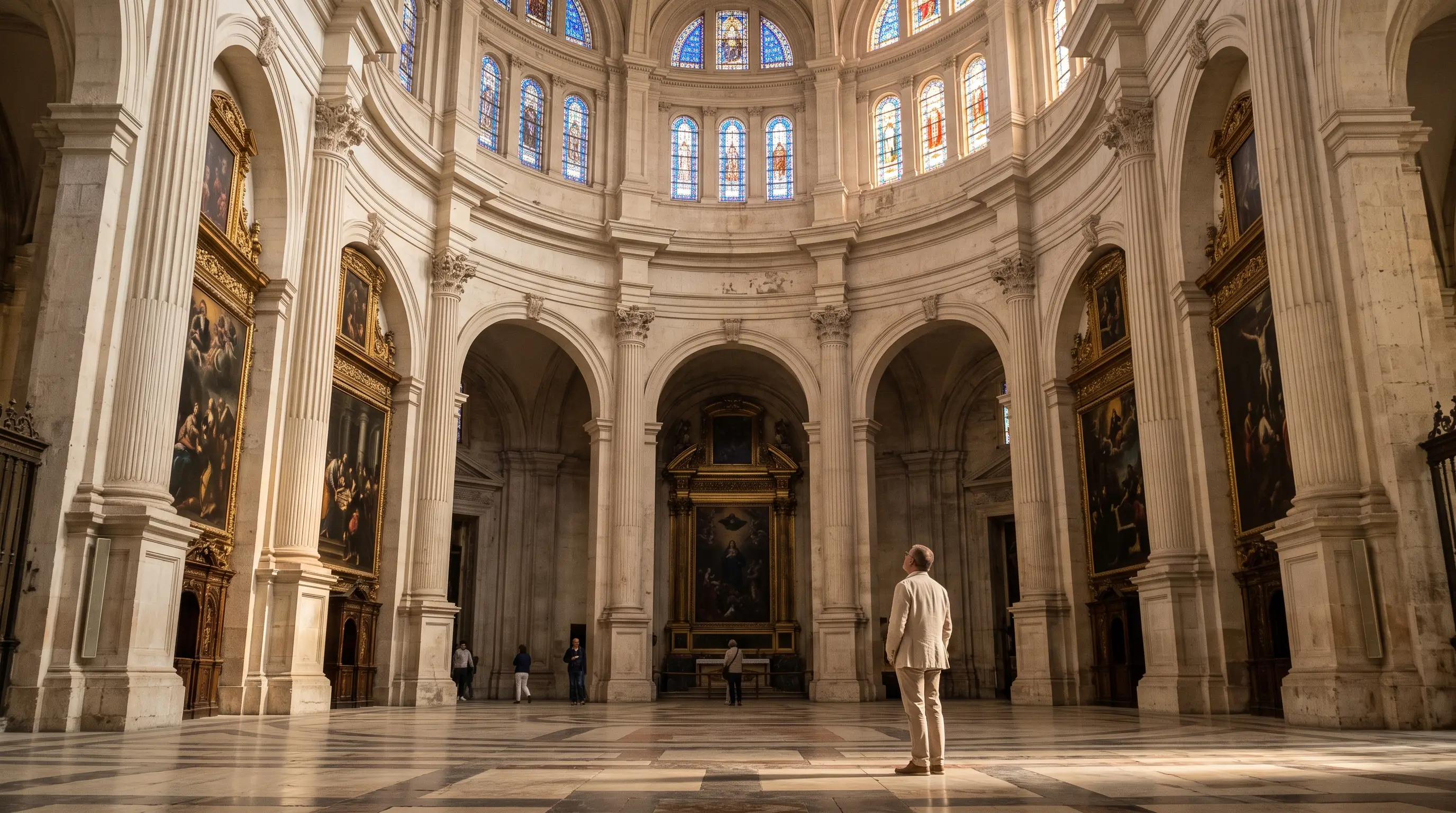
Then look up. The Capilla Mayor is Siloé's rotunda, told in full in the Renaissance cathedral of Granada, but Cano worked here too. In 1664 he completed the set of canvases on the life of the Virgin made for the Capilla Mayor.[13] Spain's tourism board also lists sculptures and paintings by Cano among the decoration of the dome.[14]
The late Granada paintings, the Mysteries of the Virgin above all, calm everything down: balanced, symmetrical, closer to classicism than to the tenebrism of Seville.[15]
The sacristy is the part to confirm before you go: ask the cathedral what is open to visitors and whether the Inmaculada can be seen.
The facade: his name, other men's stonework
He took charge of the facade last and finished it least. The cathedral's own chronology describes the years from 1650 to 1667 as a difficult restart, a search for a new maestro mayor that ended with the Granada-born artist.[16]
A date for the design itself is harder to pin. The Royal Academy of History's timeline places it in 1664.[17] Other accounts tie his mastership of the works to 1667, the year he died, so "around 1664 to 1667" is the honest range.
Recommended tours
Tours are selected for quality, not commission. We earn a small fee if you book — at no extra cost to you.
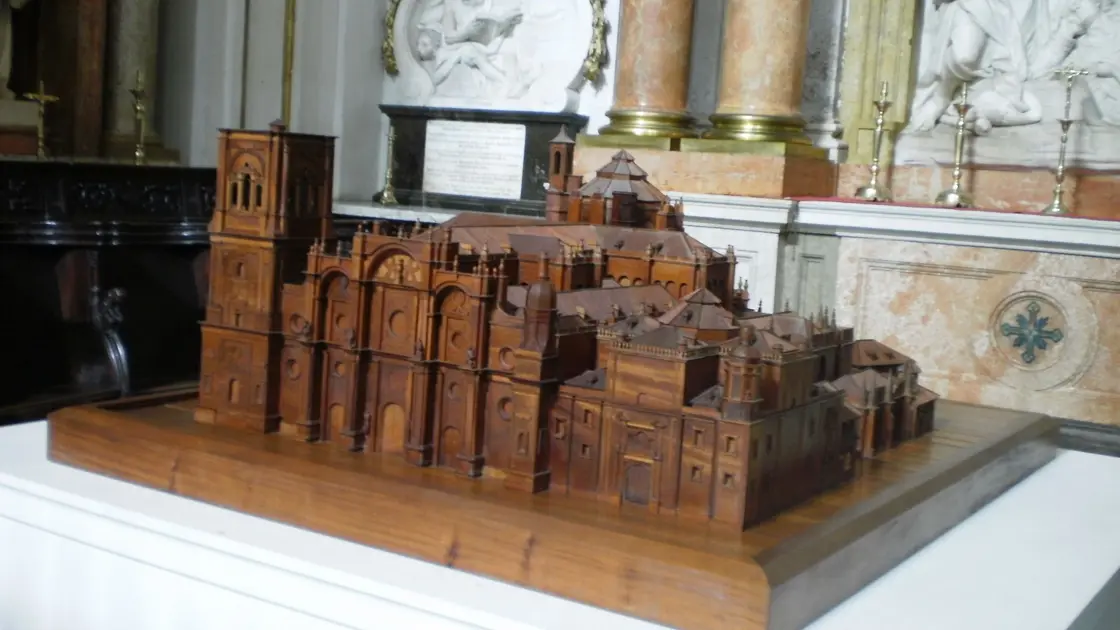
He did not start from a blank page. Siloé had conceived the west front as a great Roman triumphal arch, and Cano was obliged to keep that form.[18] The tall arches visitors photograph are Siloé's idea in Cano's drawing.
The top is neither man's. The horizontal crowning and pinnacles above the arches are a later invention of Melchor de Aguirre, according to the chapter's own minutes.[19] Cano's name is on the facade, but his fingerprints share the stone with at least two other architects.
That split authorship is worth holding onto when you stand in the square. The facade reads as one confident gesture, yet it is a relay: Siloé's scheme, Cano's drawing, then decades of other hands finishing what a dead man left on paper. Credit Cano for the idea of making an old arch breathe, not for every carved inch.
Seeing Cano today, and the legend
The Museo de Bellas Artes keeps his San Jerónimo, donated by the Bermúdez Pareja family in 1978 and on display today.[20] Check the current display before you go, and do not plan the visit around a dedicated Cano room.
A sensible order for a Cano day in Granada:
Capilla Mayor: the Virgin cycle he completed in 1664, under Siloé's dome.
Cathedral sacristy: the Inmaculada the canons moved out of the choir, if access allows; check with the cathedral before you go.
West facade: from the square, to read Siloé's arch, Cano's drawing and Aguirre's crown in one look.
Museo de Bellas Artes: San Jerónimo, if it is on the wall that day.
The man behind the paintings read. A reconstruction of his library finds treatises on architecture and anatomy, history and emblem books, and a long fight to have painting treated as a liberal art rather than a craft.[21]
His local reputation has run ahead of him. A study of Granadan architecture in the University of Granada's Cuadernos de Arte complains that local patriotism has inflated him until almost nobody else counts: "Cano lo ha sido todo y lo sigue siendo", Cano has been everything and still is.[22] The complaint is fair. He did not build the facade alone.
The deathbed crucifix belongs to the same family of stories. By the tradition, he told the priest to take it away because it was badly carved.[23] Treat it as a tradition, not a documented fact. It is also exactly what the Inmaculada in the sacristy would lead you to expect.
Frequently asked questions
Who was Alonso Cano?
A painter, sculptor and architect born in Granada in 1601 and dead there in 1667. He trained in Seville under Pacheco and, by tradition, Montañés, worked at the court in Madrid, and spent his last years at Granada Cathedral, where his paintings, a carved Inmaculada and the facade design survive.
Why is Alonso Cano called the Spanish Michelangelo?
For the diversity of his talents. Like Michelangelo he worked as painter, sculptor and architect, and his Granada output covers all three: canvases in the cathedral's Capilla Mayor, the Inmaculada, and the design of the cathedral's west front.
What did Alonso Cano do in Granada?
He returned in 1652 to a cathedral post, was expelled in 1656, and was restored in 1660. In those years he carved the Inmaculada for the choir lectern and completed the Virgin canvases for the Capilla Mayor in 1664. The design of the cathedral's west facade came later, around 1664 to 1667.
Where can you see Alonso Cano's work in Granada?
At the cathedral: the Capilla Mayor paintings, and the Inmaculada the canons moved to the sacristy. The Museo de Bellas Artes holds his San Jerónimo. Check what is currently on display at each before you plan the day around a particular piece.
Did Alonso Cano design the facade of Granada Cathedral?
He drew the design, but not alone and not to the end. Scholars date it between 1664 and 1667, Cano had to keep Siloé's triumphal-arch scheme, and the crowning above the arches was added later by Melchor de Aguirre.
Did Alonso Cano murder his wife?
The reliable sources say only that he was suspected in 1644 and escaped to Valencia. The more lurid details come from later tradition, so the question has no documented answer beyond the suspicion.
Was Alonso Cano a priest?
Yes, late in life. The Catalan encyclopedia says he was ordained in Madrid in 1657, after being expelled from his Granada post, and the royal council restored him in 1660. His exact cathedral title, canon or racionero, varies between accounts.
“El 1652 tornà a Granada com a racioner de la catedral; expulsat amb motiu de les seves discussions amb els canonges, anà a Madrid (1657), on fou ordenat sacerdot.”
“En agosto de 1616 entró en el taller de Francisco Pacheco, donde Velázquez estaba concluyendo su aprendizaje, quedando los dos artistas amigos por toda la vida.”
“Forced to leave the city in 1638 because of a duel with the painter Sebastián de Llano y Valdés, he fled to Madrid and obtained the favour of the court.”
“El 1652 tornà a Granada com a racioner de la catedral; expulsat amb motiu de les seves discussions amb els canonges, anà a Madrid (1657), on fou ordenat sacerdot.”
“Cuando entregó en 1656 tal genialidad que coronaría el facistol del Coro de la Catedral, los canónigos la extrajeron del sitio y la condujeron a la Sacristía”
“the last paintings, from his stay in Granada, especially the Mysteries of the Virgin in the Cathedral, are harmonious, with a classic balance and symmetry.”
“Empeñado en un conflicto por imponer su carácter de humanismo, la liberalidad del arte por encima de las servidumbres de la consideración meramente artesanal”
“El patriotismo local ha contribuído de tal manera a enaltecer la personalidad de Alonso Cano que casi nadie más cuenta. Cano lo ha sido todo y lo sigue siendo.”