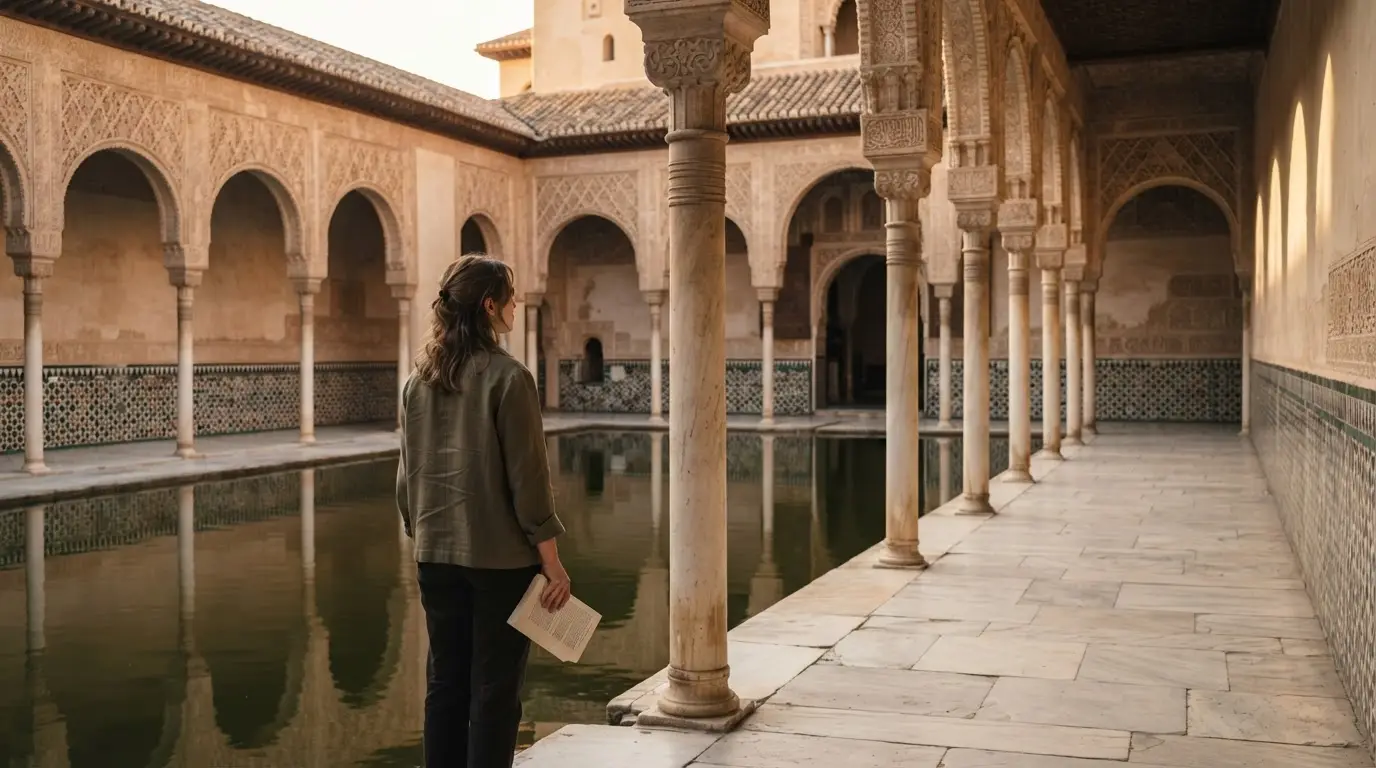

Ibn Battuta, April 1350: a soldier who turned sightseer
Ibn Battuta sailed for Gibraltar in April 1350 with a small band of volunteer fighters,[2] a man whose wanderings would eventually add up to some 75,000 miles.[3] He traded the soldier's role for a sightseer's and went on into al-Andalus.[4]
Granada then held about 50,000 people.[5] Its Nasrid sultan, Yusuf I, was in the middle of beautifying the courtyards of the Alhambra, the red fort on the hill.[6]
Battuta never got to judge that work from the sultan's side of the door. In the Rihla he says an illness kept him from meeting Yusuf,[1] and it was the sultan's mother who sent the stranger a purse of gold coins.[7] So the best-known outsider's account of Nasrid Granada comes from a man who was paid, but not received.
What the Rihla notices in Granada
Ibn Battuta's Granada is a city of superlatives. He calls it "the metropolis of Andalusia and the bride of its cities",[8] and then, characteristically, heads straight for the surroundings.
“The metropolis of Andalusia and the bride of its cities.[8]”
His eye leaves the walls first, for the hill of Ayn ad-dama, the Fountain of Tears, which he found covered in gardens and orchards.[9] Scholars of the Aynadamar water system count him among the travellers who described the great spring at Alfacar.[10]
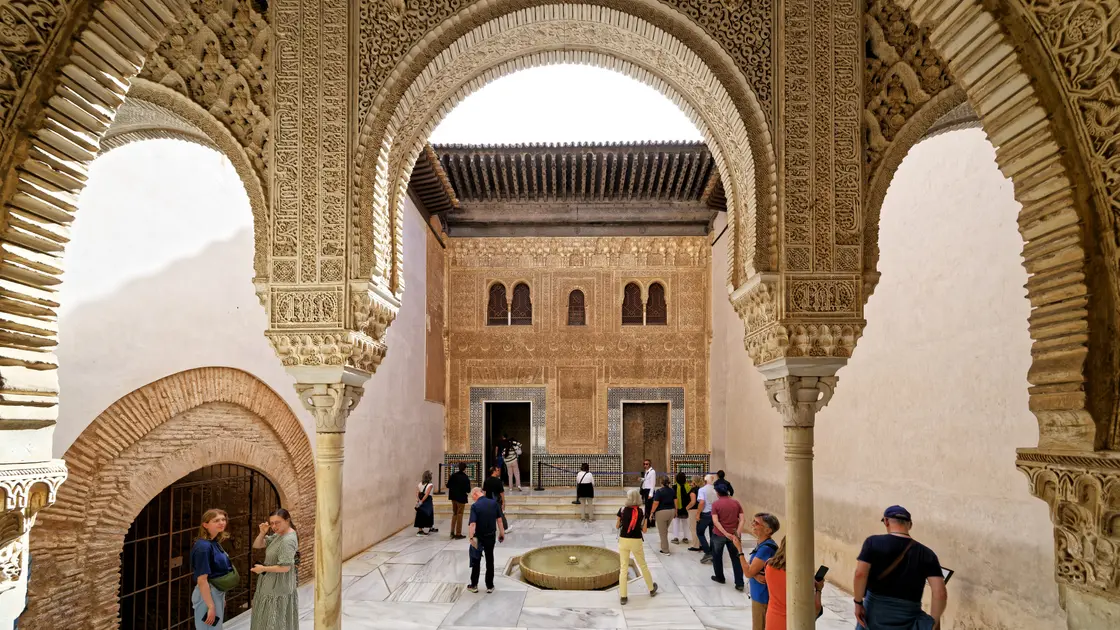
Explore nearby · Monument
Alhambra
The Alhambra is Granada's UNESCO fortress-palace: Nasrid Palaces, Alcazaba and Generalife gardens. Tickets sell out weeks ahead; book via the Patronato site.
Inside the city he records people rather than buildings. A company of Persian dervishes had settled there, drawn from places as far apart as Samarqand, Tabriz, Konya, Khurasan and India, because Granada reminded them of home.[11] In a jurist's house he met a 28-year-old named Ibn Juzayy,[12] the man who would later write the whole Rihla down. The sultan he missed matters less to the book than the young scholar he met.
Ibn Khaldun crosses from Fez with a friend at court
Ibn Khaldun came to Granada with a long family memory of Spain and no home in it. He was born in Tunis in 1332,[13] into a family that had left Seville before Castile took it,[14] and in 1349 the Black Death took both his parents.[15]
By the early 1360s he was working in Fez, where he had helped the exiled Muhammad V win back his throne.[16] That debt bought him a welcome in Granada, and the sultan's prime minister, Ibn al-Khatib, was already a friend.[17] Sources date the visit differently: the Andalusi Legacy foundation places his time in Seville and Granada between 1363 and 1365,[32] while the age of 32 given for his arrival points to about 1364.[18]
The friend was also the establishment. Ibn al-Khatib was born in Loja in 1313, nearly twenty years his senior,[19] a minister who wrote as brilliantly as he governed.[17]
Where an illness had kept Ibn Battuta outside the sultan's door, Ibn Khaldun was let in and given work. A city where Persian dervishes felt at home was also a fair place for a Sevillian family's son from Tunis, and for a man who would later write an introduction to history itself, a small dynasty in its mountain refuge was a close view of statecraft.
An embassy to Seville, a village from the sultan, a quarrel with the vizier
Granada kept Ibn Khaldun busy. Three things came out of those years:
- a work on logic, composed at Muhammad V's court during the stay (1363 to 1365 on the Andalusi Legacy dating)[20][32]
- an embassy to Seville to conclude a peace treaty with Pedro I of Castile, dated 1363 by one account and 1364 by others[21][33]
- a village that the sultan gave him on his return, and that he gladly accepted[22]
The embassy had its own irony. His ancestors had left Seville before Castile took it,[14] and he went back as Granada's envoy, sent to settle terms with Pedro I.[21] He met the king in the Royal Alcázar of Seville, a Mudejar palace that still stands.[34] Treaty-making of this kind kept the state alive, as Nasrid diplomacy with Castile and the Marinids shows.
Success at court was where the trouble began. Ibn Khaldun tried to mould the young sultan into a wise ruler, an effort Ibn al-Khatib thought foolish and a danger to the peace of the country.[23] Enemies turned the vizier against him, helped, it seems, by jealousy between the two most brilliant intellectuals of their age, and Ibn Khaldun went back to Africa.[24] He left Granada about 1364 or 1365, when a friend who had recaptured the throne of Bougie invited him there.[35]
His own autobiography says little about the quarrel. Muhsin Mahdi reads that silence as Ibn Khaldun admitting to himself, later, that he had badly misjudged Muhammad V.[25] The historian had misread the court he was standing in.
What is left of their Granada, Ibn al-Khatib's end and the Muqaddimah
Scholars count Ibn Battuta among those who described the great spring at Alfacar, the Fountain of Tears.[10] Ibn Khaldun came back to Granada once more and could not save his old rival and friend.[26] Ibn al-Khatib died in Fez in 1374 or 1375,[19] having sent Ibn Khaldun a last poem when he saw the end coming.[27]
Ibn Khaldun lamented the death in writing, though the friendship had been tense at times.[28] The years that followed produced the Muqaddimah, written during more than three years of seclusion in a fortress where Berber tribes sheltered him.[29] Franz Rosenthal translated it into English in three volumes.[30]
Recommended tours
Tours are selected for quality, not commission. We earn a small fee if you book — at no extra cost to you.
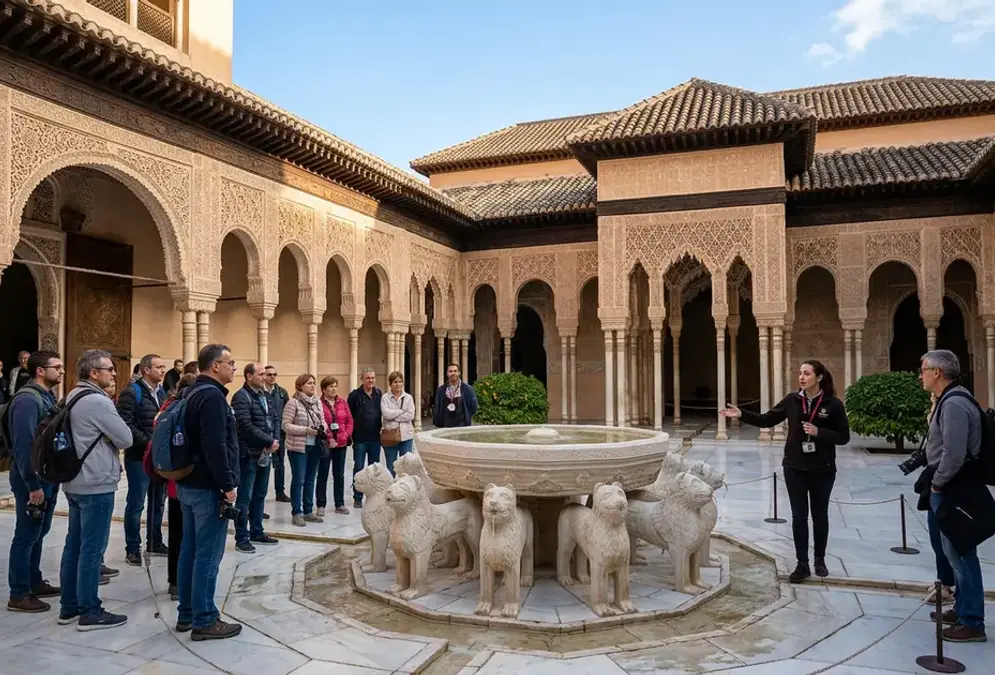
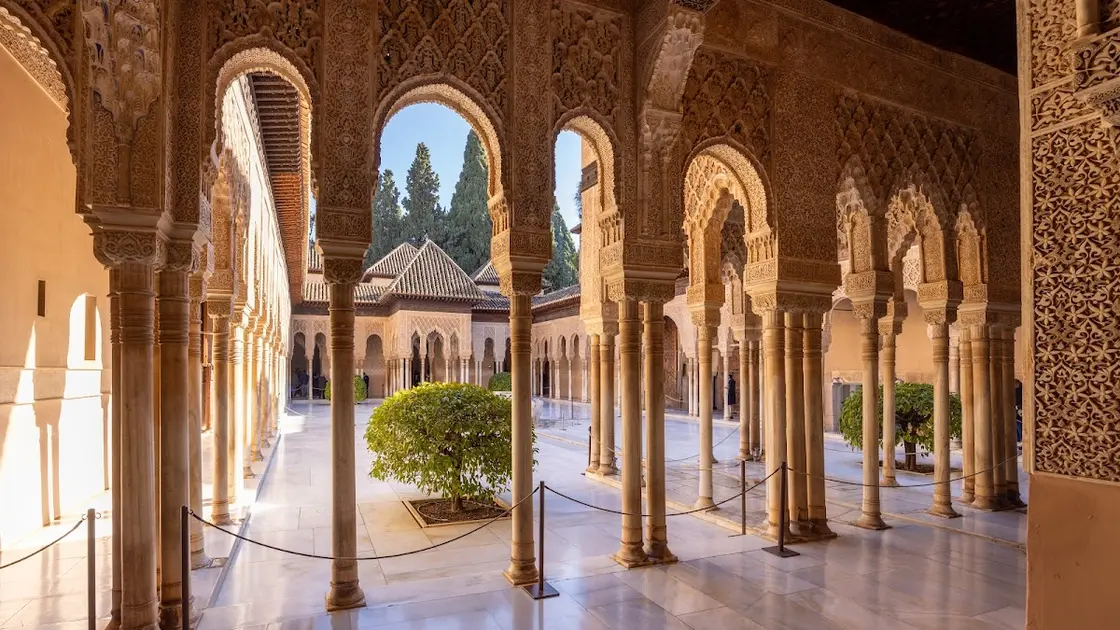
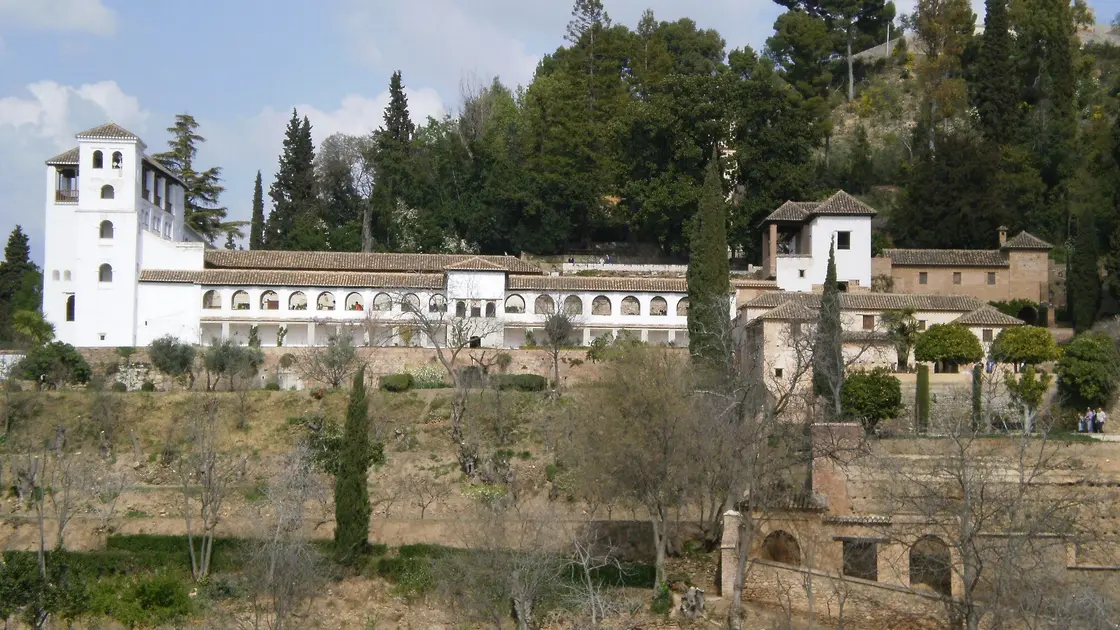
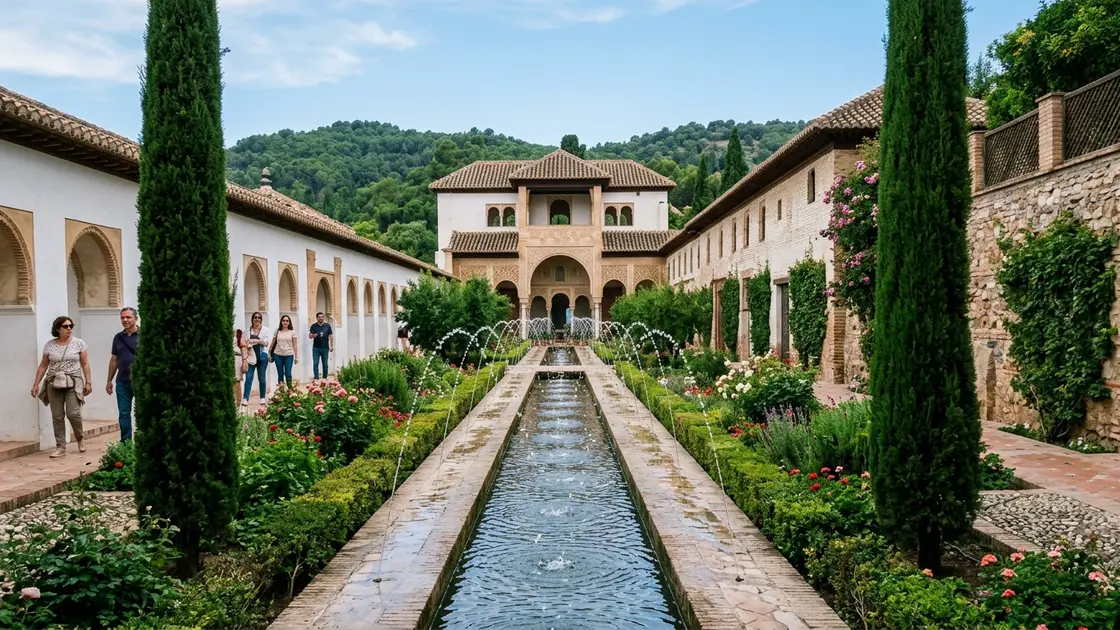
The Granada both men saw was at its peak. The Alhambra reached its full splendour in the second half of the fourteenth century, in the reign of Yusuf I, which Ibn Battuta glimpsed, and the second reign of Muhammad V, which Ibn Khaldun served.[31]
Deep dive · Article
1066 Granada Massacre: When the Jewish Golden Age Ended in a Day
The 1066 Granada massacre killed Joseph ha-Nagid and thousands of the city's Jews in a single day, ending three decades of Jewish power under Samuel ha-Nagid.
Ibn Khaldun's patron governed from rooms mapped in the Alhambra's political history, and the walls carry the verse and mottos read in Nasrid inscriptions and their meaning. Set Ibn Battuta's praise beside Ibn Khaldun's quarrel and you see the court from both sides of its door: one outsider turned away by illness, one insider undone by rivalry.