Granada Cathedral: Five Naves of Renaissance Architecture
cathedral renaissance baroque

Granada Cathedral: Five Naves of Renaissance Architecture

Granada Cathedral in Spain took 181 years to build from 1523, blending Gothic foundations with a Renaissance interior of five naves and a gilded dome chapel.

Mon–Sat 10:00–20:15; Sun & public holidays 15:00–18:15. Closed 25 Dec and 1 Jan.
During the KERYGMA exhibition, through 28 Nov 2026: €10 individual / €8 reduced. From 29 Nov 2026: €7 individual / €5 reduced. Under 12 free.
Directions
Jump to a section

Granada Cathedral stands on the site of the city's main mosque, demolished after the Christian reconquest of 1492 — the mosque served briefly as a church before it was cleared for the new building. Construction began on 25 March 1523 under architect Enrique Egas, who started with a Gothic design. Diego de Siloé took over in 1528 and redirected the project toward Renaissance ideals, introducing the famous circular main chapel, a floor plan with five naves, and a soaring central space that reaches 34.5 metres at its vault. The result is one of the most original cathedral interiors in Spain, where a round chancel sits at the end of a basilica plan, a solution that had never been attempted before on this scale.

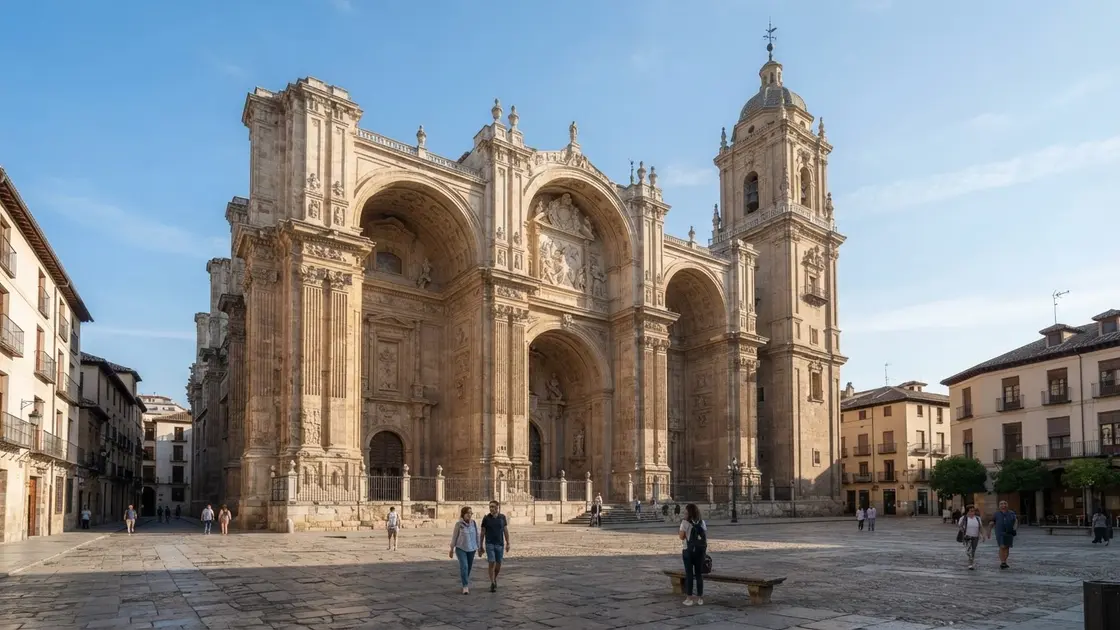
The facade, finished in 1667 by Alonso Cano, a Granada-born painter and sculptor, is a Baroque composition of three arched portals framed by pilasters, considered Cano's masterpiece and one of the finest Baroque facades in Andalusia. Inside, the circular main chapel is ringed with gilded altarpieces, painted busts of Ferdinand and Isabella by Cano, and a dome covered with gold stars on a blue ground. Light filters through the large windows in a way that makes the space feel open and luminous compared to the enclosed gloom typical of Gothic cathedrals.

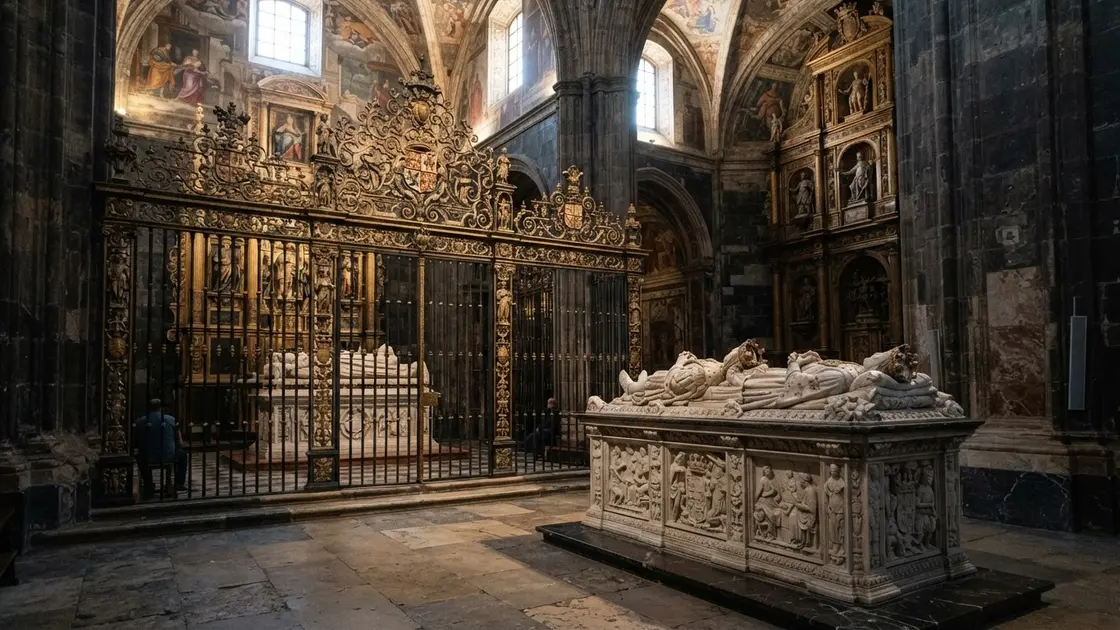
The Royal Chapel, though technically a separate building adjoining the cathedral to the south, is accessed through the same complex and houses the tombs of Ferdinand and Isabella, the Catholic Monarchs. The Cathedral itself took 181 years to complete, finally finished in 1704. That long timeline is visible in its fabric: Gothic arches carry Renaissance vaulting; Baroque ornament sits above Classical columns. Rather than incoherence, the combination gives the building a layered quality that rewards careful looking.

Practical notes for visitors: the main entrance is on Gran Vía de Colón. Lines form quickly after 11:00, so an early morning visit is worth the effort. The museum inside holds paintings by Alonso Cano, vestments, and a 16th-century organ. Audio guides are available in English and cover both the cathedral and the Royal Chapel. Since 8 May 2026, the cathedral has hosted the KERYGMA exhibition, which raises admission through 28 November 2026, when standard pricing resumes.
For the fuller history of that mosque before it was demolished, see [the history of Granada's Great Mosque before it became a cathedral](/articles/granada-great-mosque-history-precathedral).

Find a Granada tour

Tours are selected for quality, not commission. We earn a small fee if you book — at no extra cost to you.

Compare skip-the-line tickets and guided visits.

Practical information

Opening hours

Mon–Sat 10:00–20:15; Sun & public holidays 15:00–18:15. Closed 25 Dec and 1 Jan.

Admission

During the KERYGMA exhibition, through 28 Nov 2026: €10 individual / €8 reduced. From 29 Nov 2026: €7 individual / €5 reduced. Under 12 free.

Address

Gran Vía de Colón 5, 18001 Granada

View on Google Maps
Interactive map — loads as you scroll (requires JavaScript)

Tags

cathedral renaissance baroque religion architecture historical

Frequently asked questions

What is the history of Granada Cathedral?

The cathedral stands where the city's main mosque stood until the Christian reconquest of 1492; the mosque briefly served as a church before it was demolished to clear the site. Construction started on 25 March 1523 under Enrique Egas with a Gothic design. Diego de Siloé took over in 1528 and redirected it toward Renaissance ideals, adding the circular main chapel and five-nave plan. Alonso Cano's Baroque facade followed in 1667, and the whole building was finally finished in 1704 — 181 years after the first stone.

How long does a visit to Granada Cathedral take?

Plan about 45 to 60 minutes for the cathedral alone. If you also visit the adjoining Royal Chapel and museum, allow 90 minutes to 2 hours in total.

Is the Royal Chapel included in the cathedral ticket?

No. The Royal Chapel has a separate entrance fee (€7 adult, €5 reduced) and its own opening hours. Both buildings share the same block but are ticketed independently.

What is the best time to visit to avoid crowds?

Arrive at opening time (10:00 on weekdays) or just before closing in the late afternoon. Midday from 11:30 to 14:00 is the busiest period, especially in summer.

Who designed Granada Cathedral?

Three architects shaped the building across its 181-year construction. Enrique Egas began with a Gothic design in 1523. Diego de Siloé introduced the Renaissance plan from 1528. Alonso Cano designed the Baroque facade, completed in 1667.

Is photography allowed inside the cathedral?

Non-flash photography for personal use is permitted in most areas. Tripods and professional equipment require prior permission from the cathedral administration.