Articles · Travel insights
Granada Curiosities: Essays Beyond the Guidebook
This section collects the curiosities that a guidebook skips: why Granada gets crowded, what the weather actually does across the seasons, odd facts about the city, and the disputes behind names and symbols locals take for granted.
10 articles
Travel insights: the big picture

Written by
James Walker Seven years resident in Granada. Specialist in Nasrid architecture, Al-Andalus history, and Andalusian walking routes.
This section collects the curiosities and deep-dives that don't fit a monument page: the facts, essays, and disputes behind Granada's identity. Start with 20 interesting facts about Granada for the widest sweep, then follow the etymology threads into where the Alhambra's name comes from and the separate, unresolved question of where Granada's own name comes from, with the pomegranate symbol sitting between the two as both a Nasrid religious motif and a 1492 conquest trophy.
Other pieces track how the modern city actually functions: why the Alhambra caps its visitor numbers, a policy running as a formal cap since 1993 and tightened after a 1998 study found the Nasrid Palaces could safely hold only 535 people at once; Granada's markets, from the 14th-century Nasrid-era Alcaicería, burned in 1843 and rebuilt as a Neo-Moorish reconstruction, to the Sunday flea market at Almanjáyar; and the university district, built around an institution founded in 1531 with roots in a 1349 Nasrid madrasa and today enrols more than 60,000 students.
Two outliers round out the collection: why Granada runs colder than the rest of Andalusia, explained by the city's 738-metre elevation below the Sierra Nevada, and the films shot in Granada province, from Indiana Jones to Society of the Snow. A separate piece on Granada's travel-writing workshop profiles the five-day writing intensive that leads students through the Alhambra gardens, the Albaicín, and Sacromonte.
Begin with the interesting facts article, then branch into whichever curiosity caught your eye.
Planning a visit?
For opening hours, weather and practical logistics, see the dedicated guide: Granada Travel Tips
More travel insights articles
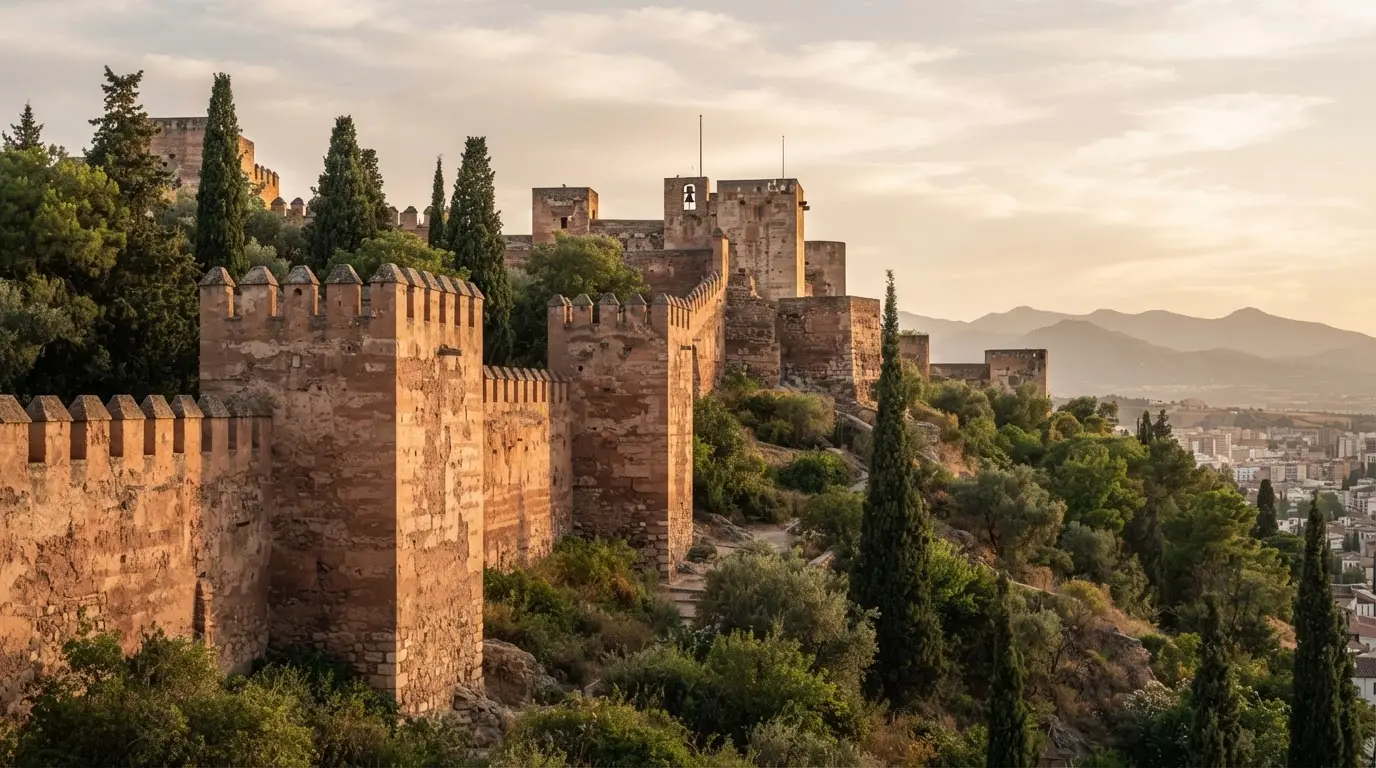
Alhambra Name Meaning: Why It Is the Red One
James Walker
Alhambra means "the red one" in Arabic, expanding to "red fortress." Learn why rammed-earth walls, not torchlight or the founder's name, explain the color.
Read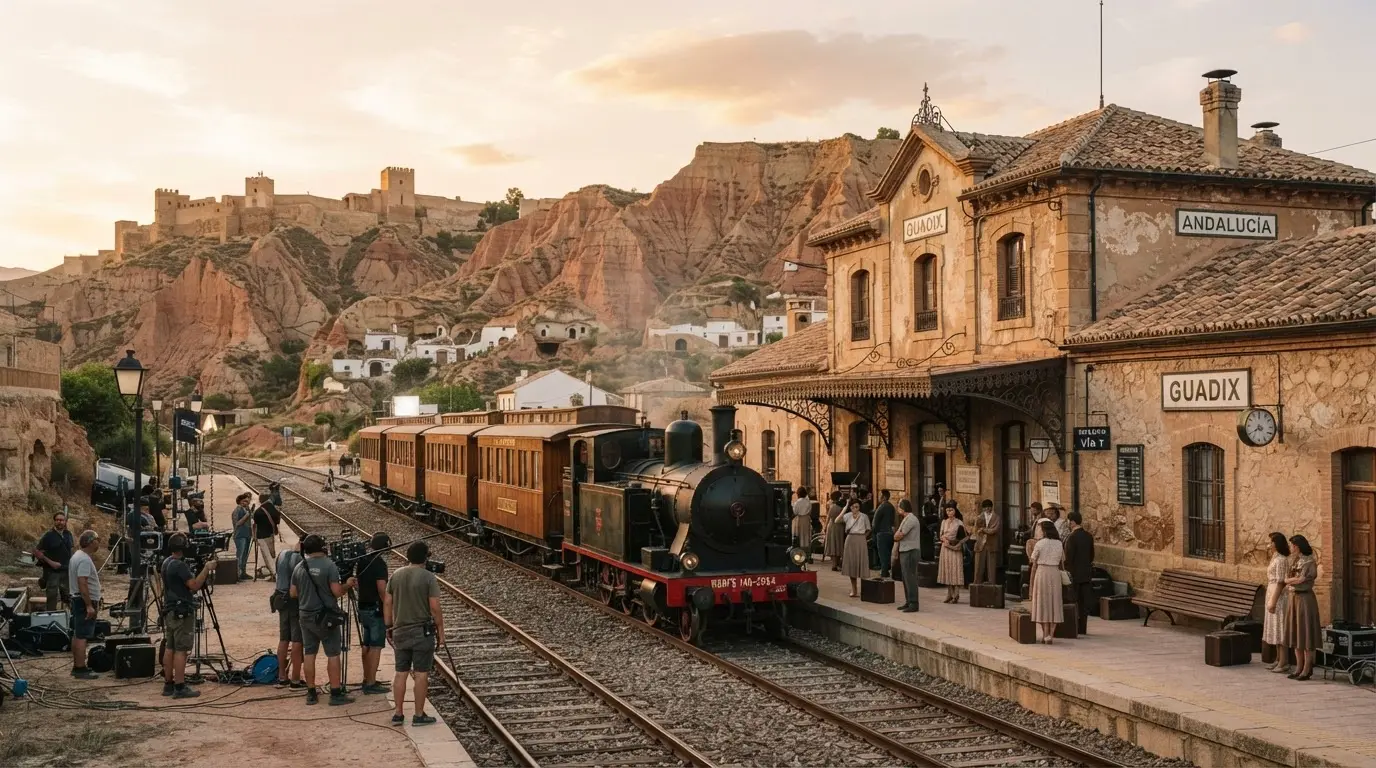
Movies Filmed in Granada: Hollywood's Andalusian Backlot
James Walker
Steven Spielberg rejected the Alhambra for Indiana Jones as too recognisable. Guadix, La Calahorra Castle and Sierra Nevada became Granada's film backlot.
Read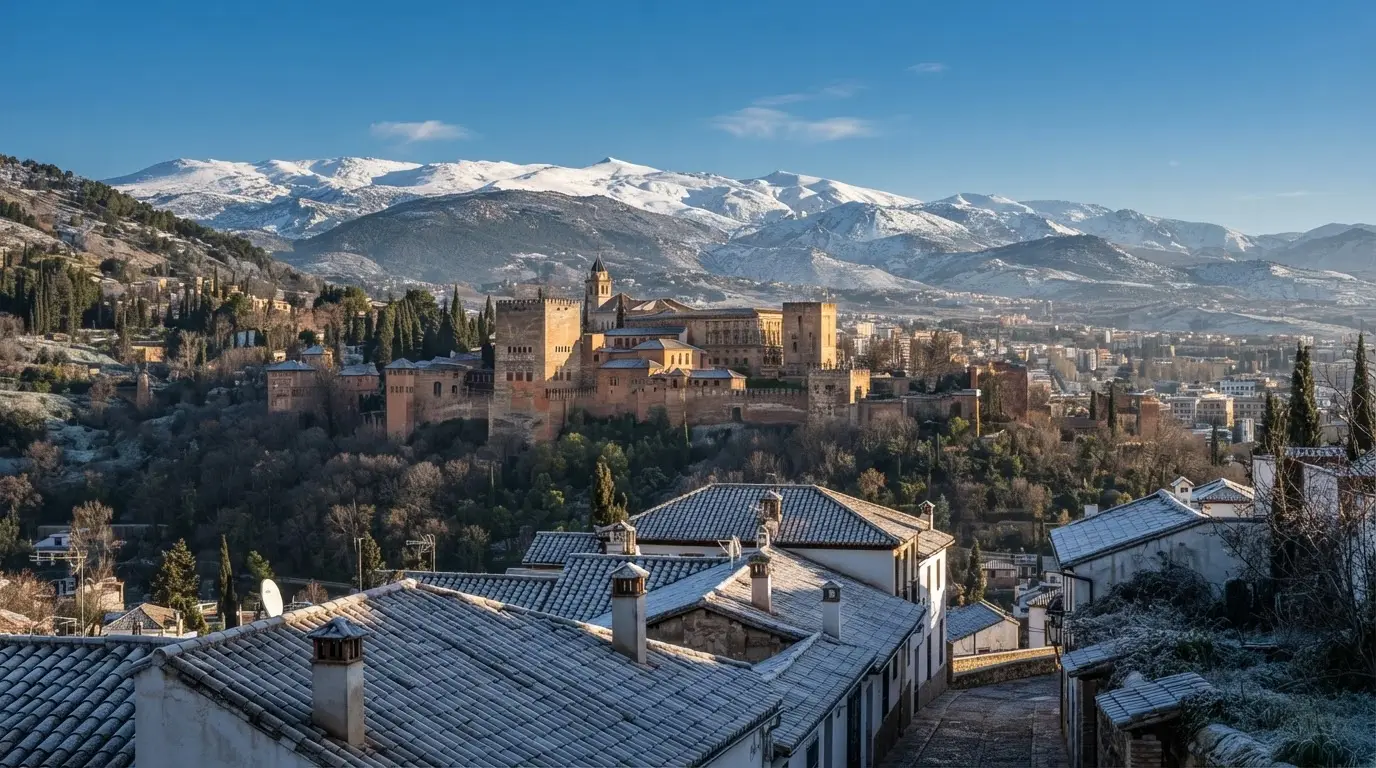
Why Is Granada So Cold? Blame the Sierra Nevada
James Walker
Granada sits at 738m in a bowl below the Sierra Nevada's 3,479m peaks, an elevation gap that brings cold nights, warm days, and skiing 27km from the city.
Read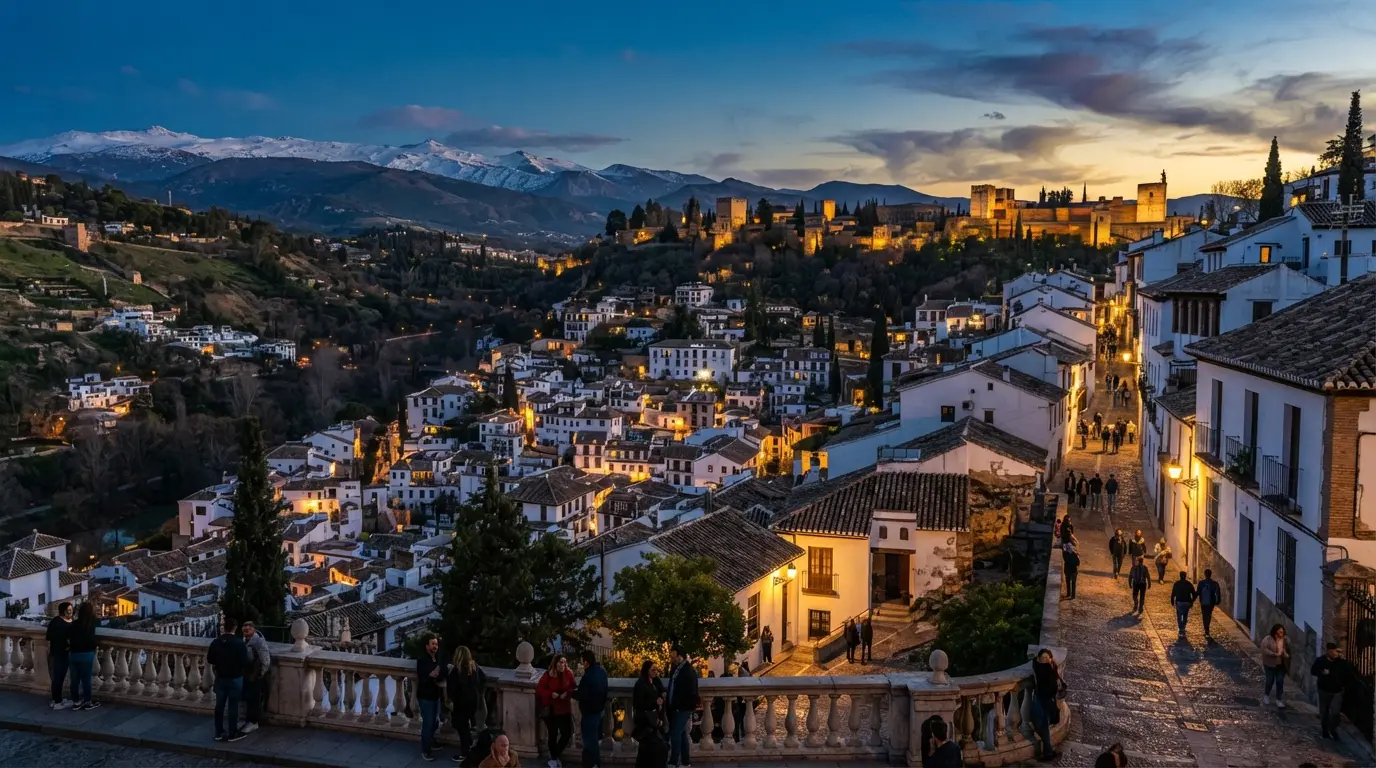
Where Did Granada Get Its Name? The Competing Etymologies
James Walker Updated
Granada reaches Spanish through the Arabic Gharnāṭa, but what Gharnāṭa originally meant is unknown. The pomegranate story everyone learns is probably wrong.
Read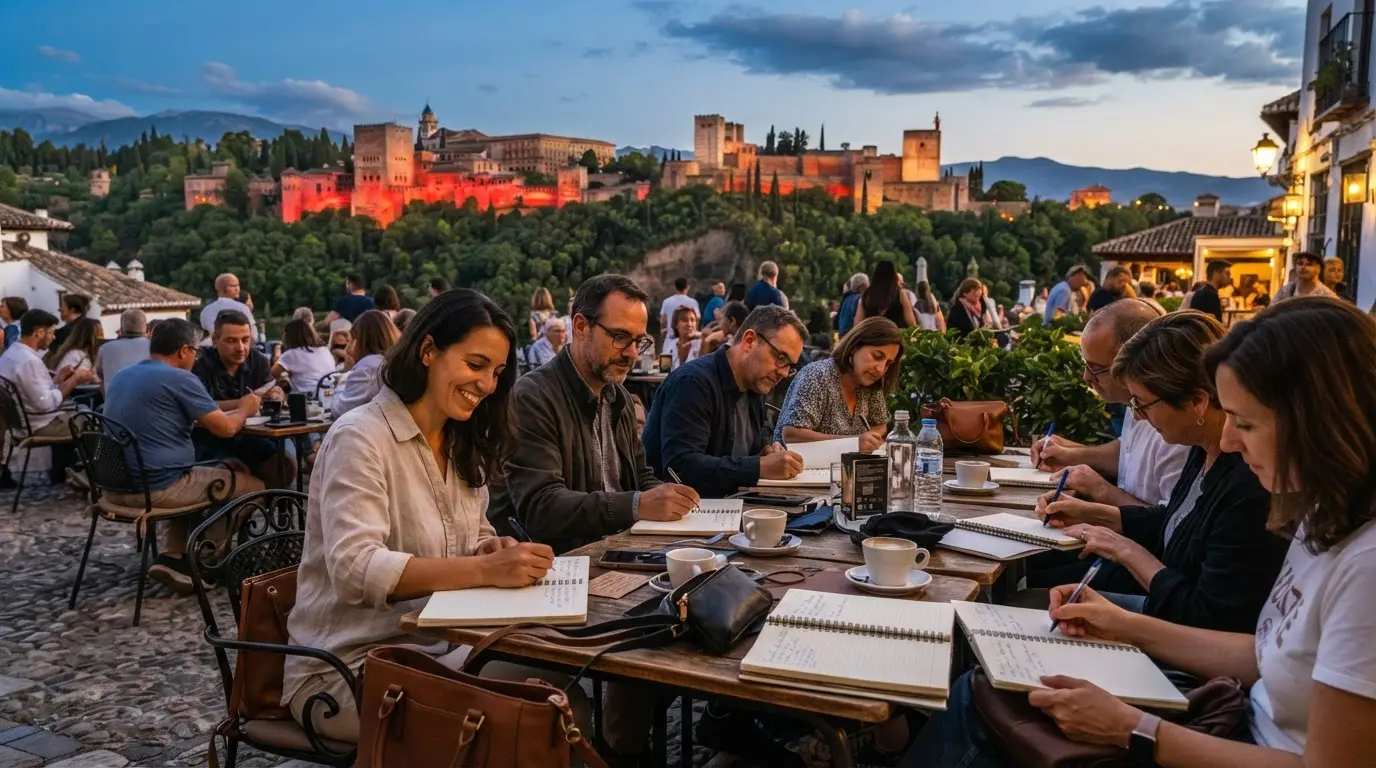
Travel Writing Workshops in Granada: What to Expect
James Walker Updated
Granada in Story is a five-day travel writing workshop that uses the Alhambra, Albaicín and Sacromonte as material, plus who leads it and what it costs.
Read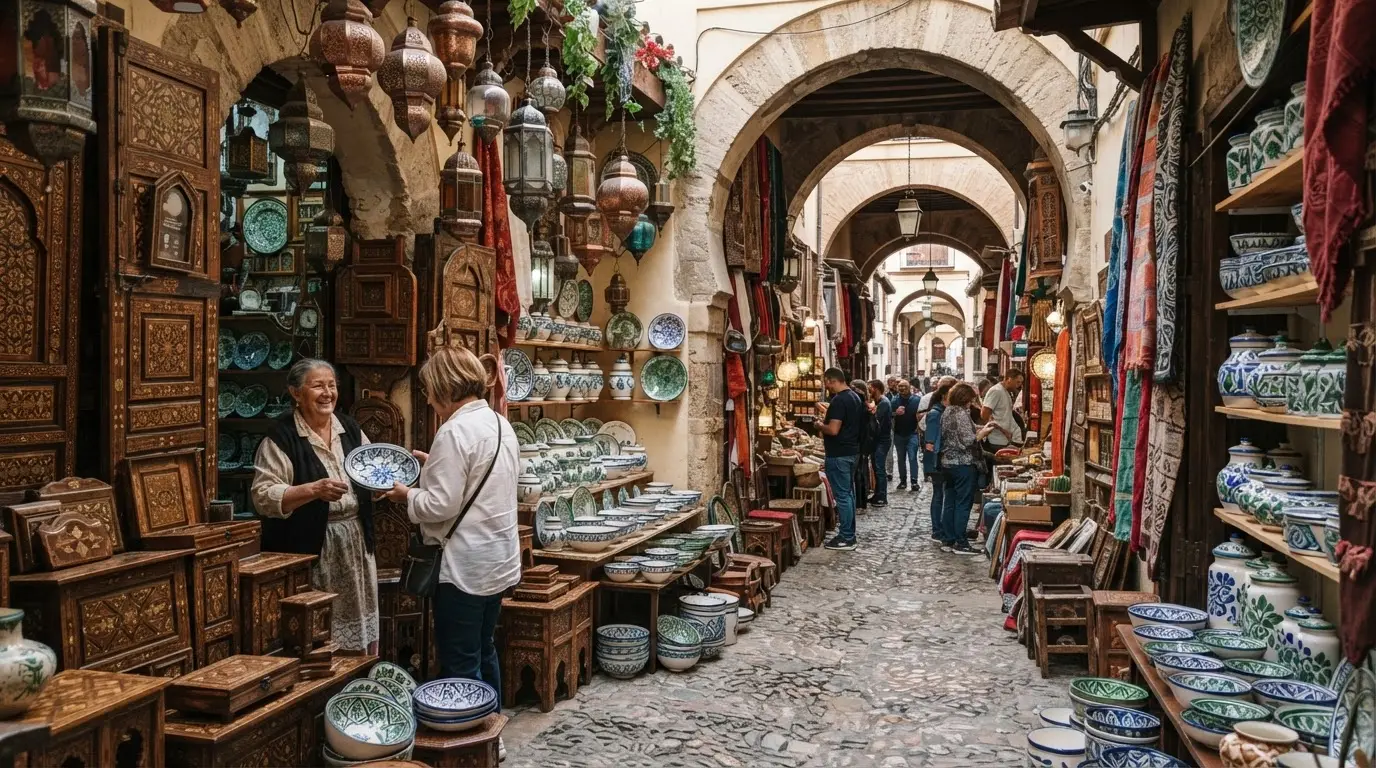
Granada's Markets: A City's History Told Through Trade
James Walker Updated
From a Nasrid silk monopoly to Sunday flea markets, Granada's five markets map the city's history. Where to go, what's worth buying, and what each reveals.
Read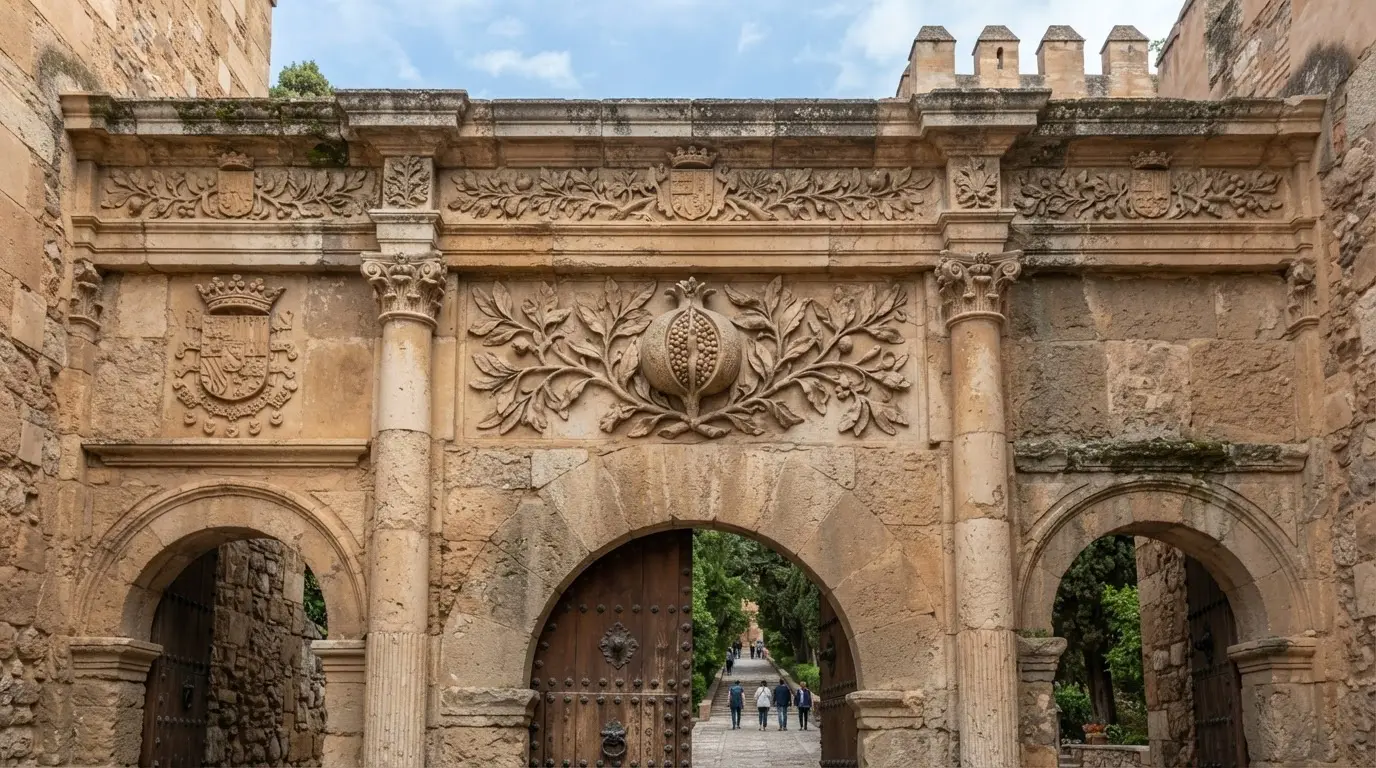
Granada's pomegranate symbol: from conquest to convergence
James Walker Updated
A pomegranate sits on Spain's royal coat of arms — Ferdinand and Isabella's 1492 Granada conquest trophy, once revered by Nasrid rulers as paradise's fruit.
ReadFrequently asked questions
What does the name Alhambra actually mean?
Al-Hamra means ‘the red one’ in Arabic; the fuller form, al-Qal’ah al-Hamra, means ‘the red fortress’. The colour comes from iron oxide in the rammed-earth walls, not from torchlight or the founder’s red hair, both of which are popular but undocumented stories.
Why is Granada's own name disputed?
The city’s Arabic name, Gharnata, may derive from a Berber phrase meaning ‘hill of strangers’, from Latin granatum (pomegranate), or from Latin granum referring to the reddish local soil. No theory has been definitively proven, and the popular pomegranate story is likely a later folk etymology.
Why does the Alhambra limit how many people can visit?
A 1998 study found the Nasrid Palaces could safely hold only 535 people at once. The Patronato has tightened ticket numbers repeatedly since 1993, fixing an annual cap of 2,785,000 visitors in 2003 that has not been raised since, even as demand approached it by 2019.
Why is Granada colder than the rest of Andalusia?
Granada sits at 738 metres, directly below the Sierra Nevada's 3,479-metre peaks. Cold air drains off the range overnight and pools in the city's basin, giving Granada sharp day-night temperature swings that coastal Andalusian cities, cushioned by the sea, rarely experience.
What does the pomegranate on Granada's manhole covers mean?
It carries two layered meanings: a Quranic fruit of paradise for the Nasrid court that ruled the city until 1492, and a conquest trophy for Ferdinand and Isabella, who added it to the Spanish royal coat of arms after taking Granada that same year.
Has the Alhambra appeared in films?
Rarely, and deliberately so: Steven Spielberg scouted it for Indiana Jones and the Last Crusade but judged it too recognisable to double as anywhere else. Productions instead use Guadix’s railway station and La Calahorra Castle, both a short drive from Granada.