History guide
Zirid Granada and the early Islamic city
Before the Alhambra there was a Berber dynasty, a hill fortress and a capital at Medina Elvira. How Granada became a city, and what the Zirids, Almoravids and Almohads left behind.

Written by
James Walker Seven years resident in Granada. Specialist in Nasrid architecture, Al-Andalus history, and Andalusian walking routes.
Published
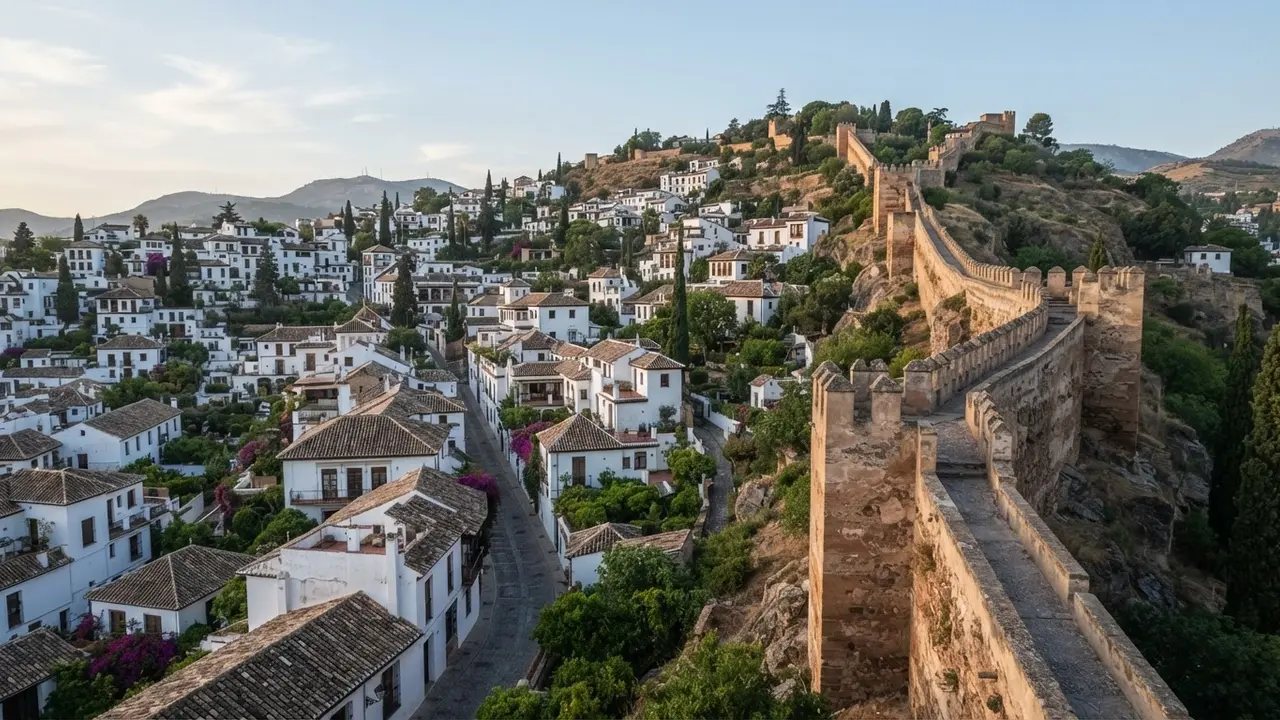
Granada is a Zirid city. The Berber Zirid dynasty made it the capital of an independent taifa in 1013, on the hill we now call the Albaicín, and for 77 years it rivalled Seville, Almería, Toledo and Zaragoza.
This page is the overview: from Roman Ilíberis and Medina Elvira through the Zirids, the Jewish golden age, the Almoravids and the Almohads, to the Nasrid takeover in 1238. Each stage links to a full article. For walking the Albaicín today, use the Albaicín guide; for the Nasrid centuries, see Moorish Granada.
Jump to a section
Before the Zirids: Medina Elvira
Before 1013 the capital of the district was Medina Elvira (Madinat Ilbira), not Granada. Founded around the 9th century on earlier farming hamlets, it became the capital of the kūra of the same name, and it kept that role after the Arab and Berber conquest until the 11th century. Granada was then a small settlement clustered around a castle (hisn) in and around the present Albaicín.
The older town, Visigothic Ilíberis, had stood at Sierra Elvira near Atarfe, which is why the Roman and Visigothic story belongs to a different place from the city you walk in today. Granada's own history as part of al-Andalus runs, in the University of Granada's phrasing, for almost eight hundred years (711-1492). For the first three centuries of al-Andalus the capital of Islamic Spain was Córdoba, and Granada sat in its provincial shadow.
The Roman Granada and Ilíberis article covers the town that came before Elvira.
Why the Zirids chose the Albaicín hill
The Zirids moved the capital from Medina Elvira to Granada partly because the hill was easier to defend: it was surrounded by natural moats. The dynasty had received the province of Ilbīra from the Umayyad caliph Sulaymān al-Mustaʿīn early in the 11th century, then set up as an independent power under Zāwī ibn Zīrī. The conventional date is 1013; Britannica gives 1012, so read "about 1013" as the safe form.
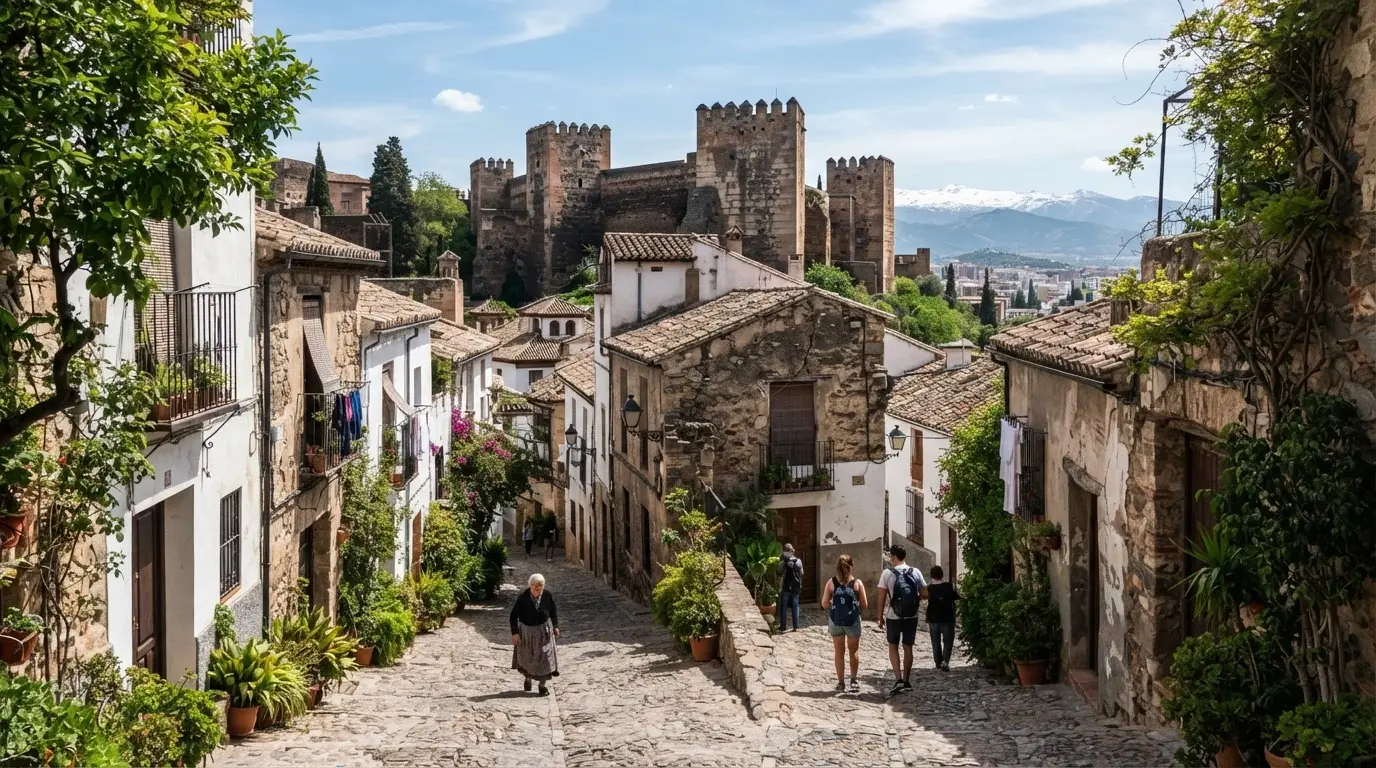
The new city's fortified core, the qadīma alcazaba, covered about 15 hectares and roughly matched the Albaicín. The taifa lasted 77 years, to 1090, under four sultans. A University of Granada historian concludes that the Zirid period is the most important in the city's history, which is a strong claim from a university that also studies the Nasrids.
The dynasty, its sultans and the politics of the taifa are in the Zirid dynasty article. The last Zirid king, Abdallah ibn Buluggin, wrote the Kitab al-tibyan, which historians still use as a key source for the period.
What the Zirids built
The Zirids built three things that shaped the city: a defensive wall, a water system, and a Great Mosque on the plain below the hill. The wall was rammed earth (tapial de cal y canto) with river stones. The Aynadamar canal carried water from the Fuente Grande spring at Alfacar into the heart of the qadīma, and cisterns such as the Aljibe del Rey, which held 300 cubic metres, stored it.
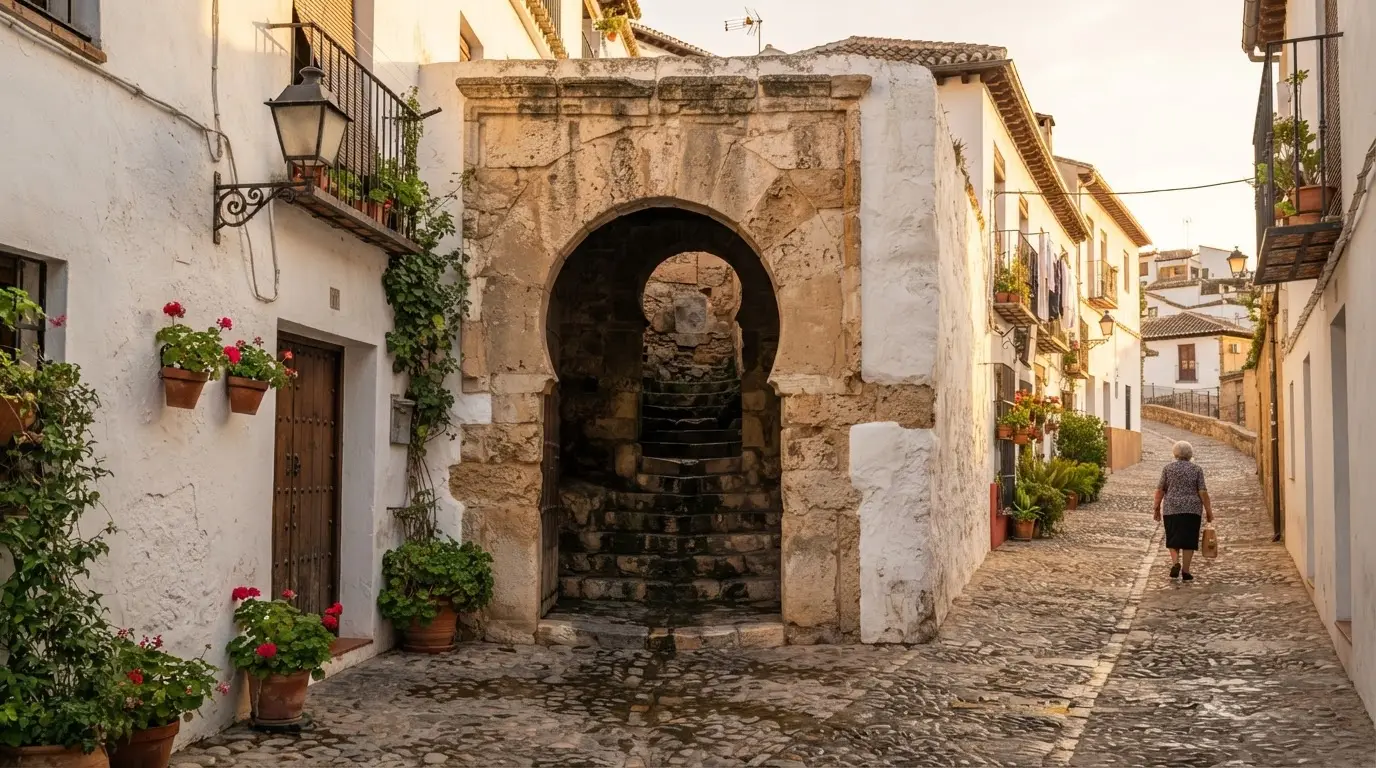
- Wall and gates: the city walls of the Albaicín.
- Water: the Albaicín aljibes and cisterns.
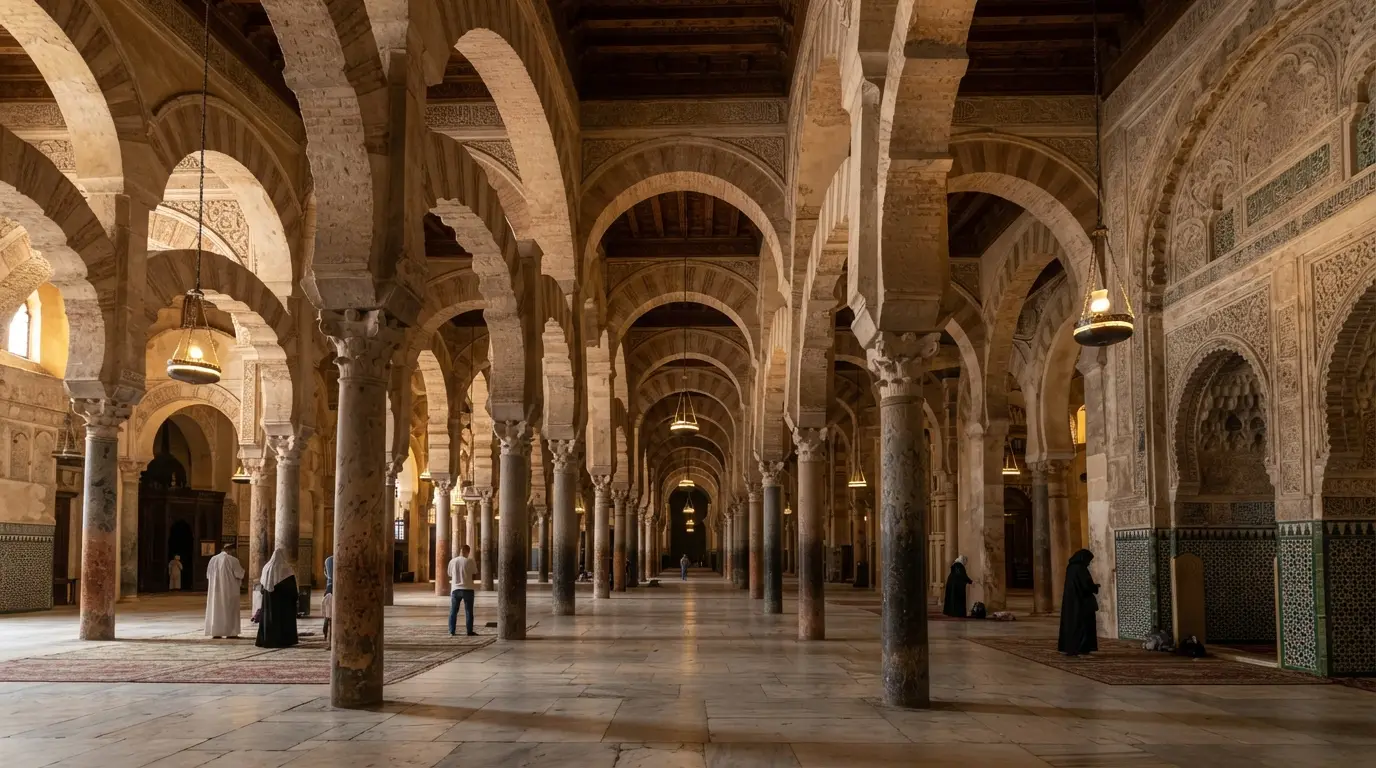
- Faith and civic life: the Great Mosque, forerunner of the cathedral.
The mosque stood on the approximate site of the church of El Sagrario beside the Cathedral. UNESCO describes the Albaicín as the origin of the City of Granada, with a story running from the Zirids to the Nasrids.
The Jewish golden age and the 1066 massacre
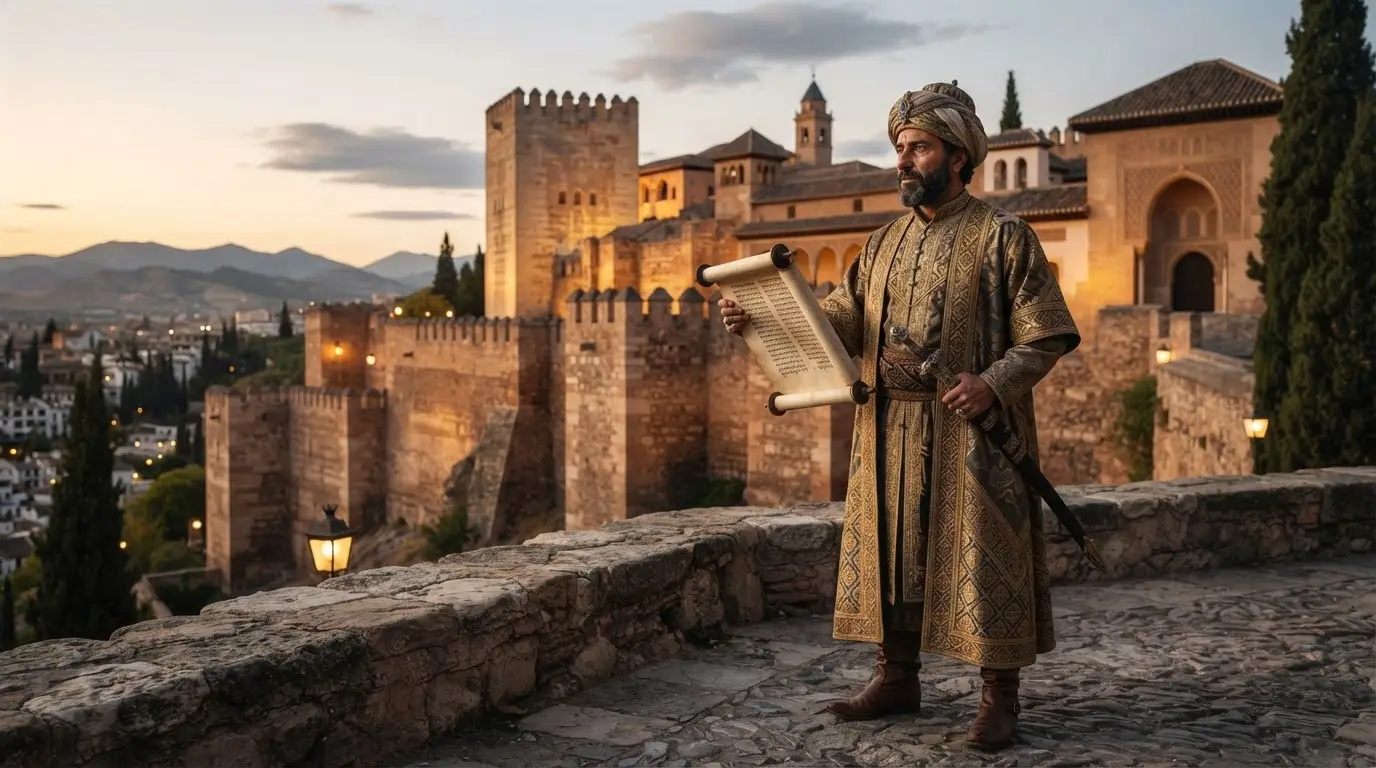
Granada's Jewish golden age was the 11th century, when Jewish culture flowered into one of its most splendid periods in al-Andalus under a plural Zirid kingdom. Its figure was Samuel ibn Naghrillah, known as Samuel ha-Nagid: born in Córdoba in 993, driven out in 1013 by civil war, then the authorised chief (nagid) of Granada's Jews and a poet. He backed Badis in the 1037 succession dispute and kept his post as vizier when Badis became king.
That a Jew held office at all was unusual: under the Pact of Umar, Jews were not meant to hold public office in Muslim countries. Samuel died in the mid-1050s (the Jewish Encyclopedia gives 1055, other sources 1056), and the community's decline began soon after. His son Joseph succeeded him as vizier and rabbi.
On 30 December 1066 a mob stormed the royal palace where Joseph had taken refuge. The toll of 4,000 often quoted is an unverified estimate. The community recovered quickly, only to be struck again by the Almoravids in 1090. Read Samuel ha-Nagid and the 1066 massacre for the full accounts; the Realejo Jewish quarter article follows the community's later geography, which moved with each dynasty.
Almoravids and Almohads: Granada as a provincial town
The Almoravids overthrew the Zirids in 1090, and with the Almohad Caliphate (arriving in 1157 by the University of Granada's dating) Granada became a province of a North African empire. The Almoravids made major changes to the Great Mosque, and the Almohads restored the Alcazaba of the Alhambra, a reminder that the hill opposite the Albaicín was already in use before the Nasrids.
Intellectual life carried on regardless. Women poets such as Nazhun, Hafsa and Hamda were celebrated in 12th-century Granada, and Hafsa bint al-Hajj has her own article.
After the Almohad collapse, al-Andalus shrank to the Nasrid kingdom and Granada became a capital again, from 1238 to 1492. That is where the Nasrid dynasty story begins.
The full story: early Islamic Granada
The articles below cover this period in depth. Start with the Zirid dynasty itself, then follow the Jewish golden age and the 1066 massacre, or turn to the physical remains: walls, cisterns and the Great Mosque. Hafsa bint al-Hajj shows what intellectual life looked like once the Zirids had gone.


Frequently asked questions
Who were the Zirids of Granada?
The Zirids were a Berber dynasty founded by Zāwī ibn Zīrī. Britannica records that the Umayyad caliph Sulaymān al-Mustaʿīn gave them the province of Ilbīra at the start of the 11th century, and that they set up an independent dynasty in Granada. Conventionally the Zirid taifa runs from 1013 to 1090, a span of 77 years under four sultans; Britannica dates the start to 1012. The full account is in the Zirid dynasty article.
Where was Medina Elvira and why did Granada replace it?
Medina Elvira (Madinat Ilbira) was founded around the 9th century and became the capital of the kūra that bore its name. It lay near Sierra Elvira at Atarfe, where the Visigothic town of Ilíberis had stood, not on the site of modern Granada. Historians at the University of Granada say the capital stayed there until the 11th century, when the Zirids proposed moving to Granada and founding a new Islamic city on a hill ringed by natural moats.
What was the Jewish golden age in Granada?
The University of Granada's history module describes 11th-century Granada as seeing Jewish culture flower into one of its most splendid periods in al-Andalus. Its centre was Samuel ibn Naghrillah (Samuel ha-Nagid), the nagid of the Jewish community and a vizier to the Zirid kings, who also wrote poetry. The age ended violently with the 1066 massacre. Samuel ha-Nagid's biography has the detail.
What happened in the 1066 Granada massacre?
On 30 December 1066 a mob stormed the royal palace where Joseph ibn Naghrela, Samuel's son and successor as vizier, had sought refuge. He was killed, and so were many members of the Jewish community. The Jewish Virtual Library gives a death toll of 4,000; Wikipedia's entry calls that an unverified estimate, so treat it as an unverified estimate. The massacre is usually ascribed, in Bernard Lewis's phrase, to a reaction among the Muslim population against a powerful and ostentatious Jewish vizier. See the 1066 massacre article.
When did the Almoravids and Almohads rule Granada?
Britannica says the Almoravids overthrew the Zirids in 1090. The University of Granada dates the Almohad Caliphate's arrival to 1157, and under both empires Granada was a provincial town rather than a capital. After the Almohad collapse the Nasrid kingdom took over, and Granada became a capital again (1238-1492).
What survives of Zirid Granada?
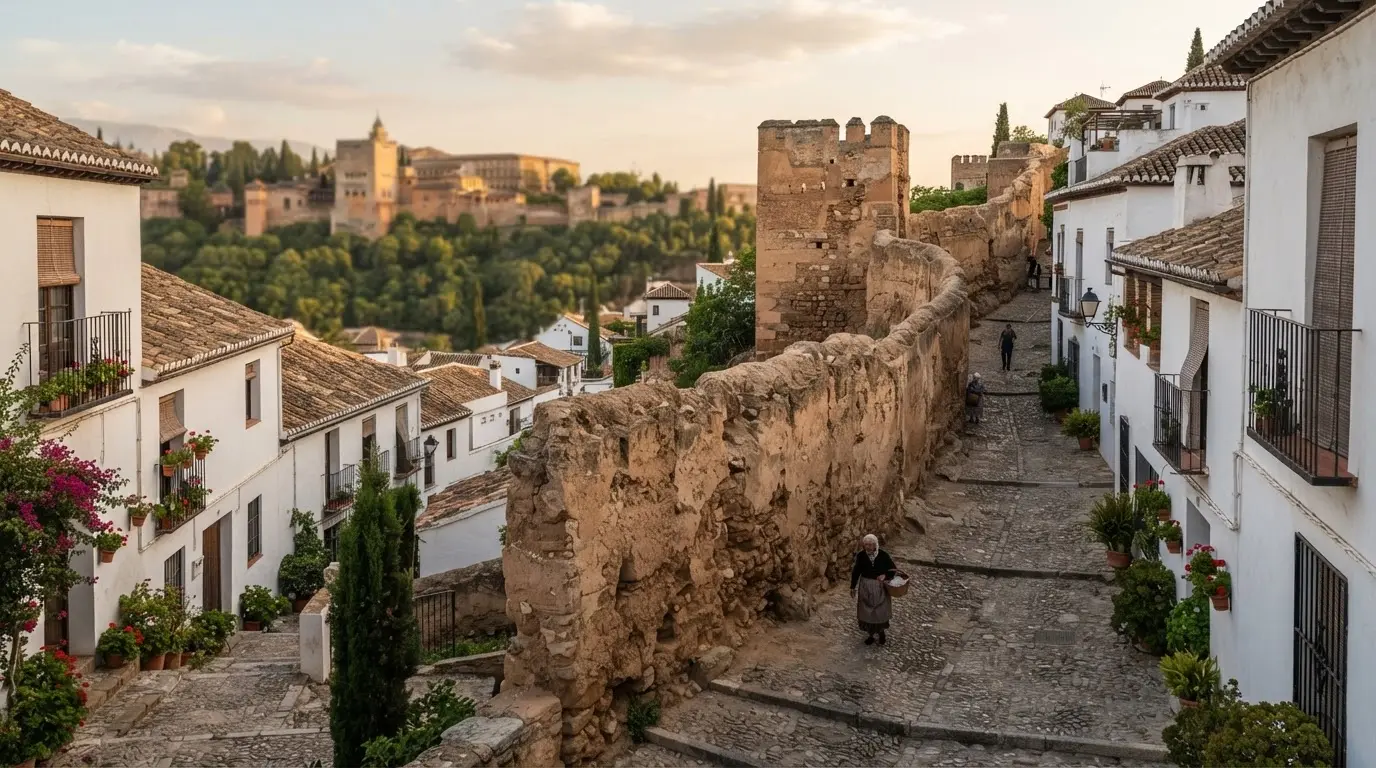
The Zirid layer is the Albaicín's street plan and defensive line: the fortified qadīma alcazaba of about 15 hectares, stretches of rammed-earth wall, and the Aljibe del Rey cistern. UNESCO's World Heritage listing calls the Albaicín the origin of the City of Granada. Plan a visit with the Albaicín guide.
Further reading
Sources
6 references Show Hide
- Universidad de Granada: Granada, al-Andalus from 711 (open course module) (opens in a new tab)
University historians on Granada within al-Andalus, the taifa, the Almoravids, Almohads and Nasrids.
- Universidad de Granada: the Zirid city (open course module) (opens in a new tab)
Medina Elvira, the move to Granada, the alcazaba, walls, cisterns and the Great Mosque.
- Britannica: Zirid dynasty (opens in a new tab)
Origins of the Zirids in Ilbīra and their overthrow by the Almoravids in 1090.
- UNESCO World Heritage: Alhambra, Generalife and Albayzín (opens in a new tab)
The Albayzín as the origin of the City of Granada, from the Zirid dynasty onward.
- Jewish Encyclopedia: Samuel ha-Nagid (opens in a new tab)
Samuel's career as nagid and vizier, and his surviving poetry.
- Jewish Virtual Library: Granada (opens in a new tab)
The Jewish community of Granada from the Zirids to the Almoravids, including 1066.