Articles · Nature & day trips
Nature and Day Trips from Granada
This section looks past the city to the region around it: skiing and Europe's southernmost glacier in the Sierra Nevada, the whitewashed villages of the Alpujarras, and dark-sky spots within reach of a day trip.
4 articles
Nature & day trips: the big picture
Written by
James Walker Seven years resident in Granada. Specialist in Nasrid architecture, Al-Andalus history, and Andalusian walking routes.
This small collection follows the Sierra Nevada above Granada through four different lenses. The history of the Sierra Nevada ski resort traces how Europe's southernmost ski station was built in four campaigns, from a 1935 summit road to the 1996 World Ski Championships, run by Cetursa, the company constituted for the purpose in 1964. The resort's base village, Pradollano, is terraced between 2,078 and 2,400 metres, making it Spain's highest permanently inhabited settlement.
A short drive up the same mountain, Corral del Veleta held Europe's southernmost glacier, active until 1913 and now a shrinking relict ice body that a 2008 survey measured at 4,860 square metres, one researchers monitor as an early-warning site for climate change.
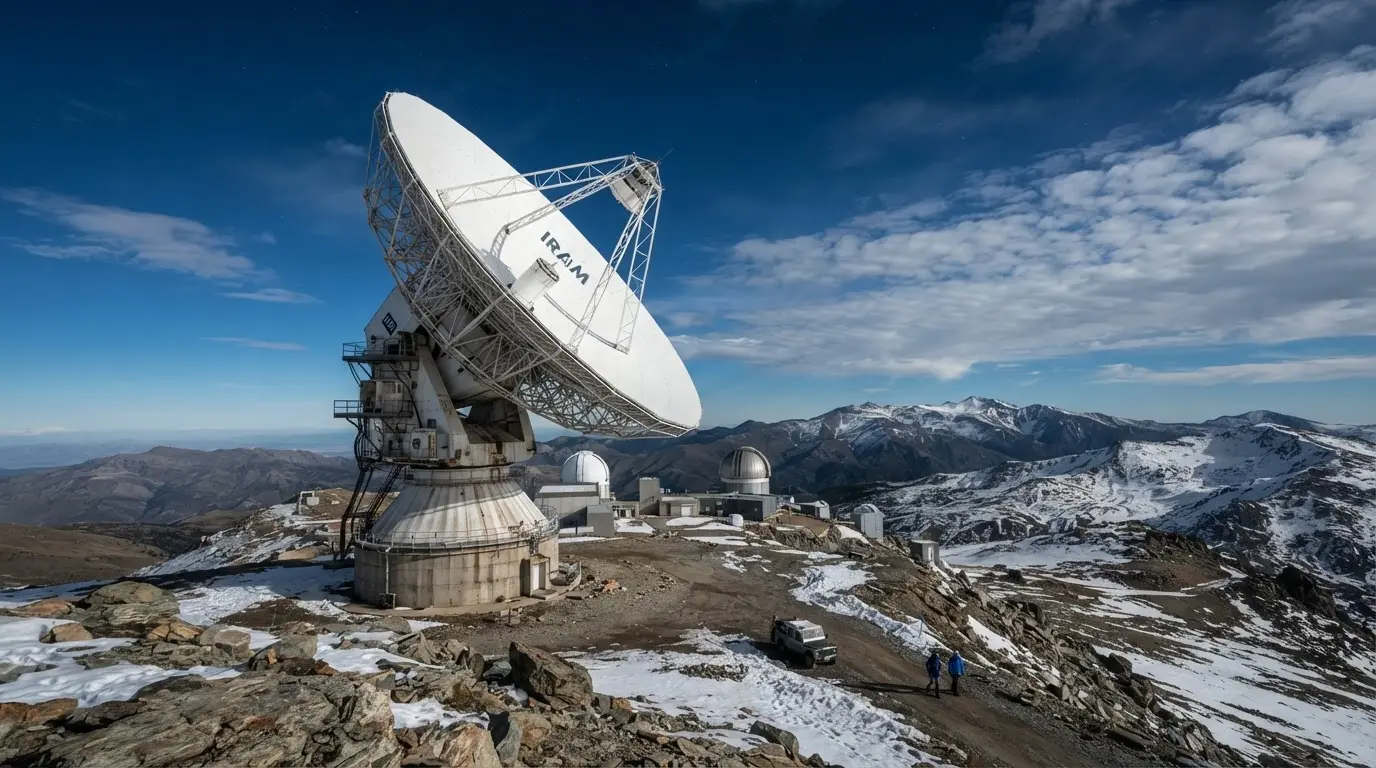
Higher still, two working scientific stations occupy the range. The IRAM 30-metre radio telescope on Pico Veleta, built between 1980 and 1984 and weighing roughly 800 tonnes, made the first high-resolution radio observations of the Milky Way's own black hole in 1995 and helped capture the first-ever image of a black hole in 2019. The region's night skies are covered separately in the guide to stargazing near Granada, which explains why the professional Sierra Nevada Observatory, at 2,896 metres, is not actually where visitors go to see stars after dark, and why the Alpujarras village of Capileira instead holds the range's Starlight certification.
Start with the ski resort history for the broadest orientation to the mountain, then follow the glacier and telescope articles for the science, or the stargazing guide if a night under the Milky Way is the plan.
More nature & day trips articles
Frequently asked questions
When did the Sierra Nevada resort host the World Ski Championships?
From 12 to 25 February 1996, the only time Spain has hosted the FIS Alpine World Ski Championships. The event had been awarded in 1990 and was originally scheduled for 1995, but was postponed a year for lack of snow.
Is there still a glacier in the Sierra Nevada?
Not an active one. The Corral del Veleta glacier, once Europe’s southernmost at 37°N, lost all measurable movement in 1913. A shrinking rocky remnant of fossil ice, relict ice, and permafrost survives in the shaded cirque, measured at 4,860 square metres in a 2008 survey.
What did the IRAM telescope on Pico Veleta achieve?
Built between 1980 and 1984 at 2,850 metres, it was the only European station in the 2017 observing campaign that produced the first-ever image of a black hole, released in April 2019, and it also contributed to the 2022 image of the Milky Way’s own black hole.
Can you visit the Sierra Nevada Observatory at night?
No. The OSN’s public programme is a guided daytime tour of its telescope domes; its two Nasmyth telescopes run active research programmes overnight. Visitors who want to see stars after dark go instead to Pradollano and Borreguiles, roughly forty minutes from Granada.