Granada Silk Road: the Alcaicería and Nasrid Silk Trade
Granada's Alcaicería was the commercial heart of a silk empire. How Nasrid silk funded the Alhambra, reached Flanders, and was dismantled by decree after 1492.
Seven years resident in Granada. Specialist in Nasrid architecture, Al-Andalus history, and Andalusian walking routes.
Updated Published
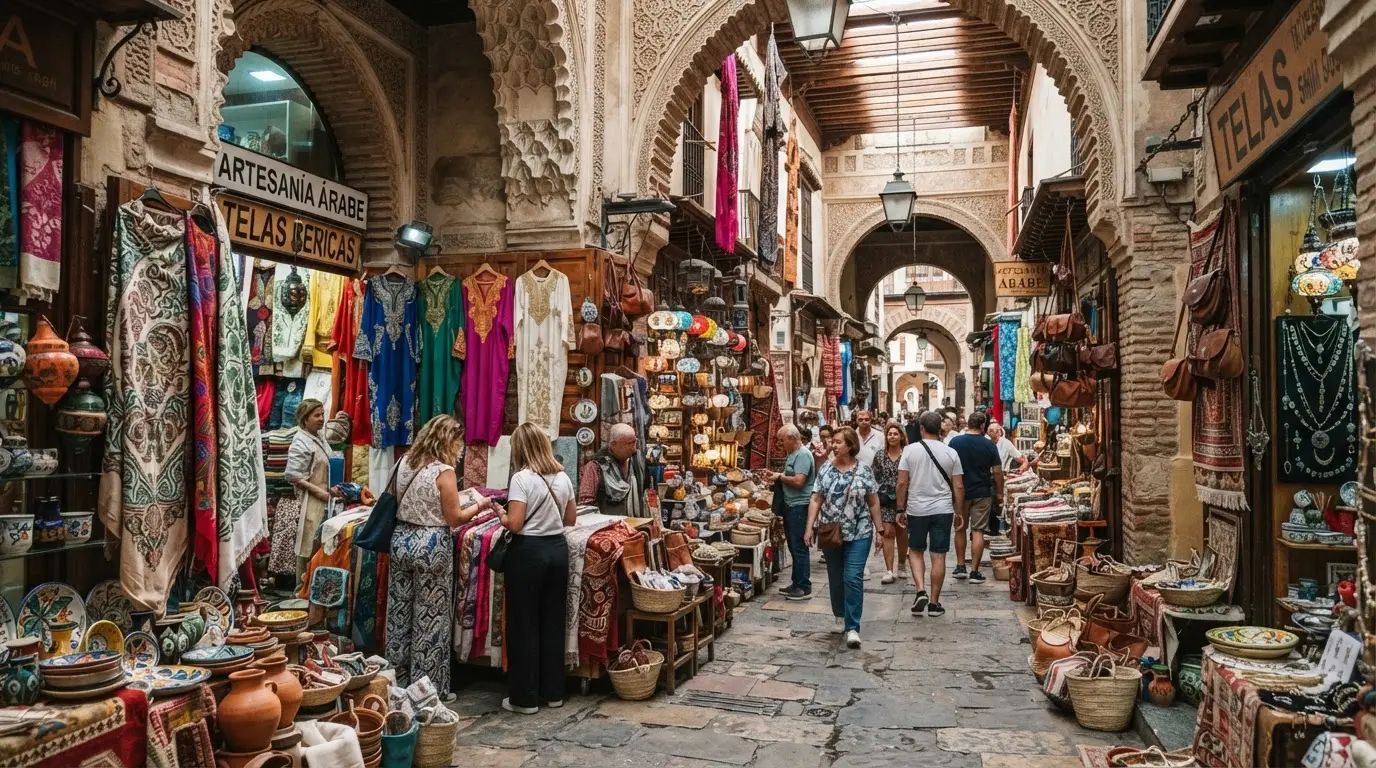
The Alcaicería you walk through today, the pocket of covered lanes beside the Cathedral selling ceramics and spices, is a 19th-century reconstruction of something far larger. The original Nasrid market covered 4,600 square metres, housed up to 152 shops, and sat at the centre of an export economy that reached Italy, Flanders, and England. Silk paid for the Alhambra. This is that story.
In this article
Jump to a section
⌄
What the Alcaicería actually was
The name comes from the Arabic al-qaysariyya — itself derived from al-Kaysar-ia, meaning "place of Caesar," a reference to the Byzantine Emperor Justinian, who in the 6th century granted Arab merchants exclusive rights to manufacture and sell silk.[1] The institution spread across the Islamic world: enclosed, lockable silk markets existed in Cairo, Fez, Tunis, and dozens of other cities. Granada's was a western instantiation of the same model, not a copy of any single prototype.
The Granada Alcaicería stood to the southwest of the Great Mosque — on the site now occupied by the Cathedral and Royal Chapel, at the commercial heart of the Nasrid medina. It was bounded by what are now Calle Libreros, Calle Oficios, Calle Tinte, and the Zacatín, which remains one of Granada's main shopping streets today. A 1787 plan documented its layout in detail: up to 152 shops along perpendicular covered lanes, nine gated entrances that were locked at night, and a layout that separated different classes of goods by street.
This was not a free market. The Alcaicería was owned directly by the Nasrid dynasty: a state-controlled enclave where luxury goods were traded, taxed at higher rates than the surrounding market, and audited by royal officials. A merchant who wanted to sell silk wholesale in Granada had no alternative. Every transaction passed through the Alcaicería, and every transaction generated revenue for the crown.
Adjacent to the market sat two structures that Yusuf I (r. 1333–1354) built as part of the same commercial complex: the Funduq al-Jadida caravanserai (the funduq being the merchant inn where traders stayed and stored goods) and the Madrasa al-Yusufiyya, which still stands today as the old Madraza building, now the University of Granada's rectorate. The surviving Corral del Carbón, Granada's 14th-century funduq, gives a concrete sense of the commercial infrastructure these merchants moved through: a courtyard inn three storeys high, designed for the camel caravans and pack mules that brought raw silk from the Alpujarras into the city.
The Alpujarras: where Granada's silk was made
The Alcaicería was the market, but the silk came from the mountains. The Alpujarras, the steep-sided valleys running south from the Sierra Nevada toward the Mediterranean coast, were the production heartland of the Nasrid silk economy. Villages like Cástaras, Trevélez, Pitres, Ugíjar, Juviles, and Valor maintained mulberry orchards on terraced hillsides that climbers still see today. The mulberry tree (Morus alba) was the dominant cash crop: its leaves are the sole food source for Bombyx mori, the silkworm whose cocoon produces raw silk thread.[2]
Sericulture (the rearing of silkworms) had arrived in al-Andalus in the 8th century, brought by Syrian emigrants known as the Kaisids who settled in the south of the peninsula. Over the following centuries, production spread across the Nasrid kingdom's agricultural territories: the Vega plain around Granada, the Alpujarra slopes, and the coastal areas around Almería and Málaga. At its peak, the industry counted over 4,000 looms operating in the Alpujarras alone.[2] The thread those looms produced (raw, spun, twisted, and dyed) flowed into the city via the mountain roads and into the Alcaicería's warehouses.
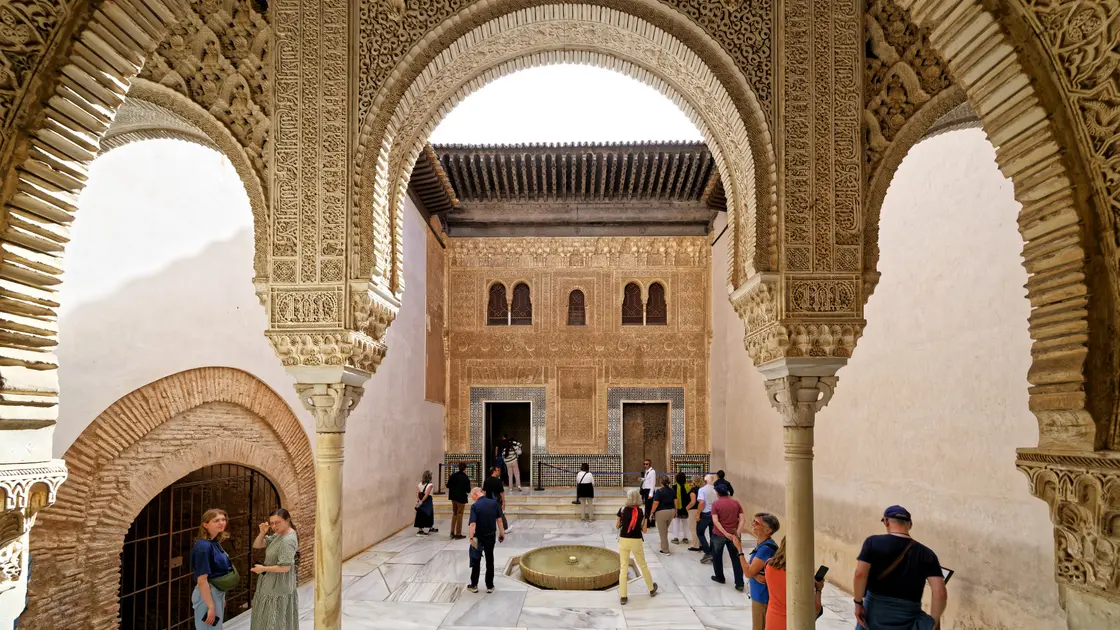
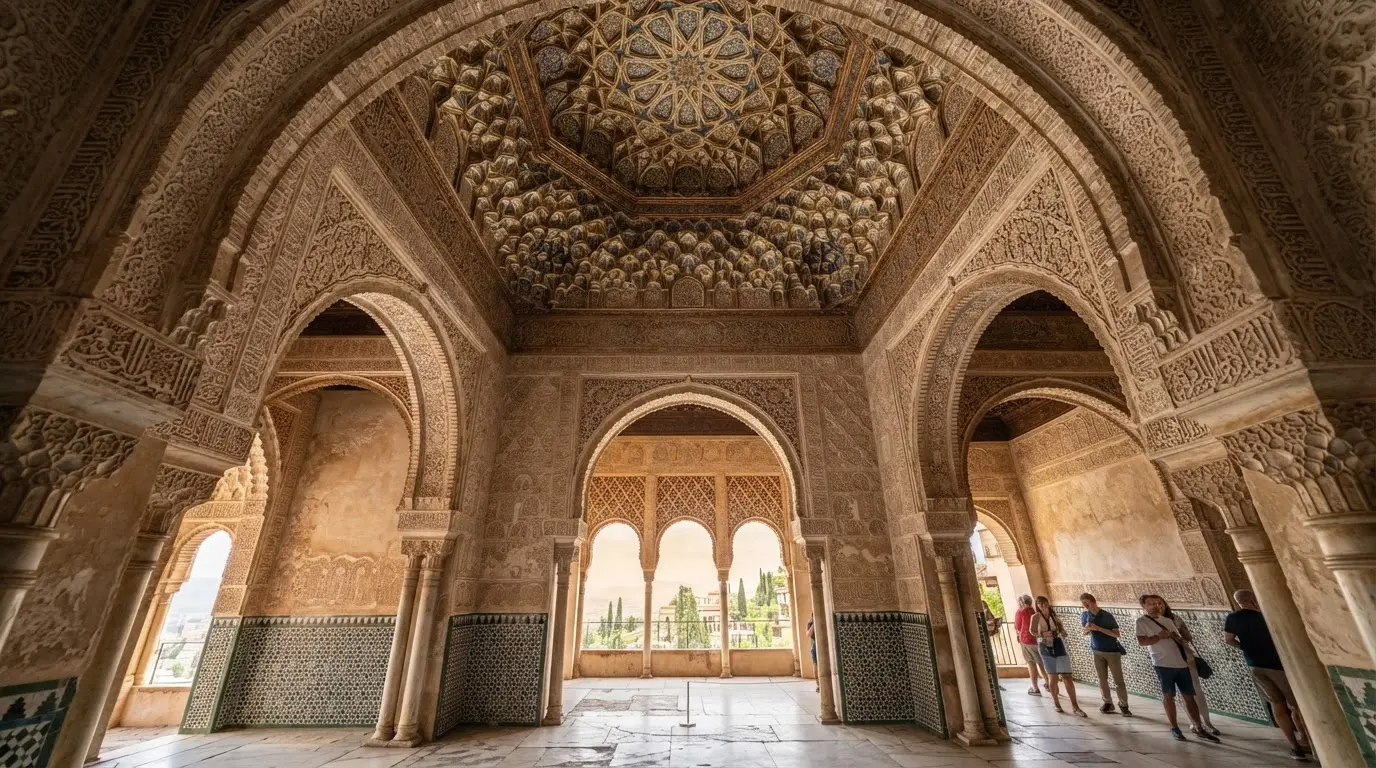
The city itself processed what the mountains produced. Granada maintained a royal tiraz: a luxury textile workshop under direct state supervision, producing the highest-tier fabrics for the court and for export. Ibn Khaldun, the North African historian who visited Granada in the 14th century, documented the tiraz's existence.[3] Its output ran to taffetas, damasks, velvets, and complex silk brocades whose geometric patterns echoed the ataurique and merlon motifs on the Alhambra's plasterwork walls: the same visual language, rendered in thread instead of gypsum.
The Albaicín neighbourhood also hosted silk workshops, though this was distributed production rather than a single dedicated district. What the Nasrid city had was an integrated supply chain: mountain sericulture feeding urban spinning and dyeing, dyeing feeding weaving, weaving feeding the Alcaicería's wholesale stalls and the tiraz's export looms. The whole chain was taxed, regulated, and ultimately funded the state.
How Nasrid silk reached Flanders and paid for the Alhambra
Silk was Granada's hard currency. This is not metaphor: the tribute payments that the Nasrid emirs made to Castile (estimated at between 12,000 and 20,000 gold dinars annually during the 14th century) were financed directly by silk revenues and customs duties on goods moving through Almería.[4] The last Islamic emirate in Iberia survived for 260 years partly because it was too economically useful to destroy. Castile needed the luxury goods. Granada supplied them and paid tribute with the proceeds.
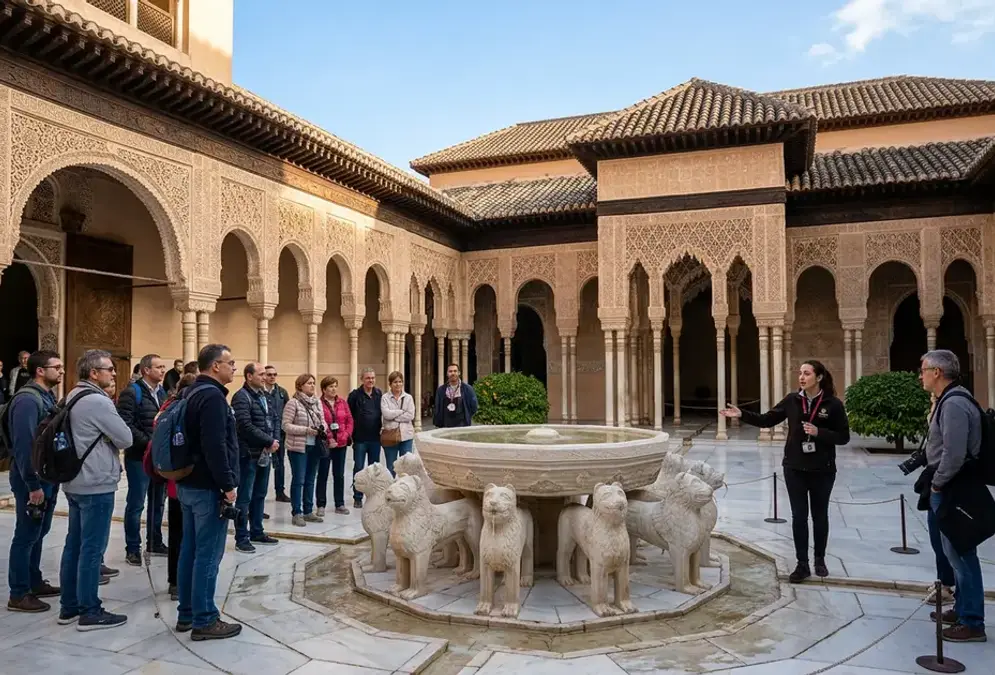
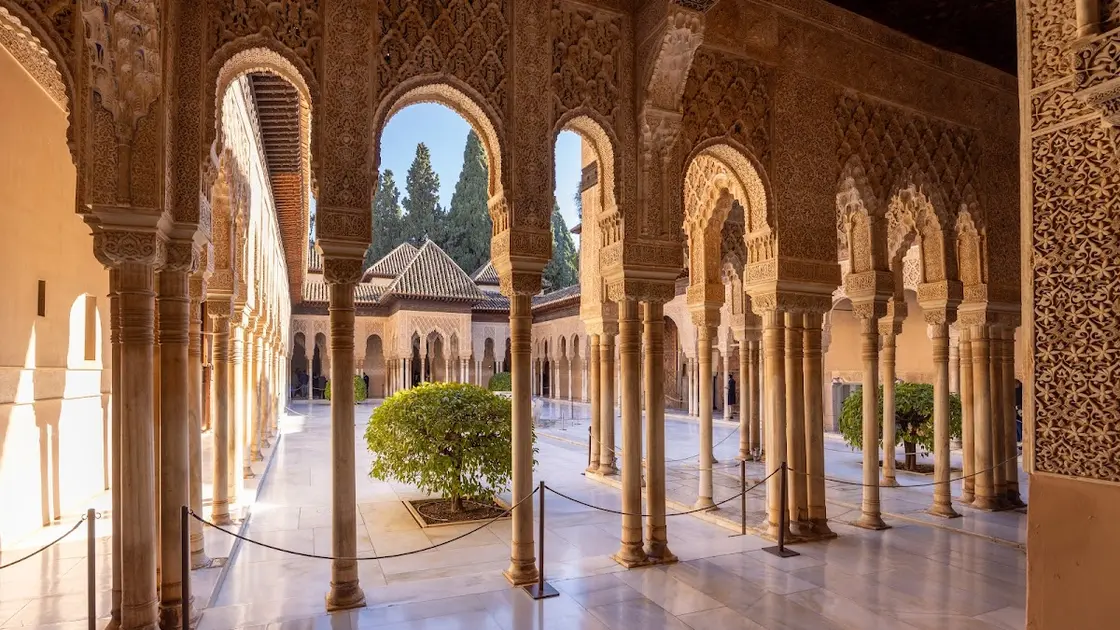
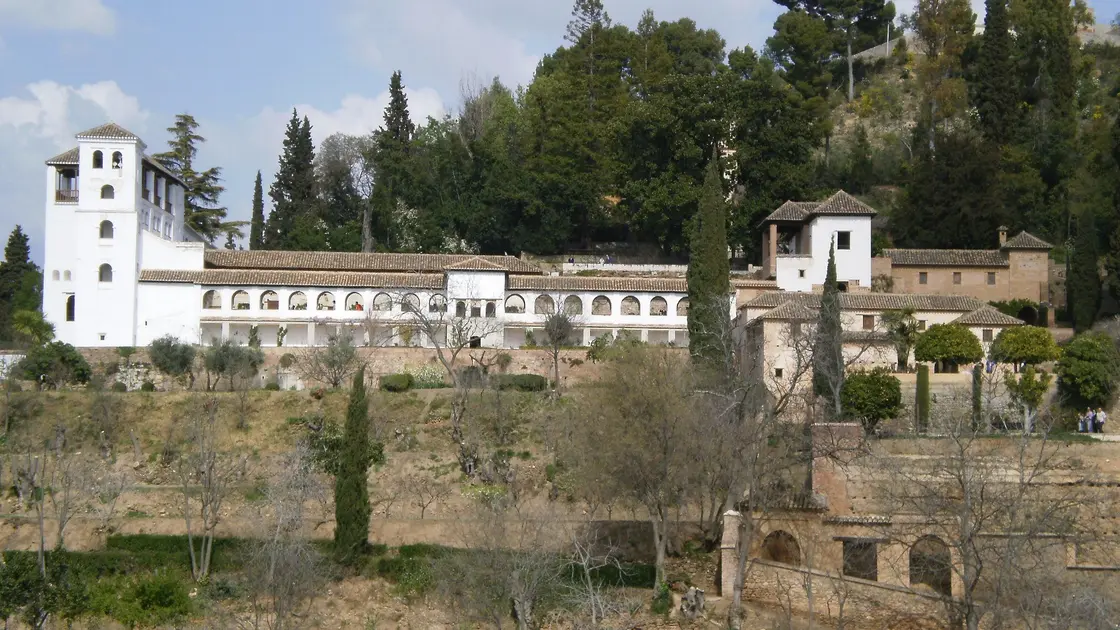
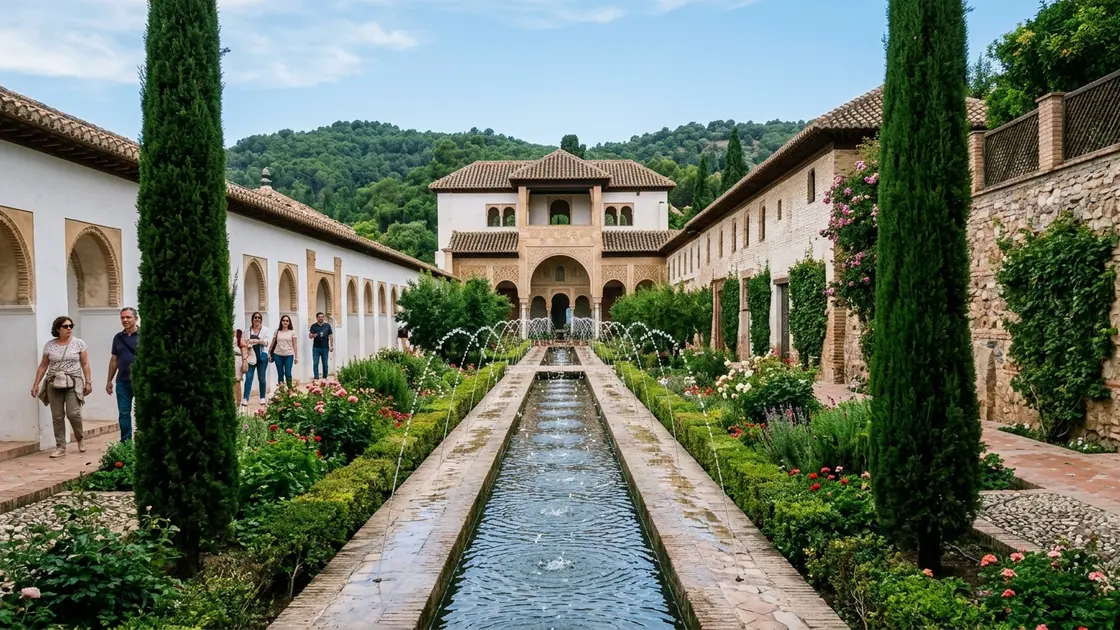
The money also built the Alhambra. The Nasrid Palaces, the Generalife gardens, the Comares Tower, the Alhambra complex on its entire ridge. All of it was raised on silk revenue. Yusuf I, who commissioned the Hall of Ambassadors and the Generalife estate water gardens in the 14th century, was simultaneously the sultan who elevated the Alcaicería's status and strengthened the state's grip on the silk trade. Architecture and commerce were the same project.
Granada silk reached European markets through a network of Italian merchants, principally Genoese, who bought wholesale at the alcaicerías of Granada, Almería, and Málaga and redistributed the goods through their Mediterranean trading posts. By the 14th and 15th centuries, Alpujarra silk was being sold in Italian cities, in Flemish ports, and as far north as England. One contemporary source described Granada's silk as "the most sought-after decoration item in the whole of the Mediterranean." The Genoese merchant community had a formal presence in Granada, with warehouses and a consulate, underwriting the city's role as a luxury export node.
Recommended tours
Tours are selected for quality, not commission. We earn a small fee if you book — at no extra cost to you.
The fabrics themselves carried that status visually. Taffetas and damasks in gold, crimson, cobalt, and white. Velvets cut with the geometric pomegranate and merlon patterns the Nasrid craftsmen used across every medium. Silk brocades that referenced the same mathematical grids as the Alhambra's ceiling carvings. A piece of Granada silk brought to a Flemish merchant's house in the 1430s would have announced the wearer's knowledge of the most sophisticated decorative culture in the Western world.
The collapse: from 1492 to the Alpujarras rebellions
The Catholic Monarchs entered Granada on 6 January 1492. The initial Treaty of Granada promised the Morisco population (Muslims who converted to Christianity under the terms of the capitulation) religious tolerance, property rights, and the continuity of their trades. The silk industry kept operating. A Silk Art House was established in 1511 under Christian rule to regulate quality standards, which tells you that the Crown understood silk's commercial value even as it began dismantling the social order that had produced it.[5]
The tolerance lasted less than a decade. From 1499, Cardinal Cisneros broke the treaty terms by forcing mass conversions rather than allowing the gradual, voluntary conversions the capitulations envisaged. The resulting outrage triggered the first Alpujarras rebellion (1499–1501), which was suppressed, followed by the forced conversion of the remaining Muslim population of Castile in 1502. In Granada, Moriscos (now nominally Christian) maintained the silk trade under increasing fiscal pressure.
The decisive blow came in 1561, when the Crown banned the Granadan silk trade outright. This was not an economic decision in isolation: it was a weapon of cultural destruction, targeting the most lucrative sector of Morisco life to accelerate their absorption into Christian society. The ban, combined with existing discriminatory taxation, provided the proximate economic cause for the second Alpujarras rebellion.
Philip II's Pragmática Sanción, issued 1 January 1567, went further: it prohibited the Arabic language, Moorish dress, public baths, traditional music, and any cultural practices identifiable as Moorish. The Morisco community of Granada had been promised these things would not be touched. The Pragmática broke that promise completely. In 1568, the rebellion broke. It lasted until 1571, became one of the bloodiest conflicts in 16th-century Spain, and ended with the expulsion of approximately 80,000 Moriscos — roughly half of Granada's Morisco population, dispersed to Córdoba, Toledo, León, and other cities far from their mountain villages.[6]
The fields went uncultivated. The mulberry trees were left to grow unpruned or cut down. A small number of silk craftsmen were allowed to remain to preserve some technical continuity, but the knowledge ecosystem was broken: the accumulated expertise of village sericulture, passed from father to son across the Alpujarra slopes, was gone. The silk industry that had funded a civilization never recovered its scale.
Timeline
8th century
8th century
Syrian Kaisid emigrants introduce sericulture (silkworm rearing) to al-Andalus. Mulberry cultivation spreads across the south of the peninsula.
1232
1232
Muhammad I founds the Nasrid emirate of Granada. The Alcaicería and the enclosed silk market district already exist in the medina.
1333–1354
1333–1354
Yusuf I expands the Alcaicería complex, builds the adjacent Madrasa al-Yusufiyya and the Funduq al-Jadida. Alhambra construction accelerates, funded by silk revenues.
1492
1492
Catholic Monarchs take Granada on 6 January. Treaty of Granada promises Morisco religious tolerance and property protection. Silk trade continues under Christian rule.
1499–1501
1499–1501
Cardinal Cisneros breaks treaty terms with forced conversions, triggering the first Alpujarras rebellion.
1561
1561
Crown bans the Granadan silk trade outright, devastating Morisco economic life.
1567–1571
1567–1571
Philip II's Pragmática Sanción bans Arabic language, Moorish dress, and traditional customs. The second Alpujarras rebellion follows in 1568. Around 80,000 Moriscos are expelled on its suppression.
1843
1843
Fire destroys most of the original Alcaicería. The market is rebuilt on a smaller scale in Neo-Moorish Revival style. The silk trade is already long gone.
The 1843 fire and the reconstruction visitors see today
In 1843, fire destroyed most of the Alcaicería that remained from the Nasrid period. What had survived the 1492 conquest, reduced in scale and changed in function but structurally still the old market, was gone in a night. The rebuilt Alcaicería, which opened in the following decades, was not a restoration. It was a new structure designed in Neo-Moorish Revival style, the 19th-century Spanish architectural movement that translated Islamic forms into a decorative vocabulary understood by Romantic-era Europeans: pointed horseshoe arches, painted tilework, hanging lanterns, surfaces ornamented with plaster arabesque.
The reconstruction eliminated the internal street network that had characterized the Nasrid-era market. The nine gated entrances were reduced. The scale contracted from 4,600 square metres[1] to the three narrow lanes visitors walk today. The spirit evoked is Moorish; the building is Victorian-era pastiche. This is not a criticism. The Alcaicería is atmospheric precisely because it doesn't look like any other 19th-century European market building. But it matters for anyone trying to understand what they are actually looking at.
What is genuine in the current Alcaicería is the location, the tradition of craft production, and the commercial DNA. The Zacatín beside it is still named for the Arabic word for secondhand clothes dealers. The lanes still sit between the Cathedral (built on the foundations of the Great Mosque) and the Bib-Rambla square where public life has concentrated for centuries. The taracea marquetry boxes and Fajalauza ceramics sold there trace genuine lineages back to Nasrid workshop traditions, even if the buildings around them are 150 years old.
The silk itself is almost entirely absent. A handful of shops sell silk scarves and fabric, but the trade connection to the Alpujarras looms is historical memory rather than living practice. For that, you would need to drive two hours into the mountains, past Lanjarón and Órgiva, up into the barranco villages where the terraced mulberry fields are still visible from the road, even if the mulberry trees themselves are now mostly replaced by other crops.
Reading the Alcaicería today: what the lanes tell you
Stand at the main entrance on Calle Oficios and look at the arch above you. The pointed horseshoe form is Nasrid in origin, Ottoman in its later elaboration, 19th century in its execution. The lantern hanging from the vault is a granadina, a craft form that has been made in Granada for at least 500 years even if this particular specimen was probably manufactured last year. The man selling ceramics in the first shop on the left is working within a commercial tradition that runs, with interruptions, back to the same spot in the 14th century.
Granada's relationship with its Moorish past is layered this way everywhere you look. The Cathedral immediately to the north of the Alcaicería was built on the site of the Great Mosque; the Royal Chapel beside it contains the tombs of Ferdinand and Isabella, the monarchs who ended the Nasrid dynasty. The Bib-Rambla square a short walk east was the site of public heretic burnings by the Inquisition in the same decades that Cisneros was breaking the treaty terms that preserved Morisco culture. The current Alcaicería's Neo-Moorish reconstruction is part of the same pattern: a city continuously converting its Moorish heritage into forms legible to later eyes.
The silk trade that built this city is invisible now. The Alpujarras villages whose looms funded the Alhambra are known today for cured ham: jamón de Trevélez, cured at altitude for the same climatic reasons that once dried mulberry leaves on the terraced slopes above. The Morisco craftsmen who kept the tiraz running after 1492 left no buildings. What they left is embedded in the decorative vocabulary of everything from Alhambra tiles to taracea boxes to the geometric plasterwork of the palaces themselves. It is the visual language of a civilization that the 1568 expulsion could silence but not erase.
If the story interests you beyond the market lanes, the Museo de la Alhambra holds a significant collection of Nasrid applied arts, including silk textile fragments from the royal tiraz that you can see under glass: 15th-century silk with geometric pomegranate patterns in gold and crimson, as close as you can get to the physical object that moved through these lanes 600 years ago.
Frequently asked questions
What was the Alcaicería in Granada?
The Alcaicería was the Nasrid silk market at the commercial heart of medieval Granada, covering approximately 4,600 square metres with up to 152 shops. Owned directly by the Nasrid dynasty, it was locked and guarded at night. The name comes from the Arabic al-qaysariyya, a form of enclosed, state-controlled market found across the Islamic world, from Cairo to Fez to Tunis.
How important was silk to Granada's Nasrid Kingdom?
Silk was the economic engine of the Nasrid state. Mulberry cultivation dominated the Alpujarra mountains, with over 4,000 looms counted at peak production. Silk revenues funded the Nasrid dynasty's tribute payments to Castile and financed the construction of the Alhambra and Generalife. Genoese and Italian merchants exported Granada silk to Italy, Flanders, and England, making it one of the most prized luxury textiles in the medieval Mediterranean.
Who built the Alhambra and how was it paid for?
Successive Nasrid sultans built the Alhambra between the 13th and 15th centuries. The palaces, towers, and gardens were funded primarily by revenues from the silk trade. Yusuf I (r. 1333–1354), who commissioned the Hall of Ambassadors and the Generalife, simultaneously elevated the Alcaicería's status as the state silk exchange. Architecture and commerce were the same project.
When was the Alcaicería destroyed and what is there today?
Fire destroyed most of the original Nasrid Alcaicería in 1843. It was rebuilt on a much smaller scale in Neo-Moorish Revival style, which eliminated the original internal street network. The current market (three covered lanes selling ceramics, leather goods, spices, and craft items) is a 19th-century reconstruction that evokes Nasrid aesthetics but is not an authentic survival. Entry is free.
What happened to Granada's silk industry after 1492?
Production continued under Christian rule but was progressively dismantled. The Crown banned the Granadan silk trade in 1561. Philip II's 1567 Pragmática Sanción then banned Arabic language and Moorish cultural practices. This triggered the 1568–1571 Alpujarras rebellion. Around 80,000 Moriscos were expelled from Granada, leaving the Alpujarra looms and orchards empty. The silk knowledge ecosystem never recovered at its former scale.
What is the Zacatín in Granada?
The Zacatín is the street bordering the Alcaicería to the north, still one of Granada's main shopping streets today. The name comes from the Arabic for secondhand clothes dealers (al-saqqatin). In the Nasrid period it was one of the commercial arteries connecting the Alcaicería to the broader market district. Its survival as a named, functioning street is a small piece of the city's Islamic geography still readable on a modern map.
Where were Granada's silk workshops located?
The primary production heartland was the Alpujarra villages south of Granada: Cástaras, Trevélez, Pitres, Juviles, Valor, and Ugíjar, which counted over 4,000 looms at peak production. The royal tiraz (luxury textile workshop) operated in the city of Granada itself. The Albaicín quarter also housed silk workshops, though it was not a dedicated silk-weavers' district in the sense of a named commercial zone.
What is the difference between the original and current Alcaicería?
The original Nasrid Alcaicería was a state-controlled royal monopoly covering 4,600 square metres with up to 152 shops, nine gated entrances, and its own guards. The current market is a 19th-century Neo-Moorish reconstruction, smaller in scale, with three narrow lanes. The scale, function, and architectural character are entirely different. But the location, the craft traditions, and the commercial geography are genuine.