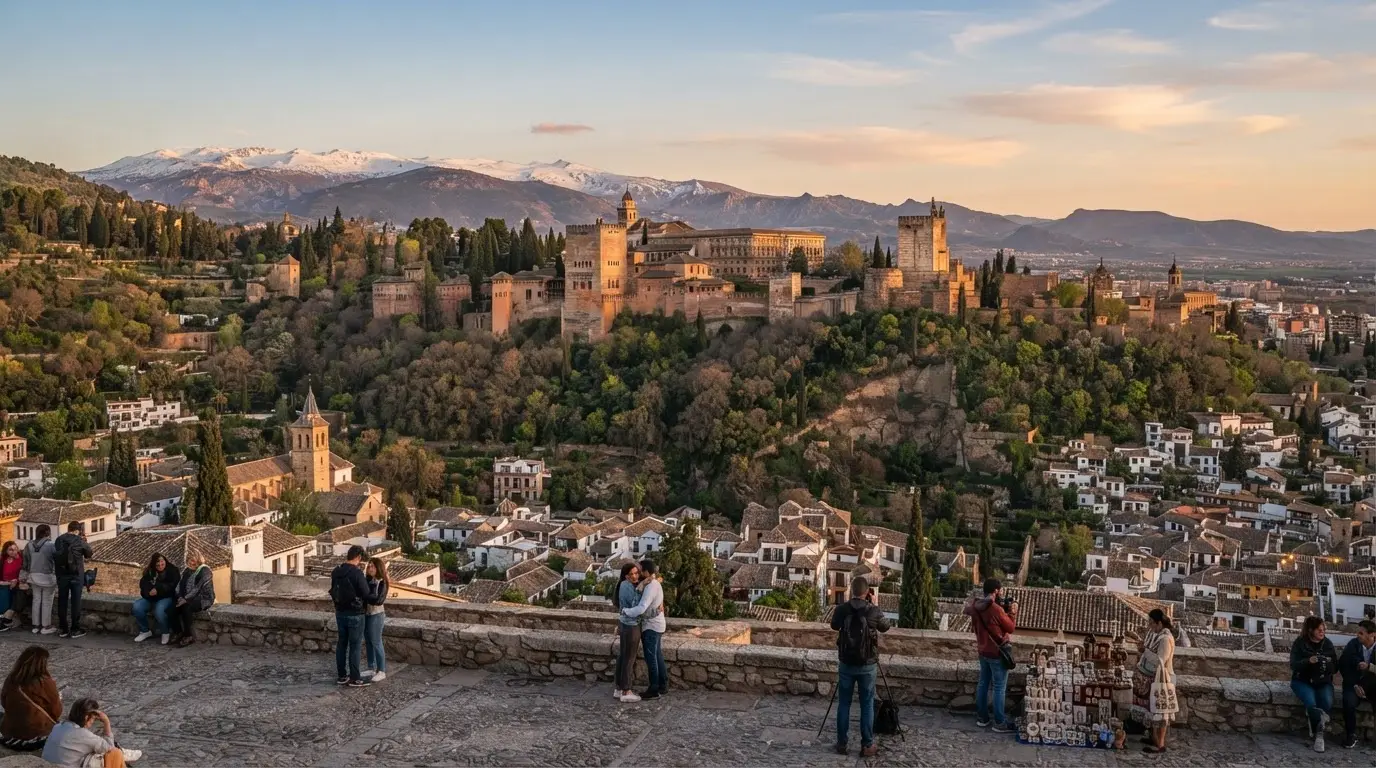
The Nasrid Civil War: How Internal Strife Gave Spain Granada
Granada didn't fall to military conquest. A Nasrid succession crisis and three-way civil war handed Ferdinand and Isabella the keys to the last Moorish kingdom.
Seven years resident in Granada. Specialist in Nasrid architecture, Al-Andalus history, and Andalusian walking routes.
Updated Published
Granada fell on 2 January 1492, but the real collapse began ten years earlier, inside the Alhambra's own walls. The Nasrid emirate did not lose a war so much as implode through a succession crisis that its enemies exploited with precision. Ferdinand and Isabella supplied the siege. The Nasrid family supplied the defeat.
By the time Emir Yusuf III died in 1417[1], the Nasrid emirate was already showing the structural flaw that would destroy it: clan loyalty consistently outweighed loyalty to the emir. Power in Granada was not a matter of orderly inheritance. It was a competition among noble factions, each attached to a particular branch of the Nasrid family tree, each prepared to back their claimant with armed force.
The dynasty had ruled since 1232[1], outlasting every other Muslim kingdom in Iberia by virtue of tribute payments to Castile and a talent for political manoeuvre. But that longevity concealed a violent interior. At least six sultans were murdered or forcibly deposed during the 15th century alone. The grand vizier position, effectively the prime ministry of the emirate, rotated between noble families who controlled it for their own ends rather than the state's.
Two families dominated these factional wars. The Abencerrajes (known in Arabic as the Banu al-Sarraj) backed one set of claimants; the Zegríes backed another. The sultan at any given moment depended on whichever faction had most recently outmanoeuvred its rival. For an emir, this meant that authority over your own court was provisional, and that a successful military campaign abroad could cost you the throne at home.
Abu'l-Hasan Ali, who became emir around 1464[2], attempted to resist this pattern with unusual force. He cut tribute payments to Castile, raided Christian territory, and executed prominent nobles who challenged him. He was ruthless by the standards of Nasrid politics, which set a high bar. He was also, by the 1470s, producing his own succession crisis. His marriage to a Christian convert named Thuraya (the Castilian sources call her Zoraya) over his existing wife Aisha meant that two sets of potential heirs existed, backed by different court factions. Aisha, protective of her son Boabdil's place in the succession, began cultivating relationships with the Abencerrajes. The fuse was already burning before anyone lit it.
The 1482 coup: a throne seized while the army was away
In the spring of 1482, Abu'l-Hasan Ali took his forces north to raid Loja, a town on the Castilian frontier.[3] It was the kind of campaign he had conducted before: aggressive, anti-tribute, designed to project strength. He left Granada with its political tensions unresolved.
Boabdil, his son by Aisha, moved immediately. Supported by the Abencerrajes of Granada and with his mother's backing, he entered Granada and seized the Alhambra. Abu'l-Hasan returned to find his own palace occupied. He retreated to Málaga, in the east of the emirate, where he still commanded loyalty. Granada was now split: Boabdil held the capital and the Alhambra, his father held the eastern territories.
Aisha's role in the coup is described in both Arabic and Castilian sources as active and deliberate[3], part of a documented pattern of Nasrid royal women's political influence covered in women of the Alhambra and the Nasrid court. She had spent years preparing for it, building the Abencerraje alliance and ensuring that the palace household was ready to move when the moment came. Her motivation was straightforward: Thuraya's sons were growing up in the Alhambra, and their position in the succession was strengthening as Abu'l-Hasan aged. Aisha acted before that process concluded.
The coup produced a divided emirate at the worst possible moment. Castile and Aragon had united through the 1469 marriage of Ferdinand and Isabella, and their joint military capacity dwarfed anything the Nasrids could field. But Ferdinand did not immediately press the advantage. He did not need to. The Nasrids were doing the work for him.
For the Abencerrajes, the coup was the most consequential bet they ever placed. They backed Boabdil because it served the clan's interests in the court power structure. Whether it served Granada's interests was not the question they were asking.
Lucena: the defeat that changed everything
In April 1483, Boabdil launched a raid into Castilian territory near Lucena, south of Córdoba.[4] The immediate purpose was probably to consolidate his authority inside Granada by demonstrating military effectiveness against Castile. The result was the opposite: his forces were routed, and Boabdil himself was captured by the Count of Cabra.
Contemporary Granadan sources were unsparing. The chroniclers who documented the Battle of Lucena called it the cause of the fatherland's destruction.[4] The capture of a reigning sultan was catastrophic: it destroyed his claim to lead Nasrid resistance, demonstrated his military incompetence to his own subjects, and placed him entirely in Ferdinand's hands.
Ferdinand's response is the most revealing thing any Christian ruler said about Granada during the entire war. His documented statement, made explicitly after Boabdil's capture, was that he would release Boabdil "to put Granada in division and destroy it."[3] This was not geopolitics as metaphor. Ferdinand released Boabdil under the Pact of Cordoba, binding the young sultan to Castilian interests: Boabdil would campaign against his own father and uncle, provide intelligence on Nasrid defences, and acknowledge Castilian suzerainty over whatever territory he held.
Recommended tours
Tours are selected for quality, not commission. We earn a small fee if you book — at no extra cost to you.
Boabdil accepted. He had no leverage. But the arrangement was structurally a betrayal of everything the emirate existed to defend. A Nasrid sultan, obligated by treaty to assist the Christian kingdom that was in the process of absorbing his own, was no longer defending Granada. He was helping to dismantle it from within.
Abu'l-Hasan, still holding the east, had meanwhile consolidated around the city of Málaga and the fortresses of the eastern kingdom. He was old and increasingly ill, but his military record was better than his son's and his resentment of Castile was genuine rather than diplomatic. He remained the clearest Nasrid voice for resistance, which is perhaps why Ferdinand was in less hurry to remove him than to release Boabdil.
Three sultans, one collapsing emirate
By 1485, the Nasrid emirate had three effective rulers. Boabdil held Granada and the Alhambra, nominally the senior claimant but bound by the Pact of Córdoba to Castile. Abu'l-Hasan held parts of the east but was ageing and losing grip. And then there was al-Zaghal, Abu'l-Hasan's brother, who in 1485 deposed the failing emir and took control of the eastern territories himself.[5]
Al-Zaghal (the name means the Valiant in Arabic) was a different kind of Nasrid from Boabdil. He had fought Castilian forces and won, inflicting several defeats that gave him a genuine military reputation. His reading of the situation was clearer than his nephew's: any arrangement with Ferdinand was a delay, not a resolution, and the emirate's only chance required unified command and a willingness to hold every fortification until the last moment.
What he faced instead was a structural impossibility. Al-Zaghal controlled the east but could not trust the west. When Ferdinand's forces pressed toward the eastern towns, al-Zaghal needed to garrison the Alhambra against Boabdil at the same time as defending each of the major eastern cities from Castilian assault:
Timeline
1482
Boabdil seizes Granada
While Abu'l-Hasan Ali campaigns at Loja, Boabdil takes the Alhambra with Abencerraje and Aisha backing. The emirate splits between Granada in the west and Málaga in the east.
April 1483
Battle of Lucena
Boabdil leads a raid into Castile and is captured by the Count of Cabra. Ferdinand negotiates the Pact of Córdoba: Boabdil is released as a Castilian vassal obligated to undermine his father and uncle.
1485
Al-Zaghal deposes Abu'l-Hasan
Abu'l-Hasan's brother takes control of the eastern territories and expels Boabdil from Granada. Boabdil returns with Castilian support, continuing the civil war.
1487
Málaga falls to Castile
Ferdinand takes Málaga after a siege. Al-Zaghal cannot relieve it because Boabdil's forces hold Granada. The entire western coast of the emirate is lost.
1489–1490
Baza, Almería, and al-Zaghal's surrender
The eastern cities fall one by one. Al-Zaghal surrenders his remaining territories and goes into exile in North Africa. Boabdil is left holding only Granada itself.
2 January 1492
Granada surrenders
Boabdil hands the city keys to Ferdinand and Isabella after an eight-month siege. He departs for North Africa in October 1493, ending the Nasrid dynasty.
Málaga, the principal port
Vélez-Málaga, its coastal dependency
Baza, the key inland fortress
Almería, the eastern terminus
The Nasrid military capacity was split not by Ferdinand but by the succession war that Aisha and the Abencerrajes had helped start in 1482.
In Granada itself, the population was not passive. The Albaicin neighbourhood, the densely settled quarter facing the Alhambra across the Darro gorge, became a political arena in its own right. Boabdil's supporters held much of it; al-Zaghal's supporters held other parts. In 1485, al-Zaghal's forces expelled Boabdil from Granada entirely, pushing him back to his Castilian allies.[5] Boabdil returned with Castilian support. The two Nasrid claimants fought over Granada's streets while Ferdinand systematically reduced the eastern cities.
The spectacle disgusted observers on both sides. Castilian chroniclers noted that the Christian army barely needed to fight a pitched battle; the Nasrids were destroying their own defensive capacity. Arabic sources from within Granada described the period in terms of grief and paralysis. The Nasrid dynasty of Granada that had produced the Alhambra, the poetry of Ibn Zamrak, and two and a half centuries of cultural production was consuming itself over a succession dispute that neither claimant could definitively resolve.
The fall of the east: how vassal status emptied the defence
Málaga fell to Ferdinand in 1487 after a siege of approximately four months. It was the most important port city in the emirate and the centre of Nasrid naval supply. Its loss isolated the eastern territories from any seaborne resupply.
Al-Zaghal could not relieve it. His forces were sufficient to have made the siege costly, but Boabdil's Castilian-backed presence in Granada meant that committing eastern forces westward risked losing the Alhambra permanently. He faced the classic problem of a defender fighting on two fronts against opponents who had coordinated their pressure. Ferdinand knew this and timed the Málaga campaign accordingly.
1487
The year Málaga fell to Ferdinand after a four-month siege, stripping the Nasrid emirate of its principal port. Al-Zaghal could not relieve it because Boabdil's Castilian-backed forces held Granada simultaneously.[5]
Boabdil's obligations under the Pact of Córdoba were not passive. The treaty required him to cooperate actively against his uncle and to keep his Granadan forces from relieving cities under Castilian siege.[4] He complied. The history of the eastern campaign from 1487 to 1490 is the history of a Nasrid sultan honouring his treaty commitments to the enemy besieging his cousin's cities. Baza fell in 1489 after a long siege in which al-Zaghal's relief forces never arrived.[5] Almería followed. Al-Zaghal, his territory reduced to nothing and facing a Nasrid claimant backed by Castile on one side and a Castilian army on the other, surrendered his remaining lands in 1490 and accepted Ferdinand's terms. He left for North Africa soon after.
The eastern collapse was not the result of military inferiority alone. The city of Granada's population at its peak was perhaps 50,000; the emirate had never been able to field armies comparable to Castile's. But the structural argument is that a unified emirate under al-Zaghal, without Boabdil's Pact of Córdoba obligations draining its defensive coherence, would have made the siege of each eastern city far more costly. Ferdinand did not need to break Nasrid military power. He had arranged, through the Pact of Córdoba, for one part of that power to be permanently unavailable to the other part.
Boabdil returned to rule a city that was now entirely encircled. He cannot have missed the irony: the Castilian support that had twice restored him to the Alhambra had also systematically removed every other Nasrid position that might have made Granada defensible. By 1491, the emirate consisted of a single city. The fall of Granada in 1492 is the last act of a story whose outcome had been decided eight years earlier at Lucena.
What Granada's collapse really teaches us
Historians of the Granada War have debated for decades whether the emirate was conquered or whether it collapsed. The honest answer is that both happened, but not simultaneously. The military conquest came last, in the form of the 1491 siege and the surrender of 2 January 1492. The collapse came first, in the decade between Boabdil's coup and Málaga's fall.
The Castilian campaign was well-organised and well-funded, drawing on revenues from the unified kingdoms in ways that neither Castile nor Aragon could have managed alone. Ferdinand was a capable commander and a calculating diplomat. But the Granada War lasted ten years[3] not because the Nasrids put up a fierce resistance, but because Ferdinand could afford to take his time. He had Boabdil as a vassal doing much of the work from inside.
The story of Boabdil, last Moorish king is often written as tragedy: a weak man caught between impossible pressures, condemned by circumstances he did not create. That reading has merit but understates his agency. Boabdil chose to make the Pact of Córdoba. He chose to comply with its terms, repeatedly, as eastern cities fell. He chose, at each moment, his own position over his emirate's survival. He was not the only person who made bad choices; the Abencerrajes, Aisha, al-Zaghal, and Abu'l-Hasan all made catastrophic decisions at various points. The civil war was a collective failure.
What the Nasrid civil war really demonstrates is the fragility of states built on faction rather than institution. The emirate had no reliable succession mechanism. Noble clans owed loyalty to their preferred claimant, not to the institution of the sultanate, and the court produced no political culture capable of distinguishing clan advantage from collective survival. The Abencerrajes and their rivals had been conducting this particular kind of politics for a century before Boabdil's coup; the coup was not an aberration but an outcome.
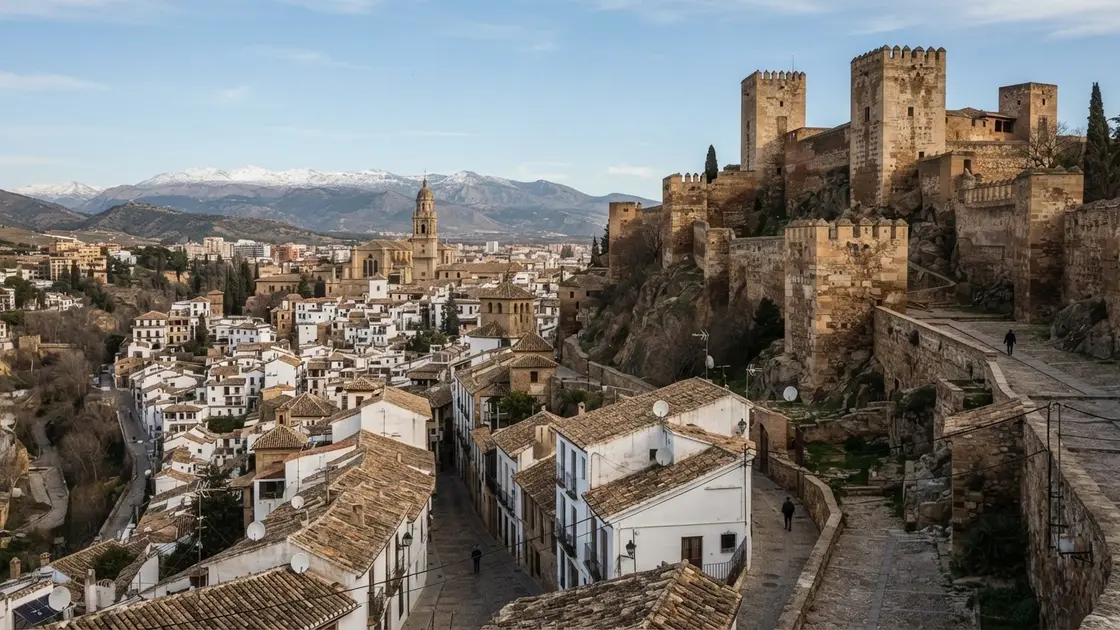
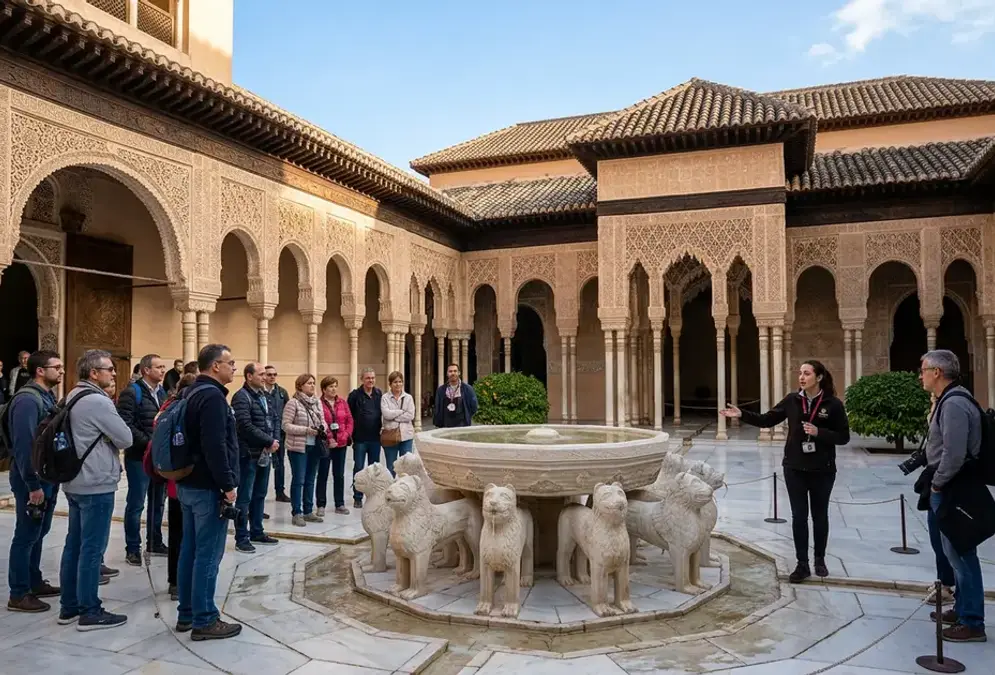
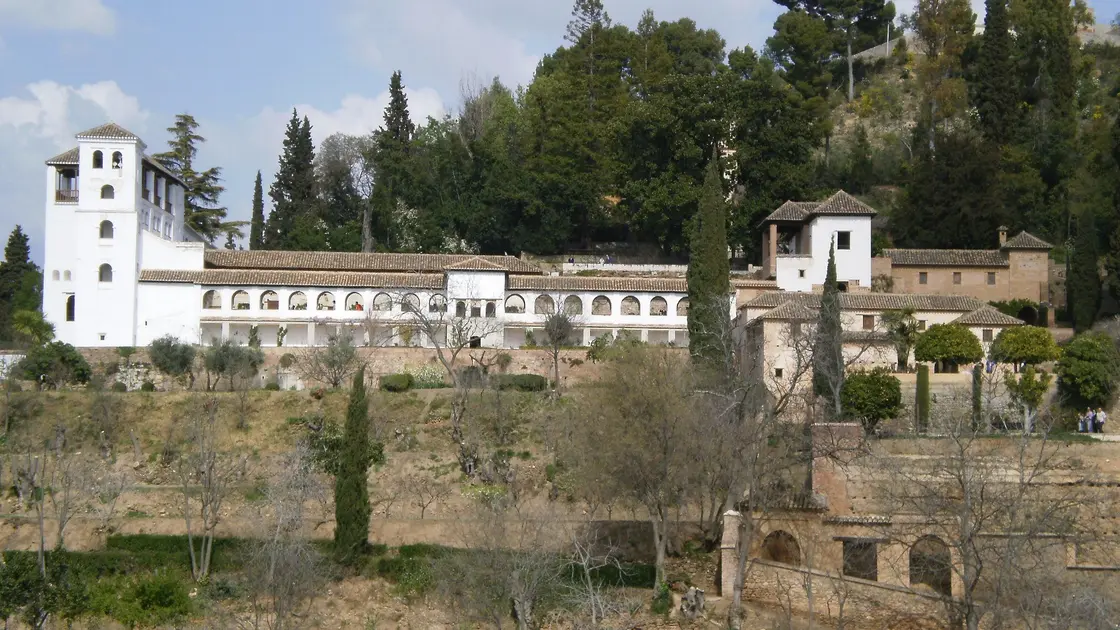
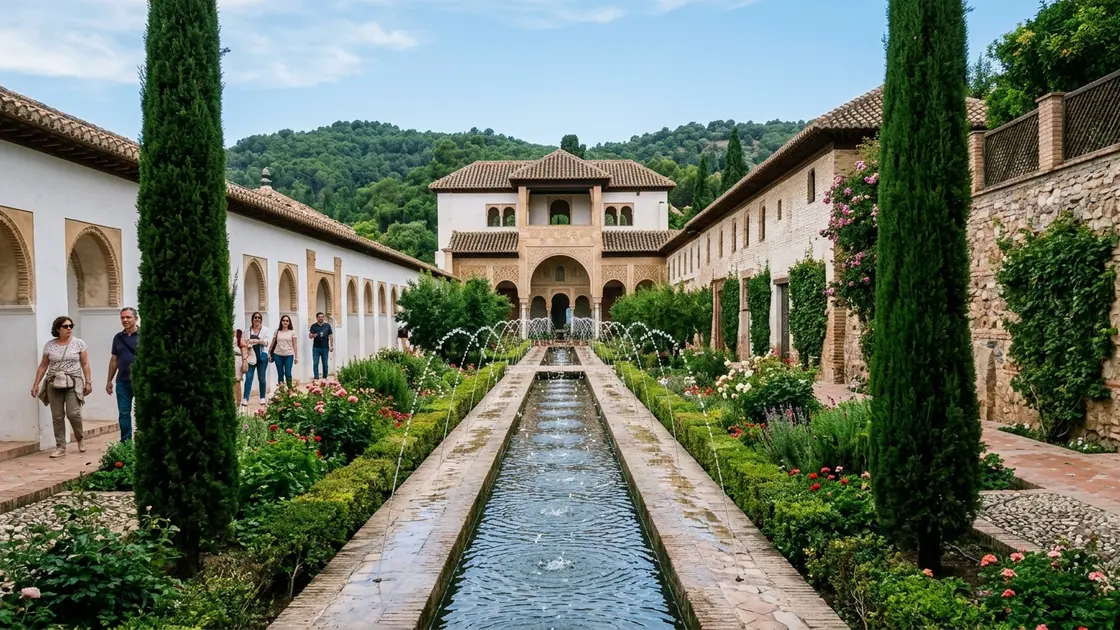
Granada today preserves the physical legacy of the dynasty that lost it. The Alhambra, the Albaicin, the Generalife gardens, the muqarnas ceilings and the marble fountains are all Nasrid work. So is the political history that handed them over. Walking the Comares Tower's battlements on a clear morning, with the vega spread out to the west where Ferdinand's army camped in 1491, it is possible to see both things at once: the extraordinary civilisation that built this, and the structural contradictions that made it impossible to defend.
Frequently asked questions
Why did the Emirate of Granada fall in 1492?
Granada fell through a combination of external military pressure from Ferdinand and Isabella and an internal succession crisis that split Nasrid military capacity for a decade. The 1482 coup by Boabdil against his father Abu'l-Hasan Ali divided the emirate into competing factions. Ferdinand exploited this by making Boabdil a Castilian vassal through the Pact of Córdoba, obligating him to work against his own relatives. The emirate never achieved unified command; each eastern city fell while Boabdil's forces stayed in Granada.
What caused the Granada War?
The Granada War (1482-1492) was triggered partly by Abu'l-Hasan Ali's decision to stop paying tribute to Castile and raid Christian territory, and partly by the internal succession crisis that followed Boabdil's 1482 coup. Ferdinand and Isabella had been consolidating Castilian and Aragonese power since their 1469 marriage; the political fragmentation of the Nasrid emirate gave them a strategic opening they exploited methodically over ten years.
Who was al-Zaghal and what was his role in the civil war?
Al-Zaghal (Muhammad XIII) was the brother of Abu'l-Hasan Ali and uncle of Boabdil. In 1485 he deposed the ageing Abu'l-Hasan and took control of the emirate's eastern territories. He was a more capable military commander than Boabdil and inflicted several defeats on Castilian forces. However, he could not defend the east from Ferdinand while simultaneously contending with Boabdil's Castilian-backed forces in Granada. He surrendered his remaining territories in 1490 and went into exile in North Africa.
What was the Pact of Córdoba?
The Pact of Córdoba was the agreement Ferdinand negotiated after capturing Boabdil at the Battle of Lucena in April 1483. Under its terms, Ferdinand released Boabdil in exchange for Boabdil accepting Castilian suzerainty and agreeing to work against his father and uncle. Boabdil was bound to assist Castilian strategic aims, including not relieving cities under Castilian siege. Ferdinand stated explicitly that he released Boabdil to put Granada in division and destroy it. The pact made Boabdil a functional instrument of Castilian policy inside the Nasrid emirate.
How did Boabdil become a Castilian vassal?
Boabdil became a Castilian vassal through the Pact of Córdoba, negotiated after his capture at the Battle of Lucena in April 1483. His military raid into Castilian territory had failed, and he was a prisoner with no leverage. Ferdinand offered release in exchange for formal vassal obligations, including campaigning against Boabdil's father and uncle. Boabdil accepted. He held the Alhambra for nine more years, but under treaty obligations that prevented him from mounting a coordinated defence of the emirate's other territories.
Who was the last sultan of Granada?
Boabdil (Muhammad XI or Muhammad XII depending on the source) was the last sultan of Granada. He surrendered the city to Ferdinand and Isabella on 2 January 1492, ending the Nasrid dynasty that had ruled since 1232. He departed for North Africa in October 1493 with other Granadan nobles under the terms of the Capitulations of Granada. His full biography is explored separately at the Boabdil article on this site.
What happened to Granada after the Nasrids surrendered?
Under the Capitulations of Granada signed in November 1491, the city's Muslim inhabitants were initially guaranteed the right to practise their religion, keep their property, and maintain their customs. These terms were progressively abandoned: Cardinal Cisneros launched forced conversions in Granada from 1499; a royal edict in 1502 then required all Muslims in Castile to convert or leave. The Morisco population, baptised Muslims who stayed, faced ongoing repression and were finally expelled from Spain altogether between 1609 and 1614. The Alhambra became a royal palace and was never demolished, which is the main reason it still stands.