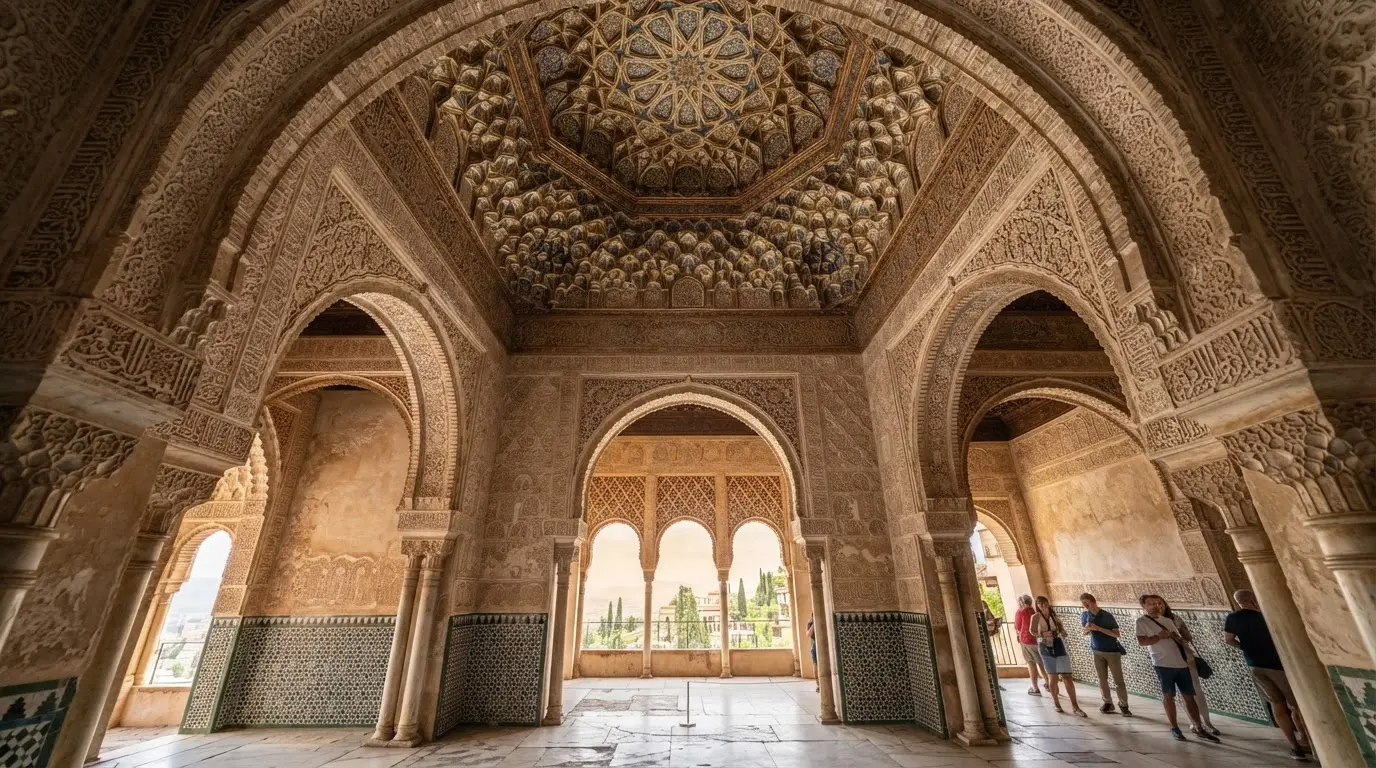

Who was Boabdil? The man behind the legend
Born around 1460 as Abu Abdallah Muhammad, Boabdil was the son of Abu al-Hasan Ali, the Nasrid sultan who had ruled Granada since 1464. The Nasrid dynasty had held power in Granada since 1232[1], a sliver of Al-Andalus that survived by a combination of tribute payments, defensive geography, and the political disunity of its Castilian neighbours. By the time Boabdil came of age, that room for manoeuvre had nearly closed.
He was the 22nd and final Nasrid sultan. Calling him the last Moorish king of Spain is technically accurate in the sense that he was the last Muslim sovereign on the Iberian Peninsula. But the title can mislead: by 1492, the Moorish world he ruled was already a reduced entity, a city-state in the mountains of Andalusia clinging to the foothills of the Sierra Nevada while Castile and Aragon consolidated around it.
To understand Boabdil, you need to understand what Granada looked like at the height of its culture rather than at its end. The Alhambra was not a ruin in 1492. Its palaces were in use, its gardens watered, its craftsmen still active. The city below the hilltop fortress had tens of thousands of inhabitants. The Albaicin, the old Moorish quarter that faces the Alhambra across the Darro valley, was dense with houses, mosques, and market streets. Granada was not declining culturally. It was losing militarily, and those are different things.
Boabdil came to power not through orderly succession but through a palace revolt in 1482. His father had a favourite concubine, Zoraya, whose sons stood to inherit the throne over Boabdil. His mother, Aixa, backed her son's claim and manoeuvred within the court. The revolt put Boabdil on the throne, but his father reclaimed it almost immediately — and the civil war between them, with his uncle Muhammad XIII (known as al-Zaghal, meaning the Valiant) eventually joining as a third claimant, would consume the final decade of Nasrid power. Ferdinand and Isabella did not simply conquer Granada. They watched its ruling family destroy much of the work for them.
The family war for the Nasrid throne
In April 1483, Boabdil led a military raid into Castilian territory and was captured at the Battle of Lucena, near Córdoba[2]. His father took the throne back. Ferdinand chose not to ransom him immediately — a prisoner Nasrid claimant was strategically more useful than a ransom payment. Over the following months, he released Boabdil in exchange for a secret agreement: Boabdil would become a vassal of Castile and work against his father and uncle. It was a humiliating arrangement, but Boabdil had limited options.
The three-way conflict between Boabdil, his father, and his uncle al-Zaghal paralysed Nasrid resistance at exactly the moment when unified defence might have made a difference. Al-Zaghal was the more capable military commander: he inflicted several defeats on Castilian forces and held the eastern part of the kingdom, including the city of Baza, until 1489. He understood what Boabdil did not, or would not — that any deal with Ferdinand was a delay, not a solution.
Boabdil finally consolidated his hold on Granada around 1487, when his father died. But by then, the territorial losses were severe. Málaga had fallen to Ferdinand in 1487 after a four-month siege[3]. Baza fell in 1489. Al-Zaghal surrendered his remaining territories in 1490 and went into exile in Morocco. Granada — the city itself and the Alhambra hilltop — was all that remained of the Nasrid kingdom.
The Alcazaba, the military fortress at the Alhambra's western tip, still shows the physical logic of the city's last defence. Standing on its towers today, you can see what the Nasrid commanders saw: the open vega to the west where Castilian forces would eventually camp, the hills of the Sierra Nevada to the south that provided a partial barrier, and the tight urban grid of the Albaicin below. A city that could be held indefinitely if supplied, and that could be strangled if supply routes were cut. That fortress was already six centuries old by Boabdil's time; its full construction history, from a 9th-century refuge fort to the 1238 Nasrid stronghold, is covered in Alcazaba Granada: a fortress history older than the Alhambra.
The surrender of Granada, 2 January 1492
The siege began in earnest in spring 1491. Ferdinand and Isabella established their camp at Santa Fe and began systematically cutting the roads into the city. The harvest failed. By autumn it was clear that Granada could not hold through another year.
Negotiations began in October 1491, conducted in secret, at night, through a series of intermediaries. The resulting document, signed on 25 November 1491[4], was called the Treaty of Granada (Capitulations of Granada). Its terms were, by the standards of 15th-century warfare, remarkably protective. Muslims could continue to practise their religion. Their laws, customs, and property would be respected. Anyone who wished to cross to North Africa could do so. Boabdil received the Alpujarras region southeast of Granada as a personal estate, along with significant financial compensation. The city's Jewish community received no equivalent guarantee: the Alhambra Decree, signed four months later, ordered their expulsion from Spain entirely.
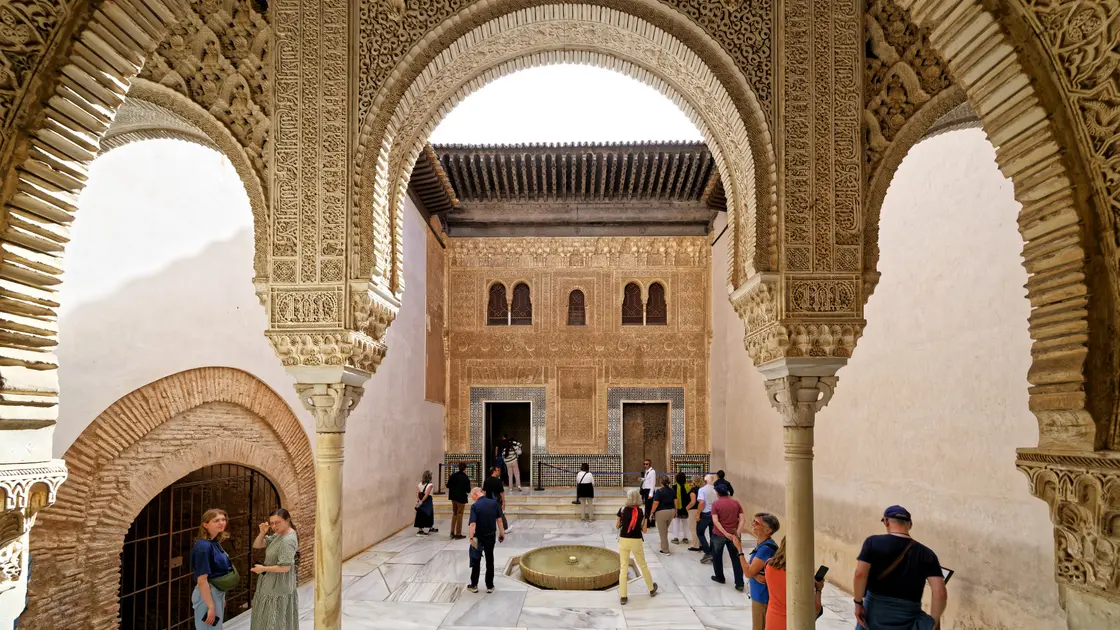
Explore nearby · Monument
Alhambra
The Alhambra is Granada's UNESCO fortress-palace: Nasrid Palaces, Alcazaba and Generalife gardens. Tickets sell out weeks ahead; book via the Patronato site.
The handover ceremony took place on the morning of 2 January 1492. Boabdil rode down from the Alhambra and met Ferdinand on the road below the city. The exact exchange is recorded in several chronicles, with minor variations. The most-cited version has Boabdil handing over the keys and saying: "God loves you very much; these, my lord, are the keys to this paradise." Ferdinand received them, then returned them to his officials. The Spanish flag went up over the Torre de la Vela — the bell tower of the Alcazaba that you can still climb today — and was visible across the vega.
Recommended tours
Tours are selected for quality, not commission. We earn a small fee if you book — at no extra cost to you.
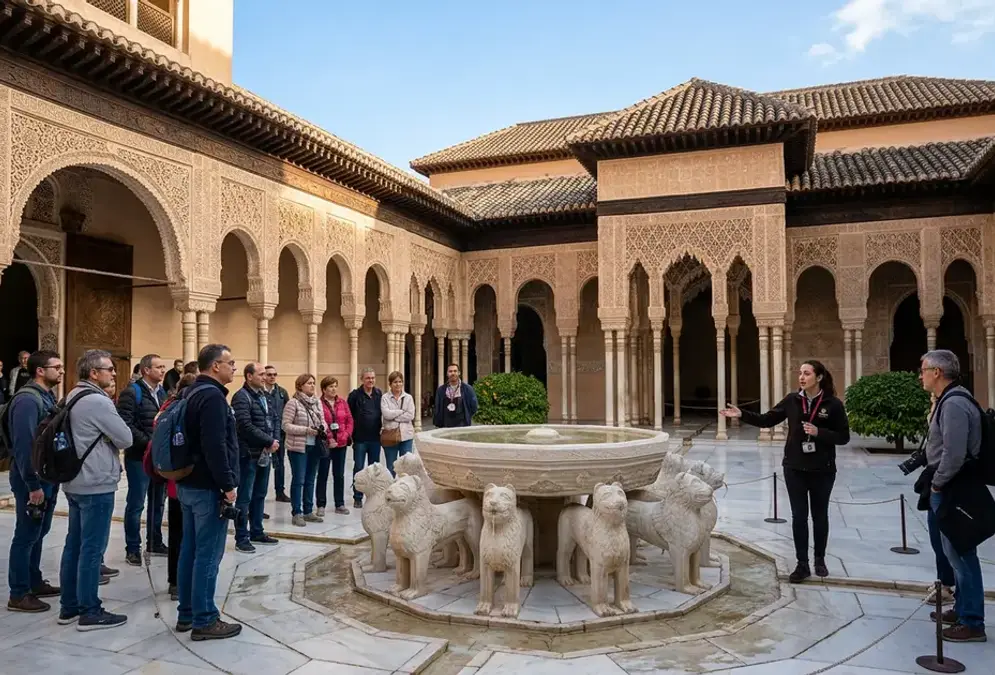
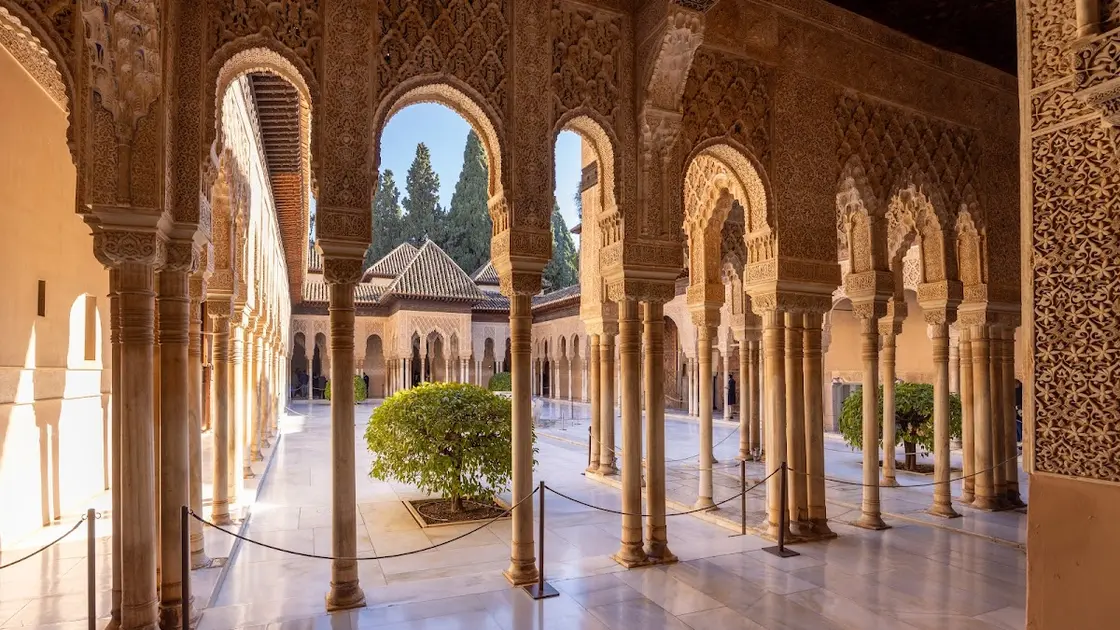
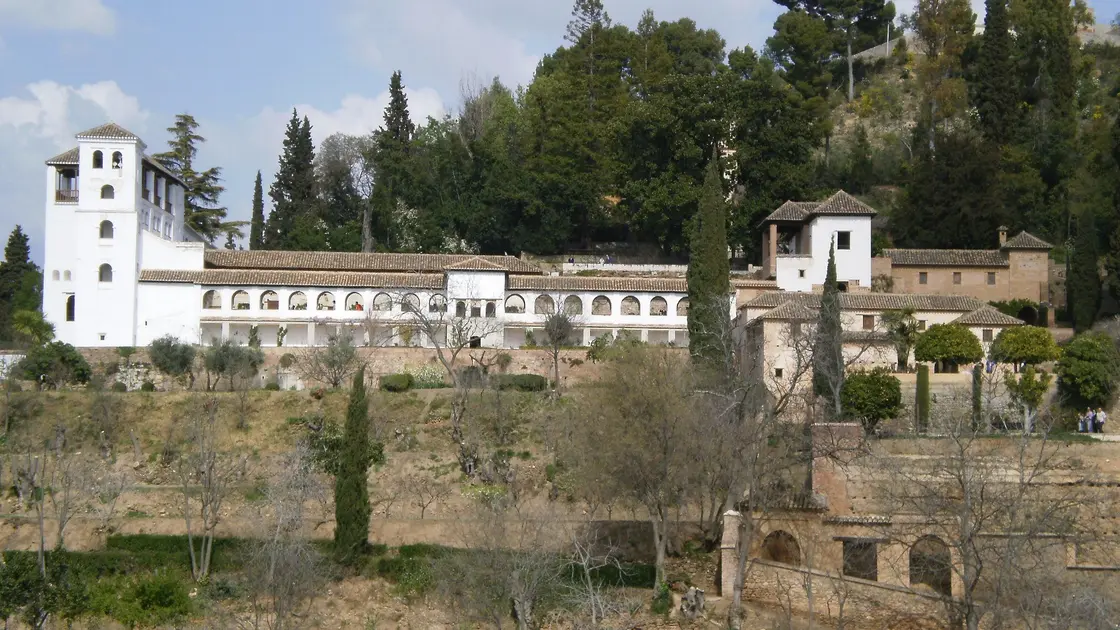
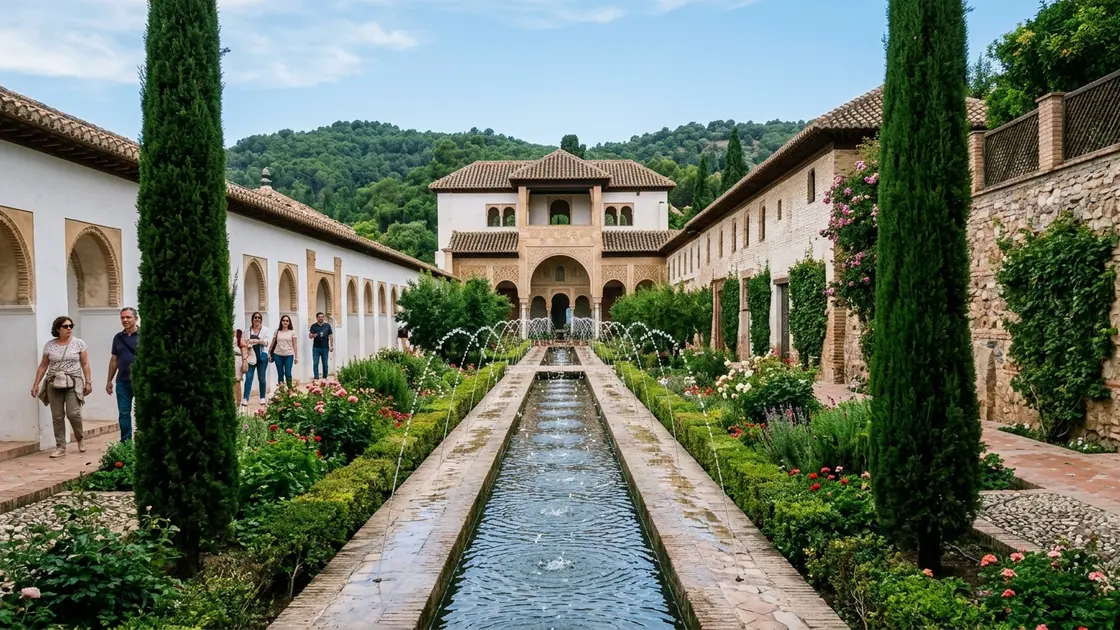
Standing inside these royal chambers now, trying to place that morning in the halls Boabdil would have walked through, the mind catches on ordinary domestic details: the muqarnas ceilings still in place, the marble floors that hadn't been walked on yet by strangers, the gardens still tended by the gardeners who had always tended them. Each of those rooms — the Mexuar, the Comares Tower, the Court of the Lions, the Hall of the Two Sisters — had been built by a specific sultan to project a specific political claim; the political biography of those rooms makes the weight of what Boabdil handed over that morning considerably more concrete. The physical fabric of the Alhambra was handed over intact because the capitulations protected it. Whatever else Boabdil failed at, he negotiated the survival of the building.
The Día de la Toma — the Day of the Taking — is still observed in Granada on 2 January each year. The ceremony involves raising the royal standard at the Torre de la Vela and a formal procession to the monarchs' burial chapel, where Ferdinand and Isabella are buried in a marble tomb commissioned by their grandson Charles I. The ceremony has become controversial in recent years: far-right groups have used it as a nationalist rally point, leading to restrictions on banners and megaphones, and counter-cultural events on the same day organised by residents who prefer a different framing of the occasion.
The Moor's Last Sigh: fact, legend, and a viewpoint near Padul
The most famous moment in the Boabdil story may never have happened.
The legend runs as follows: as Boabdil's party descended south through the mountains toward the Alpujarras, he reached a high pass near Padul, roughly 30km south of Granada, and turned to look back at the city for the last time. He wept. His mother Aixa, riding behind him, observed the scene and said: "Weep, weep like a woman, over what you couldn't defend like a man."
The spot has a name: El Suspiro del Moro, the Moor's Last Sigh. There is a viewpoint there, on the N-323 road heading south toward the coast. On a clear day, you can see Granada in the basin below, with the Alhambra visible on its hill. Whether or not Boabdil actually wept there, the geography is accurate: it is a point from which you look back at the city as you leave it.
Deep dive · Article
Granada's pomegranate symbol: from conquest to convergence
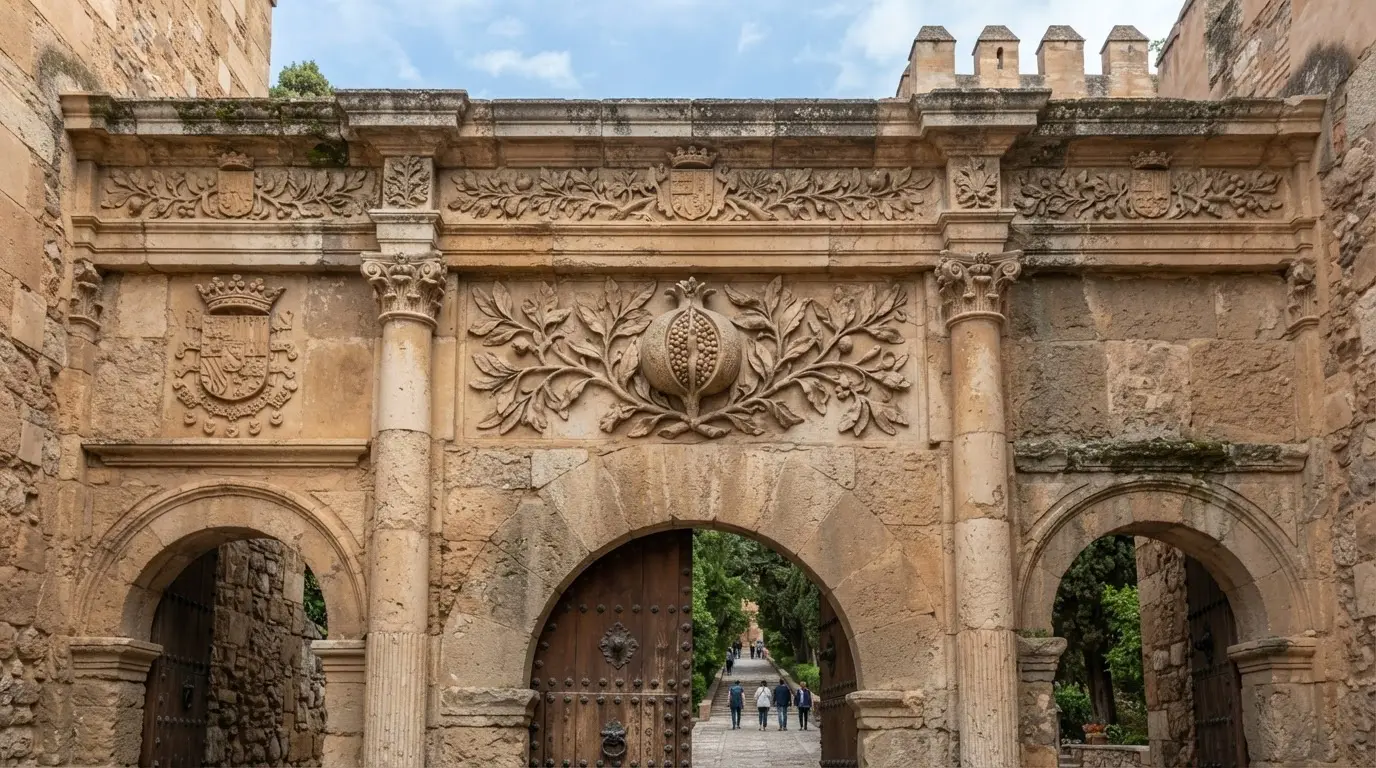
A pomegranate sits on Spain's royal coat of arms — Ferdinand and Isabella's 1492 Granada conquest trophy, once revered by Nasrid rulers as paradise's fruit.
The line attributed to Aixa appears first in 16th-century chronicles, written by people who had no direct source for it. It may be entirely invented. What it does, regardless of its truth, is enact a specific cultural judgement: that losing Granada was a failure of manhood, of nerve, of will. That a stronger leader would have held the city. This reading was convenient for several audiences — for those who needed to explain the fall of al-Andalus without implicating the structural military and economic imbalance between a united Castile-Aragon and the isolated Nasrid remnant.
Modern historians tend to be more careful. The military situation in 1491 was not close. Boabdil had no relief force coming, no naval support, no food in the city. The question is not why he surrendered, but whether the terms he negotiated were the best available — and here the record is clearer. The Granada Capitulations were more protective than most surrender documents of the era. That those terms were later violated, when Cardinal Cisneros forced mass conversions in 1502 and dismantled the agreement Boabdil had signed, was not Boabdil's failure. It was Cisneros's.
Life after Granada: the Alpujarras, then Fez
The Granada Capitulations gave Boabdil the Alpujarras — a rugged mountain region southeast of the city, with around 50 villages and the agricultural land they controlled. He arrived there in January 1492 and spent the following year managing an estate that was, by any objective measure, a comfortable exile within his own former kingdom.
It didn't last. By October 1493, he had decided to cross to North Africa, taking with him more than 1,100 courtiers, servants, and members of the Nasrid household[2]. The decision may have been pragmatic: surrounded by a hostile Christian administration, holding territory that remained legally his but practically insecure, living as a vassal prince in what was now Castilian territory. The crossing to Fez offered independence, or at least the appearance of it.
Read next · Monument
Generalife
The Nasrid sultans' summer estate above the Alhambra, with terraced gardens and the Patio de la Acequia, a 49-metre water garden from the 14th century.
In Fez, he built a palace and lived as an exile prince for the remaining years of his life. The exact date of his death is uncertain — sources give dates ranging from 1527 to 1533. He may have died fighting: one chronicle places him at the Battle of Oued el-Abid in 1527, where a Nasrid prince was killed alongside his son. If that was Boabdil, he died in a battle for a Moroccan sultan's cause, far from the mountains where he had been born.
His descendants remained in Fez for several generations. The Nasrid bloodline continued in North Africa, though it carried no political weight. The name Boabdil passed into memory — first as a symbol of failure, eventually as something more complicated.
For visitors to Granada who want to follow his route out of the city, the road south through Alhendín toward Padul follows roughly the same geography. The Alpujarras themselves — the villages of Lanjarón, Órgiva, Capileira — are a destination in their own right, but knowing that Boabdil spent a year there before his final departure adds a layer to the landscape.
How Granada remembers Boabdil today
Granada's relationship with Boabdil is layered in a way that no single visit can fully unpick. The city stages the Día de la Toma every January 2nd, but also hosts counter-events. It preserves the Alhambra he handed over intact, but the official ceremony at the Royal Chapel celebrates the monarchs who took it from him. He has no statue in the city, no street named for him, no museum dedicated to his reign. The Royal Chapel's sacristy museum, however, preserves something Isabella herself assembled: the private Flemish painting collection she bequeathed here, including works by Van der Weyden and Memling. The Flemish masterpieces in the Royal Chapel sacristy are the art Isabella chose for her own devotion — a dimension of the queen who received Boabdil's keys that most visitors miss entirely.
The literary legacy is more generous. Washington Irving arrived in Granada in 1829 and spent several months living inside the Alhambra itself, an arrangement permitted by the governor. His Tales of the Alhambra (1832) did more than any political tract to make Granada's Moorish past romantic to a European audience. Boabdil appears in it as a figure of pathos and dignity, not contempt. John Dryden's play The Conquest of Granada (1672) had already given English audiences a theatrical Boabdil seventy years before Irving. Salman Rushdie's The Moor's Last Sigh (1995) borrowed the legend's title directly, though Rushdie's Moor is not literally Boabdil.
The modern historical reassessment is more measured than the literary one. Boabdil was not a great military commander. He did not resist effectively. But the argument that he could have held Granada if he had fought harder collapses when you examine the actual resources: the city was blockaded, food had run out, and there was no realistic prospect of relief. The Capitulations were a negotiated outcome, not an abject surrender. That the Castilian crown later violated them is a separate verdict.
For visitors standing in the Alhambra today, particularly in the Nasrid Palaces, it's worth holding both things at once: that this building exists as completely as it does because Boabdil handed it over rather than burning it or letting it be taken by storm, and that the city below it changed fundamentally because of what happened on 2 January 1492. Those two facts don't cancel each other. They're both true, and Granada lives inside the tension between them.