Nasrid Tribute Payments: How Granada Survived Castile
Muhammad I's 1246 pact bound Granada to pay Castile in gold, silver, and silk-funded tribute, a bargain that funded the Alhambra and lasted 250 years in total.
Seven years resident in Granada. Specialist in Nasrid architecture, Al-Andalus history, and Andalusian walking routes.
Published
Granada's Nasrid emirate didn't outlast every other Muslim kingdom in Iberia by fighting harder. It outlasted them by paying, year after year for two and a half centuries, buying survival with parias tribute funded by the kingdom's silk trade. The arrangement worked until 1477, when an emir decided he'd rather fight.
A defeated emir's opening bid: the 1246 pact with Castile
Muhammad I ibn al-Ahmar did not build the Nasrid emirate on military strength. He built it on a calculation: that survival mattered more than dignity. By the mid-1240s he had consolidated Granada, Málaga, and Almería under his rule, but Ferdinand III's armies were pushing south with a speed no Muslim ruler in Iberia had managed to slow. Córdoba had fallen in 1236. Seville would follow within a decade. Every remaining Muslim territory faced the same choice: resist and be crushed, or negotiate while there was still something left to negotiate with.
Muhammad I negotiated. In March 1246, Muhammad I surrendered the city to Ferdinand III of Castile in exchange for peace, agreeing to pay Ferdinand an annual tribute of 150,000 maravedís[1], paid in gold, silver, or wheat depending on the harvest and the state of the Nasrid treasury. The pact went beyond money: Muhammad I also agreed to supply auxiliary troops for Castilian campaigns against other Muslim cities in the years that followed, surrendering any claim to territory conquered east of the Guadalquivir in the process[2]. A Nasrid emir was, within a few years of founding his own dynasty, fighting alongside the king who would eventually inherit everything else.
The broader pattern had begun a decade earlier. Muhammad I pragmatically shifted strategy in 1236, aiding the Christian capture of Córdoba from Ibn Hud in exchange for nominal vassalage, tribute obligations, and military non-aggression[3], a deal that let him neutralise rival Muslim factions and secure control of Málaga and Almería. The 1246 pact with Ferdinand III formalised what had already become his governing method: pay, ally, survive. It is worth being precise about what this bought. Not independence: Granada was now a formally subordinate tributary state acknowledging Castilian suzerainty. What it bought was time, and a border Castile had no immediate reason to cross. Every other independent Muslim territory in the peninsula fell within Muhammad I's own lifetime. Granada did not. The Nasrid dynasty he founded in 1232 would outlast his own reign by two and a quarter centuries, and the mechanism that carried it there was set the year he signed this treaty.
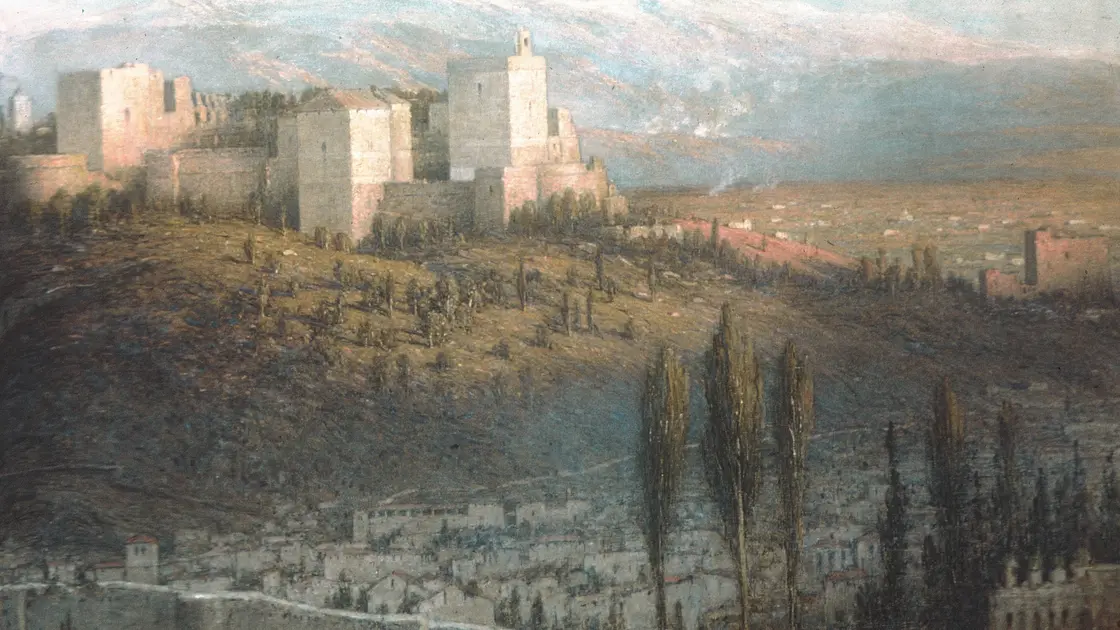
The 1246 pact also set a template every subsequent Nasrid ruler would reach for whenever the alternative got worse: cede a border town, sign a truce, pay what was asked, and use the resulting peace to build. The earliest Alcazaba fortifications, and later the palace complex that became the Alhambra, rose on land bought with exactly this kind of settlement.
What parias actually meant: tribute as a running cost of statehood
The word parias predates the Nasrids by two centuries. It described the payments the fragmented Muslim taifa kingdoms of 11th-century Iberia made to Christian rulers for protection and non-aggression, a system Granada revived and then ran longer than any taifa ever managed. This was not a one-off ransom. It was an annual, recurring line in the Nasrid treasury, renegotiated at almost every change of monarch on either side of the frontier, and it did not get cheaper with time.
Tribute demands grew heavier as the fourteenth and fifteenth centuries wore on. The currency shifted too: Muhammad I's original treaty had specified maravedís, and later demands increasingly called for gold doblas, a harder currency Castile could pour straight into its own wars.[4] The heaviest jumps in demand tended to follow Nasrid military defeats rather than Castilian generosity running dry: after the 1340 rout at Río Salado and the loss of Algeciras in 1344, tribute terms tightened without any territorial gain to show for it.[4]
Truces were rarely permanent either. Most ran for a fixed term, often close to the twenty years Muhammad I had originally negotiated, after which both sides renegotiated, sometimes raising the price, sometimes lowering it if Castile itself was distracted by wars against Aragon, Portugal, or its own nobility. Granada's negotiators learned to read Castilian internal politics as closely as their own; a civil war in Castile was worth as much to Granada's treasury as a good silk harvest.
Paying tribute did not buy permanent peace. Nasrid Granada and Castile fought repeated border wars across two and a half centuries, and the tribute clock reset after nearly every one. What paying tribute bought was a lever short of war: pay more, buy another decade. Historians increasingly describe the Nasrid approach less as resistance and more as diplomatic accommodation: a semi-autonomous buffer state absorbing pressure instead of confronting it head-on.
Funding the bill: silk, mulberries, and the Alcaicería
Tribute at this scale could not be paid from taxes on wheat and olives alone. Granada's answer was silk, an industry the Nasrids built into the most disciplined export economy in Iberia. Silk became one of the Nasrid economy's chief resources, and by the time of the 1492 reconquest a large share of the population, rural and urban alike, made their living from the industry[5]. Its reputation for quality traced to the mulberry trees grown across La Alpujarra, in villages such as Cástaras, Trevélez, and Pitres, whose climate suited the trees perfectly[6]. By the 15th century, Almería had become a weaving centre in its own right, producing more than ten varieties of silk, much of it exported raw to be finished in Genoa, Flanders, and England.
Every stage of that trade was taxed through traditional Islamic levies: zakat on Muslim wealth, jizya poll tax on non-Muslims, and kharaj land tax on agrarian production, with additional customs duties layered on top of silk exports[7], substantial enough to fund a standing defence budget and, in bad years, the tribute payment itself.
The Alcaicería as customs house
None of that revenue could be collected on trust. Granada channelled its entire silk trade through the Alcaicería, the enclosed, gated market where every skein had to be registered before it could legally change hands. The Municipal Archive describes the Alcaicería as a hybrid of exchange hall and customs house. Producers presented skeins; officials checked origin and weight; lots could be auctioned; taxes were deducted[8]. A 1501 royal letter reiterated that hank silk from the Kingdom of Granada had to be sold in the Alcaicerías of Granada, Málaga and Almería[8], a rule aimed less at consumer convenience than at keeping every transaction inspectable and taxable. A merchant caught selling silk outside the Alcaicería's walls was evading a revenue system that funded the army guarding the Castilian frontier. The full story of that market, its 152 shops, and what survives of it today is told separately in Granada's silk road and the Alcaicería.
A distributed economy underwrote a single treasury
The silk that passed through the Alcaicería's gates started far from the palace. Sericulture was dispersed across the kingdom; spinning and preliminary processing could take place in rural or domestic settings; merchants moved raw silk; urban specialists handled later stages[9]. Genoese merchants, established in Málaga's port with their own trading colony, moved the finished product into Mediterranean shipping networks and extended the credit that kept the whole system liquid, a chain running from mountain villages to Italian ledgers, with the Nasrid treasury taking its cut at every stop along the way.
Villages across the Alpujarra built entire local economies around a handful of mulberry trees and the seasonal labour of silkworm-rearing, a pattern of dispersed rural production that outlived the Nasrids by centuries. Christian Granada kept taxing Alpujarra silk long after 1492, for much the same reason the Nasrids had: it worked.
Playing both sides: Marinid alliances and frontier diplomacy
Vassalage to Castile was never Granada's only card. From the earliest Nasrid decades, the emirate cultivated ties across the Strait of Gibraltar with the Marinid Sultanate of Morocco, a relationship that let a Castilian tributary act, when it needed to, as a Muslim ally against a Christian threat. Muhammad I ibn al-Ahmar prioritized internal stabilization and external accommodation to preserve the nascent emirate amid Christian encirclement[10], and Marinid support was one more accommodation in a strategy built entirely from them.
The alliance cut both ways and was never free. Marinid troops crossed into Iberia to fight alongside Granada more than once, most disastrously at the Battle of Río Salado in 1340, where a combined force was routed by a Castilian-Portuguese-Aragonese coalition. Algeciras, a key Nasrid port, fell to Castile four years later in 1344. Both losses tightened the very tribute terms the Marinid alliance had been meant to relieve, proof that a second patron did not cancel out the first; it just added a second set of obligations to manage.
Recommended tours
Tours are selected for quality, not commission. We earn a small fee if you book — at no extra cost to you.
The relationship was never purely defensive, either. Nasrid rulers occasionally invited Marinid forces onto Iberian soil specifically to counterbalance Castile, then found those same forces difficult to dislodge once the immediate threat had passed. Foreign help, in the frontier politics of medieval Iberia, rarely arrived without its own price attached.
By the 15th century, Marinid power in North Africa was itself fading, and the alliance that had once given Granada leverage against Castile became unreliable exactly when the Nasrids needed it most. Diplomats like Ibn al-Khatib, the Granadan vizier whose career spanned decades of exactly this kind of frontier negotiation, understood the arithmetic: Granada could play Castile and the Marinids against each other only as long as both sides believed the other mattered. Once Castile stopped believing that, Granada's second card was worthless.
When the bargain broke: 1477 and the Granada War
The parias system survived for 230 years because every Nasrid emir before Abu'l-Hasan Ali understood the arithmetic Ibn al-Khatib had spelled out: tribute was humiliating but survivable, and the alternative was not. In the late 1470s, Abu'l-Hasan Ali stopped paying the annual tribute to Castile — a longstanding obligation under prior emirs that symbolized nominal submission — rejecting the parias system that had preserved the emirate's existence. That rupture, combined with escalating border raids on both sides over the following years, helped trigger the Granada War[11]. It was among the most consequential decisions any Nasrid ruler made in two and a half centuries, and it was made by choice, not necessity.
Ferdinand and Isabella, newly unified through their own 1469 marriage and consolidating power across Castile and Aragon, did not need much provocation. The tribute cutoff gave them a clean casus belli and a target that could no longer claim the protection of a standing treaty. What followed was the ten-year Granada War: a conflict fought not against a defiant, unified kingdom but against an emirate that spent much of the war also fighting itself, as detailed in the separate account of the Nasrid civil war and succession crisis.
Timeline
1246
Vassalage formalised
Muhammad I surrenders the city and agrees to pay Ferdinand III of Castile 150,000 maravedís a year.
1340
Río Salado defeat
A Nasrid-Marinid force is routed by a Castilian-Portuguese-Aragonese coalition; Algeciras falls four years later.
1430s
Tribute in gold doblas
Payments increasingly shift to gold doblas, a harder currency than the maravedís of the original treaty.
1477
Abu'l-Hasan Ali stops paying
The emir ends 230 years of continuous tribute, removing Granada's treaty protection.
1492
Granada surrenders
Boabdil hands the city to Ferdinand and Isabella on 2 January, ending the Nasrid dynasty.
The first Castilian campaigns of the 1480s targeted the emirate's border fortresses one by one: Alhama in 1482, Ronda in 1485, Málaga in 1487, each siege chipping away at territory the tribute system had never needed a garrison to defend, because tribute, not walls, had been Granada's actual first line of defence for two centuries.
Granada surrendered on 2 January 1492. The fall of the Nasrid emirate is usually told as a story of military conquest, and in its final decade it was. But the 230 years that preceded 1477 were not military resistance at all. They were tribute, paid on time, funded by silk, renegotiated whenever Castile's price went up. The war came only once an emir chose to stop paying.
The verdict: strategy or slow surrender?
Two hundred and fifty years is a long time to call anything a stopgap. By any reasonable measure, the Nasrid tribute system worked: it kept the last independent Muslim kingdom in Western Europe alive for nine generations after every comparable taifa had been absorbed. Judged purely on survival, paying Castile was the correct strategy, and Muhammad I deserves more credit for that calculation than the standard telling of the Reconquista usually gives him.
Judged on anything else, the picture is less flattering. Parias bought time, not sovereignty. Every tribute payment was also an admission of Castilian suzerainty, repeated annually for two and a half centuries, a slow, compounding erosion of the idea that Granada was truly independent at all. The silk economy that funded the tribute also, by the same logic, funded the relationship of submission that eventually made resistance impossible: an emirate that had spent 230 years training its institutions to pay rather than fight had none of the muscle memory it needed once paying stopped being an option.
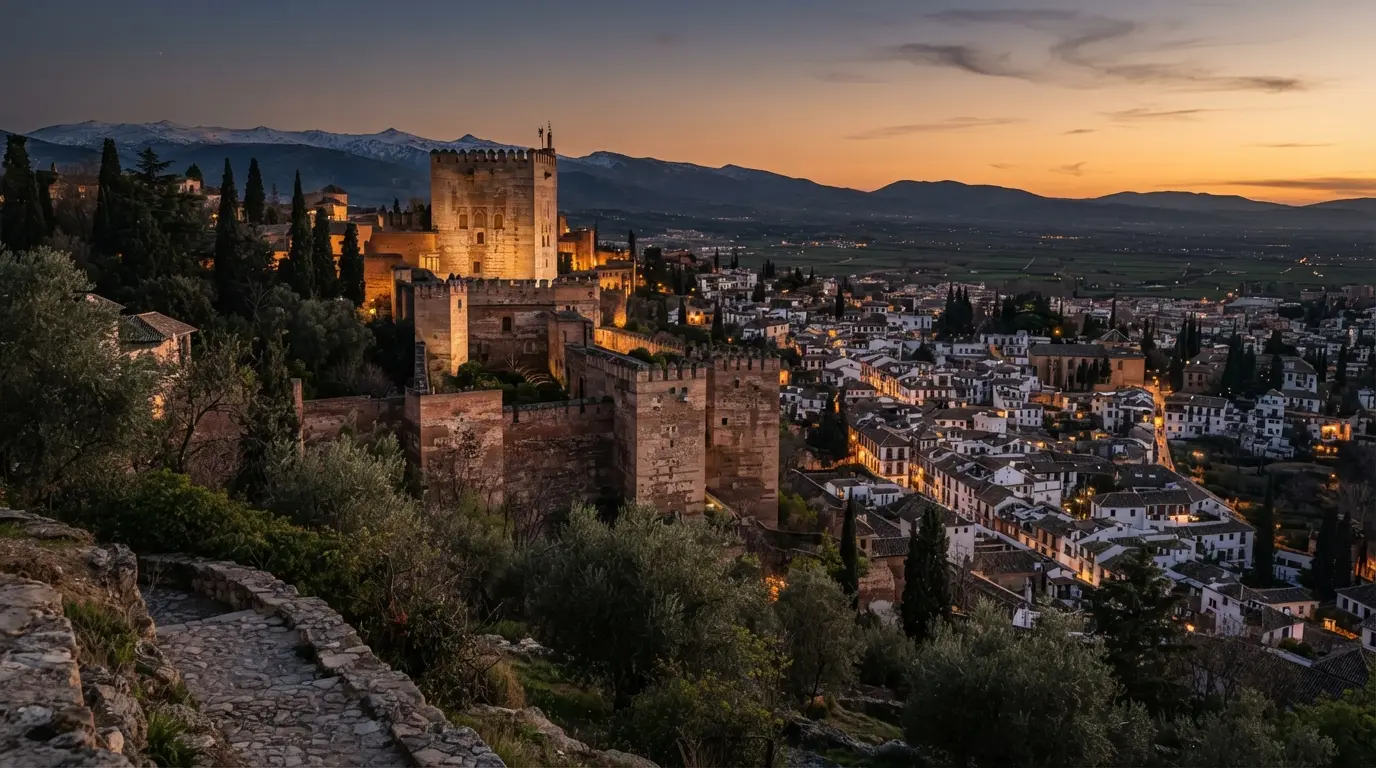
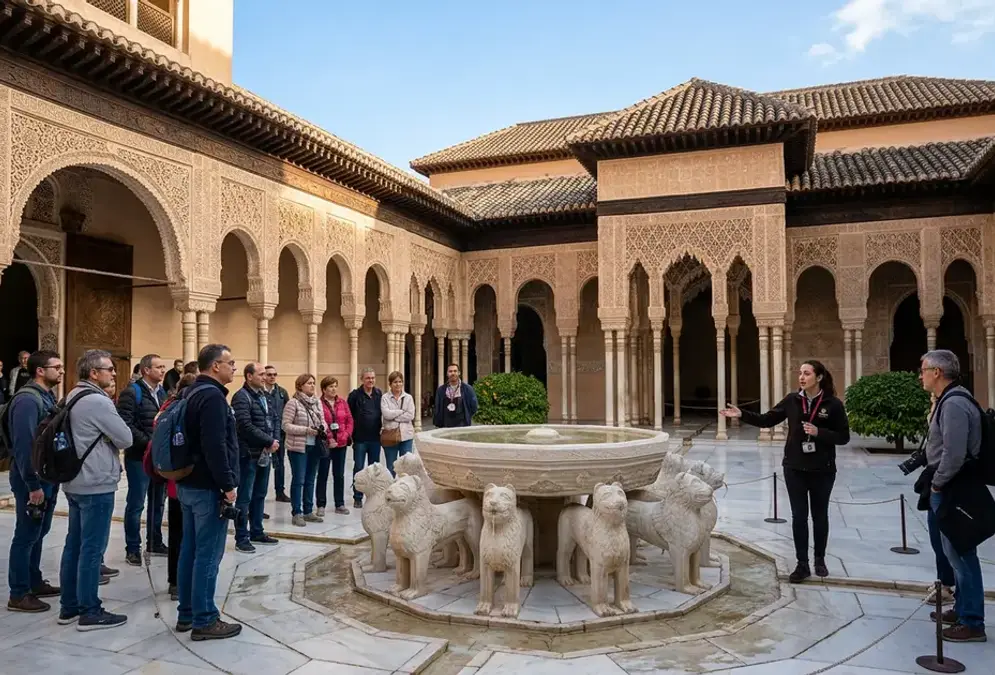
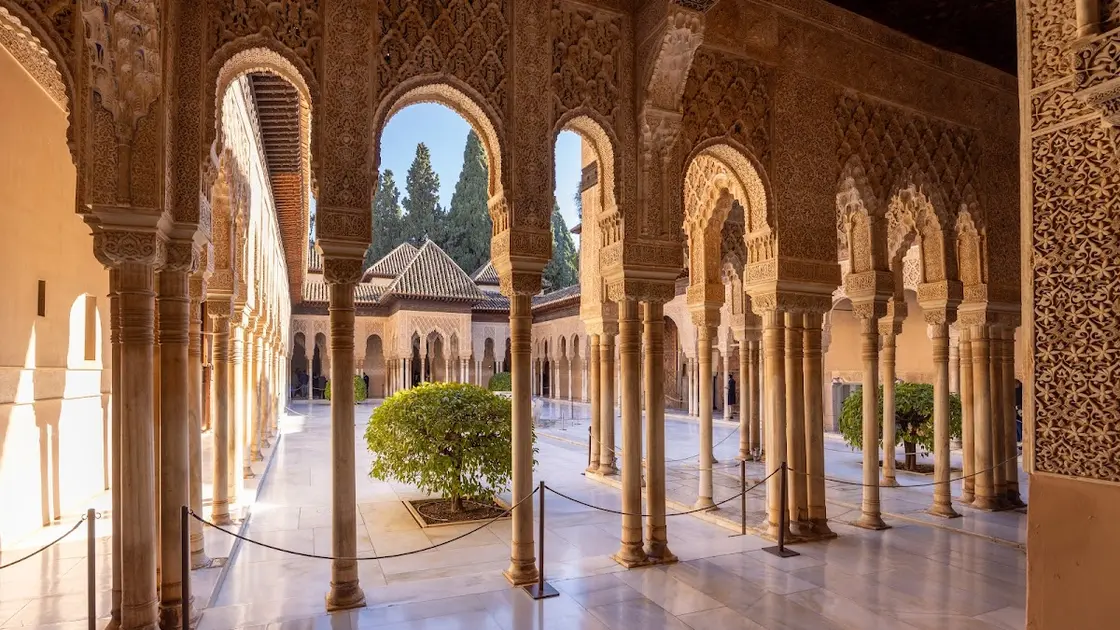
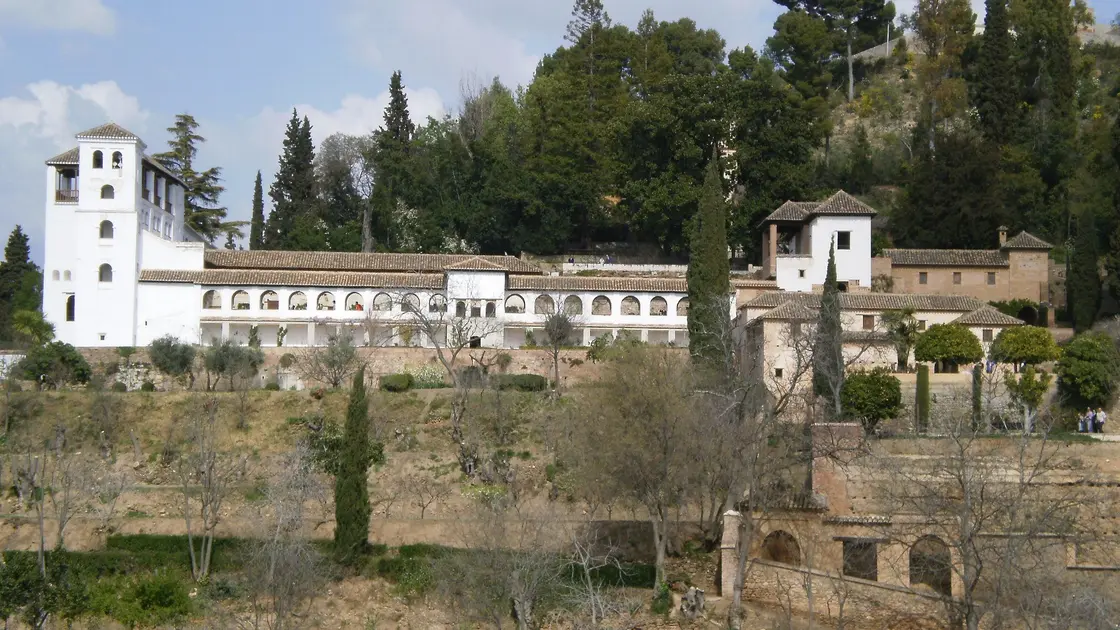
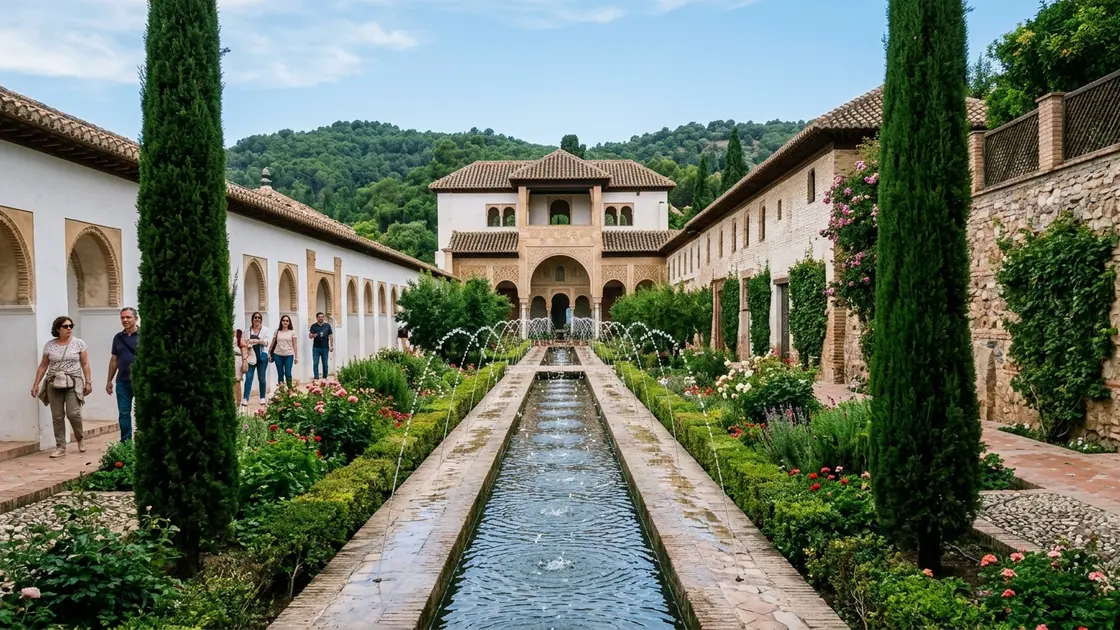
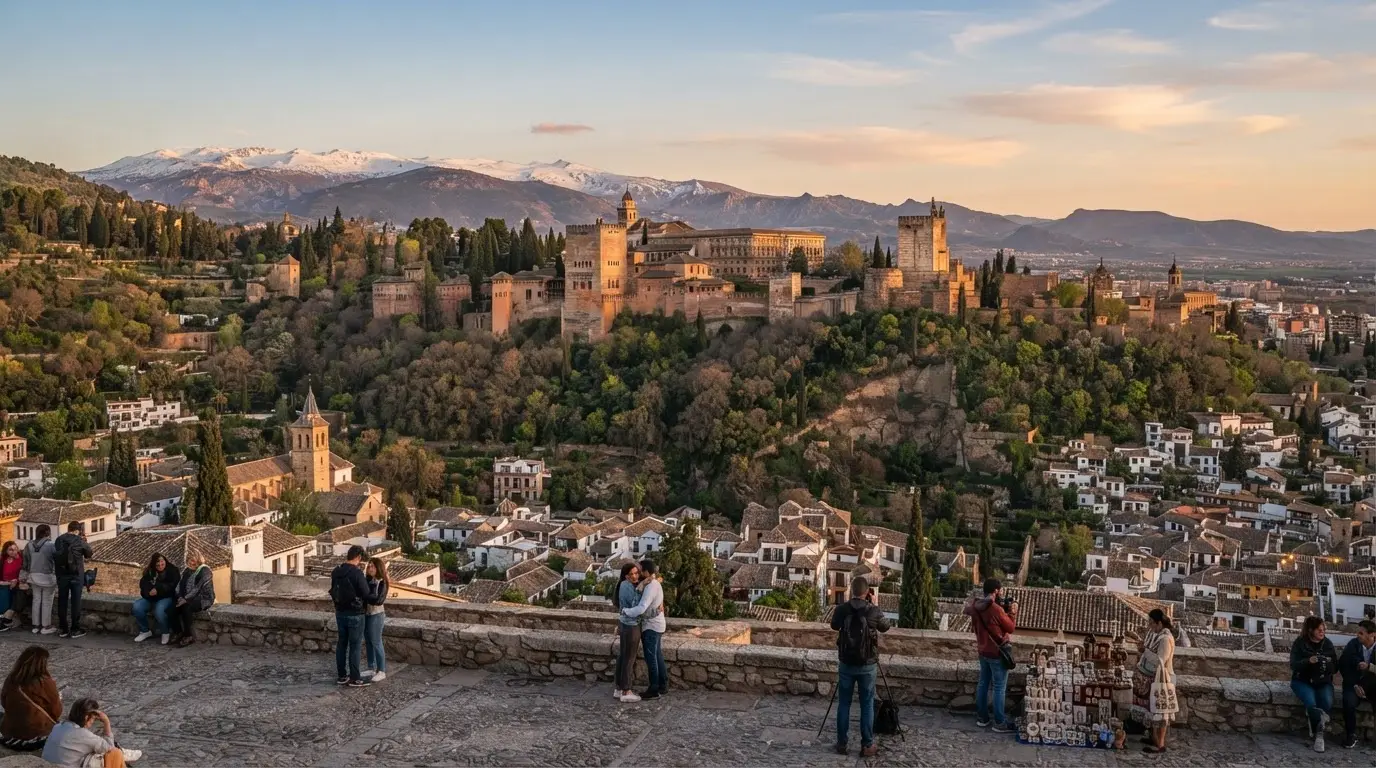
What Granada's Nasrid dynasty actually built with those 250 years is not in question. The Alhambra, the Generalife, the muqarnas ceilings and the marble courtyards are Nasrid work, financed in large part by the same tribute economy this piece has traced. Standing on the Alcazaba's walls with the vega spread out below, it is worth remembering that the view itself was bought, paid for one taxed skein of silk at a time, to a kingdom that eventually stopped needing to be paid at all.
Visitors who want to see where this economy actually lived can still trace it: the Alcaicería's narrow lanes near the Cathedral, the mulberry-terraced villages of the Alpujarra, and the Alcazaba's original defensive walls, laid down in the very years the first tribute payments were negotiated.
Frequently asked questions
How did Granada survive as an independent kingdom surrounded by Christian powers?
Granada survived through diplomatic accommodation rather than military resistance. Starting with Muhammad I's 1246 pact with Ferdinand III of Castile, the Nasrid emirate paid annual tribute (parias) in exchange for territorial security and a non-aggression guarantee. This tributary relationship, renegotiated repeatedly over 230 years and funded largely by the silk trade, kept Castile from conquering Granada until an emir stopped paying in 1477.
What was the Nasrid tribute system and how did it work?
The Nasrid tribute system, known as parias, required Granada's emirs to pay Castile an annual sum, starting at 150,000 maravedís under Muhammad I's 1246 treaty, in exchange for peace and formal vassal status. Payment could be made in gold, silver, or wheat. The amount was renegotiated at changes of monarch and grew heavier after Nasrid military defeats, with payments increasingly demanded in gold doblas by the 15th century.
How did silk production fund Granada's military and tribute payments?
Granada's silk industry, centred on mulberry cultivation in La Alpujarra and weaving workshops in Almería, generated the customs revenue that paid for both defence and tribute. All silk had to be registered and taxed at the Alcaicería, Granada's enclosed silk market, where customs duties were applied to exports before they reached Genoese merchants and onward Mediterranean markets.
Why did Granada pay tribute to Castile for 250 years?
Granada paid tribute because the alternative, demonstrated by the fall of Córdoba in 1236 and Seville in 1248, was conquest. Muhammad I calculated that accepting vassal status and paying an annual sum was cheaper than fighting a stronger power outright. Every Nasrid ruler after him inherited the same calculation until Abu'l-Hasan Ali broke with it in 1477.
What was the relationship between the Nasrid Emirate and the Marinid Sultanate?
The Marinid Sultanate of Morocco was Granada's secondary diplomatic lever, offering Muslim military support that let the Nasrids counterbalance Castilian pressure. The relationship was costly rather than free: joint forces suffered a major defeat at Río Salado in 1340 and lost Algeciras in 1344, and Marinid support became unreliable by the 15th century as Marinid power in North Africa declined.
What is parias in the context of medieval Christian-Muslim relations in Spain?
Parias were tribute payments made by weaker rulers to stronger ones in exchange for peace, protection, or non-aggression. The system originated among the fragmented Muslim taifa kingdoms of 11th-century Iberia, which paid Christian rulers to avoid conquest. The Nasrid emirate of Granada revived the practice from 1246 and sustained it longer than any earlier taifa, turning an emergency measure into a 230-year governing strategy.
What happened when Granada stopped paying tribute to Castile?
When Abu'l-Hasan Ali ceased tribute payments in 1477, he removed the treaty protection that had kept Castile from attacking for over two centuries. Ferdinand and Isabella, newly consolidated through their own dynastic union, used the lapse as grounds for war. The resulting Granada War (1482-1492) ended with the surrender of the city on 2 January 1492 and the collapse of the Nasrid dynasty.
“In exchange for peace, Muhammad surrendered the city and agreed to pay Ferdinand an annual tribute of 150,000 maravedíes—an amount that became Ferdinand's most important source of income. This agreement was made in March 1246.”
“To secure survival, he forged a vassalage treaty with Ferdinand III that year, surrendering claims to conquered lands east of the Guadalquivir, committing to annual tribute payments of 150,000 maravedís or equivalent in gold and wheat, and supplying auxiliary troops for Castilian campaigns against other Muslim cities”
“Muhammad I pragmatically shifted strategy in 1236, aiding the Christian capture of Córdoba from Ibn Hud in exchange for nominal vassalage, tribute obligations (parias), and military non-aggression toward Nasrid holdings. This alliance, formalized through oaths of fealty and mutual aid clauses, enabled him to neutralize rival Muslim factions and secure control over Málaga, Almería, and surrounding areas”
“Tribute payments, initiated by Muhammad I (r. 1232–1273) in exchange for alliance against other taifas, persisted as a core dependency, with annual sums reaching 20,000 gold doblas by the 1430s to avert invasion. The 1340 defeat at Río Salado against a Castilian-Portuguese-Aragonese coalition, followed by the loss of Algeciras in 1344, intensified vassalage terms without territorial gains, reversing any prior negotiation leverage and embedding parias as a fixed drain rather than intermittent diplomacy.”
[5]
visit-andalucia.com
“By the time of the reconquest of Granada in 1492, silk was one of the main economic resources for the Kingdom of Granada and a large proportion of the population, rural and urban, made their living from the industry.”
[6]
visit-andalucia.com
“Silk from Granada was considered the finest and this was due to the mulberry trees that were grown in the Alpujara region notably around the villages of Cástaras, Trevélez, Pitres, Pórtugos, Juviles, Valor and Ugíjar. The trees flourished in the Alpujara climate.”
“The Nasrid fiscal system relied on traditional Islamic levies, including zakat on Muslim wealth, jizya poll tax on non-Muslims, and kharaj land tax on agrarian production, which formed the backbone of state revenue. Customs duties on silk exports, often reaching 15 percent of value, provided critical funds for military maintenance amid ongoing threats.”
“The Municipal Archive describes the Alcaicería as a hybrid of exchange hall and customs house. Producers presented skeins; officials checked origin and weight; lots could be auctioned; taxes were deducted. A 1501 royal letter reiterated that hank silk from the Kingdom of Granada had to be sold in the Alcaicerías of Granada, Málaga and Almería.”
“Sericulture was dispersed across the kingdom; spinning and preliminary processing could take place in rural or domestic settings; merchants moved raw silk; urban specialists handled later stages.”
“Following the establishment of Nasrid rule in 1238, Muhammad I ibn al-Ahmar prioritized internal stabilization and external accommodation to preserve the nascent emirate amid Christian encirclement. This adaptive strategy involved vassalage to Castile, including annual tribute payments, and frequent negotiations that allowed Granada to function as a semi-autonomous buffer state rather than pursuing futile territorial ambitions.”
“In 1477, Abu'l-Hasan Ali ceased the annual tribute payments to Castile, a longstanding obligation under prior emirs that symbolized nominal submission, rejecting the parias system that had preserved the emirate's existence but at the cost of fiscal strain and perceived vassalage. This decision ultimately contributed to the Granada War (1482-1492), which led to the Nasrid dynasty's final collapse.”