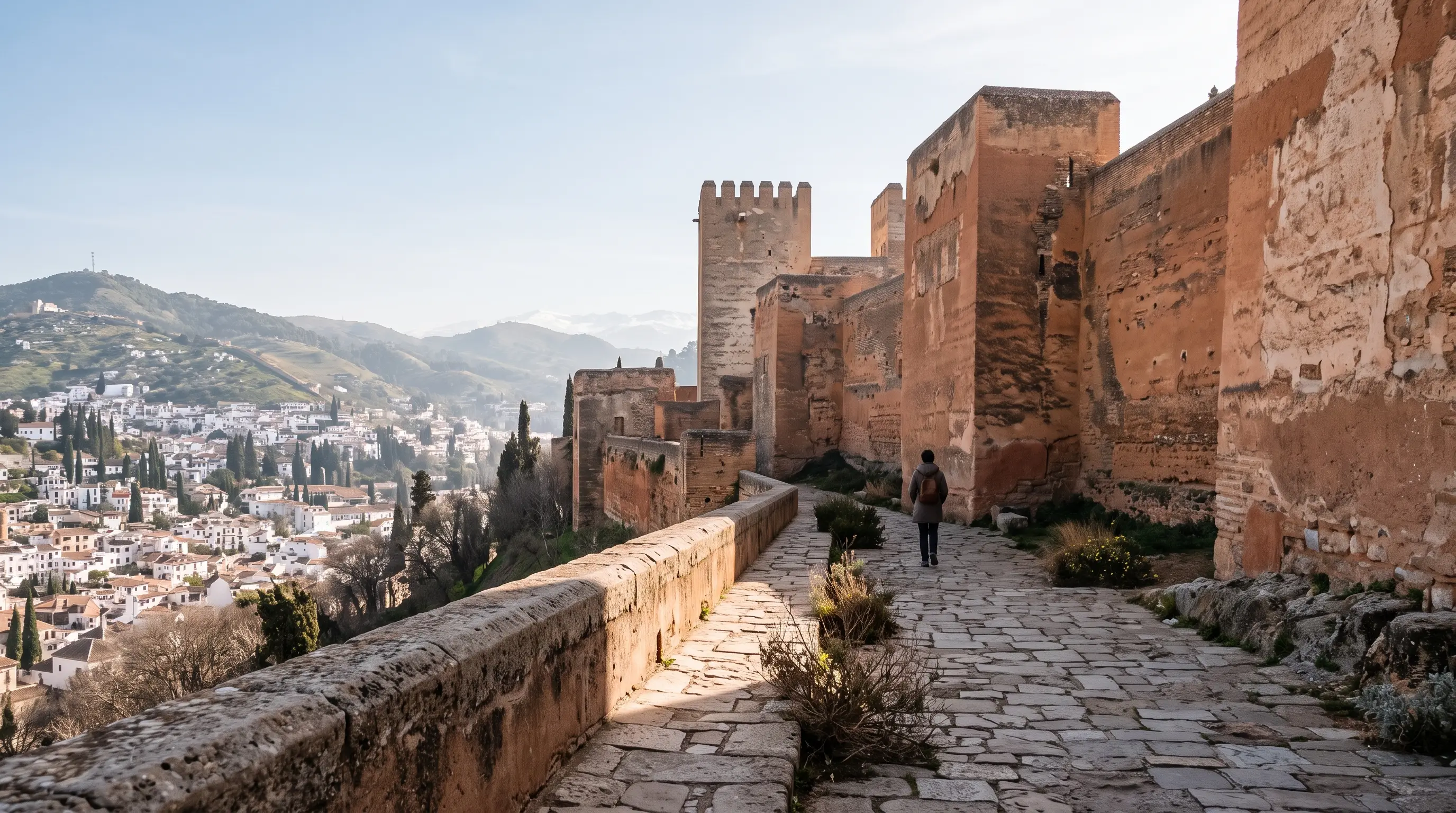
The count and his title: 1492 or 1502?
The Count of Tendilla was the Alhambra's de facto governor from 1492[4], but his formal appointment as Captain General dates only to 1502[1].
The Crown needed someone to hold a fortress-city it had just taken by agreement. It chose Íñigo López de Mendoza, a nobleman from a family of Basque origin, and the Alhambra's Patronato says Ferdinand and Isabella made him Captain General of the Kingdom of Granada and governor of the Alhambra in 1492[4]. The terms of that surrender are in the Treaty of Granada of 1491, and how well they held is another story.
Both dates are defensible. Cuadernos de la Alhambra calls him the first alcaide of the Alhambra from the conquest, and says the captain general appointment followed later, after the 1499 Albaicín rising. On paper, the Captaincy General is a 1502 title.
One legend sits beside the paperwork. A family chronicle by Gaspar Ibáñez de Segovia, written generations later, has Boabdil giving the count a turquoise ring, with the remark that Granada had been governed by it. Treat that as the Mendoza telling their own founding story, not as evidence.
The portrait tradition is steadier. A painting of the count shows him at a window with a pomegranate on the sill[5], the fruit that gave the city its name. For a governor of Granada, the pun was ready-made.
A governor who moved in
Tendilla did not rule from a safe distance. The Patronato says he "set up house in a Nasrid palace"[6], though which one the sources behind this piece do not say. A study in Cuadernos de la Alhambra adds that he made the fortress the seat of the Captaincy General[7]. The Alhambra became a home and a government office at once.
With Archbishop Hernando de Talavera and the royal secretary Hernando de Zafra, he shared the job of turning an Islamic city into a Christian, Castilian one[8]. Zafra's name is attached to one of the earliest Christian works on the hill, a large two-nave cistern built in 1494[9].
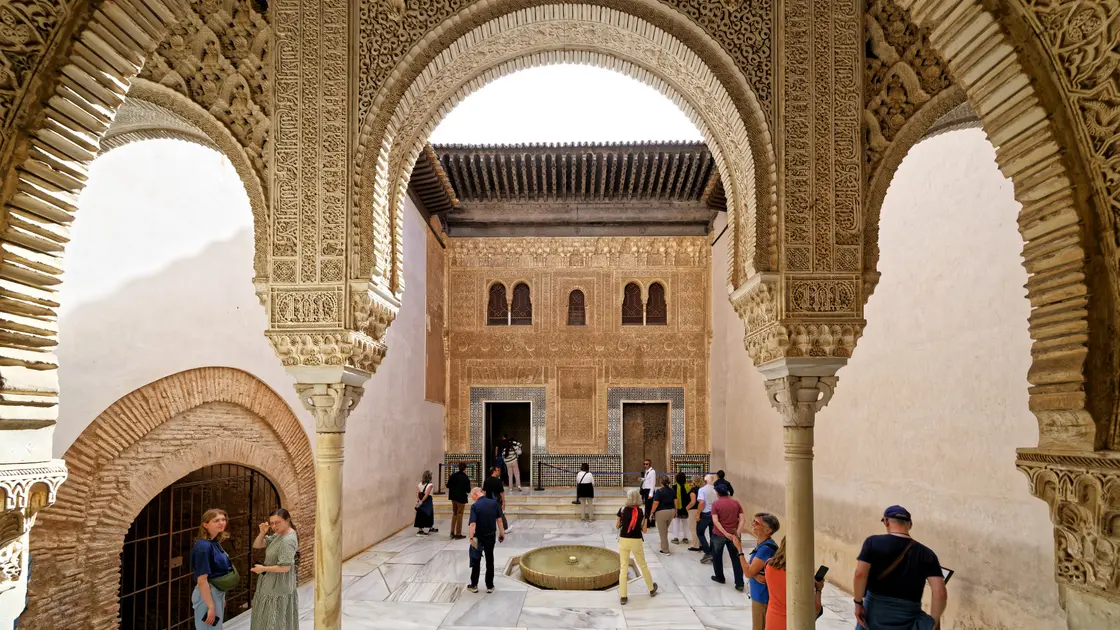
Explore nearby · Monument
Alhambra
The Alhambra is Granada's UNESCO fortress-palace: Nasrid Palaces, Alcazaba and Generalife gardens. Tickets sell out weeks ahead; book via the Patronato site.
The legal frame was blunt. Under the Ordinances of the Alhambra, the whole medina passed to the Christian monarchs and could be altered as they pleased[10]. Adapting it was left to the alcaides, the counts of Tendilla, who from 1512 carried the title of marquis of Mondéjar[11]. Visit the Alhambra with that in mind and the palace stops looking like a sealed Nasrid time capsule.
The same years show what "adaptation" meant on the ground. Artillery bulwarks went up at the medina's gates and strategic points between 1492 and about 1505[12]. The Ordinances also regulated water use, and the Patronato reads them as evidence of his sensitivity to Morisco customs[13]. His circle in Granada included Gonzalo Fernández de Córdoba, the Great Captain[14].
Tolerance, Cisneros and the 1499 rising
Two churchmen frame the decade. Hernando de Talavera, first archbishop of Granada, tried from the first moment, alongside Tendilla, to keep Christians and mudéjares sharing the city on terms of tolerance[15]. Francisco Jiménez de Cisneros, the Toledo archbishop and royal confessor, pressed conversions in 1499.
Cisneros changed the terms. One study locates the origin of the so-called Morisco problem in his arrival[16], and the choice he left the mudéjares was conversion or persecution, prison and torture[17]. Tendilla's own preference for persuasion looked weak beside that. The gap between the two policies is where the next decade went.
On 18 December 1499 the mudéjares of the Albaicín rose against forced conversion[18]. That rising is the hinge of Tendilla's career, because Cuadernos de la Alhambra ties his official elevation to captain general in 1502 to it[1]. The man who preferred coexistence was promoted for a crisis that coercion had caused.
- 1492
Takes charge of the Alhambra after the conquest
- 1494
Zafra's two-nave Christian cistern built
- 18 December 1499
Albaicín mudéjares rise against forced conversion
- 1502
Formal appointment as Captain General
- 1512
Counts of Tendilla become marquises of Mondéjar
- July 1515
Death of the count
He went on arguing from the Alhambra. A register of his letters for 1508 to 1513 shows him intervening for Talavera's dean and nieces, who were still in prison[19].
The letters that keep him on the record
Few early governors of the Alhambra left a paper trail like his. Three surviving registers, running from 1504 to his death in July 1515, add up to about 6,000 letters, mostly written from the Alhambra[2]. That is more than one a day for eleven years. His requests and quarrels can be followed in close detail.
The University of Granada's edition of the 1504 to 1506 letters alone gathers nearly two thousand[20]. Its presentation calls the registers an exceptional source for the history of the emerging modern Spain[21]. An older register, from 1497, is the oldest of them all[22], five years before the formal Captain General title.
The letters sit alongside a household with intellectual ambitions. Tendilla protected humanists, among them Pedro Mártir de Anglería, who tutored his children[23]. A fortress-governor with a humanist in the nursery and a correspondence office at his elbow is not the stock figure of a Castilian soldier.
To hear him rather than read about him, start with the Epistolario del conde de Tendilla, edited at the University of Granada. Most of it is in sixteenth-century Spanish, and the effort is worth it.
After 1515: the Mendoza custody and its end
The count died in July 1515[2], but the post stayed in the family. His eldest son and heir, Luis Hurtado de Mendoza, is credited in the Patronato's exhibition with building the Palace of Charles V[24].
The Andalusian culture minister, opening the 2016 exhibition, put the family's care of the monument at two and a half centuries[3]. A Cambridge study of the palace's architectural ceramics explains why that mattered in practice: upkeep lay with the Tendilla alcaides, who "were always very keen" to keep fabrics and decorations to the highest standard[25].
That study also gives the sentence worth carrying onto the hill. What visitors see today, it says, is the result of work undertaken after, "and sometimes long after", the Castilian conquest[26]. A very significant share of the materials for that work was produced inside the Alhambra itself[27]. The nineteenth-century chapter of the same story is in Rafael Contreras's restoration.
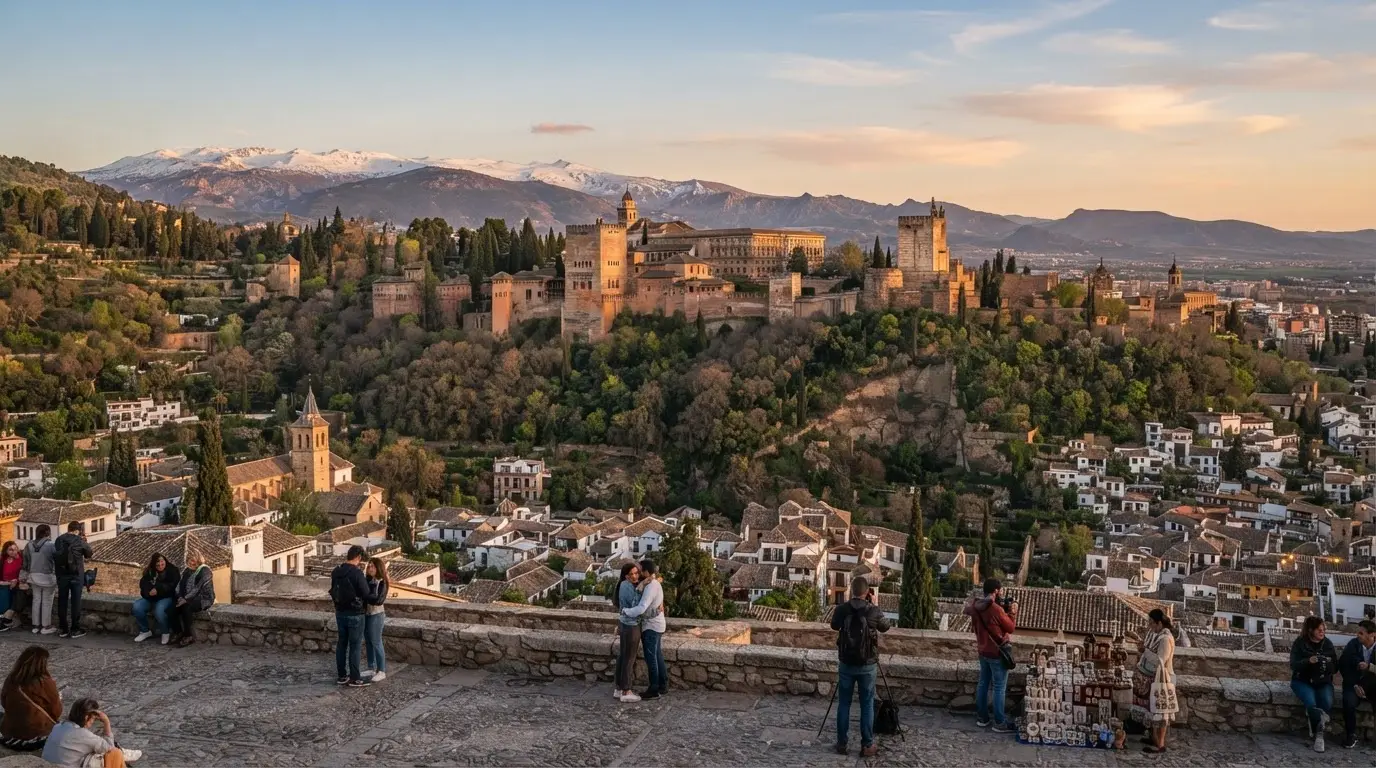
Deep dive · Article
20 Interesting Facts About Granada, Spain
Interesting facts about Granada Spain that guidebooks skip: disputed etymologies, the soldier who saved the Alhambra, and a river buried under Plaza Nueva.
The Mendoza lost ground in two stages. Control of the Captaincy General lasted almost eighty years, until the Morisco rebellion removed them from Granadan politics[28]. The Patronato attributes that decline to their tolerant stance toward the Moors in the Alpujarras rebellion[29]. The alcaide's post survived longer. Philip V ended it when the Mendoza backed the Austrian claimant in the War of the Spanish Succession[30].