Why the restoration argument matters
A visitor meets the Alhambra as a finished sequence of colour, plaster and tile. Conservation history makes that apparent unity less certain. Some surfaces preserve Nasrid work; others bear later repairs or renewal. The safest question is therefore not simply whether a room is "original", but which period each visible layer belongs to and how clearly a repair identifies itself.
That distinction changes the way you read the monument. The political history of the Alhambra's rooms explains why the palaces were built; restoration history asks what later custodians believed those rooms ought to look like. Contreras pursued legibility through renewed decoration. Torres Balbás later argued for old fabric, historically significant additions and new work that could not be mistaken for the old[4].
The labels need care. Restaurador adornista is useful shorthand for a decorative restorer, while restauración científica names a more documentary approach. Neither phrase removes the historical context in which choices were made. It does, however, expose the central disagreement: should a damaged palace recover a convincing visual whole, or should it display the evidence of its own survival?
What Rafael Contreras renewed
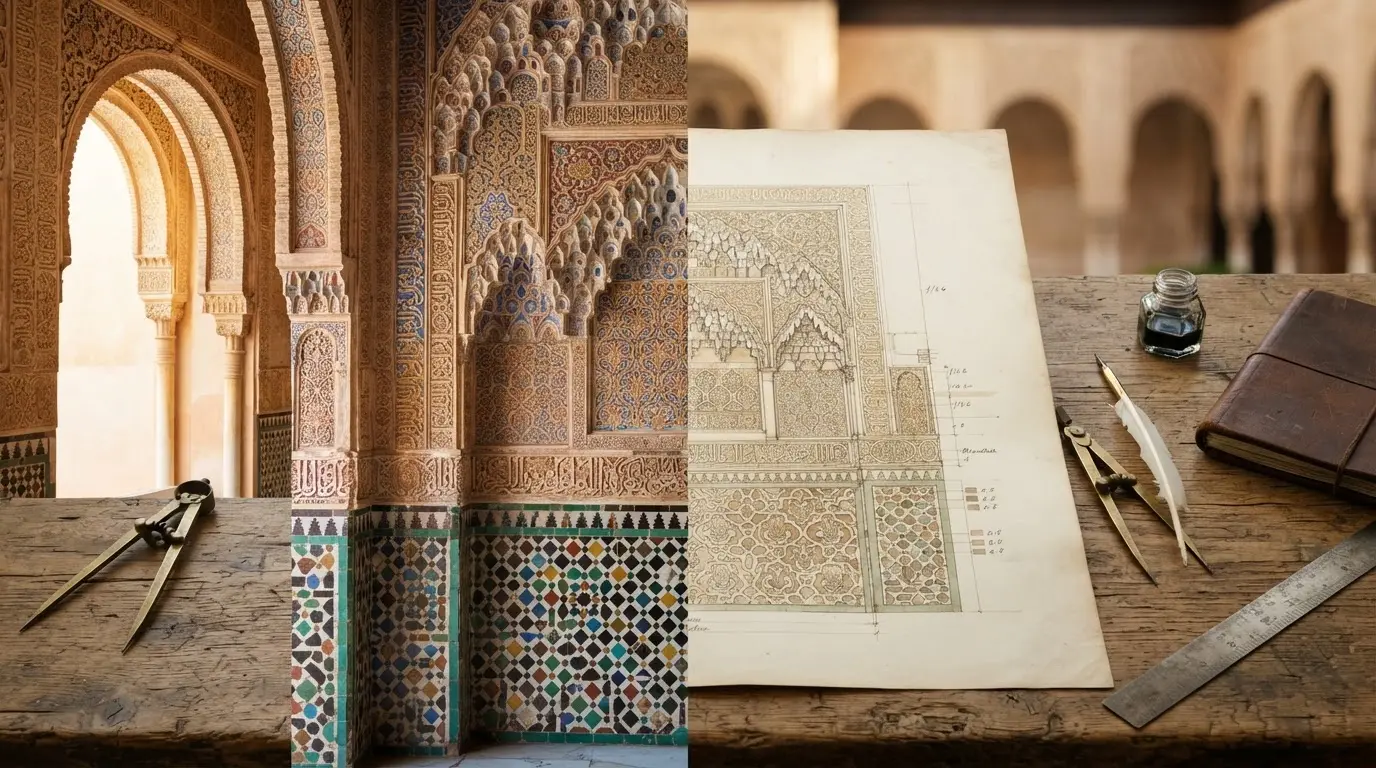
Contreras's documented work in the Sala de las Camas touched the three materials that make the palace so visually persuasive: ceramic, wood and plaster[5]. That combination matters. Yesería can rebuild a carved surface, polychromy can return colour to it, and ceramic work can close gaps in an alicatado pattern. Used together, those operations can make damage recede from view.
The result belongs to a nineteenth-century idea of restoration in which completion could help a visitor understand the design. It also makes later dating harder. A repaired pattern may follow the grammar of Nasrid ornament while carrying newer material, pigment or technique. The guide to muqarnas, mocárabes and zellige is useful here because it explains the vocabulary without assuming that every surviving example is untouched medieval fabric.
Explore nearby · Monument
Alhambra
The Alhambra is Granada's UNESCO fortress-palace: Nasrid Palaces, Alcazaba and Generalife gardens. Tickets sell out weeks ahead; book via the Patronato site.
Contreras should not be reduced to a caricature of free invention. The records in the research cache document interventions and materials, not his every intention. What can be said is narrower: his method accepted visible renewal to a degree that later conservators challenged. That is enough to explain why his name remains part of the Alhambra restoration debate without pretending that one short article can reconstruct his whole career.
Where decorative repair created later problems
A restoration can look convincing and still age badly. In the Sala de las Camas, the documented use of plaster to adhere ceramic elements caused many subsequent problems[6]. The lesson is physical rather than moral: a material that helps complete an image may behave poorly beside the historic fabric it is meant to support.
This is where the contrast with conservation becomes concrete. Alicatado is a system of fitted ceramic pieces, not a painted motif that can be retouched without consequence. Adhesive choice affects weight, moisture and future removal. An intervention becomes part of the object, so later conservators inherit both the medieval material and the repair.
The Alhambra has faced other kinds of damage too. The Sala de la Barca fire belongs to a different episode, but it sharpens the same question: after loss, how much should be reconstructed, and how much evidence of the break should remain readable? Conservation decisions begin where the wish for a complete picture meets the limits of surviving fabric.
How to read a restored surface
- Compare the depth and sharpness of repeated plaster forms
- Notice changes in colour across adjoining ceramic pieces
- Treat a seamless pattern as a question, not proof of age
For a visitor, the useful habit is to slow down at joins. Look for shifts in surface depth, colour and the crispness of repeated forms. These observations do not date a repair on their own. They do turn a decorative wall into a record of maintenance rather than a timeless backdrop.
How Torres Balbás changed the method
Torres Balbás arrived with a programme that the University of Granada record describes as integral and methodical, tied to Ricardo Velázquez Bosco's general conservation plan of 1917[7]. The significance lies in the scale of the method. Individual repairs were judged as parts of a larger archaeological site, not isolated chances to perfect a room's appearance.
His own hierarchy was blunt: consolidación was the ideal, repair could be justified, and restoration often carried obsolete theories of stylistic unity[8]. Consolidation asks first how to keep surviving material in place. Repair permits more action when necessary. Restoration, in the criticised sense, risks making different centuries conform to one selected image.
That approach leaves room for historical additions. A later layer can possess documentary or artistic value even when it interrupts a pure Nasrid reading. When new material is unavoidable, the aim is legibility: it should support the old work without impersonating it. That principle sits close to modern conservation practice, though applying a present-day label too neatly would flatten the debate.
The difference is easiest to grasp beside the Alhambra's repeating patterns. The geometry of Alhambra architecture rewards completion because the eye wants a broken sequence to continue. Torres Balbás's method asks the conservator to resist that visual pressure when the evidence for reconstruction is weak. Restraint can feel less satisfying at first glance. It tells the truth more clearly.
This was still intervention, not passive neglect. Archaeological reading, structural care and selective repair all require decisions. The change was in what those decisions tried to achieve: stability and historical clarity rather than a single, polished period image.
The cupola that made the dispute visible
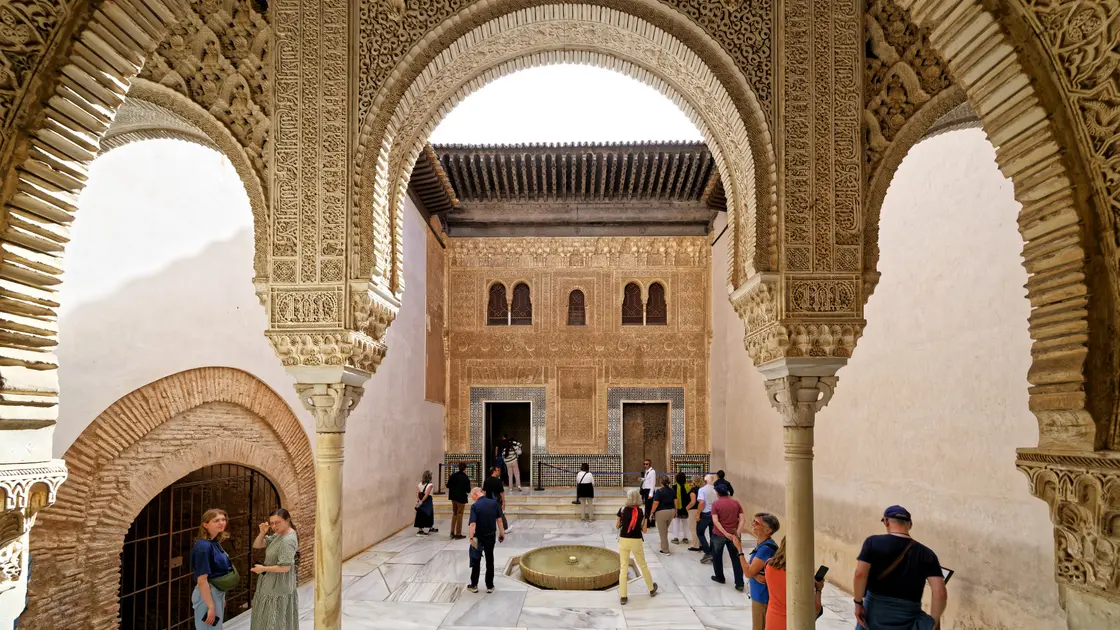
The eastern pavilion of the Court of the Lions gave the methodological argument a public face. Torres Balbás removed a nineteenth-century cupola that was regarded as a false addition, and the decision prompted fierce criticism in Granada's local press[9]. The reaction matters because many residents had come to accept the cupola as an essential part of the monument. Familiarity had given a later intervention the authority of age.
This was not a simple reversal of everything done in the previous century. Removing one addition can itself erase a chapter in a building's history. Keeping it can mislead visitors about the earlier architecture. The conservator has to weigh physical evidence, historical value and the risk of confusion; there is no neutral choice.
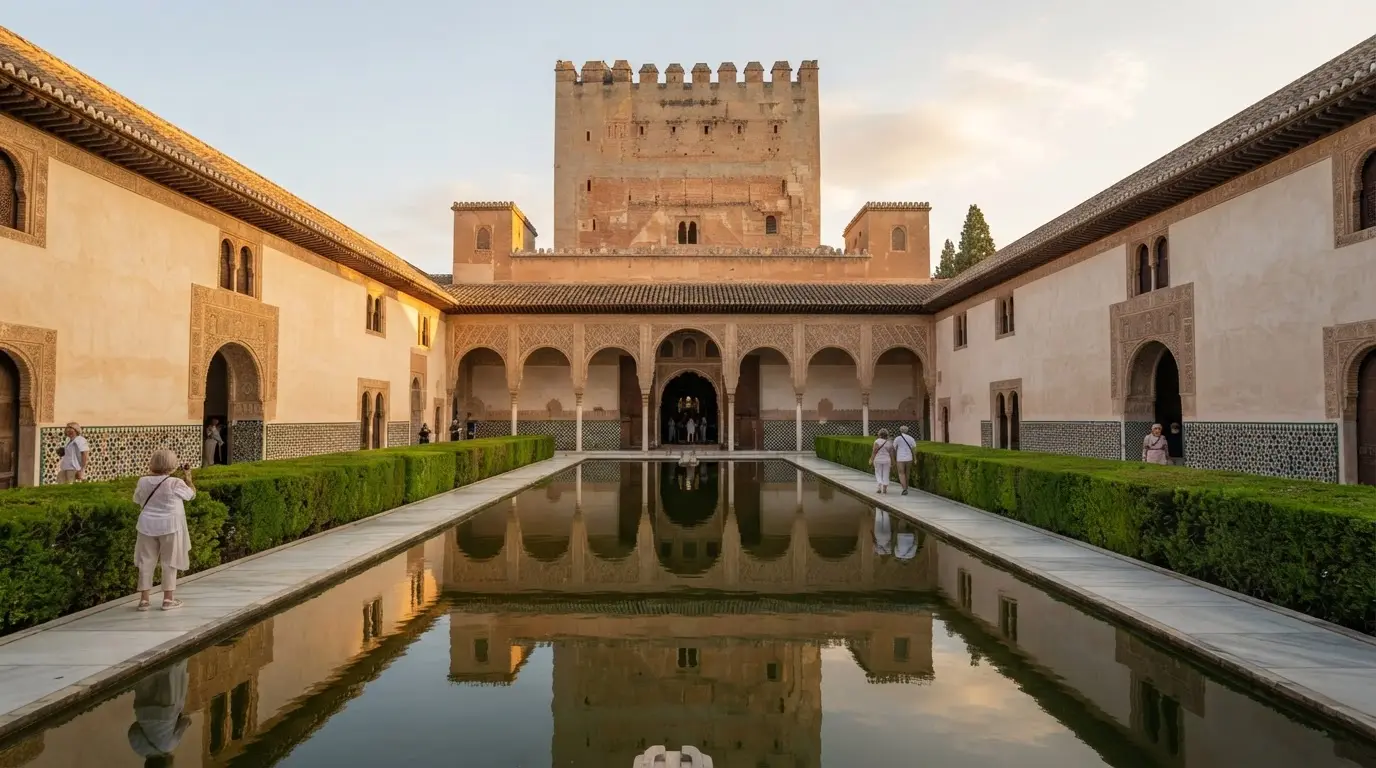
The history of the Court of the Lions gives the pavilion its Nasrid setting. Read alongside the restoration dispute, the court becomes more than a celebrated composition. It shows how strongly a public image of the Alhambra can depend on work added long after the Nasrid dynasty.
Deep dive · Article
Alhambra Rooms History Political Meaning: Which Sultan Built What
Yusuf I built the throne room, Muhammad V built the Court of the Lions, and Charles V added a palace in the 1520s. Who built what, room by room, and why.
That is the best way to understand Contreras and Torres Balbás together. Contreras helps explain why renewed colour and completed ornament became part of the Alhambra people expected to see. Torres Balbás explains why conservation later placed a higher value on fabric, chronology and visible distinction. The palace visitors encounter today carries both arguments.