
Napoleon's Granada: the French garrison, 1810–1812
French troops entered Granada on 28 January 1810 and did not leave until 17 September 1812[1], part of the wider Peninsular War that had already swallowed Madrid, Seville, and half of Andalusia. Command fell to General Horace Sébastiani (Horacio Sebastiani in the Spanish sources), leading the IV Corps[2], a career officer under Napoleon who had already governed occupied Rome before Spain.
Granada mattered to the French Spanish campaign for the same reason it always has: the Sierra Nevada passes and the road south to the coast made it a useful staging point, and its symbolic weight as the last Muslim capital of Iberia was not lost on either side. For most of the two and a half years, occupation meant requisitioned grain, billeted soldiers in private houses, and a garrison economy layered awkwardly onto a city that had barely recovered from the famines of the previous decade.
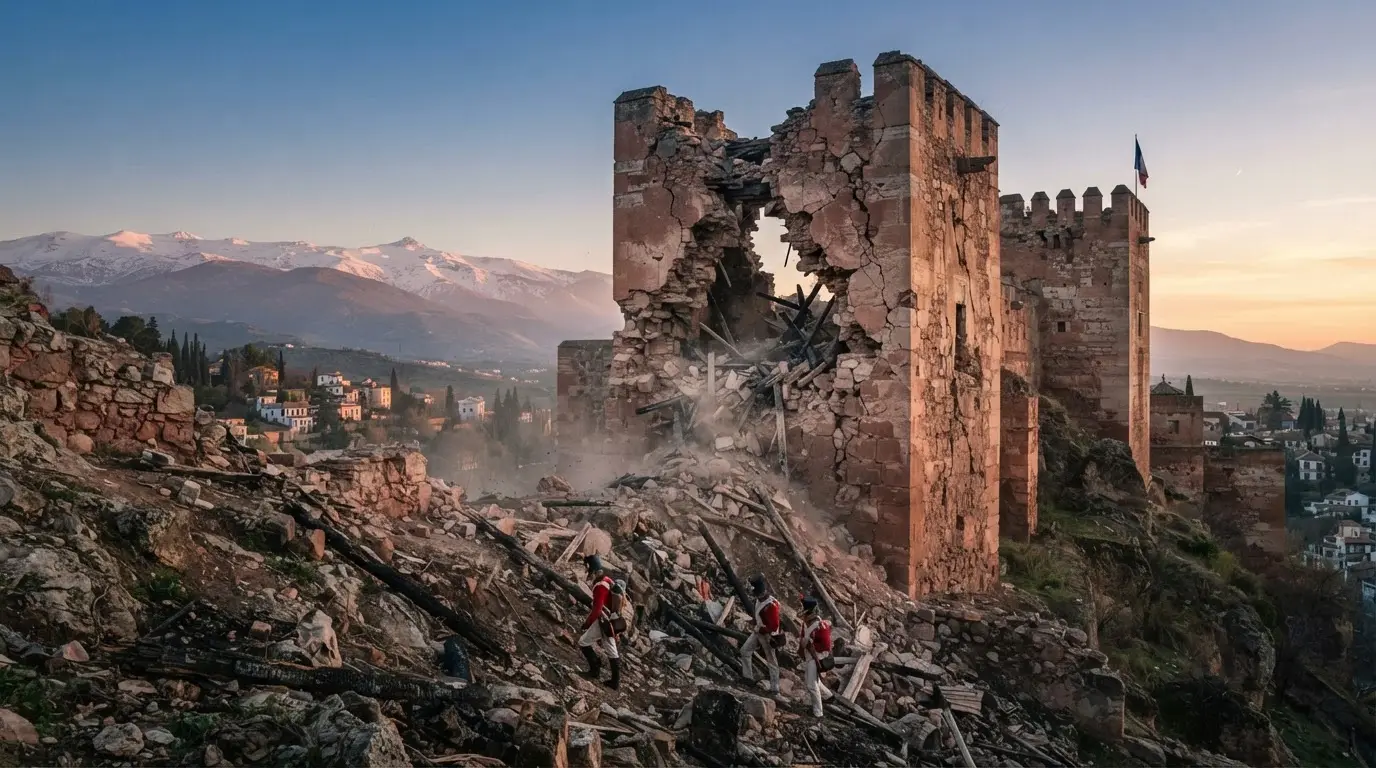
The occupation reshaped the Alhambra hill into a working garrison rather than a monument. French officers billeted in the palace rooms; ordinary troops were quartered through the fortress and the town below. The the Alcazaba fortress, the military core at the western tip of the complex, became a prison. Soldiers stripped and burned whatever wood the fortress offered for warmth: coffered ceilings, doors, beams, and religious images among it[3]. What the French intended for the fortress once they finally left became explicit only when the war turned. By 1812, Wellington's advance through central Spain made Andalusia untenable for Joseph Bonaparte's forces, and Granada's garrison received orders to withdraw north. What they did on their way out is the part of this story that still shows on the stonework.
The withdrawal order: why the French mined the Alhambra
Retreating armies of the period had a standard doctrine for fortresses they could not hold: deny them to whoever came next. On leaving Granada in September 1812, the French applied that doctrine to the Alhambra itself. Engineers laid gunpowder charges through the tower bases along the eastern and southern ramparts, the stretch of wall running from the Torre del Agua — blown up during the French occupation[4] — down past the Torre de los Siete Suelos. The stated purpose was to make sure the complex could never again be re-used as a fortified position[5]: not spite, not simple destruction, but a calculated denial of a defensible hilltop to the Spanish forces closing in behind them.
This was not an isolated French tactic. Fortresses across occupied Spain went the same way as armies pulled back toward the Pyrenees in 1812 and 1813; walls and towers were reduced so Wellington's advancing forces would have to besiege bare rubble rather than reoccupy a working stronghold. Granada's Alhambra, already regarded by antiquarians and Romantic travellers as an irreplaceable monument even in 1812, got no special exemption from that logic. The mining was methodical rather than chaotic: charges were set tower by tower, timed to detonate in sequence as the last French units cleared the site. That sequencing matters for what happened next: a chain of explosions, lit and running, gives a narrow window for anyone brave or reckless enough to try to break it. Someone did.
Explore nearby · Monument
Alhambra
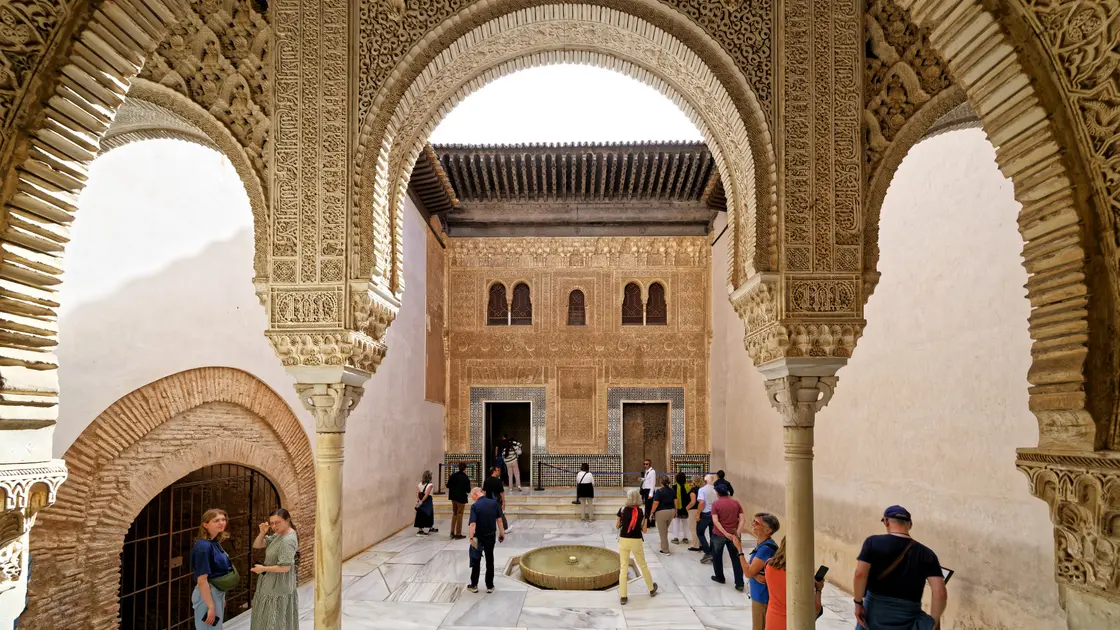
The Alhambra is Granada's UNESCO fortress-palace: Nasrid Palaces, Alcazaba and Generalife gardens. Tickets sell out weeks ahead; book via the Patronato site.
Eight towers fall: what survived the mines and what didn't
Eight towers of the Alhambra were blown up before the remaining fuses were disabled[5], the figure that recurs across every account of the 1812 demolition, English and Spanish alike. Not every one of the eight is individually named in the surviving record, but the pattern of damage across the eastern defensive sector is clear.
The Torre del Agua (Water Tower) took the worst of it: only its base survived, and the three-storey form visible today is a reconstruction — the original height itself is a scholarly best estimate rather than a certainty[6]. A short distance along the same wall, the Torre de los Siete Suelos (Tower of the Seven Floors) suffered similarly near-total destruction[7]. Two more towers in that same eastern sector, the Torre del Capitán and the Torre de la Bruja, are listed among the damaged, though no single source names the full roster of eight by name.
One tower in the chain got lucky. French engineers attempted to blow up the Torre de los Picos and its bastion, but fled before finishing the job[8] — the clearest evidence that whatever stopped the demolition worked mid-sequence, not after it. The Torre de los Picos stands today largely as the Nasrids left it, the one substantial exception in an otherwise grim tally.
Recommended tours
Tours are selected for quality, not commission. We earn a small fee if you book — at no extra cost to you.
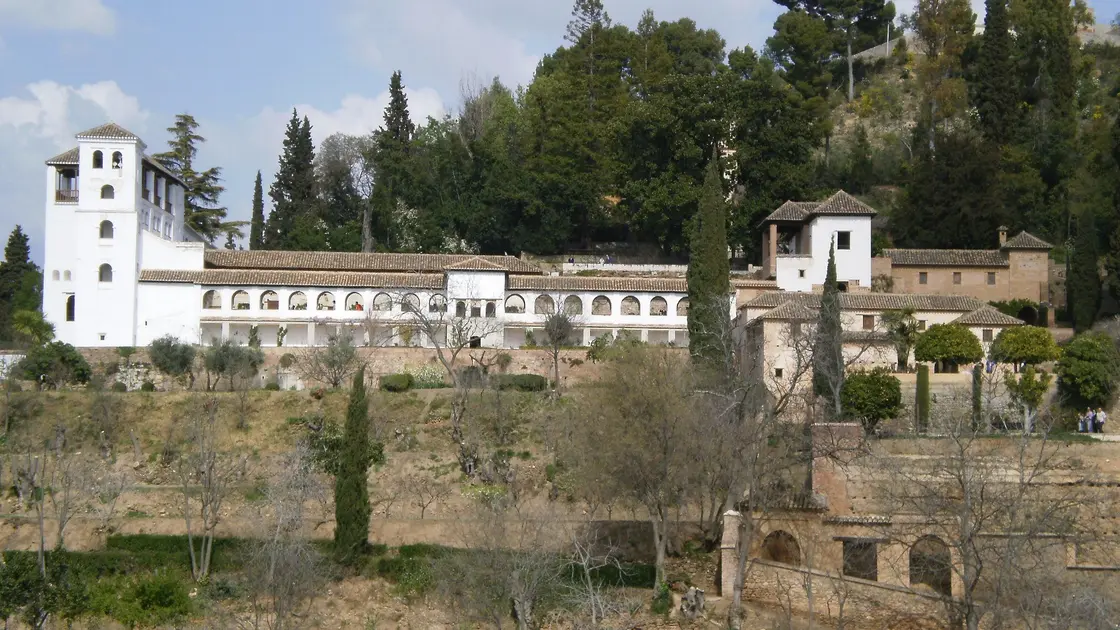
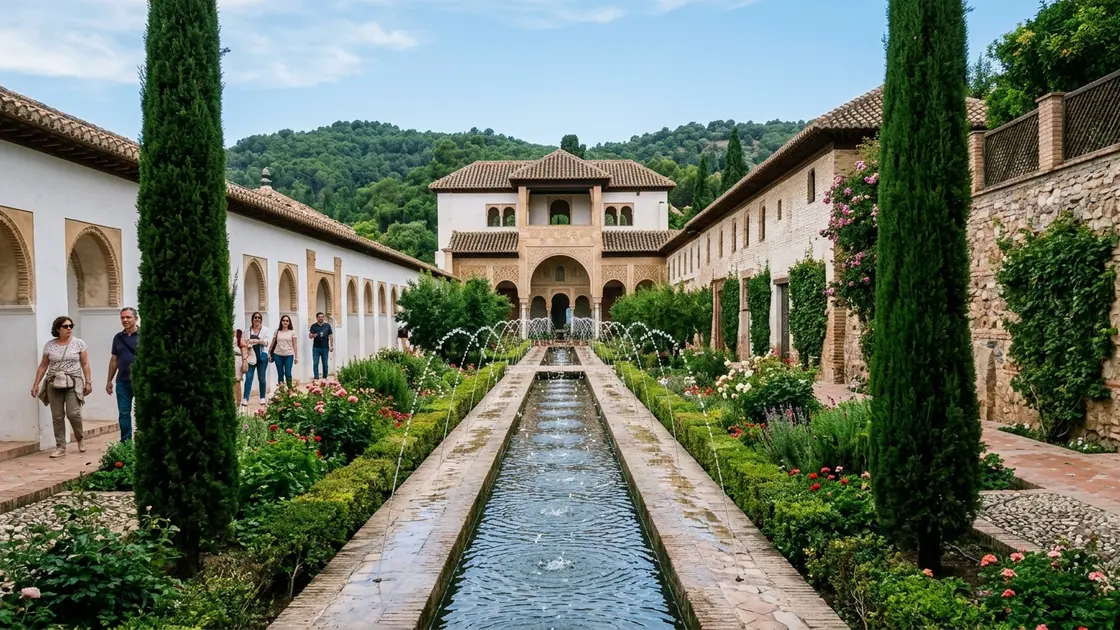
None of this touched the older defensive line below the hill. The Torres Bermejas, the reddish 11th-century watchtowers overlooking the Realejo, predate the Alhambra itself by two centuries and sat outside the mined perimeter entirely, a reminder that Granada's fortifications ran in layers, and 1812 only reached the newest of them.
| Tower | Fate in 1812 |
|---|---|
| Torre del Agua | Destroyed: only the base survived, later rebuilt |
| Torre de los Siete Suelos | Near-total destruction: rebuilt in the mid-20th century |
| Torre del Capitán | Damaged in the mining |
| Torre de la Bruja | Damaged in the mining |
| Torre de los Picos | Targeted but survived: French fled before finishing |
José García: the soldier who broke the chain of fuses
The official account, kept by the Alhambra's own custodians, credits a single Spanish soldier with stopping the demolition before it finished: José García, who neutralised the live fuses still burning when the French abandoned the site[5]. The Alhambra's own official account honours him for risking his life to stop the fuses before they could destroy the rest of the fortress[9].
The details around García get less certain the closer you look, and it is worth saying so plainly rather than repeating the tidiest version. Tradition holds that he had already lost a hand and taken a serious leg wound at the Battle of Bailén years earlier, which placed him in the Corps of Invalids, the Spanish army's unit for soldiers disabled in combat — though no independent documentary record confirms these specifics. Independent historical sources describe him as a disabled corporal in that corps; the Alhambra's own Patronato account instead calls him a brigadier[9]. The two don't agree, and nothing in the record settles which rank is correct.
The more cinematic version of the story, García moving tower to tower along the wall and cutting fuses with a knife against the clock, is how the episode is often told in guidebooks and walking tours. It makes for a good story, and the core of it is corroborated: a disabled soldier did stop a chain of explosions that would otherwise have taken the rest of the fortress with it. The blow-by-blow detail of how he did it is folklore built on top of a genuine act, not a documented sequence of events. Granada has treated García's act as settled history for two centuries, and there's no reason to doubt the substance of it: a disabled veteran, already maimed once for his country, chose to run toward live explosives rather than let the fortress finish burning. Whether he did it as a corporal or a brigadier changes nothing about the courage; it only changes which document you trust.
The scars today: what a visitor can still see
The Torre de los Siete Suelos wasn't rebuilt to anything like its original form until the mid-20th century[7], a gap of well over a century during which the tower stood as a partial ruin at the edge of the fortress. Stand at its base today and the join between the older, weathered stonework and the reconstructed sections is still visible if you know to look for it — a rough seam running up the wall where the 20th century met the damage from 1812.
The Torre del Agua's current form is likewise a later addition on an original base; what you see is a working reconstruction over the surviving foundation, not the Nasrid tower itself. The Torre de los Picos, by contrast, needs no such caveat — it is close to what the French tried and failed to destroy, one of the few points on the eastern circuit where the visible stone predates 1812 without qualification.
Deep dive · Article
Abencerrajes of Granada: the noble clan behind the legend
Abencerrajes of Granada: the noble clan who shaped Nasrid court politics for a century and became legend through a massacre story set in the Alhambra.
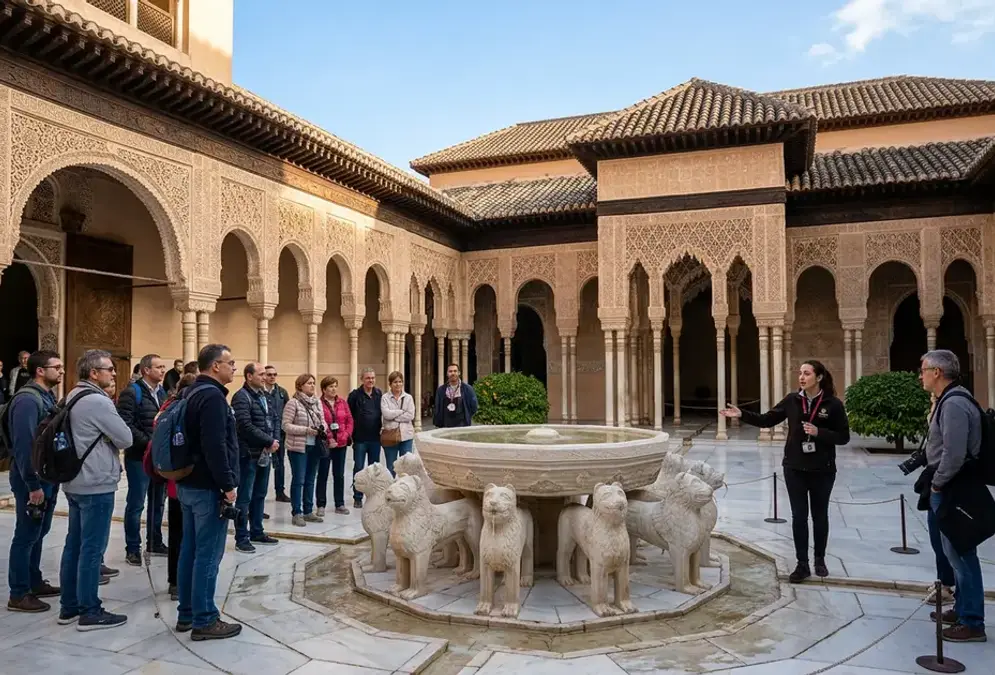
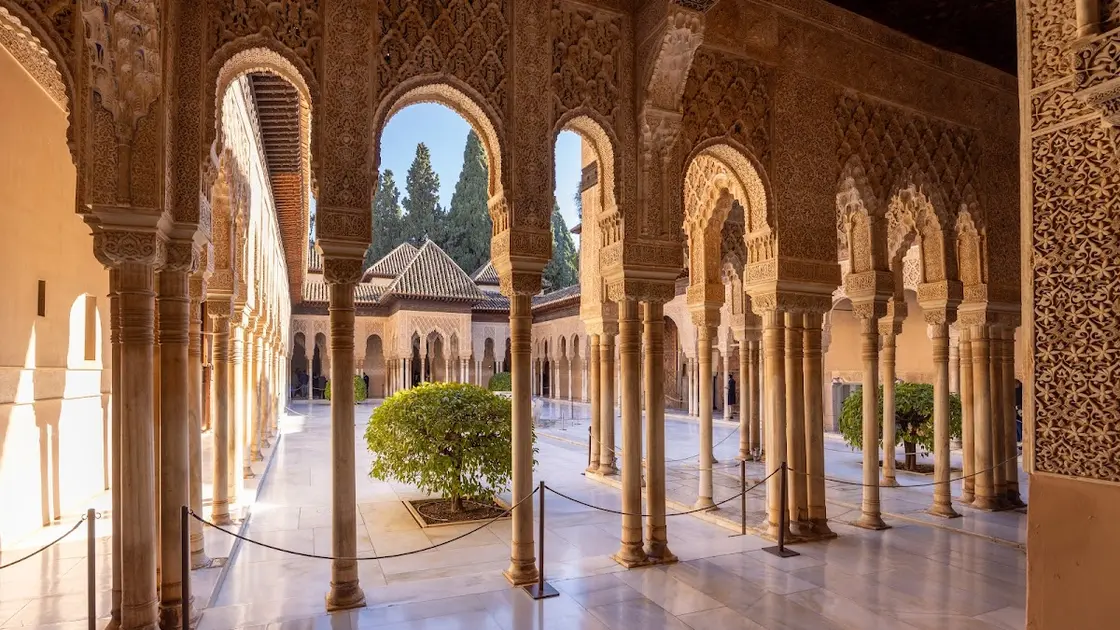
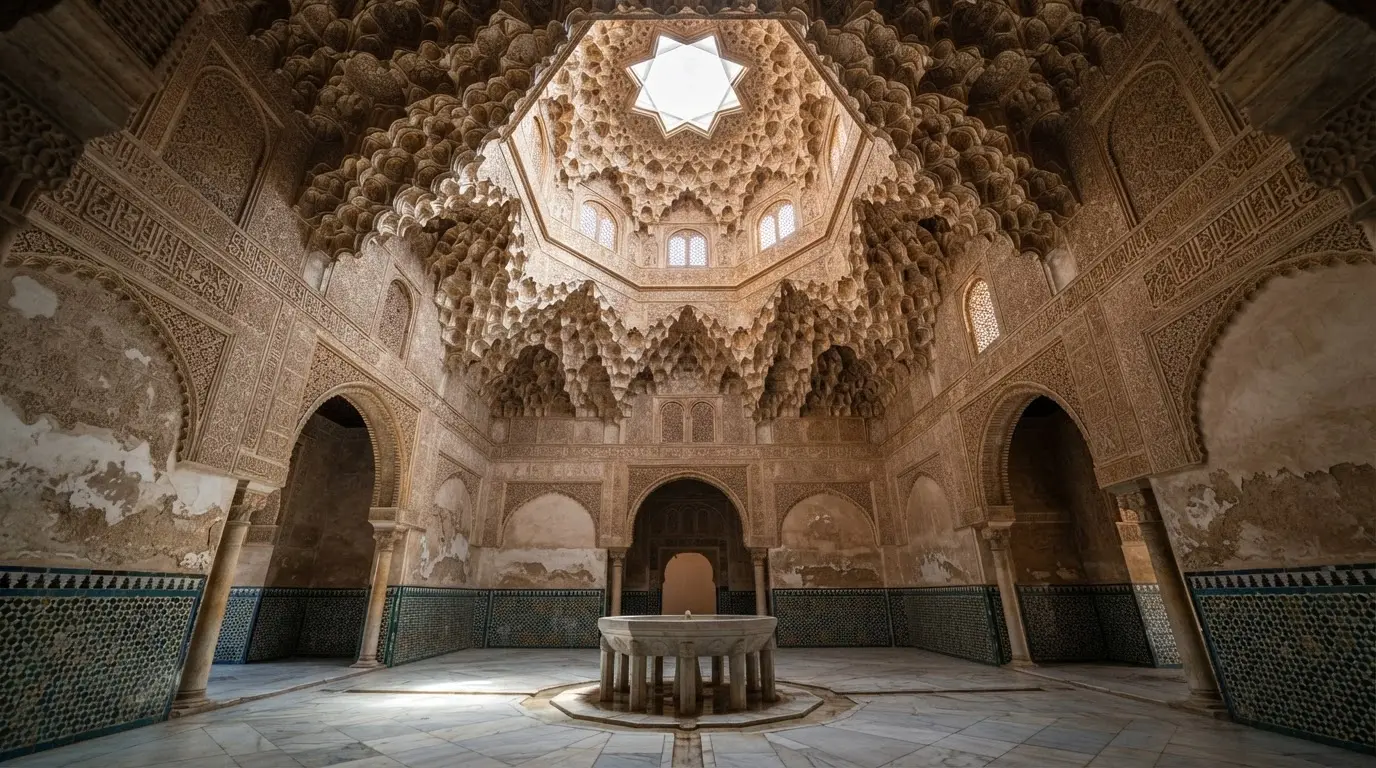
None of this touched the interior. The muqarnas vaulting and carved plasterwork of the Nasrid Palaces, the ornament that makes the Alhambra worth the queue in the first place, sat inside the perimeter the French mined but never reached — see our guide to Nasrid architecture for what that craftsmanship actually involved. Two years of occupation and one botched demolition left the fortress's skeleton scarred at its eastern edge and its ornamental heart untouched, which is as close to a fair outcome as this story gets. For a visitor with two hours and a Nasrid Palaces ticket already in hand, walking the eastern rampart from the Torre de los Picos to the rebuilt Siete Suelos is the closest thing Granada offers to reading the events of September 1812 directly off the walls.