From Muslims to Moriscos: the forced conversions of 1502
The Capitulations of Granada, signed on 25 November 1491, had promised the Muslim population of the surrendered city that they could keep their religion, their language, their courts, and their customs. The document was detailed, specific, and legally binding. It held for seven years.
In 1499, Cardinal Francisco Jiménez de Cisneros, Archbishop of Toledo, arrived in Granada with no patience for the conciliatory approach of his predecessor Hernando de Talavera. Talavera had learned Arabic, encouraged gradual conversion through education, and treated the Muslim population as potential Christians rather than a problem to be solved. Cisneros took the opposite view. He began a campaign of mass baptisms, often under direct coercion, and in January 1500 ordered the burning of Arabic manuscripts in the Plaza Bib-Rambla.[1] Thousands of books, many of them literary and scientific, went up in smoke at the same plaza where the Reconquista Granada 1492 had played out its final scenes a decade earlier. What the record does and does not support about that fire is checked in Cisneros's Arabic book burning in Granada.
The population of the Albaicín responded with an armed revolt in December 1499. Further risings followed in the Alpujarras in 1500 and 1501. The Crown suppressed them and used the revolts as legal grounds to void the religious guarantees of the capitulations: by taking up arms, the argument ran, the Granadan Muslims had broken the peace.
The consequence came on 12 February 1502: a royal decree ordered all Muslims in the Crown of Castile to convert to Christianity or leave the country.[2] Unlike the Jews expelled in 1492 under the Alhambra Decree, the Muslims of Castile were not even given the option of leaving for Muslim-ruled territories in North Africa. The decree was deliberately framed to push conversion rather than emigration: those who wished to leave had to go as Christians and could not take gold or silver with them. Most converted. Those who did became known as Moriscos, from the Spanish morisco, meaning "Moorish."
1502
Crypto-Islam and taqiyah: faith in secret
Conversion did not mean abandonment. For the next century, the Morisco community in Granada practised taqiyah, the Islamic theological principle permitting Muslims to conceal their faith under duress without spiritual culpability.[3] Outwardly Christian, inwardly Muslim: they attended Mass, had their children baptised, married in church. Privately, they whispered the shahada (the declaration of faith), performed the salat (five daily prayers), observed Ramadan, washed according to Islamic ritual purification (wudu), avoided pork and wine, and continued to circumcise their sons.
The documentary trail they left is rich precisely because the Inquisition recorded it in such detail. Trial records from the Granada Tribunal of the Inquisition describe families lighting candles on Friday evenings, washing the dead in Islamic fashion, reciting prayers in Arabic at night. The 1569 trial of a Granada woman named María de Córdoba recorded that she had been heard saying Lā ilāha illā Allāh before sleeping, and that her neighbours had never seen her eat pork.
They also wrote in secrecy. Aljamiado manuscripts, written in Arabic script but carrying Romance-language text, allowed Morisco scholars to preserve Islamic religious literature in a form that Christian authorities could not easily read. Collections of aljamiado manuscripts survive from the Granada region, smuggled through the Alpujarras and eventually reaching North Africa after the 1609 expulsion. Some are now in the Biblioteca Nacional de España in Madrid; others ended up in Algerian and Moroccan archives.
Explore nearby · Monument
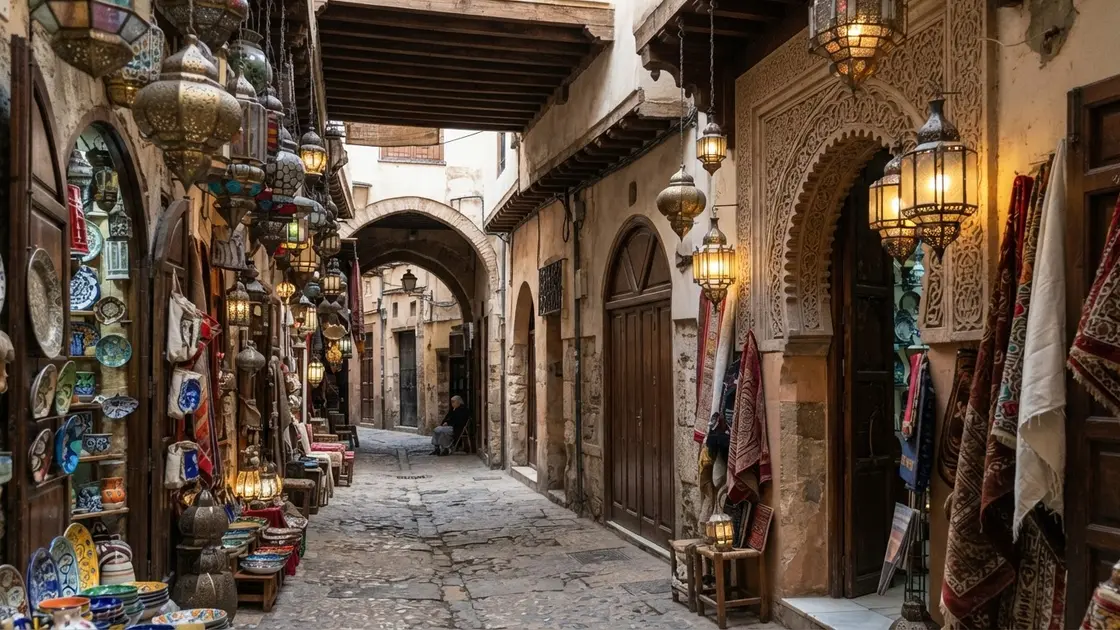
Alcaicería
Granada's historic silk market, rebuilt after 1843 in Neo-Moorish style. Small shops sell ceramics, taracea woodwork, spices, and leather goods. Free to enter.
The Lead Books of Sacromonte were a different kind of Morisco strategy: forgeries produced in the 1590s claiming that Granada's first bishop had written in Arabic, creating a theological argument that Arabic was a sacred language of early Christianity. Whether this was a cynical political move or a genuine expression of Morisco identity is still debated.
The Pragmática Sanción of 1567: language, dress, and the slow elimination of a culture
For much of the 16th century, the Crown lived with an uneasy compromise. The Moriscos paid taxes, many worked as skilled craftsmen and traders, and the Alpujarras produced silk that the Granadan economy depended on. Forcing the question of genuine conversion would have disrupted the fiscal machine. The Inquisition prosecuted individuals, but there was no systematic attempt to destroy Morisco cultural life wholesale until Philip II signed the Pragmática Sanción on 1 January 1567.[4]
The decree banned:
- The use of Arabic in any context, public or private
- Moorish dress, including the haik and the use of henna
- Traditional Morisco baths (hammams)
- Zambras and leilas (Morisco musical celebrations)
- Morisco wedding customs
- The keeping of doors locked on Fridays
A three-year grace period was granted for compliance. Francisco Núñez Muley, an elderly Morisco nobleman who had served as a page in the household of Archbishop Talavera and was one of the most respected voices in the community, submitted a formal memorandum to the Audiencia of Granada in 1567 protesting the decree.[5] His question cut to the heart of what the Crown was actually demanding: "How can people be deprived of their own language, with which they were born and raised?" He argued, with considerable legal sophistication, that the customs the Crown wanted to eliminate were cultural rather than religious, and that forcing their abandonment would produce misery without advancing Christian doctrine.
“How can people be deprived of their own language, with which they were born and raised?”
Recommended tours
Tours are selected for quality, not commission. We earn a small fee if you book — at no extra cost to you.
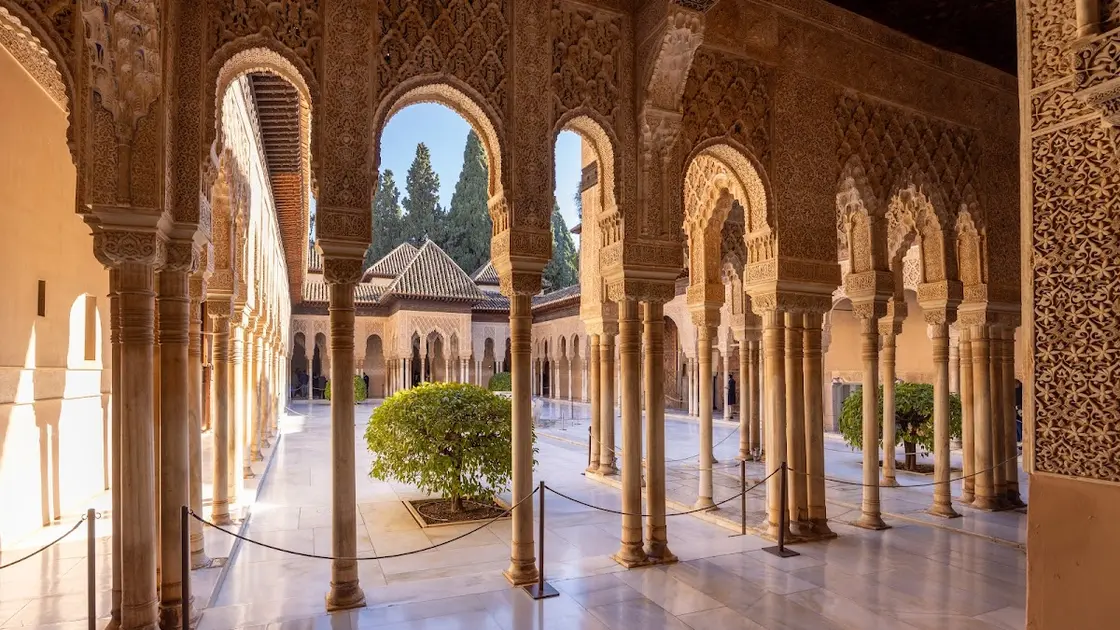
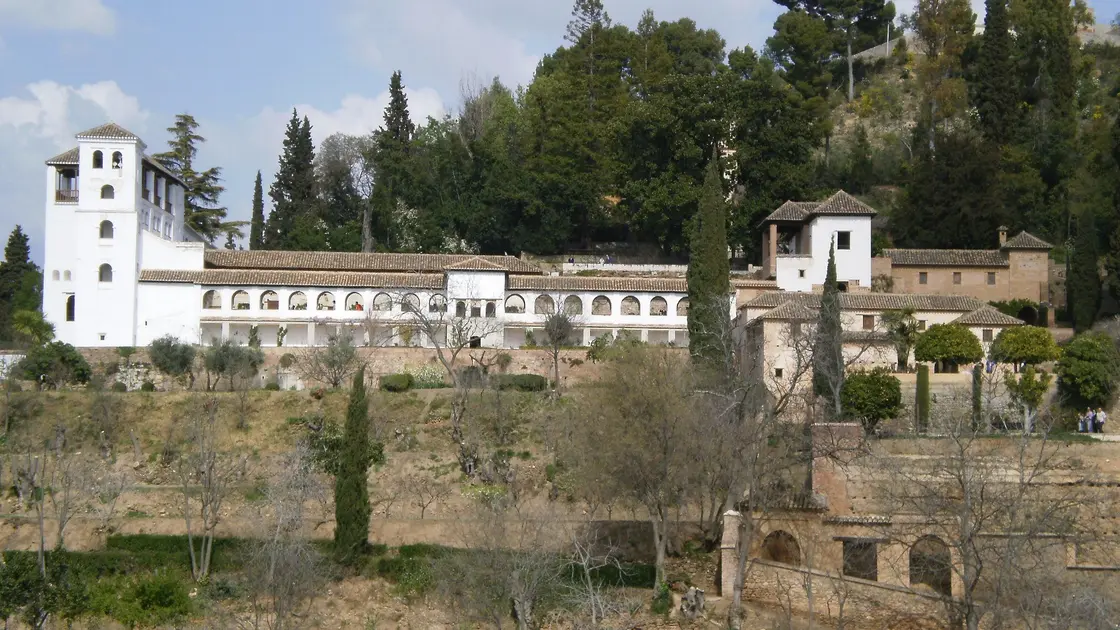
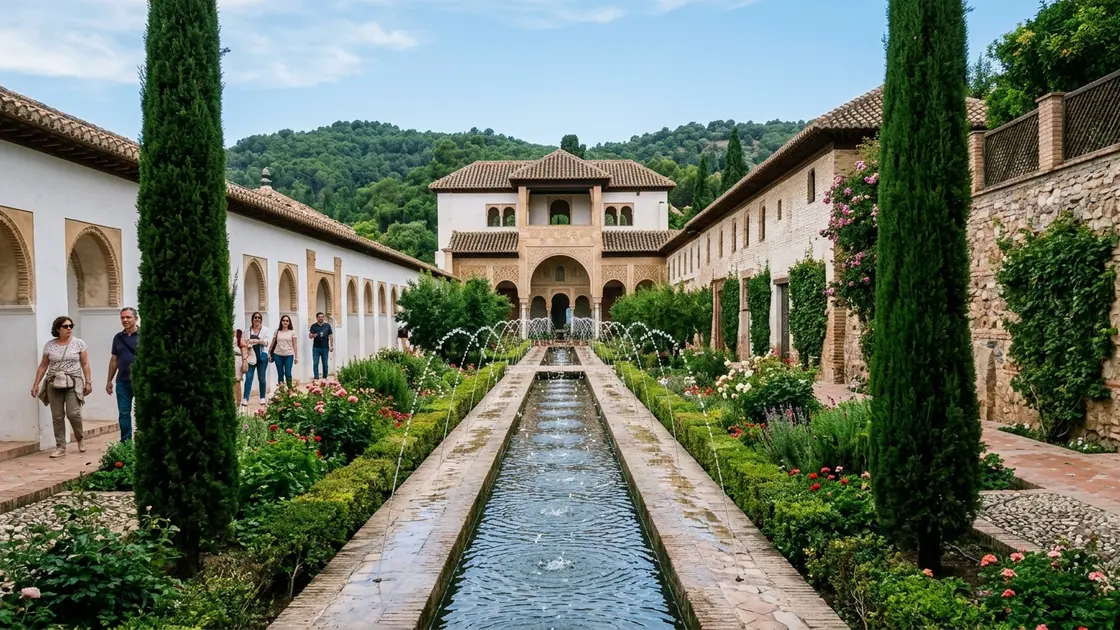
The Audiencia forwarded his petition to Philip II. The King rejected it. The Pragmática would be enforced.
Núñez Muley's memorandum is one of the most extraordinary documents to survive from the Morisco period. Written in Castilian, addressing Christian legal arguments in their own terms, by a man who had spent his entire life navigating both worlds, it reads as the articulate final argument of someone who already knew the answer. The original is in the Archivo de la Real Chancillería de Granada; the text has been published and translated by L.P. Harvey in his foundational study of the Spanish Moriscos.
The Second Revolt of the Alpujarras: 1568 to 1571
The rebellion began on Christmas Eve 1568, in the village of Béznar in the Alpujarras mountains south of Granada.[6] A group of Morisco conspirators had been planning for months. Their chosen leader was Hernando de Córdoba y Valór, a Morisco nobleman of Granada who claimed Umayyad descent. He took the name Aben Humeya and was proclaimed king of Granada and Andalusia by the rebel council. His brief, violent reign and assassination by his own men is covered in full in Aben Humeya and the 1568 Rebellion.
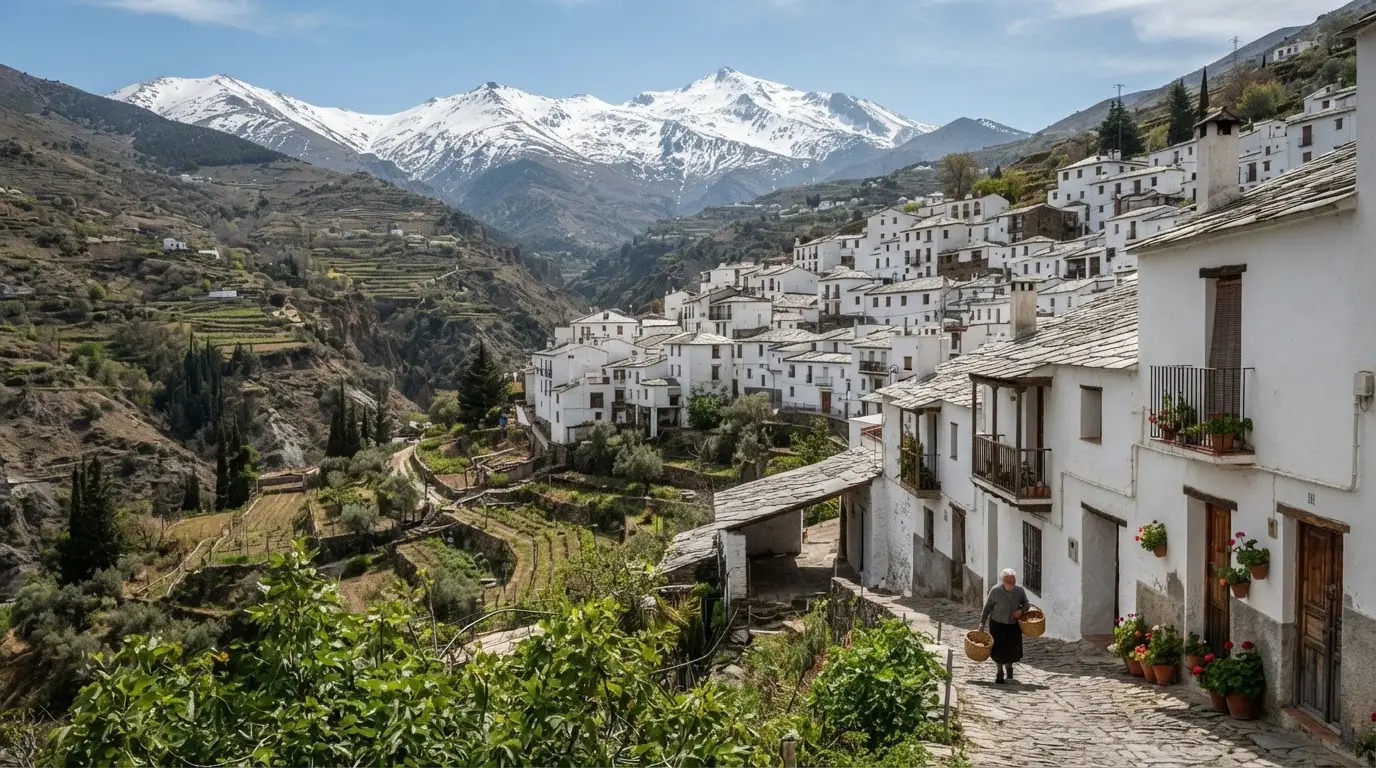
The geography of the Alpujarras suited a guerrilla war. The mountains rise to over 3,000 metres,[6] the valleys are steep and narrow, the villages perched on slopes with a single approach road. The Morisco fighters knew every path. Spanish regular forces, deployed from the coast and from Granada, found the terrain as punishing as the resistance. The Alpujarras villages that visitors walk through today, Bubión, Capileira, Pampaneira, were the sites of fierce fighting in 1568 and 1569.
At its peak, the rebellion drew in a substantial Morisco force, supplemented by small numbers of Berber volunteers from North Africa and a handful of Ottoman advisers. The Spanish crown committed tens of thousands of troops. The early months went badly for the Crown: garrison forces were massacred, churches burned, Christian settlers in isolated farms killed. Aben Humeya called on Sultan Selim II for direct military intervention; the Ottomans sent weapons and some troops but no fleet.
The rebellion fractured from within. Aben Humeya was assassinated by his own followers in October 1569, reportedly over a dispute involving his personal conduct. His cousin Aben Aboo took over as rebel leader. Philip II responded by appointing his half-brother, Don John of Austria, as supreme commander of the campaign in early 1569. Don John was 22 years old and had no command experience, but the appointment came with full royal authority and adequate resources.
The military outcome was not in doubt once Don John imposed order on the Spanish forces. By spring 1570, the rebellion's territorial control had been reduced to a handful of mountain valleys. Aben Aboo was killed in a cave near Bérchules in 1571, betrayed by a Morisco who had accepted a Spanish pardon. His body was brought to Granada and displayed.
The human cost was severe. Tens of thousands of Moriscos died during three years of fighting, from combat, famine, and massacres on both sides. Enslaved Morisco captives were sold in Granada's markets. Churches across the Alpujarras held mass burials for Christian settlers killed in the uprising.
The dispersal and the 1609 expulsion
The end of the revolt did not mean the Moriscos stayed in Granada. Philip II ordered a mass deportation of the entire Morisco population of the Kingdom of Granada in 1570, before the fighting had even finished. Approximately 80,000 people were forcibly marched from Granada into Castile, dispersed across Old and New Castile in small groups to prevent them from organising.[6] Families were separated. The Alpujarras, emptied of its Morisco population, was repopulated with Christian settlers brought in from other parts of Castile, but the resettlement was chronically underfunded. Historians estimate that settlers arrived in numbers far below the Morisco population they replaced, leaving large stretches of the Alpujarras effectively abandoned for a generation.
The dispersed Morisco communities in Castile continued to practise Islam covertly. Inquisition records from the 1570s, 1580s, and 1590s document arrests across Toledo, Valladolid, and Seville. The community remained identifiable, largely endogamous, and under sustained suspicion. In the 1590s, the Sacromonte lead tablets emerged — the final Morisco gamble, an attempt to reframe Arabic and Islamic culture as compatible with early Christianity. It did not work.
The final decree came from Philip III on 9 April 1609, ordering all Moriscos in the Kingdom of Valencia expelled within three days of its local proclamation, with subsequent decrees extending to Aragon, Castile, and Andalusia by 1614.[7] Traditional estimates put those expelled at between 270,000 and 300,000, though modern scholarship, including detailed work by Trevor Dadson, suggests the actual figure was lower, with roughly 40% of Moriscos in some regions staying through local exemptions, flight, or official blindness.
Deep dive · Article
Realejo Jewish Quarter Granada: A Neighbourhood Built on Erasure
The Realejo was Granada's medieval Jewish quarter, home to Samuel HaNagid. Walk it today and you're crossing the site of a 1066 massacre and a 1492 expulsion.
The destinations were Morocco (for Granadan Moriscos specifically, who spoke Arabic and had cultural memory of al-Andalus), Ottoman Algeria, Tunis, and, for those who could not afford the North African passage, France. Morisco communities settled in Tetuán, Salé, and Rabat in Morocco, founding neighbourhoods that preserved Andalusian architectural and culinary traditions for centuries. The Andalusian quarter of Tetuán was largely settled by Granada Moriscos and retains the layout of a Nasrid medina.
The Duke of Lerma, Philip III's principal minister, was the political architect of the expulsion. Archbishop Juan de Ribera of Valencia was its most vocal ecclesiastical advocate, arguing in a 1609 pastoral letter that the Moriscos were an unreformable internal enemy whose presence endangered Christian Spain. The political calculation also had a domestic dimension: Lerma needed a high-profile success to consolidate the new king's authority, and the expulsion, announced with considerable ceremony, served that purpose.
What the Moriscos left behind in Granada and the Alpujarras
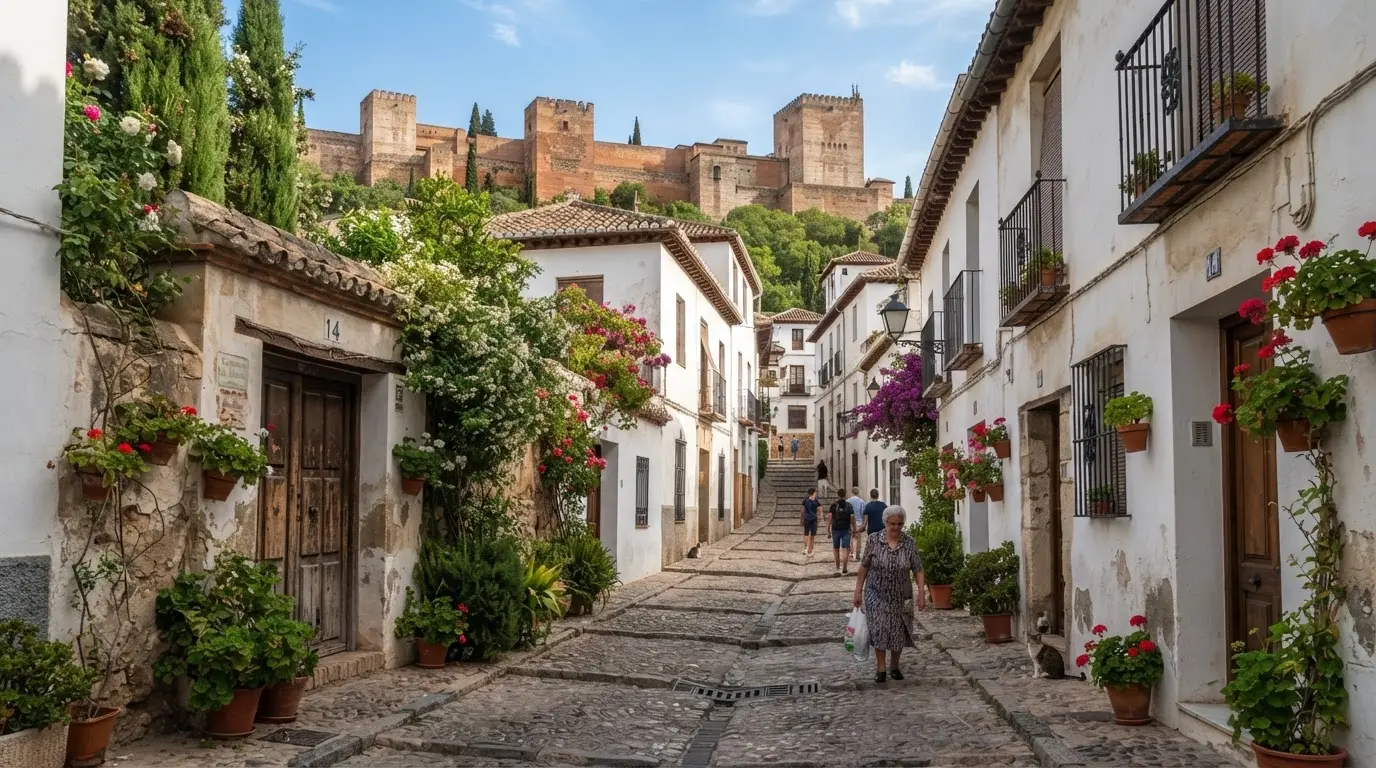
The physical traces are easier to read in the mountains than in the city. The villages of the Poqueira gorge (Bubión, Capileira, Pampaneira) and the broader Alpujarras retain an architectural vocabulary the Moriscos brought with them from the Nasrid city: launa roofs (flat terraces sealed with grey waterproof clay found only in these mountains), tinaos (covered passages connecting houses above the street), and the narrow street pattern of a defensive hill village. These are not picturesque accidents. They are the material remains of a building tradition that survived because the mountains were remote and the settlers who replaced the Moriscos arrived too thinly and too late to impose a different architecture.
Granada's Albaicín shows subtler traces. The street names and the plot divisions of the neighbourhood follow the Nasrid period, preserved because the capitulations of 1492 initially protected them. The old Morisco aljibes (underground cisterns) that once served the neighbourhood before municipal water arrived are a further trace of the same period. The hammam tradition survived in the Nasrid baths of the Albaicín and the Alhambra even after public hammams were banned in 1567; the Bañuelo, Granada's best-preserved Arab bath, dates from the 11th century and predates the Morisco period, but its continued existence through the 16th century reflects the difficulty of physically erasing seven centuries of infrastructure. The Maristan of Granada, Muhammad V's 1367 hospital nearby on the Darro, illustrates the opposite trajectory: it was converted into a royal mint in 1502, then a friary, then a winery, and eventually demolished almost entirely in 1843 — a pattern of erasure-by-repurposing that was as effective as any demolition. The full story of the Carrera del Darro street where the Bañuelo stands — from its Roman gold origins to the embovedado that buried the rest of the river by 1938 — belongs to a separate history.
The Sacromonte Lead Books, now stored in the archive of the Abadía del Sacromonte, are the most complex legacy: a Morisco forgery that became a genuine local cult, then a condemned heresy in 1682, then a museum piece, and eventually a UNESCO Memory of the World document. The Vatican condemned them. The city of Granada still includes them in its cultural heritage tours. That contradiction has not been resolved.
In food culture, the traces are harder to separate from the general Andalusian kitchen. The use of cumin, coriander, and cinnamon in savoury dishes, the almond-and-honey sweets sold by Granada's convents, the layered meat dishes of the Alpujarras, all carry the imprint of a cooking tradition that had been local for eight centuries before it was driven underground. The Junta de Andalucía has done some work on documenting Morisco culinary heritage, though the field remains underresearched.
For visitors, the most direct encounter with Morisco history in Granada is at the Palacio de los Olvidados (Palace of the Forgotten) in the Judería, a small private museum that displays artefacts and documents from the Jewish and Morisco communities. The Realejo neighbourhood, where the Jewish quarter of Granada once stood, borders the area where many converted Moors settled after 1502. Both communities occupied adjacent margins of the city; both were eventually removed.