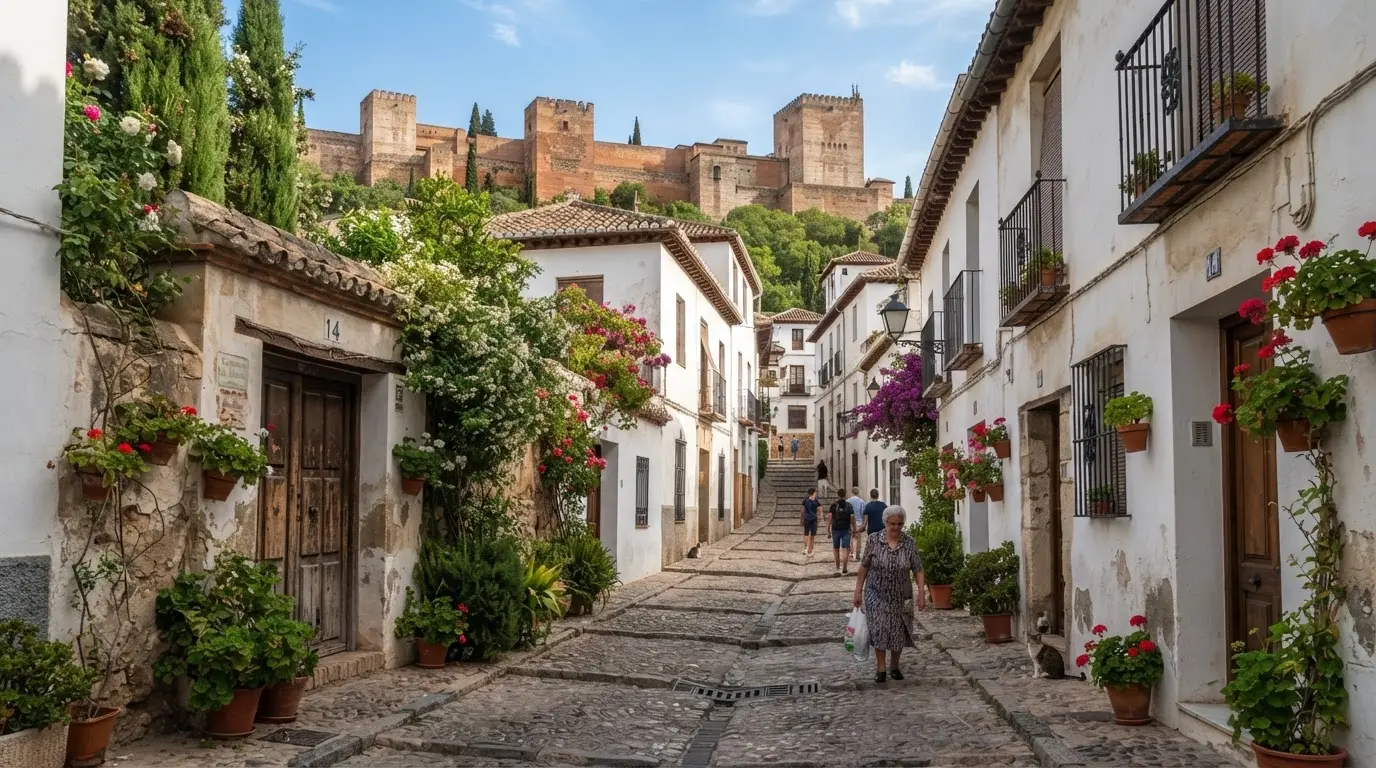

Garnata al-Yahud: the Jewish city within the city
Before it was the Realejo, this neighbourhood had a different name. Arabic sources called it Garnata al-Yahud (Granada of the Jews), a designation that treated the Jewish quarter as a city in its own right rather than a marginal annexe of the Muslim capital.[1] The quarter occupied the lower southern slopes of the Alhambra hill, a position that was both central and slightly apart: close enough to the main city to conduct business, sheltered enough by the hill to maintain its own institutions.
Jews had lived in this part of the Iberian Peninsula before the Arab conquest of 711. When the Umayyads arrived and reorganised the region under Islamic rule, they found an existing Jewish community and accommodated it under the dhimmi system: non-Muslims could practise their religion and run their own legal affairs, in exchange for a poll tax and certain civic restrictions. The arrangement was far from equal, but it was workable enough for a community that had spent centuries navigating precarious circumstances under Visigothic rule.
Garnata Yahud
Under the Zirid kingdom of Granada, the Berber dynasty that ruled the city as an independent taifa after the Caliphate of Córdoba collapsed in 1031, Jewish life reached a density and sophistication that had almost no parallel in medieval Europe. The quarter had synagogues, Talmudic academies, markets, and a Jewish leadership structure operating in parallel with the Muslim court. The word that later historians would reach for was convivencia: coexistence. The reality was more complicated, but for a period of about a century, the gap between the word and the truth was narrow.
Samuel HaNagid: the Jewish general who ran a Muslim kingdom
The single most extraordinary figure to emerge from Garnata al-Yahud was Samuel ibn Naghrela, born in Córdoba in 993 and later known as Samuel HaNagid, the Prince.[2] When the Caliphate of Córdoba collapsed and Berber troops sacked the city in 1013, Samuel fled south, ending up in Málaga, where he reportedly worked as a spice merchant while conducting a secret correspondence with the vizier of the Zirid court in Granada. The vizier recognised his talent and brought him to court. By 1027, Samuel held the formal title of Nagid, leader of the Jewish community of al-Andalus, the first person ever to hold it. By 1037, he was grand vizier and military commander of the taifa kingdom under King Badis ibn Habus.
For roughly eighteen years, Samuel HaNagid led the armies of Granada into battle against rival taifa kingdoms: Seville, Carmona, Almería. A Jewish man commanding a Muslim army was, by any measure of the period, extraordinary. That it happened at all rested on a combination of genuine ability (he was a skilled administrator, a Talmudic scholar, a poet in both Arabic and Hebrew) and on a particular configuration of Zirid court politics that gave him room to operate.
His three collections of Hebrew poetry survive: Ben Tehillim (battle verse and secular poems), Ben Mishlei (rhymed proverbs), and Ben Qohelet (philosophical poetry in the mode of Ecclesiastes). He introduced Arabic metrical forms and the genre of battle poetry into Hebrew literature, writing about military campaigns in the biblical idiom of the Psalms. The poems are specific, unsentimental, and frequently brilliant. He also maintained a Talmudic academy in Granada and sent financial support to Jewish academies in Babylonia and North Africa, making the city a centre of Jewish scholarship with reach extending well beyond al-Andalus.
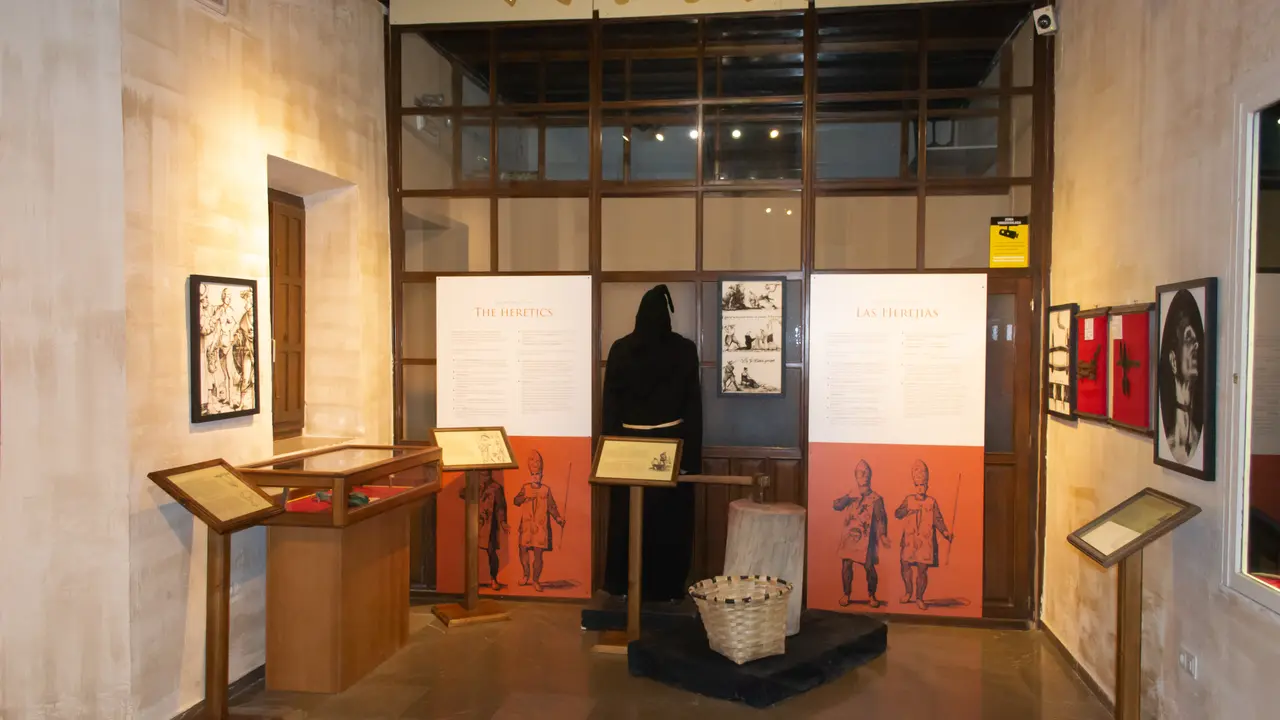
Explore nearby · Museum
Palacio de los Olvidados
Granada's Sephardic Jewish history told through wax figures, Inquisition artefacts, and guided tours. Steps from the Carrera del Darro in the Albaicín.
He died around 1056, probably in his early sixties, in the city he had helped govern for two decades. His son Joseph ibn Naghrela succeeded him as both vizier and Nagid, inheriting a position of extraordinary power and, as it turned out, extraordinary vulnerability.
For the fuller account of his rise from Córdoba refugee to Zirid vizier and army commander, see the dedicated profile of Samuel HaNagid.
30 December 1066: the massacre
Joseph ibn Naghrela was about thirty years old when the mob came for him on 30 December 1066.[3] He had held his father's positions since before he was twenty-one and had, by the accounts of the period, neither Samuel's political tact nor his father's instinct for managing resentment. His power was visible: the vizier of a Muslim kingdom, moving through Granada with all the ceremony that office implied, while the Berber Zirid court watched.
The ideological preparation had been laid down in an antisemitic poem by Abu Ishaq al-Ilbiri, a Granadan jurist who circulated verses that year calling explicitly for the removal of Jewish power. One passage, often quoted by historians, read: «Do not consider it a breach of faith to kill them — the breach of faith would be to let them carry on.» The poem named Joseph directly, complained that a Jew held authority over Muslims, and invoked religious obligation as the justification for violence. It circulated in a city where the Berber military class had always regarded the HaNagid family's power with suspicion.
The immediate trigger was an accusation that Joseph had been negotiating secretly with a rival taifa ruler, Al-Mutasim ibn Sumadih of Almería, to betray Granada in exchange for being installed as a subordinate king. The accusation may have been fabricated; by the time it gained traction, it was irrelevant. On 30 December, Joseph was found at the royal palace and killed. His body was crucified, hung on a cross in a deliberate act of humiliation intended to invoke Christian imagery and degrade both the man and his community.
Recommended tours
Tours are selected for quality, not commission. We earn a small fee if you book — at no extra cost to you.
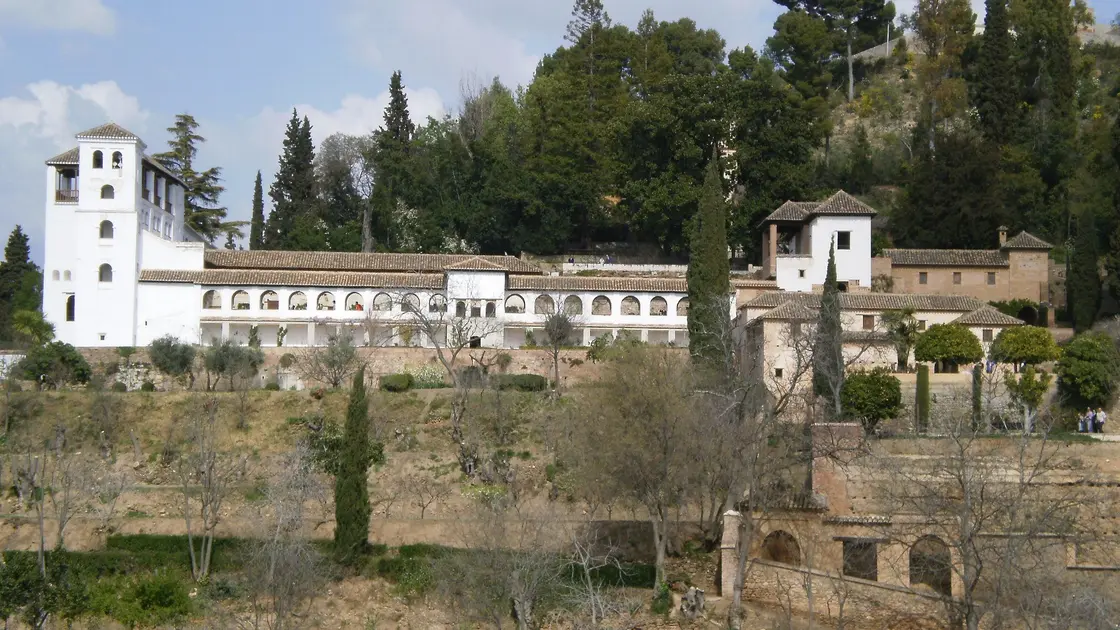
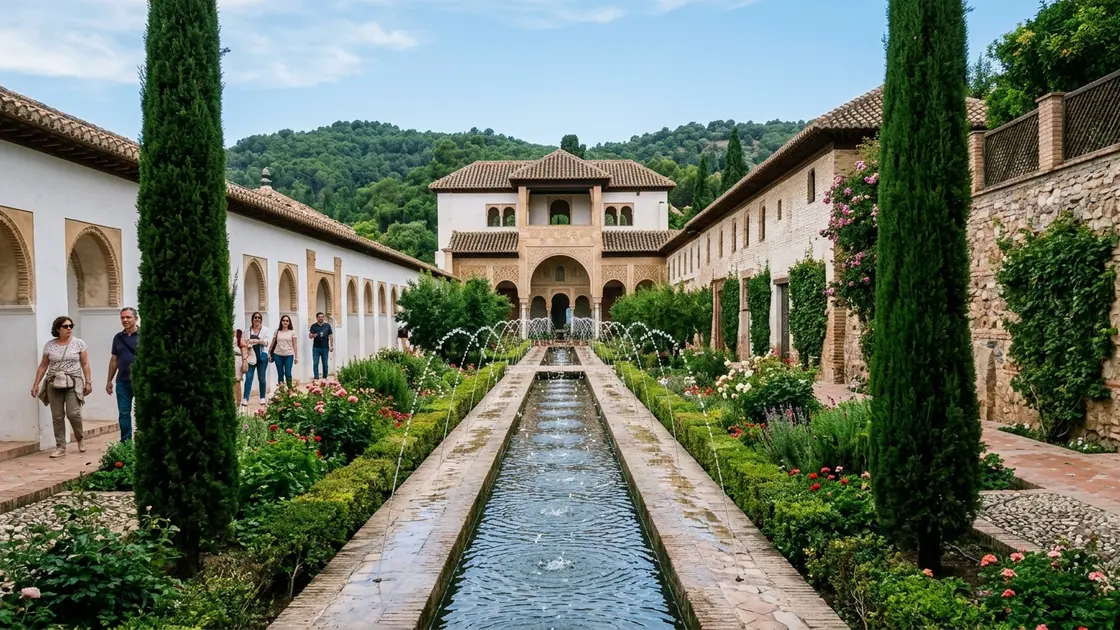
The killing of the vizier was not the end. A mob moved through the streets of Garnata al-Yahud that day and through the following hours. How many people died is genuinely uncertain. The 1906 Jewish Encyclopedia cited a figure suggesting thousands dead in a single day; later scholarship regards that number as imprecise but does not replace it with something more reliable. What is clear is that the violence killed a substantial portion of the Jewish community and destroyed the quarter's physical infrastructure on a scale from which it never fully recovered.
Modern historians describe what happened as one of the worst massacres of Jews in al-Andalus — and, measured against the timeline of European Jewish history, it predates the Rhineland massacres of 1096 by thirty years. Joseph's wife and surviving family fled to Lucena, the main centre of Jewish learning in al-Andalus. Granada's Jewish community endured, and slowly rebuilt. But the combination of political authority and military command that Samuel HaNagid had embodied was gone and would not return.
For the fuller account of that single day, from Joseph's secret plot with Almería to the poem that helped incite the mob, see the dedicated piece on the 1066 Granada massacre.
1492: the Alhambra Decree and the end of the judería
Granada fell to Ferdinand and Isabella on 2 January 1492. The Nasrid sultan Boabdil descended from the Alhambra and handed over the city under terms that protected, at least in theory, the religious rights of the Muslim population. The Jewish community had no such treaty. On 31 March 1492, Ferdinand and Isabella signed the Alhambra Decree, ordering the expulsion of every Jew from Spain. The deadline was 31 July 1492, leaving four months.
For the Jewish community of the Realejo — which had spent four centuries as Garnata al-Yahud, which had produced Samuel HaNagid and a tradition of scholarship that had shaped Jewish intellectual life across the medieval Mediterranean — four months was the period in which to decide what to take, what to sell, where to go, and how to travel. Property was sold under duress, at fractions of its value. Some sources indicate that Ferdinand ordered the demolition of Jewish homes in the quarter to clear the ground for a hospital and, later, a cathedral. The physical fabric of the judería was deliberately erased.
The expelled Sephardim scattered across the Mediterranean. Families settled in Morocco, in the Ottoman Empire's cities of Istanbul, Sarajevo, and Thessaloniki, in the Netherlands. They carried Iberian customs, Iberian legal traditions, and the Ladino language (Judeo-Spanish, a form of 15th-century Castilian preserved in amber) with them for centuries. In Thessaloniki, Ladino newspapers were still being published in the early 20th century. The expulsion did not end the story; it exported it.
Back in Granada, the Realejo was rebuilt over the next decades as a Christian neighbourhood. The synagogues were converted or demolished. The street names changed. The name Garnata al-Yahud was forgotten. What remained was the topography: the same slopes of the Alhambra hill, the same drainage patterns that had shaped the medieval streets, the same orientation toward the south that had made the quarter liveable.
The Realejo today: walking the palimpsest
The contemporary Realejo is a quiet residential barrio with a student population, tapas terraces on Campo del Príncipe, and enough medieval texture in the upper lanes to reward a slow afternoon on foot. The Jewish history is not hidden, exactly, but it is not announced either. Finding it requires knowing what to look for.
The most visible public acknowledgment of the quarter's origins is a statue of Judah ibn Tibbon on Calle Pavaneras, at the entry point to the neighbourhood from the city centre. Judah ibn Tibbon was born in Granada around 1120 and became one of the great translators of the medieval Jewish world, carrying Arabic philosophical and scientific texts into Hebrew and making them available to communities that could not read Arabic. His statue marks the threshold of the judería without explaining what happened inside it.
The Centro Sefardí on Placeta Berrocal is the more substantial institution: a cultural centre dedicated to Sephardic heritage, with permanent exhibitions covering the history of the community before and after 1492. For the Palacio de los Olvidados, the most direct museum treatment of the Jewish expulsion in the city, you need to cross to the Albaicín, where the museum sits on Cuesta de Santa Inés. It is worth the detour: the collection covers the 1492 expulsion and its consequences in detail that the Realejo's street memorials do not.
On Campo del Príncipe, Granada's free-tapas tradition plays out on the terraces around the square's central Cristo de los Favores, a 17th-century Baroque statue of remarkable specificity of devotion for a neighbourhood that once had no cross to speak of. The square was built in 1497 on the site of a former Muslim cemetery, itself cleared after the conquest. Layers all the way down.
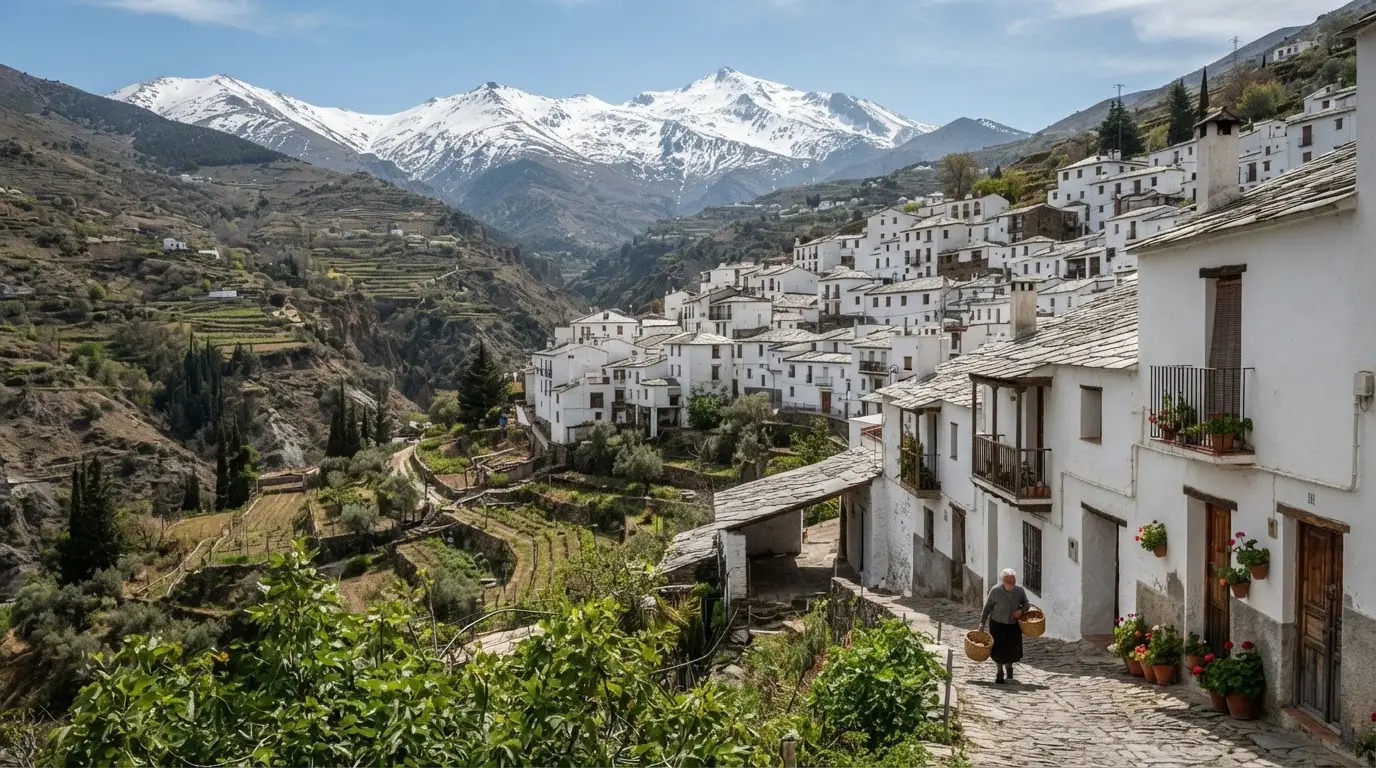
Deep dive · Article
Moriscos of Granada: Secret Islam and the 1609 Expulsion
Forced to convert in 1502, Granada's Moriscos practised secret Islam under Inquisition surveillance for a century before Philip III expelled 270,000 in 1609.
The Cuesta del Realejo is the route locals use to approach the Alhambra: a 15-to-20-minute climb that avoids the tourist-heavy Cuesta de Gomérez and passes through the upper streets where the carmenes sit behind high walls. A carme (from the Arabic karm, meaning vineyard) is a private walled garden draped over the hillside, planted with fruit trees, roses, jasmine, and fountain basins. You cannot enter them; their presence announces itself in scent and the sound of water through a wall. In April the orange blossom from the gardens above the Cuesta del Realejo carries halfway down the hill.
On Calle Molinos and the exterior walls of the Colegio Santo Domingo, the murals of El Niño de las Pinturas (the street artist Raúl Ruiz) overlay the older history with something more immediate. His work runs to hyper-realistic faces and handwritten fragments of poetry. The faces look out of walls that were here, in some form, when Samuel HaNagid walked this quarter. The effect is not decorative.
How to visit the Realejo: practical notes
The Realejo is a 10-to-15-minute walk from the cathedral and Plaza Nueva. From Plaza Nueva, cross Calle Reyes Católicos into the old town, pick up Calle Pavaneras (where the Judah ibn Tibbon statue stands), and follow it southwest. The neighbourhood opens from there.
Campo del Príncipe is the natural anchor point for the visit. The square has half a dozen tapas bars on its terraces and is best in the late afternoon when Granada's free-tapas culture is fully operational. Order a beer and you will receive a plate; the plate changes with each round, the logic being competitive rather than scripted.
For the murals, Calle Molinos runs parallel to the upper edge of the neighbourhood, below the Torres Bermejas towers. The Torres Bermejas themselves, the red towers on the Alhambra's outer defensive circuit, are visible from most of the upper Realejo and provide a useful orientation point.
The Centro Sefardí on Placeta Berrocal maintains limited opening hours and it is worth checking in advance. The Palacio de los Olvidados (check current hours and admission on their website) is in the Albaicín rather than the Realejo, but the walk between the two neighbourhoods is pleasant and the two sites complement each other: Realejo for the street context, Palacio de los Olvidados for the historical content.
The Cuesta del Realejo as an Alhambra approach route is genuinely better than the main Cuesta de Gomérez for people who want a quiet walk rather than a souvenir market. It adds about five minutes to the approach and delivers you near the Alhambra's ticket office. The carmenes on the upper lanes are not open to visitors, but the scent of the gardens and the occasional glimpse of wisteria over a wall are reward enough for the gradient. For a structured route through the neighbourhood, the Realejo Barrio Walk is one of the free self-guided routes on the walking tours page.