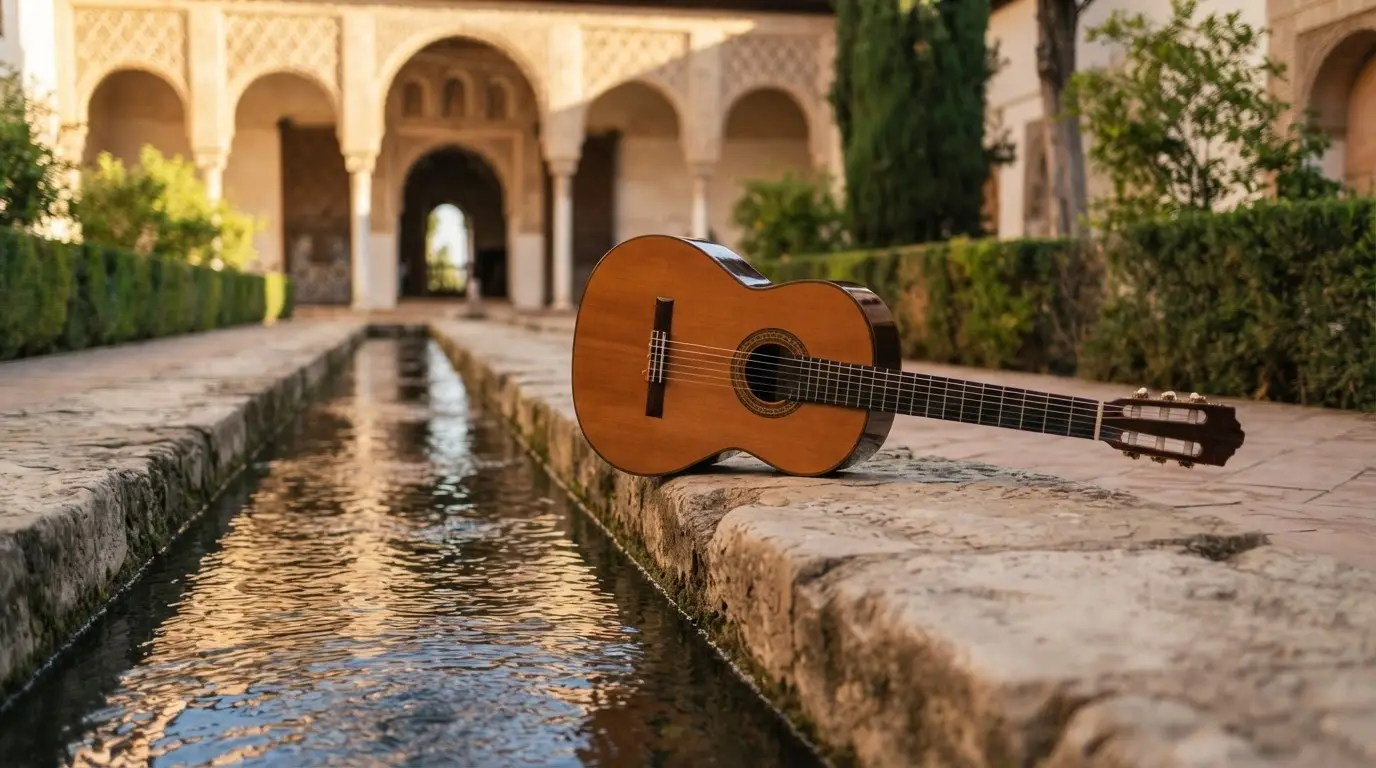

Written in Málaga, remembered from the Alhambra
The visit is the part with a paper trail. In spring 1899 Tárrega spent several weeks in Granada, living in a pensión, according to the Alhambra's own journal, Cuadernos de la Alhambra.[3] Seco de Lucena's 1972 account has him visiting monuments as Albéniz had done, and says that was when he composed the delicate tremolo piece;[4] it also places a private guitar recital on 14 April.[5]
The score tells a more careful story. The surviving manuscript is dated Málaga, the feast of the Immaculate Conception, 8 December 1899, months after the spring stay and while Tárrega was on his way to Algeria.[1] An autograph only came to light in 1991; before that the piece was known from an early 20th-century print dedicated to Alfred Cottin.[6] The manuscript later passed through Frederic Mompou and Fernando Alonso's collection, was bought at auction in 2011 by Wolf Moser and was donated by him to Barcelona's Museu de la Música in 2016.[7]
So the answer to 1896 versus 1899 is 1899. Some catalogues list 1896 as the composition year, while the dated manuscript says 8 December 1899.
The chronology has two anchors: Tárrega spent several weeks in Granada in spring, and the oldest surviving score is a rough 'improvisation' written down in Málaga in December.
Pujol's biography ties the piece to an Andalusian tour made with Gómez de Jacoby. The musicologist Buch reads that as speculation, since the earliest source is the December score.[8]
A name-day gift for Conchita, not a postcard
Read the manuscript as a gift. Tárrega made it as an offering for the name day of Doña Concha Gómez de Jacoby, his friend, disciple and protector,[9] and wrote on it that she should accept his 'poor note', the poetic impression his soul felt before the grandiose marvel of the Alhambra, which the two of them had admired together.[10] It is the only piece he ever composed about a place.[11]
Explore nearby · Monument
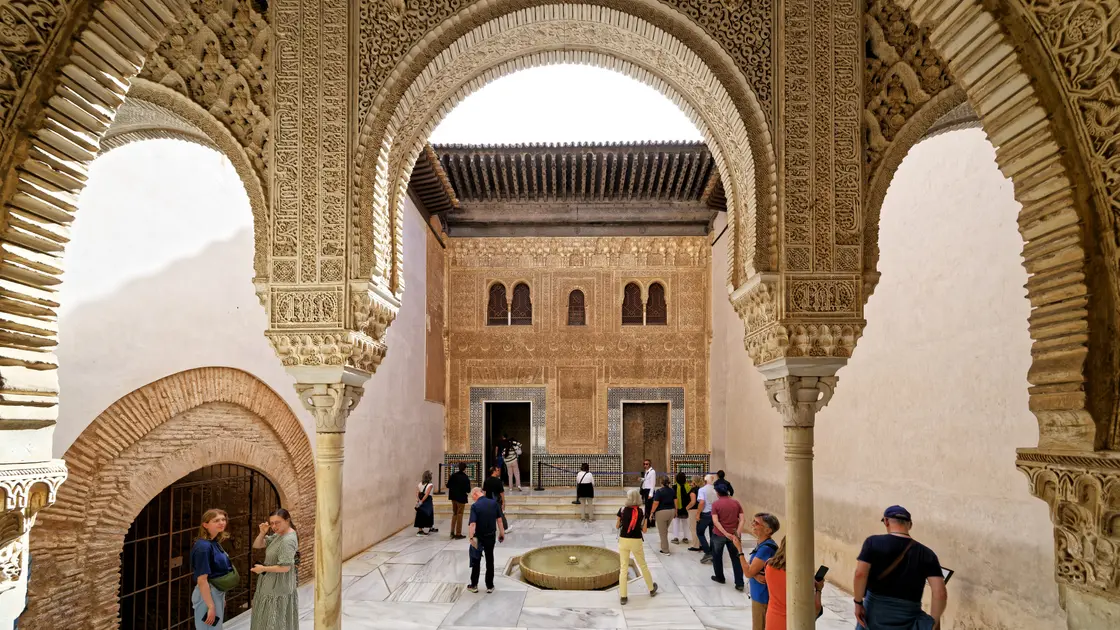
Alhambra
The Alhambra is Granada's UNESCO fortress-palace: Nasrid Palaces, Alcazaba and Generalife gardens. Tickets sell out weeks ahead; book via the Patronato site.
Gómez de Jacoby is the wealthy patron Tárrega met on a concert tour in Valencia, and she became a valuable support to him.[12] Pujol's biography calls her Doña Concha Martínez and never learned that Tárrega composed the piece for her.[13]
The name everyone knows belongs to a later layer. Tárrega met Alfred Cottin in Paris on a visit in 1897 that Concepción sponsored,[14] and when the piece was printed, with the title Recuerdos de la Alhambra fixed at the end of the first decade of the 20th century,[2] the dedication moved from her to him. The two versions differ in small ways:
- Title: Improvisación ¡A Granada! Cantiga Árabe in the manuscript, Recuerdos de la Alhambra in print.[2]
- Dedicatee: Gómez de Jacoby in the manuscript, Cottin in the print.[14]
- Tempo: Andante in the autograph, Andantino in the print.[15]
- Ending: a closing chord in the manuscript, a long arpeggio in the published version.[16]
Tremolo, borrowed tunes and a Moorish accent
The effect that made the piece famous is mechanical. One melody note is plucked in rapid succession by the ring, middle and index fingers while the thumb plays an arpeggio accompaniment at the same time,[17] which is why people who have heard it without watching often take it for a duet.[18] The sustained note is an illusion, and the piece is built on it.
Tárrega was not the first to put a place into a tremolo. José Viñas had already written a tremolo capricho, Recuerdos de Palma, and Albéniz's En la Alhambra, from the 1886-87 Recuerdos de viaje and also in A minor, had taken the palace into piano music.[19] Tárrega's own piece opens in A minor and turns to the parallel major, A major, in its second section.[20]
The Moorish colour is a matter of musical gesture. Tárrega inflects the quivering line with rapid triplet ornaments at key cadences and leans on the dominant phrygian mode.[21] Wolf Moser appears to have been the first commentator to notice that the opening phrase resembles Nadir's aria Je crois entendre encore from Bizet's Les pêcheurs de perles.[22]
The fountains: a popular reading, not Tárrega's
The story most listeners hear goes like this: Tárrega, standing in an Alhambra courtyard, hears running water, and the tremolo is the fountains. Programme notes and modern editions state it as fact without giving a source,[23][24] and one dramatised retelling has him hear the water and reach for his guitar, in the same breath as an 1896 date and the wrong dedicatee.[25]
The documents closest to the piece say something narrower. The inscription on the manuscript speaks of a poetic impression of the Alhambra's grandeur and of a visit shared with Conchita,[10] and Buch reads the piece as a gift commemorating their time together at the palace.[26] Neither line mentions water. The fountain image is a listener's interpretation, and an appealing one: another listener hears shimmering water in the pools of the Alhambra.[27]
Two other readings fit the record at least as well:
You can test the fountain reading on site, though the dedication names the Alhambra as a whole and no particular court. The Alhambra water system explains why the water is there at all, and the Court of Lions is one place to start. Whether Tárrega ever listened for it is a question the manuscript does not answer.
Where Recuerdos de la Alhambra lives now
The autograph is not in Granada. It is held by the Museu de la Música in Barcelona, where Wolf Moser's donation placed it in 2016.[7] The museum announced a loan to the Granada exhibition Sobre la Alhambra en el arte moderno, with the manuscript leaving Barcelona on 1 March 2022 and the show scheduled from 11 March to 15 May.[28] Check with the museum before planning a visit around seeing it.
The piece itself travelled much further. Miguel Llobet, Andrés Segovia and Julian Bream are among its performers,[29] and it reached screens through Forbidden Games, with Narciso Yepes on guitar, as the Philip II theme in Civilization VI and in a 2018 Korean series titled Memories of the Alhambra.[30]
Deep dive · Article
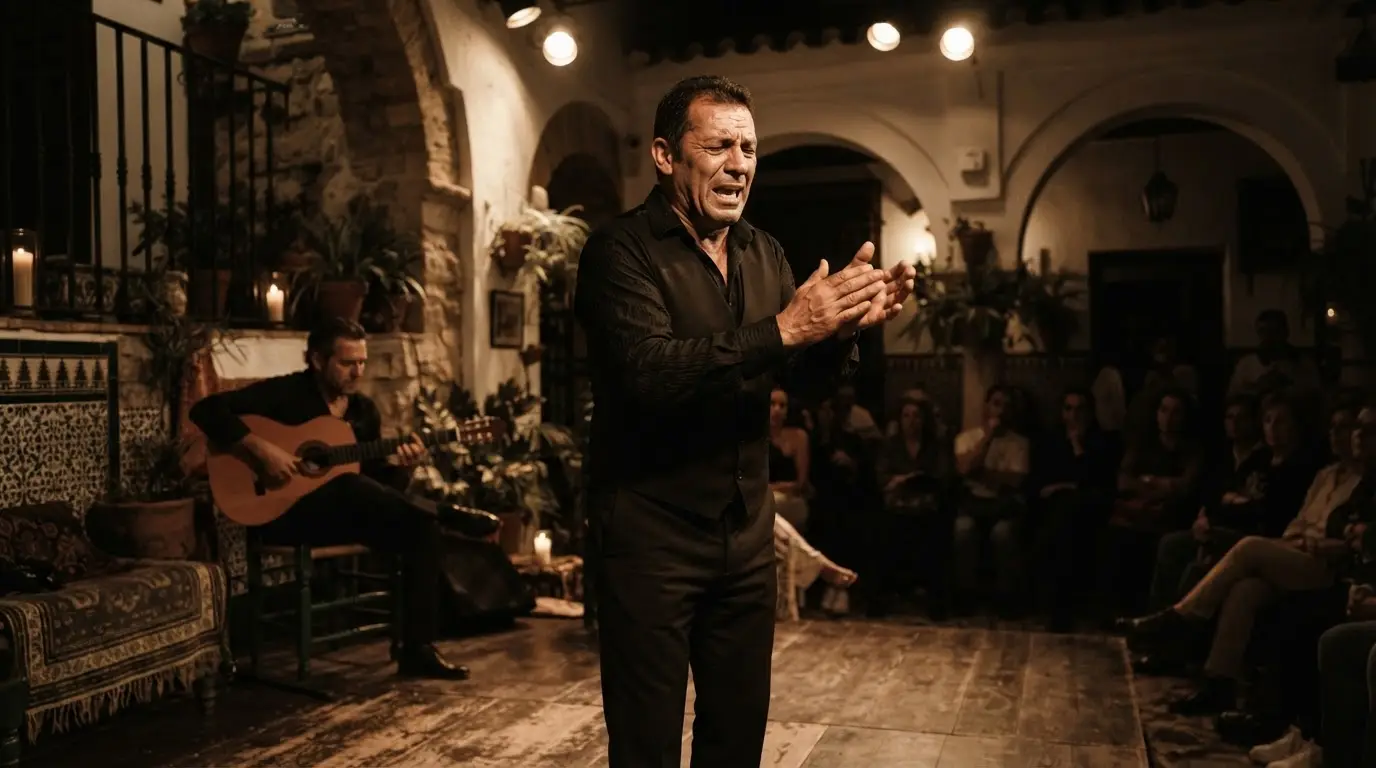
Enrique Morente: Granada's Flamenco Revolutionary
Enrique Morente went from Albaicín choirboy to flamenco's most radical voice, reviving cante, setting Lorca to song, and fusing it with rock on Omega (1996).
Recommended tours
Tours are selected for quality, not commission. We earn a small fee if you book — at no extra cost to you.
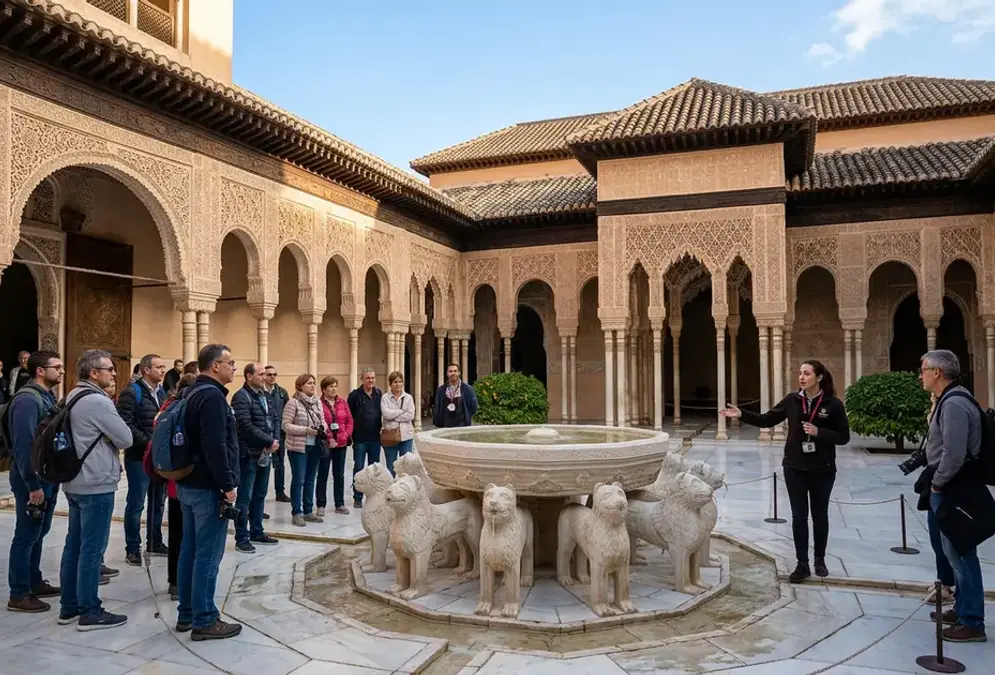
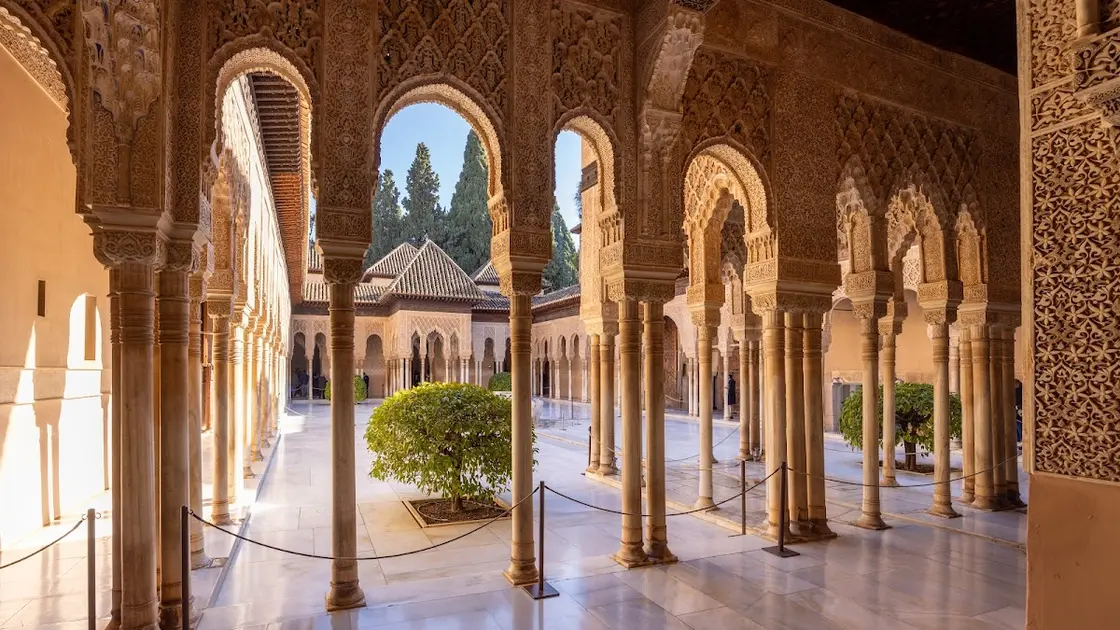
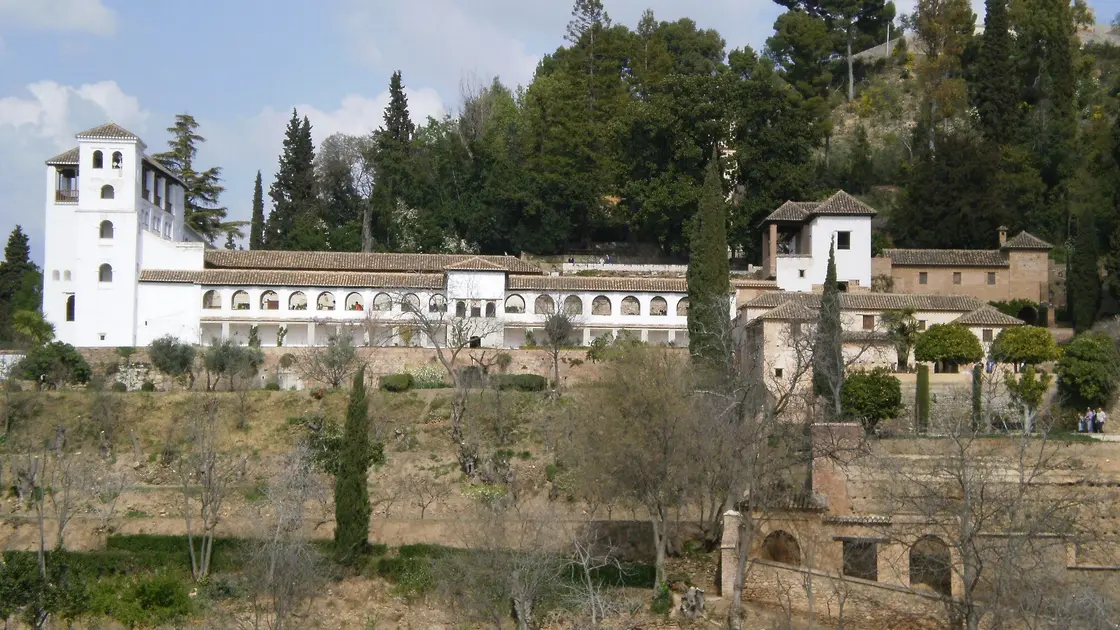
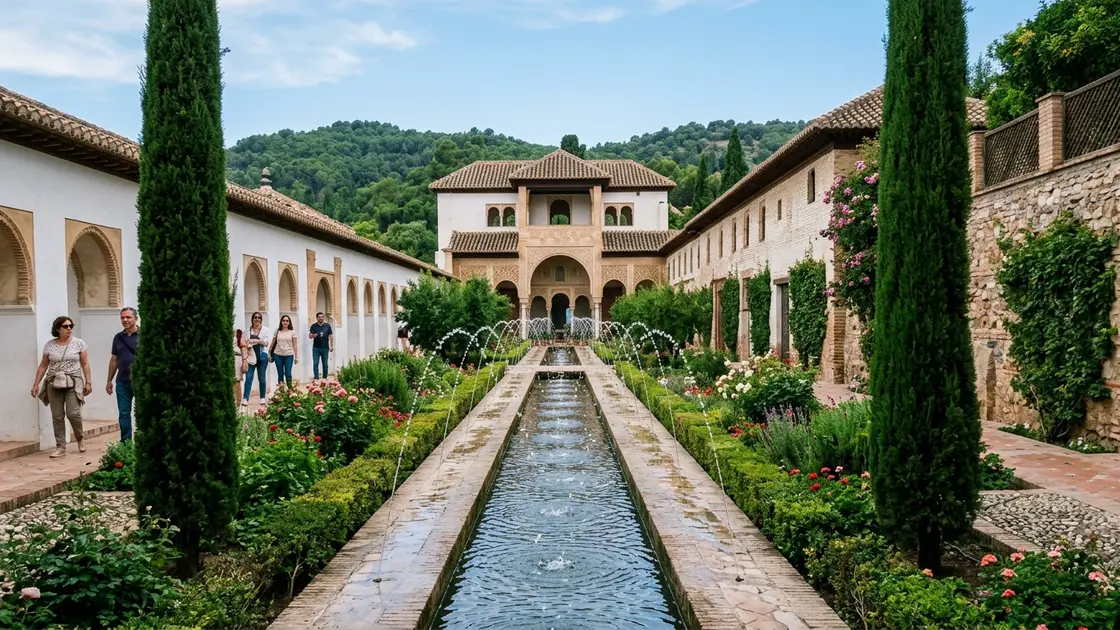
In Granada, the useful pairing is the music and the hill. Play a recording before you walk up to the Alhambra, then read Tárrega's inscription against the palace: his 'poetic impression' was of its grandeur as a whole, not of one courtyard.[10] The Generalife is the natural second stop on the same hill. For another musician tied to the Alhambra, read about Ángel Barrios, the Granada composer and guitarist who belongs to the palace-city's own musical story.