A city that lost its mosques, and the one it got back
The Albaicín's medieval main mosque did not survive the conquest as a mosque. It became the Iglesia del Salvador, a Mudéjar church built in the sixteenth century that still keeps the old courtyard (sahn), a western gallery of pointed horseshoe arches and the cistern[2]. It was later made a collegiate church[3].
That older story, and the Great Mosque that the cathedral replaced, is told in our history of the Great Mosque of Granada. This article starts where it stops, centuries on, with the conquest of 1492 long settled and no purpose-built mosque anywhere in the city.
Land, Libyan money and a hostile climate
The community bought its plot on the Albaicín hill with money from Libya. Qantara dates the purchase to 22 years before the opening[6]; Al Jazeera's 2003 report says the project had been in the making for 20 years[7]. Take it as the early 1980s. Dawn's agency copy repeats that the site was acquired thanks to a donation from Libya[8].
Buying land was the easy part. Abdul Haqq, a community spokesman, remembers broadcasts and press coverage turning against the project, and "Moors out!" painted on walls[6].
He is blunter about the local mood: "Even if no-one admits it openly, we were not welcome here"[9].
Qantara's later reporting calls it "somewhat of a miracle" that the mosque was built at all[10]. The word fits a project that needed one foreign donor to buy the land and another to finish the building.
The longer story of how Granada's Muslims were treated after the conquest, from conversion to expulsion, is in our account of the Moriscos of Granada.
Setbacks, archaeology and who paid
It was 1998 before construction could begin, Qantara reports[11]. By the two dates above, that is roughly 15 to 17 years after the plot was bought. A community official later summed up the whole process as slow "because of financial and political reasons"[12].
Al Jazeera's report names two setbacks: the death of Morocco's King Hassan II, who was very attached to the scheme, and archaeological remains that halted work for some time[13]. Digging on an old hill quarter turns things up. Here the cost was time.
Libya funded the project first. Al Jazeera reported that the Emir of Sharjah in the United Arab Emirates then covered most of the $4.5 million needed, though Qantara gives a different breakdown[14]. Set against two decades of delay, the money looks like the simpler problem.
Money also brought a say in the running. Control of the foundation stays local by a single seat: the Spanish community holds a 4-3 majority on its council, and the Emir of Sharjah, the biggest donor, appoints the rest[15].
What the complex is, and what it faces
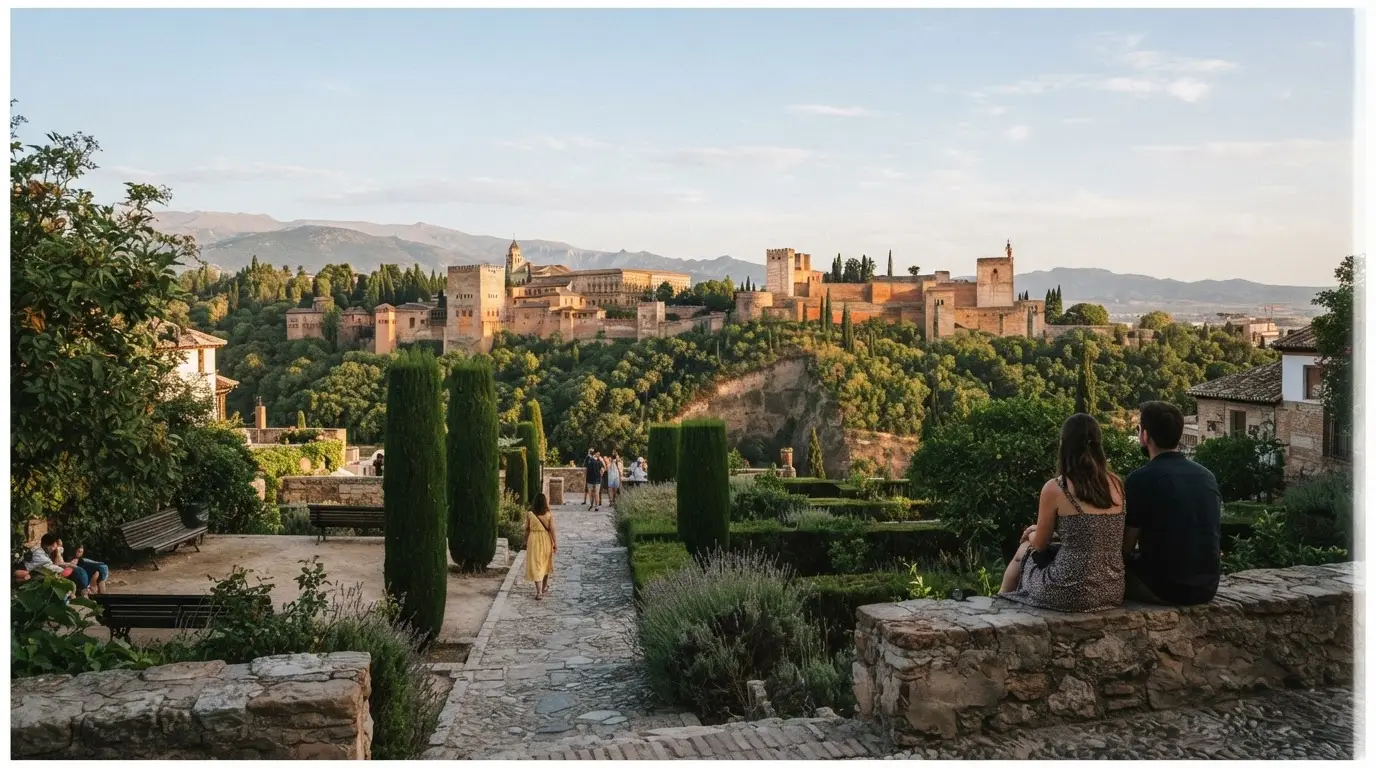
The mosque stands beside the Mirador de San Nicolás[16], the best-known viewpoint of the Albaicín. The climb that brings the crowds to the hill brings them to its gate.
Explore nearby · Monument
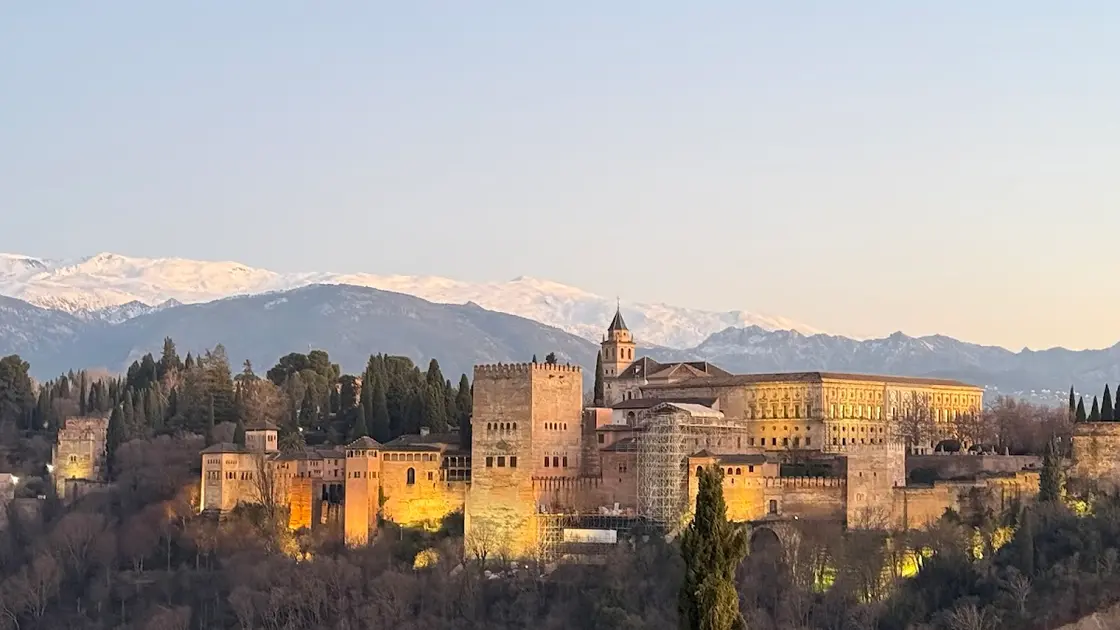
Mirador de San Nicolás
Free 24-hour viewpoint in the Albaicín with unobstructed Alhambra views and the Sierra Nevada as backdrop. Crowds peak at sunset; early morning is far quieter.
The complex combines the mosque, a centre of Arabic studies and a garden[17]. Qantara describes a prayer room for several hundred people, with the library and a study centre for scholars of Islam in separate outbuildings[18].
The garden is the reason many non-Muslim visitors climb the hill: it looks out on the Alhambra, the Darro valley and the Albaicín[17]. Dawn reported in 2003 that it was already becoming an attraction for local people and for tourists from Muslim countries[19].
Recommended tours
Tours are selected for quality, not commission. We earn a small fee if you book — at no extra cost to you.
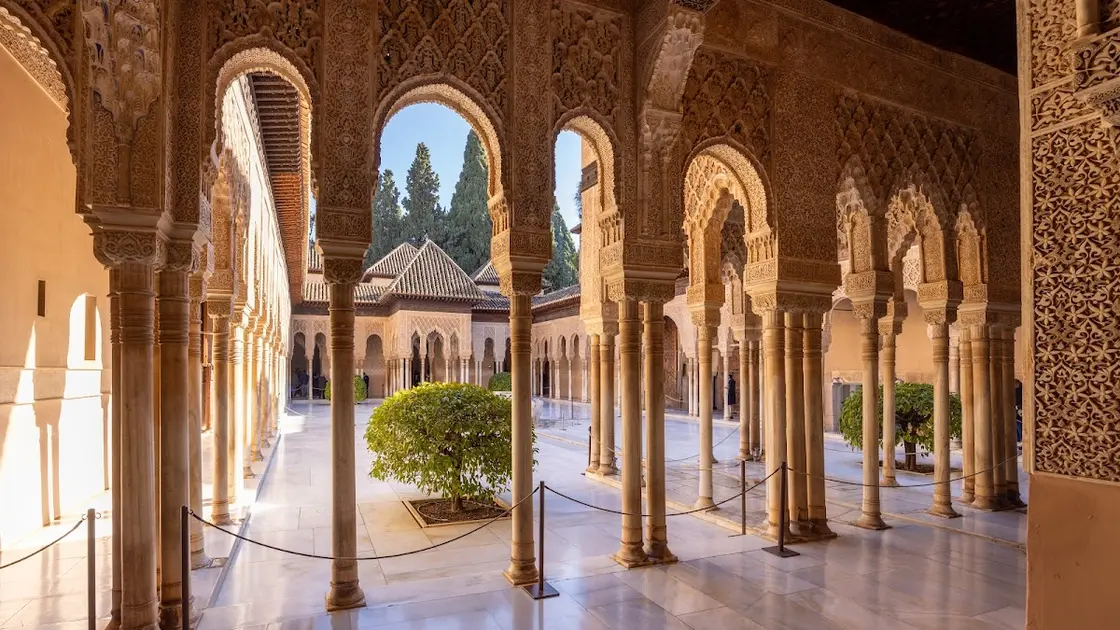
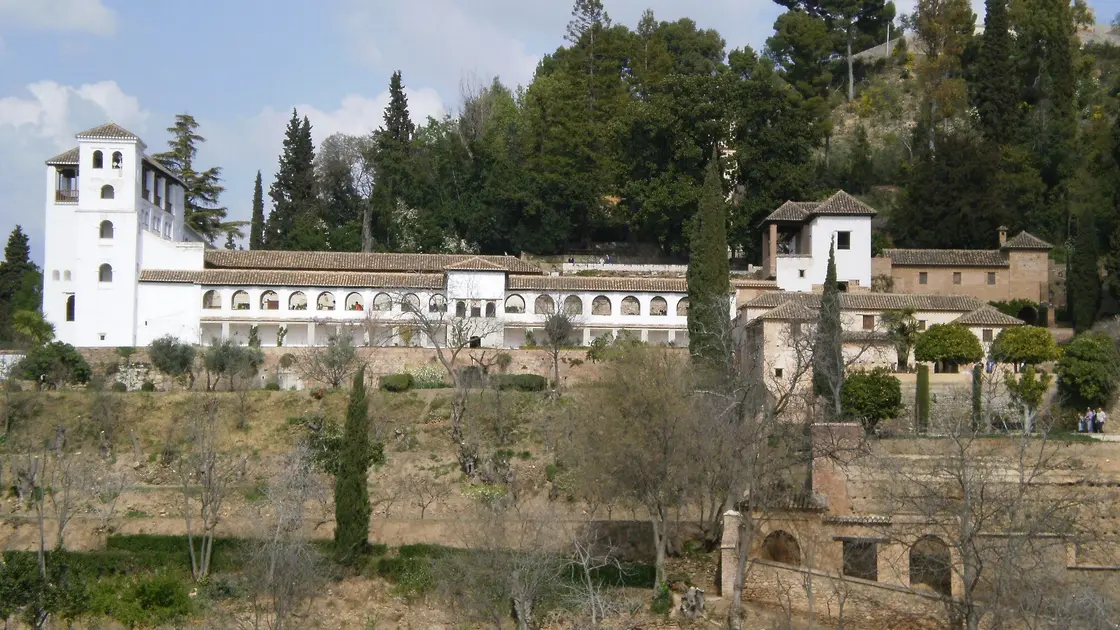
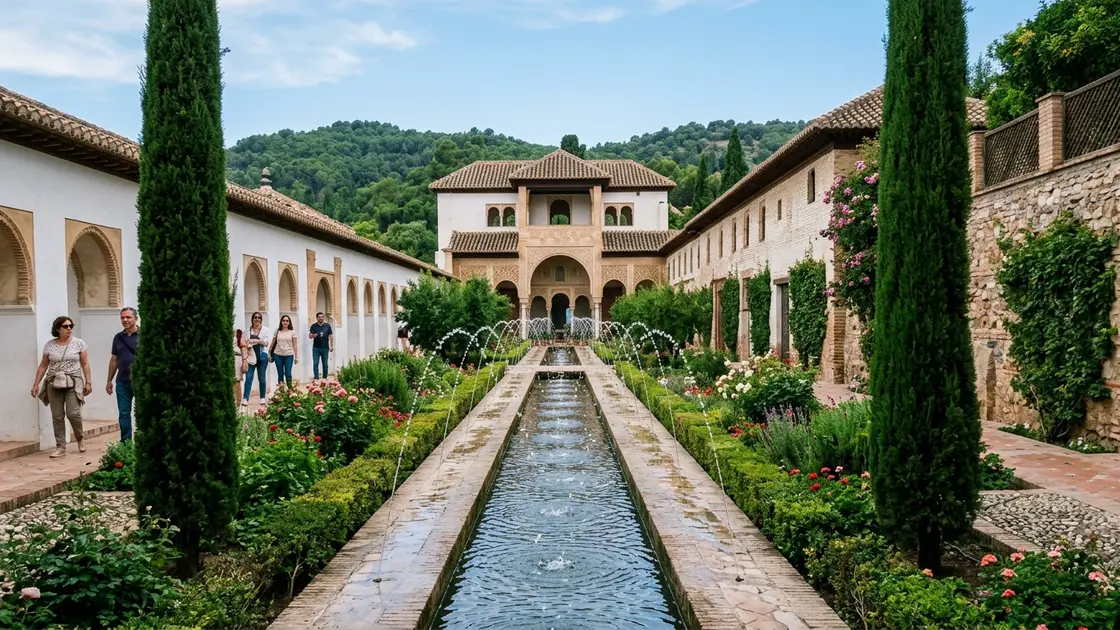
The most pointed detail is the call to prayer. The muezzin climbs 59 steps and directs his call towards the Alhambra[20], a palace complex whose own royal mosque vanished. The call is unamplified. In the words of a later Qantara piece, "here it's just a man, his voice and the wind."[21]
Visiting a working mosque
Treat it as a place of worship first. The head of the community's national body put daily attendance in the hundreds in 2003, so the prayer room was in use from the start[22].
Ramadan shows the same pattern. A 2018 report describes the whole Quran being read twice through during the month[23], and the mosque's own site records a Granada platform of Muslim communities, the Mezquita Mayor among them, that arranged visits between mosques across Ramadan[24].
Confirm visiting terms first
Opening hours, entry fee and dress code for non-Muslim visitors are not confirmed here. Check the mosque's official site, mezquitadegranada.com, before you climb the hill. The hours on the city tourism portal belong to the tourist office, not to the mosque.
For prayer times, halal food and other practicalities for Muslim visitors, our Muslim traveller's guide to Granada covers what this article does not.
Deep dive · Article
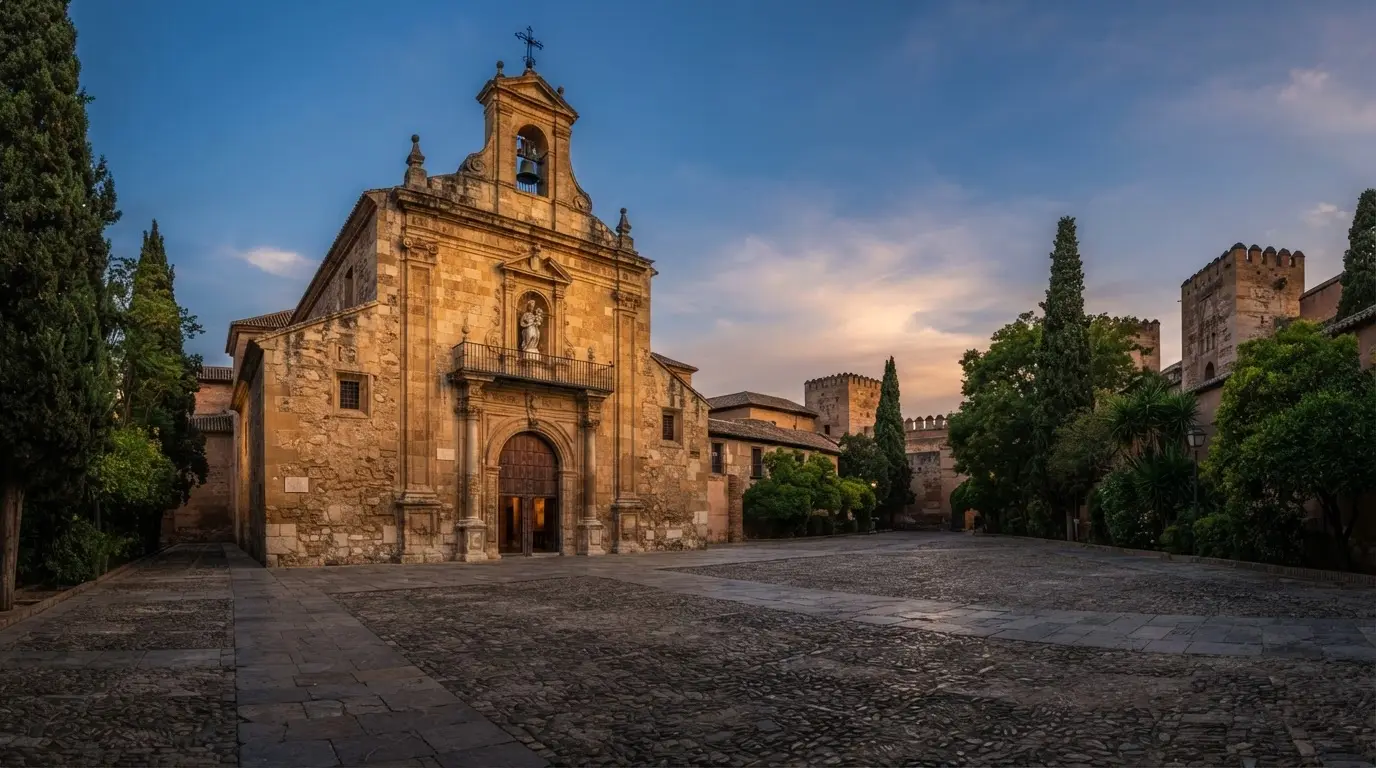
Alhambra Royal Mosque: From Nasrid Mosque to Santa María
The Alhambra royal mosque was completed in 1305 and later replaced by Santa María. Read its plan, surviving bath and difference from Granada's city mosque.
The case for going is narrow and real. It is a modest building, finished late, with a garden facing the Alhambra. Go for the gap it closes and for the view, not to tick off a monument.