Interesting facts about Granada Spain that guidebooks skip: disputed etymologies, the soldier who saved the Alhambra, and a river buried under Plaza Nueva.
Seven years resident in Granada. Specialist in Nasrid architecture, Al-Andalus history, and Andalusian walking routes.
Updated Published
Most people leave Granada knowing they have seen something extraordinary but not quite understanding why. These twenty facts answer that question in ways that general guidebooks tend to skip: where the name came from, who actually saved the Alhambra from destruction, and what flows beneath your feet as you walk across Plaza Nueva.
In this article
Jump to a section
⌄
Name, identity, and the last sultanate
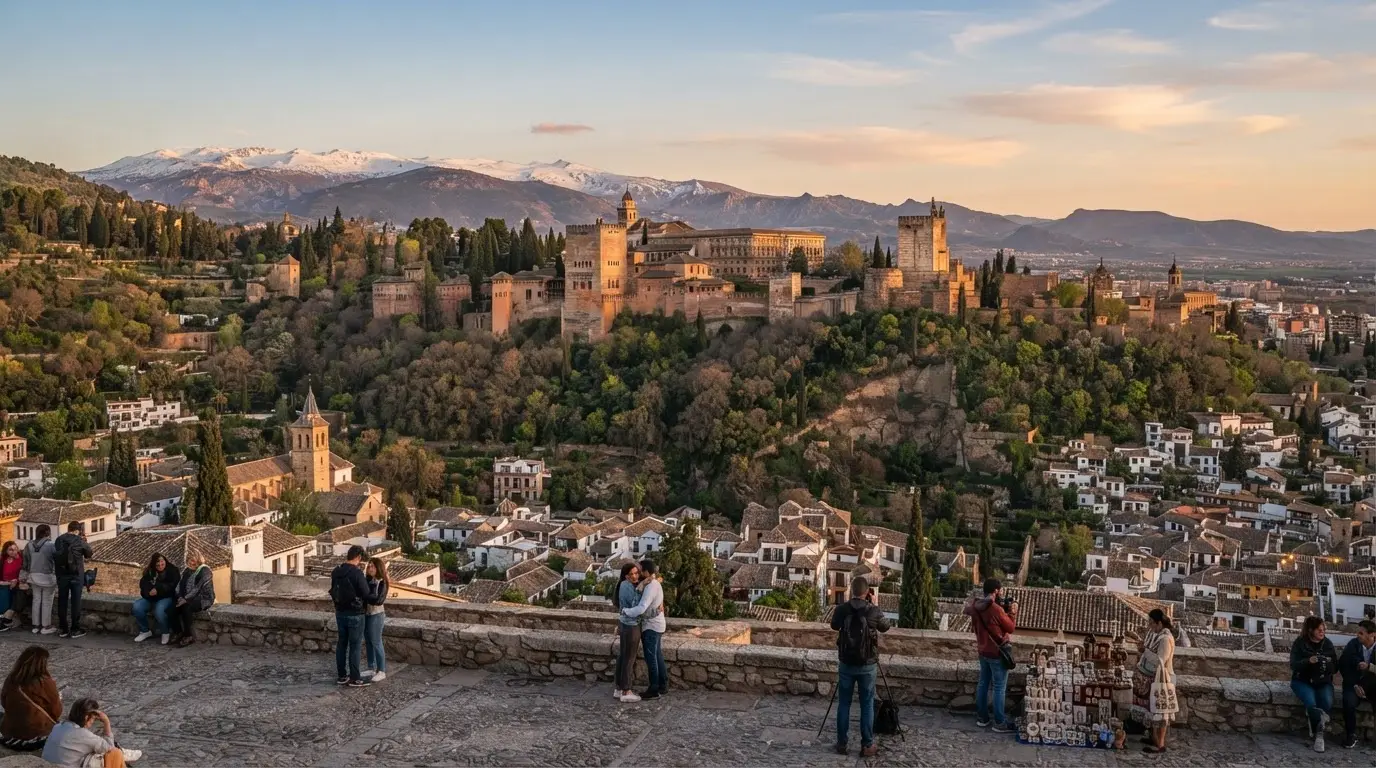
Start with the name itself. The Arabic name was Ġarnāṭa, and no one fully agrees on where it came from.[1] Three competing etymologies circulate: the most romantic derives it from the Latin granatum (pomegranate), which would make the city named after its own heraldic fruit. A second traces it to the Arabic kurn (hill) and nattah (stranger), meaning roughly hill of strangers. A third, preferred by some scholars, translates it as hill of pilgrims. The pomegranate still appears on Granada's coat of arms and on the city's stone fountains, so the fruit etymology, true or not, stuck with more force than the others. For the full range of theories and what scholars actually know, read about how Granada got its name.
The more consequential historical fact is what Granada was from 1238 to 1492: the last independent Muslim kingdom on the Iberian Peninsula, surviving for 260 years, from 1232 to 1492, after the rest of Islamic Spain had fallen to the Reconquista.[2] The Nasrid dynasty founded it when Muhammad I Ibn al-Ahmar retreated south from Jaén, negotiated a vassal arrangement with Castile, and began building the Alhambra. At its peak, Granada absorbed refugees from every other fallen emirate in Iberia, becoming a final enclave of a civilisation that had once stretched from Córdoba to Lisbon. By 1490, the Nasrid emirate was the only Islamic-governed territory left in the peninsula, surrounded on all sides by Christian kingdoms.
When the city finally fell, it did not fall quietly. On 2 January 1492, Boabdil (Muhammad XII), the last Nasrid sultan, handed the keys of the Alhambra to Ferdinand and Isabella and rode out of the city with his court. He looked back from a pass in the hills south of the city. The pass is still called El Suspiro del Moro (The Moor's Sigh).[4] His mother, Aixa la Horra, reportedly said: You weep like a woman for what you could not defend like a man. Whether she said it or not, the story has survived five centuries because it captures something true about the weight of that departure. The deeper context of the Nasrid succession crisis that made the city's fall almost inevitable is worth reading separately.
260 years
The Nasrid emirate of Granada survived from 1232 to 1492, longer than the United States has existed. It was the final Islamic-governed territory in the Iberian Peninsula, outlasting every other Moorish kingdom by centuries.
One quieter consequence of 1492 rarely appears in tourist literature: the same year Granada fell, the Alhambra Decree expelled all Jews from Spain. Columbus had witnessed the city's surrender in January; he sailed west in August. Three of the most consequential events in European history share a calendar year in Granada.
The Alhambra: red fort, a soldier's courage, and Columbus
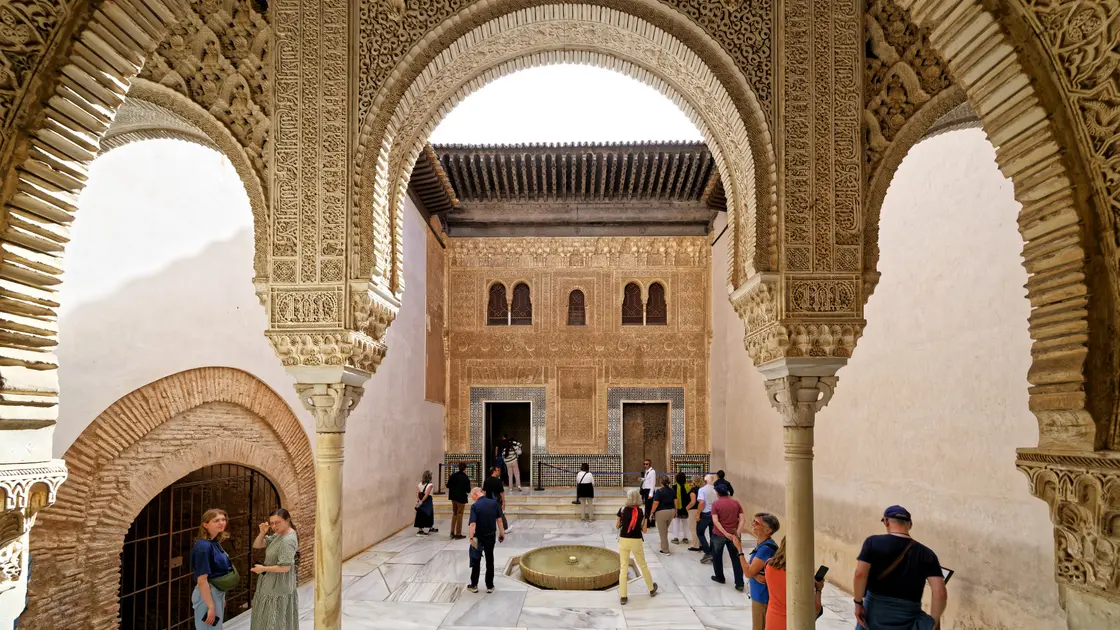
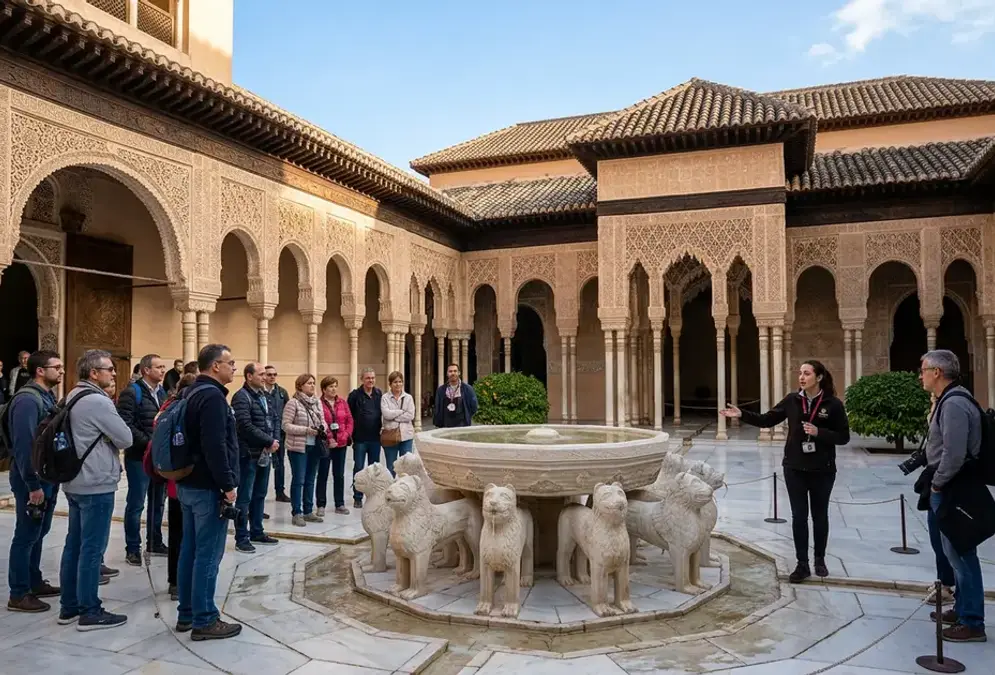
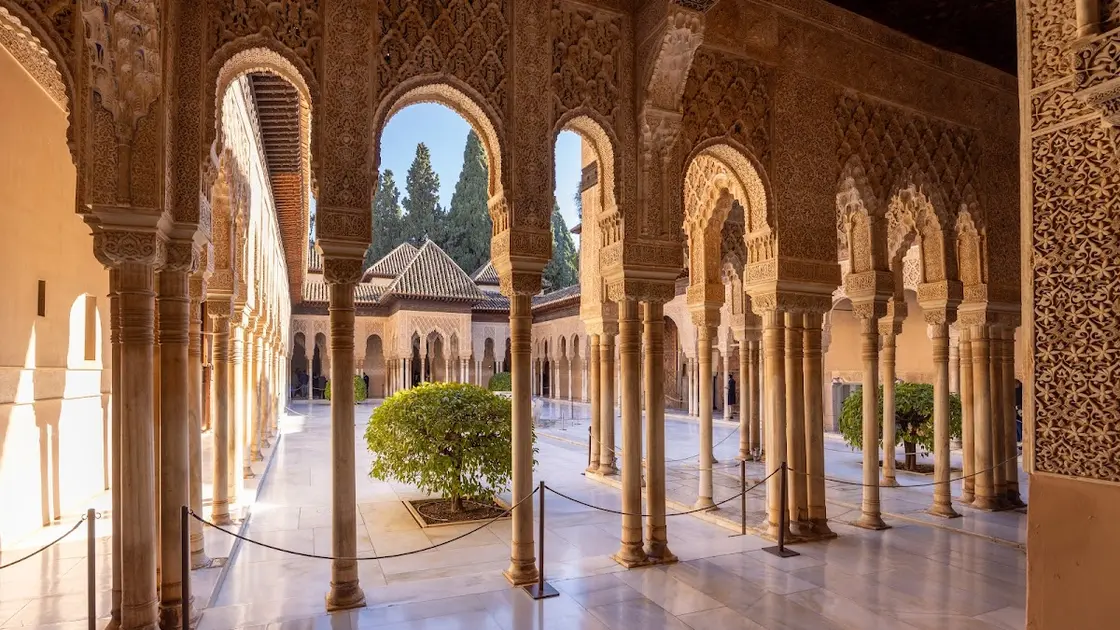
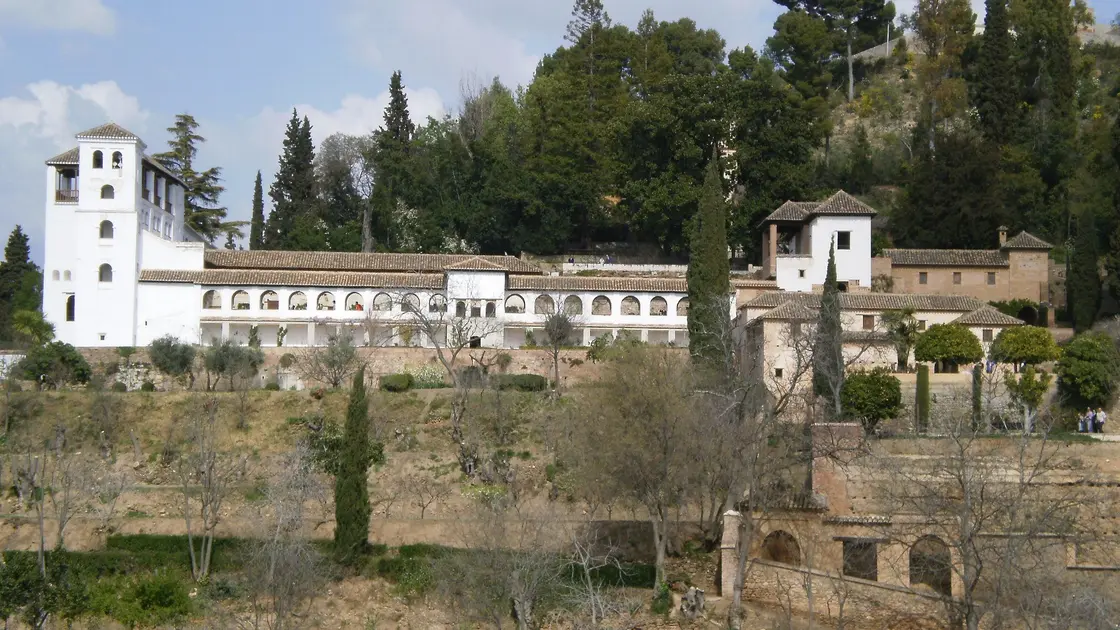
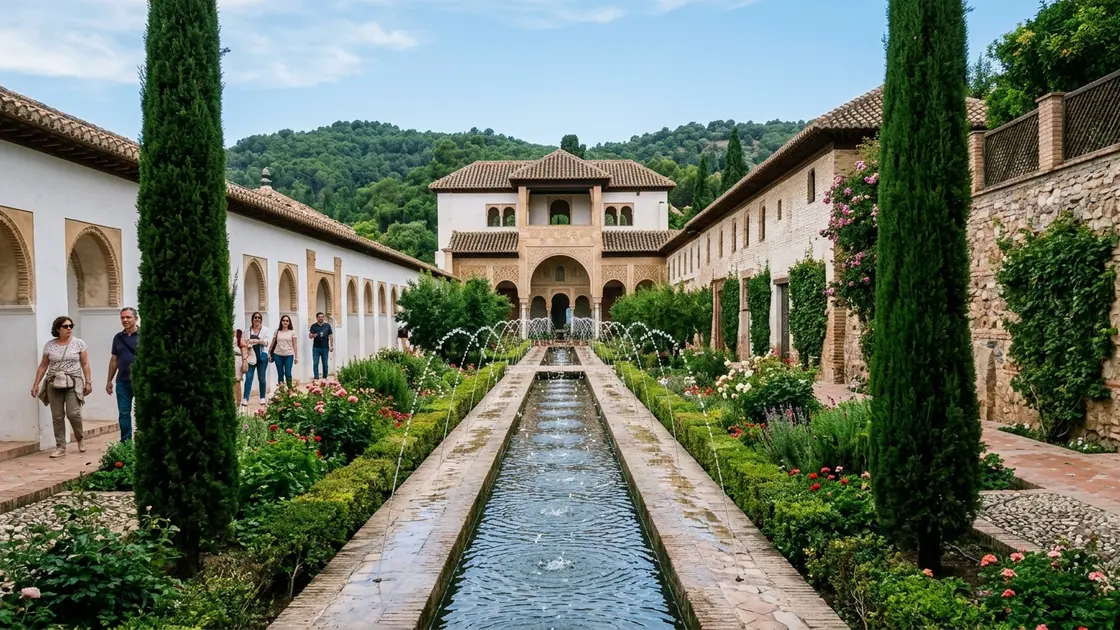
The name Alhambra comes from the Arabic al-qal'a al-hamra, meaning red fort or red castle, a reference to the reddish stone of its outer walls and towers. Muhammad I began construction in 1238, six years after founding the Nasrid emirate in 1232. But the palace complex that visitors walk through today did not take its iconic form until the 14th century, under two later sultans: Yusuf I (ruled 1333–1354) built the Torre de Comares and the Comares throne room, and Muhammad V (ruled 1354–1391) added the Court of Lions, the high-water mark of Nasrid decorative architecture.[3]
The fact that the Alhambra exists at all is partly down to one person acting on instinct during a military retreat. During the Napoleonic Wars, French troops occupied Granada and prepared to demolish the entire palace complex as they withdrew. Explosives were placed throughout the buildings. A disabled Spanish soldier named José García cut the remaining fuses before they could detonate, saving much of the palace complex.[4] Had he not acted, the Alhambra might be a field of rubble today. The building's UNESCO World Heritage inscription in 1984 and its status as Spain's most-visited monument owe something to that one decision. The inscription was expanded in 1994 to include the Albaicín neighbourhood across the valley, recognising the medieval Islamic quarter as part of the same protected site.[11]
The Alhambra also carries a diplomatic footnote that surprises most visitors. Christopher Columbus was present at the surrender ceremony on 2 January 1492 and returned to the Alhambra shortly after to present his expedition plans to Ferdinand and Isabella.[2] The monarchs signed the authorising contract — the Capitulations of Santa Fe — on 17 April 1492, not in the Alhambra but at Santa Fe, the royal encampment constructed outside Granada's walls during the siege. Columbus had presented his plans in the Hall of Ambassadors; the formal agreement was executed at a purpose-built settlement nearby. The Alhambra was nevertheless the place where the political will was formed for both events: the end of Moorish Spain and the opening of the Atlantic.
Washington Irving's 1832 book Tales of the Alhambra, written while he lived inside the palace complex as a guest of the Spanish governor, is largely responsible for the Alhambra's international fame in the modern era. Before Irving, the palace had fallen into disrepair and was partly occupied by squatters. His romantic essays sent educated European travellers to Granada in significant numbers. The tourism economy that followed eventually funded the restoration work that makes the site what it is now. The role of a single American writer in saving a Moorish palace from neglect is another fact that tends not to appear in visitor briefings.
Free tapas and the university that keeps them alive
Granada calls itself la ciudad de tapas — the city of tapas — and the claim is defensible. Order any drink at a traditional bar and a plate of food arrives, unrequested and uncharged. This happens in Madrid on occasion and in a handful of other Spanish cities as a marketing gimmick, but in Granada it is still close to universal at neighbourhood bars and structural to the city's social life.
The etymology is simple enough. The Spanish verb tapar means to cover, and the most plausible origin story has bartenders placing a slice of bread or jamón directly on top of customers' wine glasses to keep flies out during hot weather. The cover became a habit, the habit became a custom, and the custom became economically self-reinforcing: once enough bars served food for free, any bar that stopped was simply the bar with worse value.
What preserved the tradition in Granada specifically, when Seville and Córdoba quietly abandoned it decades ago, is the university. Granada has approximately 47,000 undergraduate students[11], making the University of Granada one of the largest in Spain relative to the city's total population. That demographic creates fierce competition among bars near campus. Drink prices stay low; value has to come from somewhere. It comes from food. The cost of the tapa is folded into the drink price, which is why a caña in Granada costs slightly more than a caña in a small Andalusian village but comes with a plate of albóndigas. The full history of Granada's free tapas tradition goes deeper into the economics and the unwritten rules that govern it.
Recommended tours
Tours are selected for quality, not commission. We earn a small fee if you book — at no extra cost to you.
The practical consequence for visitors: avoid the tourist bars on Calle Navas and around Plaza Nueva, where the tradition has been quietly hollowed out. The bars that still take it seriously are in the streets around the university, in the older sections of the Albaicín, and in the Realejo neighbourhood south of the cathedral. At a serious bar, the tapa changes with each round; at a tourist bar, it is a bowl of crisps.
Sierra Nevada, underground rivers, and extreme geography
Granada sits at an average elevation of approximately 738 metres above sea level.[11] That height is part of why the city can be brutally hot in summer and genuinely cold in winter, a temperature range that surprises visitors who associate Andalusia only with heat. For the full explanation of why that elevation gap matters, see our deep-dive on why Granada is so cold.
The Sierra Nevada resort, 27 kilometres from the city centre, is Europe's southernmost ski station and receives more winter sunlight than any other ski resort on the continent.[6] Pradollano, the resort village, sits at 2,100 metres. The highest point, the Mulhacén, reaches 3,479 metres, making it the highest mountain in the Iberian Peninsula.[6] None of that is what surprises visitors most. What surprises them is the drive time to the sea: on a good day, it takes under an hour to descend from the ski slopes to the Mediterranean coast near Motril.[7] You can ski in the morning and swim in the afternoon. This is not a theoretical possibility; Granadinos actually do it.
Below the city, geography takes another unexpected turn. The Darro River flows openly and visibly along the Carrera del Darro, one of the most photographed streets in Andalusia. What most visitors do not know is that the same river continues beneath their feet when they cross Plaza Nueva, running in a bricked vault under approximately one kilometre of city centre before emerging near the central market.[10] The culverting happened in two phases, between 1854 and 1938, to prevent flooding and create new street space. The Gran Vía de Colón, Granada's main commercial boulevard, was built directly above the buried river. The full story of the Darro's burial and what it replaced is more complicated than most people expect.
The elevation also creates a weather pattern that sets Granada apart from the coastal Andalusian cities. Snow on the Alhambra happens most winters. The Albaicín looks different under snow: the whitewashed walls brighter, the views to the Sierra Nevada sharper, the terraces empty. If you visit in January or February and it snows, you are not unlucky.
Lorca, Sacromonte, and the legends that refuse to settle
Federico García Lorca was born on 5 June 1898 in Fuente Vaqueros, a village 17 kilometres west of Granada.[8] In a career that lasted fewer than two decades before his murder in 1936, he produced three plays now performed across the world: Blood Wedding, Yerma, and The House of Bernarda Alba. He also wrote the Romancero Gitano and the Poeta en Nueva York cycle, collaborated with Salvador Dalí and Luis Buñuel, and put Granada's Romani community on the international literary map. His connection to the city was not just biographical; his understanding of the deep grammar of duende, that quality of raw emotional authenticity that serious flamenco requires, came directly from the cave singers and guitarists of Sacromonte. Granada's literary history did not begin with him: the year Lorca was born, 1898, was the same year Ángel Ganivet, the Granada-born diplomat-writer and precursor of the Generation of '98, drowned in Riga while serving as Spain's consul there.
Lorca was shot by Nationalist militia on 19 August 1936 at the beginning of the Spanish Civil War.[12]His remains have never been found. The search has occupied historians, forensic teams, and political commissions for decades. It is one of Spain's unresolved historical wounds, and the absence of a grave leaves Granada's relationship with his legacy permanently complicated. The house in Fuente Vaqueros is a museum. There is a park named after him near the university. The city has honoured him with every instrument available except the one he would probably have found most useful: a grave.
Sacromonte is the hillside neighbourhood east of the Albaicín, where the Romani community settled after 1492, when the fall of Granada displaced the city's marginalised populations.[9] The caves they carved into the hillside were practical rather than picturesque: the rock provides natural insulation, cool in summer, warm in winter, and requires almost no building materials beyond a doorframe. The neighbourhood is still inhabited. The Zambra flamenco tradition that developed in the Sacromonte caves is distinct from tablao flamenco: more intimate, more percussive, historically performed for the cave community itself rather than for audiences.
The oldest legend attached to the Alhambra concerns the Abencerrajes, a noble Nasrid clan who held significant power at court during the late 15th century. According to the story, Boabdil ordered the execution of the clan's leading men in the Hall of the Abencerrajes, allegedly over a romantic rivalry or a political betrayal depending on which version you read. The rust-coloured stains in the hall's central marble fountain, visitors are told, are the blood of the executed nobles. They are, in fact, iron oxide deposits from the marble itself. But the story has been attached to those stains for five centuries, which is its own kind of fact about how Granada works: the legends and the stones have grown inseparable.
Granada's history at a glance
The facts above are scattered across eight centuries; laid end to end, they form a short, legible timeline. Granada's history runs from a defeated general's retreat in 1232 to a UNESCO listing in 1994, and almost every major turn in that story left a physical mark you can still walk past today.
This is the compressed version. For the fuller narrative, including what happened to the city under Castilian rule after 1492 and how the Albaicín survived intact while so much of Moorish Spain did not, the Granada history guide covers it at length. What follows here is the skeleton: the dates that everything else in this article hangs on.
Timeline
1232
Nasrid emirate founded
Muhammad I Ibn al-Ahmar retreats south from Jaén and establishes Granada as a vassal kingdom of Castile, beginning 260 years as the last independent Muslim state in Iberia.
1238
Alhambra construction begins
Muhammad I starts building the Alhambra six years after founding the emirate; the palace complex reaches its familiar form only later, under Yusuf I and Muhammad V.
1333–1391
The Court of Lions era
Yusuf I builds the Comares throne room; his son Muhammad V adds the Court of Lions, the architectural high point of Nasrid Granada.
2 January 1492
Fall of Granada
Boabdil surrenders the Alhambra's keys to Ferdinand and Isabella, ending the Nasrid emirate and Muslim rule in Iberia. Columbus witnesses the surrender the same year.
1936
Lorca's death
Federico García Lorca, Granada's most famous writer, is shot by Nationalist militia at the start of the Spanish Civil War; his remains have never been found.
1984–1994
UNESCO World Heritage listing
The Alhambra is inscribed in 1984; the designation is expanded in 1994 to cover the Albaicín, recognising the medieval Islamic quarter alongside the palace.
Frequently asked questions
What is Granada Spain most famous for?
The Alhambra palace complex is Granada's defining landmark, one of the finest examples of Islamic architecture in the world and Spain's most-visited monument. Beyond the Alhambra, Granada is known for the free tapas tradition, the Albaicín UNESCO neighbourhood, the Sierra Nevada ski resort, and its connection to Federico García Lorca. The city was also the last Moorish kingdom in Spain, falling to the Reconquista in 1492.
What does the name Granada mean in English?
The name's origin is genuinely disputed. The most popular theory links it to the Spanish word for pomegranate (granada), which is also the city's heraldic symbol. A competing etymology derives it from the Arabic kurn nattah, meaning hill of strangers. A third interpretation translates it as hill of pilgrims. The Arabic name for the city was Ġarnāṭa. None of the three etymologies has been definitively confirmed.
Why are tapas free in Granada?
Traditional bars in Granada serve a free tapa with every drink, a custom tied partly to history and very much to economics. The University of Granada's approximately 47,000 students create intense competition among bars, keeping drink prices relatively low. Free food is the differentiator that keeps customers coming back and moving between bars. The word tapa comes from the Spanish tapar (to cover), referring to the original practice of placing bread on top of wine glasses to keep out flies.
What is surprising about the Darro river in Granada?
The Darro flows visibly along the Carrera del Darro, one of Granada's most photographed streets, but continues underground for approximately one kilometre beneath the city centre. It runs in a bricked vault under Plaza Nueva and the Gran Vía de Colón, buried in two phases between 1854 and 1938 to prevent flooding and create urban space. Most visitors walk above it without realising.
What is the connection between Granada and Christopher Columbus?
Columbus was present at the fall of Granada on 2 January 1492 and returned to the Alhambra shortly after to present his expedition plans to Ferdinand and Isabella. The monarchs approved the venture, but the formal contract — the Capitulations of Santa Fe — was signed on 17 April 1492 at Santa Fe, the royal encampment built near Granada during the siege, not in the Alhambra itself.
Can you ski and swim on the same day in Granada?
Yes, in practice. The Sierra Nevada ski resort sits 27 kilometres from Granada's city centre and is Europe's southernmost ski station. The Mediterranean coast near Motril is roughly 65 kilometres from the resort. On a clear winter day, the drive from the ski slopes to the beach takes under an hour. Granadinos do this; it is not just a marketing claim.
What happened to Federico García Lorca?
Lorca was shot by Nationalist militia on 19 August 1936, at the start of the Spanish Civil War. He was 38 years old. His remains have never been found, despite decades of searches by historians, forensic teams, and official commissions. He was born in Fuente Vaqueros, 17 kilometres west of Granada, and his family home there is now a museum.
When did the Alhambra become a UNESCO World Heritage Site?
The Alhambra received UNESCO World Heritage designation in 1984. In 1994 the inscription was expanded to include the Albaicín neighbourhood, recognising Granada's medieval Islamic quarter with its characteristic whitewashed houses and narrow streets. The two sites together represent one of the most complete surviving examples of a medieval Moorish city.
What is the history of Granada, Spain, in brief?
Granada's Nasrid emirate was founded in 1232 when Muhammad I retreated south from Jaén, and it survived as the last independent Muslim kingdom in Iberia until 2 January 1492, when Boabdil surrendered the Alhambra to Ferdinand and Isabella. In between, the Alhambra took its familiar form under Yusuf I and Muhammad V in the 14th century. The 20th century added its own chapter: Federico García Lorca's execution in 1936, and UNESCO's 1984 and 1994 listings of the Alhambra and the Albaicín. For the fuller narrative, see the dedicated Granada history guide.