A city built for people who notice things
Granada rewards attention in a way most cities do not bother to. Walk from the Albaicín down to the Darro and you cross, in fifteen minutes, the physical evidence of three religious cultures that shared this valley for centuries: a mosque's footprint under a church floor, a Jewish quarter's street grid still legible in the Realejo, a Nasrid water channel still running under a Christian convent. Nothing here is staged for visitors. It is simply what remains when a city has been continuously inhabited and repeatedly reinvented since the eleventh century.
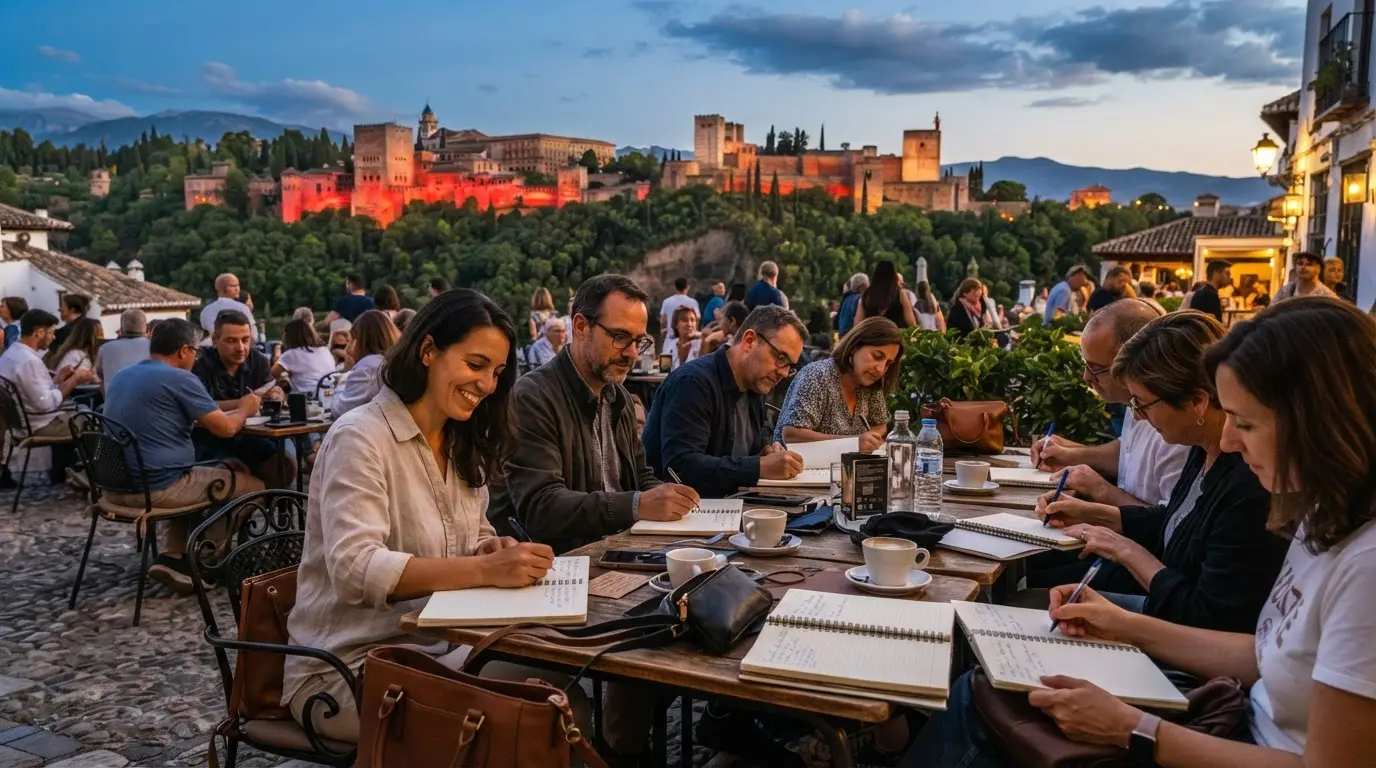
That density of material is the actual argument for a travel writing workshop in Granada, more than any marketing copy about golden light or flamenco guitars. A writer needs specific, checkable, sensory detail: the sound water makes in a stone channel, the particular white of Albaicín plaster against a blue sky, the smell of a cave dwelling in Sacromonte after rain. Granada does not ask writers to invent atmosphere. It asks them to notice what is already there and describe it accurately. That is a harder and more useful skill than most creative-writing courses teach.
This is also a city with an unusually long relationship to writers who came, stayed, and worked. The Convivencia of Muslim, Jewish, and Christian communities is not background scenery for a workshop; it is the kind of layered material a good travel essay is built from, provided the writer has been taught to look past the postcard version.
Granada does not ask writers to invent atmosphere. It asks them to notice what is already there and describe it accurately.
None of this makes Granada unique among Spanish cities in an absolute sense. Toledo has comparable layering. Córdoba has its own claim. What Granada has, and what the workshop under review below leans on directly, is a genuinely walkable concentration of that material inside a single afternoon's radius: the Alhambra, the Albaicín, and Sacromonte within roughly two kilometres of each other, each demanding a different kind of writing.
Granada in Story: what the workshop actually is
The concrete example worth naming is Granada in Story, a five-day travel writing and storytelling intensive run by Wandering Writers Workshops, an organiser that describes its programmes as "International Writing & Storytelling Intensives Rooted in Place." The 2026 edition runs 21 to 25 September in Granada, led by instructor Laura Porfirio, M.Ed., a storyteller and educator, alongside facilitator Angela Orlando, Ph.D.
Structurally, it is closer to a short literary residency built around sense of place writing than to an open-ended retreat. Five days combine:
- Craft instruction in narrative nonfiction and storytelling technique
- Three curated excursions built around specific Granada locations
- Guided story-noticing exercises in the field, not just in a classroom
- Structured writing time and cohort discussion each day
- A final-night, salon-style story showcase where participants read or perform what they produced
Tuition is $2,100, and it covers all five points above.[1] It does not cover airfare, lodging, or meals outside the programme; participants book their own flights and choose their own hotel in Granada, which for a city this walkable is not a hardship.
$2,100
The organiser is explicit that this is "not a retreat and not a tour," and having read through the programme materials, that distinction holds up. A retreat implies unstructured time and personal reflection as the main event. A tour implies passive sightseeing with a guide talking at you. Granada in Story sits between the two: guided observation exercises at specific sites, followed by dedicated time to actually write about what you just saw, followed by a group that reads and responds to the results. That middle position, structured but not passive, is the entire pitch of a creative-writing intensive like this one.
Laura Porfirio: the instructor
Laura Porfirio brings more than 30 years in adult education, leadership training, and participatory learning to the workshop, with experience across Arizona and national contexts.[5] Her background combines curriculum design grounded in constructivist learning theory with digital storytelling workshops that turn personal experience into multimedia narrative. She describes storytelling as transformative when people connect experience, reflection, and craft, with a particular focus on amplifying voices that need to be heard, and she is fluent in Spanish, Italian, and English.
Angela Orlando: the founder and facilitator
Angela Orlando founded Wandering Writers Workshops and is described by the organiser as "an anthropologist, writer, and educator."[6] Under her direction, the organisation frames its mission as combining "creative rigor with cultural immersion, helping participants grow through craft, community, place, and perspective." That mission is also where the organiser draws its sharpest distinction: in its own words, these are "thoughtfully designed, small-cohort workshops that combine expert instruction, cultural immersion, and genre-specific creative development in extraordinary locations," not retreats.
The excursions, and why each location earns its place
Granada in Story structures its five days around three curated excursions plus an additional market-focused session, with accessible-route options offered for two of the four.[2] Each is chosen less for its fame than for the specific kind of writing problem it poses.
Explore nearby · Monument
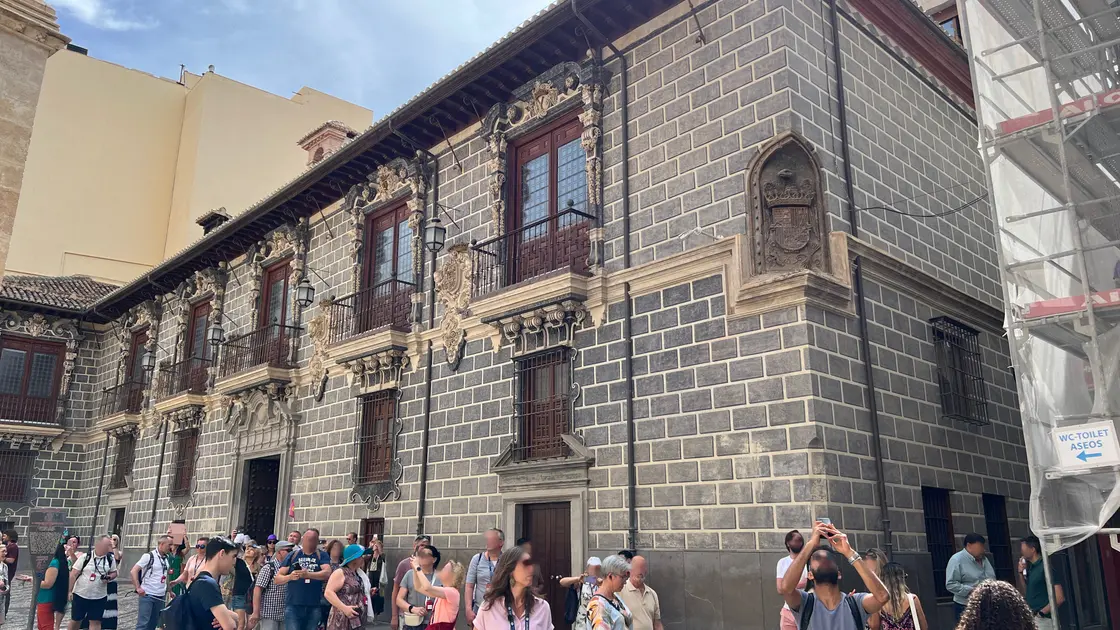
Madraza of Granada
The Madraza, founded in 1349 by Sultan Yusuf I, was Granada's first Islamic college. Its Nasrid oratory and Baroque facade stand near the Royal Chapel.
Recommended tours
Tours are selected for quality, not commission. We earn a small fee if you book — at no extra cost to you.
Alhambra Gardens and the Generalife
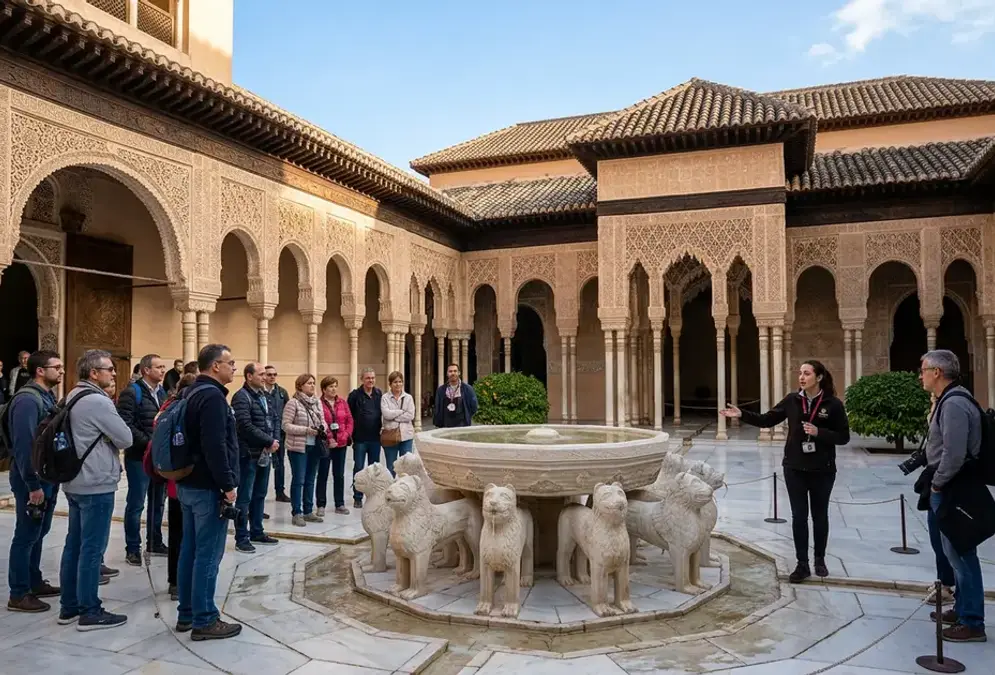
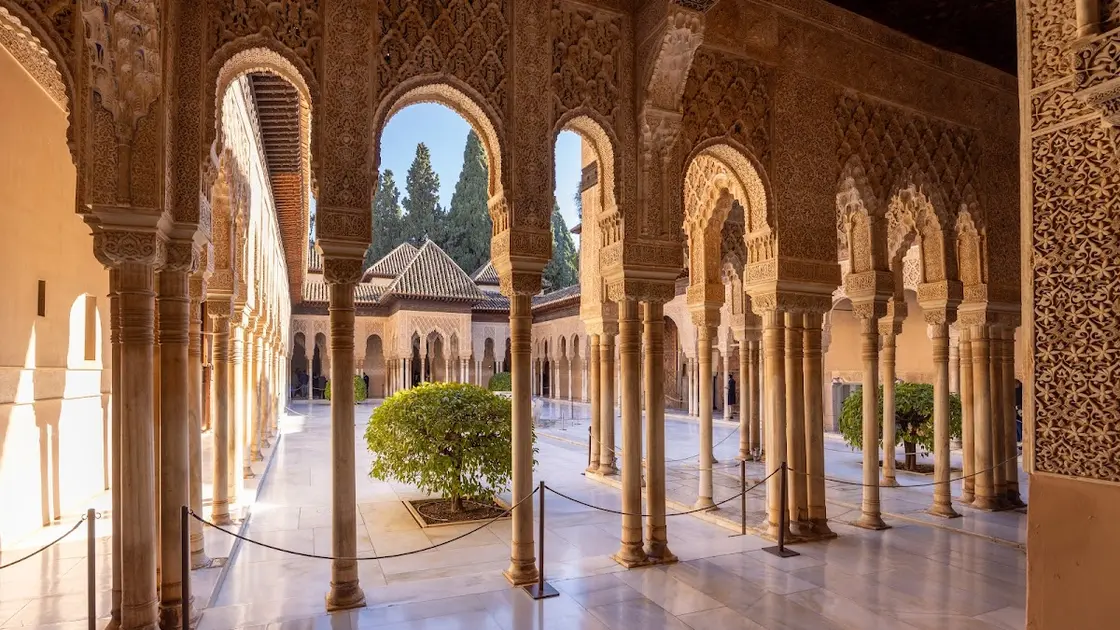
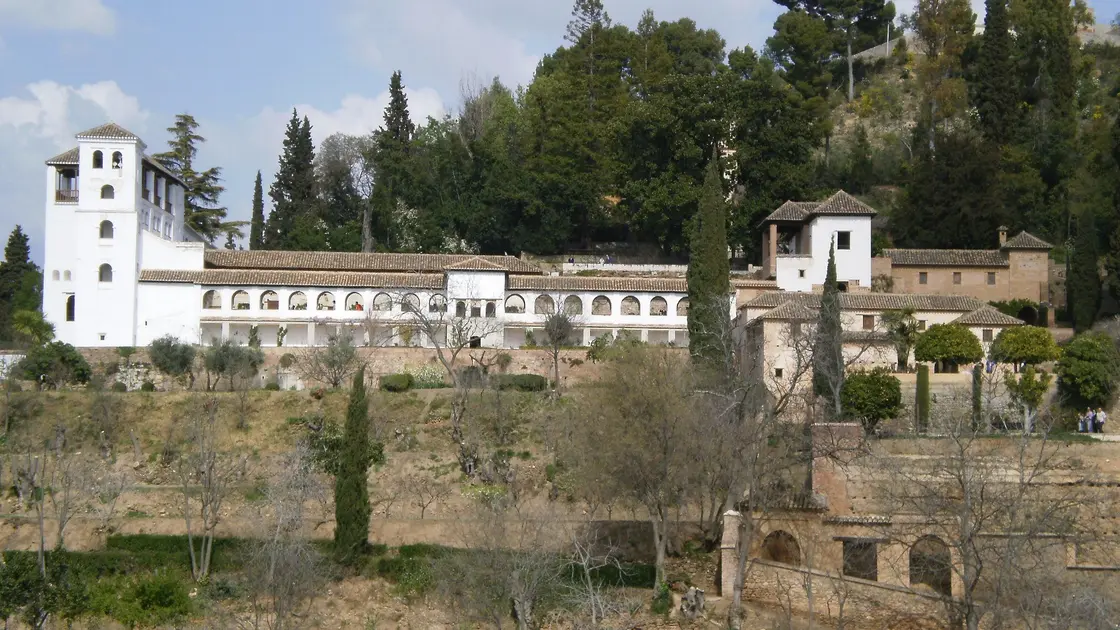
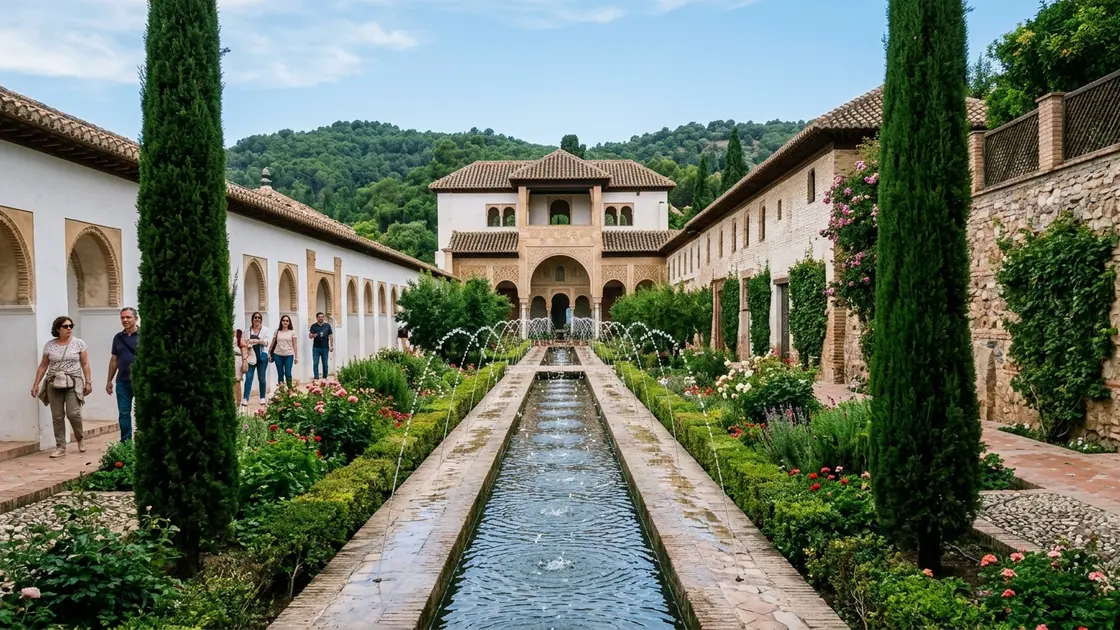
The Alhambra excursion focuses on the gardens rather than the palace interiors, which suits a writing workshop better than the crowded Nasrid Palaces circuit would. Cypress hedges, running water, and the long sightlines of the Generalife terraces give a group time to stand still and actually look, which the timed-entry palace slots do not allow. An accessible-route option is offered for this excursion, useful given the site's uneven historic paving and the climb from the city centre. Writers taking notes here are working with what is probably the most-described monument in Spain, which is exactly the difficulty: finding a sentence about the Alhambra that has not already been written a thousand times is a genuinely useful constraint for a workshop to set.
The Albaicín and Sacromonte walks
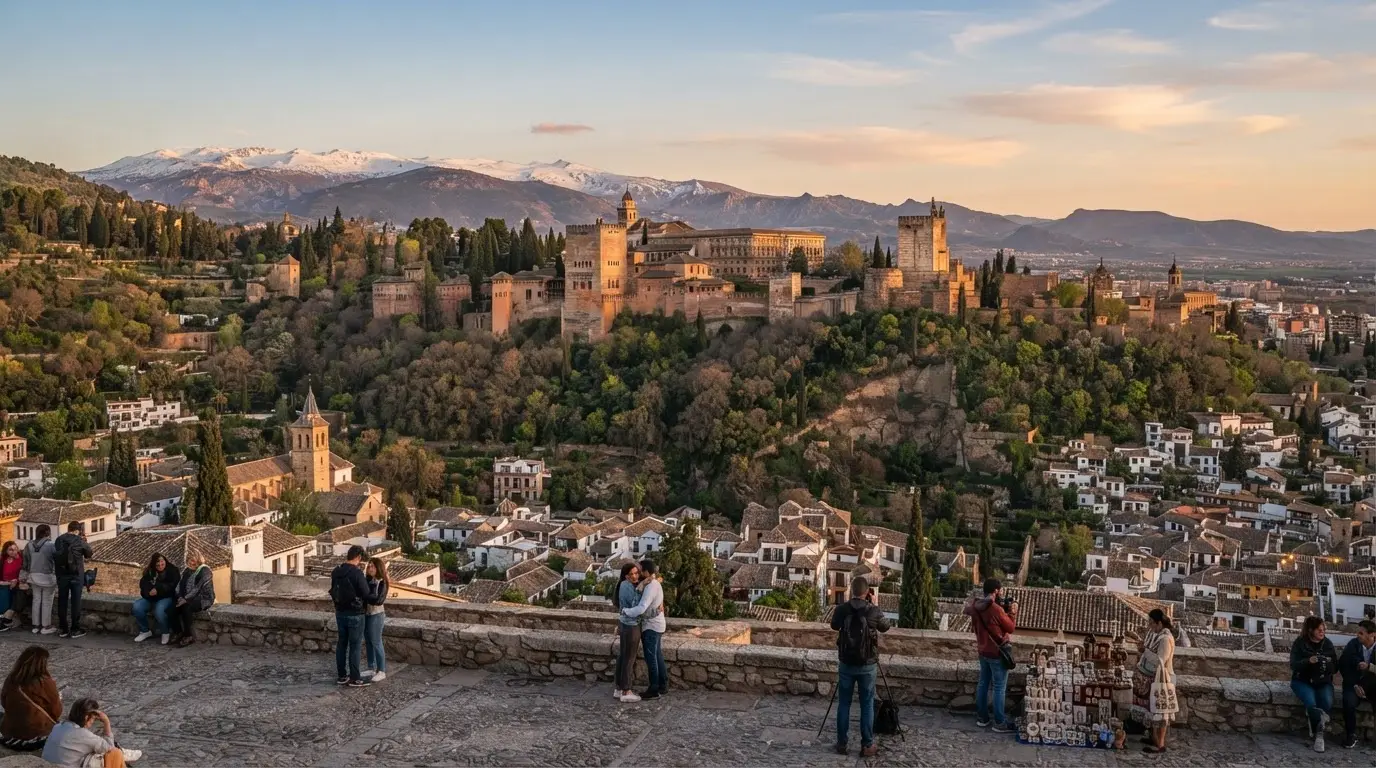
The Albaicín walk works the opposite way from the Alhambra: instead of one over-described monument, it is a neighbourhood of unremarkable-looking lanes that reward close, patient observation, whitewashed walls, hidden cármenes gardens, and the particular quiet of streets too narrow for most cars. The gitano cave district leg adds a different register: cave dwellings cut into the hillside, a Romani neighbourhood with its own flamenco tradition, and views back across the valley toward the Alhambra that most day-trippers never bother to climb for. A workshop that sends writers between these two neighbourhoods on foot, rather than describing them from a bus window, is doing something a standard sightseeing tour cannot.
The Cathedral Quarter and market noticing session
The fourth session moves down into the flatter Cathedral Quarter, with its own accessible-route variant, and into the covered lanes of the city's market district. This is a deliberately different kind of noticing exercise: less monument, more commerce, transaction, and the ordinary choreography of a working market on a Tuesday morning. It is the closest the programme gets to teaching participants how to write about everyday life rather than heritage, and arguably the most transferable skill of the five days. Most travel writing fails not because writers cannot describe a cathedral, but because they cannot describe an ordinary Tuesday without reaching for cliché.
Who it's for, and why it isn't a retreat
Nothing about Granada in Story requires prior publication, performance experience, or even much confidence as a writer. The organiser is direct about this: the workshop is designed for travellers, writers, and storytellers, adults of any background, not people who already have a book deal or a byline. That distinction matters more than it sounds, because a workshop pitched at working professionals only would draw a different, smaller, more self-conscious crowd, and would produce a different kind of week.
It is worth repeating what the organiser calls this: "not a retreat and not a tour." A retreat sells rest, open schedule, and personal reflection with minimal structure. A tour sells a guide, a bus, and an itinerary you have no hand in shaping. Granada in Story sells neither. It sells a structured creative intensive: fixed hours of instruction, fixed excursions, fixed writing blocks, and a fixed group discussion each evening. If what you actually want is unstructured time to wander Granada and write when the mood strikes, this format will feel restrictive rather than freeing. If what you want is a container that forces daily output and honest feedback from people who are not your friends or family, the structure is the entire value.
This is also where the digital-nomad angle is worth being honest about. A working remote professional who has been drifting through cafés with a half-finished manuscript for a year or two is a plausible candidate for this kind of week, precisely because the fixed schedule imposes deadline pressure that unstructured remote life rarely provides. Someone who already writes daily and wants unmediated time in Granada might get more from booking a long-stay apartment and skipping the workshop altogether. Whether a travel writing workshop like this suits you depends less on Granada, which supplies the material either way, and more on whether you personally respond to structure or find it confining.
Practical details: dates, price, and what's included
Tuition for the 2026 edition of Granada in Story was $2,100[3], covering the five days of instruction, the excursions, and the closing showcase described above. Applications for that cohort closed 15 July 2026, and the workshop itself ran 21 to 25 September 2026. A $300 deposit secured a place on acceptance, with the remaining $1,800 balance due by 1 September 2026.[3] The organiser has not announced a next edition; future cohorts are typically announced several months ahead of their own application deadlines, so the same general shape, deposit on acceptance, balance due before the start date, is a reasonable guide to what a later edition would look like.
Flights, lodging, and meals outside the scheduled programme were the participant's own arrangement. For the September 2026 cohort, the organiser recommended arriving 19–20 September, ahead of the 21 September start, and departing 26 September or later, which left a buffer day on each end for jet lag and for finishing writing before the showcase.
| Payment | Amount | Due / covers |
|---|---|---|
| Deposit | $300 | On acceptance |
| Balance | $1,800 | By 1 September 2026 |
| Total tuition | $2,100 | Instruction, excursions, and showcase |
Beyond one workshop: Granada's longer relationship with visiting writers
Granada in Story is a real, bookable programme with a real date on the calendar, but it would be a mistake to treat this article as being about a single week in September 2026. Workshops like this have run in Granada before under different organisers, and the underlying reason is not a marketing trend: this city has a genuinely long track record of absorbing writers and changing what they produce.
The most famous case is Washington Irving, who moved into a suite of rooms inside the Alhambra in May 1829 and spent about three months there before publishing Tales of the Alhambra, the book that arguably invented Romantic-era tourism to the city. A century later, Federico García Lorca wrote his major plays in a summer house on Granada's edge, drawing directly on the flamenco he heard in Sacromonte's caves and the landscape of the Vega. Both writers did, in an unstructured and personal way, roughly what a five-day workshop now compresses into a formal schedule: they showed up, paid close attention to a specific place, and produced the kind of travel memoir material that outlasted their visit.
Wandering Writers Workshops, judging from its own materials and social presence, runs comparable place-rooted intensives elsewhere too, in destinations that include Peru, Hawaii, and Arizona among others.[4] Granada is one stop on a wider circuit rather than a one-off experiment, which matters if this specific September cohort fills up or the organiser eventually moves on: the city itself is not going anywhere, and the case for treating it as workshop material will still hold long after this particular programme's dates have passed.
Deep dive · Article
20 Interesting Facts About Granada, Spain
Interesting facts about Granada Spain that guidebooks skip: disputed etymologies, the soldier who saved the Alhambra, and a river buried under Plaza Nueva.
For a writer or a curious remote worker, the practical takeaway is this: Granada supplies the material whether or not you ever sign up for a structured workshop. What a week like Granada in Story adds is instruction, a fixed schedule, and a room full of people reading your drafts alongside you. The city's raw material, the light, the water, the layered history, has been sitting there, mostly free, since the eleventh century, workshop or not.