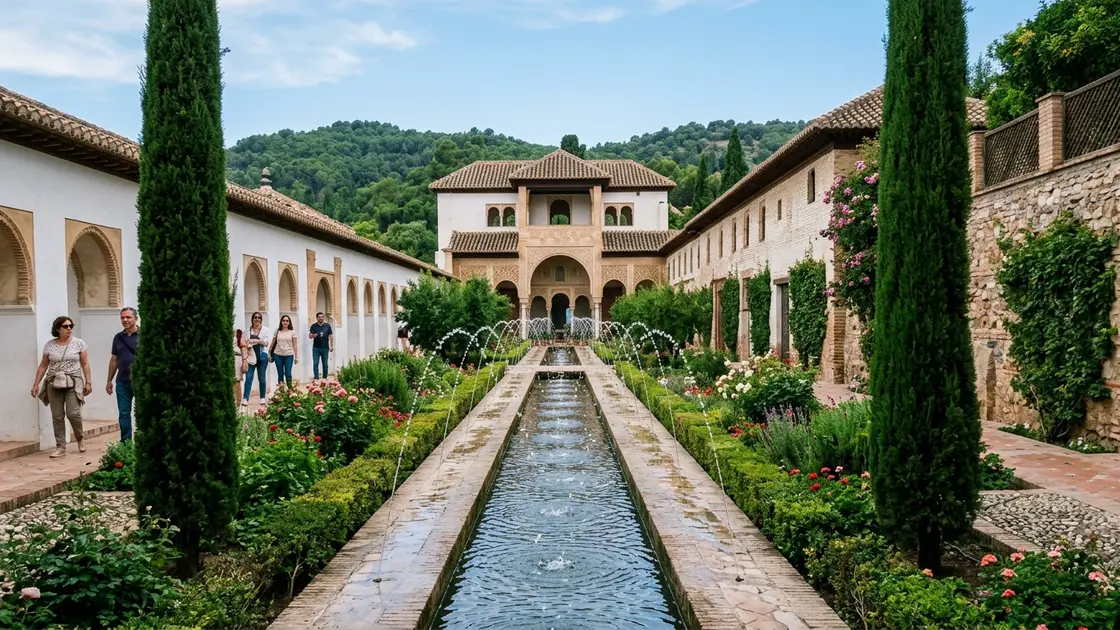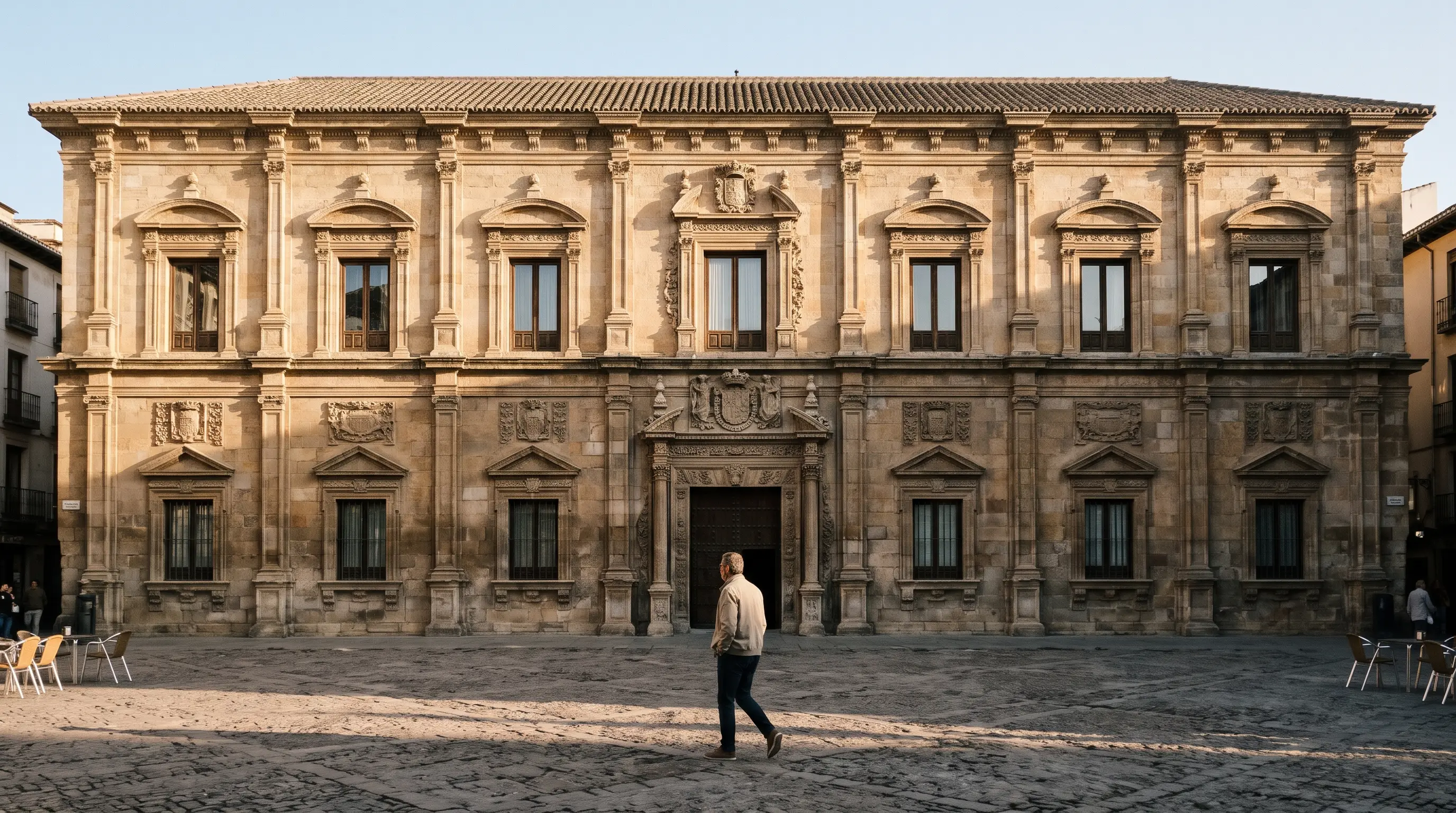
Mannerist facade of the Real Chancillería de Granada on Plaza Nueva, two storeys and seven bays of stone openings in late afternoon light, the history of Spain's southern high court in one front

How the Real Chancillería of Granada Ruled South of the Tagus

How the Real Chancillería of Granada became Spain's high court south of the Tagus: 1505 move from Ciudad Real, its Plaza Nueva palace, and what survives today.

Portrait of James Walker
Written by

Seven years resident in Granada. Specialist in Nasrid architecture, Al-Andalus history, and Andalusian walking routes.

Published
Castilian conquest & the Moriscos1492–1610
For three centuries, a lawsuit that began almost anywhere in southern Castile could end up before the judges of a palace on Plaza Nueva. The Real Chancillería of Granada was the Crown's high court for the lands south of the Tagus[1], ordered here from Ciudad Real in 1500 and sitting in Granada from 1505[2][3]. Its palace is still a courthouse, and the judiciary counts it as the only building in Spain made as a court seat that still serves as one[4]. You can see the facade from Plaza Nueva, but the building is a working court, and the court's archive is a separate site elsewhere in the city.
Court's move took effect
8 Feb 1505
Ordered in 1500 and effective five years later[3]
Chancillería renamed
1834
Became an Audiencia over four eastern Andalusian provinces[18]
Facade bays, two storeys
7 bays
Two storeys with a dense variety of openings[6]

Why the Crown moved its high court to Granada

The Catholic Monarchs ordered the Chancillería, then seated at Ciudad Real, to move to Granada in 1500.[2] The order took five years to bite: the court began its Granada life on 8 February 1505[3], under Queen Juana I, a few months after Isabella I had died.[7] Any account that has Isabella moving the court in 1505 has the dates wrong.
So the founding date depends on what you count. 1500 is the Crown's decision[2] and 8 February 1505 is the day the move took effect[3], and both are defensible if you say which one you mean. A guidebook that quotes only one of them is simplifying, not lying, but a reader comparing sources will meet both and wonder who is wrong.
What Granada inherited was a territory, not a building: the Ciudad Real court's competence over everything south of the Tagus, with the Chancillería at Valladolid keeping the north.[5] A river is a blunt legal frontier, but it made Granada the court for the southern half of Castile at a moment when the city, taken in 1492, was barely thirteen years into Castilian rule and the Alhambra Decree was recent memory. Placing the senior bench of the south in the former Nasrid capital put royal justice, and the officials who administered it, in the one city the Crown most wanted to anchor.
The court did not start in its famous palace. Its early homes were the Alhambra and premises on the Albaicín's calle de Oidores, before it settled for good on Plaza Nueva.[8] The street name is a fossil of that period, since oidores was the title of the court's judges, literally the "hearers" of a case.

What the court judged and how far its reach ran

Under the Ancien Régime the Chancillería was a superior court of justice, a governing body and a royal court at once, the last because the royal seals were kept at its seat.[9] That mix explains why its judges, the oidores, mattered beyond the courtroom: a governing body issues orders as well as verdicts, and a royal court carries the king's authority into places the king rarely visited. A litigant in the far south therefore dealt with an institution that looked a good deal like the Crown itself.
The Andalusian judiciary's own history lists the territories over which the court held extraordinary jurisdiction and privileges:[10]
  • Andalusia
  • The kingdoms of Granada and Murcia
  • The provinces of Extremadura and La Mancha
  • The Canary Islands
On paper the reach was enormous. In practice it was trimmed within a generation, with Seville gaining its own Real Audiencia de los Grados in 1525 and the Canary Islands an audiencia the year after.[11] Read the list as the court's founding ambition rather than a map of where its judgments ran for three centuries, and remember that the Seville carve-out removed the largest city of the south from Granada's daily business.
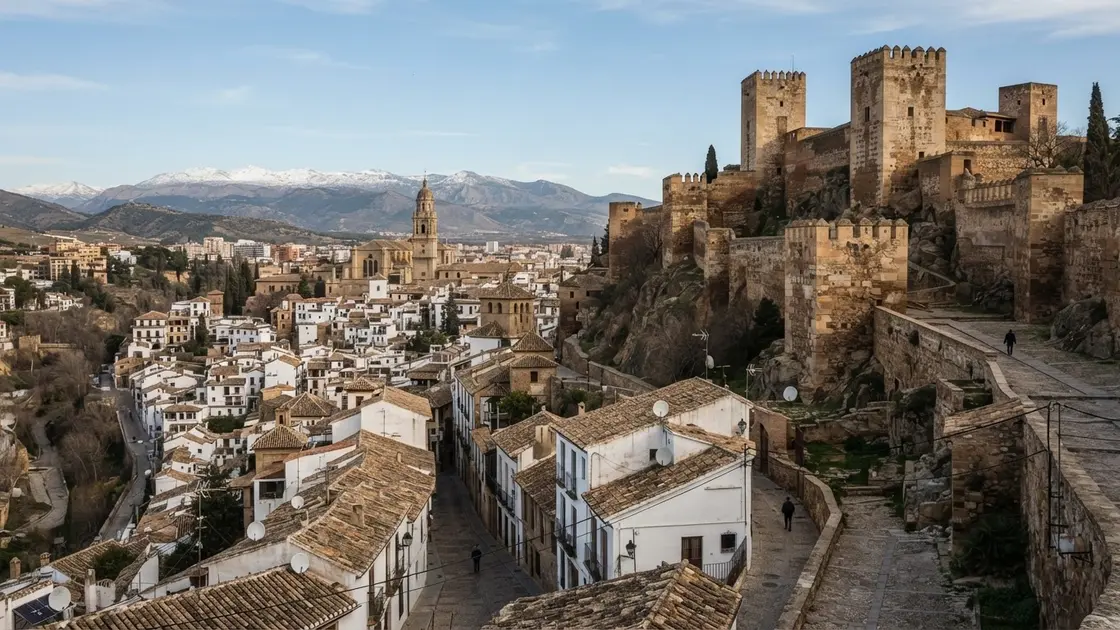
The Alcazaba fortress towers rising from the western end of the Alhambra hill, with Granada's old city below

Explore nearby · Monument

Alcazaba, Granada

Granada's oldest fortress and the military core of the Alhambra, built in 1238. Its Watch Tower delivers panoramic views of the Albaicin and Sierra Nevada.

Do not confuse the court with the Inquisition tribunal of Granada. The Inquisition ran its own tribunal for matters of faith under its own authority, while the Chancillería was the king's court of justice.

The palace on Plaza Nueva, from order to facade

Charles V ordered the palace built in 1526 or 1531, depending on the account, and it was finished in 1587 under Philip II.[12][13] Either way the work spanned most of a lifetime and outlasted the emperor himself.
The project was carried out by the Jaén architect Francisco del Castillo[14], and the facade is organised in two storeys and seven vertical bays crowded with a dense variety of openings.[6] It is routinely presented as the city's best example of Mannerist architecture, and as the first building in Spain erected to house a court of justice.[15]
Treat the second billing with care. The safer, narrower claim is the judiciary's own: the only building made as a court seat that still serves as one.[4] Mannerism, for anyone who has come straight from the cathedral, is the late-Renaissance habit of using classical elements with deliberate liberties, and a facade crowded with different openings is exactly where that habit shows.
The builders drew on regional stone, including:[16]
  • Santa Pudia calcarenite
  • Sierra Elvira limestone
  • Alfacar travertine
Timeline
  1. 1500

    Catholic Monarchs order the move

    The Chancillería, then at Ciudad Real, is to relocate to Granada.

  2. 1505

    Move takes effect

    8 February, under Queen Juana I.

  3. 1526 or 1531

    Charles V orders the palace

    The date depends on the account.

  4. 1587

    Facade finished under Philip II

    The palace on Plaza Nueva is complete.

  5. 1834

    Chancillería becomes an Audiencia

    The court loses its name but keeps its palace.

The courtyard has been attributed to Diego de Siloé, the architect who reworked Granada Cathedral in the same decades, though the project as a whole is Castillo's.[17] Siloé's name is the one that attaches itself to most major Granada buildings of the period, so the attribution is plausible but deserves its qualifier.

From Chancillería to Audiencia, 1834 and after
In 1834 the Chancillería lost its name and became an Audiencia with jurisdiction over Granada, Almería, Jaén and Málaga.[18] A court that had once claimed authority from La Mancha to the Canary Islands was now a regional bench for four provinces.
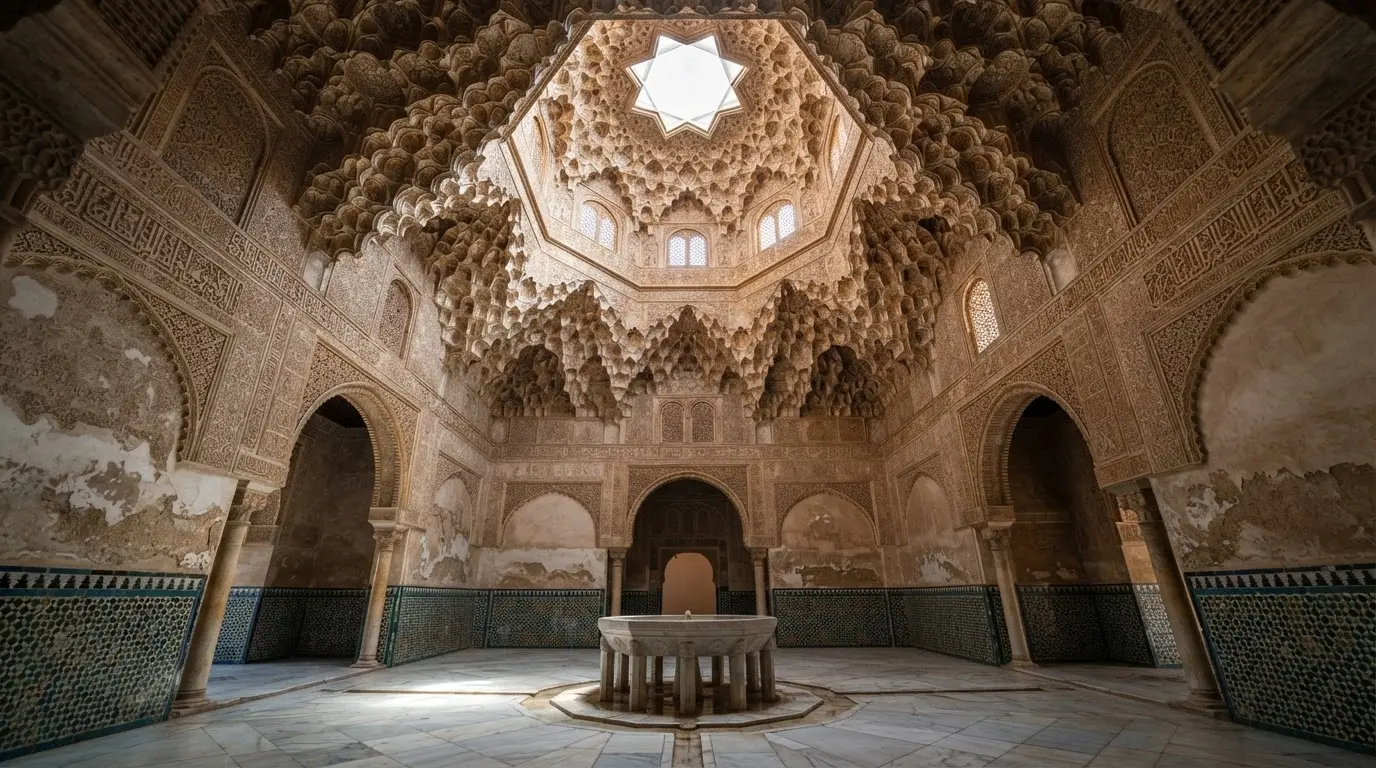
Interior of the Sala de los Abencerrajes Alhambra Granada, a key site in Abencerrajes Granada history, looking up at the octagonal muqarnas honeycomb stalactite ceiling rising above the twelve-sided central marble fountain, shafts of light filtering through high windows, warm stone walls with geometric tile dadoes below carved stucco friezes

Deep dive · Article

Abencerrajes of Granada: the noble clan behind the legend

Abencerrajes of Granada: the noble clan who shaped Nasrid court politics for a century and became legend through a massacre story set in the Alhambra.

The paper survived better than the title. By 1964 the court's archive had moved out to the Casa del Padre Suárez, a building received on 30 March 1963 and occupied the following year.[19] Court and records, once under one roof, now lead separate lives, which is worth knowing before you go looking for either. Since 1834 the name has changed, but the judicial use has continued: a Renaissance palace made to hear cases still hears them.[4]

Seeing the Chancillería today

Start in Plaza Nueva, in the Centro district, and look at the facade from the square: the two storeys and seven bays are easier to count from across it than from the foot of the wall. The facade makes more sense once you remember that a king's court was built to be read as the Crown's presence in a newly Castilian city. It is still a working courthouse, so plan around the facade. The useful stops are these:
  • The facade on Plaza Nueva, for the bays, the openings and the mix of stone.
  • Granada Cathedral and the Royal Chapel, a short walk away, which tell the Catholic Monarchs' story from the religious side.
  • The Archive of the Royal Chancillería at Plaza del Padre Suárez 1, 18009 Granada, a separate site from the palace.[21] It holds the court's records and keeps a reading room open on working days from 08:30 to 14:30, or 08:30 to 14:00 in summer.[20]
Twenty minutes in the square is enough for the facade; the rest of the morning belongs to the cathedral and the chapel. Walk the three in that order and you move from the Crown's courtroom to the Crown's church to the Crown's tombs, a compact lesson in how the Catholic Monarchs and their heirs reorganised the city after 1492.

The palace and the archive are different places

The courthouse on Plaza Nueva is a working court. The reading room that holds the Chancillería's records is a separate site with its own working-day hours, so confirm both before you build a morning around either.

Frequently asked questions

What is the Real Chancillería de Granada history in brief?

The Real Chancillería was the Crown's high court for the territories south of the Tagus. The Catholic Monarchs ordered it moved from Ciudad Real in 1500, it began sitting in Granada in 1505, and it worked from a palace on Plaza Nueva until it became an Audiencia in 1834.[2][3][18]

Was the Real Chancillería moved to Granada in 1500 or 1505?

Both dates are right. The Catholic Monarchs ordered the move in 1500, and it took effect on 8 February 1505, under Juana I rather than Isabella.[2][3][7]

Which territory did the Granada Chancillería cover?

Its territory lay south of the Tagus, the northern half belonging to the Chancillería of Valladolid.[5] The judiciary's history lists Andalusia, the kingdoms of Granada and Murcia, Extremadura, La Mancha and the Canary Islands, although Seville and the Canaries gained their own audiencias in 1525 and 1526.[10][11]

Who built the Real Chancillería and when was it finished?

The project was carried out by the Jaén architect Francisco del Castillo, and the building was finished in 1587 under Philip II. Charles V's order is dated 1526 or 1531 depending on the account.[12][13][14]

What is the Real Chancillería building used for today?

It is still a court. The judiciary describes it as the only building in Spain made as a court seat that continues to serve that purpose.[4]

Can you visit the Real Chancillería of Granada?

The facade is on Plaza Nueva for anyone to see. The building is a working courthouse, so check with the court authorities before planning to go in. The archive that holds its records is a separate site with its own reading-room hours.[20]

When was the Chancillería of Granada abolished?

It lost its name in 1834, becoming an Audiencia with jurisdiction over Granada, Almería, Jaén and Málaga.[18]

Sources

21 references Show
  1. Junta de Andalucía (opens in a new tab)

    “Su ámbito geográfico abarcaba los territorios de la Corona castellana situados al sur del río Tajo para los fondos correspondientes al Antiguo Régimen”

  2. poderjudicial.es (opens in a new tab)

    “en el año 1500 los Reyes Católicos disponen que la Chancillería o Tribunal Superior de Justicia, entonces con sede en Ciudad Real, sea trasladado a Granada.”

  3. poderjudicial.es (opens in a new tab)

    “La decisión de los Monarcas se hace efectiva el 8 de febrero de 1505.”

  4. poderjudicial.es (opens in a new tab)

    “ser el único edificio que fue construido como sede judicial y continúa teniendo el mismo destino.”

  5. Wikipedia (opens in a new tab)

    “heredó las competencias de la anterior, que se extendían sobre el territorio situado al sur del río Tajo, en contrapartida con la Real Audiencia y Chancillería de Valladolid, que las tenía sobre el territorio al norte del citado río.”

  6. ugr.es (opens in a new tab)

    “Se estructura la fachada en dos cuerpos y siete ejes verticales, resaltando la densa variedad de vanos”

  7. Wikipedia (opens in a new tab)

    “hecho que se hizo efectivo cinco años más tarde, siendo reina Juana I.”

  8. Junta de Andalucía (opens in a new tab)

    “desde 1505 en Granada, en su origen en la Alhambra y en la albaicinera calle de Oidores, y definitivamente en el Palacio de Plaza Nueva.”

  9. Junta de Andalucía (opens in a new tab)

    “fue durante el Antiguo Régimen un tribunal superior de justicia, un importante órgano gubernativo y corte real por la residencia en su sede de los sellos reales.”

  10. poderjudicial.es (opens in a new tab)

    “El Tribunal tenía jurisdicción y privilegios extraordinarios no sólo en Andalucía, sino también en los reinos de Granada y Murcia, provincias de Extremadura y de la Mancha y en las Islas Canarias.”

  11. Wikipedia (opens in a new tab)

    “perdió parte de su jurisdicción al ser creada en 1525 la Real Audiencia de los Grados en Sevilla y un año más tarde la Real Audiencia de Canarias, con sede en Gran Canaria.”

  12. ugr.es (opens in a new tab)

    “fue mandado construir por el emperador Carlos V en 1526”

  13. Wikipedia (opens in a new tab)

    “está situado en Plaza Nueva y fue construido entre 1531 y 1587.”

  14. ugr.es (opens in a new tab)

    “El proyecto fue ejecutado por el arquitecto jienense Francisco del Castillo”

  15. turismo.granada.org (opens in a new tab)

    “The first building erected in Spain to house the Court of Justice and the best example of Mannerist architecture in the city”

  16. ugr.es (opens in a new tab)

    “la calcarenita de Santa Pudia, la caliza de Sierra Elvira y el travertino de Alfacar”

  17. Wikipedia (opens in a new tab)

    “El patio ha sido atribuido a la traza de Diego de Siloé.”

  18. poderjudicial.es (opens in a new tab)

    “En 1834 la Chancillería pierde su nombre y pasa a ser Audiencia, con jurisdicción sobre las provincias de Granada, Almería, Jaén y Málaga.”

  19. Junta de Andalucía (opens in a new tab)

    “recepcionándose el edificio el día 30 de marzo de 1963, y ocupándose en 1964.”

  20. cdn.juntadeandalucia.es (opens in a new tab)

    “El horario de consulta es: laborables de 08:30 a 14:30 h. Durante los meses de verano el horario es de 08:30 a 14:00 h.”

  21. cdn.juntadeandalucia.es (opens in a new tab)

    “La dirección del Archivo de la Real Chancillería es Plaza del Padre Suárez, n.º 1 de Granada.”