Rebellion of the Alpujarras 1499: Why Granada Rose Up

Seven years resident in Granada. Specialist in Nasrid architecture, Al-Andalus history, and Andalusian walking routes.
- Naples treaty signed
- 11 Nov 1500
- A secret pact between Ferdinand and Louis XII to partition Naples[3]
In this article
Jump to a section
Why Granada's Muslims rose in 1499
The Albaicín revolt of 18 December 1499
Explore · Neighbourhood
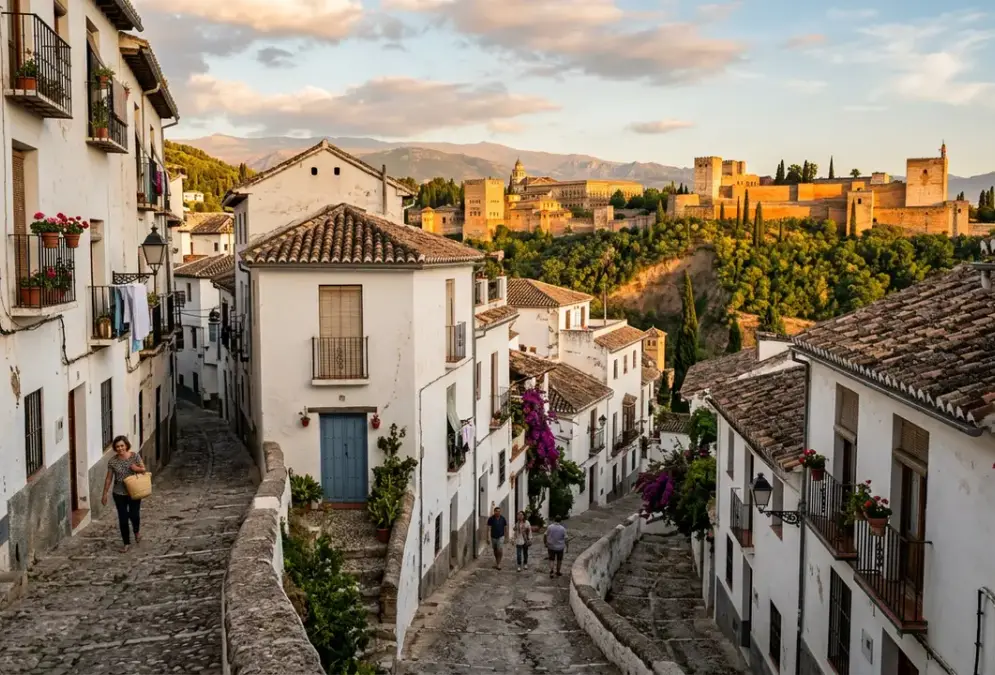
Albaicín
Granada's oldest neighbourhood: the Albaicín holds a UNESCO-listed maze of whitewashed lanes, Moorish cármenes, and the finest Alhambra views in the city.
From the city to the mountains, 1500 and 1501
- 18 Dec 1499
The Albaicín rises
A crowd kills the constable and barricades the quarter.
- Jan 1500
Forced baptisms
Registers for the Albaicín parishes are compiled.
- Feb to Mar 1500
Royal army mobilised
Ferdinand arrives to direct the campaign in the Alpujarras.
- 14 Jan 1501
Army stood down
Unrest soon flares again in the Sierra Bermeja.
- Mar 1501
Sierra Bermeja disaster
Alonso de Aguilar dies and his troops are nearly wiped out.
Baptism or exile: how the rising ended
What the 1500 Treaty of Granada was, and was not
Deep dive · Article
1066 Granada Massacre: When the Jewish Golden Age Ended in a Day
The 1066 Granada massacre killed Joseph ha-Nagid and thousands of the city's Jews in a single day, ending three decades of Jewish power under Samuel ha-Nagid.
- The capitulations of 1491 guaranteed Granada's Muslims their property, faith and Islamic law, and are the document the Crown later repudiated.[4]
- The 1500 treaty is about Italian territory: it concerns the partition of Naples.
Reading the rising in the Albaicín today
Recommended tours
Tours are selected for quality, not commission. We earn a small fee if you book — at no extra cost to you.
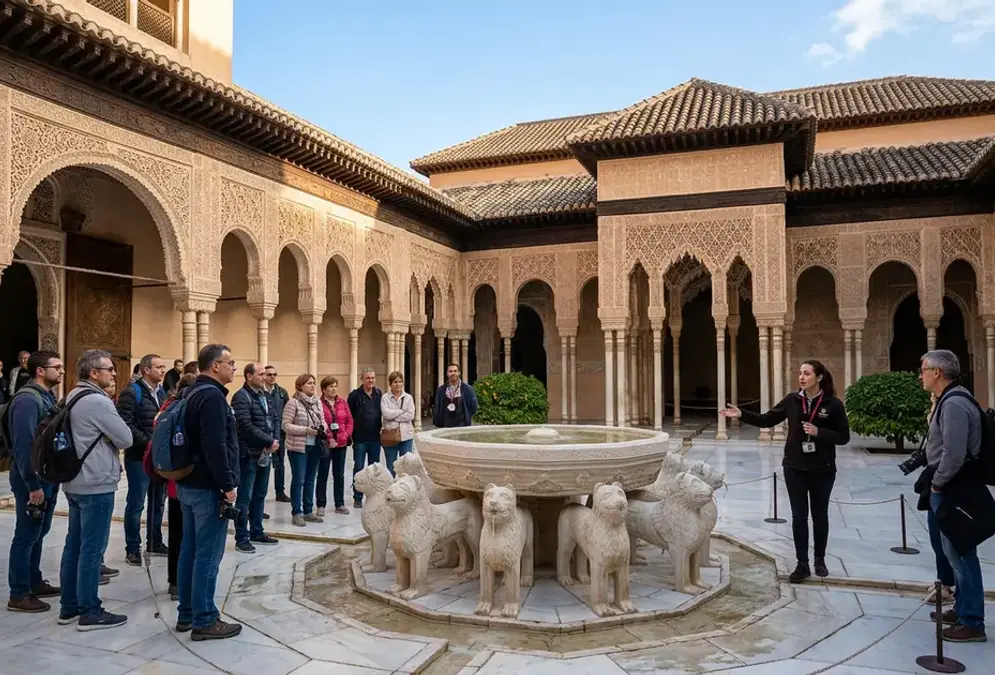
- Climb into the Albaicín from Plaza Nueva on foot and wear flat shoes; the lanes do not forgive heels.
- Look for the church of Santa Isabel, whose register opens with the blessing of a former mosque on 11 January 1500.[13]
- Lanjarón and Laujar de Andarax, named in the campaign above, are Alpujarran villages you can still visit; the longer history of that landscape is in Morisco villages of the Alpujarras.
Frequently asked questions
What was the rebellion of the Alpujarras 1499 to 1501?
Why did the Albaicín revolt start on 18 December 1499?
What was the Treaty of Granada of 1500?
Did the Muslims of Granada break the 1491 treaty?
What did exile cost in 1501?
How is the 1499 to 1501 rising different from the 1568 revolt?
When did Islam stop being allowed in Castile?
Sources
26 references Show Hide
- Wikipedia — Rebellion of the Alpujarras (1499–1501) (opens in a new tab)
“By February 1500, 80,000 Christian troops were mobilized to put down the rebellion.[1] By March, King Ferdinand arrived to personally direct the operations.[12]”
- Wikipedia — Rebellion of the Alpujarras (1499–1501) (opens in a new tab)
“Only those who could pay ten gold doblas were given passage, and the majority who could not pay had to stay and be baptized.”
- Wikipedia — Treaty of Granada (1500) (opens in a new tab)
“The Treaty of Granada (1500), signed on 11 November 1500, was a secret treaty between Ferdinand II of Aragon and Louis XII of France, in which they agreed to partition the Kingdom of Naples.”
- foreignexchanges.news (opens in a new tab)
“They were to be given safe passage to North Africa or, if they chose to stay, would be entitled to keep their property and their faith, to be governed according to Islamic law, and other concessions to religious tolerance.”
- revistas.uva.es (opens in a new tab)
“Los dos factores que provocaron la sublevación de los mudéjares de Granada en diciembre de 1499 fueron ciertas novedades en materia fiscal que les perjudicaban y la llegada en octubre del cardenal Cisneros”
- Britannica (opens in a new tab)
“Jiménez’s intervention was the direct cause of a Moorish revolt in 1499–1500”
- Wikipedia — Rebellion of the Alpujarras (1499–1501) (opens in a new tab)
“in December 1499 he told Pope Alexander VI that three thousand Muslims converted in a single day.”
- Wikipedia — Rebellion of the Alpujarras (1499–1501) (opens in a new tab)
“The officials were then surrounded by a hostile crowd, the constable was killed and the assistant managed to escape after being sheltered by a local Muslim woman.”
- Wikipedia — Rebellion of the Alpujarras (1499–1501) (opens in a new tab)
“After ten days, the uprising ended as the Muslims handed in their weapons and handed over the constable's killers, who were promptly executed.”
- Wikipedia — Rebellion of the Alpujarras (1499–1501) (opens in a new tab)
“He convinced Ferdinand and Isabella to declare a collective pardon to the rebels, on condition that they convert to Christianity.”
- revistas.ucm.es (opens in a new tab)
“Los bautismos forzosos comenzaron a finales de diciembre de 1499 y continuaron durante los primeros meses del 1500”
- revistas.ucm.es (opens in a new tab)
“Nuestro propósito es enfocar el análisis de otra amplia muestra de mulsumanes bautizados —1629 individuos—.”
- revistas.ucm.es (opens in a new tab)
““En la mezquita que se bendixo este dia [11 de enero] por el obispo de Guadix e se llamo Santa Ysabel””
- revistas.ucm.es (opens in a new tab)
“Este error historiográfico, que ya señaló Ladero Quesada 27 , se sigue repitiendo hasta en las publicaciones eruditas más recientes 28 .”
- Wikipedia — Rebellion of the Alpujarras (1499–1501) (opens in a new tab)
“The uprising in the city quickly died down, but it was followed by more serious revolts in the nearby mountainous area of the Alpujarras.”
- Wikipedia — Rebellion of the Alpujarras (1499–1501) (opens in a new tab)
“The rebels' lack of strategic command allowed the Christian forces to proceed by defeating the rebels in one area separately, then moving on to the next.”
- Wikipedia — Rebellion of the Alpujarras (1499–1501) (opens in a new tab)
“One of the most violent episodes occurred in Laujar de Andarax, where the Catholic forces under Louis de Beaumont took 3,000 Muslims prisoner and then slaughtered them.”
- Wikipedia — Rebellion of the Alpujarras (1499–1501) (opens in a new tab)
“The result was a catastrophe for the Catholic army; Aguilar himself was killed in battle and the army was nearly annihilated.”
- revistas.uva.es (opens in a new tab)
“El levanta-miento de los granadinos no fue fácil de controlar, especialmente en la última fase (enero-mayo de 1501) durante la que los cristianos sufrieron numerosas pérdidas.”
- foreignexchanges.news (opens in a new tab)
“Many left but most, unable to afford the cost of obtaining passage abroad, converted.”
- Wikipedia — Rebellion of the Alpujarras (1499–1501) (opens in a new tab)
“The Catholic rulers used these revolts as a justification to repudiate the Treaty of Granada and abrogate the rights of the Muslims guaranteed by the treaty.”
- revistas.uva.es (opens in a new tab)
“Fue el miedo a la muerte y a ser quemados lo que nos hizo convertirnos.”
- revistas.uva.es (opens in a new tab)
“En este contexto fue como se decidió el maquiavélico decreto de expulsión de febrero de 1502 en el que se les conminaba, so pena de muerte, a marcharse del reino”
- revistas.ucm.es (opens in a new tab)
“al poco tiempo, en febrero de 1502, todos los mudéjares de Castilla se verían forzados a elegir entre un exilio de condiciones imposibles, y la apostasía.”
- historyofwar.org (opens in a new tab)
“The Treaty of Granada (11 November 1500) was an agreement between Louis XII of France and Ferdinand II of Aragon to split the Kingdom of Naples between them.”
- Wikipedia — Treaty of Granada (1500) (opens in a new tab)
“The agreement was signed by Louis at Chambord on 10 October, then by Ferdinand at Granada on 11 November.”