Gate of Bibarrambla: Why Granada Tore It Down, Then Rebuilt It

Seven years resident in Granada. Specialist in Nasrid architecture, Al-Andalus history, and Andalusian walking routes.
In this article
Jump to a section
A gate on the sandy plain: what Bab al-Ramla was
Explore nearby · Monument
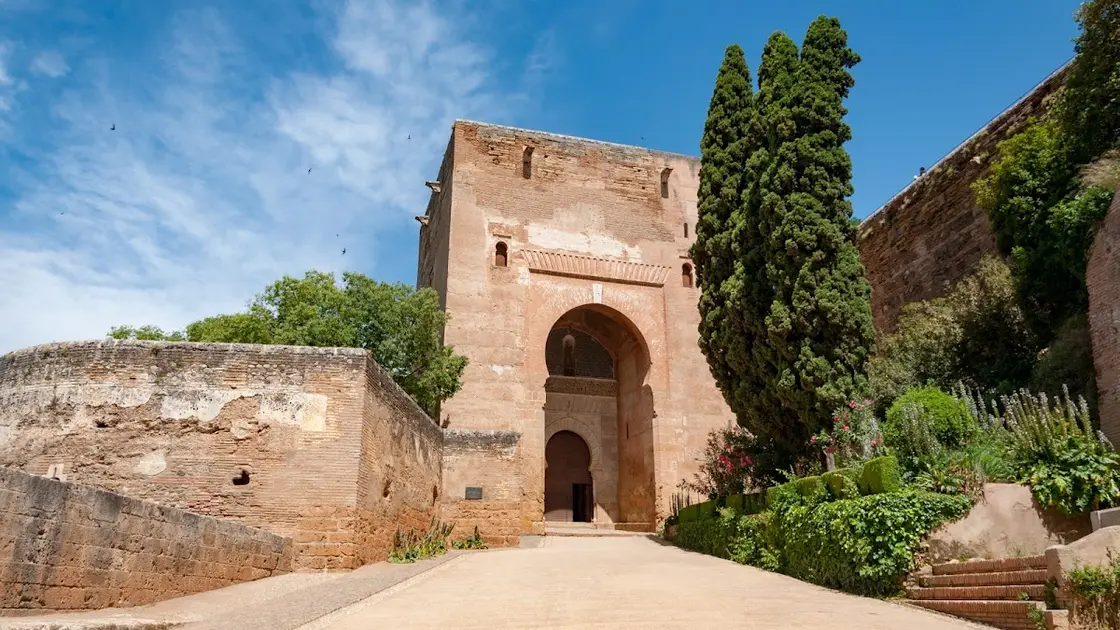
Puerta de la Justicia
Alhambra's main entrance, built by Yusuf I in 1348. A Hand of Fatima on the outer keystone and a Key on the inner encode the Five Pillars and royal power.
Why Granada called it the Arch of the Ears
Eleven years to demolish a listed gate
Deep dive · Article
Abencerrajes of Granada: the noble clan behind the legend
Abencerrajes of Granada: the noble clan who shaped Nasrid court politics for a century and became legend through a massacre story set in the Alhambra.
The motives on record overlap:
- In 1873, under the cantonal government, the council decided to demolish it to give work to the city's many unemployed.[20]
- A prominent individual was interested in its demolition in order to revalue his property.[21]
- By 1884 its continuing decay, added to a cholera epidemic, persuaded the council to pull it down.[22]
11 years
From museum store to the Alhambra forest, 1930 to 1935
Finding the Arco de las Orejas today
Recommended tours
Tours are selected for quality, not commission. We earn a small fee if you book — at no extra cost to you.




What to do with that on the ground:
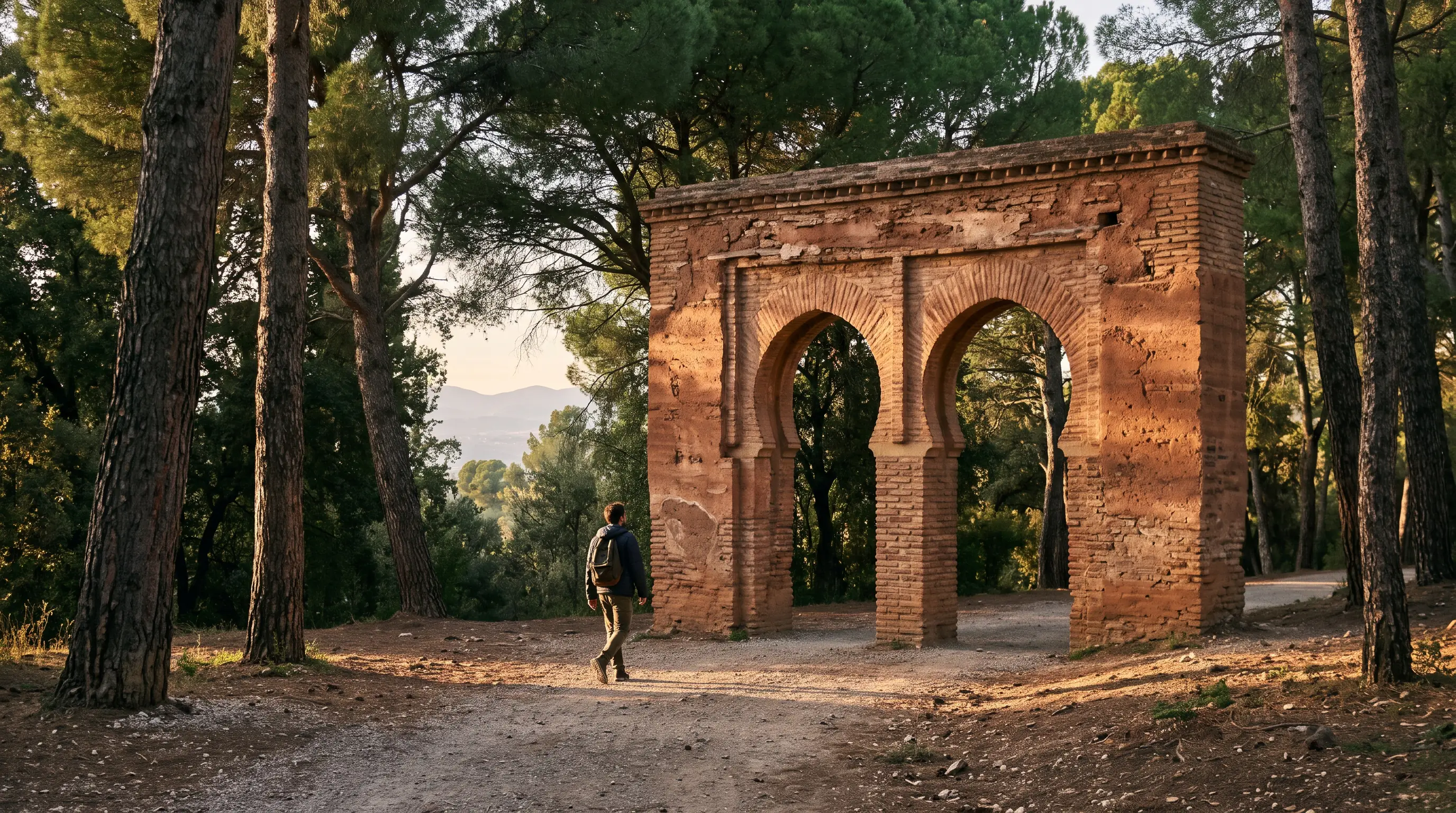
- Look at the two entrance arches first; they are what survives of the demolished gate.[39]
- Compare the straight passage with the bend of the Puerta de la Justicia.[7]
- Pair it with the Puerta de las Granadas, a Renaissance gate that replaced an Islamic one, whose remains can be seen at its right-hand side.[48]
- Stop at the Charles V pillar, where the wall behind carries four carved medallions with mythological figures.[49]
- To stand where the gate really was, go down to the junction of calle Arco de las Orejas and calle Salamanca, above calle Monterería.[3]
Frequently asked questions
Where is the Gate of Bibarrambla in Granada now?
Why is the Gate of Bibarrambla in Granada called the Arch of the Ears?
When was the Gate of Bibarrambla in Granada demolished?
Is the Gate of Bibarrambla in Granada the original gate?
Who rebuilt the Gate of Bibarrambla in Granada?
What does Bab al-Ramla, the original name of the Gate of Bibarrambla, mean?
Where was the Gate of Bibarrambla in Granada originally?
Sources
49 references Show Hide
- Patronato de la Alhambra — Exposicion virtual la puerta de bibarrambla (opens in a new tab)
“The Bibarrambla Gate was declared a National Historic-Artistic Monument in 1881, but incisive pressure from the local authorities managed to knock it down in 1884.”
- Patronato de la Alhambra — Puerta de bibarrambla (opens in a new tab)
“Desarmada la puerta pieza a pieza fue guardada en el Museo Arqueológico de Granada, hasta que en 1933 el arquitecto conservador de la Alhambra, Leopoldo Torres Balbás decide reconstruirla”
- Patronato de la Alhambra — La puerta de bibarrambla2 (opens in a new tab)
“Until its disappearance, it was located at the confluence of the current Arco de las Orejas streets with Salamanca street, above Monterería street.”
- Patronato de la Alhambra — Exposicion virtual la puerta de bibarrambla (opens in a new tab)
“The Bab al Rambla (the gateway to the sandy area) was one of the main access gates to the city of Granada in the Middle Ages”
- elindependientedegranada.es — Puerta bib rambla luce como nueva bosque alhambra (opens in a new tab)
“El origen de su construcción data de época zirí, cuando se cerró la cerca de Granada entre la Puerta de Elvira y el río Darro.”
- Patronato de la Alhambra — La puerta de bibarrambla2 (opens in a new tab)
“In the first half of the 14th century a monumental arch was built at the front as a façade, similar to the one that still exists today at the Gate of Elvira.”
- Patronato de la Alhambra — La puerta de bibarrambla2 (opens in a new tab)
“This model is very similar to that of the Puerta de la Justicia but differs from the one in that the passage is straight and there is no bend.”
- Patronato de la Alhambra — Puerta de bibarrambla (opens in a new tab)
“Su fábrica principalmente era de tapial, con ciertos elementos formales y estructurales realizados en piedra,”
- Patronato de la Alhambra — Puerta de bibarrambla (opens in a new tab)
“Esta puerta daba acceso a la plaza del mismo nombre centro neurálgico de la Granada nazarí que se extendía sobre el llano.”
- Patronato de la Alhambra — La puerta de bibarrambla2 (opens in a new tab)
“because at the beginning of the 16th century it was home to a flour weight and the mutilated ears of fraudsters were displayed here.”
- monumentalnet.org (opens in a new tab)
“castigo aplicado a molineros que defraudaban en el peso o adulteraban la harina.”
- elindependientedegranada.es — Obras dejan descubierto restos historica puerta bib rambla muralla medina medieval (opens in a new tab)
“nombre que según Gómez Moreno debía provenir de la antigua costumbre de poner en las entradas de las ciudades los mutilados miembros de los criminales.”
- Patronato de la Alhambra — La puerta de bibarrambla2 (opens in a new tab)
“it became an emblematic place in the city due to the chapel that was built inside it in 1507”
- Patronato de la Alhambra — La puerta de bibarrambla2 (opens in a new tab)
“It was an obligatory stop for the Corpus Christi procession in the Baroque period”
- elindependientedegranada.es — Puerta bib rambla luce como nueva bosque alhambra (opens in a new tab)
“Fue de los monumentos más dibujados y pintados por los viajeros románticos.”
- Patronato de la Alhambra — La puerta de bibarrambla2 (opens in a new tab)
“The painter David Roberts visited Granada in the second quarter of the 19th century and of all the drawings and prints he made, there are two that have been more successful”
- Patronato de la Alhambra — Exposicion virtual la puerta de bibarrambla (opens in a new tab)
“In 1873 the town council first raised the need for its demolition.”
- Patronato de la Alhambra — La puerta de bibarrambla2 (opens in a new tab)
“Its destruction was initially checked by the Provincial Commission of Monuments and there was an eleven-year struggle between the two institutions, until 1884.”
- elindependientedegranada.es — Puerta bib rambla luce como nueva bosque alhambra (opens in a new tab)
“A mediados del siglo XIX (1857-8) se procedió a realinear esta zona y el Arco de las Orejas quedó tapado por las construcciones de enfrente.”
- elindependientedegranada.es — Puerta bib rambla luce como nueva bosque alhambra (opens in a new tab)
“En 1873, coincidiendo con el cantón regionalista que gobernó la comarca, el Ayuntamiento decidió demolerlo para dar empleo a los muchos parados de la ciudad.”
- legadoandalusi.es (opens in a new tab)
“besides, there was a prominent individual interested in its demolition to revalue his property.”
- elindependientedegranada.es — Puerta bib rambla luce como nueva bosque alhambra (opens in a new tab)
“Pero el deterioro que continuaba sufriendo, añadido a la epidemia de cólera, aconsejaron al Ayuntamiento derribarlo.”
- Patronato de la Alhambra — La puerta de bibarrambla2 (opens in a new tab)
“Without exception, Republican municipal governments, revolutionaries of the independent canton and monarchists of the restoration all worked towards its disappearance”
- Patronato de la Alhambra — La puerta de bibarrambla2 (opens in a new tab)
“First the Bibalmazán gate fell, then the Fish gate, the Sun gate and the Iron gate”
- elindependientedegranada.es — Obras dejan descubierto restos historica puerta bib rambla muralla medina medieval (opens in a new tab)
“como Monumento Nacional Histórico Artístico por R. Orden el 10-10-1881 (Gaceta de Madrid 13-10-1881)”
- elindependientedegranada.es — Oppidum eleberis denuncia que cultura pretende ocultar emparedar con pladur restos torreon (opens in a new tab)
“celebrando tan infausto acontecimiento el Ayuntamiento con cohetes y fuegos artificiales”
- Patronato de la Alhambra — La puerta de bibarrambla2 (opens in a new tab)
“The Arco de las Orejas is much more than a nostalgic reference since its demolition between 1873 and 1884 became a symbol of the fight for the protection of Historical Heritage in Spain.”
- elindependientedegranada.es — Puerta bib rambla luce como nueva bosque alhambra (opens in a new tab)
“Hasta que en 1930, Manuel Gómez-Moreno (hijo) propuso al director de la Alhambra, Leopoldo Torres Balbás, su reconstrucción en algún lugar del conjunto monumental.”
- Patronato de la Alhambra — Exposicion virtual la puerta de bibarrambla (opens in a new tab)
“Once the most important remains had been recovered, it was rebuilt in the Alhambra forest in 1933, at the behest of Manuel Gómez Moreno Martínez and Leopoldo Torres Balbás.”
- elindependientedegranada.es — Alhambra restaurara puerta bib rambla (opens in a new tab)
“Hasta ahora se atribuía al arquitecto conservador Leopoldo Torres Balbás (1888-1960) esta iniciativa, pero la idea fue de Manuel Gómez Moreno el Joven”
- Patronato de la Alhambra — Puerta de bibarrambla (opens in a new tab)
“Desarmada la puerta pieza a pieza fue guardada en el Museo Arqueológico de Granada, hasta que en 1933 el arquitecto conservador de la Alhambra, Leopoldo Torres Balbás decide reconstruirla”
- elindependientedegranada.es — Puerta bib rambla luce como nueva bosque alhambra (opens in a new tab)
“El primer proyecto para reconstruirlo se hizo en el secano, pero fue desestimado por ser lugar demasiado llano”
- Patronato de la Alhambra — La puerta de bibarrambla2 (opens in a new tab)
“TORRES BALBÁS, L., “La puerta de Bibarrambla de Granada”, Archivo Español de Arte y Arqueología, nº33, 1935.”
- patrimonizate.es (opens in a new tab)
“El proyecto se desarrolla en dos etapas: en 1933 se montaron los arcos; y en 1935 se construyen los muros.”
- elindependientedegranada.es — Puerta bib rambla luce como nueva bosque alhambra (opens in a new tab)
“La reconstrucción trató de hacerse lo más fiel posible, pero también se falsearon dovelas y ladrillos, así como sillares nuevos en piedra de Alfacar.”
- elindependientedegranada.es — Puerta bib rambla luce como nueva bosque alhambra (opens in a new tab)
“Se pensó iniciar aquí una senda peatonal que uniese el Arco de las Orejas con la Puerta de la Justicia, serpenteando por la ladera. Pero nunca se hizo la senda.”
- Patronato de la Alhambra — Puerta de bibarrambla (opens in a new tab)
“según se cruza la puerta de las Granadas en el lado izquierdo, inserta en el bosque.”
- turismo.granada.org (opens in a new tab)
“En el bosque de la Alhambra se encuentran la puerta de las Granadas, el pilar de Carlos V, la puerta de Bibrrambla y las estatuas de Washington Irving y Ángel Ganivet.”
- elindependientedegranada.es — Arco orejas rehabilitacion (opens in a new tab)
“Actualmente perviven sólo los dos arcos de ingreso a la Puerta de Bib-Rambla.”
- elindependientedegranada.es — Oppidum eleberis denuncia que cultura pretende ocultar emparedar con pladur restos torreon (opens in a new tab)
“El pasado noviembre de 2016 y en unas obras de rehabilitación que se estaban llevando a cabo en un edificio de la calle Arco de las Orejas, al picar las paredes aparecieron cinco metros del poderoso torreón”
- Patronato de la Alhambra — La puerta de bibarrambla2 (opens in a new tab)
“In 2016 important archaeological remains resurfaced belonging to one of the gate towers, which were previously thought to be lost, and its connection with the city wall”
- patrimonizate.es (opens in a new tab)
“Aunque en la práctica la obra no se ha llevado a cabo hasta el verano de 2020,iniciando los trabajos en junio para terminar en el mes de octubre.”
- elindependientedegranada.es — Arco orejas rehabilitacion (opens in a new tab)
“esta intervención, que tiene un presupuesto de 95.510 euros y un plazo de ejecución de cuatro meses”
- elindependientedegranada.es — Puerta bib rambla luce como nueva bosque alhambra (opens in a new tab)
“La Puerta de Bib-Rambla luce como nueva en el bosque de la Alhambra. Quizás demasiado nueva y con regusto a cemento porland.”
- elindependientedegranada.es — Puerta bib rambla luce como nueva bosque alhambra (opens in a new tab)
“cuando fue reconstruida hace casi un siglo no se le construyó una cimentación demasiado sólida”
- turismo.granada.org (opens in a new tab)
“La zona de la Alhambra también se puede disfrutar sin entrada.”
- turismo.granada.org (opens in a new tab)
“Cuesta de Gómerez que baja a Plaza Nueva”
- Patronato de la Alhambra — Puerta de las granadas (opens in a new tab)
“Esta puerta renacentista sustituyó a otra islámica, cuyos restos pueden verse a su costado derecho.”
- Patronato de la Alhambra — Pilar de carlos v (opens in a new tab)
“presenta cuatro medallones tallados con personajes mitológicos”