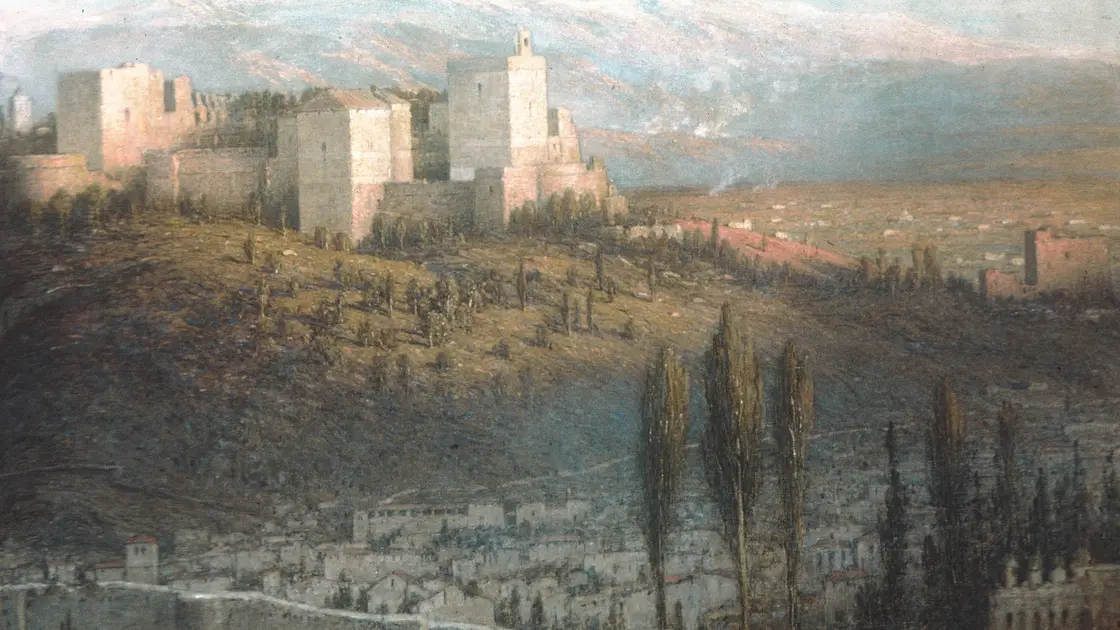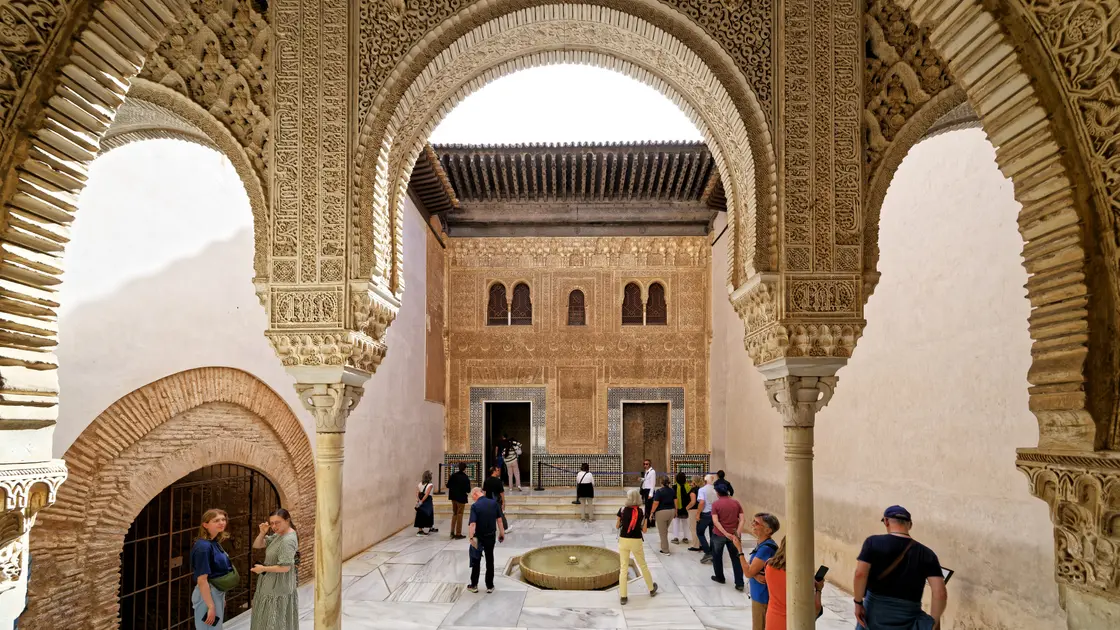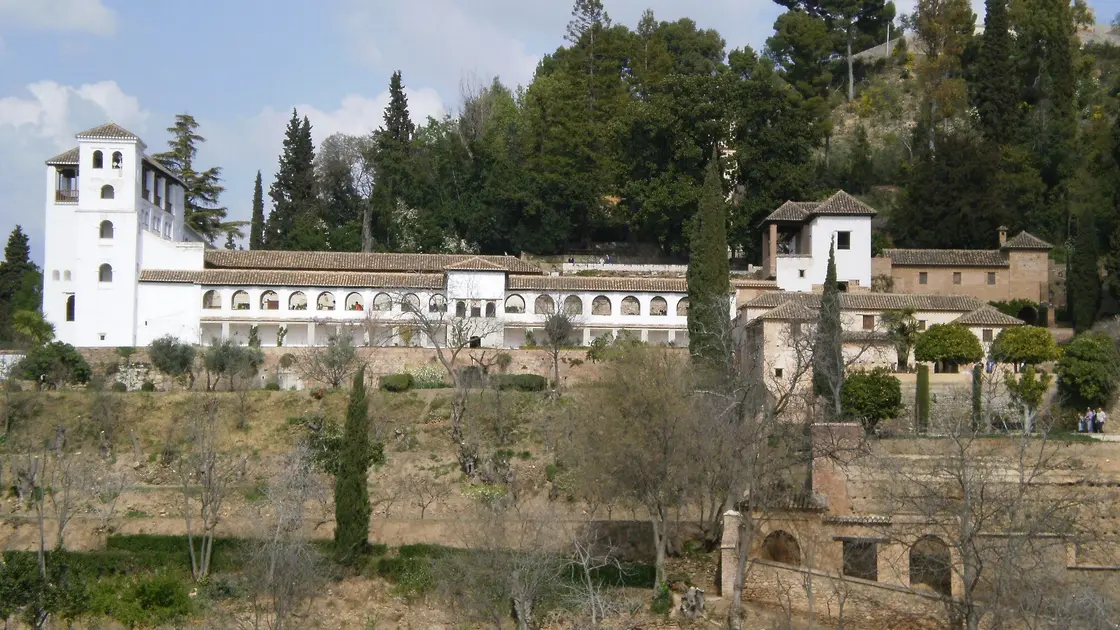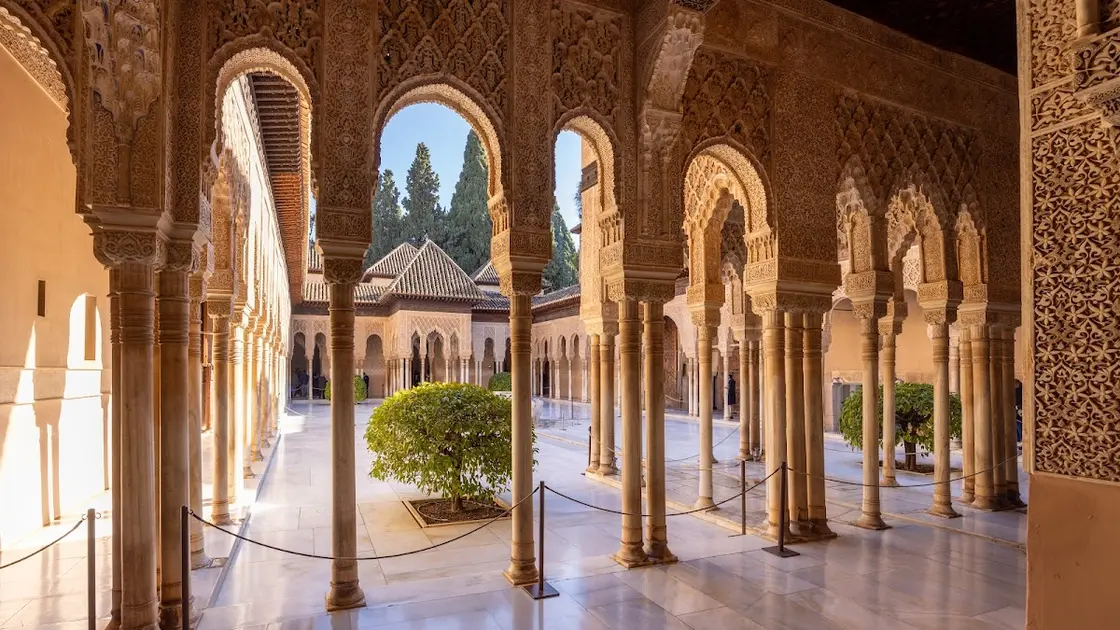
The Alhambra district is not a barrio in the way Realejo or Albaicín are barrios. Nobody grew up here. It is the forested hill the fortress stands on, the access roads that climb to its gates, and the small handful of hotels and restaurants that have set up business within a few hundred metres of the ticket office. The postal code is 18009, the same code the monument itself uses, which says something about how tightly this district is drawn around a single landmark. The Alhambra, the Generalife, the Alcazaba and the Nasrid Palaces have their own pages. This one covers where to sleep and eat on the hill around them, not the monument itself.
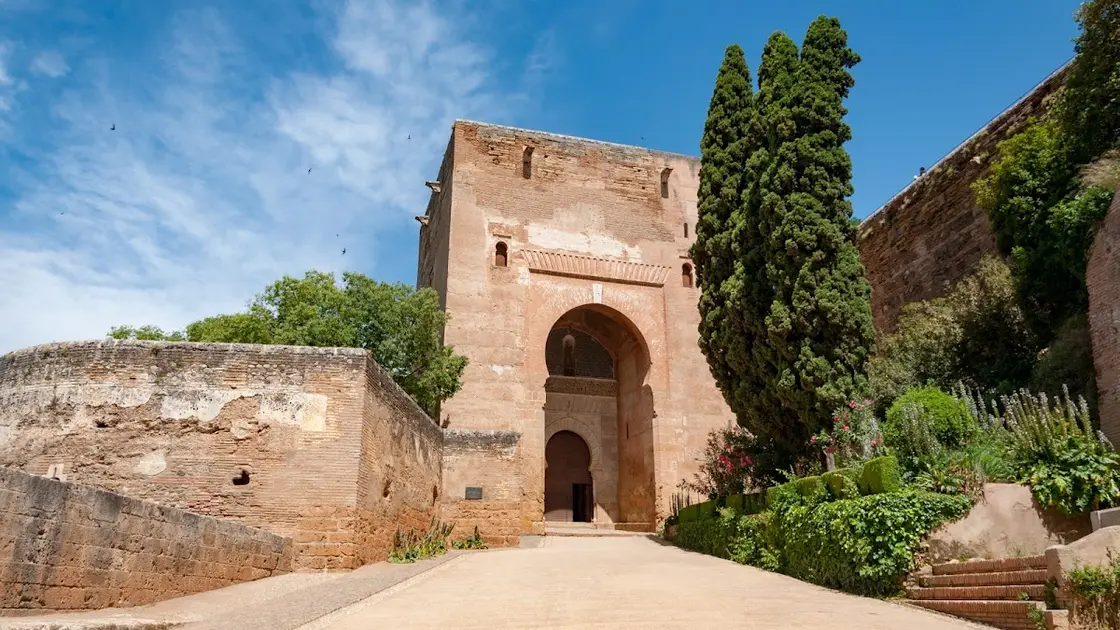
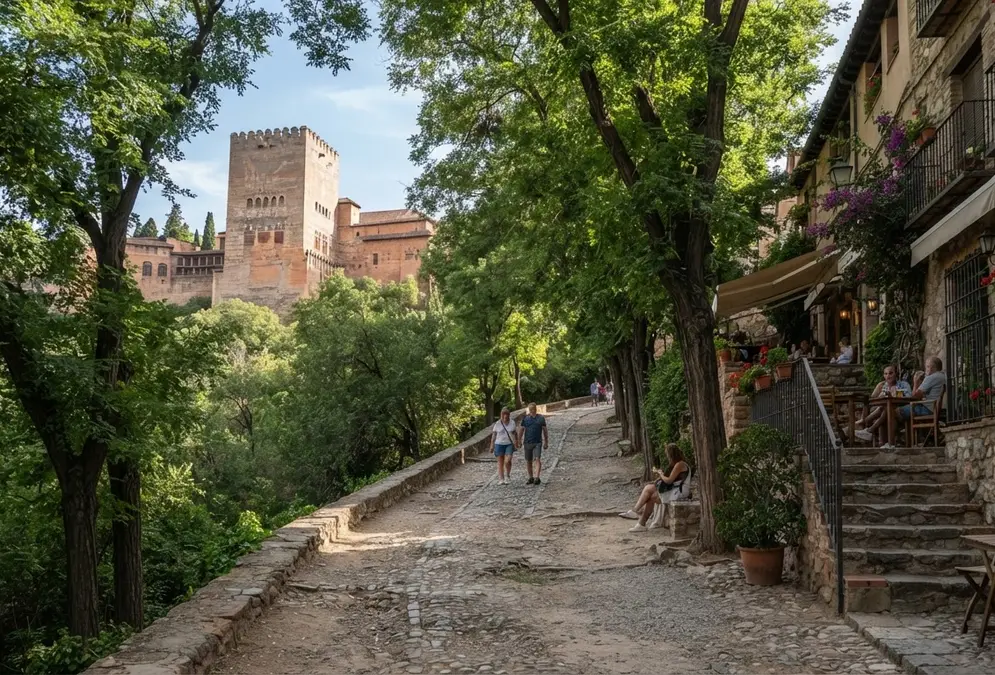
Bosque de la Alhambra, the planted forest of elms, pines and poplars that buffers the fortress from the city below, covers most of the district. Cuesta de Gomérez climbs up from Plaza Nueva through this tree cover toward the Puerta de la Justicia; Paseo de la Sabica and Paseo del Generalife wrap around the base of the walls. Every hotel and restaurant here sits inside or at the edge of that forest, which is why the district feels closer to a nature reserve than a neighbourhood once the coach parties have gone home for the evening.
Where to sleep on the hill
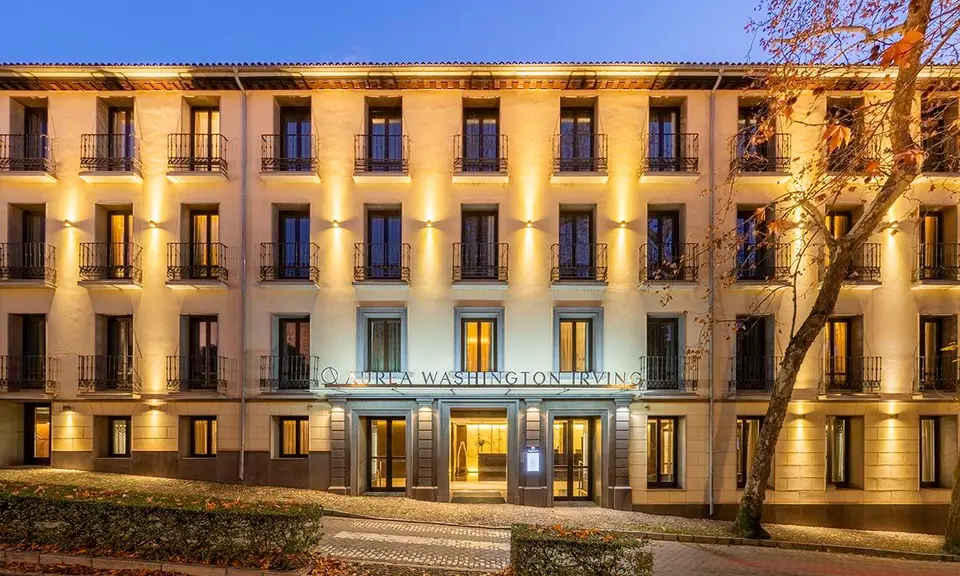
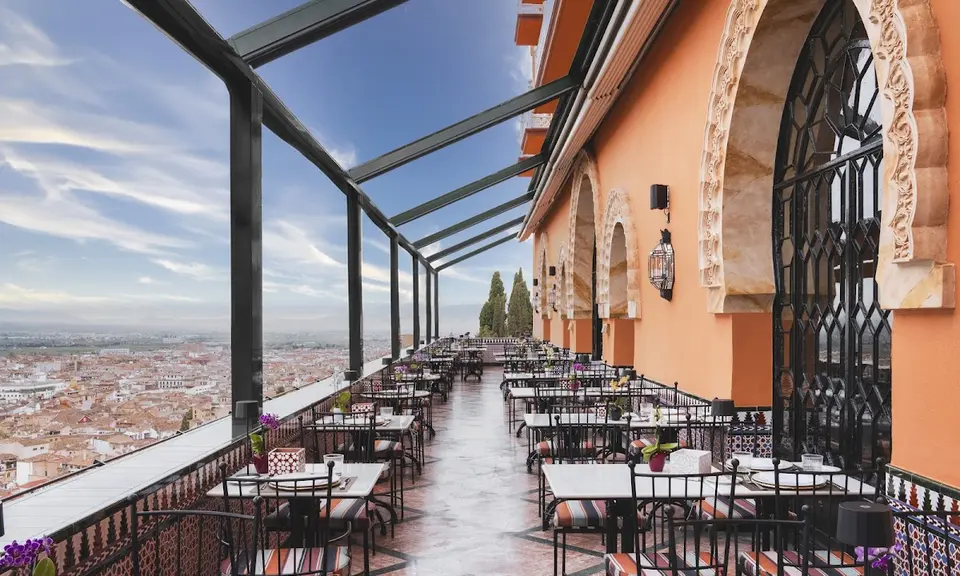
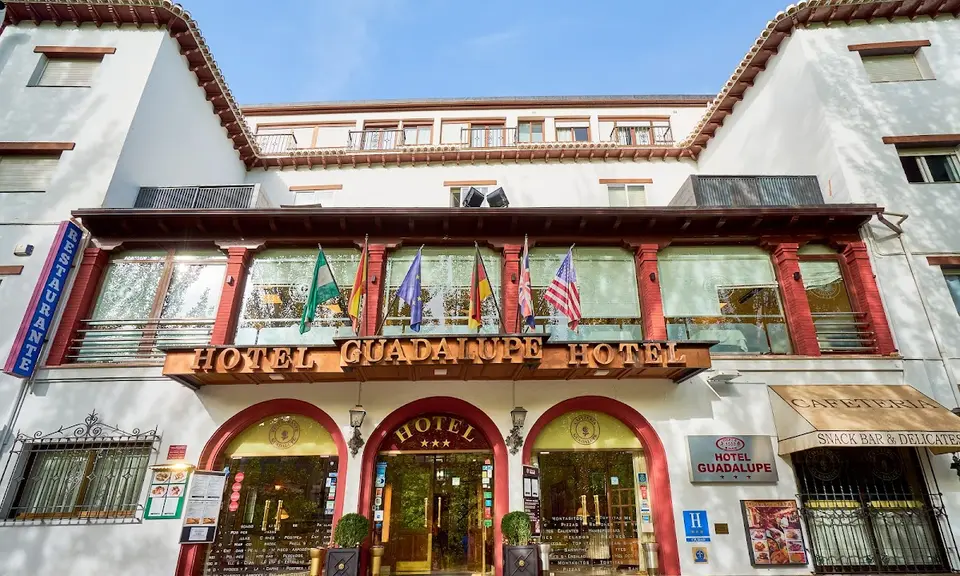
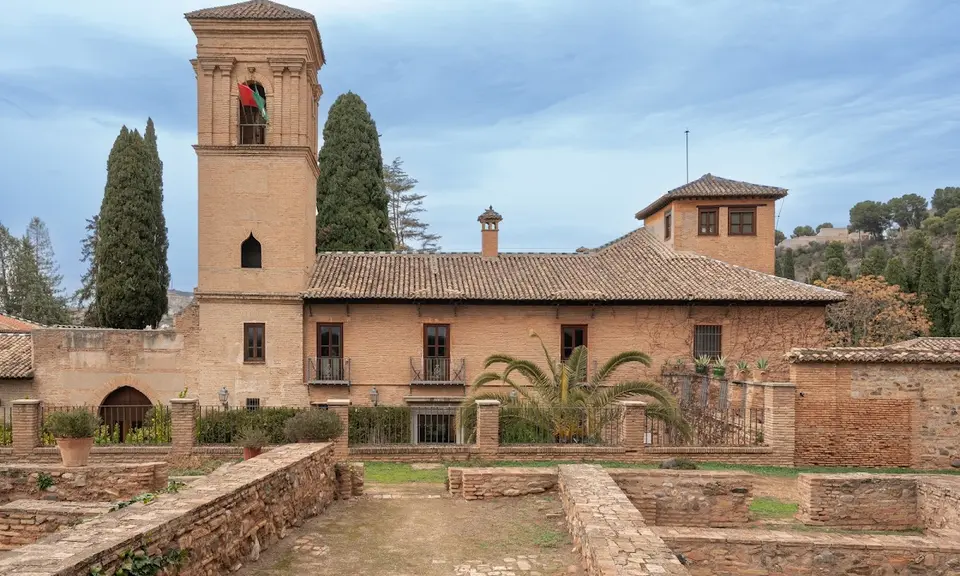
The Parador de Granada is the only hotel actually inside the UNESCO perimeter, built into a 15th-century monastery on Calle Real de la Alhambra with just 40 rooms — booking three to six months ahead is normal for peak season. Outside the walls but on the same hillside, the Eurostars Washington Irving on Paseo del Generalife takes its name from the writer whose Tales of the Alhambra was largely composed a few hundred metres away in 1829; its 63 rooms sit 400 metres from the entrance gates. Hotel Guadalupe, on Paseo de la Sabica, is closer still, roughly 100 metres from the ticket hall, with upper-floor rooms looking straight onto the Generalife gardens and the fortress walls. The Alhambra Palace, open on the hilltop since 1910, is a five-minute walk down to the gates and one of the few hotels in the district with its own panoramic restaurant rather than a borrowed terrace view.
Eating between the gate and the gardens
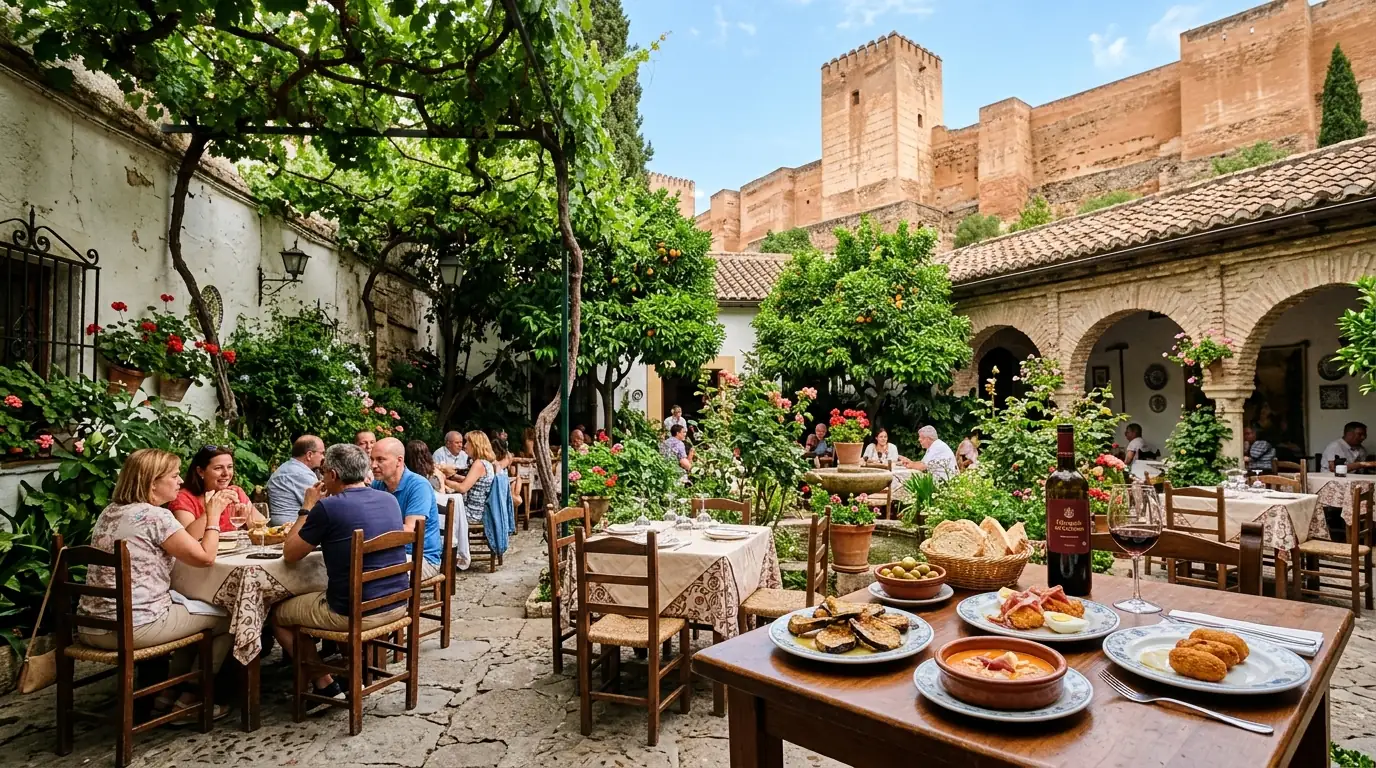
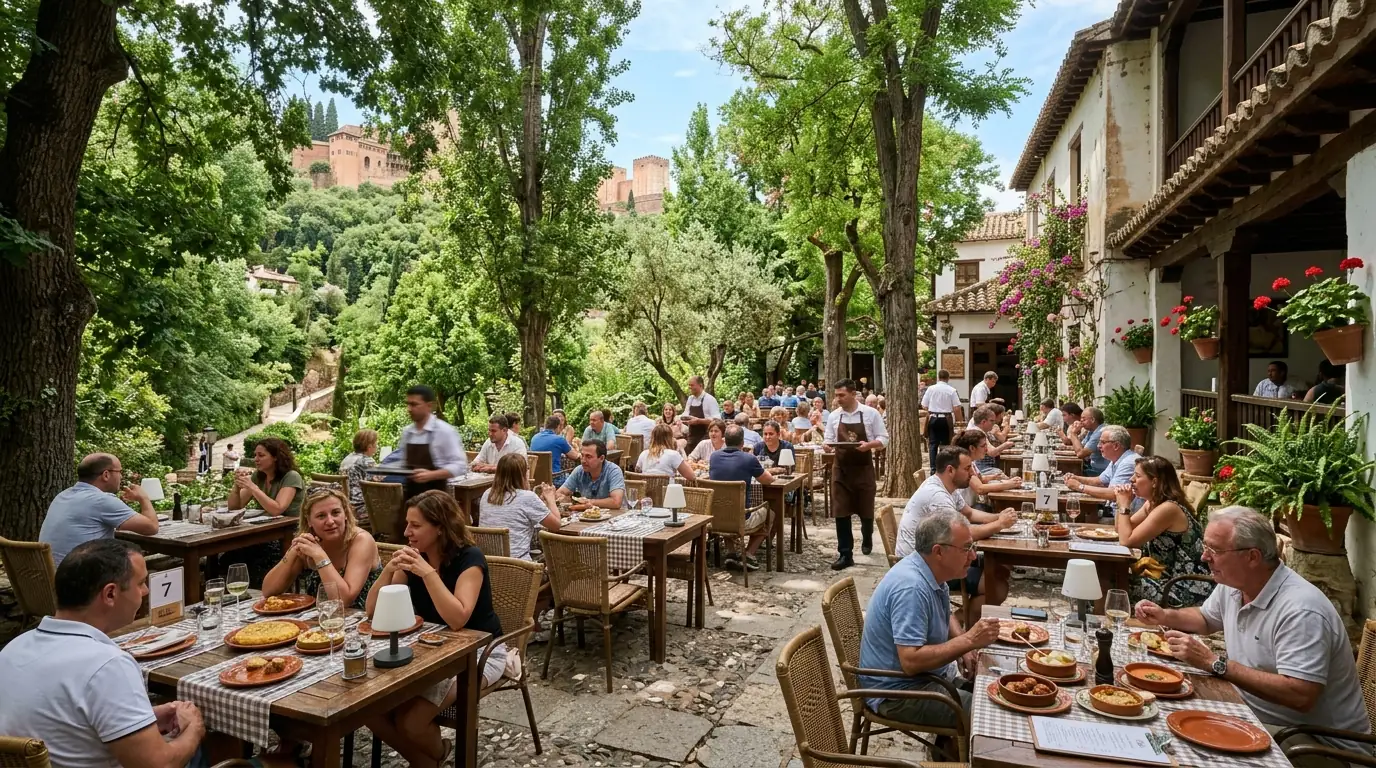
Jardines Alberto occupies a 19th-century carmen right at the entrance, its terraced garden looking up at the Alcazaba walls through the tree line; the kitchen leans on Nazarí references, a slow-braised lamb tagine the standout in a district with few full menus to choose from. La Mimbre, on Avenida del Generalife, has been feeding people who made the climb since around 1881, which makes it Granada's oldest working restaurant. It serves lunch only, noon to 17:00, and sits far enough inside the grounds that no other full-service kitchen shares its address. Neither restaurant is built for an evening crowd — the district empties out once the monument closes, and dinner means heading back downhill.
Why base yourself here, and what it costs you
Staying on the hill buys an early-entry advantage no city-centre hotel can match: a two-minute walk to the ticket gates from Guadalupe, a seven-minute one from the Washington Irving, before the buses from Plaza Nueva have unloaded their first load of the day. It costs you the evening. Granada's tapas circuit and the bars around Centro and the Albaicín are twenty to thirty minutes downhill on foot, or a short ride on the C30 minibus, and almost nothing on the hill itself stays open past dinner. For a stay built around two or three Alhambra mornings, that trade is straightforward. For a trip centred on Granada's nightlife, one of the lower neighbourhoods is the better base.