
A false start in 1884 and a name nobody was using
A first brewery called Alhambra opened on Calle Jardines in 1884 and had vanished within a few years[3]. The beer that lasted began four decades later with two outsiders, the French-born Carlos Bouvard and Antonio Knörr from Vitoria, who raised a factory in Granada on mostly foreign capital[4]. They settled on a plot on the Camino del Fargue, also called the Cuesta de los Cerdos, or Pig Slope[8].
The name was nearly something else. The directors weighed San Carlos before deciding that Alhambra sounded better and tied the beer to its city[6]. They also found the old trademark free, because the 1884 owners had never renewed the licence, and simply adopted it[5].
Explore nearby · Monument
Alhambra
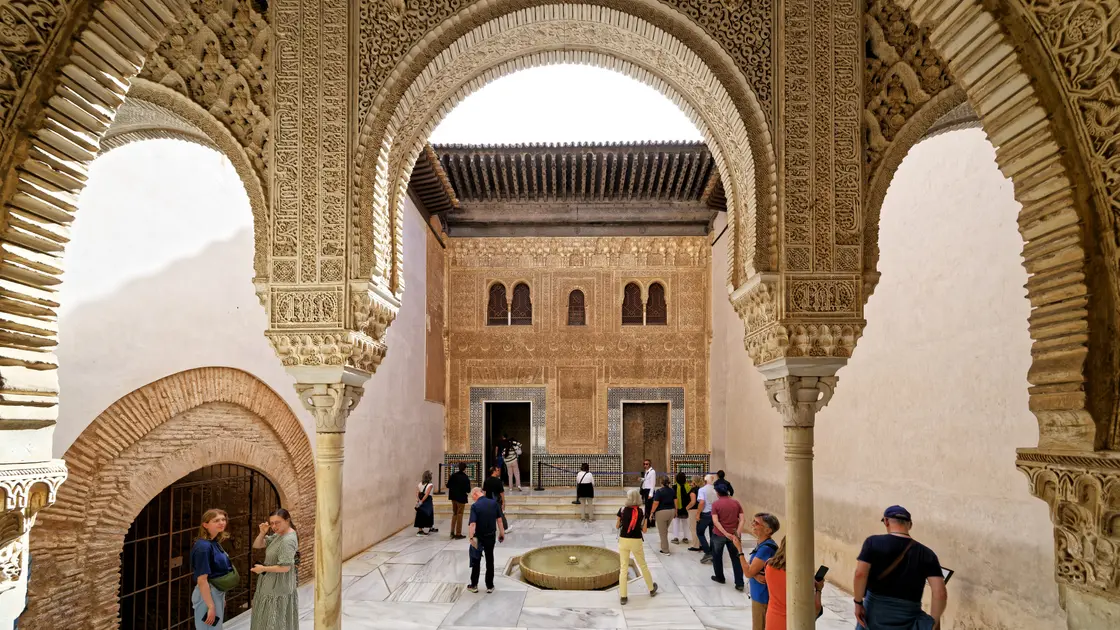
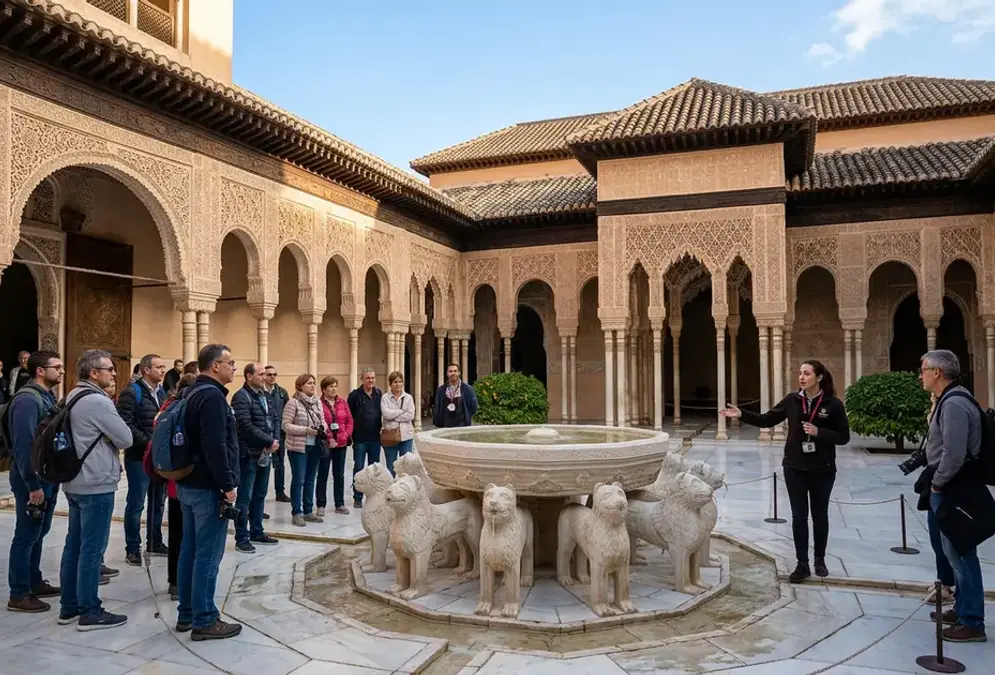
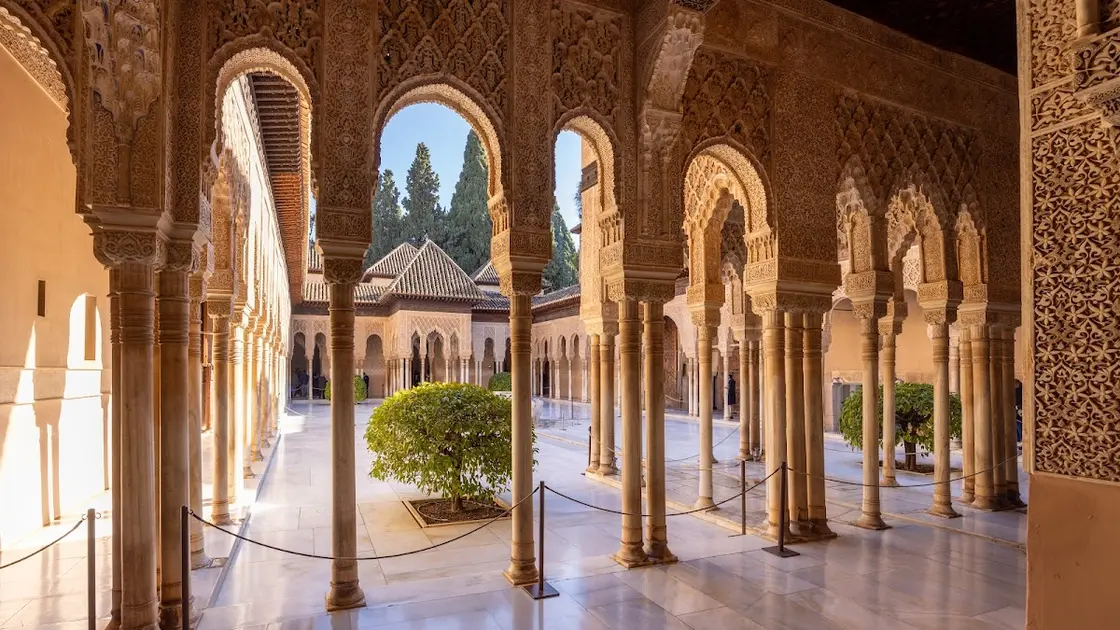
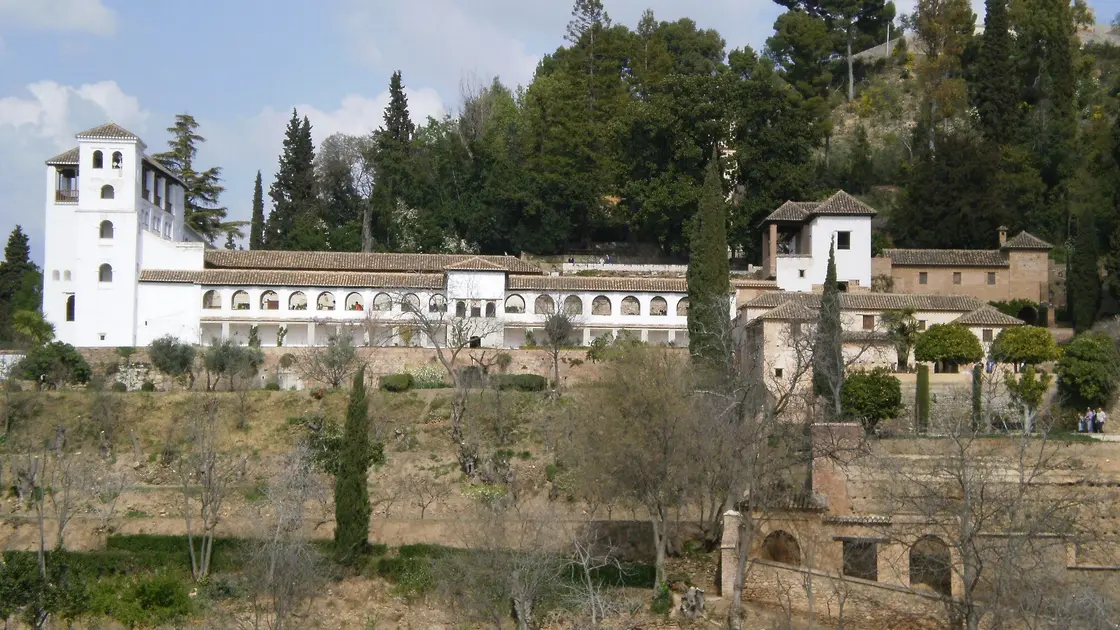
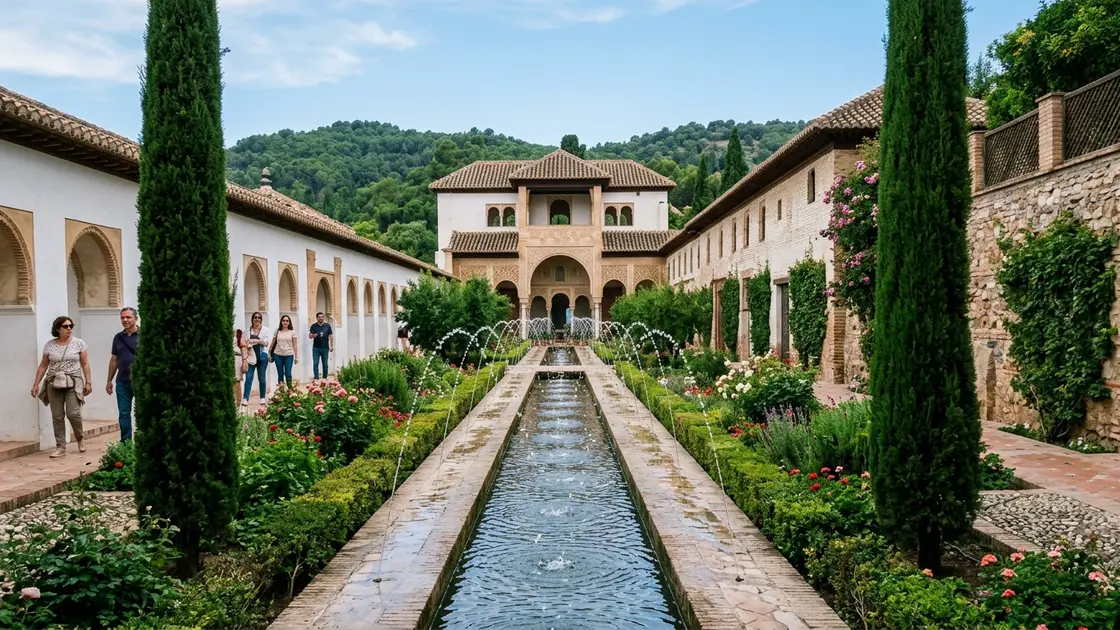
The Alhambra is Granada's UNESCO fortress-palace: Nasrid Palaces, Alcazaba and Generalife gardens. Tickets sell out weeks ahead; book via the Patronato site.
The word is Arabic, al-Hamra, "the red", after the colour the walls take at sunset[7], the same etymology behind the monument's name. A brewery that borrowed the city's best-known silhouette was always going to be local. The money was not.
1925 or 1926: the brewery with two birthdays
Granada's brewery has two founding dates, and both are defensible. The company, Cervezas La Alhambra S.A., was notarised on 4 November 1925[9], the year the brand still prints. A second account dates the constituent deed to 2 February 1926, with practically all the capital coming from outside the city[10].
What is not in doubt is what followed once the money was in place:
That first beer came in 75 cl bottles or kegs, in Pilsen and Munich styles[13]. The embossed bottles ordered from England for the launch had not arrived in time, so the earliest customers got generic glass[14]. The famous bottle, in other words, missed the launch on 1 November 1926. Brands like a single date and a single bottle. Archives rarely oblige.
The green bottle: what the record supports
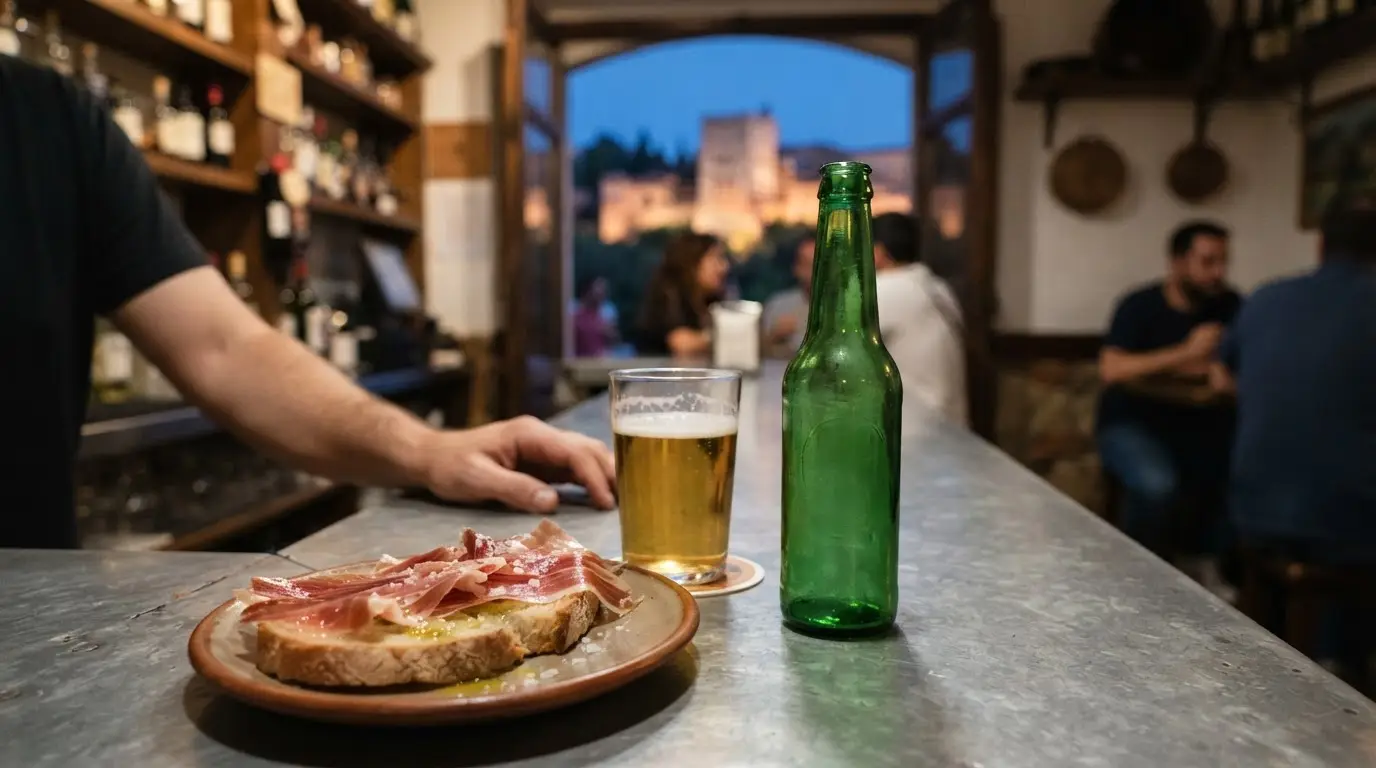
Today's Reserva 1925 comes in a slim green bottle with no paper label; the legal text, logos and brand are moulded into the glass[15]. That was a marketing decision, and a marketing-agency analysis describes the bottle as inspired by the first commercial model[16].
There is something to the claim. A local-press history of the brewery says the first green bottle, made in England and without a paper label, was close to the current 1925 and Roja, both of which took it as their model[17]. It sits awkwardly beside the launch itself, when the English bottles were late and the first beer went out in generic ones[14]. The embossed bottle is real; it just was not there for the first beer, so its pedigree is better read as brand storytelling than as archive.
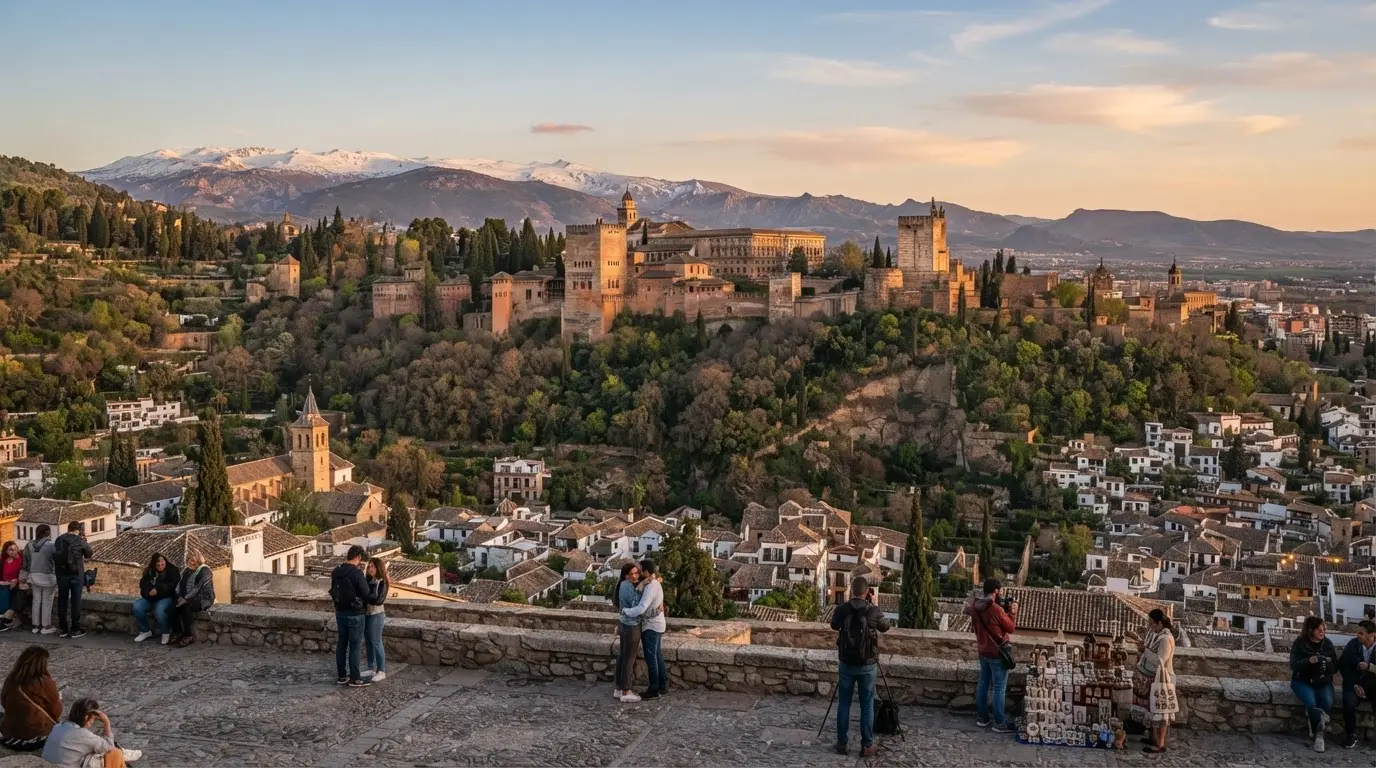
The early paper labels, on the other bottles, showed the Alhambra with a snow-covered Sierra behind it[18]. That picture, at least, needs no marketing department to make it true on a clear winter morning.
The brand knows the value of a green bottle. For its 2025 centenary it issued 500 commemorative four-bottle cases in a reissued 1964 bottle design, according to sponsored Forbes BrandVoice copy[41], which describes the original as having been an emblem of modernity and local pride in the 1960s[42]. Nostalgia sells, and Granada has plenty to spare.
Damm, Cruzcampo and the 1995 near-collapse
By 1954 Damm held most of the shares of La Moravia and with them almost all of Alhambra[19][20]. The Civil War of 1936 to 1939 barely touched production[39]. In 1979 a share swap brought Seville's Cruzcampo in with 27%[21].
Under that ownership output grew almost fourfold between 1961 and 1980[22]. Then it unravelled: in 1995 the factory's imminent closure was announced and Damm and Cruzcampo left in a hurry[23]. A group of private investors bought 99% of the capital that year[24]. By 2000 the group was Spain's fifth-largest brewer, with 2.6% of the national market[40].
290,000 hl
The company that sold to Mahou a decade later was therefore a company kept alive by private investors, not a family heirloom. Small, scrappy and proud. That explains the tone of the Reserva 1925 that followed.
Reserva 1925: a strong beer born in a crisis
A marketing analysis puts Alhambra close to financial collapse in the mid-1990s, with its last cartridges spent on two new beers, Especial and Reserva 1925[25]. A local-press history dates the first sale of the 1925 to 1995[26]. Master brewer Miguel Hernáiz is credited with it, though one account calls his work an adaptation of an earlier formula rather than an invention[27].
It began as a strong beer, at least 7.2% by volume, and was well received by the public, by a local-press account[28]. Strong, then. The version on shelves now sits at 6.4%[29]. Its listed ingredients include maize alongside barley malt, hops and yeast[30], which is worth knowing before you take the heritage pitch literally.
Recommended tours
Tours are selected for quality, not commission. We earn a small fee if you book — at no extra cost to you.
The brewery's own account stresses slow fermentation as the recipe's signature[31]. Drink it cold, with something salty, and judge it as a good lager rather than as a museum piece.
Mahou, the Granada plant and what to order
Mahou San Miguel signed the purchase contract for Grupo Alhambra Alimentaria in Granada on 8 November 2006[32], and Spain's competition tribunal decided the case on 7 March 2007[33]. The buyer pledged to respect the brand's identity, production structure and staff[34]. At the time Alhambra held 2.2% of the national market and 6.7% in Andalusia[35]. Mahou's own account says the beer kept its Granada identity and its brewing process after 2007[2].
The Granada plant still brews, about 247,000 hectolitres in 2019[36]. The first beers were made with water from a medicinal spring and the Aynadamar irrigation channel, on a plot that had been the old pig market[37].
Deep dive · Article
20 Interesting Facts About Granada, Spain
Interesting facts about Granada Spain that guidebooks skip: disputed etymologies, the soldier who saved the Alhambra, and a river buried under Plaza Nueva.
Granada is where the brand is strongest. In 2005 the buyer's own estimate, filed with the competition authority, put Alhambra at 35% to 45% of the province's bar and restaurant beer trade, against 5% to 15% in the next-best Andalusian province[38]. That is a 2005 estimate, not a current share. The same file found draught Alhambra kegs cost more in Granada than anywhere else in Spain[43], in a country where draught lager is over 40% of bar beer[44]. A draught beer in Granada usually still comes with the free tapa that Granada bars still hand out. Order the Reserva 1925 when you want a slower drink, and check the label for the maize before you call it heritage.