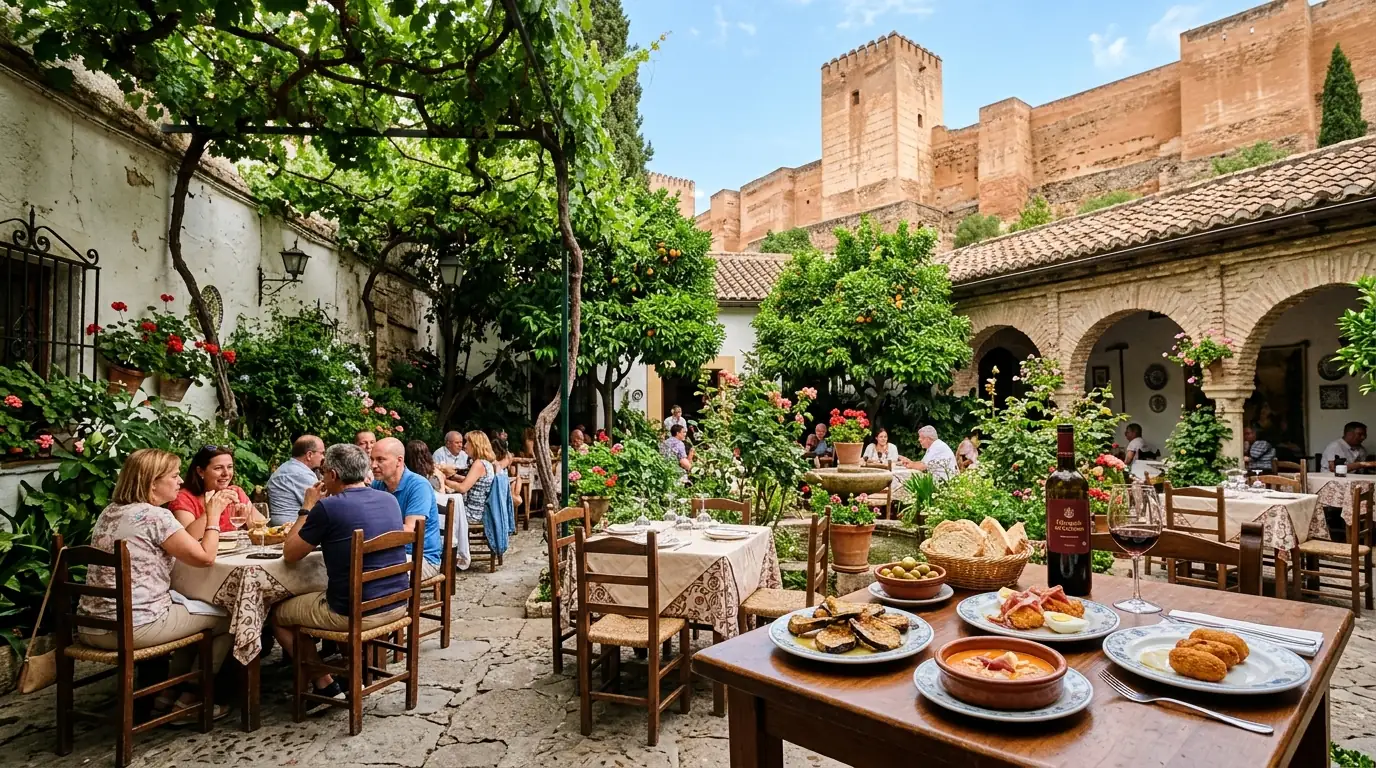
At the entrance to the Alhambra
Jardines Alberto occupies a 19th-century carmen at Paseo de la Sabica 1, immediately adjacent to the main Alhambra ticket hall. The C30 and C32 buses that bring visitors up the hill stop in front. The Alhambra ticket queues form metres away. The fortress walls of the Alcazaba are visible from the garden terrace above the tree line.
This position makes Jardines Alberto the most direct pre- or post-Alhambra lunch option in Granada. Not the most atmospheric restaurant in the city, not the cheapest. But if you are arriving at the monument in the morning, the logistics are simple: eat here before you enter, or return here directly after you exit.
The carmen and the garden
A 19th-century carmen is a Granadan urban farmhouse: walled, with a garden, built on the hillside where land was available after the Reconquista. This one has been converted into a restaurant while keeping the garden structure: terraced levels, old stone walls, plantings that have been here for decades. The roses and climbing vines on the walls are not decorative additions — they are part of an old garden that was managed as a working productive space before it became a restaurant terrace.
The garden terrace is the main reason to eat here. The views are of the Alhambra walls and the surrounding forest, not the city below. On the restaurant strip down in the city centre, views of the Alhambra are marketed aggressively and priced accordingly. Here you are looking at the walls from a position adjacent to the monument rather than from a distant rooftop across the valley.
The kitchen
The menu draws on Nazarí culinary heritage alongside Mediterranean cooking. The tagine-style lamb with dried fruit and spices is the explicit reference: a slow-braised preparation using apricots, almonds, cinnamon, and coriander that traces its lineage to the Nasrid kitchens that operated in the Alhambra above. This is not a Moroccan restaurant — the dish is Spanish in execution, referencing rather than reproducing Nasrid-era cooking.
The grilled seasonal vegetables from the Vega de Granada are the other notable option. The Vega is the fertile agricultural plain that stretches west of the city, one of the most productive market-garden areas in Andalusia. The asparagus, artichokes, broad beans and peppers grown there are genuinely different in flavour from the generic Andalusian vegetable supply chain. When the menu specifies Vega de Granada sourcing, it is a meaningful claim.
For dessert, the Moorish pastries with almonds and honey are made in-house: a small plate of phyllo-wrapped sweets with almond paste and local honey from the Sierra Nevada beehives. They are sweet, fragrant, and historically grounded in the almond and honey combination that Nasrid Granada would have recognised.
Average spend is €25–40 per person.
Hours and practical access
The restaurant is open Tuesday through Saturday until midnight and on Sunday and Monday until 20:00. Full hours: 09:00–00:00 Tue–Sat; 09:00–20:00 Sun–Mon. The early opening at 09:00 makes it a breakfast option before an Alhambra morning visit, which few restaurants in the city can offer at this location.
Parking near the Alhambra is limited. The C30/C32 bus from the city centre stops directly outside and is the practical approach for most visitors. From Plaza Nueva, the journey takes about fifteen minutes by bus or thirty minutes on foot uphill.