How Were Nasrid Glass and Glazed Ceramics Made in the Alhambra?
What Alhambra kilns and analysed glazes reveal: how Nasrid glass and glazed ceramics were made, from keyhole kilns and tin-lead glazes to Secano glassworking.
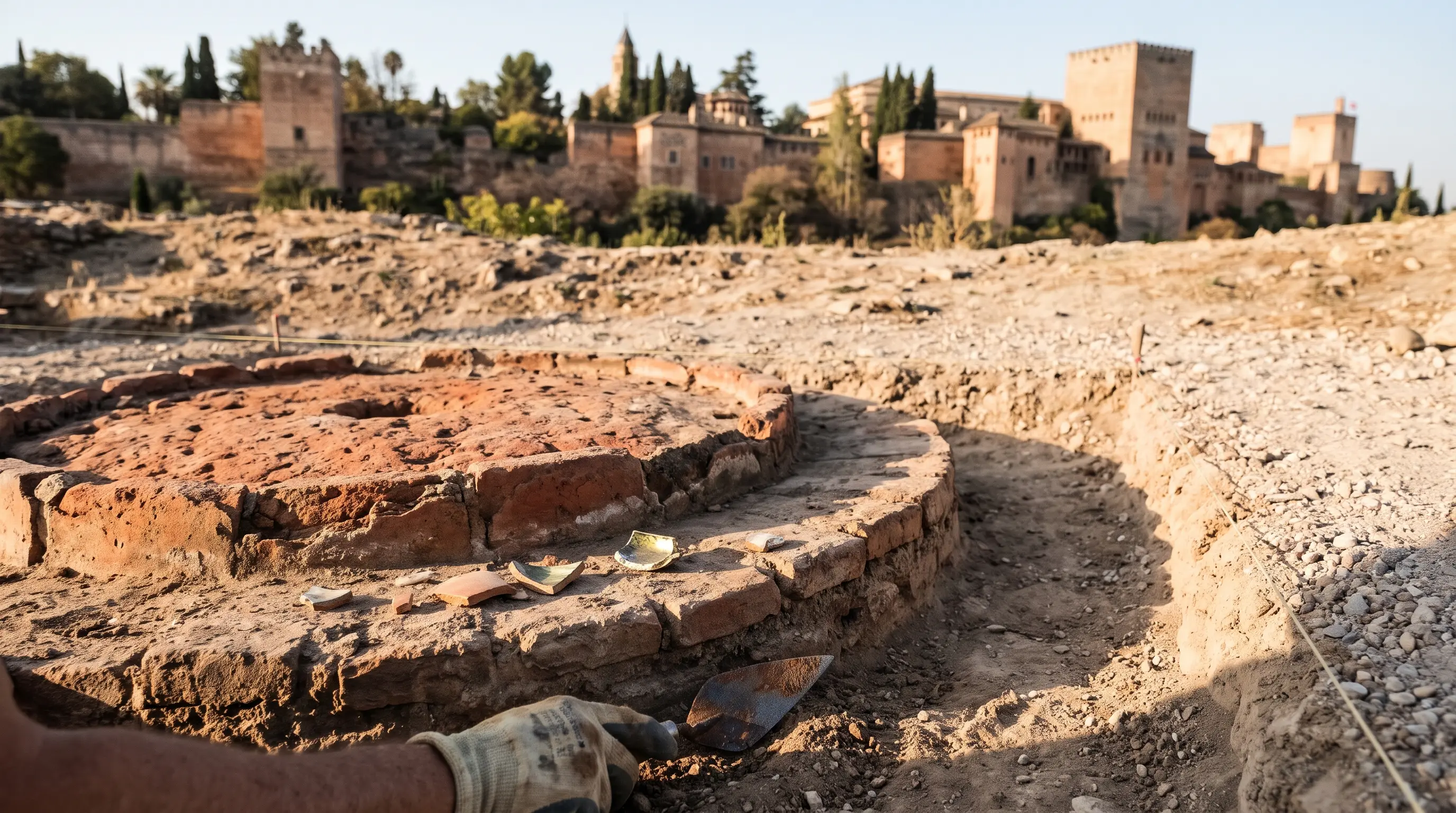
During the first phase the team found the base of a keyhole kiln near the Puerta de los Siete Suelos.
- Royal Workshops project
- 2015–2017
- Run with the universities of Granada, Bournemouth, Leicester and Newcastle[2]
In this article
Jump to a section
Where Nasrid craftsmen fired their pots and glass
Reading a keyhole kiln: what the dig actually did
- Late medieval to early modern
Workshops in the Secano
Trench 1 holds one late medieval and several early modern furnaces[10].
- 1960s and 1970s
Furnaces reconstructed
Work under Francisco Prieto Moreno leaves no records of the earlier excavation[15].
- 2015–2017
Royal Workshops project
Four universities and the Alhambra study the Secano's kilns and workshops[2].
How Nasrid glaze worked: tin, lead and copper
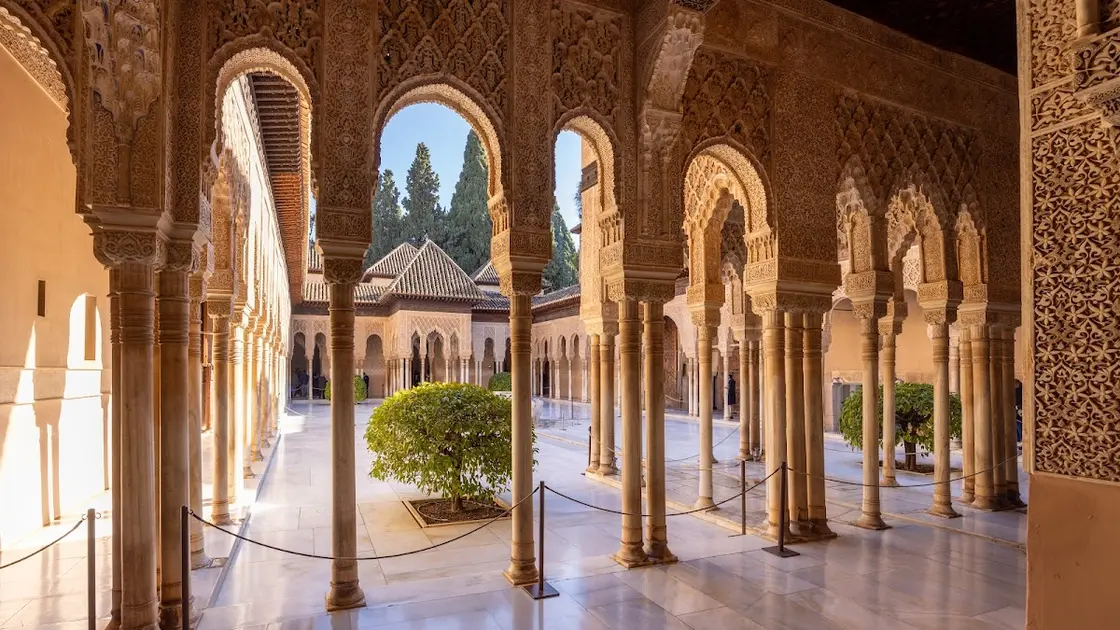
Explore nearby · Monument
Nasrid Palaces
Three royal Nasrid palaces inside the Alhambra, including the Patio de los Leones and Hall of the Ambassadors. Entry is timed: arrive within your booked slot.
Glass in the same workshops: atifles, muflas and heavy metals
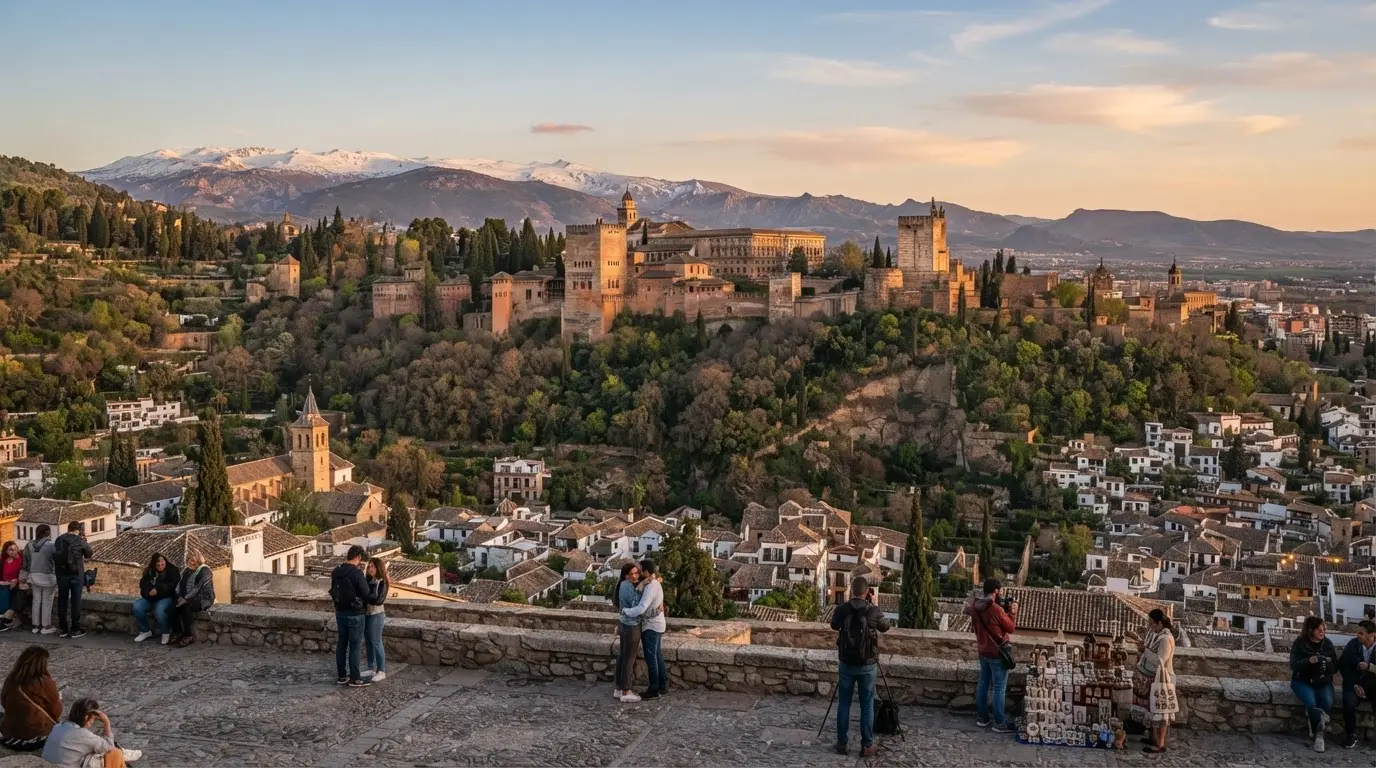
Deep dive · Article
20 Interesting Facts About Granada, Spain
Interesting facts about Granada Spain that guidebooks skip: disputed etymologies, the soldier who saved the Alhambra, and a river buried under Plaza Nueva.
What the research cannot yet say, and where to look on a visit
Recommended tours
Tours are selected for quality, not commission. We earn a small fee if you book — at no extra cost to you.
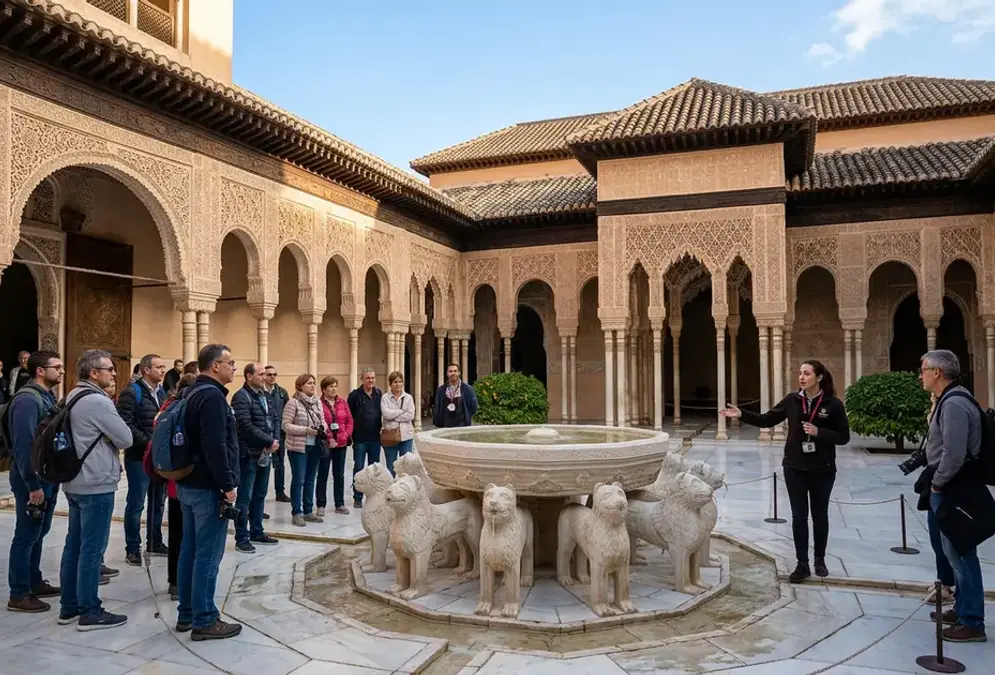
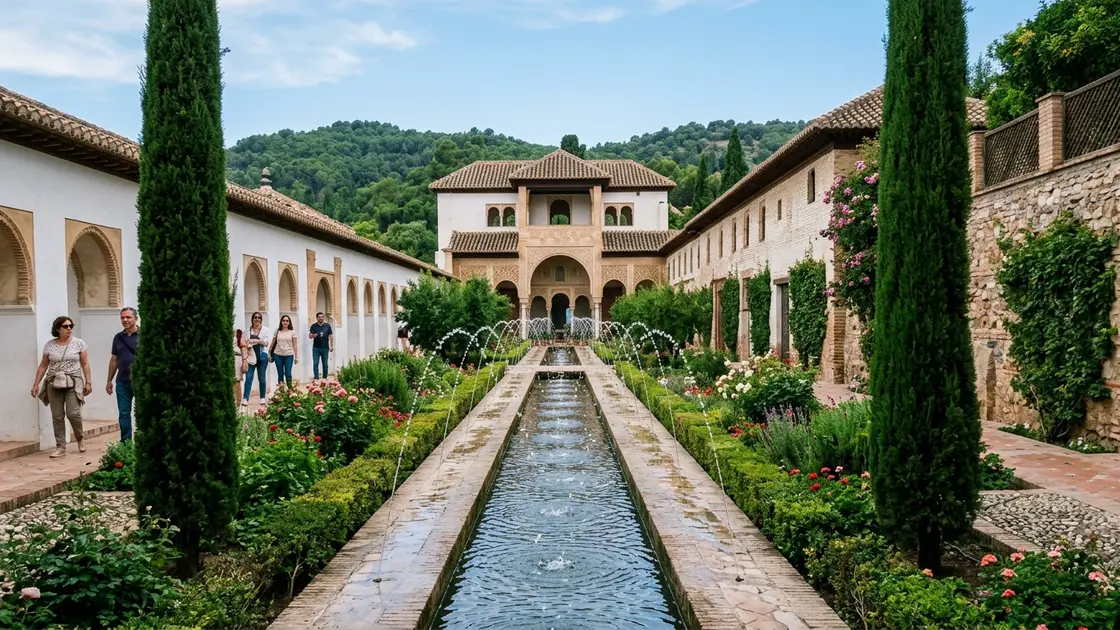
- Nasrid Palaces: compare the Comares and Lions areas with the research in mind; two white mosaic glazes there differ strongly in tin oxide even where the eye cannot tell
- Museo de la Alhambra: ask what Nasrid ceramic and glass is on display, since rooms and loans change
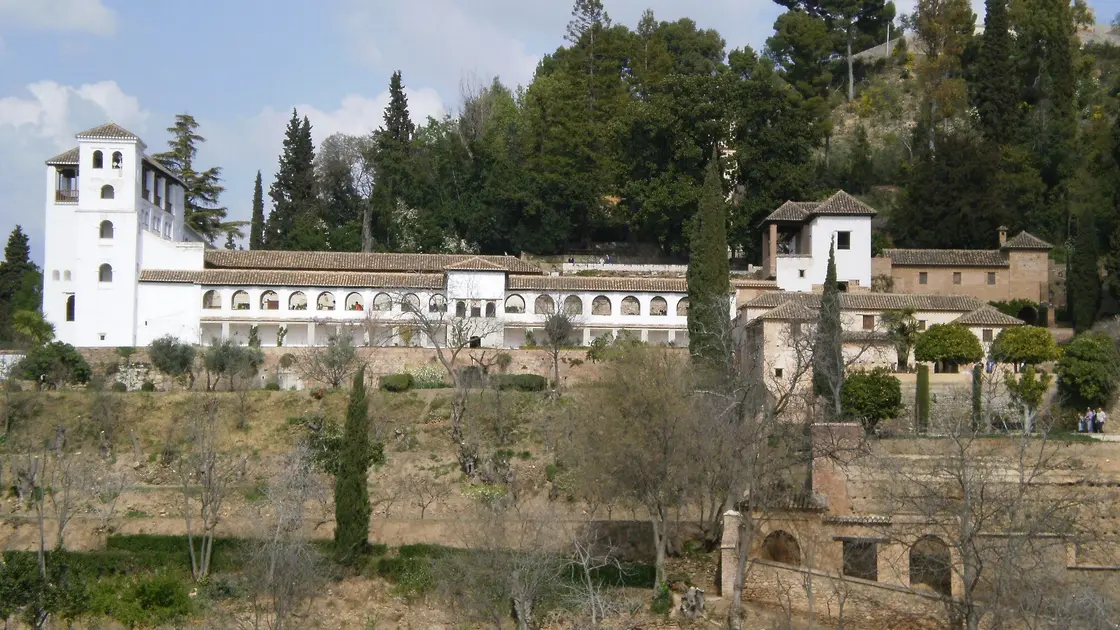
- The Secano: treat any furnace you see as a restoration first, because furnaces there were rebuilt in the 1960s and 70s[15]
Frequently asked questions
What is a keyhole kiln?
Where were Nasrid pots and glass made in the Alhambra?
What did the Alhambra kiln research find about Nasrid glass and ceramics?
How did Nasrid glaze get its white and turquoise colours?
Did Nasrid potters fire their glazes twice?
Is the Secano kiln dig a new discovery?
Did glass and ceramic production stop when Granada fell in 1492?
Sources
27 references Show Hide
- cambridge.org — 888886B9B5D70C0A05D6DAC57A4C166A (opens in a new tab)
“confirming that the area was used for industrial production without interruption from the Nasrid period to the 17th century.”
- produccioncientifica.ugr.es — 68e6a4593fb18f799b2b7963 (opens in a new tab)
“The results of this research suggest continuity in production activities between the Nasrid period and the Early Modern Age”
- Patronato de la Alhambra (opens in a new tab)
“21 people will be taking part including archaeologists, art historians and other researchers.”
- elsevier.es (opens in a new tab)
“Most glazes are inglaze on lead tin-opacified bases, fired in oxidising conditions”
- cambridge.org — EFF7FDC60888942E251052ED7CA32C38 (opens in a new tab)
“many of which correspond to production remains (scoria, threads, drops, etc.). This strongly suggests that glass-working activities were being carried out in situ.”
- elsevier.es (opens in a new tab)
“Thirteen architectural ceramic pieces from key locations within the Alhambra and Generalife”
- Patronato de la Alhambra (opens in a new tab)
“Various different workshops and pottery kilns were located in this area, in which Nasrid craftsmen produced a variety of craft pieces, including glazed ceramics”
- Patronato de la Alhambra (opens in a new tab)
“This initiative is the result of a collaboration agreement between the Alhambra, the University of Granada and two British universities: Bournemouth University and the University of Leicester.”
- cambridge.org — 888886B9B5D70C0A05D6DAC57A4C166A (opens in a new tab)
“it had been previously excavated by the former director of the site, Francisco Prieto Moreno (also responsible for the reconstructions)”
- cambridge.org — 888886B9B5D70C0A05D6DAC57A4C166A (opens in a new tab)
“The excavation resulted in the improved characterization of one late medieval and several early modern furnaces”
- Patronato de la Alhambra (opens in a new tab)
“the discovery of the base of a keyhole kiln in the area near the Gate known as the Puerta de los Siete Suelos.”
- Patronato de la Alhambra (opens in a new tab)
“They were called keyhole kilns because they had a circular hole through which the potters inserted the objects that they wanted to fire and another oblong opening into which the fuel was placed.”
- Patronato de la Alhambra (opens in a new tab)
“combines “traditional systems with the most modern geophysical techniques which allow us to “see” beneath the surface before we begin excavating”
- cambridge.org — 888886B9B5D70C0A05D6DAC57A4C166A (opens in a new tab)
“The excavation of the furnaces was assisted by handheld portable X-ray Fluorescence (pXRF) analysis”
- cambridge.org — 888886B9B5D70C0A05D6DAC57A4C166A (opens in a new tab)
“no archaeological protocols were followed, and the extent and scope of the old excavation were unclear (no records, photographs, or plans exist)”
- produccioncientifica.ugr.es — 699cce73fc3a1565671ccb57 (opens in a new tab)
“Carolina Cardell 1 - Maja Urosevic 1 - Danielle Dias Martins 1 - Isabel Guerra 1 - Alberto García Porras 1”
- elsevier.es (opens in a new tab)
“This work presents the first systematic archaeometric data of 13th–14th century AD Nasrid glazed architectural ceramics from the Alhambra and Generalife”
- elsevier.es (opens in a new tab)
“Al-Andalus glazes followed the single-firing technique typical of late Islamic glaze technology”
- elsevier.es (opens in a new tab)
“Green-turquoise colour results from Cu (expresses as CuO, Table 2) dissolved in the matrix under oxidising conditions.”
- elsevier.es (opens in a new tab)
“Opacity in white glazes was achieved by varied cassiterite (SnO2) amounts”
- digibug.ugr.es (opens in a new tab)
“substantial evidence for glassmaking or glassblowing has been attested, a technology with abundant lines of cross-fertilisation with glazed ceramics”
- cambridge.org — EFF7FDC60888942E251052ED7CA32C38 (opens in a new tab)
“many others have been securely dated to either side of the Christian takeover of the city in 1492, on both stratigraphic and typological grounds.”
- produccioncientifica.ugr.es — 68e6a4593fb18f799b2b7963 (opens in a new tab)
“abundant kiln furniture, including atifles andmuflas, as well as traces of the raw materials (chiefly heavy metals) used in the glazing of pottery”
- cambridge.org — 888886B9B5D70C0A05D6DAC57A4C166A (opens in a new tab)
“will shed light on potential technological changes in the production of glass and glazed ceramics between the final stages of the Nasrid period and the beginning of Christian rule”
- elsevier.es (opens in a new tab)
“Today archaeometric studies of Nasrid glazed architectural ceramics are still emerging and remains non-systematic”
- elsevier.es (opens in a new tab)
“Glazes 1382_W and 2264_W (14th century AD) exhibit great compositional variability, particularly in SnO2”
- elsevier.es (opens in a new tab)
“the distinct composition of glazed ceramics from the Lions Palace is interpreted as intentional, rather than due to inadequate workmanship by Nasrid artisans.”