Albuñol's Cave Held Baskets and Sandals 2,000 Years Apart
A 2023 radiocarbon study split the Albuñol cave finds into two eras: three baskets about 9,500 years old, the four dated sandals Neolithic. Where to see them.
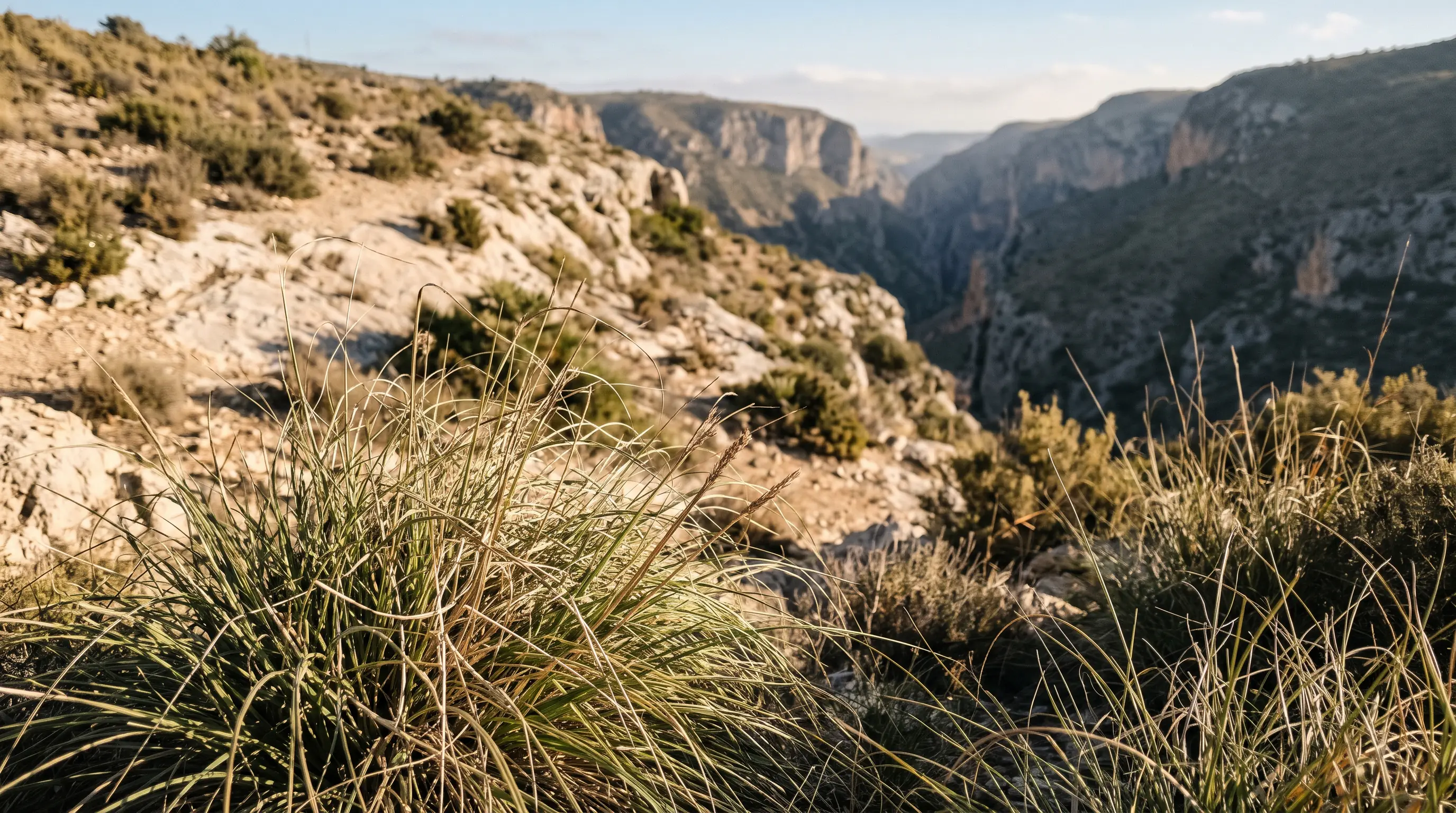
Three dated Albuñol baskets were woven from raw esparto about 9,500 years ago; the four directly dated sandals are Neolithic.
In this article
Jump to a section
How a mining find became one Neolithic assemblage
What the 2023 dates changed
- Phase 1, Mesolithic hunter-gatherers: it ends around 7480 to 7100 cal BCE, close to 9,500 years ago, after a short life of 0 to 530 years.[10]
- The gap: 2,340 to 1,780 years, estimated with OxCal at 95% probability.[3]
- Phase 2, Neolithic farmers: roughly 7,200 to 6,200 years ago, the phase that includes the wooden mallet and the four directly dated sandals.[11][12]
The baskets and what they are the oldest of
Deep dive · Article
1066 Granada Massacre: When the Jewish Golden Age Ended in a Day
The 1066 Granada massacre killed Joseph ha-Nagid and thousands of the city's Jews in a single day, ending three decades of Jewish power under Samuel ha-Nagid.
The sandals: earliest in European prehistory, with limits
Recommended tours
Tours are selected for quality, not commission. We earn a small fee if you book — at no extra cost to you.
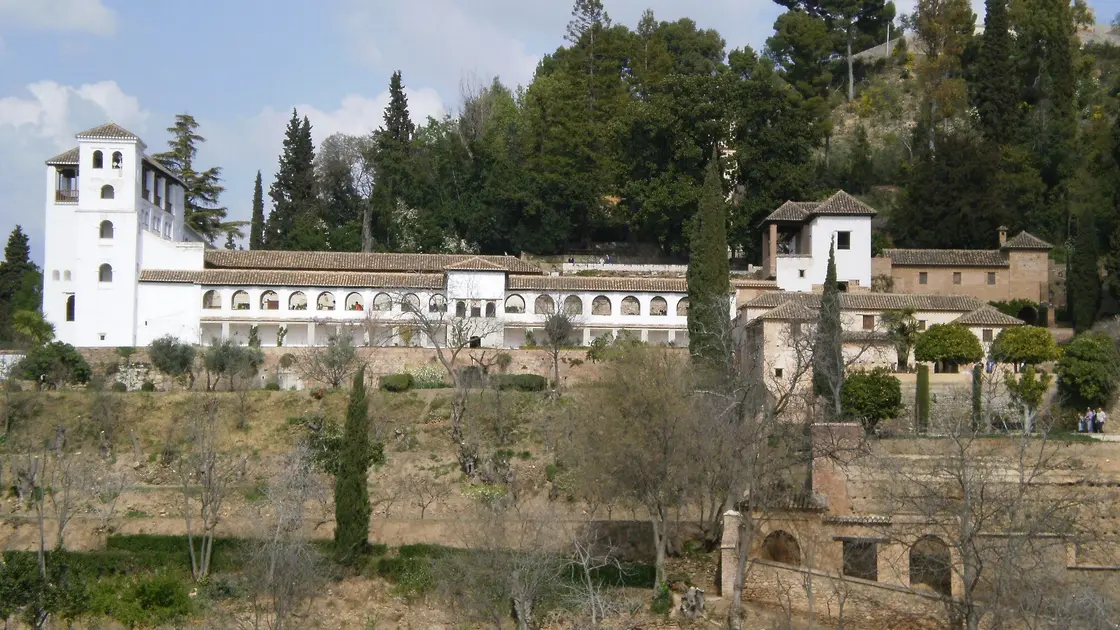
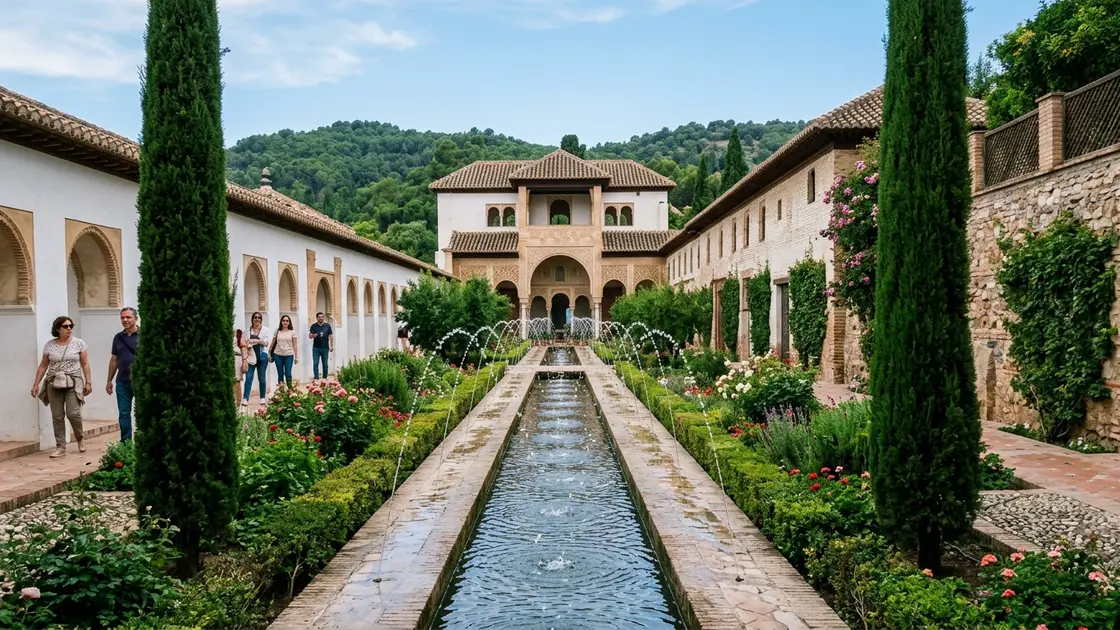
Where to see the finds, and why not the cave
Two caves, one name
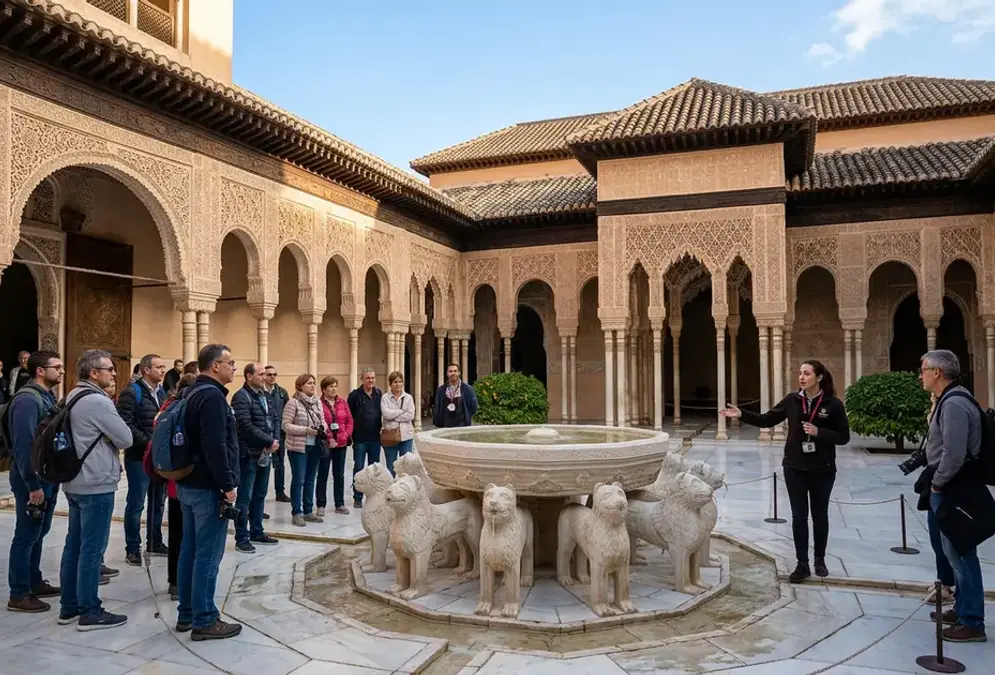
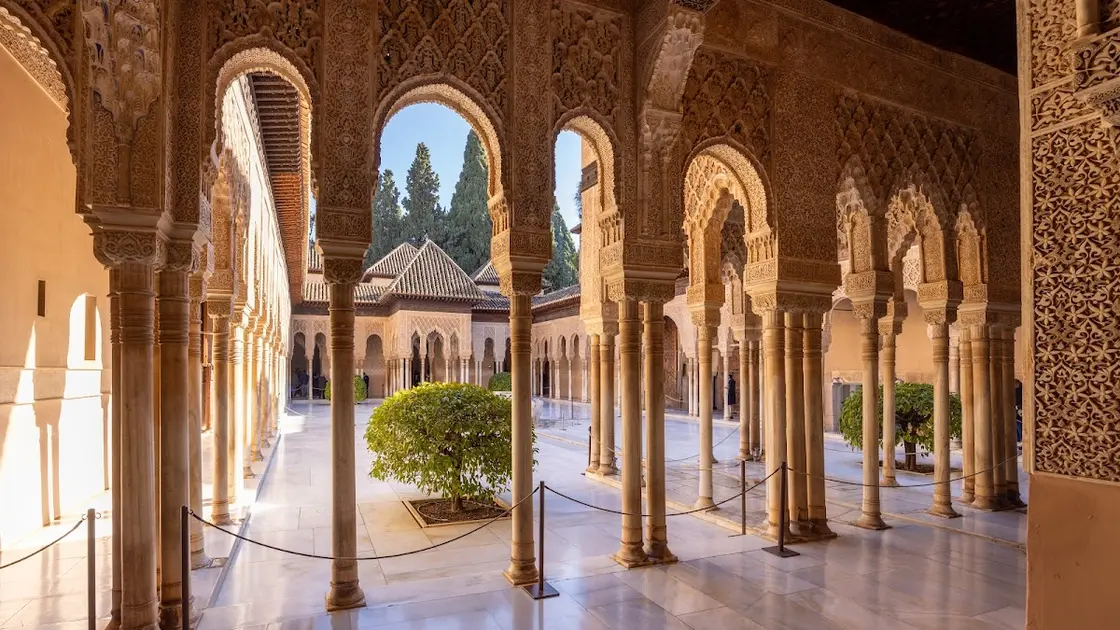
- Madrid: Room 7 of the permanent exhibition at the Museo Arqueológico Nacional, with esparto baskets, textile fragments and sandals.[4]
- Granada: Granada's Archaeological Museum, in the 16th-century Casa de Castril at Carrera del Darro 43; check current opening hours and ask what is on display from Albuñol.[28]
- Albuñol: the cave itself, on private land and not a show cave.[25]
Explore nearby · Museum
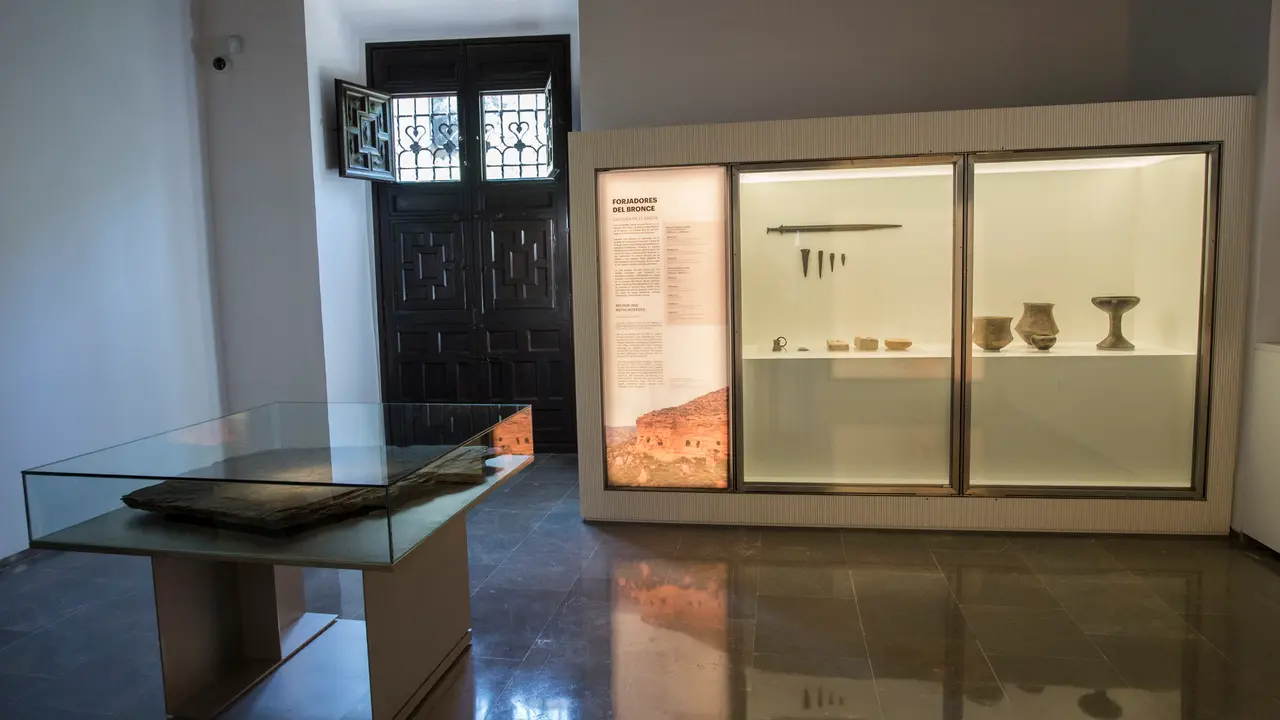
Museo Arqueológico de Granada
Inside the 1539 Casa de Castril on the Darro. Paleolithic to Nasrid-era finds: Phoenician objects, Roman bronzes, Arab ceramics. €1.50; free for EU citizens.
Sources
36 references Show Hide
- pmc.ncbi.nlm.nih.gov (opens in a new tab)
“Questions persisted until the 1970s, when the first radiocarbon analysis was carried out on a sample of vegetal fiber and another from wood, both yielding Neolithic dates (5200 to 4850 cal BCE) (32).”
- pmc.ncbi.nlm.nih.gov (opens in a new tab)
“We present 14 14C dates for the perishable artifacts (N = 76), situating the assemblage between the Early and Middle Holocene (c. 7500 to 4200 cal BCE).”
- pmc.ncbi.nlm.nih.gov (opens in a new tab)
“The chronological gap between the end of phase 1 and the start of phase 2 was estimated at 2340 to 1780 years using OxCal’s Difference command (95% HPD).”
- man.es — Nota web cueva de los murcielagos.pdf (opens in a new tab)
“Entre ellos, destacan varios fragmentos de tejido, cestos y unas sandalias elaboradas en esparto y que pueden verse en la sala 7 de la exposición permanente del museo.”
- pmc.ncbi.nlm.nih.gov (opens in a new tab)
“The entrance is 15 m wide, oriented to the east; the cave is 60 m long and 30 m wide, with a drop of about 48 m between the highest and the deepest parts (fig. S1).”
- pmc.ncbi.nlm.nih.gov (opens in a new tab)
“The shelter was also used to keep goats until the identification of a vein of galena led to its exploitation by a mining company in 1857.”
- pmc.ncbi.nlm.nih.gov (opens in a new tab)
“According to Góngora (33), the materials suffered substantial fragmentation or charring when the lead workers burned them to keep their boiler working.”
- man.es — 1 primeros enterramientos (opens in a new tab)
“conservaban mechones de cabello humano y semillas de adormidera. Ya fueran ajuares personales u ofrendas, algunos de estos objetos son únicos, como la diadema de oro que apareció junto a un esqueleto.”
- pmc.ncbi.nlm.nih.gov (opens in a new tab)
“Although another wood sample provided an earlier chronology (6450 to 6030 cal BCE) (37), this was interpreted as due to the “old wood effect” and excluded from the interpretation.”
- pmc.ncbi.nlm.nih.gov (opens in a new tab)
“Phase 1 starts in around 7680 to 7360 cal BCE (95% HPD) and ends around 7480 to 7100 (95% HPD). This phase was relatively short at 0 to 530 years (95% HPD) (Table 2).”
- pmc.ncbi.nlm.nih.gov (opens in a new tab)
“Phase 2 begins in 5420 to 5070 cal BCE (95% HPD) and ends in 4390 to 4070 cal BCE (95% HPD).”
- man.es — Nota web cueva de los murcielagos.pdf (opens in a new tab)
“otros materiales como un mazo de madera y unas sandalias de esparto, nos sitúa entre 7.200 y 6.200 años antes del presente”
- pmc.ncbi.nlm.nih.gov (opens in a new tab)
“analysis of a simple sandal (611) and a central core sandal (603) agrees with the previous analysis of two central core shoes (598 and 609) (37), confirming that they date to the Neolithic period.”
- man.es — Mutermur (opens in a new tab)
“están implicados 15 investigadores pertenecientes a 11 instituciones con el fin de desarrollar un estudio multidisciplinar de todos los restos arqueológicos”
- pmc.ncbi.nlm.nih.gov (opens in a new tab)
“The burial site of Cueva de los Murciélagos in southern Iberia, uncovered during 19th-century mining activities, contained the best-preserved hunter-gatherer basketry in southern Europe”
- pmc.ncbi.nlm.nih.gov (opens in a new tab)
“being almost complete and decorated with geometric motifs made with dyed fibers (Fig. 2A); some incorporate human hairs or pigments (Fig. 2B).”
- livescience.com (opens in a new tab)
“"Some of the baskets also had leather pieces that were used for hanging them up," Martínez-Sevilla said. "The craftsmanship was very complex."”
- pmc.ncbi.nlm.nih.gov (opens in a new tab)
“Our study therefore offers direct evidence of the oldest fiber-based objects made by hunter-gatherer populations in Iberia and in Europe.”
- pmc.ncbi.nlm.nih.gov (opens in a new tab)
“The lack of prevailing humidity in the area and the circulation of wind in the cave as it cools and dries prevent the proliferation of bacteria”
- pmc.ncbi.nlm.nih.gov (opens in a new tab)
“We also present the earliest and most diverse set of plant-based footwear documented in the prehistory of Europe.”
- pmc.ncbi.nlm.nih.gov (opens in a new tab)
“Sandals form an important part of the inventory. Alfaro (29) distinguished two types: simple (N = 2) and central core (N = 20).”
- pmc.ncbi.nlm.nih.gov (opens in a new tab)
“Some sandals had clear use marks, while others were apparently never used, suggesting that while some individuals were buried with their daily clothing, others had specific clothing prepared.”
- pmc.ncbi.nlm.nih.gov (opens in a new tab)
“It is important to highlight that the physical treatment of crushing the leaves is evidenced only in Neolithic materials, suggesting that this practice was not used in earlier periods.”
- pmc.ncbi.nlm.nih.gov (opens in a new tab)
“Other examples of shoes have been recovered in Europe, including one from a pit in the Areni-1 Cave (Armenia, 3627 to 3377 cal BCE). This was made of leather and a large number of grasses (45).”
- pmc.ncbi.nlm.nih.gov (opens in a new tab)
“We thank the landowners of Cueva de los Murciélagos, D. Lupiáñez Soto, M. I. Lupiáñez Soto, and P. Lupiáñez Soto, for allowing us to carry out fieldwork at the cave.”
- elfaromotril.es (opens in a new tab)
“Aquí están los arqueólogos con los arneses y los cascos, nos ayudan a ponerlos. Tenemos que pasar por un paso muy peligroso.”
- man.es — Man bol 2017 35 030.pdf (opens in a new tab)
“La colección Góngora sería donada al Museo Arqueológico Nacional, y de las 1145 piezas que la componían quedaron en Granada 443.”
- turismo.granada.org (opens in a new tab)
“It was one of the first archaeological museums to be founded in Spain and was officially inaugurated in 1879 as a result of the efforts of the Monuments Commission”
- aranzadi.eus (opens in a new tab)
“These include the presence of naked barley, naked and hulled wheats and various legumes (broad beans, peas and grass pea).”
- pmc.ncbi.nlm.nih.gov (opens in a new tab)
“The perishable artifacts comprise 76 individual objects (table S1) including 10 wooden items (one of these being a composite object involving wood, reed, and vegetal fibers), 1 made of reed, and 65 fiber-based artifacts.”
- pmc.ncbi.nlm.nih.gov (opens in a new tab)
“We know only that they were recovered from the floor surface in the inner part of the cave but have no information about the association of the objects or their original positions.”
- artsandculture.google.com (opens in a new tab)
“We do know: that this type of goldsmith`s ware belongs to the Chalcolithic period;”
- pmc.ncbi.nlm.nih.gov (opens in a new tab)
“not all the organic remains can be ascribed to these periods”
- pmc.ncbi.nlm.nih.gov (opens in a new tab)
“The fieldwork in Cueva de los Murciélagos had all the required permits from the Delegación Territorial de Cultura (Granada), local authorities, and landowners”
- pmc.ncbi.nlm.nih.gov (opens in a new tab)
“a small group of fibers emanating from the base of the sole may have been placed between the first and second toes”
- pmc.ncbi.nlm.nih.gov (opens in a new tab)
“only a few of these human remains have been preserved in the museum and they have not yet been dated”