Written by James Walker
Modern Granada · 1808–today
  • 5 min
  • 31 sources

Agustina González López, La Zapatera: Mocked, Then Shot in 1936

Agustina González López, known as La Zapatera, ran a Granada shoe shop, wrote essays, founded a political party and was executed at Víznar in August 1936.
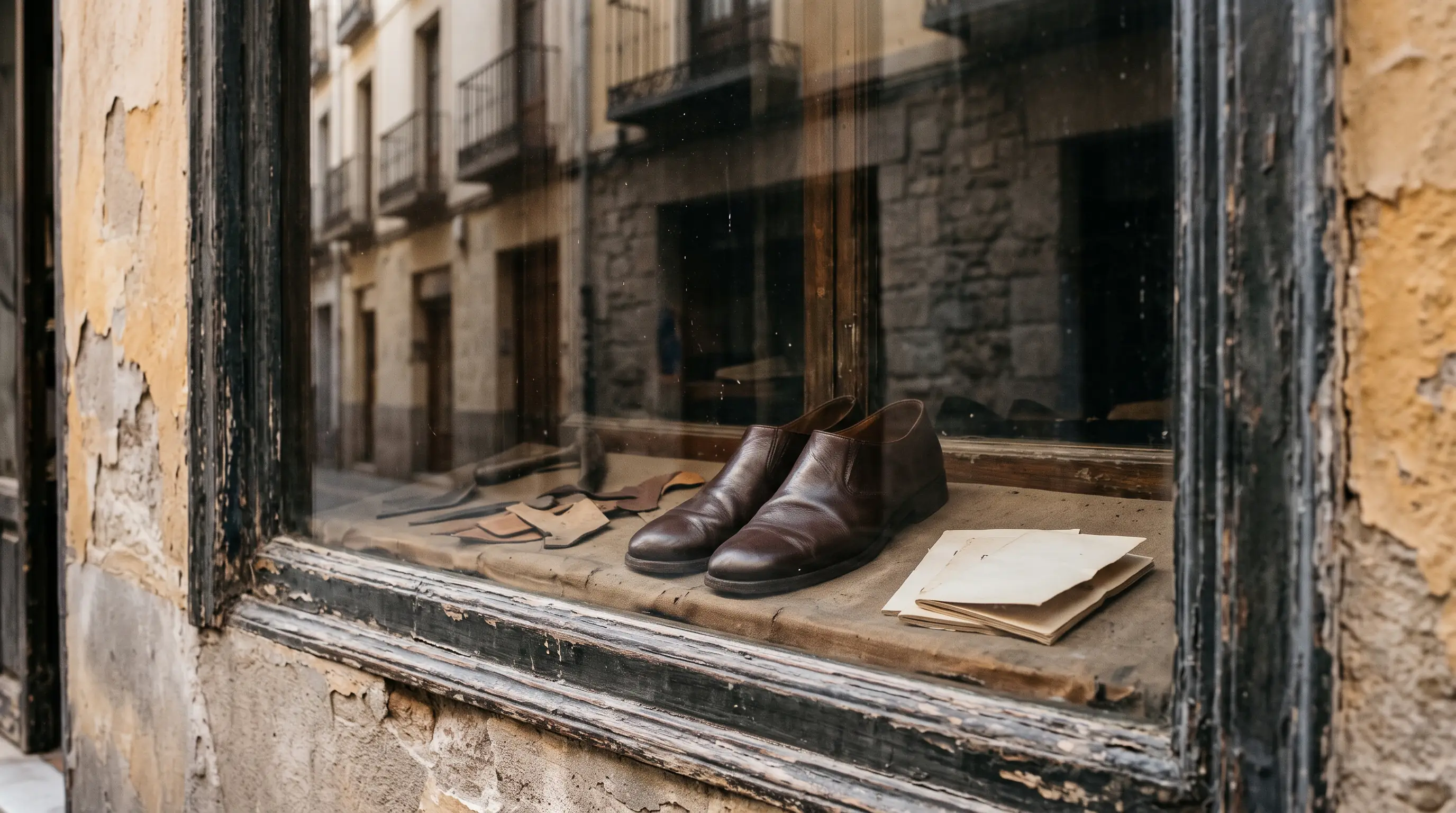
Granada shoe-shop window in the early twentieth century, hand-printed pamphlets leaning against the shoes, warm low light on the cobbles, an illustration for Agustina González López, La Zapatera

González sold her printed writings from the window of the family shoe shop at 6 Calle Mesones.

A Granada shoemaker once printed her own writings and sold them from her shop window, a habit the writer Francisco Ayala put down to eccentricity, probably madness.[1] That woman, Agustina González López, known as La Zapatera, also founded a political party of her own and was executed at Víznar in August 1936.[2] The exact day is still undetermined, and without DNA from direct relatives no identification of her remains is conclusive.[3]
Candidates in Granada, 1933
2 women
Only María Lejarraga and Agustina González stood in the city[4]
Women repressed, Granada
657
University of Granada count for the city and province[5]
Víznar remains identified
17 of 194
UGR Universidad y Memoria count at the Barranco de Víznar[6]

A shoemaker's daughter on Calle Mesones

The González family shoe shop stood at 6 Calle Mesones.[7] Agustina González López was born in Granada in April 1891.[8]
Her father died while she was small, and she was placed in the Colegio de Santo Domingo del Realejo, a school in the Realejo, where she learned to read and write and began to develop intellectually.[9] The shop came to her later: she inherited her father's business, and it made her economically independent.[10]
She kept the trade that gave her the nickname La Zapatera even after she began publishing. Ayala remembered the window at Calle Mesones as the place where she put her writing up for sale.[1] Her customers could buy the texts she had paid to print at the same address where she did business as a shoemaker.

Pamphlets, a strike and a women's group
She reached the public through print first. Her essay Idearium Futurismo argued for a simplified spelling and wrote itself in it: El sistema futurista de eskribir resuelve las difikultades ortográfikas por lo mismo que simplifika la Ortografía.[11] The sentence is the argument and its demonstration at once, which explains how a contemporary could find her ridiculous without ever engaging with the point.
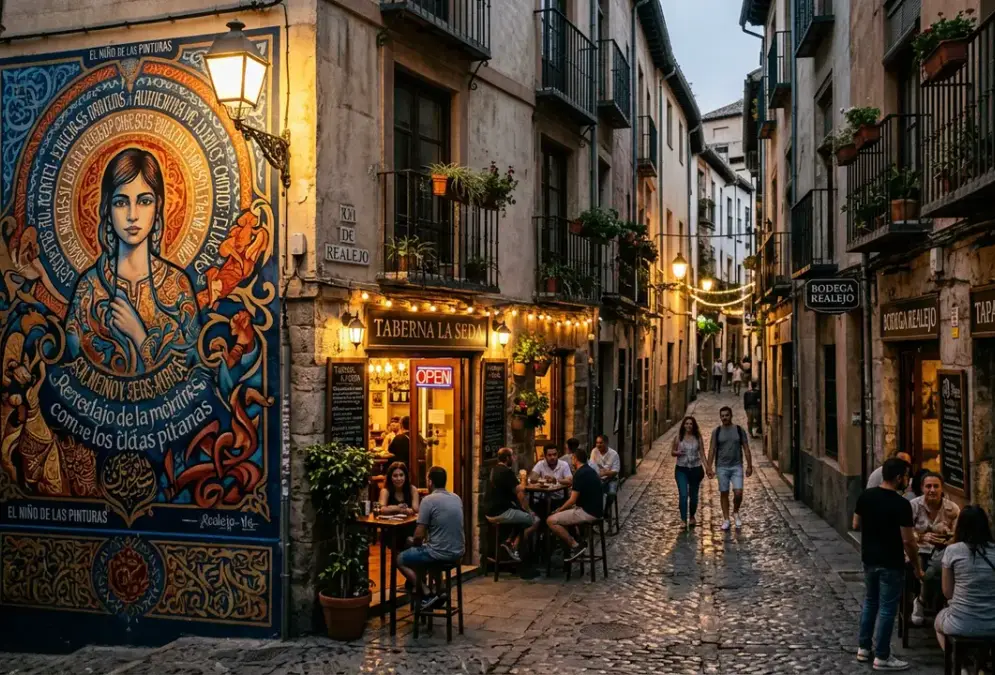
Campo del Príncipe square in the Realejo neighbourhood with old stone buildings and outdoor café tables

Explore · Neighbourhood

Realejo / Jewish Quarter

Medieval Granada's Jewish quarter, now a neighbourhood of historic palaces, street art, and the city's finest tapas bars — all at the foot of the Alhambra.

In Enriqueta Barranco's account, as relayed by El Salto, González opened her blouse in the Plaza del Ayuntamiento to show her chest to the Guardia Civil during a general strike in Granada in 1919.[12] By 1919 González was already prominent in the Agrupación Femenina Socialista. The pharmacist Milagro Almenara sought her out while organising university women.[13]

1933: a shoemaker on the ballot

She wrote plays, illustrated her own texts and painted, and she created her own political party.[14] María Lejarraga and Agustina González were the only two women who stood in Granada in the 1933 general election.[4]
González stood for Entero Humanista, which reportedly took 15 votes across the Granada constituency, with 9 in the city and 6 in the villages.[15] The count suggests how little of the electorate she reached through the party, even though her candidacy put her name on the same ballot as Lejarraga's.
Barranco describes a platform that ranged from personal habits to proposals that would have required agreement well beyond Granada. She lists these among its ideas:
  • vegetarianism
  • karma and reincarnation
  • a universal language
  • a single European currency
The language and currency proposals both dealt with what people across borders might share. The other ideas concerned how a person might live, right down to what they ate.

Zapatera, a tus zapatos: how Granada saw her
According to Barranco's account, when a play of hers was staged, the teacher Martín Scheroff criticised the production with zapatera, a tus zapatos (shoemaker, stick to your shoes).[16] The jibe made her trade the subject of the criticism. González also saw Cuando la vida calla, her first play and a three-act comedy, reach the stage.[17]
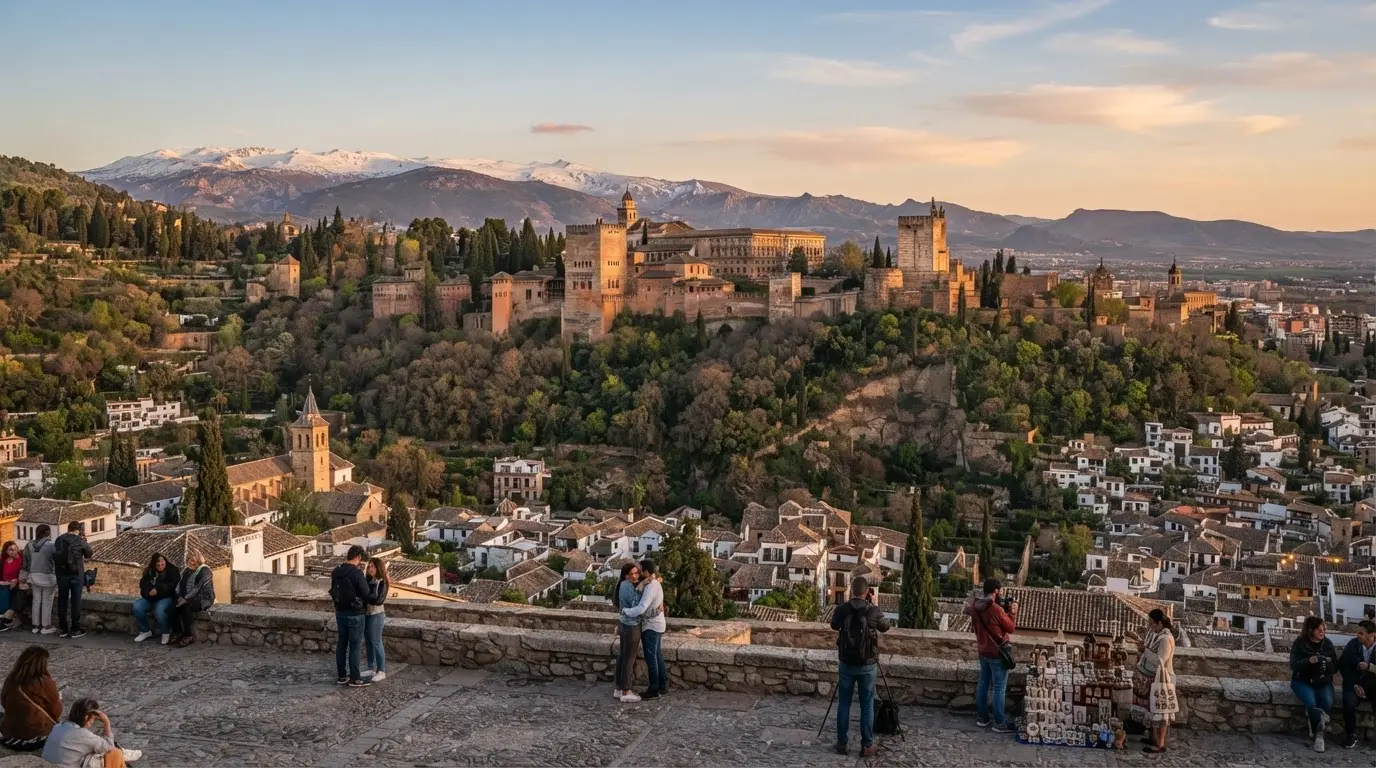
Wide-angle panoramic view of Granada Spain from Mirador de San Nicolás showing the Alhambra palace complex and Generalife gardens against the snow-capped Sierra Nevada mountains at golden hour, illustrating the interesting facts about Granada Spain

Deep dive · Article

20 Interesting Facts About Granada, Spain

Interesting facts about Granada Spain that guidebooks skip: disputed etymologies, the soldier who saved the Alhambra, and a river buried under Plaza Nueva.

In Mi cuarto a espadas, Francisco Ayala[18] recalled a woman who roamed the streets and walked into cafés and restaurants alone.[1] His aside, ¡y sola! (and alone!), puts the emphasis on how she entered a café. Scheroff had used her occupation to tell her what she ought to do. Ayala found something worth remarking on in the simple fact that she went out by herself.
She was also known as la Zapatera Prodigiosa,[13] the title of a Lorca play. Enriqueta Barranco argues that Federico García Lorca wrote La zapatera prodigiosa with his friend in mind.[19] A 2024 review in Estudios Románicos describes a related interpretation in Ana Macannuco's 2023 Dykinson edition, linking Lorca's inspiration to the public persona González fashioned for herself.[20] The shared name helps explain why the comparison has lasted. Identifying a model for the play remains a matter of interpretation.

The walk to Alfacar and the 1939 case

She was executed in August 1936, in the weeks after the July 1936 coup in Granada, and the exact day is still undetermined.[2] A case reportedly opened against her in 1939, three years after her death. The accusations were membership in the Freemasons and sympathies with left-wing parties.[21] Her family reportedly paid an indemnity of 8,000 pesetas in the case.[22]
The women held at La Colonia de Víznar were made to walk at dawn to a spot on the Alfacar road, where they were shot. The place remains unspecified.[23] Federico García Lorca died in the same weeks and the same hills, and his last 48 hours before Víznar are documented in far greater detail than hers.
A University of Granada count lists her among 657 women who suffered the repression in the city and province, with her profession recorded as writer.[5]

Engravings, a memorial square and the search at Víznar

Her biographer, Enriqueta Barranco, recounts that González's paintings went missing after rebels seized and emptied her house. Researchers did have access to her engravings.[26]
Her remains may lie among those recovered from the Barranco de Víznar, but no identification is conclusive without DNA from direct relatives.[3] The University of Granada's Universidad y Memoria team has recovered 194 remains in the ravine so far, and 17 people have been identified.[6]
Memory has begun to catch up. In June 2026 the III Jornadas de Memoria Histórica y Democrática de Víznar inaugurated a Plaza Agustina González López in a neighbourhood of the village,[27] and the illustrator Ina Gámez's comic La zapatera de las estrellas won first prize in its category at the Diputación de Granada's Granarte awards.[28] For a visit, four places matter:
  • Plaza Agustina González López, Víznar: the square dedicated to her in June 2026.
  • Barranco de Víznar: the ravine where the Universidad y Memoria team carries out its exhumation work.
  • 6 Calle Mesones, Granada, the address of her family's shoe shop.[7]
  • Centro Federico García Lorca, Granada: the museum devoted to the poet who died in the same hills.
Editorial Universidad de Granada published Enriqueta Barranco's biography in 2019.[29] Barranco included González's own work alongside the account of her life.
The full title, Agustina González López (1891-1936). Espiritista, teósofa, escritora y política, gives as much place to her beliefs as to her writing and politics. José Moreno Arenas's play El Monigote imagines a dialogue between Agustina and Amelia, one of the daughters of Bernarda Alba, about freedom and social convention.[30] In 2023 the homage held in Granada honoured her and Lorca together, because the two were killed on approximate dates and in the same places.[31]

Frequently asked questions

Who was Agustina González López, La Zapatera?

Agustina González López, known as La Zapatera, was a Granada shoemaker's daughter who inherited the family shoe shop, wrote essays and plays, illustrated her own work, painted and founded the political party Entero Humanista. She was executed at Víznar in August 1936.[2]

Why was Agustina González López called La Zapatera?

She ran her father's shoe shop on Calle Mesones, and the trade became her nickname. It was used mockingly, as when a teacher told her to stick to her shoes,[16] and in grander forms such as la Zapatera Prodigiosa.[13]

When did Agustina González López, La Zapatera, die?

In August 1936, on a day that is still undetermined.[2] A family filing made after the deadline gives 15 August.[24] A date of 2 November 1936 that appears for Víznar shootings of Granada women names two other women, Milagro Almenara Pérez and Rosario Fregenal Píñar.[25]

Was La zapatera prodigiosa based on Agustina González López?

Enriqueta Barranco argues that Lorca had González in mind.[19] A 2024 review of Ana Macannuco's edition also describes González as an inspiration for Lorca.[20] The link remains a scholarly interpretation.

What was the Entero Humanista party?

It was the political party Agustina González López created.[14] It reportedly took 15 votes in the 1933 general election in Granada.[15] Her biographer lists vegetarianism, karma, reincarnation, a universal language and a single European currency among its ideas.

Have the remains of Agustina González López been identified?

Not conclusively. They may be among those recovered from the Barranco de Víznar, but without DNA from direct relatives no scientific identification has been possible.[3]

Is there anything to see in Granada connected to La Zapatera?

A square named for her was inaugurated in Víznar in June 2026.[27] Her family's shoe shop stood at 6 Calle Mesones in Granada.[7] The Barranco de Víznar remains a site of exhumation work.

Sources

31 references Show
  1. Wikipedia — Agustina González López (opens in a new tab)

    “callejeaba mucho, entraba -¡y sola!- en los cafés y restaurantes y escribía cosas absurdas que hacía imprimir y ponía luego a la venta en el escaparate de su zapatería.”

  2. elsaltodiario.com — Homenaje agustina gonzalez zapatera asesinato (opens in a new tab)

    “fue ejecutada en una fecha todavía por determinar; sólo se sabe que fue en agosto, probablemente muy cerca de la fecha del homenaje pero de 1936”

  3. elsaltodiario.com — Jornadas memoria historica viznar homenajean mujeres represaliadas arte (opens in a new tab)

    “la falta de muestras de ADN de familiares directos ha impedido hasta ahora una identificación científica rotunda”

  4. elsaltodiario.com — Homenaje agustina gonzalez zapatera asesinato (opens in a new tab)

    “en Granada, en 1933 lo hicieron tan solo Maria Lejarraga y ella”

  5. lamadraza.ugr.es (opens in a new tab)

    “Hemos contabilizado un total de 657 mujeres que padecieron el terror de la sublevación en Granada y su provincia”

  6. ugr.es (opens in a new tab)

    “de entre los 194 recuperados por el equipo Universidad y Memoria en el Barranco de Víznar en las diferentes campañas realizadas. Con ellas, asciende a 17 el número de personas identificadas”

  7. elsaltodiario.com — Homenaje agustina gonzalez zapatera asesinato (opens in a new tab)

    “número 6 de la calle Mesones, donde se encuentra también la zapatería.”

  8. Wikipedia — Agustina González López (opens in a new tab)

    “Agustina González López was born in Granada on 4 April 1891.”

  9. elsaltodiario.com — Homenaje agustina gonzalez zapatera asesinato (opens in a new tab)

    “Nos cuenta que su padre muere cuando Agustina era pequeña y la internan en el Colegio de Santo Domingo del Realejo, donde aprende a leer y escribir y se empieza a desarrollar intelectualmente.”

  10. elsaltodiario.com — Homenaje agustina gonzalez zapatera asesinato (opens in a new tab)

    “Lectora insaciable, heredó el negocio de la zapatería de su padre que le permitió ser independiente económicamente.”

  11. Wikipedia — Agustina González López (opens in a new tab)

    “El sistema futurista de eskribir resuelve las difikultades ortográfikas por lo mismo que simplifika la Ortografía”

  12. elsaltodiario.com — Homenaje agustina gonzalez zapatera asesinato (opens in a new tab)

    “en una huelga general convocada en Granada en 1919 donde Agustina abre su blusa en plena Plaza del Ayuntamiento para mostrar su pecho a la Guardia Civil”

  13. granada.org (opens in a new tab)

    “Milagro se puso en contacto con Agustina González López (“la Zapatera Prodigiosa”), que se había destacado en la Agrupación Femenina Socialista”

  14. elsaltodiario.com — Homenaje agustina gonzalez zapatera asesinato (opens in a new tab)

    “Escribió obras de teatro, ilustraba sus trabajos escritos, pintaba, creó su propio partido político con el que se presentó a dos elecciones nacionales”

  15. Wikipedia — Agustina González López (opens in a new tab)

    “González consiguió 9 votos en la capital y 6 en los pueblos.”

  16. elsaltodiario.com — Homenaje agustina gonzalez zapatera asesinato (opens in a new tab)

    “criticó la puesta en escena de esa obra de teatro de Agustina con un “zapatera a tus zapatos””

  17. revistas.um.es — 2272691 (opens in a new tab)

    “su primera obra de teatro, Cuando la vida calla , una comedia en tres actos había sido estrenada”

  18. Wikipedia — Agustina González López (opens in a new tab)

    “Francisco Ayala la recuerda en su libro Mi cuarto a espadas como”

  19. elsaltodiario.com — Homenaje agustina gonzalez zapatera asesinato (opens in a new tab)

    “Federico García Lorca, el poeta, admirador de Agustina, escribió la famosa obra de teatro basada en su amiga”

  20. revistas.um.es — 2272691 (opens in a new tab)

    “El carácter construido por González López fue lo que la convirtió en una musa para Lorca”

  21. Wikipedia — Agustina González López (opens in a new tab)

    “En 1939, se abrió un proceso en el que se la acusó de pertenecer a la masonería y de simpatizar con los partidos de izquierdas.”

  22. Wikipedia — Agustina González López (opens in a new tab)

    “Fue condenada a una indemnización de 8000 pesetas que tuvieron que pagar sus familiares.”

  23. elsaltodiario.com — Homenaje agustina gonzalez zapatera asesinato (opens in a new tab)

    “obligadas al amanecer a caminar desde La Colonia de Víznar, donde estaban presas, hasta el lugar indeterminado en la carretera de Alfacar donde serían ejecutadas”

  24. elsaltodiario.com — Madre carmela granada historia conocer (opens in a new tab)

    “Silvia González encontró un expediente fuera de plazo en el que la familia de ‘Agustina la Zapatera’ recoge su fallecimiento el 15 de agosto”

  25. granada.org (opens in a new tab)

    “para finalmente ser fusiladas en Víznar el 2 de noviembre de 1936.”

  26. elsaltodiario.com — Homenaje agustina gonzalez zapatera asesinato (opens in a new tab)

    “cuando los golpistas requisaron y vaciaron su casa, desaparecieron sus obras. Sólo hemos tenido acceso a sus grabados donde podemos vislumbrar que su universo de fantasía se parecía al de Remedios Varo”

  27. elsaltodiario.com — Jornadas memoria historica viznar homenajean mujeres represaliadas arte (opens in a new tab)

    “Las jornadas sirvieron además para inaugurar una plaza dedicada a Agustina González López en un barrio del pueblo”

  28. elsaltodiario.com — Homenaje agustina gonzalez zapatera asesinato (opens in a new tab)

    “Lo presenté a unos premios de la Diputación de Granada, Granarte, y gané el primer premio en la modalidad de cómic”

  29. revistas.um.es — 591021 (opens in a new tab)

    “BARRANCO CASTILLO, Enriqueta (2019). Agustina González López (1891-1936). Espiritista, teósofa, escritora y política. Granada: Editorial Universidad de Granada.”

  30. elsaltodiario.com — Jornadas memoria historica viznar homenajean mujeres represaliadas arte (opens in a new tab)

    “La pieza explora las tensiones entre libertad y convención social a través del diálogo imaginario entre Agustina y Amelia, una de las hijas de Bernarda Alba.”

  31. elsaltodiario.com — Homenaje agustina gonzalez zapatera asesinato (opens in a new tab)

    “lo cierto es que fueron asesinados en fechas aproximadas, en los mismos parajes, y serán homenajeados juntos”