
Fajalauza ceramics: what they are and how to recognise them
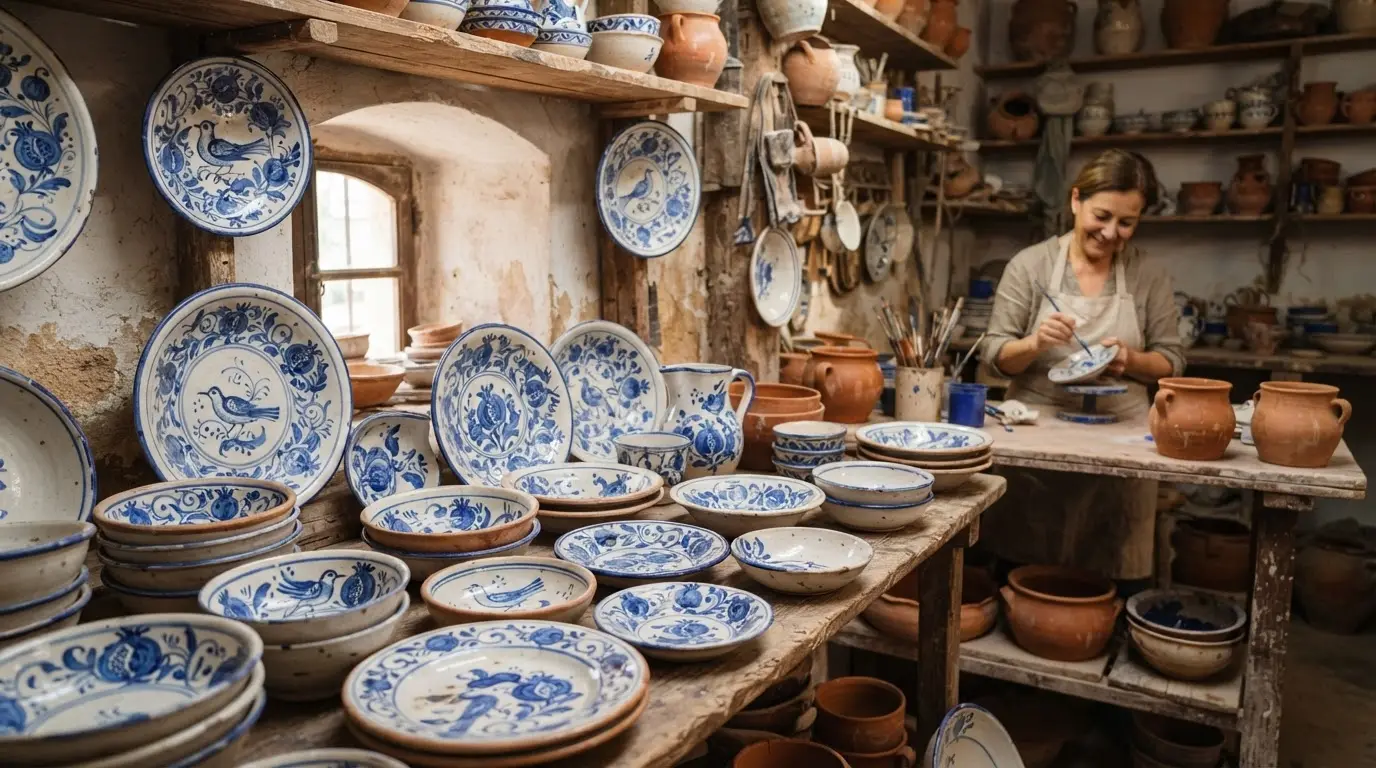
Fajalauza is a style of loza estannífera (tin-glazed earthenware) produced in Granada's Albaicín district. The defining characteristics are immediately legible: a cream or off-white base glaze, decoration applied in cobalt blue and copper green, and a motif vocabulary drawn from Moorish geometric tradition, Andalusian botany, and the heraldry of the city itself.
The pomegranate (granada in Spanish) is the signature motif. It appears on virtually every traditional piece: plates, bowls, jugs, and tiles. The pomegranate is simultaneously Granada's city symbol and a form that suits the circular composition space of a ceramic plate. Birds, stylised flowers and vegetables, lacework patterns, and heraldic emblems including the double-headed eagle complete the standard repertoire.
1517
The technique places Fajalauza in the same family as Italian majolica and Dutch Delftware: all three are tin-glazed earthenware traditions where a white opaque ground is achieved by adding tin oxide to a lead glaze, then painting decoration on top before a second firing. That two-firing process has nothing to do with the three-firing gold lustre technique used two centuries earlier for the Alhambra's own Nasrid pottery, such as the Vase of the Gazelles: the two crafts share a city and a blue palette, and nothing else. The Fajalauza palette is more restrained than most Delftware. The cobalt tends toward blue-grey rather than saturated blue, and the copper green reads as muted verdigris in traditional pieces. Industrial dyes introduced from 1975 onward pushed both colours toward higher saturation for the tourist market.[1] If the blue looks almost electric and the green is very bright, the piece was not made with traditional pigments.
The signature functional form is the lebrillo: a large wide-mouthed basin, flat-bottomed and shallower than a bowl, used for washing clothes, food preparation, and bathing. Before plastic and modern plumbing, the lebrillo was a domestic essential. Cracked ones were repaired by lañeros (specialists who drilled holes on either side of the fracture and bound the pieces with wire rivets). That repair work was valued as skilled labour: it shows how much these objects were worth to the households that owned them.[2]
The name, the gate, and where the potters worked
The name comes from a gate in the Albaicín's medieval city wall. The Puerta de Fajalauza was built in the mid-14th century, during the Nasrid period, to guard the northern approach to the neighbourhood. Its name is Arabic in origin; the gate and the district around it gave their name to the pottery workshops that clustered nearby through the 16th, 17th, and 18th centuries. The denomination cerámica de Fajalauza first appeared in print in a local magazine, La Alhambra, on 31 January 1841, and became the standard term in the 20th century.[3]
Workshops concentrated on the Collado de los Almendros and along the Cuesta de la Alhacaba, the slopes just inside the gate, where clay from the Beiro River was accessible and where kilns could be fuelled with rosemary and broom shrubs cut from the surrounding hillsides. The Aynadamar Canal, which fed the Albaicín's fountains and gardens from the Sierra Nevada, supplied water for mixing glazes and washing finished pieces. The geography was practical from the start: raw materials within half an hour's walk, the city's consumer households just below, and the gate as a natural shipping point for moving ceramics out to the wider province.
Explore nearby · Monument
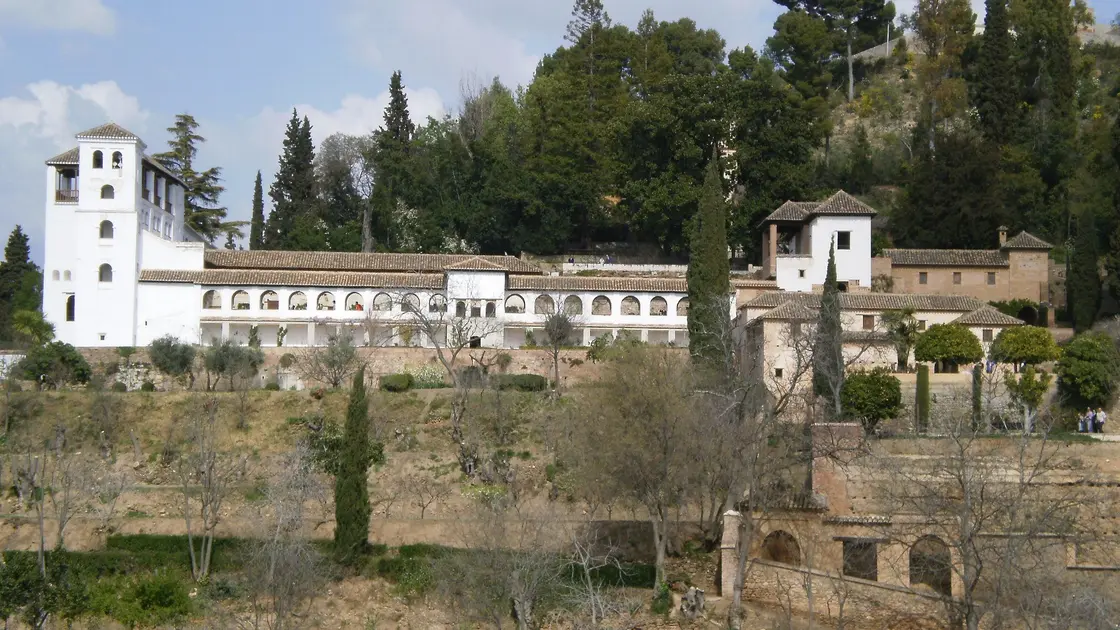
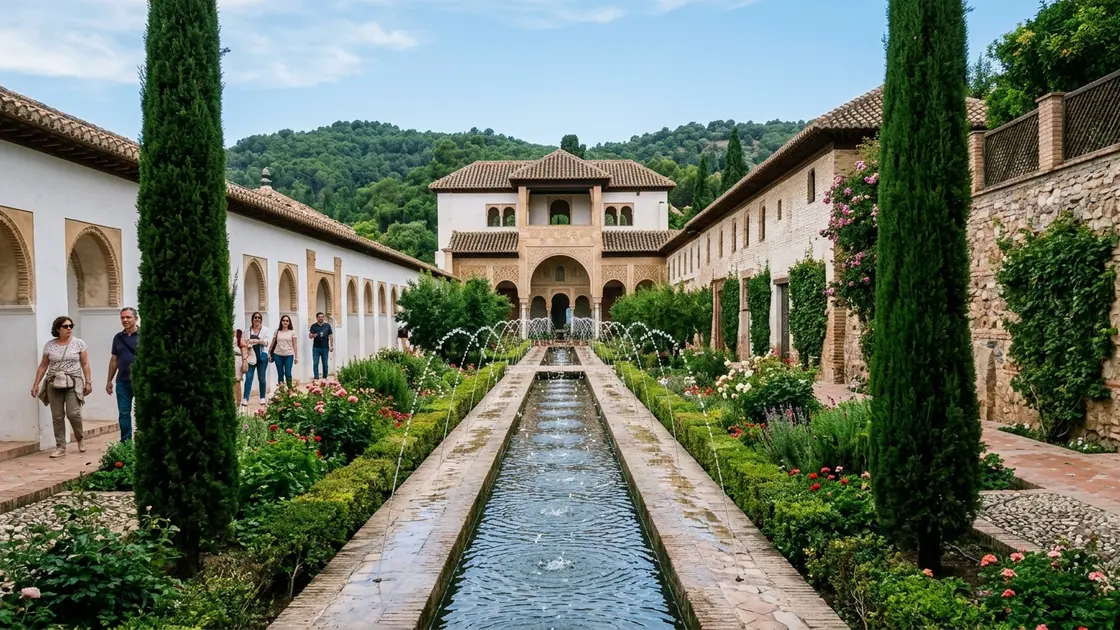
Alhambra
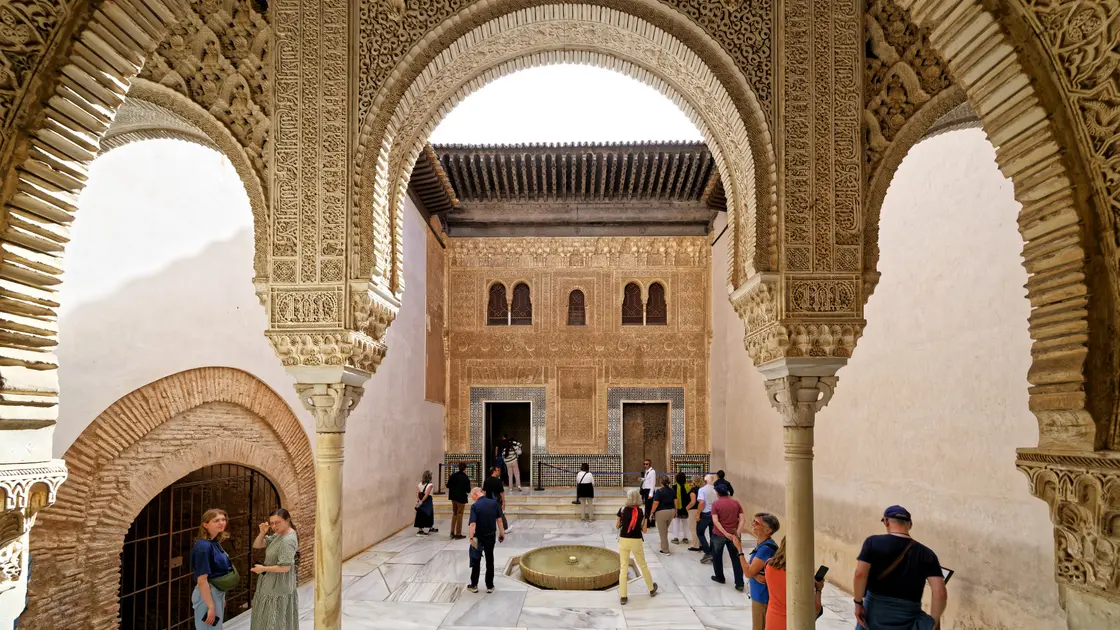
The Alhambra is Granada's UNESCO fortress-palace: Nasrid Palaces, Alcazaba and Generalife gardens. Tickets sell out weeks ahead; book via the Patronato site.
For most of its history this hillside quarter was Granada's ceramics district the same way it was its silk district and its metalwork district: a dense concentration of small workshops, each family-run, producing for the local economy rather than for collectors or tourists. The word ollero (pot-maker) and alfarero (clay worker) appear repeatedly in Albaicín tax records and property documents from the 16th century onward. What the potters made was household goods, not decorative art.
Morisco origins: five centuries of one family's kiln
The ceramic tradition in the Albaicín predates the Christian conquest of 1492, but the story that runs continuously to the present begins immediately after it. When Ferdinand and Isabella took Granada in January 1492, most of the Muslim population remained initially. They became Moriscos: nominally converted to Christianity, but continuing to practise their trades under the new regime. The potters around the Puerta de Fajalauza were among them.
The first documentary reference comes from 1517, when a Morisco potter filed a complaint against a tax increase levied on olleros in the Albaicín.[4] That complaint establishes not just the presence of the workshops but their economic significance: they were generating enough revenue to be worth taxing, and the potters had enough legal standing to contest the levy. The man whose family endured through the following five centuries is Hernando Morales, a Morisco craftsman whose direct descendants still operate the workshop today.
The Morales line is not legend; the family's continuous ownership of the workshop is documented across five centuries. The current custodian, Cecilio Morales Moreno, directed the ceramics programme at Granada's School of Applied Arts and Crafts for 34 years while simultaneously running the family workshop.[5] That dual role covers two things: teaching the trade's technical foundations to a new generation of ceramicists, and maintaining production at the family kiln. Both are a form of transmission that matches the tradition's original pattern.
Recommended tours
Tours are selected for quality, not commission. We earn a small fee if you book — at no extra cost to you.
The Cecilio Morales workshop is the only remaining Granada pottery with a kiln of Hispano-Arab origin. The production method has adapted: electric and gas kilns have replaced the wood-fired ones, and clay is now machine-kneaded rather than foot-trodden. Every piece is still hand-painted. The visual vocabulary has not changed. A lebrillo decorated with a hand-painted pomegranate leaving the workshop today reads the same as one painted in 1617 or 1717.
The Nasrid rulers established the ceramic tradition's foundations, but its continuity after 1492 belongs to the Moriscos who stayed and kept working. The conquest disrupted everything in Granada's cultural economy over the following century: the silk industry collapsed, the Alcaicería was reorganised under Castilian administration, Arabic was suppressed. The pottery survived partly because it was functional, not ceremonial: tableware and washing basins are harder to abolish than religious practices or luxury trade.
Motifs and meaning: the pomegranate, the birds, the lacework
Traditional Fajalauza decoration draws from two distinct sources that coexist on the same plate: Moorish geometric and floral abstraction on the one hand, and the symbolic vocabulary of the city on the other. The coexistence is not contradictory. It is what a craft tradition produced by Moriscos under Castilian rule looks like: design instincts inherited from Islamic ceramics, combined with the heraldic imagery of the new dominant culture.
The pomegranate is the point of synthesis. The fruit had been Granada's symbol under the Nasrid emirs; it remained the city's symbol under the Spanish crown. The pomegranate appears in Spain's royal coat of arms, first incorporated by Ferdinand and Isabella after the 1492 conquest. Fajalauza potters could paint the pomegranate and please both worlds simultaneously, or simply paint what their customers recognised as their city.
Beyond the pomegranate, the confirmed motif vocabulary includes:
- Birds (pájaros): typically shown in profile, stylised, sometimes in pairs flanking a central floral element
- Floral and vegetable designs: carnations, pomegranate flowers, stylised leaves and vines
- Lacework patterns (encaje): geometric mesh backgrounds derived from Moorish decorative tradition
- Heraldic emblems: the double-headed eagle of the Habsburg coat of arms appears on pieces from the 16th century onward, reflecting the political transition from Nasrid to Habsburg rule
The composition on a typical lebrillo follows a consistent logic: a central medallion with the main motif (usually pomegranate or floral), a band of repeated pattern around the rim, and the background in white ground with accent details in cobalt or green. Surviving pre-industrial pieces are never identical; the freehand process guarantees variation even when the same template is followed. That variation is the authentication marker.
What the tradition does not include is the deer motif occasionally mentioned in some secondary sources. None of the primary sources confirms deer as part of the standard Fajalauza repertoire: not the official workshop, not the Fundación Cerámica de Fajalauza, not the Hammam Al-Ándalus research, not the Casa Pletórica documentation. If you see deer on a piece offered as traditional Fajalauza, it was not painted from within the documented canon.
Two workshops, one name: where to find authentic Fajalauza today
The commercial landscape around Fajalauza is slightly complicated, and getting it wrong costs money. Two distinct operations trade under the Fajalauza name, and they are not related enterprises.
Cecilio Morales workshop (fajalauza.es) is the direct lineal descendant of the original Morisco pottery. Located in the Albaicín near the Puerta de Fajalauza, it is the only Granada workshop with a Hispano-Arab origin kiln and a documented production lineage back to the 16th century.[5] Pieces from this workshop are hand-painted by craftspeople trained in the family tradition; quality is consistent and prices reflect handmade work. This is where a collector goes.
Fábrica de Cerámica Fajalauza® (fajalauza.com) is a separate, larger commercial factory, also operating in Granada. It offers an official authenticity seal on its pieces and ships internationally. Its output is ceramic production at scale rather than family workshop production; the factory is a legitimate Granada producer, but it is not the same operation as the Morales workshop and should not be confused with it. Both are distinct from the mass-market imports filling the Alcaicería stalls.
The Fundación Cerámica de Fajalauza operates separately from both production entities. Established to safeguard the craft through training and cultural outreach, the Foundation has been leading an application for Fajalauza to receive Bien de Interés Cultural (BIC) designation from the Junta de Andalucía, with support from Granada City Council. As of mid-2026, that designation has been formally proposed but not yet granted.[6] The craft is already recognised as part of Granada's intangible cultural heritage; formal BIC protection would bring legal safeguards against imitation and funding for preservation.
Deep dive · Article
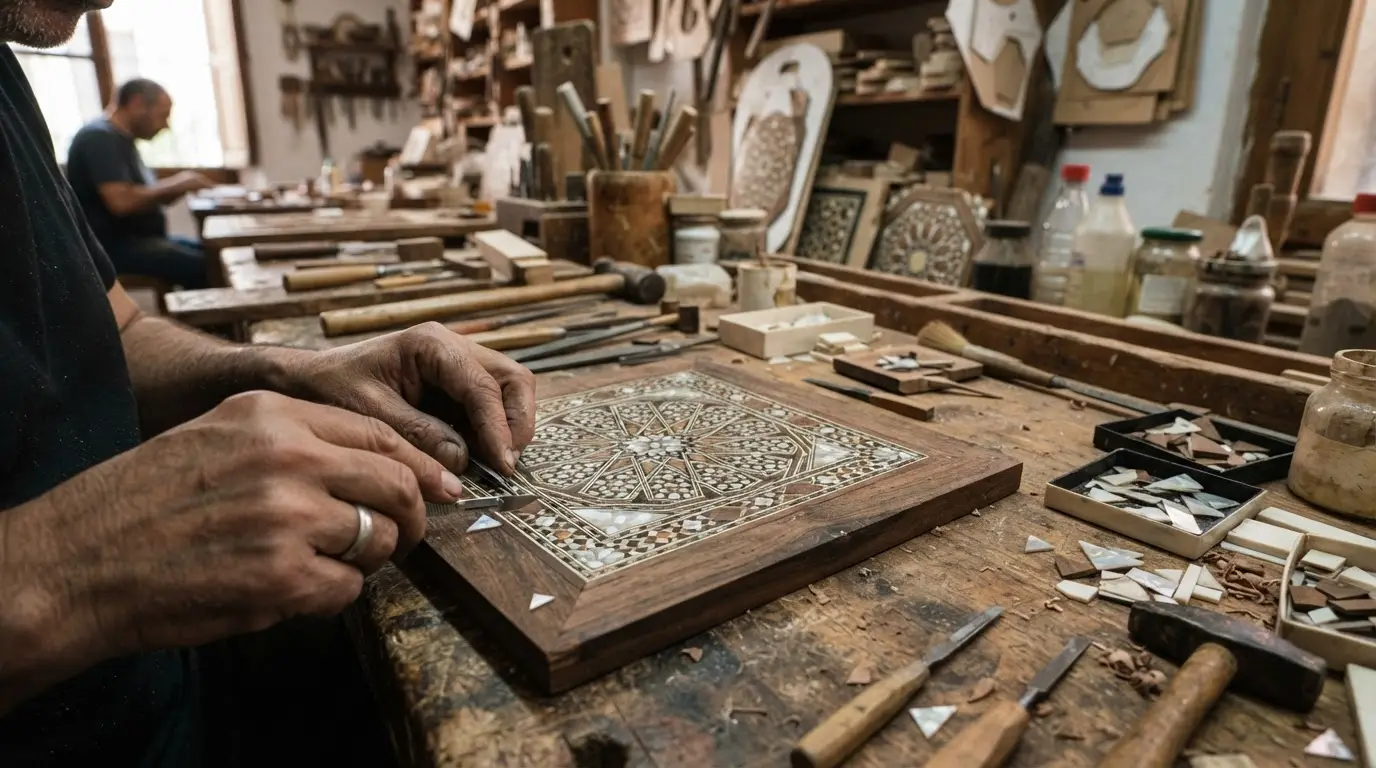
Taracea Granada Marquetry: The Craft Behind the Alhambra
Taracea is Granada's wood marquetry tradition, alive since the Nasrid Kingdom. How the inlay technique works, where it came from, and how to spot a fake.
For practical purchases:
- The Cecilio Morales workshop in the Albaicín is the starting point for anyone wanting a directly documented piece
- The Fábrica Fajalauza® (fajalauza.com) ships internationally and carries its authenticity seal
- The Alcaicería silk market and tourist shops on Calle Elvira carry Fajalauza-style ceramics in quantity; quality varies from decent to industrially stamped copies, and the price differential is usually diagnostic
- Craft shops in the Albaicín itself tend to carry better work than the market centre, because they serve a neighbourhood rather than coach parties
Authentication in the shop: hold the piece and look at the painted motifs under the light. Hand-painted decoration shows subtle variation in stroke weight and slight colour differences between individual motifs; no two birds on the rim are exactly alike. Stamped or printed decoration repeats with mechanical precision. The glaze on authentic pieces thins perceptibly toward the rim; uniform glazing edge-to-edge indicates machine application. Anything with colours that read as candy-bright was made with industrial dyes introduced post-1975.
How to visit, what to spend, and when to go
The Cecilio Morales workshop in the Albaicín keeps standard workshop hours: generally open Monday to Saturday, morning and late afternoon sessions, closed during the midday break. Come on a weekday morning between 10:00 and 13:00 if you want to see the workshop operating rather than just the finished stock. Fajalauza.es lists current hours and contact information; calling ahead for larger purchases or commissions is worthwhile, as the workshop does accommodate collectors who arrive with specific requirements.
Prices from the Cecilio Morales workshop run roughly €15–50 for plates and bowls, more for larger pieces or commissions.[5] That is not expensive by craft standards for five centuries of continuous production; it is expensive only by comparison with the mass-produced pieces on the Alcaicería stalls. The price difference is the cost of a hand that painted it.
For context before buying, the Museo de la Alhambra holds historic Nasrid ceramics and examples of pre-industrial Fajalauza alongside the palace's collection of decorative arts. Seeing what the tradition looked like before industrial dyes is useful calibration: the colour palette is softer, the glazing more uneven, the motifs slightly less perfect. These are features, not flaws. What looks like imprecision in traditional pieces is the evidence that a person painted it.
Read next · Museum
Museo de la Alhambra
Free Islamic art museum inside the Palacio de Carlos V, with Nasrid ceramics, carved stucco, and the Blue Amphora. Essential context for the Alhambra visit.
The wider craft context is laid out in the granada artisan crafts article, which covers Fajalauza alongside taracea marquetry, leather, and luthiery in a single workshop circuit. That circuit takes two to three hours and puts the ceramics in perspective alongside Granada's other surviving handmade trades. If you are coming specifically for ceramics, the Albaicín visit alone takes under an hour; allow extra time if you plan to walk up to the Puerta de Fajalauza itself, the gate the tradition is named after, which is a ten-minute walk from the workshop through the neighbourhood's narrow lanes.