Why the Alhambra Opened an Amazigh Space for Berber Granada

Seven years resident in Granada. Specialist in Nasrid architecture, Al-Andalus history, and Andalusian walking routes.
In this article
Jump to a section
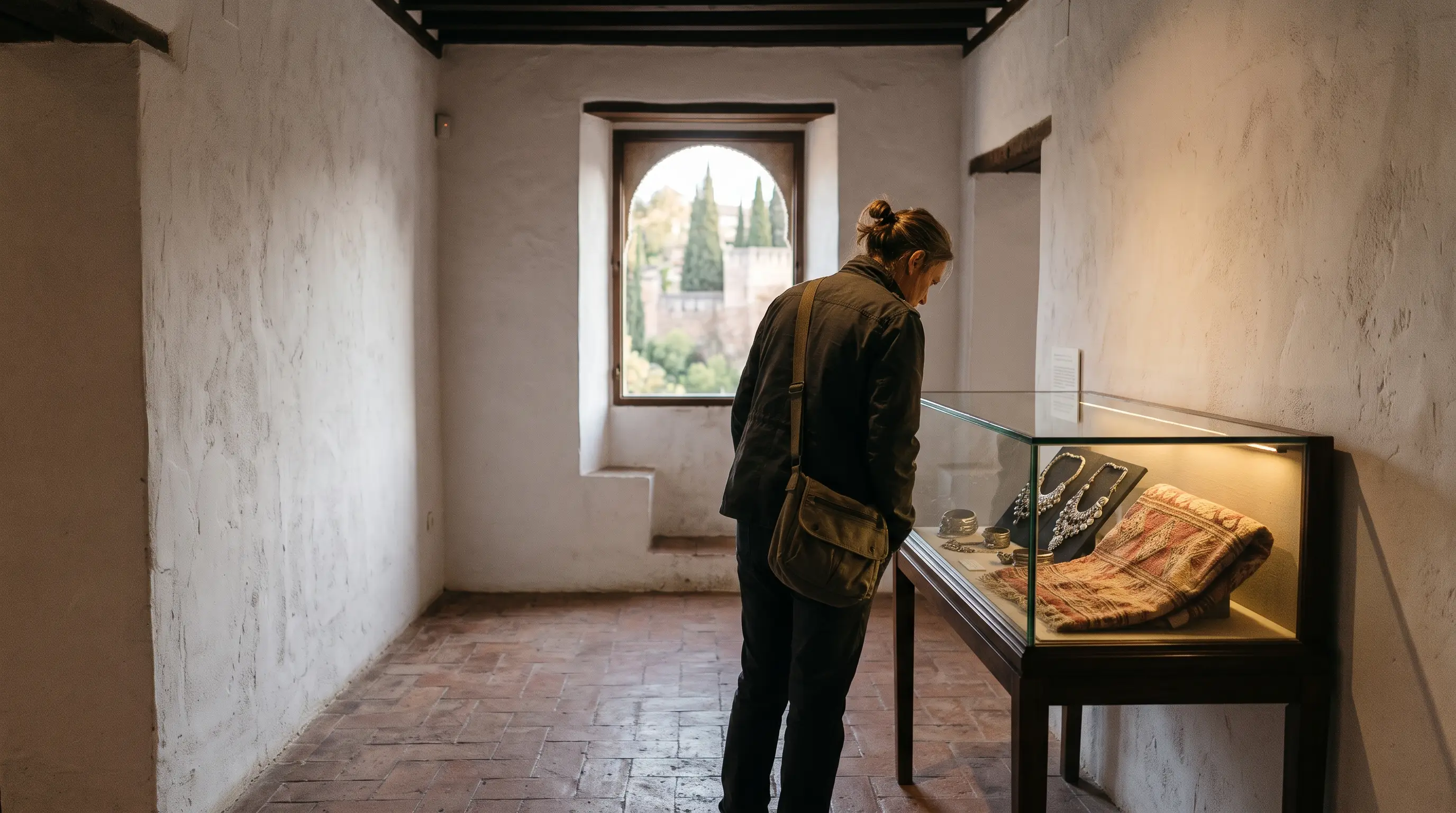
What the Espacio Amazigh shows
From the Zirids to the Almohads: three Berber powers
- 11th century
Zirids make Granada a taifa capital
A Berber dynasty rules an independent kingdom from the city.
- 1090
Almoravids depose Granada's ruler
Taifa rulers fall one by one, Granada and Málaga first.
- 1121
Ibn Tumart proclaims himself mahdi
The Almohad movement takes shape in the Atlas.
- 1147
Almoravid state falls in the Maghrib
The Almohads take the Almoravid capital; their rule over the Iberian south follows over the next decades.
- 1212
Defeat at Las Navas de Tolosa
The Almohads retreat to their North African provinces.
- 13 June 2026
Espacio Amazigh inaugurated
The Carmen de los Porcel opens its Amazigh exhibition.
Where the Nasrids fit in this story
Explore nearby · Monument
Alhambra
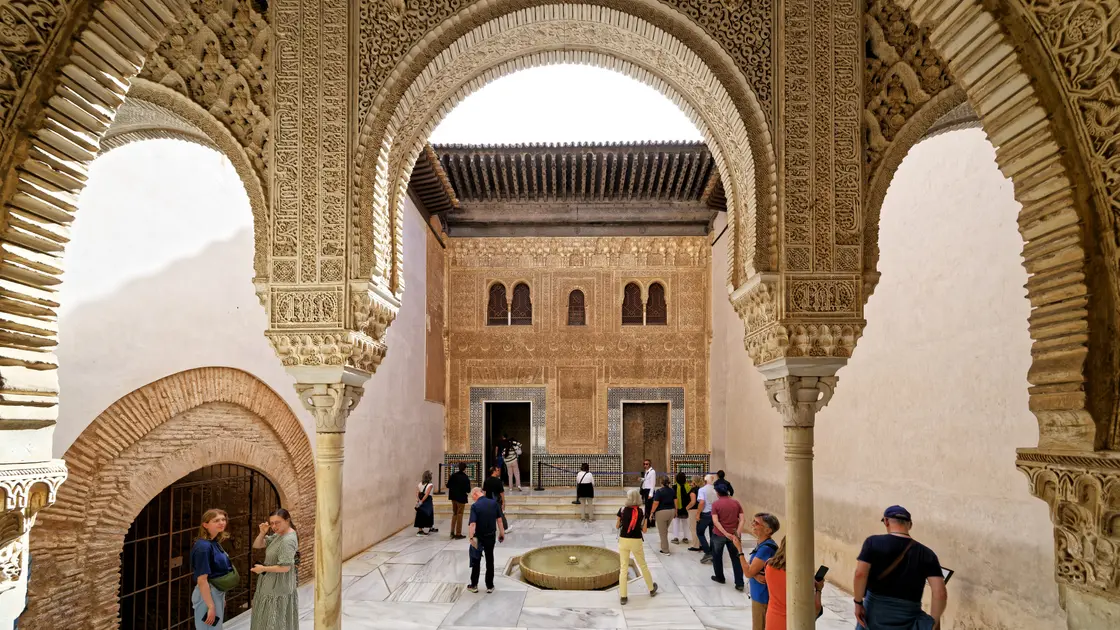
The Alhambra is Granada's UNESCO fortress-palace: Nasrid Palaces, Alcazaba and Generalife gardens. Tickets sell out weeks ahead; book via the Patronato site.
Visiting the Espacio Amazigh: layout, size and programme
Before you go
- Confirm current access and hours with the Alhambra Trust
- Allow time to sit through some of the 17 films
- Check the events programme before choosing a day
- Look for the Tifinagh and Tamazight displays
Recommended tours
Tours are selected for quality, not commission. We earn a small fee if you book — at no extra cost to you.




Berber traces you can still walk to in Granada
- The Zirid-era baths of El Bañuelo
- The church tower that began as a minaret
- The Espacio Amazigh at the Carmen de los Porcel, for objects and context
- The Nasrid palaces, to see what followed
Deep dive · Article
20 Interesting Facts About Granada, Spain
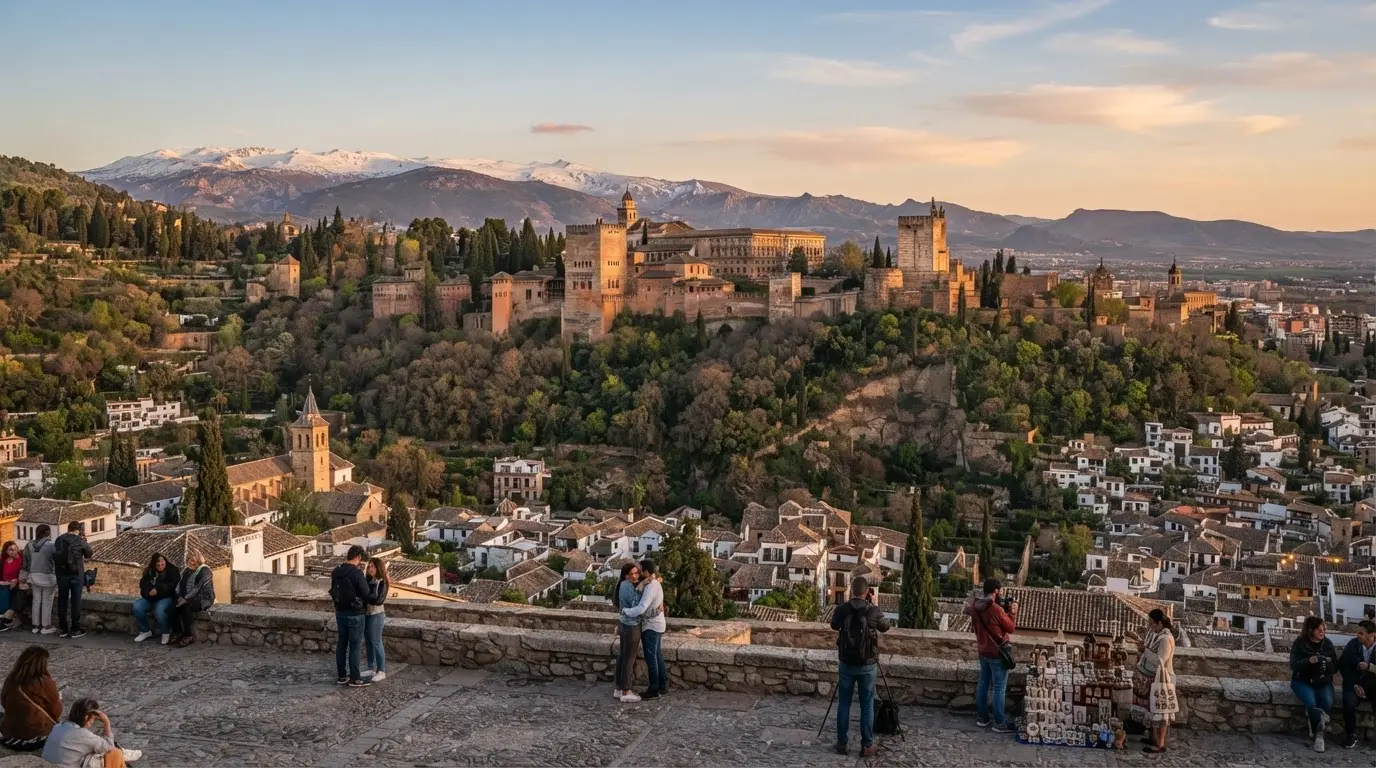
Interesting facts about Granada Spain that guidebooks skip: disputed etymologies, the soldier who saved the Alhambra, and a river buried under Plaza Nueva.
Frequently asked questions
What is the Alhambra Amazigh museum and how does it connect to Berber Granada?
What are the Zirids, Almoravids and Almohads, and how do they differ?
Were the Nasrids a Berber dynasty?
What is Tifinagh?
How many objects does the Alhambra's Amazigh museum hold?
How big is the Espacio Amazigh?
Where can I see Berber heritage in Granada besides the museum?
Sources
23 references Show Hide
- telquel.ma (opens in a new tab)
“the Espacio Amazigh was inaugurated on Saturday, June 13, billed as the first European cultural center entirely devoted to Amazigh civilization.”
- Patronato de la Alhambra (opens in a new tab)
“reúne un total de 189 piezas, entre las que hay joyas, cerámicas, piezas textiles y otros significativos objetos de la vida cotidiana”
- Patronato de la Alhambra (opens in a new tab)
“los almorávides y almohades unificaron durante siglos los territorios del Magreb y la Península Ibérica. Posteriormente, el Reino Nazarí heredó buena parte de ese legado político, cultural y artístico.”
- Patronato de la Alhambra (opens in a new tab)
“En septiembre de 2025 finalizó su rehabilitación y adecuación integral para su uso museístico, cuyas obras comenzaron en diciembre de 2023, tras una inversión total de 1.266.000 euros”
- Patronato de la Alhambra (opens in a new tab)
“La exposición aborda también la evolución del alfabeto tifinag y los procesos contemporáneos de recuperación y revitalización de la lengua tamazight.”
- moroccoworldnews.com (opens in a new tab)
“Seventeen films are projected across both levels, covering Amazigh architecture, collective granaries, kasbahs, ksour, nomadic wedding traditions, and traditional music.”
- telquel.ma (opens in a new tab)
“A large share of the permanent collections comes from her foundation.”
- legadoandalusi.es (opens in a new tab)
“it was precisely a Berber dynasty, the Zirids, who made of Granada the capital city of an independent political entity in the 11th century: the taifa kingdom of Granada.”
- Britannica — The Almoravids (opens in a new tab)
“From 1090 he deposed their rulers, beginning with those of”
- Britannica — Almohads (opens in a new tab)
“In 1121 Ibn Tūmart proclaimed himself the”
- moroccoworldnews.com (opens in a new tab)
“The Moroccan Almoravid and Almohad dynasties, both of Amazigh origin, stamped their influence on the military, cultural, and architectural character of the Iberian south.”
- Britannica — Almohads (opens in a new tab)
“They retreated to their North African provinces”
- Britannica — Nasrid dynasty (opens in a new tab)
“between submission to Christian Castile and dependence on their Marīnid kinsmen of Fès (in modern Morocco)”
- Britannica — The Almoravids (opens in a new tab)
“The people of Granada, for their part, always bore in mind what had happened in the cases of the Almoravids and the Almohads, who, having arrived from Africa as auxiliary troops, became masters in Al-Andalus.”
- Patronato de la Alhambra (opens in a new tab)
“se articula a través de una zona introductoria y siete secciones distribuidas en dos plantas, dotadas de recursos audiovisuales, cartografía histórica, piezas patrimoniales y elementos interactivos.”
- moroccoworldnews.com (opens in a new tab)
“The museum space covers a total of 250 square meters, with 200 dedicated to the permanent display and 162 occupied by the museographic route.”
- en.yabiladi.com (opens in a new tab)
“Spanning 162 square meters, the new exhibition space brings together nearly 200 historical artifacts”
- telquel.ma (opens in a new tab)
“The Espacio Amazigh will also host lectures, seminars, educational programs, screenings, and concerts, in partnership with the Euro-Arab Foundation in Granada.”
- Patronato de la Alhambra (opens in a new tab)
“el Espacio Amazigh, ubicado en el entorno del conjunto patrimonial nazarí”
- Patronato de la Alhambra (opens in a new tab)
“Se trata de una auténtica joya, que se extiende por casi 20.000 m2, compuesta por dos torreones, lienzos de muralla, silos o mazmorras nazaríes, necrópolis medievales”
- legadoandalusi.es (opens in a new tab)
“We owe to that period a rich monumental heritage, such as El Bañuelo Arab baths, or the minaret of the mosque, later converted into the tower of the Church of San José, among others.”
- Patronato de la Alhambra (opens in a new tab)
“finalmente, en 2002, fue adquirido por el Patronato de la Alhambra y Generalife.”
- telquel.ma (opens in a new tab)
“thirty years ago, it was impossible to imagine a Berber museum in the Alhambra. Today, it is a reality.”