Granada's San José Minaret and Its Former Mosque
The San José minaret in the Albaicín is an 11th-century Zirid tower, all that remains of the al-Morabitin mosque. How it became a belfry, and what to look for.
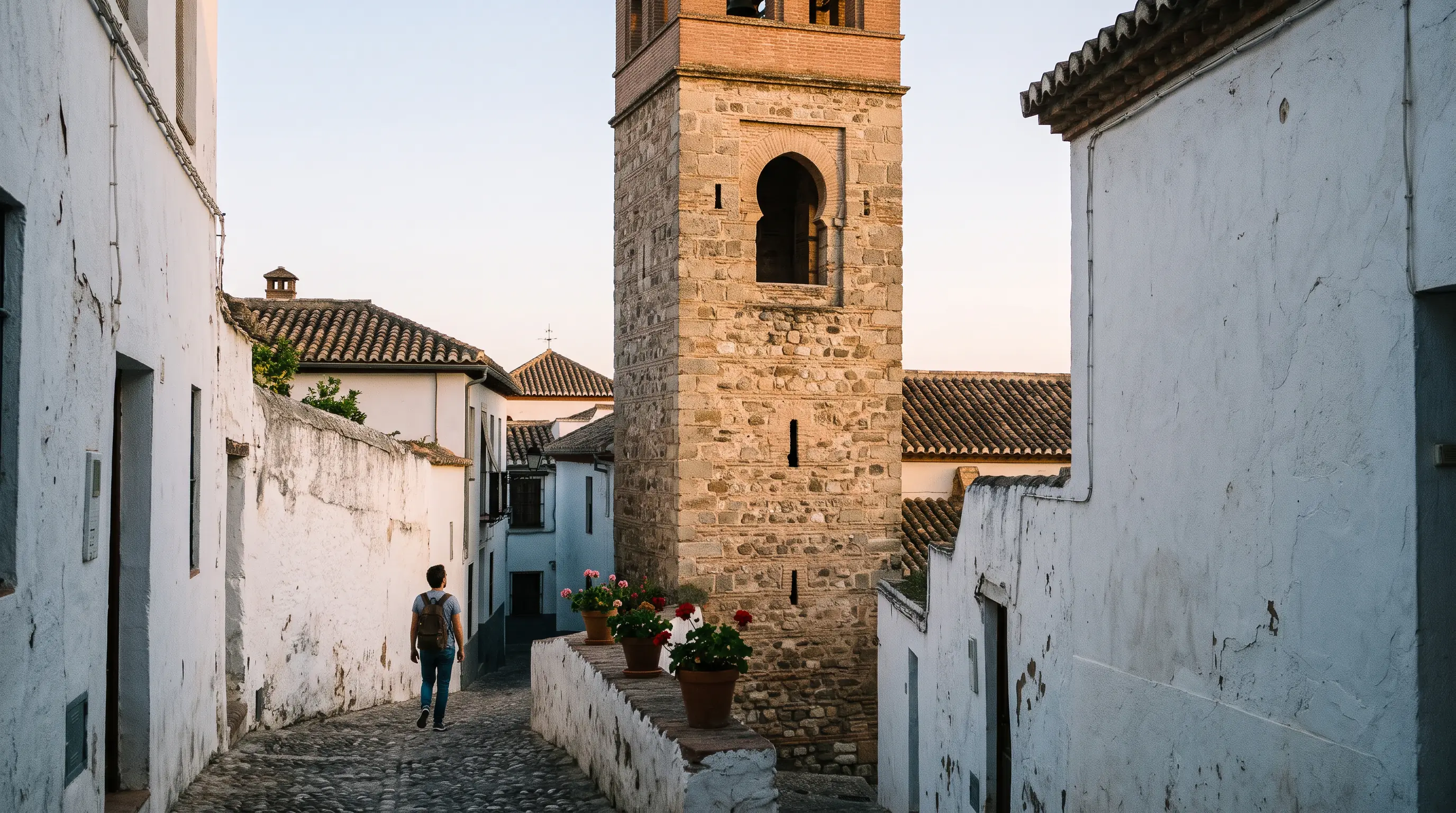
The Zirid shaft keeps its 11th-century stone; the brick belfry on top is Christian work.
- Minaret's century of origin
- 11th century
- Only minaret known in Spain predating the Almoravids, per the council[1]
- Date given for consecration
- 7 Jan 1492
- One scholarly account dates the church's consecration; others differ[2]
In this article
Jump to a section
What is left of the al-Morabitin mosque
How the Zirid tower was built
Explore nearby · Monument
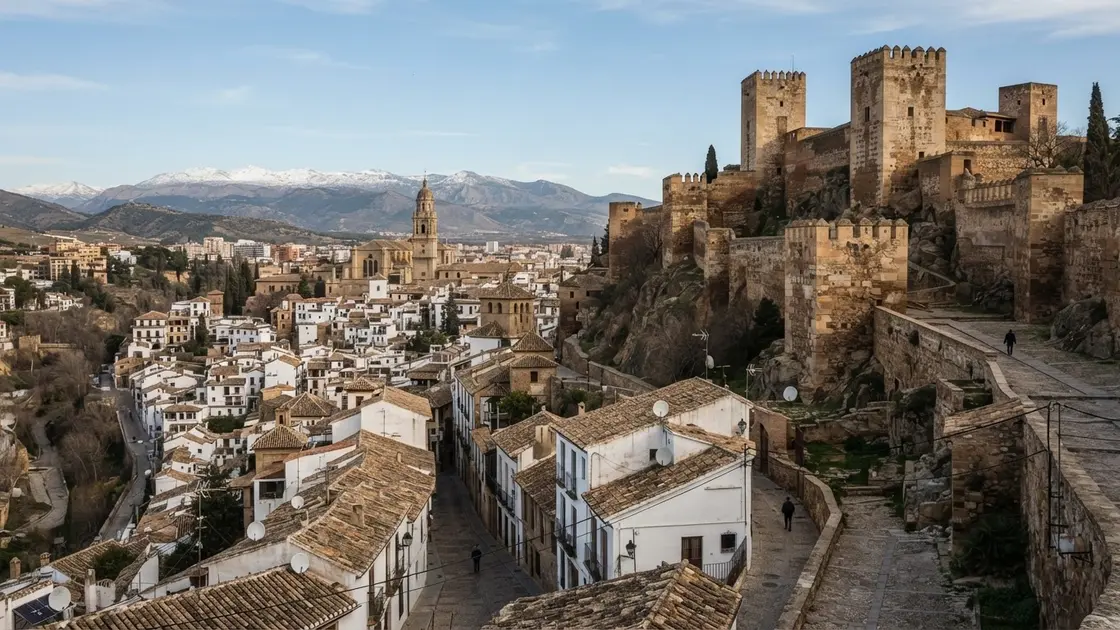
Alcazaba, Granada
Granada's oldest fortress and the military core of the Alhambra, built in 1238. Its Watch Tower delivers panoramic views of the Albaicin and Sierra Nevada.
Zirid, Almoravid and the mosque's name
Deep dive · Article
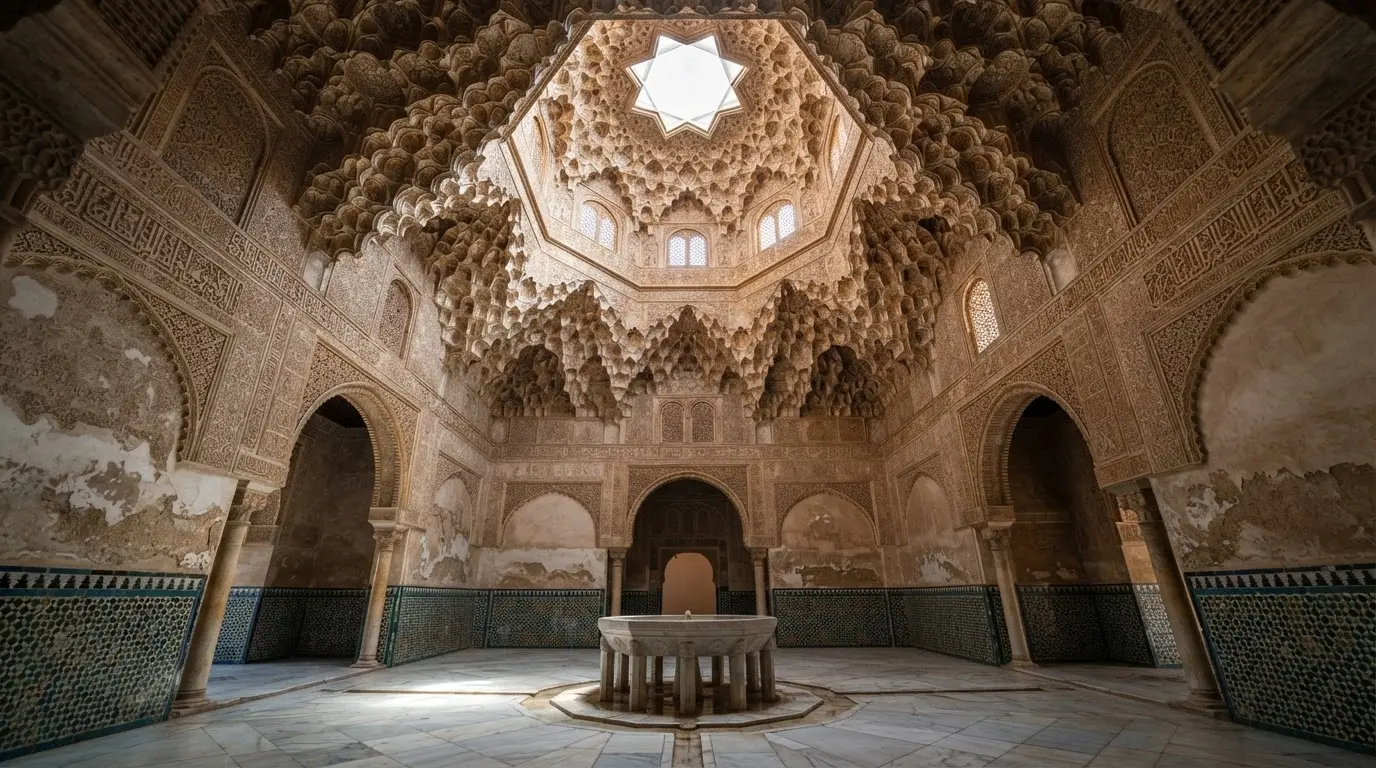
Abencerrajes of Granada: the noble clan behind the legend
Abencerrajes of Granada: the noble clan who shaped Nasrid court politics for a century and became legend through a massacre story set in the Alhambra.
From mosque to church: two dates, one belfry
Seeing the San José tower in the Albaicín today
Recommended tours
Tours are selected for quality, not commission. We earn a small fee if you book — at no extra cost to you.




- The horseshoe-arch window and the slit openings cut into the shaft.
- The false block pattern incised into the stone, best read in raking light.
- The line where the Zirid stone meets the Christian brick belfry.
- For a working mosque, the Mezquita Mayor is a separate visit.
Frequently asked questions
What is the history of the San José minaret in Granada?
Was the Church of San José in Granada a mosque?
How old is the minaret of the Church of San José in the Albaicín?
What is the aljibe de San José?
Why is the old mosque called al-Morabitin?
When did Granada's mosques become churches?
Did the San José minaret have a twin?
Sources
22 references Show Hide
- granada.org (opens in a new tab)
“El alminar es el único conocido en España anterior a los almorávides.”
- historicalsoundscapes.com — Granada (opens in a new tab)
“fue consagrada al culto cristiano el 7 de enero de 1492, con la advocación de San José. Conserva su alminar del siglo XI, al que se añadió el cuerpo para la instalación de las campanas.”
- Wikipedia (opens in a new tab)
“El 3 de junio de 1931 fue declarada «Monumento Histórico-Artístico», mediante un decreto publicado en la Gaceta de Madrid”
- granada.org (opens in a new tab)
“La actual torre de la parroquia de San José es cuanto subsiste, junto con un aljibe, de una antigua mezquita llamada al-Morabitín o de los ermitaños.”
- Wikipedia (opens in a new tab)
“San José. Fué mezquita de morabitos: conserva el aljibe sagrado y tiene algunos objetos artísticos, aunque no es de elegante construcción.”
- historicalsoundscapes.com — Granada (opens in a new tab)
“el de esta antigua mezquita también ha llegado hasta nuestros días, es el conocido como aljibe de San José.”
- granada.org (opens in a new tab)
“Hecho con lajas de piedra de la Malahá y sillares de piedra.”
- granada.org (opens in a new tab)
“Presenta una gran ventana con arco de herradura y pequeñas saeteras para iluminar el interior de su escalera que sube girando en torno a un machón central cuadrado como la torre.”
- granada.org (opens in a new tab)
“El aparejo real con que está construida la torre, está disimulado por otro fingido y sobretallado de despiece más regular, característico de construcciones del siglo XI.”
- revistaseug.ugr.es (opens in a new tab)
“Igual ocurre en el alminar zirí de la iglesia de San José de Granada (fig. 4).”
- revistaseug.ugr.es (opens in a new tab)
“Era hermana gemela de la de San José, aunque algo mayor”
- historicalsoundscapes.com — Granada (opens in a new tab)
“desembocaron en un meteórico proceso de transformación de las mezquitas de Granada en iglesias cristianas, el cual tuvo lugar entre el 5 y el 16 de enero de 1500.”
- historicalsoundscapes.com — Granada (opens in a new tab)
“Subimos a la torre, y desde su campanario conté un gran número de mezquitas”
- granada.org (opens in a new tab)
“La torre se remata hoy con un cuerpo campanario de ladrillo de construcción cristiana.”
- historicalsoundscapes.com — Granada (opens in a new tab)
“En su jardín vimos un olivo mayor que una encina, que estaba cargado de aceitunas.”
- boe.es (opens in a new tab)
“Iglesia de San José, Granada.”
- abierta.ugr.es (opens in a new tab)
“One was the Mosque of the Marabouts in the Albayzín district, on the site of the church of San José, whose belltower is the original 11th-century minaret, one of the most valuable examples of built heritage from the Zirid period.”
- abierta.ugr.es (opens in a new tab)
“The 77 years of history of the Zirid Taifa (1013-1090) saw a succession of four sultans”
- mezquita-catedraldecordoba.es (opens in a new tab)
“Originally, our current bell tower was preceded by the minaret erected in the times of Cordoba’s first caliph, Abd al-Rahmán III, around 951 A.D.”
- historicalsoundscapes.com — Granada (opens in a new tab)
“La iglesia de San José se erigió en 1501 sobre una antigua mezquita de la que todavía prevalece su alminar que fue transformado en torre de campanas.”
- historicalsoundscapes.com — Granada (opens in a new tab)
“El actual templo se contruyó en 1525.”
- historicalsoundscapes.com — Granada (opens in a new tab)
“Fue consagrada por el cardenal Cisneros en 16 de diciembre de 1499 y en ella se erigió, en 1501, la iglesia del Salvador”