
What is a carmen? The Arabic karm and its Granadan form
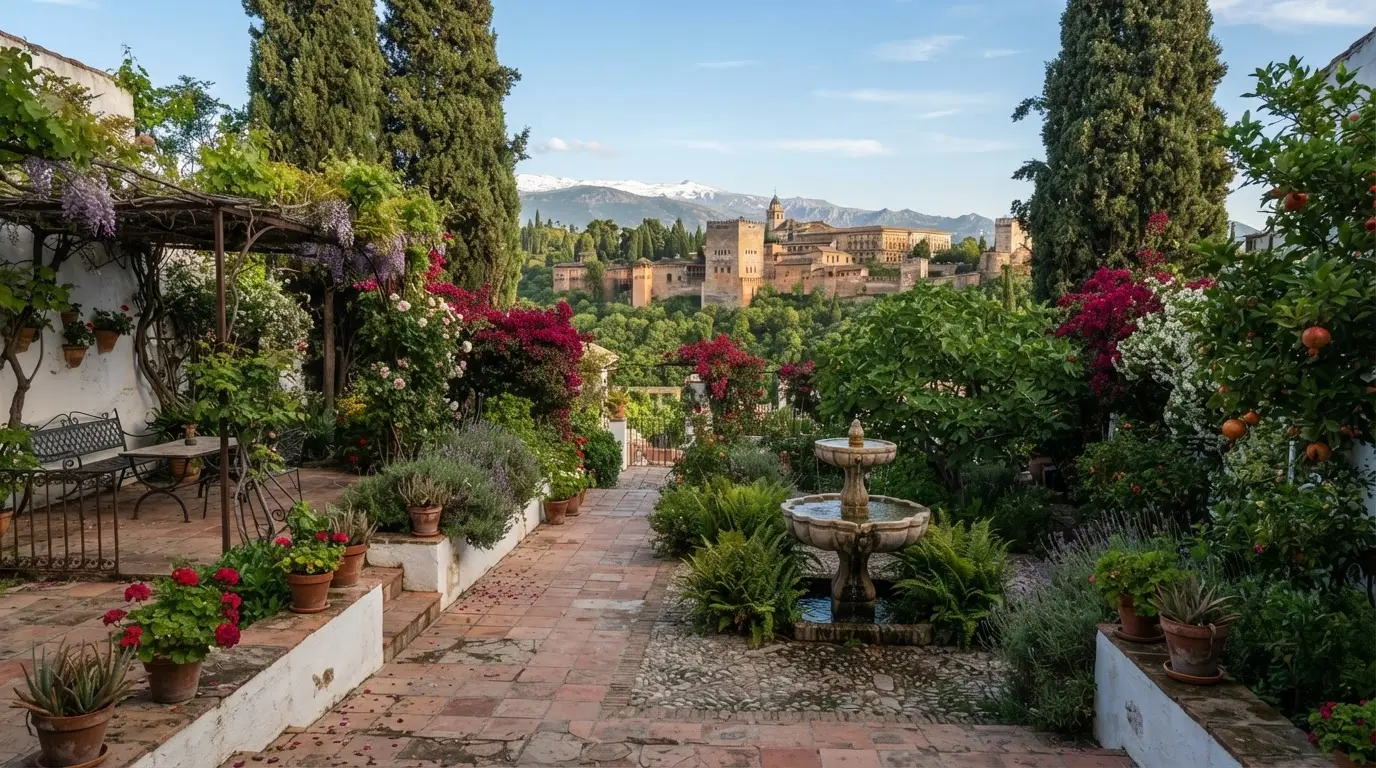
The carmen is a distinctly Granadan category of dwelling. It has no direct equivalent elsewhere in Spain. A carmen is a walled private estate combining a house with a terraced garden, typically planted with fruit trees, aromatic herbs, flowering vines, and at least one water element — a fountain, an acequia (irrigation channel), or a stone basin. The enclosing wall is not incidental; it is structural to the form. Privacy and inwardness are the point.
The word derives from the Arabic karm, meaning vineyard or orchard, which entered Granadan Spanish after the Nasrid period (1232–1492)[1] and stayed because nothing else described the form as accurately. The Moors who built the original estates were creating what their garden tradition called a private paradise: a controlled world of water, shade, and cultivated growth set against the heat and dust of the city outside the wall.
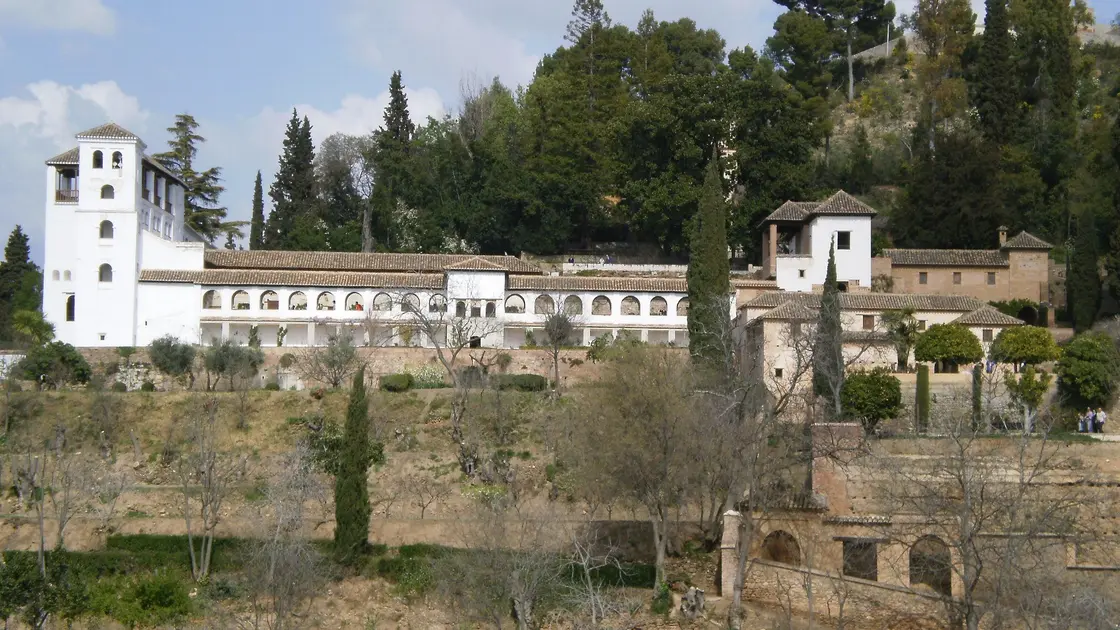
Architecturally, every carmen shares the same elements. The walled perimeter gives complete visual privacy from the street. Inside, the garden faces inward and descends in terraces cut into the hillside. A central water feature — almost always a fountain or stone channel — anchors the layout. Fruit trees (citrus, fig, pomegranate) provide shade and food. Cypress trees, often clipped into columns, mark corners and boundaries. Above the garden, and usually above the roofline, the Alhambra sits on its hill across the valley, close enough to feel like part of the same composition.
This combination of the domestic and the pastoral — a working garden that is also an aesthetic programme — is what distinguishes the carmen from a simple courtyard house. The garden was meant to be seen from the house and worked from within it. The house and the garden were designed as a single form.
Origins: Nasrid pleasure gardens and the post-Reconquista adaptation
The Nasrid period (1232–1492) was when the carmen form took its characteristic shape. The sultans and their court maintained recreational estates across the Albaicín hillside — properties used not as primary residences but as retreats from the formality of palace life, where fruit could be grown, water enjoyed, and guests received in an outdoor setting that blurred the line between garden and room.[1]
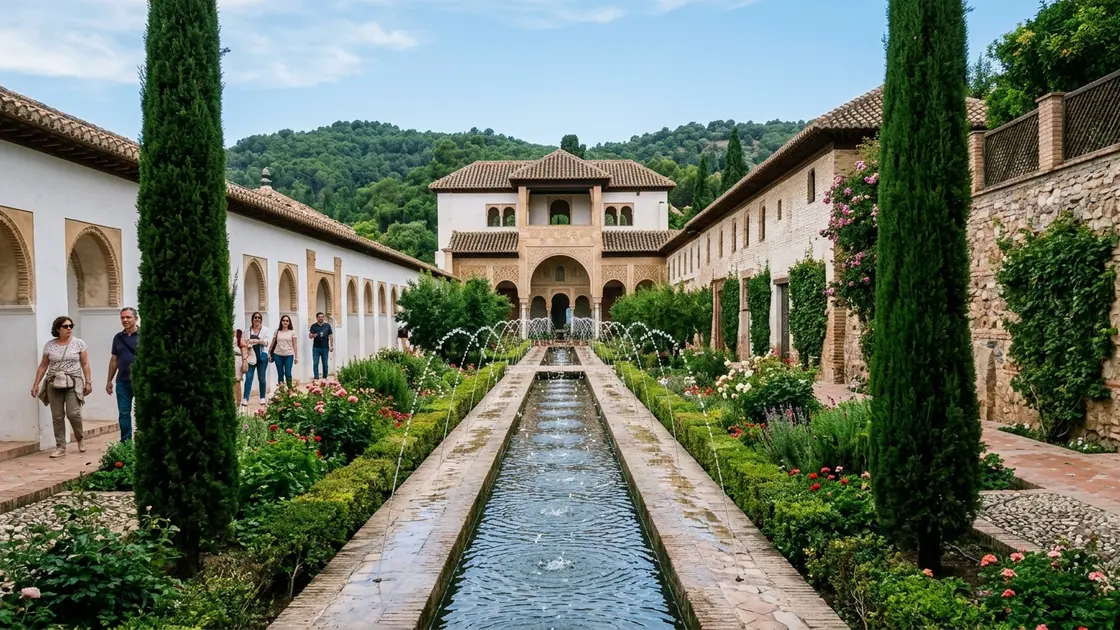
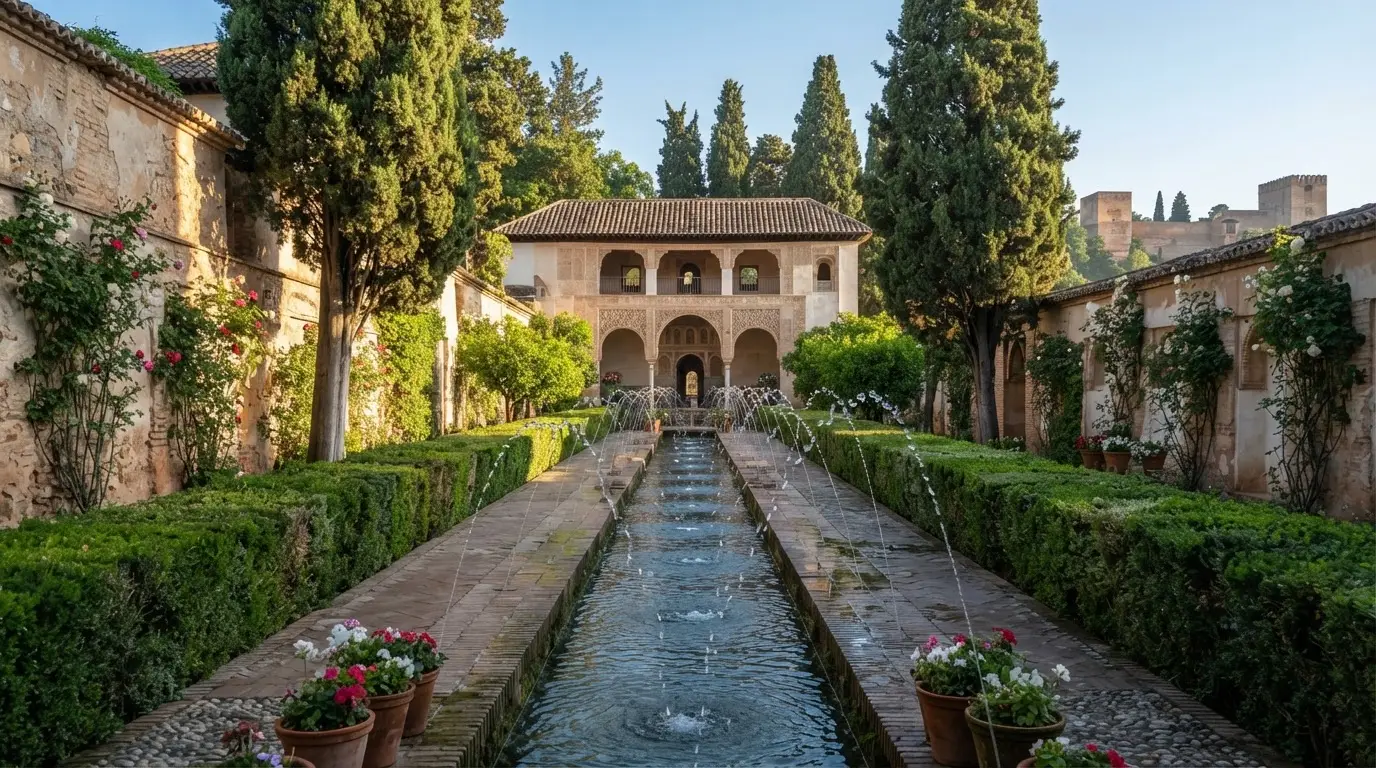
These estates drew on a centuries-old Islamic garden tradition that had moved west from Persia through North Africa and into Al-Andalus. The Nasrid pleasure garden followed the principle of the chahar bagh (four-garden layout), dividing space by water channels into quadrants that symbolised the four rivers of paradise. The Generalife above the Alhambra is the most famous surviving example at monumental scale. The Albaicín cármenes were smaller, private expressions of the same idea.
After the Reconquista of 1492, the Christian population who took over the neighbourhood faced a practical question: what do you do with hundreds of walled garden estates built by people who have left or been expelled? The answer, across the 16th and 17th centuries, was to adapt rather than demolish. The gardens survived in form; the ownership changed. Christian families took on the estates and maintained the terraced structure, the water systems, and the planting traditions because they worked — the Albaicín hillside is steep, the soil thin, and the carmen form was the most efficient way to cultivate it.
Explore nearby · Monument
Alhambra
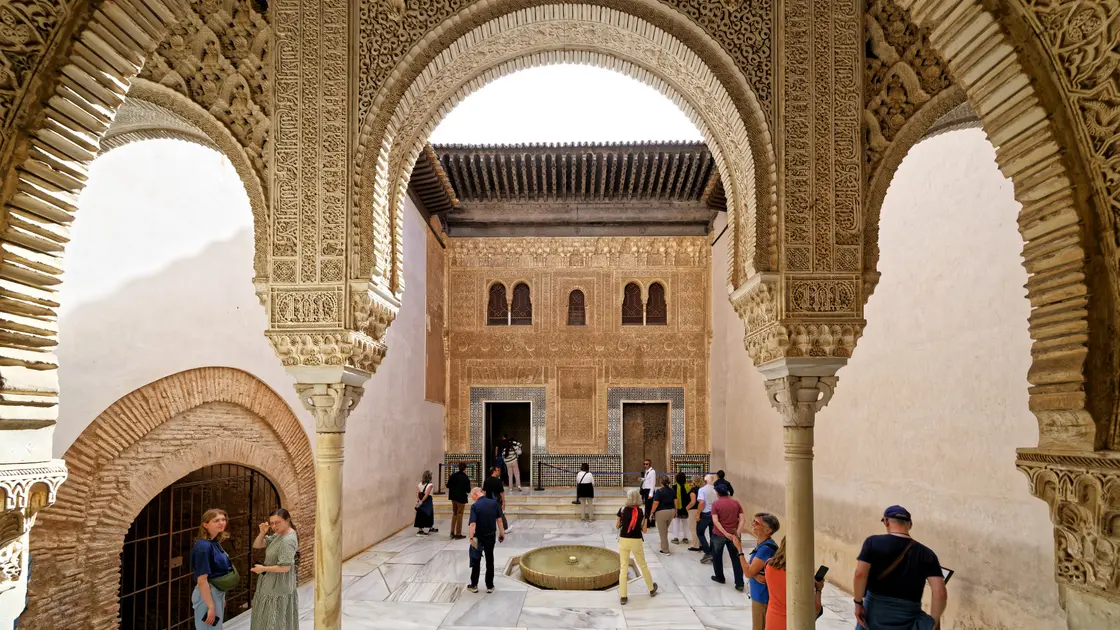
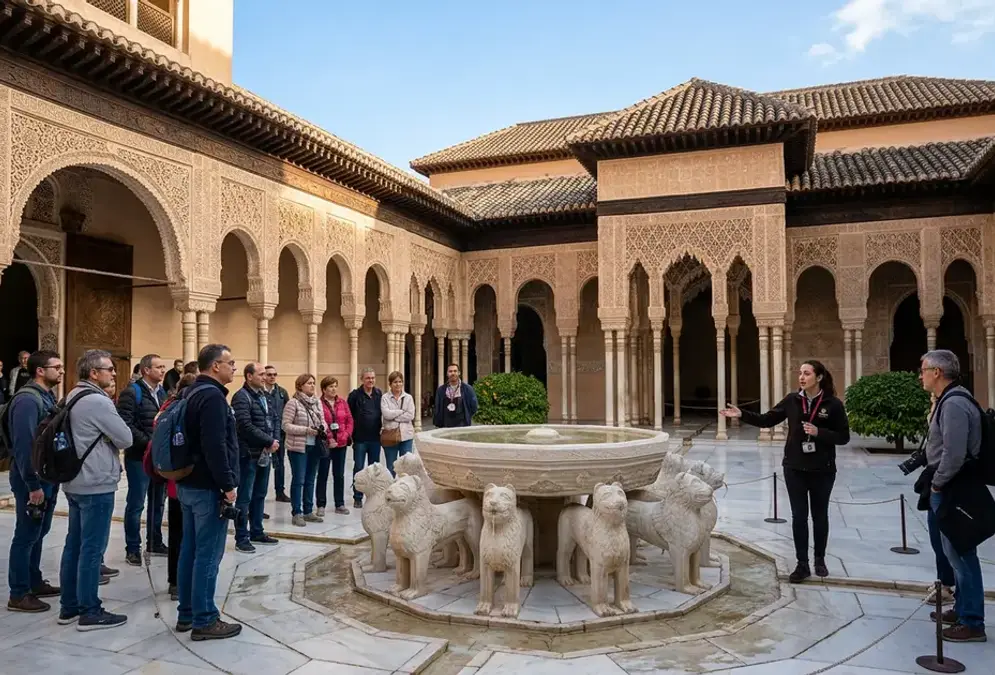
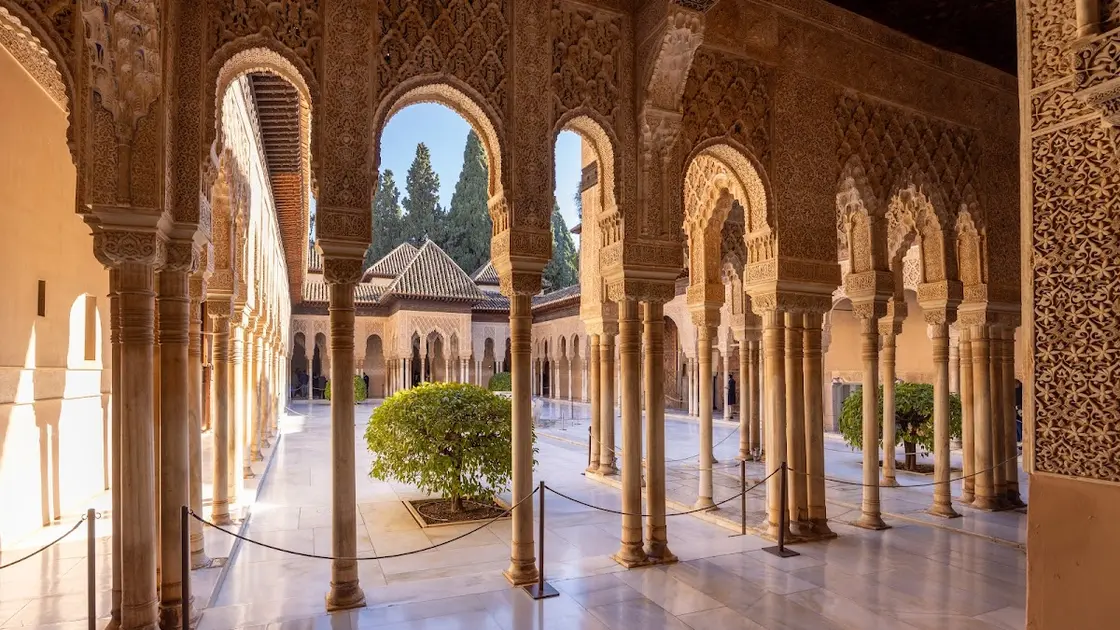
The Alhambra is Granada's UNESCO fortress-palace: Nasrid Palaces, Alcazaba and Generalife gardens. Tickets sell out weeks ahead; book via the Patronato site.
The 19th-century Romantic revival gave the carmen a second life in cultural terms. Washington Irving's Tales of the Alhambra (1832), written after his stay at the Alhambra in 1829, directed European attention to Moorish Granada with an intensity the city had not experienced since the expulsion. Artists, writers, and wealthy travellers began arriving in numbers. Several acquired or commissioned their own cármenes in the Albaicín. The form became associated with a particular idea of cultivated Granadan life — intellectual, aesthetically serious, connected to the landscape and the city's Moorish past.
Many of the cármenes that survive in their current form date architecturally from this Romantic period, though they occupy sites and follow garden plans that are older. The buildings are 19th-century. The walls, terraces, and water channels often predate them by several centuries.
Carmen de los Mártires: the largest and most accessible
If you visit only one carmen in Granada, make it the Carmen de los Mártires. It is the largest at 7 hectares[2], adjacent to the Alhambra on its southern slope, and it is free to enter. The city acquired it in the 20th century and runs it as a public park, which means the gate is open and the garden is yours to explore without queuing for a timed ticket.
The estate takes its name from the Christian captives (mártires, martyrs) who were said to have been held here during the Nasrid period, in a prison in the lower garden. Whether the story is historically verifiable or a later accretion is less important than the fact that the site was occupied and significant under the Nasrids before the current garden was laid out.
The garden design is emphatically not Nasrid in its current form. What you find is a 19th-century Romantic park overlaid on a much older site:
Recommended tours
Tours are selected for quality, not commission. We earn a small fee if you book — at no extra cost to you.
- French geometric parterres near the main entrance, with box hedges clipped into formal patterns
- An English Palm Garden in the lower section, with mature palms, a lake, and a pair of peacocks that wander freely
- A Moorish-style pool and a garden of clipped myrtle near the central terrace
- A small 19th-century Mudejar palace with a tiled façade, now closed to the public but photographable
7 hectares
The best reason to come, beyond the garden itself, is the view of the Alhambra from the upper terrace. You are looking at the Alhambra from directly alongside it, from a height that puts you level with the Torres Bermejas and the outer walls. This is not the panoramic view from the Mirador de San Nicolás across the valley; it is a close, intimate view across a narrow ravine that makes the scale of the fortress clear in a way the distant miradors cannot. Entry is free. The park is open most of the year, though hours vary seasonally — check before visiting.
Carmen de la Victoria: the Albaicín view from inside it
The Carmen de la Victoria, on the Cuesta del Chapiz, is operated by the University of Granada and has a different character from Los Mártires. It is smaller, quieter, less dramatic in its garden design — and for that reason, more typical of what a working Albaicín carmen actually feels like.[3]
The garden descends in terraces from the house, planted with fruit trees, herbs, and flowering shrubs rather than the theatrical Romantic design of Los Mártires. A cypress walkway leads from the upper terrace to the lower garden, passing stone basins and a central fountain. The planting is dense enough that you lose sight of the surrounding city within a few steps of the entrance.
What Carmen de la Victoria offers that Carmen de los Mártires does not is the specific Albaicín experience of looking at the Alhambra from within the neighbourhood itself, from a garden rather than a mirador. The view here is framed by cypress tops and fruit-tree canopy. It is closer and more human in scale than the sweeping panorama from Mirador de San Nicolás. In April, when the orange trees are flowering and the irises are out, the smell of the garden competes with the view for your attention.
Access is free but the hours are genuinely limited and change by season. The general pattern: 16 October to 31 March, weekdays 10:00–14:00 and 16:00–18:00, weekends 10:00–18:00; 16 April to 15 October, weekdays 10:00–14:00 and 18:00–20:00, weekends 10:00–20:00.[3] The garden can be closed for university events, so confirm before making a dedicated trip. The address is Cuesta del Chapiz 9 in the Albaicín.
A third carmen worth knowing: the Carmen Aben Humeya, on the Cuesta de las Tomasas, houses the Carlos Ballesta Foundation Museum. It runs cultural events and occasional guided visits. It is less accessible than the two above but gives a sense of how some cármenes have evolved into arts and cultural venues, which is one of the main uses for the form among the private owners who remain.
The Albaicín as carmen landscape: how to read what you see
Most cármenes in the Albaicín are private. UNESCO protection[1] has preserved the neighbourhood's character since 1994, which means the pattern of walls, terraced gardens, and lush vegetation above street level has survived — but it has not necessarily made the properties accessible. Walking through the Albaicín, you read the cármenes from outside.
The best streets for this are on the hillside above the Carrera del Darro, the riverside road that runs along the base of the Albaicín. The alleys climbing from the Darro — the Cuesta del Chapiz, the Camino del Sacromonte, and the lanes branching off them — pass the exterior walls of dozens of cármenes. You cannot see over most walls, but you can see evidence: the crown of a cypress above the parapet, bougainvillea spilling over whitewashed stone, the sound of a fountain when a gate is briefly open. In spring, the smell of orange blossom can locate a carmen from 20 metres away.
From the streets themselves, the form of the Albaicín reads as a terraced hillside of walled enclosures, each one holding its garden at a different height. The effect from above — from the Mirador de la Lona or the upper paths near the Carmen de los Mártires — is of a hillside stitched together by walls, with the green tops of trees marking each private enclosure. The Alhambra sits above all of it, defining the view that each carmen is oriented toward.
Deep dive · Article
Generalife gardens Granada: water, geometry, paradise
The Generalife gardens above the Alhambra are a 14th-century argument in stone and water. Here is what the Nasrid sultans built, and why it still works.
What to look for when walking:
- Wooden gates set into whitewashed walls — most will be closed, some have grilles through which the garden is briefly visible
- The height variation: a carmen on the lower Albaicín streets may have its garden three or four terraces above street level, invisible from below
- Water sounds from within walls — many cármenes use gravity-fed channels from the old Nasrid water system, and the sound of running water in an otherwise quiet alley is reliable evidence of a working garden
- The juxtaposition of the wild-looking exterior (old stone, lichen, an unpainted section of wall) with the cultivated interior. The contrast is deliberate.
Cármenes as hotels, restaurants, and cultural venues
Several private cármenes have been converted into small hotels, restaurants, and cultural centres in recent decades. The form translates naturally into boutique hospitality: the walled garden gives guests a private outdoor space in the heart of a dense neighbourhood, the terraced layout creates natural level separation between rooms, and the Alhambra view from the upper terrace is the kind of feature that fills a hotel's booking calendar.
If you want to spend time inside a working carmen beyond the two public gardens, the most reliable option is to book a meal at one of the carmen restaurants in the Albaicín — El Trillo, built around a shaded terrace over an old Moorish cistern, or Los Mascarones, in the 17th-century house of the baroque poet Pedro Soto de Rojas. Several operate in converted cármenes and serve on the terrace garden, with the Alhambra across the valley as the dining-room view. The price point at these places tends to be higher than neighbourhood average — the setting commands a premium — but a long lunch on a carmen terrace in late May, when the garden is at its best and the air carries the smell of wisteria, is not a bad way to spend an afternoon in Granada.
For photographers, the best light on a carmen garden is mid-morning in spring: the sun has climbed high enough to clear the surrounding walls and light the garden interior, but has not yet reached the harsh overhead angle that bleaches everything. In summer, the same angle arrives later and the heat is harder to work in. The Carmen de la Victoria's cypress walkway photographs well in late-afternoon backlight when the sun is behind the Alhambra and the cypresses are silhouetted against the pale sky.
The key practical point remains: the majority of cármenes in the Albaicín are private residences and will stay that way. The character of the neighbourhood, protected under UNESCO's 1994 World Heritage designation, depends partly on this privacy. The walls are not an obstacle to understanding the form; they are part of what makes it worth understanding.