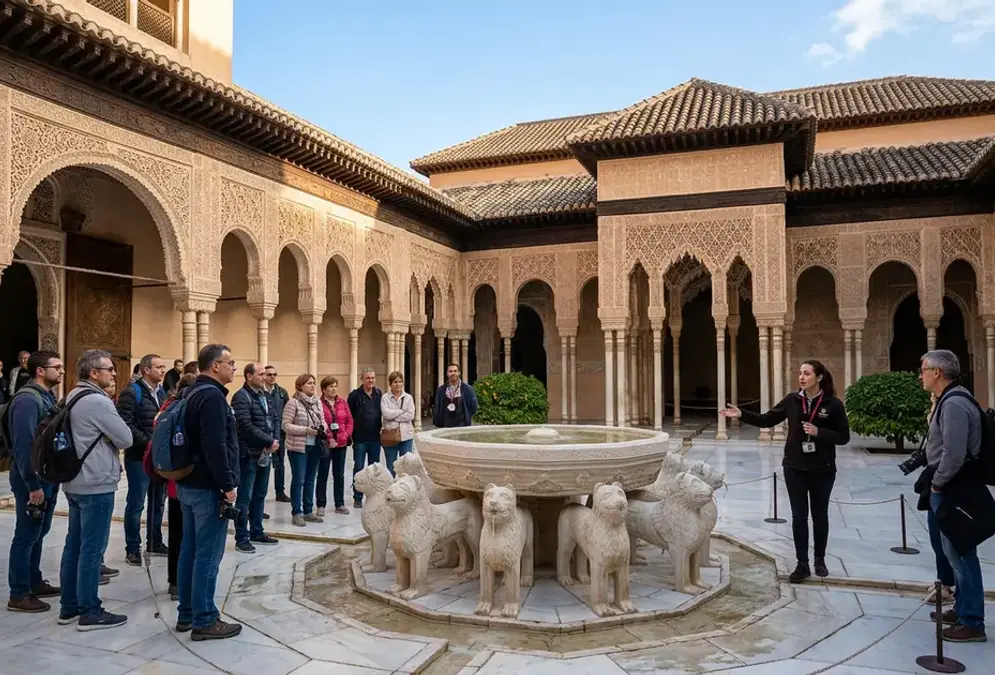
Battle of the Vega 1319 Granada: Nasrid horsemen charging a retreating Castilian column beneath Sierra Elvira on a hot June afternoon, dust and glinting armour

Battle of the Vega 1319: Why Two Castilian Regents Died
On 25 June 1319 Granada's horsemen routed a Castilian army near Sierra Elvira, and two regents died. The retreat, the rival accounts, and what you can visit.

Portrait of James Walker
Written by

Seven years resident in Granada. Specialist in Nasrid architecture, Al-Andalus history, and Andalusian walking routes.

Published
Nasrid Granada1238–1492
On 25 June 1319, a Castilian army retreating across the Vega de Granada came apart in the heat and thirst, and two of the three regents governing for the boy-king Alfonso XI, the infantes Pedro and Juan, did not live out the day[1][2]. Castilian sources say Pedro died after a fall from his horse and Juan of apoplexy, while Arab sources say soldiers killed both. The Granadan cavalry that broke the column rode out under Uthman ibn Abi al-Ula, about 5,000 horsemen by the Castilian chronicle's count[3], while the casualty totals in the Arab sources are plainly inflated. The exact field is traditional rather than surveyed, so the best-documented ground to visit is the Medina Elvira archaeological zone under Sierra Elvira[4].
Date of the battle
25 June 1319
Fought near Granada; 6 Jumada al-Awwal 719 AH[1]
Ozmin's cavalry sortie
5,000 horse
Uthman ibn Abi al-Ula's riders, per the Gran Crónica count[3]
Best-documented site
Medina Elvira
Archaeological zone below Sierra Elvira, Atarfe and Pinos Puente[4]

A crusade by regency: why the infantes marched

Castile marched on Granada in 1319 to finish the conquest, not just to burn a harvest. At the Cortes of Medina del Campo in 1318 the infantes agreed to correr e talar the Vega, to ride through it and lay it waste, with every force to muster at Córdoba in June 1319[5]. Most historians, working from Muslim and Christian testimony of the time, hold that the Castilians planned to conquer the city of Granada[6].
The pretext had already been tested. In 1316 at Guadahortuna the infantes, nominally backing the deposed Nasr, beat the army of Ismail I of the Nasrid dynasty, and Ibn al-Khatib's source counts seven hundred Granadan knights felled[7]. Three years is a short memory on a frontier. The men who rode south in 1319 had won the last time.
Command was shared, which would matter on the day. Pedro's column carried the Grand Masters of Santiago, Calatrava and Alcántara and the Archbishops of Toledo and Seville, while Juan followed with his own troops[8].

Albolote, 23 to 25 June: the camp that argued

The army reached Albolote, at the foot of Sierra Elvira and about 7 km from Granada, on Saturday 23 June 1319, the eve of San Juan, and stayed there all of Sunday[9]. It had come from the Córdoba muster by way of Illora, past the Cerro de los Infantes, and on to Pinos Puente[10].
The halt exposed a split in the command. Pedro wanted to pitch camp at the gates of Granada, but Juan and most of the commanders refused, and Pedro was angered[11]. The army meanwhile plundered the Vega and judged a siege impossible, so the withdrawal began on 25 June, in very hot weather, with Pedro leading the vanguard and Juan the rearguard[12].
Timeline
  1. 1316

    Guadahortuna

    The infantes beat Ismail I's army

  2. 1318

    Cortes of Medina del Campo

    Expedition against the Vega agreed

  3. June 1319

    Muster at Córdoba

  4. 23 June 1319

    Army reaches Albolote

    Foot of Sierra Elvira, 7 km from Granada

  5. 24 June 1319

    Camp held all day

  6. 25 June 1319

    Retreat and Granadan attack

    Pedro and Juan both die

Granada was not waiting passively. One Arab account has Ismail I offering the Castilians an enormous sum, twice, to abandon their goal; when they refused, he called up Marinid reinforcements, who camped at Elvira[13]. It is a Granadan version of events, and it casts the sultan as a man who tried money before steel, the usual order of Nasrid diplomacy between Castile and the Marinids.

25 June: thirst, a sortie and a rout

The battle was a rearguard collapse rather than a set piece, and thirst did half the work. Intense June heat sent Castilian troops scattering across the Vega in search of water, so the rearguard was strung out and disordered when the Granadans struck[14]. Uthman ibn Abi al-Ula, whom the Castilians called Ozmin, had ridden out of Granada on the sultan's orders with about 5,000 horsemen[3].
At first the Granadans only provoked the rearguard with small attacks. These turned into a general assault once they saw the Castilians losing cohesion and unable to answer effectively[15]. In the vanguard panic took hold, and many men made for the Genil, where some drowned crossing it in full armour[16].
Even the strength of the Granadan side is contested. Al-Maqqari says 5,000 fighters rode out, another account gives 1,500 knights and 4,000 infantry, and Ibn Khaldun allows only about 2,000 men[17]. The Arab chroniclers agree on the outcome, not on the count.

How the infantes died: two chronicles, two stories
The Castilian chronicle says neither infante fell to an enemy blade, while Arab writers say both did. In the Gran Crónica de Alfonso XI, Pedro's men would not obey him, and as he fought to charge, his horse bolted and he fell backwards, his head landing on the horse's rump; he lost consciousness and died soon after[20].
Juan hid his grief on hearing of Pedro's death, but when he saw his own men in disarray he suffered an apoplexy, lost his speech and understanding from midday until vespers, and died at nightfall[21].
Most modern historians accept apoplexy for Juan and place both deaths at the Cerro de los Infantes, the hill that took its name from them; Zurita blamed dehydration in heavy armour[22]. Muslim sources tell it differently: soldiers killed the infantes, and the Arabist al-Zahrani concludes they did not die of natural causes as the Christian chronicles claim[23].
Granada's chroniclers then add three details that are best read as tradition:
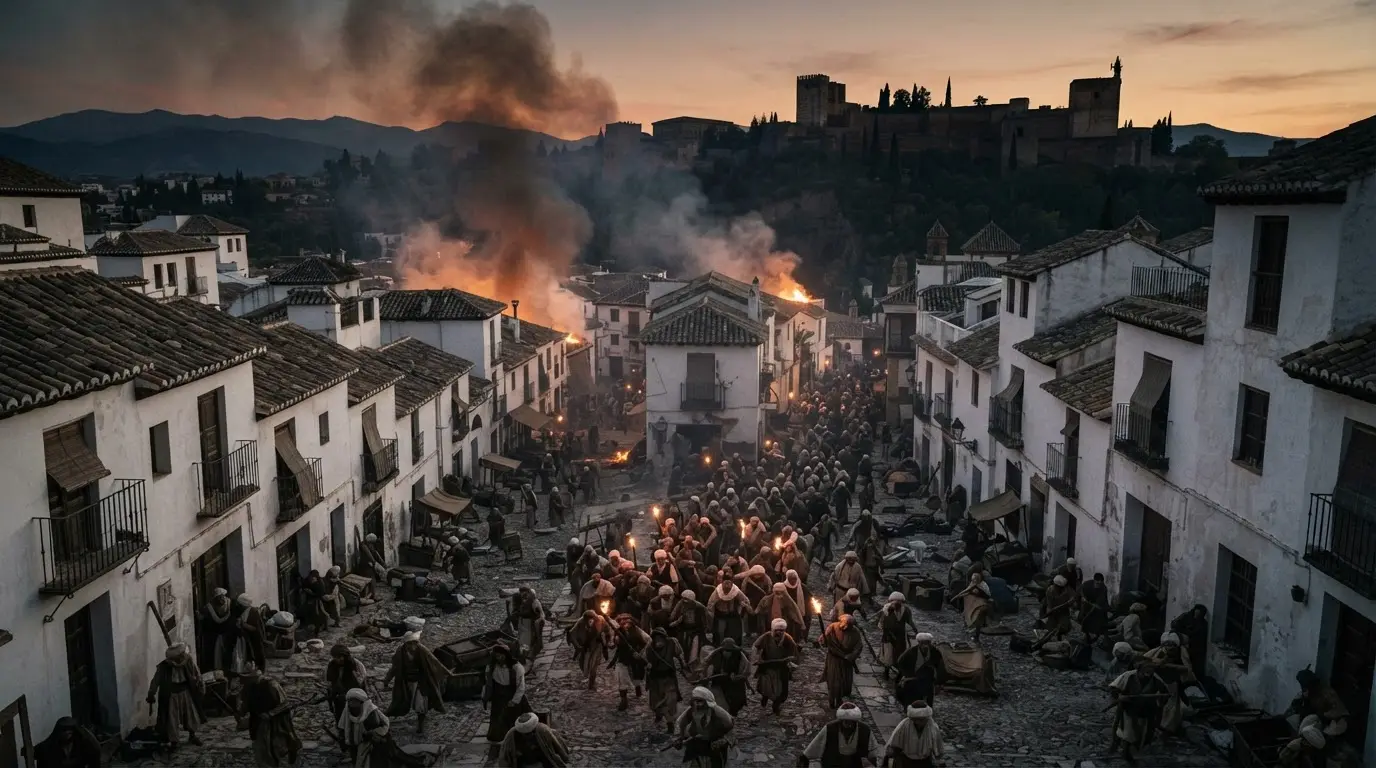
1066 Granada massacre scene in Jewish history: a mob attacking the Jewish quarter of Nasrid-era Granada at dusk, the Alhambra hill silhouetted in the background, smoke rising over whitewashed rooftops, sombre red and amber tones

Deep dive · Article

1066 Granada Massacre: When the Jewish Golden Age Ended in a Day

The 1066 Granada massacre killed Joseph ha-Nagid and thousands of the city's Jews in a single day, ending three decades of Jewish power under Samuel ha-Nagid.

  • Pedro's skin was stripped, stuffed with cotton and hung at a gate of Granada, where al-Maqrizi and al-Maqqari say it stayed for years; Ibn al-Khatib adds the coffin and a lance found lodged in a vertebra[24]
  • Juan's body was ransomed for a large sum, according to al-Umari, al-Qalqashandi and al-Nuwayri[25]
  • A captured wife of one infante is said to have offered Tarifa, Gibraltar and 18 castles as ransom, and the Granadans refused[26]

Aftermath: a broken regency and the Truce of Baena
Castile lost two of its three regents in a day and left its frontier thinly held for years. María de Molina remained as sole regent and was later joined by her other son, Infante Philip, and by a distant relative, Juan Manuel[27].
Peace followed within a year. On 18 June 1320 the Hermandad General de Andalucía agreed an eight-year truce at Baena with Ismail I[28]. For the emirate the win bought time rather than territory, inside the old bargain of truce and tribute paid to Castile that kept the Nasrids in Granada.
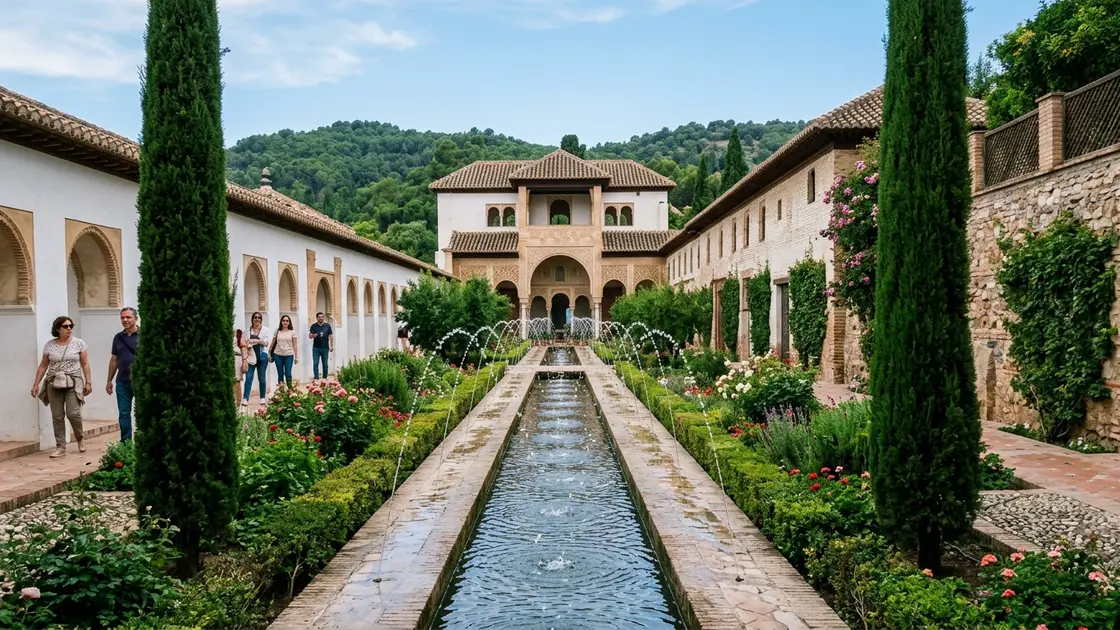
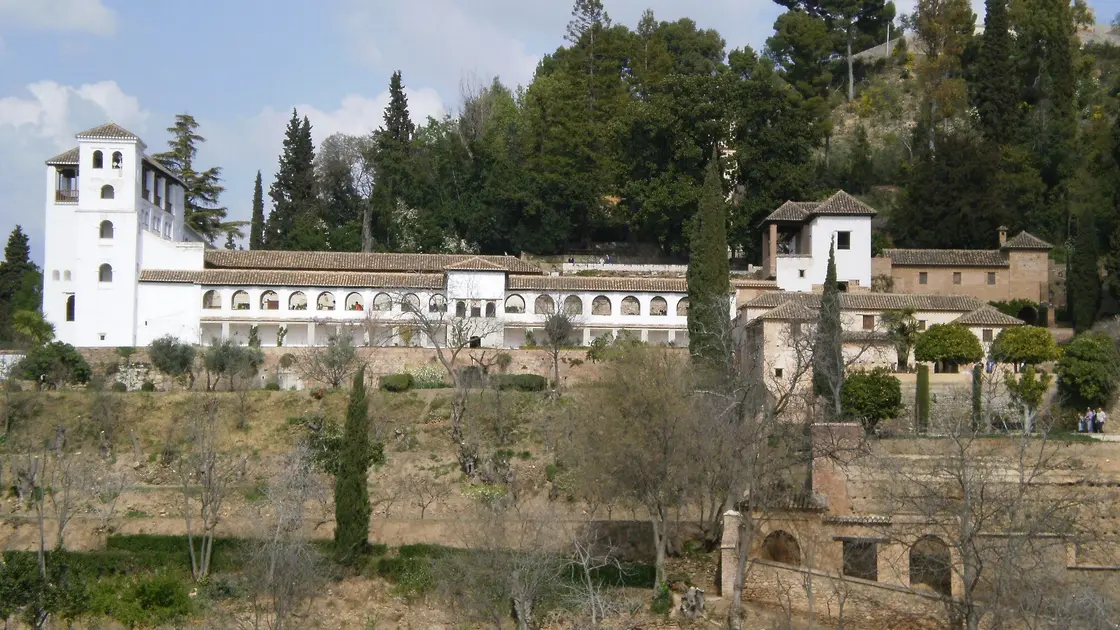
The Patio de la Acequia in the Generalife, with its central water channel and arching jets framed by cypress trees

Explore nearby · Monument

Generalife

The Nasrid sultans' summer estate above the Alhambra, with terraced gardens and the Patio de la Acequia, a 49-metre water garden from the 14th century.

Alfonso XI's majority was confirmed at the Cortes of Valladolid in 1325, and some historians read his later wars on Granada as partly an effort to avenge the infantes[29]. Ismail I, for his part, is credited by some scholars with celebrating the triumph through a remodelling of the Generalife and other places[30].

Visiting the Sierra Elvira country today

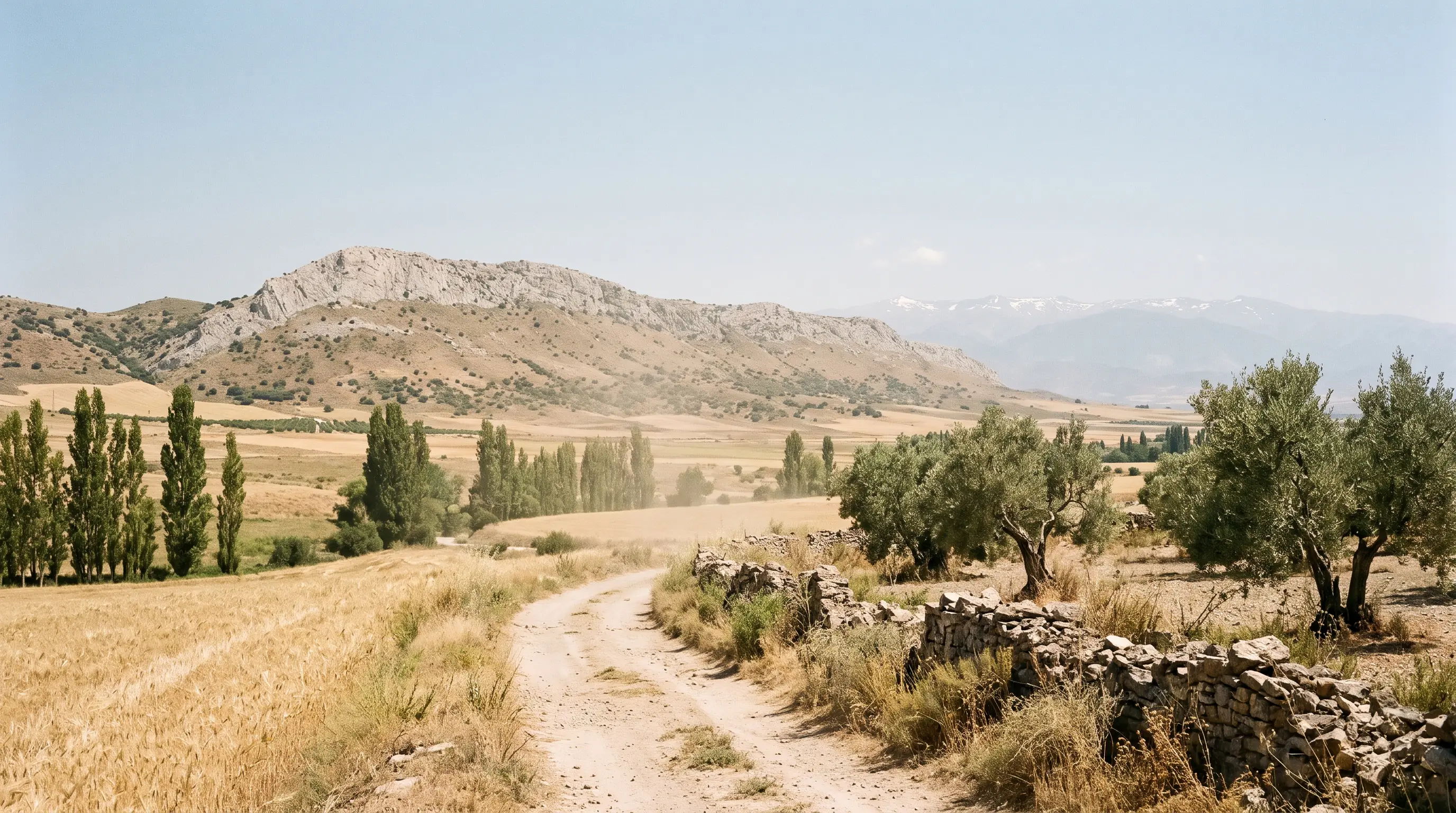
Tradition places the fighting around Pinos Puente and the Cerro de los Infantes, so treat it as traditional ground rather than a surveyed battlefield. The documented ground you can visit is Medina Elvira, the archaeological zone on the southern foot of Sierra Elvira in the municipalities of Atarfe and Pinos Puente, protected as a Bien de Interés Cultural[4].
The city was abandoned in 1010, after a Berber siege and fire, and its people moved to Granada[31]. Before that Elvira had been one of the main urban centres of Al-Andalus in the emiral and caliphal period[32]. The Junta de Andalucía puts the protected area at 332 hectares, declared a Bien de Interés Cultural in 2004, with systematic excavation campaigns running since 2005[33].
  • Medina Elvira, Atarfe: no regular public timetable appears on the official Junta or council pages. Atarfe town hall takes school-group visit requests through its electronic office[34], and the Proyecto Medina Elvira has offered free guided visits on dated listings[35]. Check with Atarfe town hall or the Junta de Andalucía before you travel
  • Pinos Puente and Albolote: the traditional setting of the fighting
  • Cerro de los Infantes: the hill named for the two regents, on the route the army took
The same plain saw Castile win the field, and gain nothing, 112 years later at La Higueruela in 1431.

Frequently asked questions

What happened at the Battle of the Vega in 1319 near Granada?

On 25 June 1319 a Castilian army withdrawing from a raid on the Vega de Granada was attacked by Granadan cavalry, lost cohesion in the heat and was routed. Both leading regents, the infantes Pedro and Juan, died that day.

Who were the two Castilian regents killed in the Battle of the Vega?

Infante Pedro, uncle of the boy-king Alfonso XI, and Infante Juan, his great-uncle. The third regent, his grandmother María de Molina, stayed on as sole regent.

How did Infante Pedro and Infante Juan die?

The Castilian chronicle says Pedro fell from his bolting horse and died soon after, while Juan suffered an apoplexy and died at nightfall. Muslim sources say soldiers killed them.

Who commanded the Granadan army at Sierra Elvira?

The chronicle names Uthman ibn Abi al-Ula, called Ozmin by the Castilians, who rode out on the sultan's orders. Ismail I was the reigning sultan; his personal role in the fighting is less clear in the accounts.

Why is it called the Battle of Sierra Elvira?

Most of the action is placed on the Vega below the Sierra Elvira ridge, around Albolote and Pinos Puente. A hill on the battlefield was named the Cerro de los Infantes after the two regents.

How many men fought and died in the Battle of the Vega in 1319?

The Castilian chronicle puts the Granadan sortie at about five thousand horse, while Arab accounts range from roughly two thousand men to five thousand or more. Arab sources claim Christian dead in the tens of thousands against a handful of Muslim dead, figures best read as claims rather than counts.

What happened to Castile after the Battle of the Vega?

María de Molina carried on as sole regent, the frontier was thinly held, and an eight-year truce was agreed at Baena on 18 June 1320. Alfonso XI's majority was confirmed at Valladolid in 1325.

Can you visit the Battle of the Vega site or Medina Elvira?

The field is traditional ground, not an excavated site. Medina Elvira, at the foot of Sierra Elvira in Atarfe and Pinos Puente, has been opened through free guided visits organised by the Proyecto Medina Elvira, so check dates first.

Sources

35 references Show
  1. Wikipedia — Battle of the Vega of Granada (opens in a new tab)

    “The Battle of Sierra Elvira, also called the Disaster of the Vega de Granada, was a battle of the Spanish Reconquista fought near the city of Granada on 25 June 1319 (6 Jumada al-Awwal 719 AH).”

  2. Wikipedia — Battle of the Vega of Granada (opens in a new tab)

    “In the late 1310s Castile was ruled by King Alfonso XI, a minor, under the joint regency of his grandmother Maria de Molina, of his granduncle infante John and of his uncle infante Peter.”

  3. Wikipedia — Desastre de la Vega de Granada (opens in a new tab)

    “había salido de la ciudad de Granada por orden de su rey con unos cinco mil caballeros”

  4. boe.es (opens in a new tab)

    “El yacimiento denominado Medina Elvira se localiza en el pie de monte del frente meridional de Sierra Elvira, en concreto en los términos municipales de Atarfe y Pinos Puente (Granada).”

  5. Wikipedia — Desastre de la Vega de Granada (opens in a new tab)

    “acordaron entrar a «correr e talar» la Vega de Granada, y establecieron que las fuerzas a sus órdenes se reunirían para ello en la ciudad de Córdoba en el mes de junio de 1319”

  6. Wikipedia — Desastre de la Vega de Granada (opens in a new tab)

    “la mayoría de los historiadores, basándose en los testimonios musulmanes y cristianos de la época, afirman que los cristianos planeaban conquistar la ciudad de Granada”

  7. wpd.ugr.es (opens in a new tab)

    “Fueron derribados setecientos caballeros de ellos”

  8. Wikipedia — Battle of the Vega of Granada (opens in a new tab)

    “With him were the Grand Masters of the Orders of Santiago, Calatrava and Alcántara and the Archbishops of Toledo and Seville.”

  9. Wikipedia — Desastre de la Vega de Granada (opens in a new tab)

    “llegaron a las cercanías de Albolote, municipio situado al pie de Sierra Elvira y a 7 kilómetros de Granada”

  10. Wikipedia — Desastre de la Vega de Granada (opens in a new tab)

    “pasaron por el Cerro de los Infantes y llegaron al municipio de Pinos Puente”

  11. Wikipedia — Desastre de la Vega de Granada (opens in a new tab)

    “el infante Pedro deseaba avanzar más y establecer el campamento cristiano junto a las puertas de Granada, pero el infante Juan y la mayoría de los que iban con ellos se opusieron”

  12. Wikipedia — Battle of the Vega of Granada (opens in a new tab)

    “The withdrawal started on 25 June 1319, in very hot weather; infante Peter led the vanguard while infante John commanded the rearguard.”

  13. wpd.ugr.es (opens in a new tab)

    “se dio prisa en ofrecerles, por dos veces, una cantidad enorme de dinero para que renunciaran a su objetivo, pero éstos lo rechazaron”

  14. Wikipedia — Desastre de la Vega de Granada (opens in a new tab)

    “las tropas castellanas se vieron obligadas ese día a dispersarse para ir en busca de agua, debido a la intensa sed que padecían por encontrarse en el mes de junio”

  15. Wikipedia — Battle of the Vega of Granada (opens in a new tab)

    “These minor attacks turned into a general assault when the Granadines realized the Castilians were losing their cohesion during their retreat and were unable to fight back effectively.”

  16. Wikipedia — Battle of the Vega of Granada (opens in a new tab)

    “in their panic, many men drowned while attempting to cross the river Genil in full armour.”

  17. wpd.ugr.es (opens in a new tab)

    “salió con 5.000 combatientes musulmanes”

  18. wpd.ugr.es (opens in a new tab)

    “Los caídos musulmanes eran entre 10 y 13 mártires solamente”

  19. wpd.ugr.es (opens in a new tab)

    “Me reuní con alguien que presenció la batalla y me contó las noticias que apunté de él, pero luego las perdí.”

  20. Wikipedia — Desastre de la Vega de Granada (opens in a new tab)

    “el infante cayo contra «el arçon detrás, ansi que la cabeça del ynfante cayo en las ancas del cauallo»”

  21. Wikipedia — Desastre de la Vega de Granada (opens in a new tab)

    “sufrió una apoplejía y perdió el entendimiento y el habla, y permaneció así desde el mediodía hasta la hora de vísperas”

  22. Wikipedia — Desastre de la Vega de Granada (opens in a new tab)

    “La mayoría de los historiadores modernos coinciden en que la muerte del infante Juan se debió a una apoplejía”

  23. wpd.ugr.es (opens in a new tab)

    “La derrota del ejército cristiano fue total y los dos infantes de Castilla, Don Juan y Don Pedro, fueron asesinados por soldados musulmanes”

  24. wpd.ugr.es (opens in a new tab)

    “le fue arrancada su piel y rellenada con algodón”

  25. wpd.ugr.es (opens in a new tab)

    “el cadáver de Juan fue rescatado con mucho dinero”

  26. wpd.ugr.es (opens in a new tab)

    “plazas importantes como Tarifa y Gibraltar, además de 18 castillos”

  27. Wikipedia — Battle of the Vega of Granada (opens in a new tab)

    “Maria de Molina remained as sole regent and was later joined by her other son, infante Philip and by a distant relative, the celebrated Juan Manuel.”

  28. Wikipedia — Desastre de la Vega de Granada (opens in a new tab)

    “acordaron una tregua de ocho años en Baena con el rey Ismail I de Granada”

  29. Wikipedia — Desastre de la Vega de Granada (opens in a new tab)

    “que fue confirmada en las Cortes de Valladolid de 1325.”

  30. wpd.ugr.es (opens in a new tab)

    “hizo una importante remodelación en el Generalife y en otros lugares”

  31. boe.es (opens in a new tab)

    “La ciudad se abandona en el año 1010, tras ser asediada e incendiada por los bereberes”

  32. atarfe.es — Historia (opens in a new tab)

    “La ciudad de Elvira (Ilbira) fue uno de los principales centros urbanos de Al-Andalus en época emiral y califal”

  33. Junta de Andalucía — Yacimiento de medina elvira atarfe (opens in a new tab)

    “cuenta con una amplia extensión protegida, de 332 hectáreas, declaradas Bien de Interés Cultural (BIC) en 2004.”

  34. atarfe.es — Medina elvira de la clase al yacimiento (opens in a new tab)

    “Solo tenéis que solicitar la visita a través de la sede electrónica del Ayuntamiento:”

  35. Junta de Andalucía — Visitas guiadas al yacimiento de medina elvira atarfe (opens in a new tab)

    “El Proyecto Medina Elvira organiza visitas guiadas y gratuitas a las instalaciones y excavaciones del yacimiento.”